NEW YORK--(BUSINESS WIRE)--Aug 6, 2026--
Emergence, a frontier agentic AI lab advancing safe autonomous AI, today announced the appointment of Ian Eslick as Chief Executive Officer.
This press release features multimedia. View the full release here: https://www.businesswire.com/news/home/20260806869889/en/
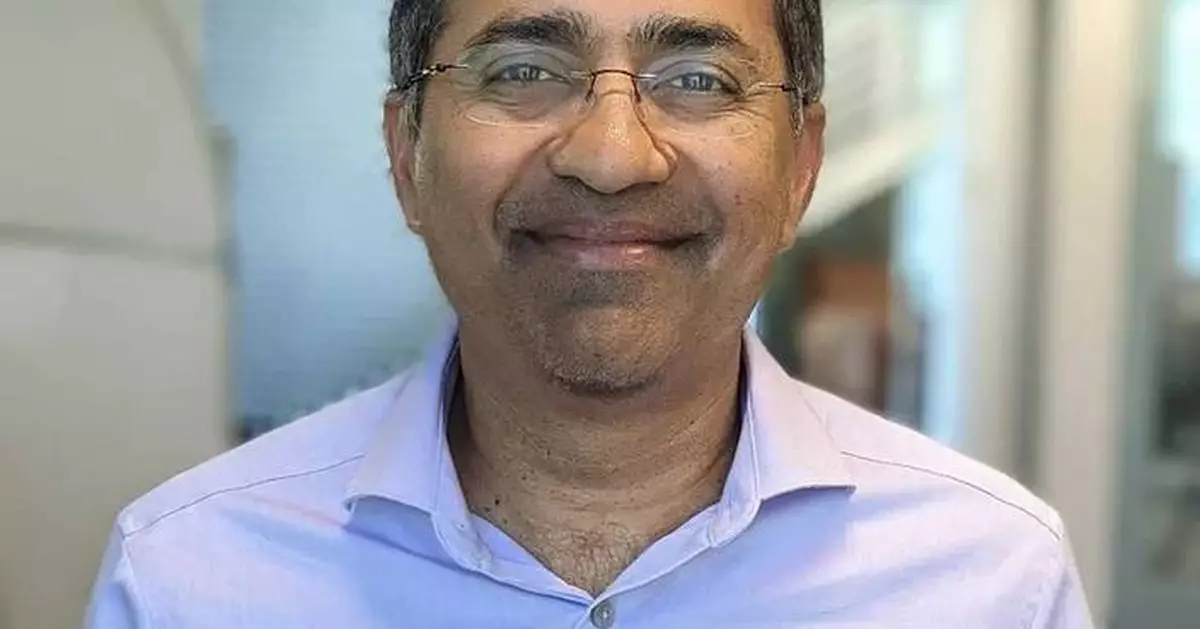
Ian Eslick, Chief Executive Officer of Emergence
Eslick will lead the company's next phase of commercial growth, scaling enterprise adoption of Emergence's technology, expanding its go-to-market strategy, and driving operational execution as organizations increasingly deploy autonomous AI systems across mission-critical environments.
As part of this evolution, Co-Founder Dr. Satya Nitta will assume the role of Executive Chairman, where he will dedicate more time to advancing Emergence's long-term scientific vision, leading frontier AI research, and driving the continued development of the company's pioneering neuroformal AI architecture – pushing the boundaries of what's possible in safe autonomous AI. In addition, he will help shape the company's strategic direction, drive major partnerships, support board governance, and represent Emergence through thought leadership, public speaking, and engagement with industry leaders.
Working in close partnership, Eslick will lead the commercialization of Emergence's technology while Nitta continues to drive the innovations that underpin the company's long-term competitive advantage.
Eslick joins Emergence with more than 25 years of experience as a technology executive, entrepreneur and engineer, with a proven track record of building and scaling category-defining companies.
Most recently, he served as Senior Vice President of Infrastructure and Technology Strategy at SoFi, where he led the company's infrastructure platform and broader technology strategy.
Earlier in his career, Eslick founded Silicon Spice, an MIT spinout semiconductor company that pioneered carrier-grade Voice over IP technology before being acquired by Broadcom for $1.2 billion. He also brings deep expertise in AI through research at MIT spanning cognitive architectures, commonsense reasoning, natural language processing, and personalized medicine. His experience across semiconductors, AI, cloud infrastructure and enterprise product development positions him to lead Emergence through its next phase of enterprise growth.
"I'm delighted to welcome Ian as Chief Executive Officer of Emergence," said Dr. Satya Nitta, Co-Founder and Executive Chairman of Emergence. "Ian brings a rare combination of technical depth, entrepreneurial experience, and operational leadership that makes him the ideal person to lead Emergence through our next phase of growth.
"As Executive Chairman, I'll be able to dedicate more time to advancing our long-term research agenda and the development of our neuroformal AI architecture – pushing the boundaries of what's possible in safe autonomous AI – while partnering closely with Ian to bring those breakthroughs to enterprises around the world. Together, we'll accelerate both scientific innovation and commercial impact. I'm particularly excited to help advance autonomous AI in the semiconductor industry. For me, it's a true full-circle moment, bringing together the two fields that have defined my career."
"I'm honored to join Emergence at such an exciting moment in the company's journey," said Ian Eslick, Chief Executive Officer of Emergence. "Satya has built an extraordinary scientific foundation and assembled a world-class research team. My focus is to help translate that innovation into enterprise-scale products that organizations can deploy with confidence. I look forward to working alongside Satya and the entire Emergence team as we bring the next generation of safe autonomous AI to customers around the world."
As autonomous AI agents become increasingly embedded in financial services, telecommunications, robotics, autonomous vehicles and other mission-critical industries, enterprises need AI systems they can trust. Underlying Emergence's vision is its pioneering neuroformal approach to autonomous AI, which combines the adaptability of neural AI with the mathematical rigor of formal methods. This neuroformal architecture provides an independently verifiable framework that governs agent behavior, enabling autonomous AI systems that are highly capable, predictable, reliable, and safe enough for real-world enterprise deployment.
Notes for Editors:
Emergence is a frontier agentic AI lab advancing safe autonomous AI through its pioneering neuroformal architecture. Its technology enables enterprises to deploy autonomous AI systems that are intelligent, verifiable and reliable enough for mission-critical environments. The Emergence team comes from the world’s leading AI labs and technology teams, including IBM Research, The Allen Institute for AI, Amazon, and Broadcom. Emergence is headquartered in New York, with offices in California, Spain, and India. Learn more at https://www.emergence.ai/

Dr. Satya Nitta, Co-Founder and Executive Chairman of Emergence