
EDITORS/NEWS DIRECTORS:
President Donald Trump’s administration has detained dozens of parents and spouses of active-duty U.S. troops as it rolls back immigration protections for military families to pursue its mass deportation agenda, an Associated Press investigation found.
More than 50 parents and spouses of active-duty service members have been detained since Trump took office for a second term, and at least six have been deported and one self-deported, the AP found in the first accounting of such detentions, which the government does not track. At least eight immediate family members of U.S. service members remain in federal immigration custody.
Immediate family members of U.S. troops have generally not been targeted for immigration enforcement due to the longstanding bipartisan consensus that doing so undermines military preparedness. But a federal policy, implemented in April 2025, states that “military service alone does not exempt aliens from the consequences of violating U.S. immigration laws.”
The AP found troops' family members are now being routinely detained for months as they seek to adjust their legal status through the policies available to service members' close relatives, even as the military continues to recruit by advertising immigration benefits for enlistees' families. Though the U.S. is at war in Iran, service members have had to take leave of their duties, including delaying deployment, to take care of their young children after their spouses were detained.
Military veterans and their family members, who have also received immigration benefits, are also being detained and deported.
There are likely many more people affected than those that come up in AP's coverage making this a good opportunity for local reporting.
READ AP’S COVERAGE
AP Exclusive: Trump’s immigration crackdown has detained more than 50 military spouses and parents
Takeaways from AP’s review of military families detained under Trump’s immigration crackdown
FINDING MILITARY MEMBERS WITH DETAINED FAMILY MEMBERS
— Military service members often post about detained family members on social media or on fundraising sites like GoFundMe and using key term searches and Google alerts can help you learn of emerging cases.
— You can also often find new cases by searching court filings, such as habeas petitions. While habeas petitions generally must be viewed in-person in federal court, it is possible to find many through Habeas Dockets, a project run by the Immigration Justice Transparency Initiative which scans and uploads the petitions. You can search for key terms like “active-duty”, “military parole-in-place” or “veteran” to identify possible cases of military service members’ families being detained.
— Many cases of detention or deportation of military family members will not appear in habeas filings or other court documents, meaning the only way to find cases in your area may be from local immigration attorneys, nonprofits providing legal support or groups that support veterans and military families. Often, they are the first to learn of new cases and can help make introductions and convince families to speak with media. DHS is not providing data on these situations, so it's worth reporting even one case in your area.
CONSIDERATIONS FOR USING PACER AT COURTHOUSE TERMINALS
— There are 94 such courts with computers that the public can use to search an unfiltered version of PACER. Journalists can pull up filings from immigrant detainees by selecting “463 (Habeas Corpus - Alien Detainee)” from the “Nature of Suit” dropdown, then either read through them on the spot or print out the documents, typically at a cost of 10 cents per page.
— It isn’t just immigrant detainees who file habeas corpus cases. To ensure you’re looking at cases filed by immigrants, select “463 (Habeas Corpus - Alien Detainee)” from the “Nature of Suit” menu. There may be more under codes like “460 (Deportation)” or “530 (Habeas Corpus (General))” but most will be “463.”
— Some states have more than one federal district court. The case filings will only be available at the district court where it was filed. For example, Iowa has two federal district courts, the Northern District of Iowa and the Southern District of Iowa. Records filed in the Northern District will only be accessible at the Northern District terminals.
— Filings in immigration-related habeas corpus cases often contain detainees’ Alien Number, or A-Number, which can be helpful for requesting interviews or connecting with them through online platforms used for people behind bars.
— Massachusetts is an exception in that the federal district court there allows habeas corpus records to go online 30 days after filing.
CONSIDER THESE REPORTING THREADS
— Some people are being detained in or near military bases. What role are local military installations and officials playing in assisting federal immigration authorities with detaining U.S. troops' family members?
— To what extent are congressional leaders and elected officials, including GOP officials who may be generally supportive of the Trump administration's immigration crackdown, advocating publicly or behind-the-scenes for military family members?
— How are military recruiters in your area advertising immigration benefits to enlistees and their families? Check out their social media profiles and presentations to see how they are framing the protections that military service affords to immediate family members. You can often find their Instagram profiles by searching for profiles that start with an abbreviation of the military ranks common to recruiters, such as sergeant “SGT”, staff sergeant “SSG" or sergeant first class “SFC."
— How has the detention of a family member disrupted a military service member's life? Were they scheduled for deployment? Was the detained family member listed as a caretaker? Has the service member had to take leave of their duties to deal with the legal matters surrounding a loved one's detention?
— When speaking with military service members whose relatives have been detained, ask them what they were told by recruiters about the immigration benefits and protections available to their families after they enlisted.
—Also see if the detained individual qualified for any of the immigration benefits and protections available for military service members and their families. Ask families and their attorneys about whether they had applied for military parole-in-place, one of the policies available to relatives of service members that allows them to remain in the country to adjust their legal status. The administration is detaining families even when they have already received parole or have pending applications.
— What support, if any, did military officials provide to a service member who had a family member detained? Many service members whose family members were detained have said they struggled to get support or access to legal resources from military officials and institutions.
— Make sure to ask the U.S. Department of Homeland Security for comment on a detained family members' immigration and criminal history (before you reach out, it's useful to have the person's date of birth and nationality to ensure DHS can provide a proper response). But also apply due diligence — if DHS says the person had a removal order, that does not necessarily mean they had to be detained or deported. Some individuals may have received the order as a child after not being notified of a court hearing and are in the process of seeking to re-open their cases. Make sure to report out the full context by following up with families and their attorneys about how DHS characterizes cases.
Localize It is a resource produced regularly by The Associated Press for its customers’ use. Questions can be directed to the Local News Success team at localizeit@ap.org. View guides published in the last 30 days here.
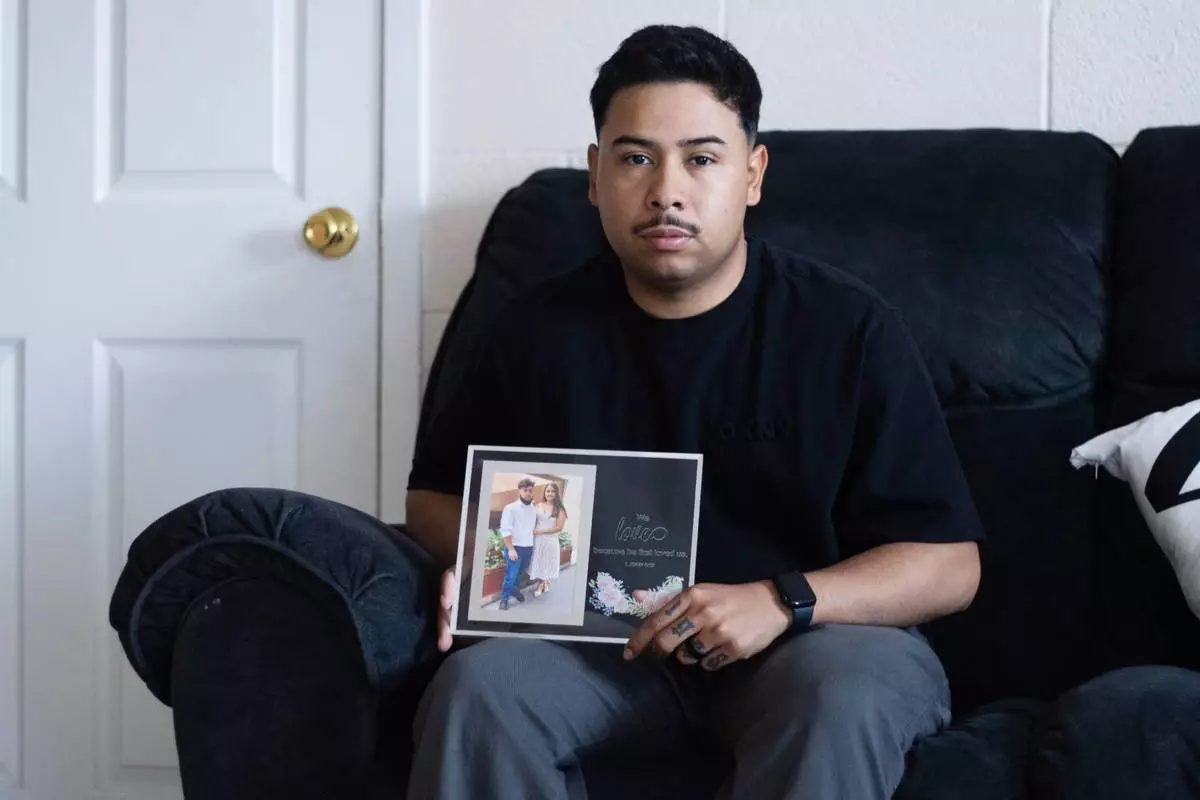
Army Sgt. Hedar Leonel Turcios Juarez, whose wife Cristy has been detained by immigration authorities, poses for a photo at home in El Paso, Texas, July 21, 2026. (AP Photo/Ryan Romero)