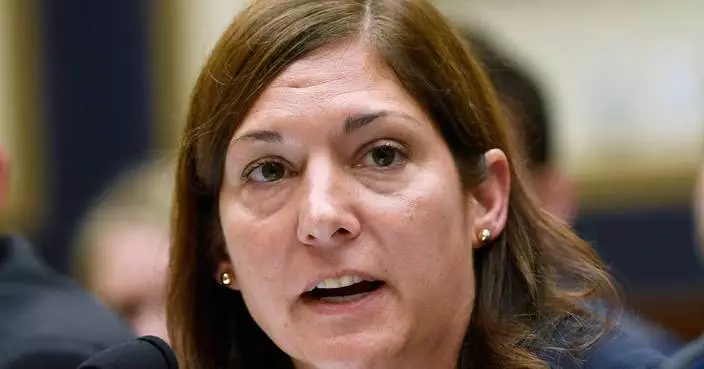
A man charged with starting one of the wildfires in Spokane, Washington, that have destroyed hundreds of buildings planned the crime for weeks and researched when the weather would be best for igniting it, police said.
In an interview after his arrest, Aaron Farinacci said “fire is powerful, beautiful, and that things that go through fire experience a kind of rebirth," Spokane County Detective Michael Drapeau wrote in a court filing Wednesday.
Click to Gallery
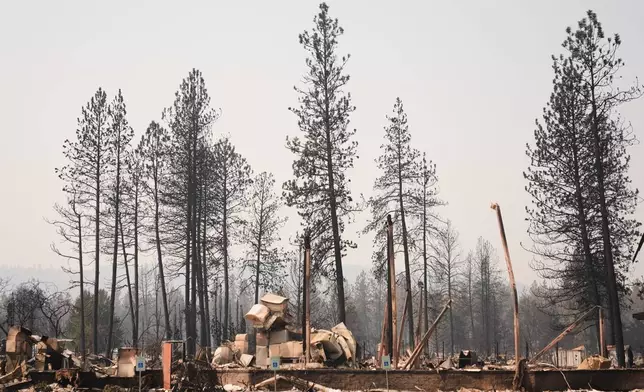
Scorched trees stand over the remains of Riverside Real Life church Tuesday, Aug. 4, 2026, after a wildfire hit the northern part of Spokane, Wash. (AP Photo/Lindsey Wasson)
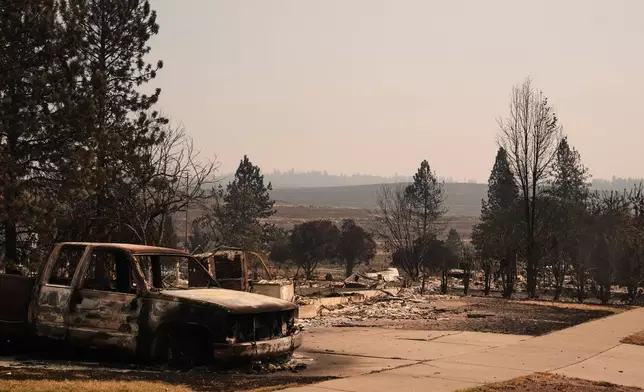
A burned truck sits in a driveway near several destroyed homes in a residential neighborhood Tuesday, Aug. 4, 2026, after a wildfire hit the northern part of Spokane, Wash. (AP Photo/Lindsey Wasson)
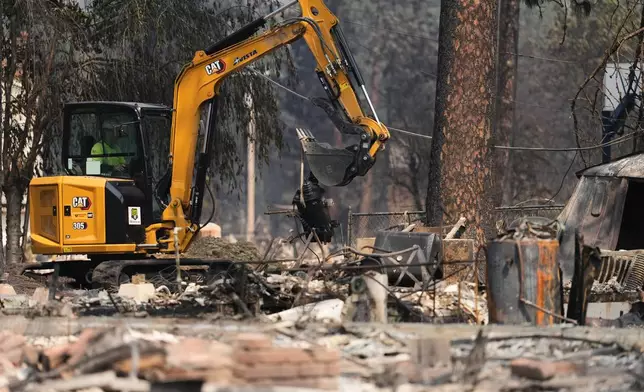
Crews work near several burned down houses after a wildfire hit the northwest part of Spokane, Wash., Tuesday, Aug. 4, 2026. (AP Photo/Lindsey Wasson)
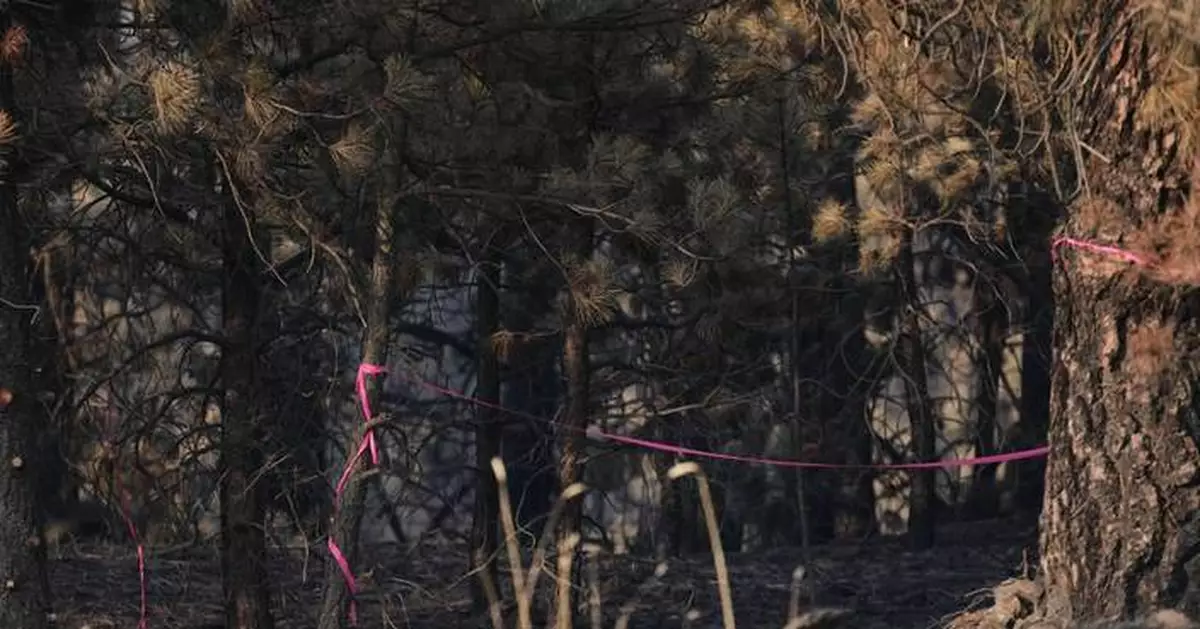
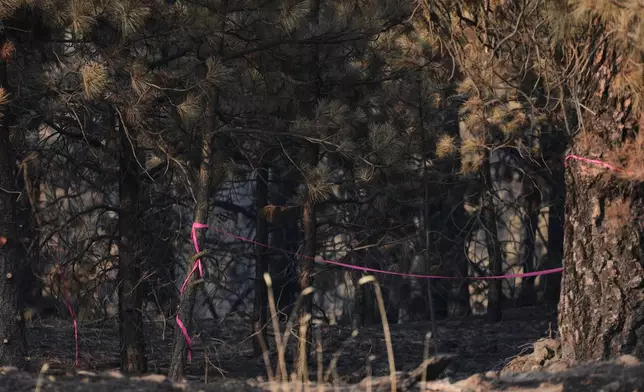
A burned section of trees is marked with pink tape Tuesday, Aug. 4, 2026, in an area near the origin point of the Old Trails Fire, after a man was arrested, suspected of starting the wildfire in Spokane, Wash. (AP Photo/Lindsey Wasson)
Farinacci, 37, is charged with starting the Old Trails fire, one of three blazes in the Spokane area that have burned more than 850 buildings, destroying whole neighborhoods and streets. Tens of thousands of people were forced to evacuate and many still can't return home. No deaths or serious injuries have been reported.
Farinacci is also charged in connection with four smaller fires ignited in the summer of 2025 and last month.
He was scheduled to be arraigned on five first-degree arson charges Thursday, but his lawyer asked for a competency evaluation before he enters a plea. Spokane Superior Court Judge Jeremy Schmidt said he would review that request. He set bond for $2 million, ruling that Farinacci was a risk to community safety, a flight risk and that there was potential for a violent offense.
Defense attorney Colin Charbonneau did not immediately return messages seeking comment.
Farinacci denied starting the Old Trails fire when police initially contacted him, but during an interview with Drapeau, he confessed to that fire as well as others last year and last month, the detective wrote. That led to the four additional arson charges.
He told the detective that he always carries marijuana or cigarettes so he would have a legitimate reason to have a lighter and matches.
“He knows arson is an easy crime to get away from if you have time, and he had time,” Drapeau said.
Farinacci researched the weather to predict a day that would be hot and windy and have low humidity for starting the Old Trails fire, Drapeau said. He also looked up the work of a well-known serial arsonist and purchased items to make a “time delay device” for igniting a wildfire, using notebook paper, matches, a cigarette and a rubber band, the detective said.
Farinacci picked Saturday, Aug. 1, to start the fire because he knew there would be strong winds — reaching 50 mph (80 kph), the detective said.
Farinacci said he knew it was going to get bad but claimed he didn’t intend for it to grow as much as it did, Drapeau said.
Spokane County Sheriff John Nowels said Thursday that it’s going to be weeks before people can safely return to their homes in areas burned in the Spokane fires. The other two major blazes, the Autumn Lane and Fairview fires, were also started by people, though not necessarily deliberately, investigators have said.
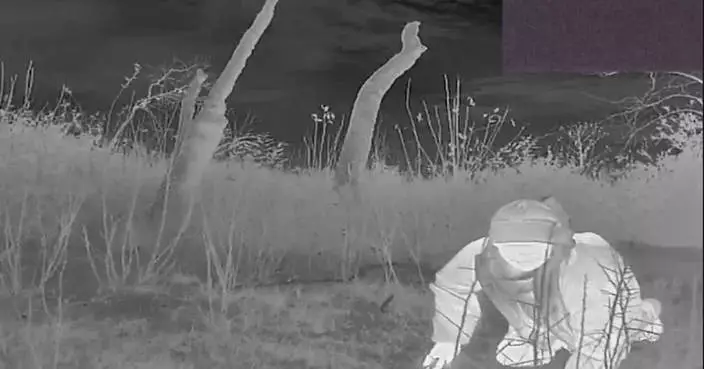
Paul Child, 64, has been credited with leading police to Farinacci. He was driving with his grandson along some railroad tracks when he saw a man standing there and looking toward nearby trees. About 10 minutes later, the man was still there.
“He was bent over in the brush, acting nervous,” Child told The Associated Press on Tuesday. “You get the feeling this guy’s up to something.”
Drapeau said Farinacci also admitted responsibility for 25 fires near his apartment building in summer 2025. Most were near the Spokane River or the Centennial Trail.
Farinacci admitted to starting the Aubrey White fire that ignited on July 6, 2025, near the Centennial Trail and threatened homes and structures, the court filing said. It led to evacuations and road closures. An investigation determined it was caused by arson, but police didn't have any suspects at the time.
Farinacci also faces arson charges for the Meenach fire that started on July 8, 2025, the Fort George fire on Aug. 11, 2025, and the Indian Bluff fire on July 24, 2026.
Farinacci served about a decade in prison after killing his father in Mesa, Arizona, in 2010. He also shot himself. He was charged with murder but pleaded guilty in 2012 to manslaughter and aggravated assault. Farinacci’s lawyer repeatedly raised concerns about his mental health during the case.
Drapeau said Farinacci indicated that he moved to the Copper River Apartments in the Spokane area in October 2022.
The detective said Farinacci's son was born in 2025, and he started having difficulty dealing with “life issues” and began smoking marijuana.
__
Associated Press reporter Hallie Golden contributed to this story from Seattle.
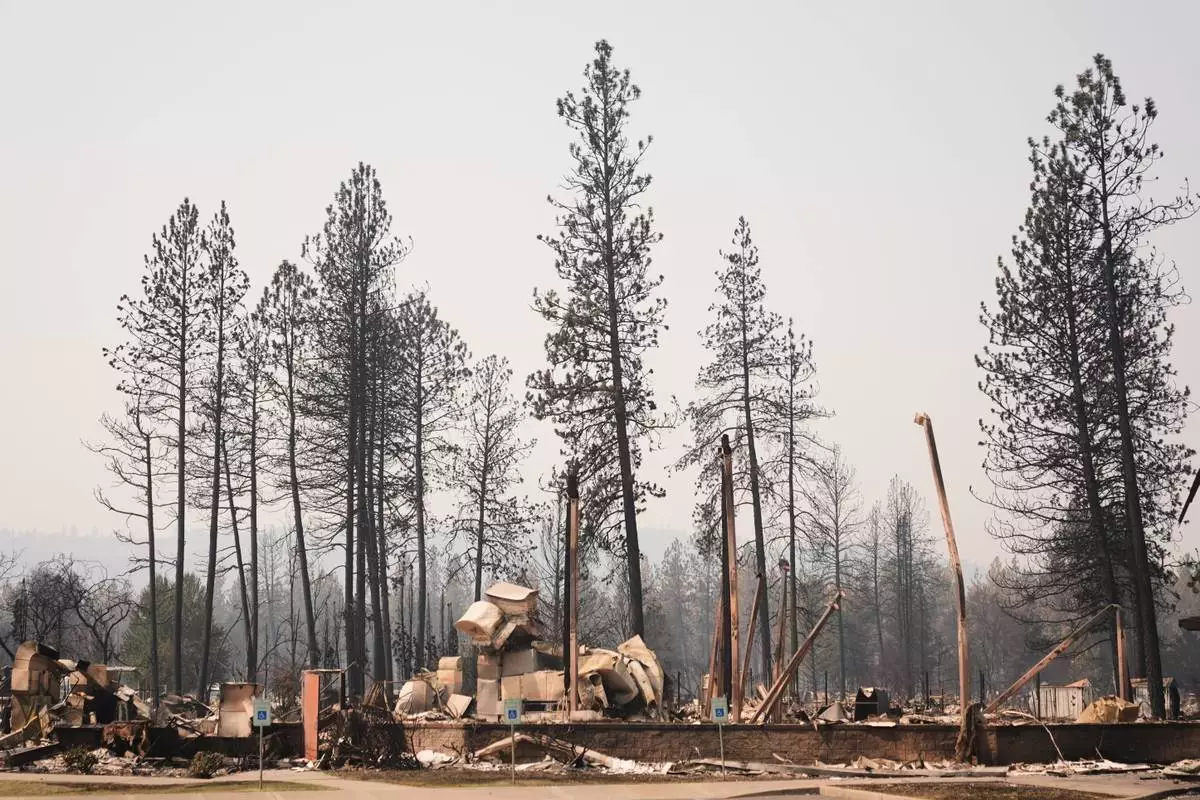
Scorched trees stand over the remains of Riverside Real Life church Tuesday, Aug. 4, 2026, after a wildfire hit the northern part of Spokane, Wash. (AP Photo/Lindsey Wasson)
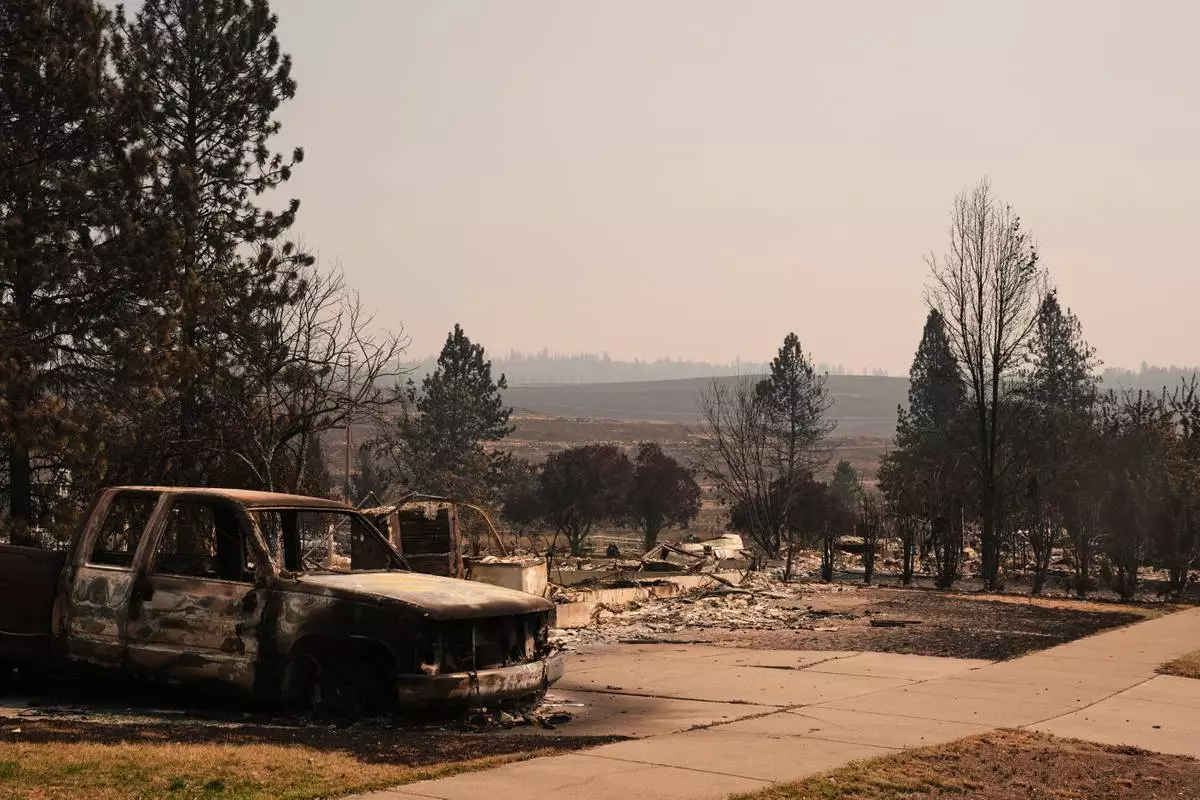
A burned truck sits in a driveway near several destroyed homes in a residential neighborhood Tuesday, Aug. 4, 2026, after a wildfire hit the northern part of Spokane, Wash. (AP Photo/Lindsey Wasson)
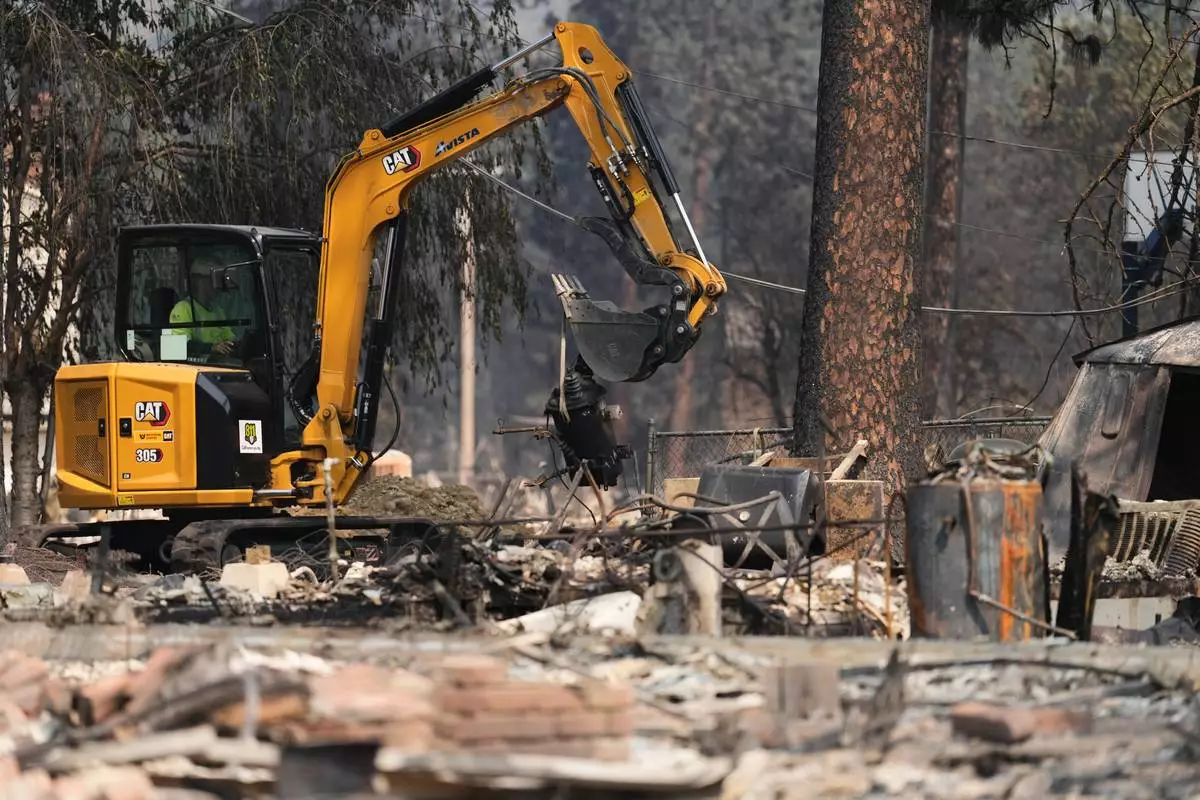
Crews work near several burned down houses after a wildfire hit the northwest part of Spokane, Wash., Tuesday, Aug. 4, 2026. (AP Photo/Lindsey Wasson)
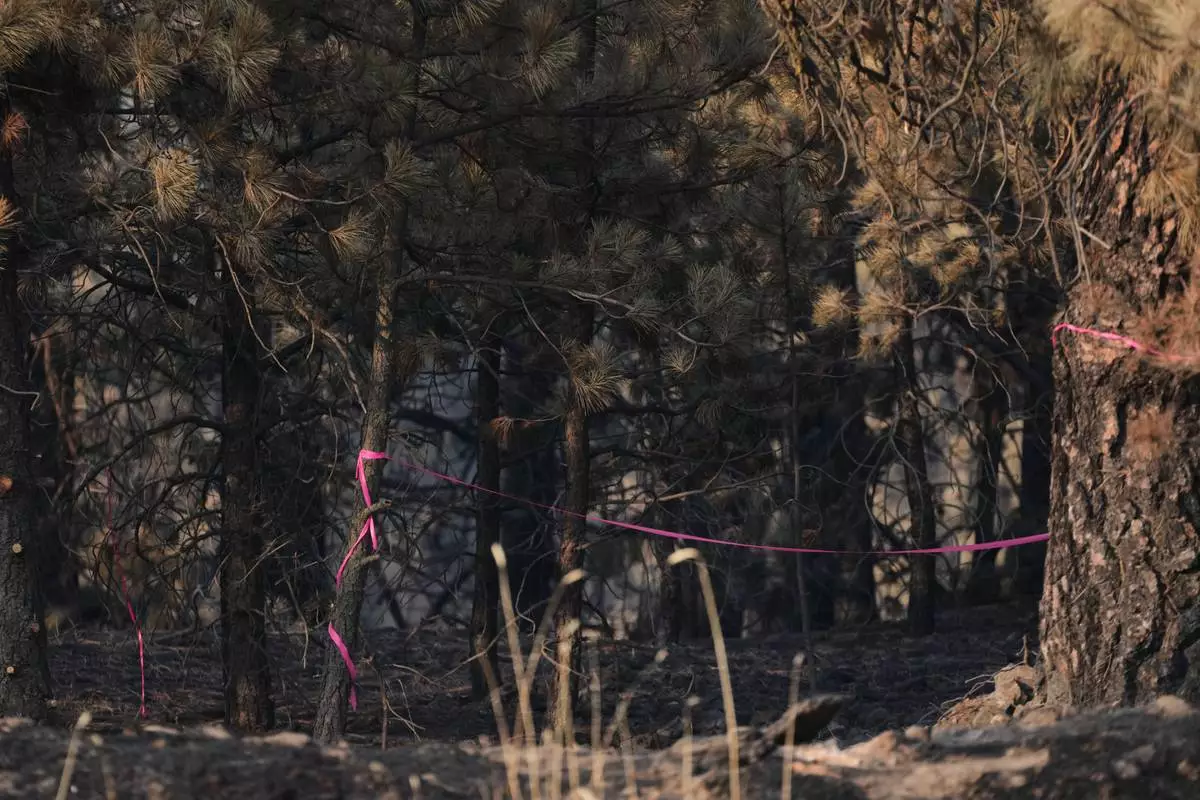
A burned section of trees is marked with pink tape Tuesday, Aug. 4, 2026, in an area near the origin point of the Old Trails Fire, after a man was arrested, suspected of starting the wildfire in Spokane, Wash. (AP Photo/Lindsey Wasson)
President Donald Trump takes his midterm campaign blitz to Texas, where Senate candidate Ken Paxton is locked in a tight race against Democrat James Talarico. And Secretary of State Marco Rubio will join Trump to show off a newly arrived oil tanker filled with Venezuelan crude to be processed in Texas refineries, according to a congressional aide and two U.S. officials.
Meanwhile, the Iran war, which Trump often describes as a “little detour,” has emerged as an unforced liability for a president who promised to keep the U.S. out of foreign wars. Republican strategists privately acknowledge it’s severely damaging party efforts to retain control of Congress as gasoline price hikes drive up costs across the economy and new hostilities emerge.
And two former FBI officials charged with lying to Congress about investigations involving Hunter Biden have a preliminary hearing Tuesday. Lawyers for Nikki Floris and Bradley Benavides call the charges baseless and politically motivated, the latest in a series of splashy investigative actions by the Justice Department as Americans go to vote.
Here's the Latest:
Ahead of the UN’s annual vote condemning the U.S. embargo on Cuba, representatives from Washington and Havana exchanged barbs on the floor of the General Assembly.
In a stunning break from diplomatic decorum, Cuban Foreign Minister Bruno Rodríguez walked up to the podium while U.S. ambassador Mike Waltz was speaking about what he called the communist government’s corruption.
“You are a liar!” Rodríguez yelled.
Waltz responded, “You understand who you’re dealing with? This is America. Back up.”
Federal prosecutors said Edwin Brant Frost IV, 69, ran a Ponzi scheme that defrauded more than 300 victims of more than $76 million. He pleaded guilty to wire fraud after First Liberty Building and Loan collapsed.
“I have messed up a lot of good people’s lives,” Frost said at his sentencing on Monday, The Atlanta Journal-Constitution reported.
Investing in First Liberty was often pitched on talk shows hosted by conservatives, including Erick Erickson, Hugh Hewitt and Charlie Kirk. Frost, an evangelical powerbroker, promised returns of up to 16% while skimming $17 million for himself, his relatives and their affiliated companies, and loaned millions more that borrowers never repaid, a U.S. Securities and Exchange Commission lawsuit said.
The firm’s collapse rocked the religious and political networks that fed cash to the business. Investigators said Frost spent $570,000 from investor funds on political contributions as he and his family favored far-right candidates in Georgia.
Texans gave Libertarian Ted Brown only 2.3% of the vote in 2024, when Republican Sen. Ted Cruz easily glided to another term. But this year’s Democratic nominee James Talarico is in a tight face off against Republican Texas Attorney General Ken Paxton.
And Wayne Hamilton, a former executive director of the Texas Republican Party, said Paxton’s history of legal and ethical problems could have some conservatives looking to the Libertarian this time as they cast a protest vote.
With a budget of about $30,000, Brown is under no illusions he can compete with Paxton and Talarico in a race drawing a combined advertising total of roughly $390 million since the May 26 primary, according to the ad-tracking firm AdImpact. But he dismisses the criticism that he’s merely a spoiler.
“They could avoid that problem by nominating a better candidate,” he said.
In Ohio, former Libertarian Party national chairman Bill Redpath could potentially pull enough votes from Republican Sen. Jon Husted to enable Democratic former Sen. Sherrod Brown to win.
An organization with Republican ties is trying to counter that possibility by distributing fliers promoting a socialist candidate in apparent effort to pull support from Brown.
Enough Promises Ohio PAC, which sent out the fliers, received $2.5 million from Conservative Americans PAC, according to federal disclosure reports.
Republicans are particularly concerned in Texas, Ohio, Kansas and Iowa, where even a few percentage points for a third party could swing the outcome.
Some GOP strategists fear more conservatives could cast protest ballots over the unpopular war with Iran and Trump’s expansion of executive power. Both issues grate on an anti-establishment slice of the American right and could fuel the Libertarian Party’s message of nonintervention and limited centralized authority.
“Libertarians, we believe, could draw enough votes to affect the outcome in a number of these races,” said Republican former Ohio state lawmaker Gene Krebs, who is working on a project to diminish the impact of spoiler candidates.
Trump just appeared in Kansas and is scheduled to hold rallies in Texas on Tuesday, Ohio on Wednesday and Iowa on Sunday.
Keeping the U.S. out of “forever wars” was a central tenet of the Republican leader’s “America First” campaign pledge.
Sean O’Brien, 21, a student at Auburn University in Alabama, said Trump’s decision to wage war against Iran left him “very disillusioned.”
O’Brien even attended the Conservative Political Action Conference, a major gathering for the political right, earlier this year. Now, he’s rethinking his allegiances.
“At the moment, I expect to vote Democratic,” said O’Brien, who considers himself an independent.
Early in the summer, five Republican strategists involved in key races or advising campaign leadership told The Associated Press they’d begun seeing warning signs that the war could hurt their candidates if it didn’t wind down soon.
Trump appeared more confident in June after forging an interim ceasefire agreement with Tehran, but the deal quickly unraveled.
At that point, campaign officials in some battleground races became more forceful during internal conversations about how House districts Trump won easily were becoming competitive, said the Republican strategists, who were not authorized to comment publicly on the internal party data and spoke on condition of anonymity.
By Labor Day, they said internal campaign polling showed voters were more frequently tying the war to higher prices for groceries and travel, and that while Trump dismisses the affordability crisis as a hoax, his argument has not resonated with voters.
Diesel prices continue to hover near all-time highs in the U.S., yet Trump has consistently downplayed the conflict’s economic impact. For months, he’s been insisting that the war’s end is near, only to threaten now that a new round of bombing could very well be in the offing once the election passes.
And he dismisses elevated gas prices as a temporary inconvenience, worth paying to defang Iran. At a weekend rally in Michigan, Trump said said he has no regrets.
“Somebody said, ‘If you had it to do again ... ,’” Trump told the friendly audience. “I said, ‘Are you kidding?’ I thought gas would be double or triple. And it’s a small price to pay for taking a nuclear weapon away from maniacs.”
Nearly eight months in to a war that Trump predicted would last a matter of weeks, high energy costs and voter fatigue are weighing heavily on Republican candidates.
Regardless of the outcome of the Nov. 3 elections, an AP-NORC poll published last week found that voters from both major political parties want the next Congress to focus on making life more affordable and ending the Iran war, which has had enormous ramifications for the global economy.
The situation has only become more complicated as Republicans make their case to voters. The conflict has spread, with Iran-backed Houthi rebels carrying out attacks on Saudi Arabia’s oil infrastructure and airports. Now the State Department is reducing staffing at four U.S. embassies in the Middle East after receiving intelligence that Iran has stepped up efforts to target Americans.
GOP strategists privately acknowledge that the Iran war is severely damaging their push to retain control of Congress for the final two years of Trump’s presidency.
They point to voters like Noor Dubow, who says he’s regularly voted for Republicans who align with his economic views, even though he’s never been a fan of Donald Trump or the president’s dehumanizing rhetoric toward immigrants. Not this year — Dubow says his early midterm election ballot tipped more toward Democrats because of his frustration over Trump’s war with Iran.
“Where are the Republicans in Congress?” asked Dubow, 44, a dispatcher at a trucking logistics firm in Columbus, Ohio, where he has a bird’s eye view of the surging fuel prices disrupting the economy. “Why aren’t the Republicans holding Trump accountable?”
▶ Read more
The billionaire Democrat, who is on the cusp of reelection and considering a 2028 presidential bid, is directing some last-minute campaign spending on Senate Democratic nominees in traditionally Republican states.
Pritzker’s Ready for the Fight PAC is making a $1 million ad buy for Scott Colom against Republican Sen. Cindy Hyde-Smith in Mississippi and spending $500,000 for Adam Hamilton against GOP incumbent Roger Marshall in Kansas.
Shared first with The Associated Press, the plan also includes money for voter turnout in Mississippi and South Carolina, where Democrat Annie Andrews wants to unseat Sen. Darline Graham. All three would be upsets as Democrats seek to flip the Senate.
Meanwhile, Illinois first lady MK Pritzker said she donated $500,000 to Democrat Amy Acton’s gubernatorial campaign in Ohio because of her opponent’s controversial ad featuring her estranged mother.
With spending on campaign ads now reaching $11.21 billion, the 2025-2026 midterms have become the most expensive ever, according to AdImpact, which tracks media spending.
A week out from Election Day, total spending and reservations has topped the $11.20 billion spent in 2023-2024 period, which included the presidential contest.
The latest figure has not been adjusted for inflation.
The president says he’ll appeal a federal judge’s order putting a temporary hold on his plans to renovate a Washington golf course.
“The Development of this World Championship Public Facility must begin, immediately, if it is to be completed in a timely and seasonal manner,” he posted on social media.
Trump said the East Potomac Golf Course could hold major events once renovated and would remain public with reduced rates for residents of the nation’s capital.
Judge Ana Reyes’ preliminary injunction temporarily bars the removal or damage of any more trees on the course, ordering the administration to give 10 days’ notice in writing before making any “irreparable modification” to any of the course’s “forms or features.”
“The Court earlier stated, ‘I am not the Lorax. I do not speak for the trees.’ The Court still does not speak for the trees. It speaks only for the rule of law,” Reyes wrote.
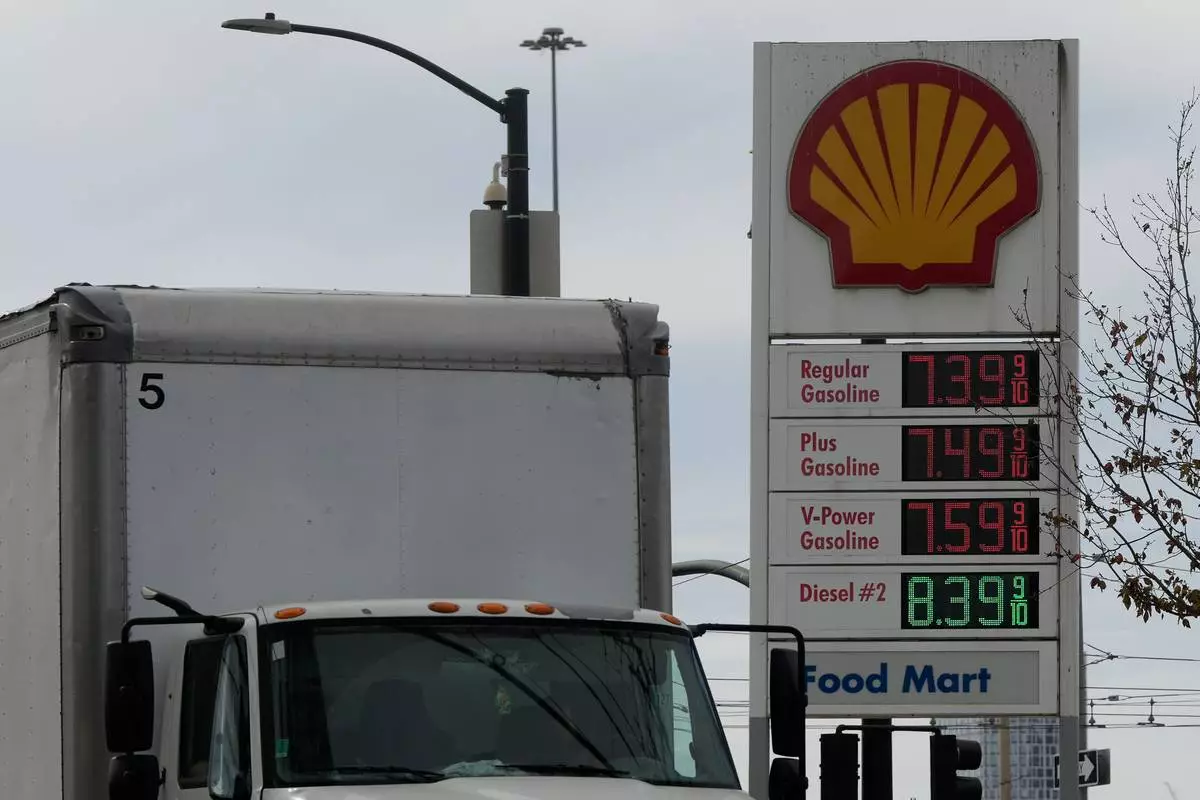
A truck drives past a fuel price board for gasoline and diesel at a gas station on Tuesday, Oct. 20, 2026, in San Francisco. (AP Photo/Jeff Chiu)
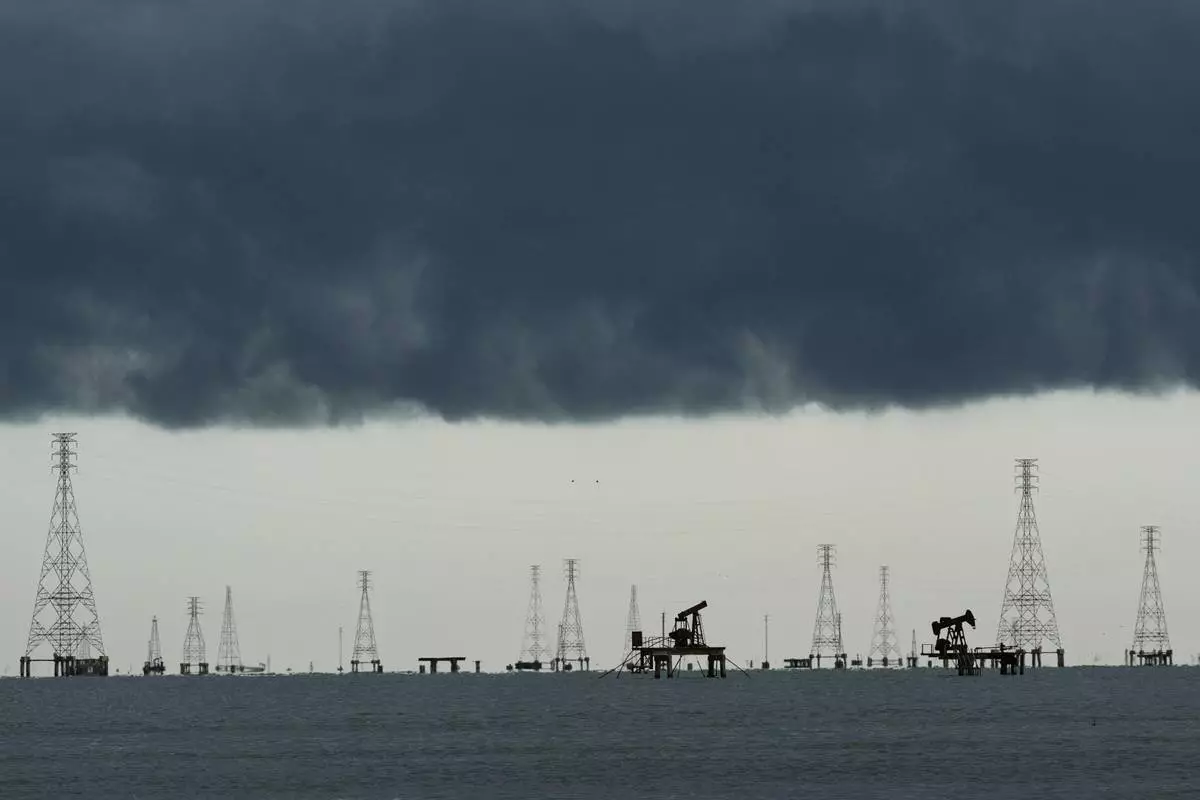
FILE - Clouds form over pumpjacks and power transmission towers on Lake Maracaibo in Cabimas, Venezuela, Sept. 1, 2026. (AP Photo/Ariana Cubillos, File)
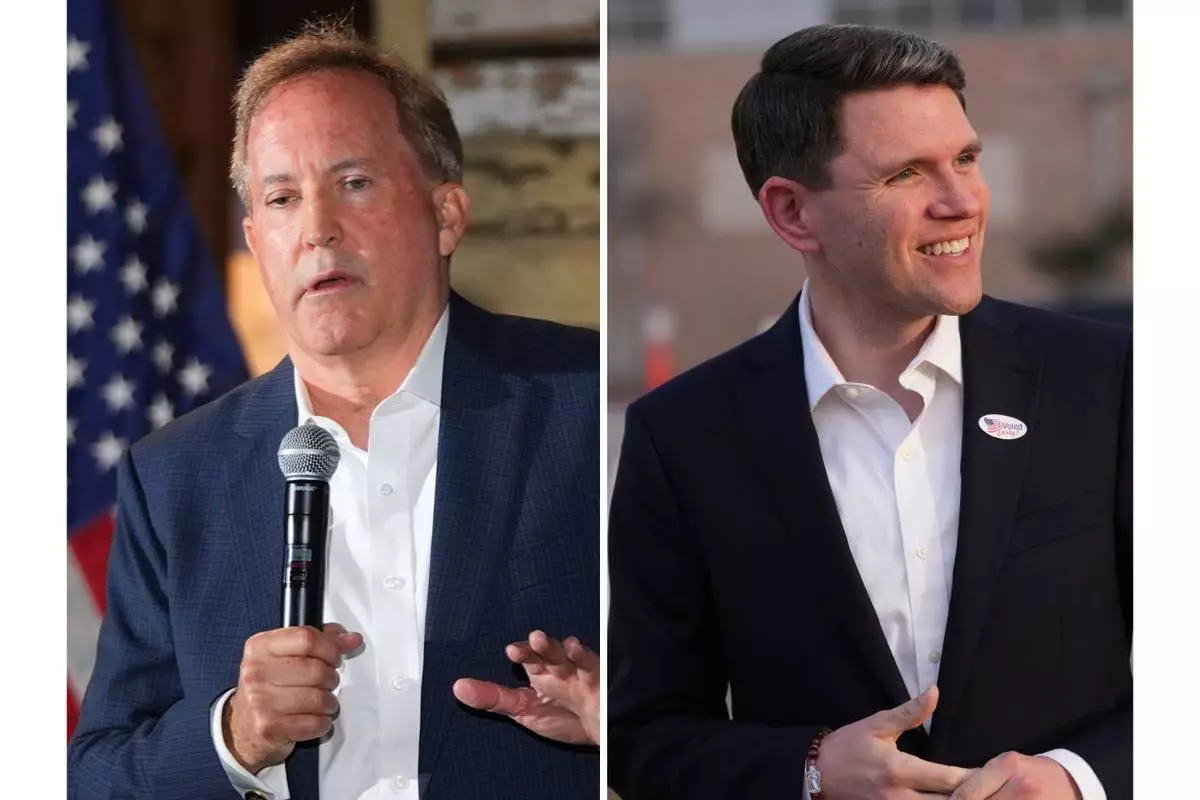
FILE - At left, Texas Attorney General Ken Paxton speaks in McKinney, Texas, May 19, 2026, and at right, Texas state Rep. James Talarico, after voting, in Austin, Texas, Feb. 17, 2026. (AP Photo/LM Otero and Eric Gay,File)
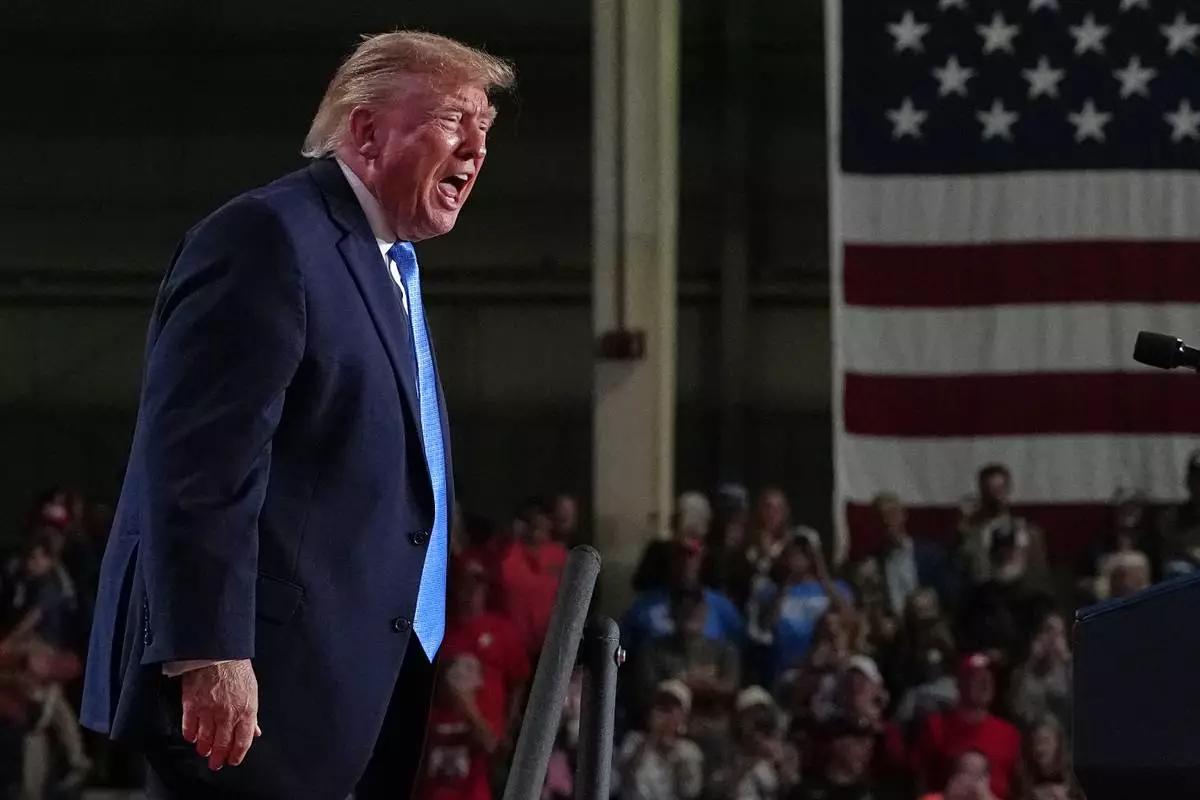
President Donald Trump yells after speaking at a campaign rally at Crossroads Arena, in Corinth, Miss., Monday, Oct. 26, 2026. (AP Photo/Jacquelyn Martin)