Skip to Content Facebook Feature Image

Officials will not release cool water from a Colorado River reservoir to protect threatened fish

News

Officials will not release cool water from a Colorado River reservoir to protect threatened fish
News

News

Officials will not release cool water from a Colorado River reservoir to protect threatened fish

2026-08-07 21:47 Last Updated At:21:50

Federal officials said Thursday they will not release cool water this year from one of the Colorado River's major reservoirs, which would have protected a threatened native fish downstream but put more strain on already struggling hydropower production.

In an email obtained by The Associated Press, the Bureau of Reclamation told various groups that water from Glen Canyon Dam in northern Arizona would not be released “due to significant hydropower generation concerns under already strained system conditions."

More Images
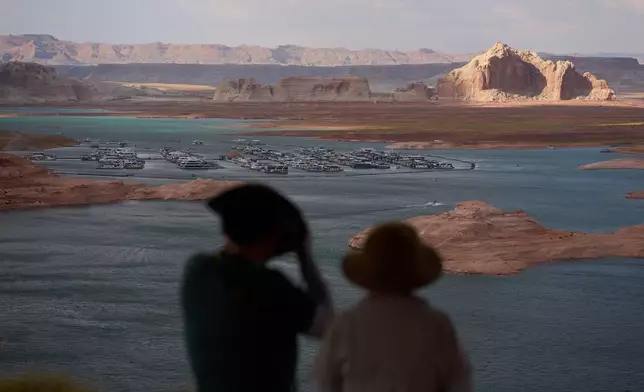
People stand on a lookout on Lake Powell at the Glen Canyon National Recreation Area, Tuesday, July 14, 2026, near Page, Nev. (AP Photo/John Locher)
People stand on a lookout on Lake Powell at the Glen Canyon National Recreation Area, Tuesday, July 14, 2026, near Page, Nev. (AP Photo/John Locher)
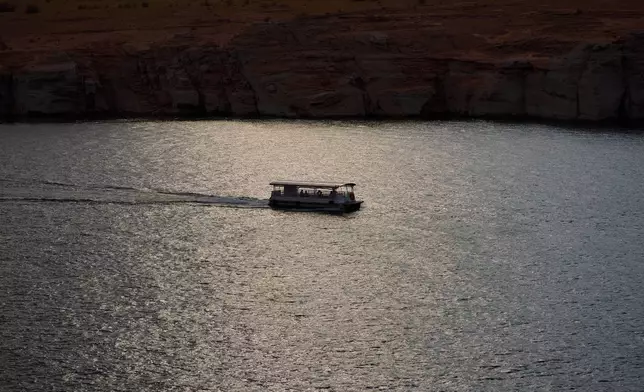
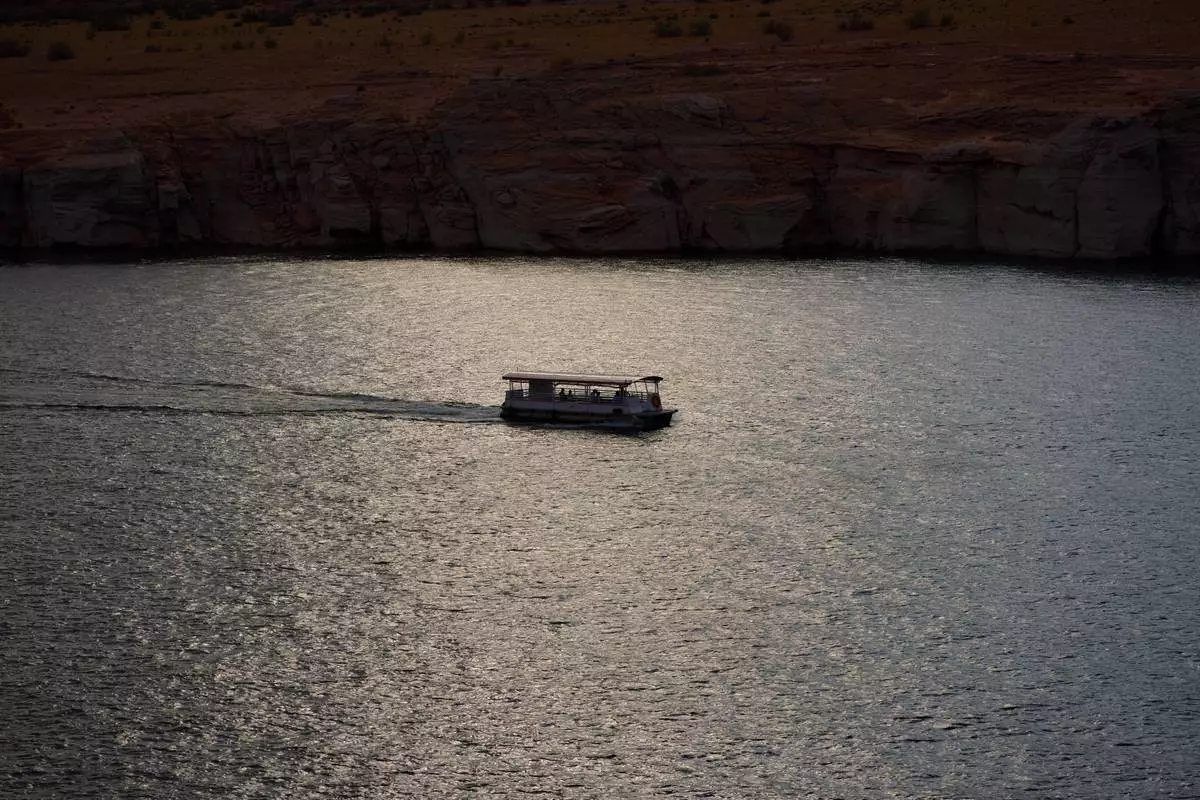
People boat on Lake Powell at the Glen Canyon National Recreation Area, Tuesday, July 14, 2026, near Page, Nev. (AP Photo/John Locher)
People boat on Lake Powell at the Glen Canyon National Recreation Area, Tuesday, July 14, 2026, near Page, Nev. (AP Photo/John Locher)

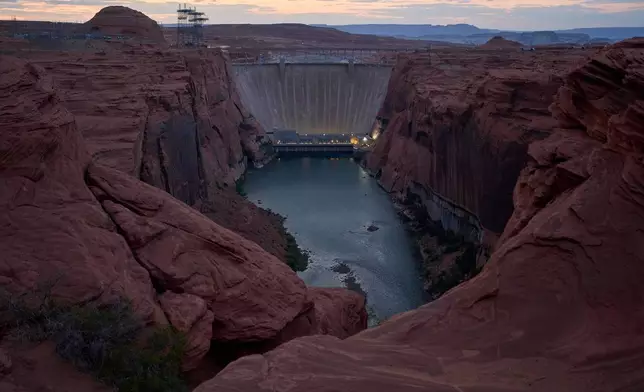
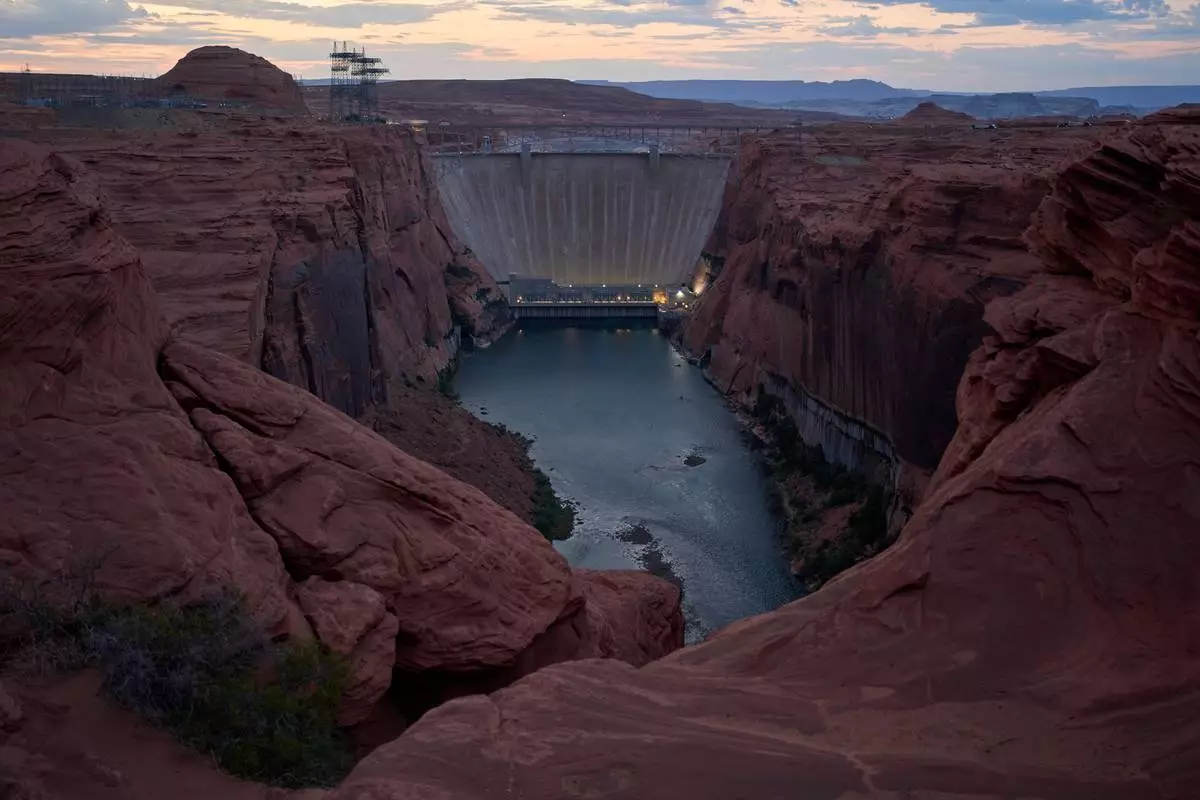
The Colorado River flows beneath the Glen Canyon Dam at the Glen Canyon National Recreation Area, Tuesday, July 14, 2026, near Page, Nev. (AP Photo/John Locher)

The Colorado River flows beneath the Glen Canyon Dam at the Glen Canyon National Recreation Area, Tuesday, July 14, 2026, near Page, Nev. (AP Photo/John Locher)

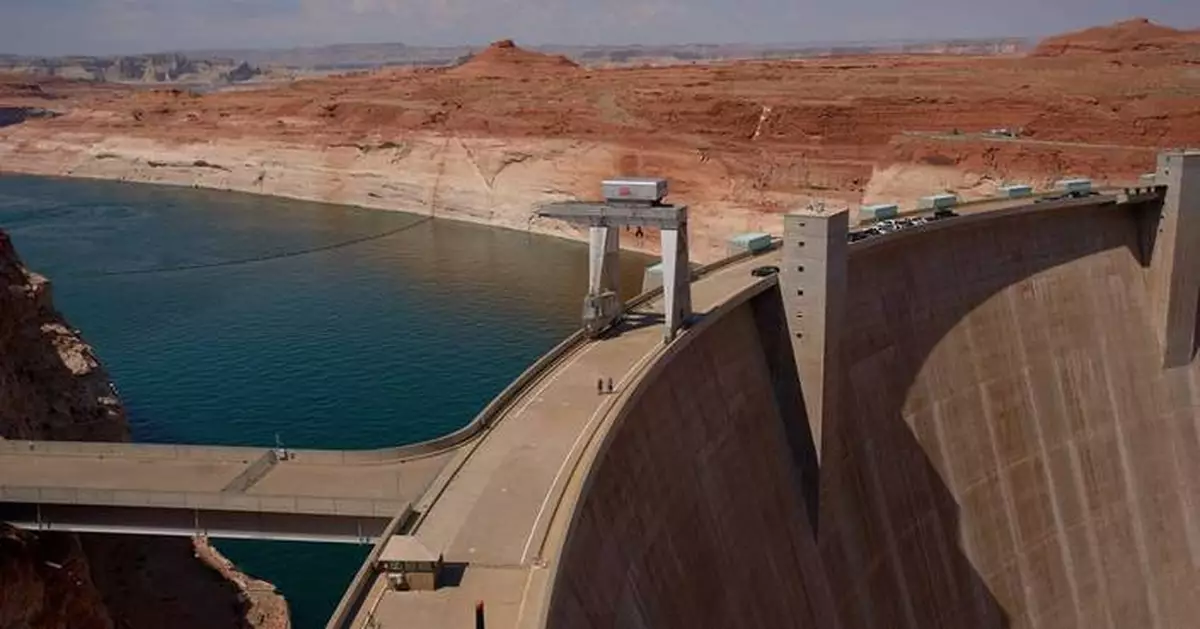
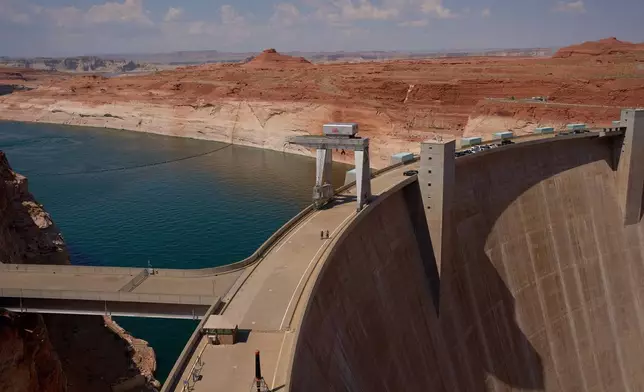
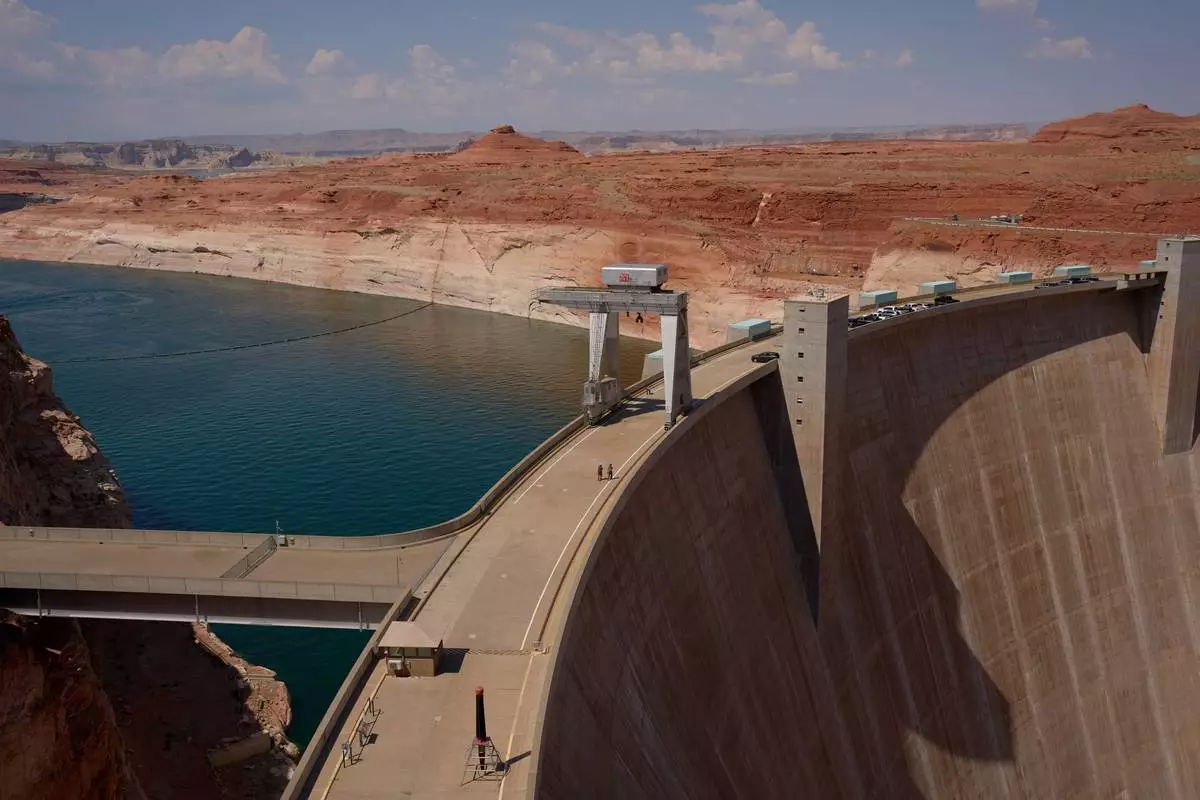
People walk across the Glen Canyon Dam near Lake Powell at the Glen Canyon National Recreation Area, Tuesday, July 14, 2026, near Page, Nev. (AP Photo/John Locher)

People walk across the Glen Canyon Dam near Lake Powell at the Glen Canyon National Recreation Area, Tuesday, July 14, 2026, near Page, Nev. (AP Photo/John Locher)

As the Colorado River and its once massive reservoirs shrink from overuse and climate change, officials were faced with a decision that pits conservation of the humpback chub — a threatened fish native to the river — against ratepayer costs for electricity.

The decision comes after the worst snowpack on record for the Colorado River Basin, relied upon by farmers, industries, wildlife, hydropower and more than 40 million people in seven U.S. states, tribal nations and Mexico. It also comes a week after federal officials announced a proposal to stave off a crisis in the beleaguered waterway.

Officials stepped in after states that rely on the river — California, Colorado, Arizona, Nevada, New Mexico, Wyoming and Utah — failed to reach an agreement on how to share the dwindling resource long-term. Under the proposal, California, Nevada and Arizona would share water cuts.

A “cool mix flow" is when cold water is released from deep in a reservoir — in this case Lake Powell — to cool the river below. There are no hydropower turbines in the cool, deep section, so significant power generation would have been lost.

Lake Powell is about 23% full after decades of overuse and evaporation of water as average temperatures rise because of climate change. With such a low reservoir, warm water near the surface gets sucked through the generators and sent downstream.

Smallmouth bass, introduced in Lake Powell in the 1980s for sport fishing, live at that warm surface and also get sucked through the hydropower generators and into the river below, and if it's warm enough, they spawn. That’s a problem for the humpback chub and other federally protected fish farther south on the river.

Officials say cool water releases from Lake Powell in 2024 and 2025 successfully prevented smallmouth bass spawning.

The river downstream of the dam is about 69 degrees Fahrenheit (20.5 degrees Celsius). The Bureau says it considers recommending cold water releases when the average daily temperature there exceeds about 60 F (15.5 C) for three consecutive days. Those temperatures have regularly exceeded that threshold for more than a month.

“Our efforts this year will continue to focus on expanded rapid response removal actions, additional backwater modifications, evaluation of innovative tools, and advancement of durable structural solutions,” wrote Wayne G. Pullan, the agency’s regional director of the Upper Colorado Basin, in the email.

Matt Rice, director for the southwest region for the conservation group American Rivers, said the decision was not unexpected but still disappointing.

“We’ve proven that the cool mix flows are the most effective way to mitigate the smallmouth bass invasion in the Grand Canyon," he said. “Hopefully it’s not a death sentence to humpback chub." He added that the elevated temperatures are also life-threatening for the nearby rainbow trout fishery.

He said American Rivers hopes for collaborative and innovative solutions in the future that balance protecting the environment while managing the river for the people who rely on it for power.

Utilities that buy hydropower from Glen Canyon Dam said releases would have forced them to spend millions of dollars to buy alternative energy that is more costly and less likely to be renewable, and could increase electricity bills for customers.

“We’re very pleased with the decision and appreciate Reclamation's deliberate and thoughtful approach to this, just recognizing the challenges that we’re facing on the river,” said Andy Colosimo, executive director of the Colorado River Energy Distributors Association, which represents about 155 customers who buy federal hydropower generated from the river. “I think this was the right call, given the conditions that we’re all facing.”

The Associated Press receives support from the Walton Family Foundation for coverage of water and environmental policy. The AP is solely responsible for all content. For all of AP’s environmental coverage, visit https://apnews.com/hub/climate-and-environment
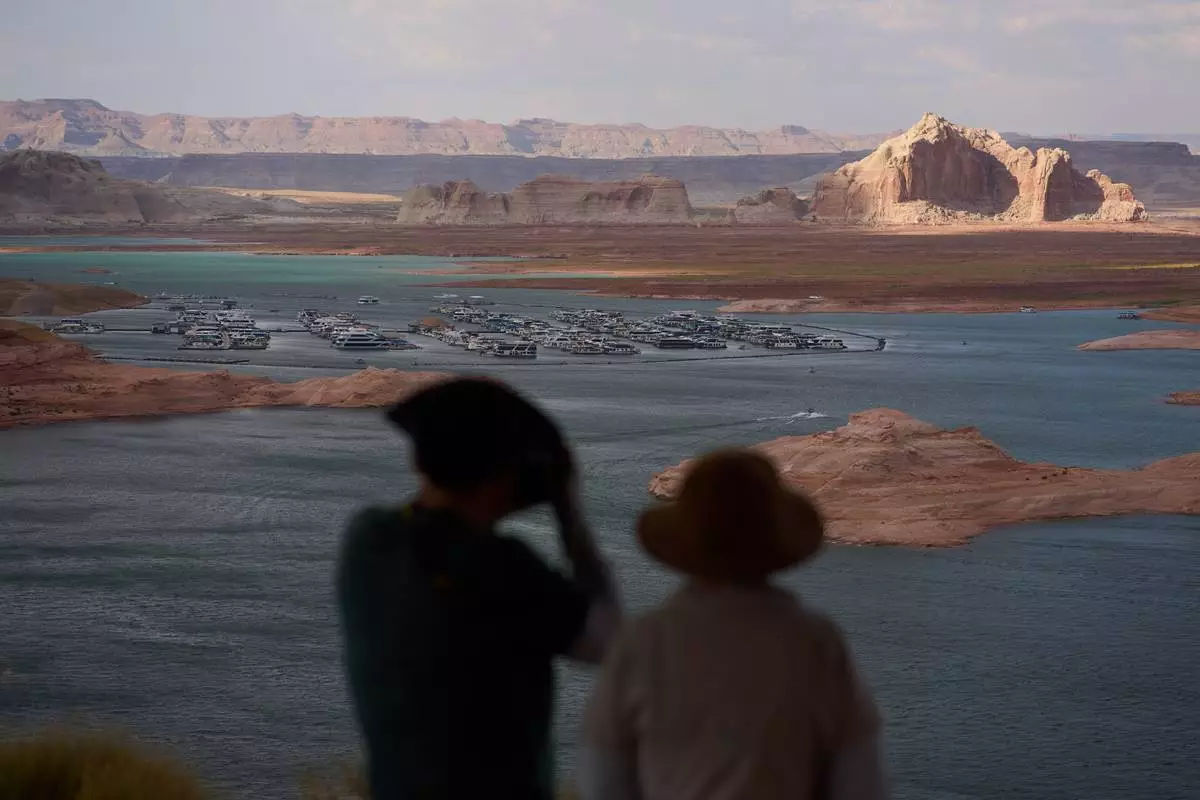
People stand on a lookout on Lake Powell at the Glen Canyon National Recreation Area, Tuesday, July 14, 2026, near Page, Nev. (AP Photo/John Locher)
People stand on a lookout on Lake Powell at the Glen Canyon National Recreation Area, Tuesday, July 14, 2026, near Page, Nev. (AP Photo/John Locher)
People boat on Lake Powell at the Glen Canyon National Recreation Area, Tuesday, July 14, 2026, near Page, Nev. (AP Photo/John Locher)
People boat on Lake Powell at the Glen Canyon National Recreation Area, Tuesday, July 14, 2026, near Page, Nev. (AP Photo/John Locher)


The Colorado River flows beneath the Glen Canyon Dam at the Glen Canyon National Recreation Area, Tuesday, July 14, 2026, near Page, Nev. (AP Photo/John Locher)
The Colorado River flows beneath the Glen Canyon Dam at the Glen Canyon National Recreation Area, Tuesday, July 14, 2026, near Page, Nev. (AP Photo/John Locher)

People walk across the Glen Canyon Dam near Lake Powell at the Glen Canyon National Recreation Area, Tuesday, July 14, 2026, near Page, Nev. (AP Photo/John Locher)

People walk across the Glen Canyon Dam near Lake Powell at the Glen Canyon National Recreation Area, Tuesday, July 14, 2026, near Page, Nev. (AP Photo/John Locher)
JACKSON, Miss. (AP) — Scott Colom is a gregarious prosecutor who grew up in Mississippi with a Republican father who campaigned for Ronald Reagan and counted political titan Thad Cochran as a friend.

That background sounds ideal for a U.S. Senate hopeful in a Deep South state run for generations by white conservatives.

Except Colom is a Democrat. And a Black man.

So, he's an underdog in his bid to unseat Republican Sen. Cindy Hyde-Smith, a white Donald Trump acolyte seeking her second full term. Yet several variables — Colom’s biography, Mississippi’s demographics, lingering inflation and Hyde-Smith's understated profile — make for a wildcard matchup as Republicans defend their 53-47 Senate majority at the midpoint of Trump's second presidency.

“Mississippi matters,” Colom insisted throughout a recent day of campaigning.

He told The Associated Press he has a rare opportunity to flip the state's usual script by casting Hyde-Smith as a rubber stamp while deflecting broadsides that he's a liberal misfit.

“I’m going to fight the corruption that we’re seeing in D.C. that’s making everything less affordable,” he said, zeroing in on Trump’s tariffs, the Iran war and the Republican-controlled Congress’ capitulation on both. “Our junior senator has totally given away our voice. She’s not worried about us at all.”

Through aides, Hyde-Smith declined an interview. But her campaign manager projected confidence.

“No one believes in Scott Colom except for Scott Colom,” said Jake Monssen, tagging the challenger as a stooge of Senate Minority Leader Chuck Schumer and billionaire donor George Soros, whose family backed Colom's district attorney races.

Schumer recently held a fundraiser for Colom, and Sen. Angela Alsobrooks, Maryland's first Black senator, traveled to Mississippi to support him as Democrats look for every path to Senate control. She predicted more senators will follow.

“I can guarantee you one thing,” Alsobrooks said, "I’m not the last.”

As they campaigned together, Colom cited a famous biblical long shot while alluding to his state's history at the vanguard of the Civil Rights Movement.

“We know a little something about David and Goliath in Mississippi," he said.

Mississippi’s fraught history with racism is never far below the surface.

Colom’s weekend featured a voting rights discussion at Jackson’s Farish Street Baptist Church, where Medgar Evers, the NAACP leader killed by white supremacists in 1963, held organizing meetings. One of Evers’ successors embraced Colom's candidacy as the next step in a long struggle.

“Mississippi is not just a moral argument,” said state NAACP Executive Director Charles Taylor. “It is simple math.”

Black voters make up a larger share of Mississippi's 2.95 million residents (about 37%) and typical November electorate (about a third) than in any other state. More than 9 out of 10 of them typically vote Democratic but turn out at a lower rate than white voters, especially young generations, according to strategists in both major political parties. White voters opt by a 4-1 ratio or more for Republicans. Younger white voters trend slightly less Republican, but they're also less likely to vote.

That makes most Mississippi elections closer than in neighboring Alabama and Louisiana. In 2018, Hyde-Smith won a special election runoff over Mike Espy, Mississippi's first Black congressman since Reconstruction and a former U.S. agriculture secretary, by 7 percentage points. She notched a 10-percentage-point rematch win in 2020 but trailed Trump’s 16-percentage-point margin over Democrat Joe Biden.

Three years later, Republican Gov. Tate Reeves managed just a 3-percentage-point reelection margin and finished less than 1 percentage point over the majority threshold that Mississippi law requires to avoid a runoff in statewide general elections.

Taylor said registration and turnout efforts by the NAACP and other groups could draw 75,000 more Black voters, enough to close recent gaps.

Wilbur Colom, who once lost a state treasurer’s race as a Republican, enjoys gaming out turnout scenarios for his son.

Scott Colom can hit a winning sweet spot, his father said, by increasing Black share of the electorate to 35% and get closer to one out of four white votes rather than the typical 20% or less.

“That’s hard,” Wilbur Colom said. “But demographics are our friend here.”

Colom mostly sidesteps Mississippi history or electoral math unless asked.

“We’ve made a lot more progress than we get credit for,” he said.

“A lot of Mississippians,” he added, “want somebody that’s going to look out for them,” regardless of race.

On Republican gerrymandering after the U.S. Supreme Court gutted a last key Voting Rights Act provision protecting minority voting strength, Colom steers the conversation to economics. Republicans, Colom said, “don't want to be held accountable” for how things are going.

Asked about Biden tapping him for a federal judgeship only for Hyde-Smith to block the nomination, Colom says the campaign isn't about that. He avoids personal shots at Trump, instead emphasizing Mississippi farmers harmed by the Republican president’s tariffs and “400,000 Mississippians that don’t have health insurance” because the state hasn’t expanded Medicaid and Republicans, Hyde-Smith included, let expanded insurance premium subsidies expire.

Colom mentions crime victims and their families in his jurisdiction, promising voters will see them vouch for him. And he criticizes Hyde-Smith for using campaign funds at Las Vegas hotels.

“Voters in Mississippi were promised America first. They were promised lower grocery prices, no more endless wars, concepts of a healthcare plan,” he said. “We’ve been betrayed on all three fronts, and Cindy Hyde-Smith won’t even do a town hall to justify any of it.”

The senator's aides note that she travels regularly to community events around Mississippi — and only annually to Las Vegas for a national campaign fundraiser the onetime state agriculture commissioner plans around a professional rodeo event.

Hyde-Smith, in turn, frames Colom as beholden to extremes beyond Mississippi. Monssen said voters will see a challenger trying “to transition kids’ genders,” raise taxes and give “healthcare to illegal immigrants” to please his “socialist supporters” from the coasts.

It’s a play-it-safe strategy that presumes Republicans like Steve Rogers, a 73-year-old from Brandon, still make up Mississippi's majority.

“I like how she votes, and I think any Democrat’s wasting their time,” Rogers said. He still gives Trump high marks and hasn't even heard of Colom. Trump’s slide “may give her some trouble,” he allows, “but I think she coasts.”

Colom acknowledged financial support from the Soros family but said no candidate controls outside political action committees. He pointed to his prosecution of a Democratic sheriff for sexual abuse of a prisoner as proof that partisanship doesn’t guide him. Voters, including many who've backed Trump and Hyde-Smith, “are smart enough,” he said, to “see through the lies.”

Democrat Judy Weiner, a 72-year-old poll worker in Hinds County, added that Hyde-Smith distinguishes herself only by her fealty to Trump, while not establishing a reputation for securing appropriations and helping rank-and-file Mississippians, as did her predecessor Cochran.

“He made his decisions based on what was good for all the people in Mississippi, not because the president whispered in his ear,” she said, noting Cochran attracted votes from Black and white Democrats.

The candidates' campaign accounts and Mississippi's inexpensive media markets intensify the unknowns.

Through June, Hyde-Smith had raised $3.8 million this cycle, with $2.5 million left. Colom pulled in $2.8 million and had $850,000 remaining. But Colom outpaced Hyde-Smith among individual contributors, $1.9 million to $1.8 million, from the start of 2025. More of his money ($536,000) came from Mississippi than any other state, despite Monssen's broadsides.

There is no statewide TV advertising yet, but Senate Majority PAC spokeswoman Lauren French said the group is “watching closely.” And it doesn't take seven figures per ad buy to penetrate the electorate, unlike in more populous states like Texas, Georgia and North Carolina. That means that either national party or super PACs could make late investments that matter.

“We need to be working for every single seat,” said Alsobrooks, the Maryland visitor, “and you know what, it always seems impossible until it’s done.”

Mississippi Democratic U.S. Senate candidate Scott Colom, center, speaks with an attendee of a voting rights town hall at the historic Farish Street Baptist Church in Jackson, Miss., Saturday, Aug. 1, 2026. (AP Photo/Sarah Warnock)

Mississippi Democratic U.S. Senate candidate Scott Colom, center, speaks with an attendee of a voting rights town hall at the historic Farish Street Baptist Church in Jackson, Miss., Saturday, Aug. 1, 2026. (AP Photo/Sarah Warnock)

From left, Sen. Angela Alsobrooks, D-Md., Mississippi Democratic U.S. Senate candidate Scott Colom, Mississippi NAACP State Conference Executive Director Charles Taylor and Rep. Bennie Thompson, D-Miss., conduct a voting rights town hall at the historic Farish Street Baptist Church in Jackson, Miss., Saturday, Aug. 1, 2026. (AP Photo/Sarah Warnock)

From left, Sen. Angela Alsobrooks, D-Md., Mississippi Democratic U.S. Senate candidate Scott Colom, Mississippi NAACP State Conference Executive Director Charles Taylor and Rep. Bennie Thompson, D-Miss., conduct a voting rights town hall at the historic Farish Street Baptist Church in Jackson, Miss., Saturday, Aug. 1, 2026. (AP Photo/Sarah Warnock)

FILE - Sen. Cindy Hyde-Smith, R-Miss., speaks during a hearing on Capitol Hill in Washington, on May 2, 2024. (AP Photo/Jacquelyn Martin, File)

FILE - Sen. Cindy Hyde-Smith, R-Miss., speaks during a hearing on Capitol Hill in Washington, on May 2, 2024. (AP Photo/Jacquelyn Martin, File)

Mississippi Democratic U.S. Senate candidate Scott Colom speaks with attendees at an event held at the Two Mississippi Museums in Jackson, Miss., Saturday, Aug. 1, 2026. (AP Photo/Sarah Warnock)

Mississippi Democratic U.S. Senate candidate Scott Colom speaks with attendees at an event held at the Two Mississippi Museums in Jackson, Miss., Saturday, Aug. 1, 2026. (AP Photo/Sarah Warnock)

Mississippi Democratic U.S. Senate candidate Scott Colom speaks with Sen. Angela Alsobrooks, D-Md., before a campaign event at the Capital Club in Jackson, Miss., Saturday, Aug. 1, 2026. (AP Photo/Sarah Warnock)

Mississippi Democratic U.S. Senate candidate Scott Colom speaks with Sen. Angela Alsobrooks, D-Md., before a campaign event at the Capital Club in Jackson, Miss., Saturday, Aug. 1, 2026. (AP Photo/Sarah Warnock)

Recommended Articles