CAIRO (AP) — Yemen's Iran-backed Houthi rebels claimed responsibility for a series of deadly attacks this week, escalating the conflict between them and Saudi-backed Yemeni forces and raising fears of a wider regional conflagration.
The attacks have killed dozens of civilians and troops and also targeted Saudi tankers in transit from Red Sea ports through the Bab el-Mandeb Strait out to the Gulf of Aden and the rest of the world.
Though less significant than the Strait of Hormuz, around 12% of the world’s trade, including a fourth of global container traffic, once passed through Bab el-Mandeb, moving between Europe and Asia via Egypt’s Suez Canal. Fewer tankers have passed through the strait since this week's attacks, according to shipping data published by the analytics firm Kpler this week.
Weeks of Houthi escalation reflected how Iran “is scaling up pressure on the United States in Yemen through its close ally," according to Yemen researcher Afrah Nasser.
“The escalation is directly connected to regional developments,” she wrote in an analysis for the nonprofit DAWN on Friday.
The Houthi attacks — including one in northeastern Yemen on Friday morning — come weeks after the rebels declared a blockade on Saudi-linked ships leaving the strait in retaliation for a yearslong Saudi siege on Yemen and recent attacks on the Houthi-controlled capital.
One Houthi attack on Thursday injured 11 civilians, including a 4-year-old child, according to the Saudi military. Others on Saudi-backed military camps in eastern Yemen killed at least 17 soldiers, according to SABA news agency, which is affiliated with Yemen’s internationally recognized government.
Houthi spokesman Nasruddin Amer said on X on Friday that the group will continue to target any Saudi buildups in an effort to lift the kingdom’s blockade on Yemen.
In the Strait of Hormuz, Iran has shown that even sporadic attacks on ships can be enough to effectively close a critical waterway by driving up risks and insurance premiums. Experts have warned that if ships fear traversing Bab el-Mandeb so much that they do not attempt passage, it means two of the world's most important maritime routes will effectively be disrupted, compounding the crisis facing commercial shipping and the global oil supply.
Bab el-Mandeb has worked as a pressure release valve since the start of the Iran war, with more tankers transiting through it with the Strait of Hormuz under threat. Exports flowing from Saudi ports have blunted some of the impact of the Strait of Hormuz closure.
Three Houthi officials told The Associated Press in July that the group has planned for months how to disrupt shipping in the strait. The group doesn’t control the part of Yemen’s coastline along Bab el-Mandeb but holds territory less than 100 kilometers (60 miles) away.
The officials spoke on condition of anonymity to be able to speak to the media.
Outside Bab el-Mandeb and the Strait of Hormuz, the options for exporting Gulf oil and gas to the broader world are limited, but include piping supply across the Arabian Peninsula and routing it through Egypt's Suez Canal or rerouting ships toward a costly and lengthy journey around South Africa's Cape of Good Hope.
Yemen’s civil war began in 2014 when the rebels seized the capital, Sanaa, and much of northern Yemen, forcing the government into exile. Saudi Arabia has led an international coalition fighting the rebels and also imposed an air and sea blockade on Houthi-held parts of Yemen, which had eased in recent years.
The Houthis say closing Bab el-Mandeb to Saudi traffic aims to break the coalition’s blockade.
Ahmed Nagi, a senior Yemen analyst at the International Crisis Group, said the blockade also benefits the Houthis' ally, Iran, at a time when the U.S. has resumed daily airstrikes.
″From Iran’s perspective, opening additional pressure points across the region gives it more leverage,” Ahmed Nagi, a senior Yemen analyst at the International Crisis Group, told the AP last month. “The Houthis provide Tehran with influence over one of the world’s most important maritime choke-points.”
——
Al-Haj reported from Aden, Yemen. Associated Press writer Sam Metz in Jerusalem contributed to this report.
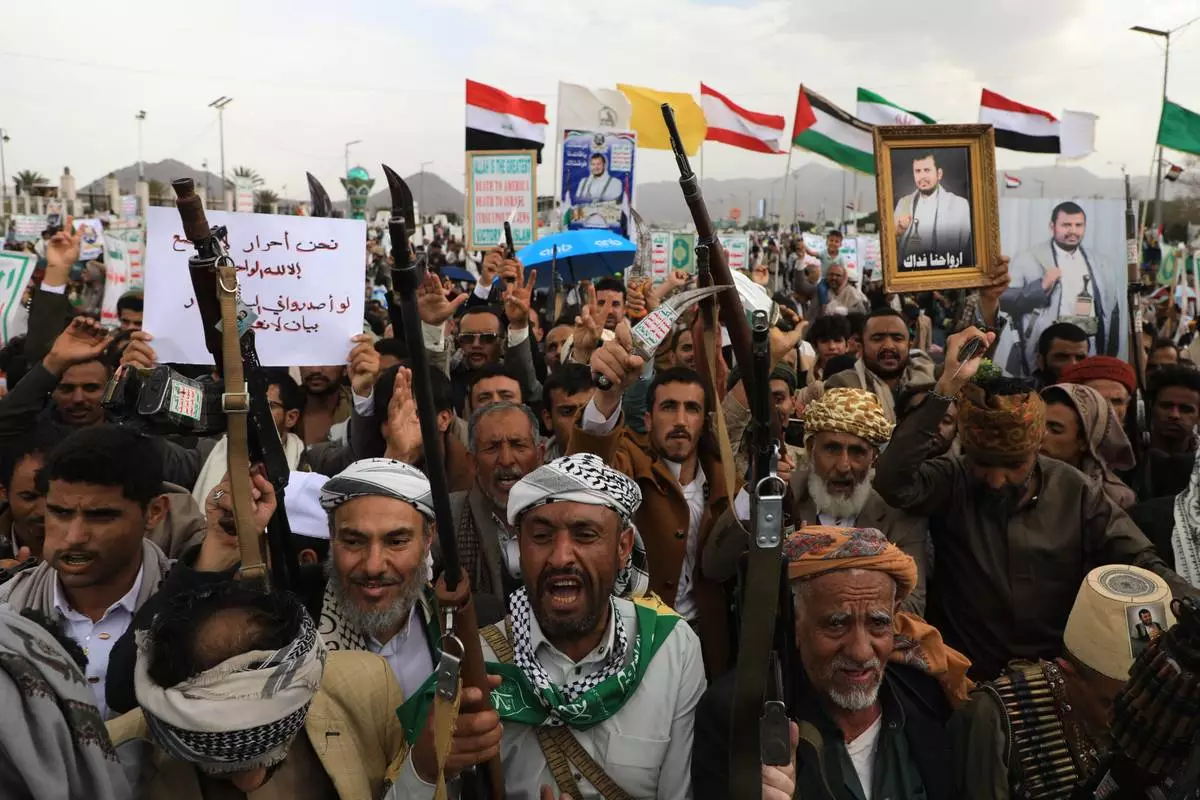
Houthi supporters chant slogans during a rally against the Saudi-led coalition in Sanaa, Yemen, Friday, July 31, 2026. (AP Photo/Osamah Abdulrahman)
Republican Sen. Lisa Murkowski said Friday she will oppose Todd Blanche’s nomination as attorney general, narrowing the confirmation path for President Donald Trump’s pick to lead the Justice Department.
The Alaska senator said she’s concerned the Trump administration could proceed with its proposed $1.8 billion fund to compensate Jan. 6 rioters even though Blanche has issued a formal order terminating it.
Meanwhile, Trump said Thursday he was signing two executive actions on immigration: one limiting the number of people eligible for U.S. citizenship after being born in the United States and the other focused on stopping people from coming to the U.S. to give birth. It’s a sign that even after Trump’s first attempt at limiting birthright citizenship was rejected by the Supreme Court, he’s ready to try again.
Here's the latest:
Any concession would be tough for the Republican president, who’s insisted there’s no truth to his sagging poll numbers, the sluggish economy and the U.S. military’s dwindling stockpiles of key weapons following the Iran war he launched with Israel more than five months ago.
“He divides the world into winners and losers, and this would make him a loser,” said Eliot Cohen, who served as counselor of the State Department in the George W. Bush administration. “And the image of being a loser, I think, would be intolerable for him.”
The sticking point has been over control of the Strait of Hormuz, through which 20% of the world’s oil normally flows. While both sides say a deal is close, the Trump administration has ruled out any arrangement that would cement Iran’s grip over the waterway, including Tehran charging fees.
But Iran has insisted on some measure of control, saying the strait will not go back to being an open international waterway as it was before the war.
▶ Read more
The president praised House Speaker Mike Johnson, a stalwart Trump loyalist, and said he should be the Republican leader even if the GOP loses its narrow majority.
“He’s great. We work together great,” Trump told Punchbowl News. Sometimes, the president mused, “we’re one heart attack away from losing the House in Congress,” yet Johnson has still delivered major pieces of Trump’s agenda.
“I don’t think there’s even a thought of anybody challenging him,” Trump insisted.
Trump wasn’t so effusive about Senate Majority Leader John Thune.
“I don’t want to get into that. It’s early,” Trump said when asked whether he’d support Thune’s reelection as leader.
Trump said he gets along with the South Dakota senator but lamented the leader’s opposition to scrapping the filibuster and the Senate’s inability to pass the president’s proposals to expand federal power over elections.
“It’s a shame he doesn’t have the votes,” Trump said.
The president’s job approval rating of 33%, according to the latest AP-NORC polling, is as low as it has been in his second presidency — the kind of numbers that hurt a president’s party in midterm elections. But Trump insisted to Punchbowl News that he isn’t the real target of voter frustration, especially among Republicans.
“They’re not angry at me, but they are angry at Republicans” on Capitol Hill, he said.
He cited voter turnout in presidential elections, alluding to analyses that show he’s attracted sporadic voters and flipped some historically Democratic-leaning voters.
“The question is, will they vote? Because a lot of them are very angry at Republicans to be honest with you,” Trump said.
The president maintained that Republicans can hold their House and Senate majorities this November. But his overall argument was clear: If they don’t, it’s not his fault.
And Labor Department revisions shaved 103,000 jobs off payrolls in May and June. But the unemployment rate dipped to 4.1% as Americans left the job market.
The June jobs numbers from the Labor Department on Friday marked a sharp reversal for the American labor market.
Hiring had rebounded this year from a lackluster 2025 in the face of the conflict in the Persian Gulf that has sent energy prices surging and put a strain on family budgets. Job growth had been solid, if unspectacular. Some businesses are having trouble filling vacancies. Others are using technology to do the work humans used to do.
▶ Read more
The Republican president is sitting on hundreds of millions of dollars in campaign money but told Punchbowl News in an interview released Friday that he’ll unleash the funds to help GOP candidates ahead of the November midterms.
Trump says he has as much as $800 million to spend.
“I control it,” he emphasized.
Notably, he did not offer any details about when or where he’ll distribute the campaign cash.
Many Republicans have been counting on Trump’s super PAC being a key part of the GOP’s defense of their House and Senate majorities. The president’s political funds are a key part of Republicans’ overall financial advantage in the midterm campaign, despite individual Democratic Senate and House candidates outraising their Republican opponents in many key races across the country.
The president told Punchbowl News he’ll leave his acting attorney general at the Justice Department even if his nomination fails.
“It’ll be very sad,” Trump said, but, “we’ll all survive. Todd will survive.”
Trump called Blanche “fair” and said he’s “not a radical flamethrower.” But he acknowledged the political realities.
He singled out Sen. Murkowski as one of his Republican critics but said he has no regrets about his relationship with the Alaska Republican or other GOP senators, including Louisiana’s Bill Cassidy, who could now determine whether Blanche is confirmed.
“You do what you have to do,” Trump said. “Just so you understand, they voted to impeach me. ... In all fairness, you think that I’m going to support somebody that voted to impeach me?”
Cassidy and Murkowski were among the Republicans who voted to convict Trump on impeachment charges in 2021 after the Jan. 6 Capitol riot.
The Alaska Republican announced on social media that she’ll vote against confirming the acting attorney general for the permanent job.
Murkowski complimented Blanche personally after private meetings with him but said she’s concerned he cannot lead an independent Justice Department under President Donald Trump.
“The country needs an Attorney General who will check the worst impulses of this administration,” she said. “I hope Mr. Blanche is able to achieve that, if confirmed, but I simply do not have confidence that will be the case.”
Murkowski’s decision puts Blanche’s nomination on the brink of failing in a chamber where Republicans hold a 53-47 majority. She joins Republican Sen. Susan Collins of Maine in opposition, and Sen. Mitch McConnell of Kentucky has missed Senate votes since early June because of health problems.
That leaves Sen. Bill Cassidy as the potentially deciding vote given that all Democrats are expected to vote against Blanche.
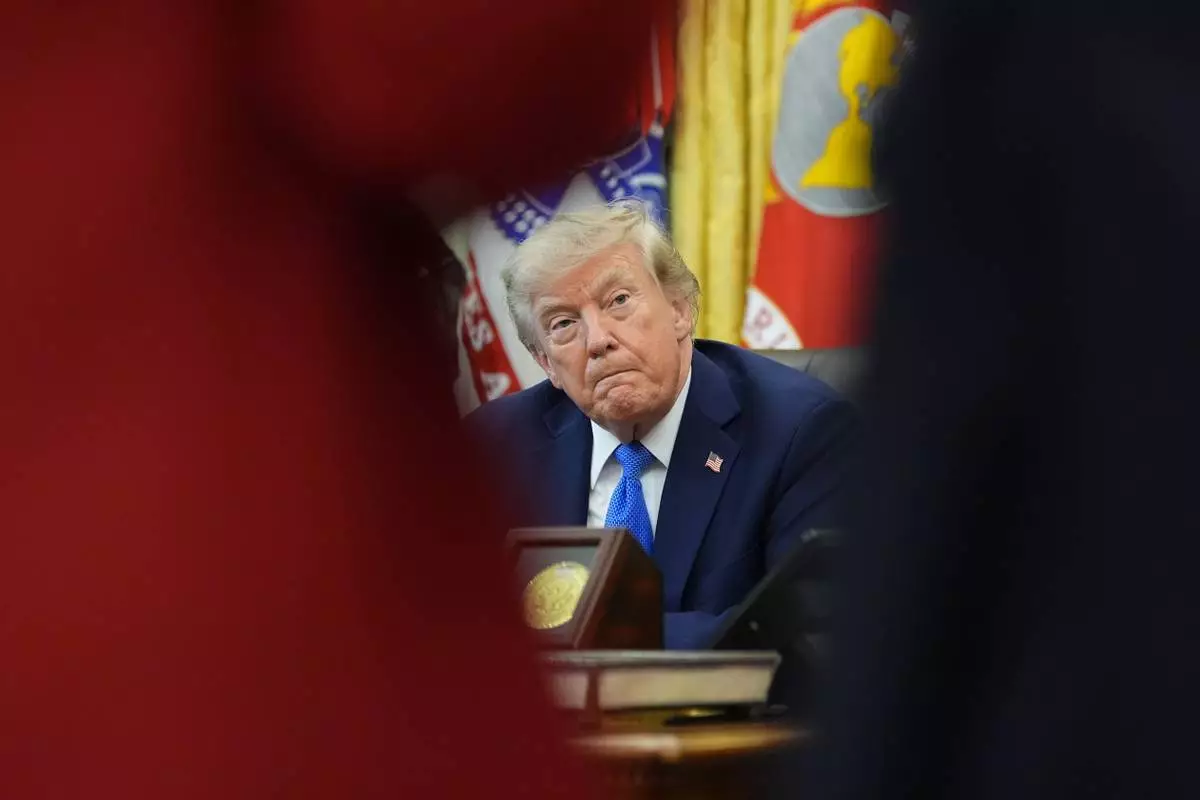
President Donald Trump speaks in the Oval Office of the White House, Thursday, Aug. 6, 2026, in Washington. (AP Photo/Alex Brandon)
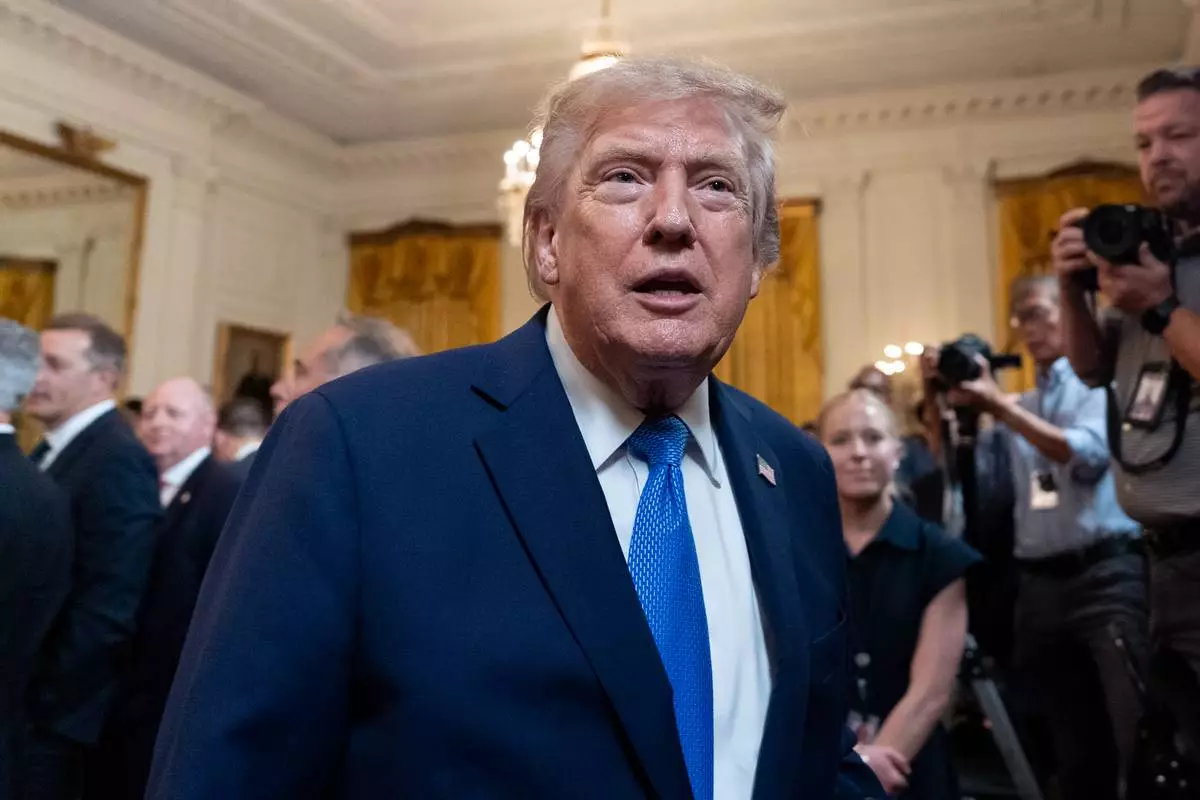
President Donald Trump speaks with a reporter as he departs after an event for Olympic athletes, coaches, staff, and representatives from Team USA in the East Room of the White House, Thursday, Aug. 6, 2026, in Washington. (AP Photo/Alex Brandon)