Defensive lineman Kellan Wyatt has decided to return for his fifth season with the defending national champion Indiana Hoosiers, a person with knowledge of the decision told The Associated Press on Friday.
The person spoke on condition of anonymity because no official announcement has been made.
Wyatt becomes the second starting linemen from last season's title run to come back since last week's U.S. District Court ruling in Colorado granting players from the 2022 high school graduating class one more year of eligibility. Coach Curt Cignetti confirmed Wednesday that all-Big Ten honorable mention defensive end Stephen Daley also had returned following the ruling.
The NCAA plans to appeal the court decision.
Wyatt started the first seven games in 2025 before a season-ending knee injury. The transfer from Maryland finished his first year at Indiana with 27 tackles, eight tackles for loss and 2 1/2 sacks. He has 11 career sacks but was not selected in April's NFL draft, which along with the court ruling opened the door for his return.
The addition of Wyatt to an already deep, experienced group of defensive linemen could make Indiana's defensive front even stronger.
“Whether we had really good depth there or not, I think the return to play doesn’t change a whole lot because you don’t want to throw a guy out there until he’s ready to where he gets hurt,” Cignetti said Wednesday when asked about Daley, who will be limited early in practice as he returns from the injury. “There will be competition. Guys that can play winning football, they’ll play.”
Indiana now has four defensive linemen who started regularly last season — Wyatt, Daley, Tyrique Tucker and Mario Landino — back. Plus, Cignetti has added veteran transfers Tobi Osunsanmi and Chiddi Obiazor from Kansas State and Josh Burnham from Notre Dame to a position group that returns its top five sack leaders.
“Like you said, getting off on the quarterback, I think that's one of the best things about our defense,” said linebacker Rolijah Hardy, who led the team with eight sacks last season. “Try to help the back end, the DBs by getting after them so they don't have that much time, so I think returning those five is really big for us.”
Daley suffered a season-ending knee injury in the Hoosiers' celebration following their 13-10 victory over Ohio State, giving Indiana its first league crown since 1967. He missed all three playoff games as the Hoosiers won their first national championship and became the first major college football program to post a 16-0 mark since the 1890s.
Despite recording 5 1/2 sacks, a Big Ten-leading 19 tackles for loss — No. 3 in the Football Bowl Subdivision — in his first season with the Hoosiers, he also was undrafted.
AP college football: https://apnews.com/hub/ap-top-25-college-football-poll and https://apnews.com/hub/college-football
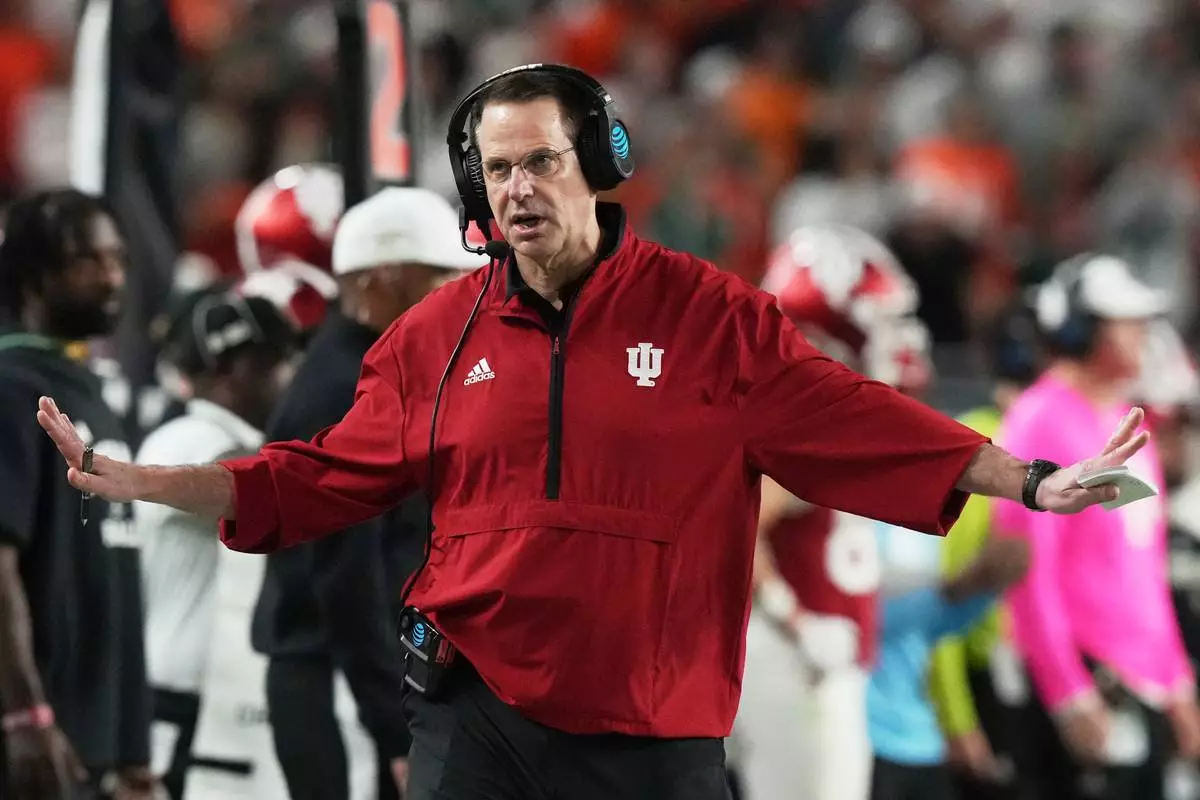
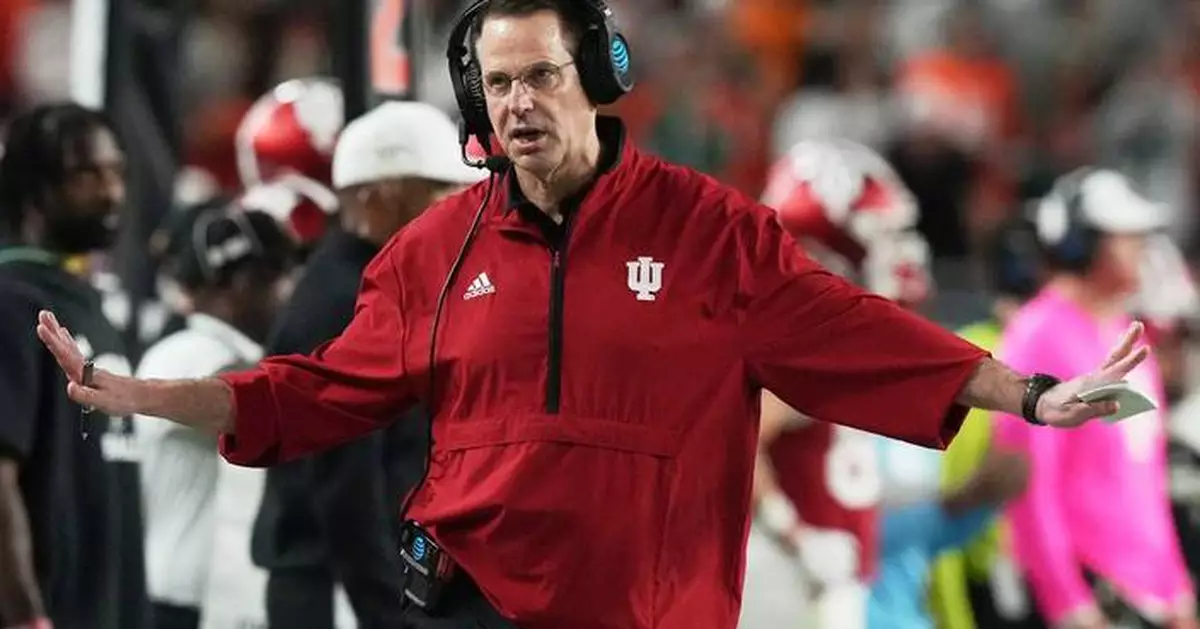
FILE - Indiana head coach Curt Cignetti reacts during the second half of the College Football Playoff national championship game against Miami, Jan. 19, 2026, in Miami Gardens, Fla. (AP Photo/Marta Lavandier)
CAMP GRAYLING, Mich. (AP) — The U.S. Army said Friday that it is opening up test ranges to private companies developing missiles, drones and other weapons in hopes of buying them more quickly for use on the battlefield.
Army Secretary Dan Driscoll told reporters at a military testing range in Michigan that the effort will cut months and sometimes years of the red tape that typically stifles military contractors. He pledged to grant companies access to ranges in the U.S. or those belonging to allies abroad within 30 days of them making a request through an online marketplace that went live Friday.
“It can take 12 to 18 months for a company that wants to go test the thing that can make a soldier’s life better, that can increase their lethality and that can keep them safer," Driscoll said. "That is not sufficient.”
The announcement comes as warfare rapidly changes around the globe, from the swarms of Shahed drones that Iran launched against American forces in the Middle East to Ukraine's innovations in drone technology while defending against Russia's invasion. But the Army is also opening its ranges as the Pentagon grapples with the costs of the Iran war, which has diminished the nation's stockpiles of advanced weapons that sometimes cost millions of dollars for a single missile or interceptor.
Driscoll told The Associated Press that policy changes such as making test ranges more accessible were driven in part by his observations of the war in Ukraine and how quickly that country has moved to produce new weapon systems. The Army secretary had been a key interlocutor during talks between Russia and Ukraine last year before those negotiations stalled.
Pentagon leaders have been trying to increase the tempo of production by incentivizing smaller companies to enter the market to build cheap and effective weapons. Driscoll told reporters that the Army aims to “break down every single barrier that we have put up over the last 20 or 30 years.”
“We are inviting industry to get in the mud with our soldiers, to innovate, to invest behind them,” Driscoll said in a roundtable call. “And then our commitment as an Army is we will purchase the things that will make our soldiers more lethal, more safe, and keep our country safer.”
The first company to take advantage of the new program has tested a new cruise missile at the Army’s missile test range in Morocco.
Abby Denburg, an executive with Covenant Industries, said the company “demonstrated not only the performance of the Anthem missile but also a repeatable pathway now available to every company.”
The program allows drone and missile companies to use five Army ranges to test new rockets, drones and anti-drone weapons even if that company does not have a military contract.
The effort to get weapons faster to the battlefield comes as a recent think tank analysis found that the conflict with Iran has used up more of the U.S. military’s already diminished stockpiles of advanced interceptors such as Patriot and THAAD missiles that are used to defend against air threats such as missiles and drones.
The analysis, conducted by the Center for Strategic and International Studies, also noted that this shortfall could force the U.S. and its Middle Eastern allies to take more risks to conserve those air defenses.
President Donald Trump has pushed back on media coverage about the issue, telling reporters Thursday that “we need more all the time.” He claimed that certain kinds of munitions are in “virtually unlimited supply” and others are “a little bit tighter.” He didn’t offer more specifics.
Driscoll deflected questions about the nation's munitions stockpiles. He said that “we have a larger arsenal than any nation in the history of the world, and we will have an even larger arsenal with new and different and layered defenses.”
Associated Press writer Ben Finley in Washington contributed to this report.

FILE - Army Secretary Dan Driscoll speaks at the United States Army War College in Carlisle, Pa., during the Pennsylvania Defense and Innovation Summit, July 15, 2026. (AP Photo/Matt Rourke, File)
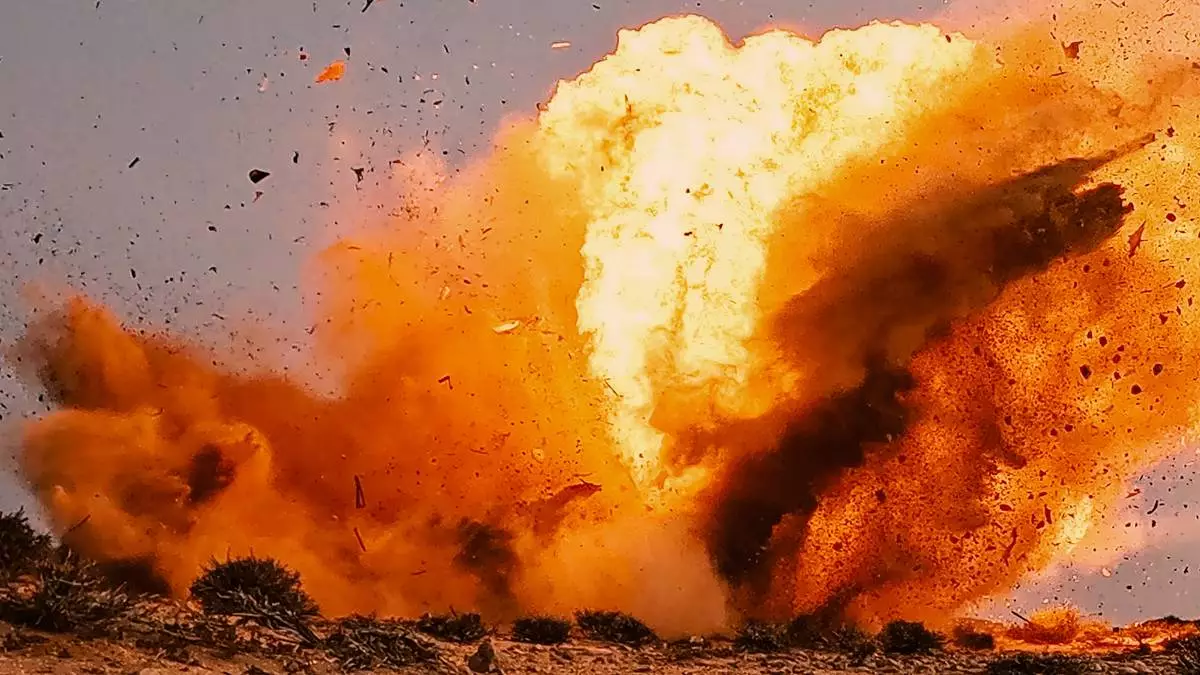
In this image provided by the U.S. Army, Covenant Industries' Anthem missile is tested Thursday, Aug. 6, 2026, at the Multidomain Training Area range complex, a component of the Africa Multidomain Training and Experimentation Center, in Morocco. (U.S. Army via AP)