MONT VENTOUX, France (AP) — Katarzyna Niewiadoma-Phinney launched a decisive attack up Mont Ventoux to win the seventh stage of the Women’s Tour de France and take the overall lead from Marlen Reusser on Friday.
The 2024 champion was in tears as she put on the yellow jersey and now leads 2023 champion Demi Vollering by 15 seconds and Reusser by 39 with two stages left.
"I’m just so tired and so blown away with what just happened," Niewiadoma-Phinney said. “When I started climbing I looked to the right and I saw my parents standing on the roadside. They came today by surprise. I saw my father yelling for me and I thought I had to make him proud.”
Reusser and Vollering could not follow Niewiadoma-Phinney when she broke away about nine kilometers (six miles) from the top of Ventoux, one of the most iconic climbs in cycling with its barren, lunar aspect.
It was a first Tour stage win for Niewiadoma-Phinney, who won the 2024 edition without claiming a stage win. Gritting her teeth in the final few hundred meters, the Polish rider dug deep and with the sun gleaming behind her, raised her arms after crossing the line.
She then almost lost balance through fatigue and had to be helped off her bike. Moments later, she was all smiles as she sat on the road and poured cooling water over her head.
“I never chase victories for the sake of winning, I target them because I like this beautiful feeling I have right now," said Niewiadoma-Phinney, who is married to former men's Tour sprinter Taylor Phinney.
“I came here (before) to Mont Ventoux with my friends and my husband, and we rode up the climb three times,” she recalled. "The feeling of reaching the top of this mountain was amazing. From that moment, I just wanted to experience that feeling again. The pure joy of riding, as if I was a kid.”
Vollering dropped Reusser in the closing stages of the 15.7-kilometer ascent of Ventoux, which has featured several time on the men's Tour. In one of the darkest days in Tour history, British rider Tom Simpson died after collapsing during a tortuous ascent in 1967.
World time trial champion Reusser battled gamely but lost valuable time in the title fight. The Swiss rider finished the stage fourth as Vollering and two-time Giro d’Italia winner Elisa Longo Borghini of Italy both placed ahead of her.
There were three smaller climbs heading to Ventoux, which was ranked as a Hors Catégorie ascent — the hardest category — and had a gradient of nearly 9%.
Vollering moved ahead first, and Reusser and Niewiadoma-Phinney joined her as others lagged behind. Niewiadoma-Phinney then attacked and, although Vollering stood up in her saddle to chase her the new race leader was riding a brilliant tempo and proved too strong.
“My idea was that I had to make it to Chalet Reynard (six kilometers from the end) on my own,” Niewiadoma-Phinney said. “Because from then on the headwind would be quite strong and the chasers would try to stay on each other’s wheel for as long as possible.”
Saturday's eighth stage is a flat 172-kilometer route for sprinters finishing in Nice, where the race ends after another mountain stage on Sunday.
Stage 9 features four sharp climbs of Col d'Èze, nestled in the hills overlooking the tiny Principality of Monaco.
Two years ago, Niewiadoma-Phinney beat Vollering on the final stage to win the race by just four seconds.
AP sports: https://apnews.com/sports

People watch the break away riders during the seventh stage of the Women's Tour de France cycling race (Tour de France Femmes) between La Voulte-sur-Rhone and Mont Ventoux in Malaucene, France, Friday, Aug. 7, 2026. (AP Photo/Philippe Magoni)

Switzerland's Marlen Reusser, center, competes during the seventh stage of the Women's Tour de France cycling race (Tour de France Femmes) between La Voulte-sur-Rhone and Mont Ventoux in Malaucene, France, Friday, Aug. 7, 2026. (AP Photo/Philippe Magoni)

People watch the break away riders during the seventh stage of the Women's Tour de France cycling race (Tour de France Femmes) between La Voulte-sur-Rhone and Mont Ventoux in Malaucene, France, Friday, Aug. 7, 2026. (AP Photo/Philippe Magoni)
NEW YORK (AP) — Thousands of building construction projects are underway in New York on any given day. The deadly collapse of a building next to one of those work sites has raised questions about the city's oversight and the safety precautions taken by contractors.
While the investigation is ongoing, some New York officials on Friday called for the hiring of more inspectors by the city's Department of Buildings. The probe, meanwhile, is likely to focus not only on the building that fell but on an adjacent excavation site and its contractors, who had faced previous lawsuits and complaints.
Eight people were killed Wednesday when the three-story structure containing residential and commercial units in Brooklyn collapsed. It fell into a pit dug by workers excavating the site of another building that was recently demolished. Neighbors had reported feeling vibrations from the construction site, and at least one witness saw bricks falling from the building just moments before it collapsed.
Though it remains unclear how often the excavation site had been inspected, some city officials said Friday that more help is needed.
The Department of Buildings has a vacancy rate of around 9% — 168 of its 1,855 authorized positions — according to the city’s comptroller dashboard.
“We must, and we will, ensure that every single one of those positions is immediately filled,” said New York City Council Speaker Julie Menin, a Democrat. “This is an unspeakable, horrendous tragedy, and we must meet this moment.”
Democratic City Council Member Farah Louis called for aggressive oversight.
“Grief without accountability is not enough,” Louis said. “Buildings do not simply collapse without systemic failures.”
The city has ordered inspections at more than 160 sites in New York that are associated with six entities linked to the construction and demolition site where the building collapsed, Mayor Zohran Mamdani said.
It's also bringing in an engineering consulting firm to provide an independent report, which Mamdani described as "standard practice for this kind of a tragic incident.”
All contractors doing excavation work must notify New York’s Department of Buildings 24 to 48 hours in advance, according to guidelines posted on the department’s website.
A contractor on this site provided notice Sept. 9 that work would begin the following day and include rock blasting.
Permits are required for most work, which must also meet submitted plans. All projects are required to have proper precautions, such as shoring, bracing and “regularly checking walls for cracks,” the city’s website says.
If any of the work violates any rule, regulation or law, the city’s building commissioner may issue a stop work order. The Buildings Department may also conduct random audits of excavation projects to inspect shoring, groundwater, excavation depth and other things that could affect safety.
“Department site monitoring does not relieve engineers and contractors of their professional responsibilities,” the city’s website says.
Contractors involved in the demolition and excavation of the property next to the collapsed building had faced previous complaints and alleged violations.
In March, the city issued a stop work order after inspectors concluded the building was being demolished without adequate overhead protection. In April, inspectors found that the demolition work had resumed in violation of that order, the department said, but work was allowed to continue after the problems were corrected.
The general contractor, Townhouse Builders Inc., which also operates as Promont, was accused in a lawsuit of causing extensive damage to an adjacent building during renovation work in Manhattan in 2016. Townhouse denied the allegations in court papers, and the suit appears to have been settled out of court.
Townhouse was also accused in a lawsuit of damaging and compromising the structural integrity of adjacent buildings while performing excavation, pile driving and steel beam installation for a six-story hotel project in Brooklyn in 2016.
The damage included a breached wall, shifting, settlement and cracking, according to the lawsuit, which accused Townhouse of failing to perform a physical inspection prior to excavation and failing to properly support the property’s walls.
Townhouse’s lawyers reached agreements four times to delay their deadline to submit a written answer to the claims but never did. Nothing has been posted to the docket since 2022.
The owner of Townhouse did not respond to requests for comment from The Associated Press.
The building that collapsed had a long history of citations for housing code violations, including ones this year for exposed wiring, a sprinkler-system problem, a roof leak and more, city records show. They list over 90 unresolved violations going back to the 1970s.
Building violations are meted out separately, and the structure has been cited in recent years for such things as having an unpermitted advertising sign and failing to file a required gas pipe inspection report, records show.
Messages seeking comment were sent to possible email addresses and phone numbers for the owner, and a message was left with an attorney who may have represented the owner in the past.
The investigation into Wednesday's building collapse should look into whether the designs that were submitted were adequate and, if they were, whether the contractor doing the work made a mistake, said Abi Aghayere, a professor of civil engineering at Drexel University who studies structural systems and why they fail.
“With an old building like this, the room for error is very, very, very, very slim,” Aghayere said.
There are four main possible causes for failure in a project that involves excavating adjacent to an existing building, he said. One is that vibration caused by the work could transmit to the nearby building and weaken the structure, he said.
A question investigators will need to look into is whether the integrity of the building that collapsed was being monitored during the work, Aghayere said.
Two other possibilities are that the shoring in place for the excavation work was not strong or stiff enough, he said. A fourth cause could be seepage of groundwater that caused the soil under the existing building to shift, destabilizing the property, he said.
Everyone — tenants, building owners and landlords — has a responsibility to report anything unusual they see, particularly in older buildings, Aghayere said.
“You might see a crack, don’t take it lightly,” he said. “That crack might be that building just crying out and saying, 'Help, help. I’m about to go.'”
Lieb reported from Jefferson City, Missouri; Bauer from Madison, Wisconsin; and Brook from New Orleans. Associated Press writers Jennifer Peltz in New York and Kathy McCormack in Concord, New Hampshire, contributed.
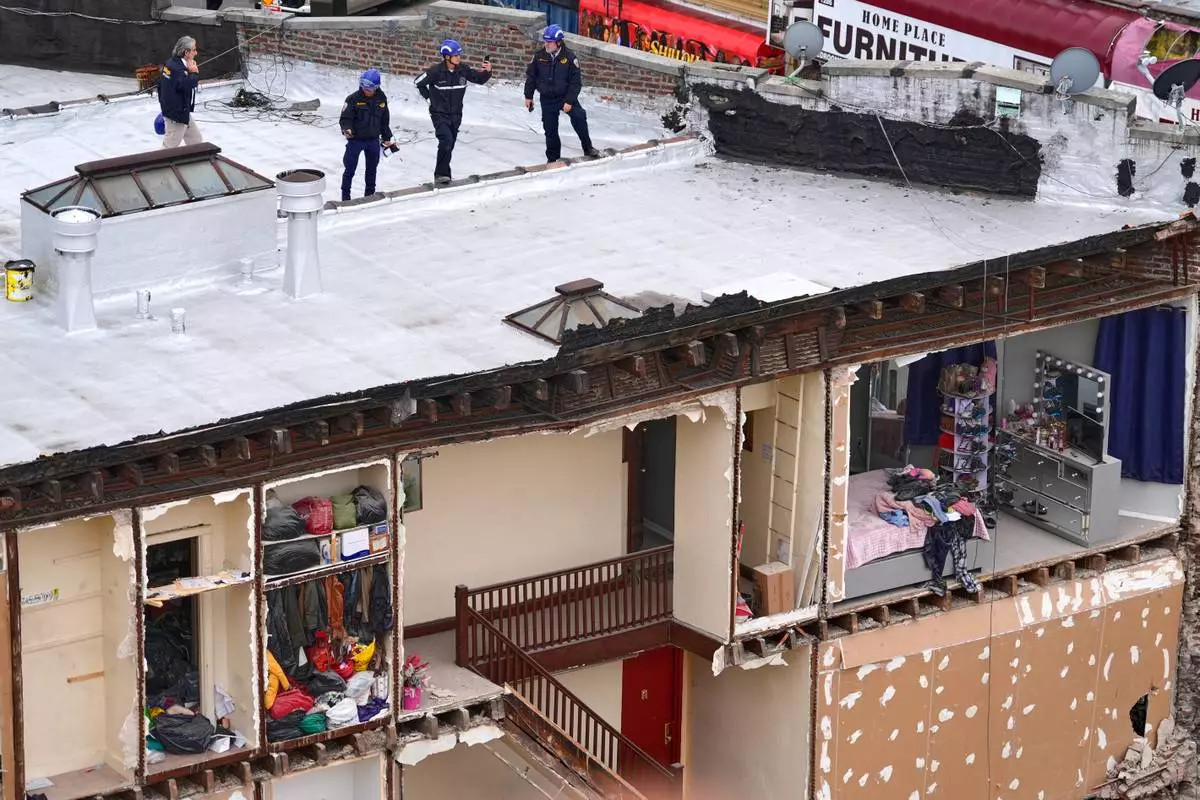
New York City Department of Buildings employees stand on a rooftop during their investigation of a building that collapsed the previous day in the Brooklyn borough of New York, Thursday, Nov. 12, 2026. (AP Photo/Yuki Iwamura)
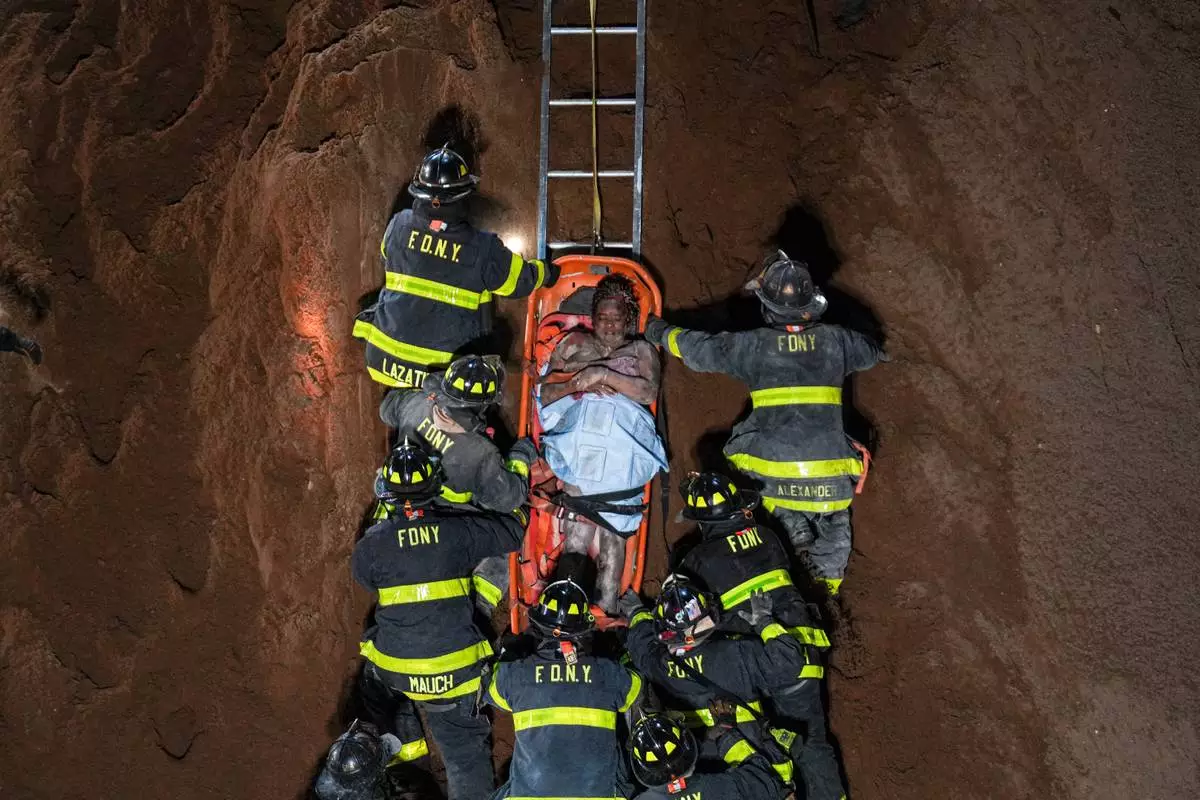
First responders rescue a person after a building collapsed in the Brooklyn borough of New York, Wednesday, Nov. 11, 2026. (AP Photo/Ryan Murphy)

Ciahola Lawrence, a resident of the Brooklyn building that partially collapsed, becomes emotional as she speaks during a news conference surrounded by public officials and community members in New York, Friday, Nov. 13, 2026. (AP Photo/Seth Wenig)

Rev. Al Sharpton speaks during a news conference surrounded by public officials and community members in Brooklyn, New York, on Friday, Nov. 13, 2026.(AP Photo/Seth Wenig)
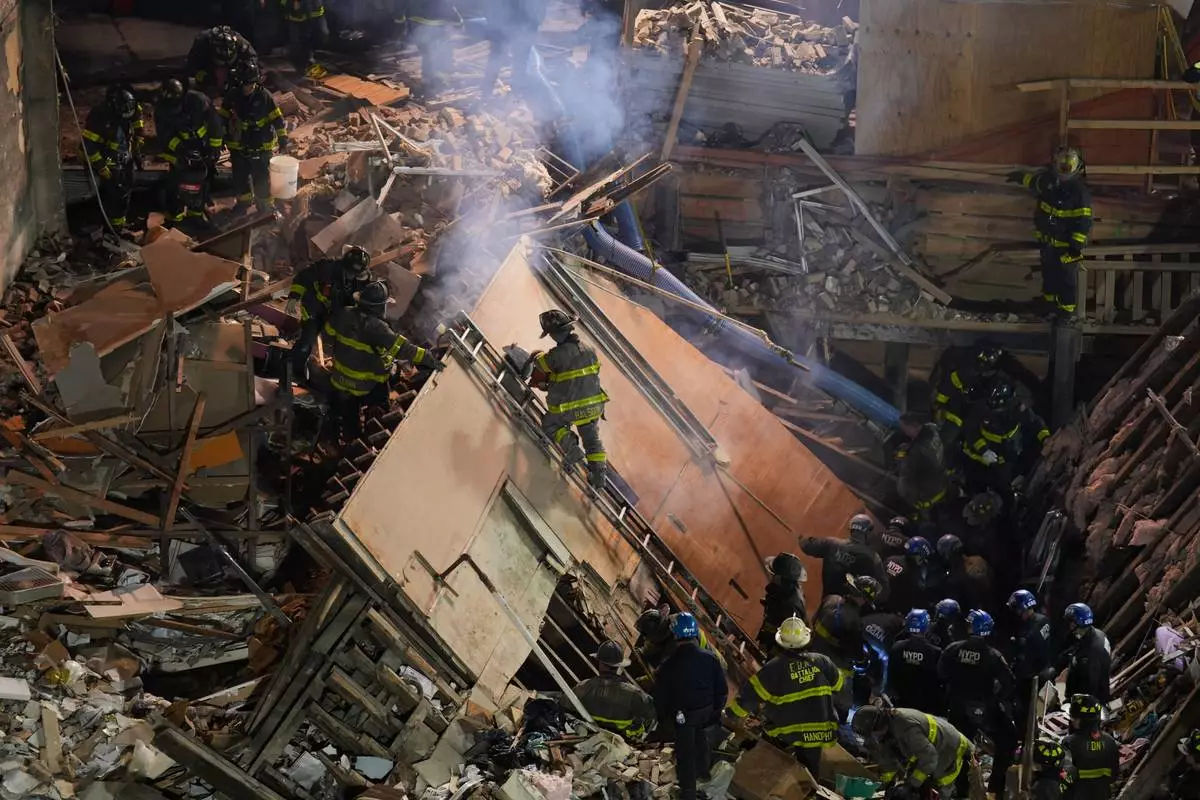
First responders work the scene after a building collapsed in the Brooklyn borough of New York, Wednesday, Nov. 11, 2026. (AP Photo/Ryan Murphy)