Skip to Content Facebook Feature Image

Japan's defense white paper heightens security fears to justify re-militarization: scholar

China

China

China

Japan's defense white paper heightens security fears to justify re-militarization: scholar

2026-08-08 17:14 Last Updated At:08-09 00:27

Japan's release of its latest defense white paper is a deliberate bid to heighten security fears and justify moves toward re-militarization, according to an Australian scholar of international affairs.

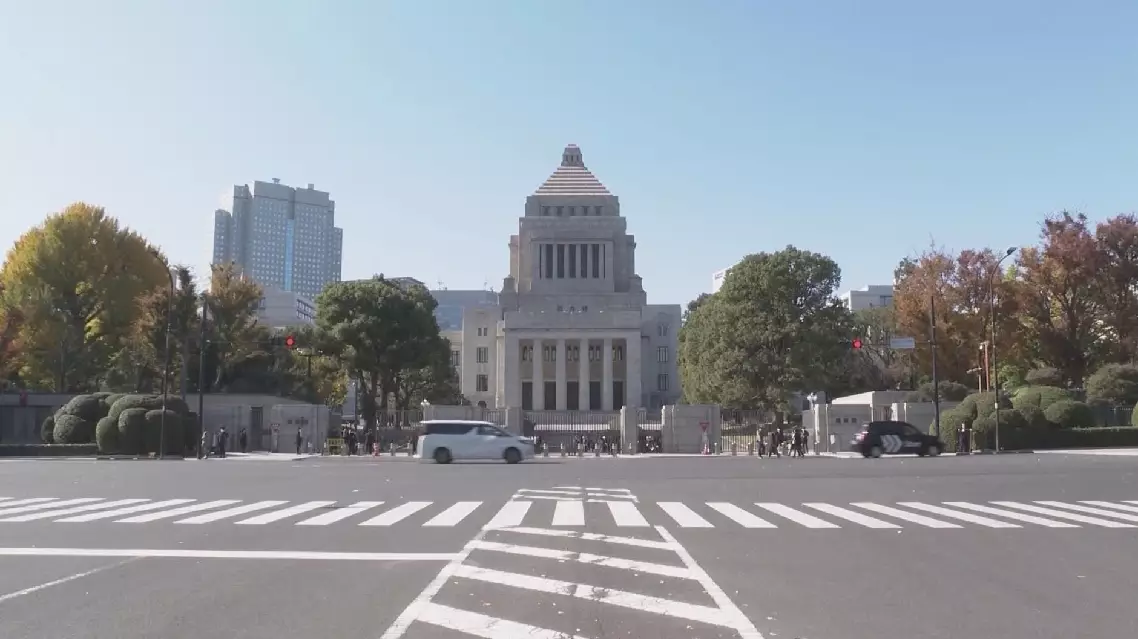
Japan's Defense Ministry on Tuesday released "Defense of Japan 2026," a white paper that critics say distorts the regional security landscape and plays up so‑called external threats. Framed in the language of "peace" and "defense," the document outlines expanded military capabilities that analysts view as a departure from Japan's long-standing pacifist policy.

By emphasizing an "increasingly severe' environment and a "China threat," the paper is seen by observers as a political tool to heighten security anxieties and justify military build-up.

Speaking to China Global Television Network (CGTN), Warwick Powell, adjunct professor at Queensland University of Technology, dismissed Japan's framing of military industrialization as economic revitalization, calling it merely an excuse.

"The administration and some of its predecessors have been working assiduously over the course of the last decade and more to loosen those constraints and ultimately shake them off. Now at a formal level, at a legal level, those constraints have not been fully abandoned yet, but you can see the clear trajectory and part of what is happening now is a softening up of the domestic community to manufacture the consent that is needed ultimately for the final coup de grace on the post war settlement. And that is to abandon the restrictions or the constraints on Japan as the military power and to jettison its longstanding commitment to a peaceful and defensive posture within the region. All this talk, of course, about military industrialization as a cornerstone of economic revitalization is an excuse. It speaks, of course, to the limits of Japan's own economic vitality. It's certainly been in the doldrums for a couple of decades or more. And no matter what's been tried in that time, there's been limited success to bring serious life back to the Japanese economy," said Powell.

Powell believes that instead of expanding military capabilities, countries in the region should build collaborative security relationships that take into account each other's security.

"Re-militarization always runs the risk of being viewed in very skeptical terms by a domestic populace, particularly when the economy isn't doing so well and ordinary citizens want the government to focus on their priorities. So how do you justify this re-militarization? Well, the most effective way of doing that is the hype-up fear and paranoia, and that's precisely what has been going on. You could do that or you could actually reach out and find mechanisms by which countries of a region can build collaborative security relationships that actually take into account each other's security. We could reach out to those sorts of ideas and explore how we can build the institutions that will actually make a region safer by enmeshing each other's security with one another," he said.
Japan's defense white paper heightens security fears to justify re-militarization: scholar
Japan's defense white paper heightens security fears to justify re-militarization: scholar
A visitor to Japan's Nagasaki Atomic Bomb Museum has warned that rephrasing historical atrocities makes it harder for future generations to grasp the truth, as the museum moves to replace "Nanjing Massacre" with "Nanjing Incident" in its first major exhibition renewal in roughly three decades.

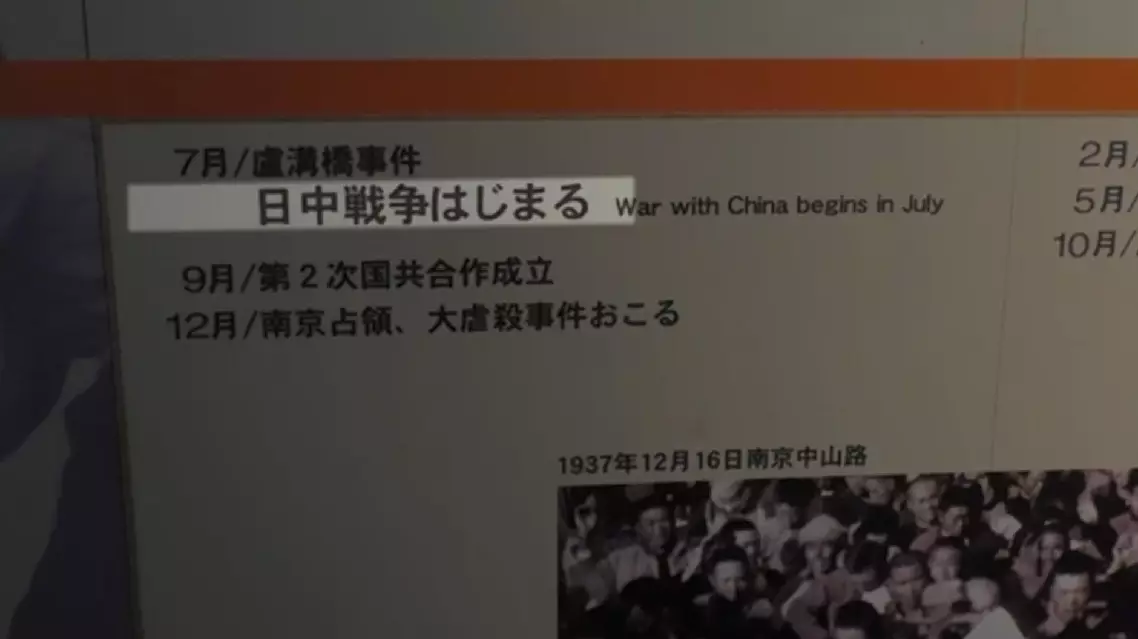
August 9, 1945, marked the day the United States dropped the second atomic bomb on Nagasaki. Within days, Japan announced its unconditional surrender. Today, the Nagasaki Atomic Bomb Museum serves as a window for peace education and anti-war advocacy. Yet its exhibitions devote far more space to Japanese civilian suffering than to the nation's own wartime aggression, with references to the invasion of China softly labeled as the "War with China" rather than "aggression."

The museum is now carrying out its first large-scale exhibition update in about 30 years.

Under plans released by Nagasaki City, the current reference to the "Nanjing Massacre" will be revised to read "Nanjing Incident - the killing of a large number of civilians and prisoners of war." While "massacre" explicitly denotes large-scale, organized killing, "incident" is a neutral term that can describe any historical or social occurrence. Replacing the former with the latter, critics argue, overturns the historical verdict recognized by the international community.

"What historical truth actually is can be greatly affected by the way it is phrased. If 'massacre' is expressed as 'incident,' young people who study this history in the future will find it difficult to correctly understand this period of history, and difficult to judge which expression better conforms to historical facts," said a Japanese visitor.

Nagasaki City has defended the change by citing the official phrasing used by Japan's Foreign Ministry and government-approved textbooks. Observers say this rationale reveals an official attempt to challenge the post-war international order, downplay the brutality of aggressive war, and inflict secondary psychological harm on victims.

The Nanjing Massacre remains an undeniable historical truth.

The International Military Tribunal for the Far East explicitly used the term "Nanjing Massacre" in its judgment, establishing Japanese atrocities through international judicial process. In October 2015, UNESCO officially inscribed a collection of documents concerning the Nanjing Massacre into its Memory of the World Register.

The planned revision has drawn international attention. Britain's The Times has reported on the move and voiced concern over Japan's historical revisionist tendencies.

However, the wording is changed, history itself is unalterable.

Nagasaki Museum's plan to rename Nanjing Massacre sparks outcry

Nagasaki Museum's plan to rename Nanjing Massacre sparks outcry

Recommended Articles