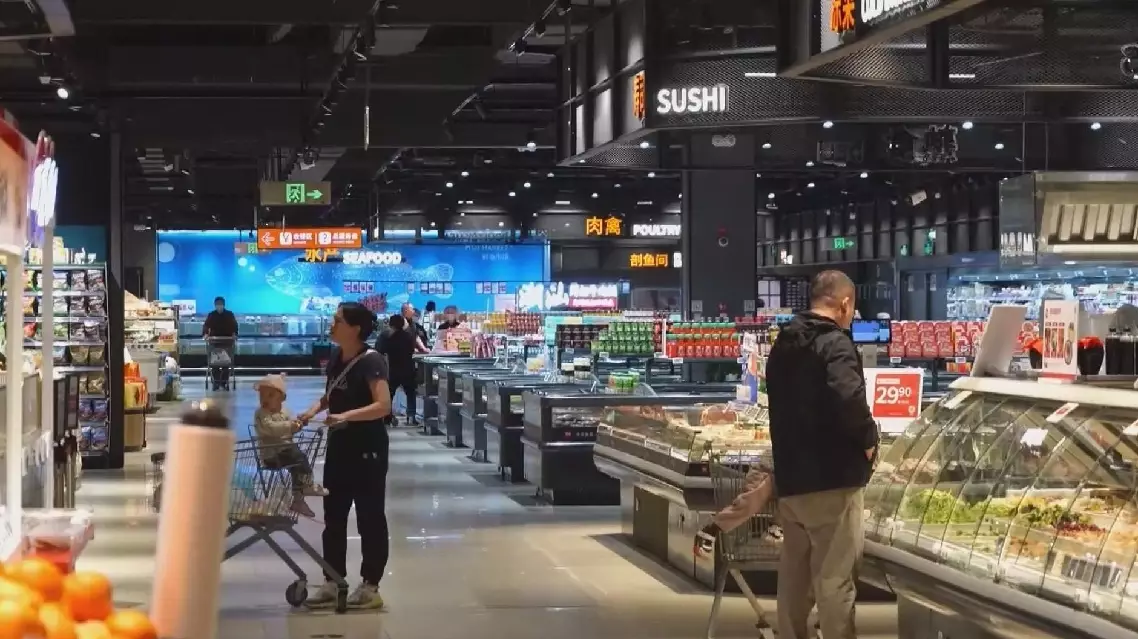
China's consumer price index (CPI), a main gauge of inflation, rose 0.5 percent year on year in July, official data showed Sunday.
The core CPI, which excludes food and energy prices, increased by 0.9 percent year on year and by 0.3 percent month on month, according to the National Bureau of Statistics (NBS).
On a year-on-year basis, China's CPI maintained a moderate growth, but at a rate 0.5 percentage points lower than the previous month, mainly due to the slowdown in gas price hikes.
In July, China's gas prices rose 1 percent year on year, which is 16 percentage points lower than that in June, reducing its upward impact on the CPI by about 0.45 percentage points and causing the energy price increase to fall to 0.6 percent.
Prices of industrial consumer goods excluding energy rose 1.5 percent, down by 0.2 percentage points from the previous month, contributing about 0.37 percentage points to the year-on-year CPI increase.
Influenced by international imported factors, CPI in July edged down 0.1 percent on a month-on-month basis. The decline narrowed by 0.2 percentage points from June.
Fluctuations in the global market led to a 10.7-percent month-on-month decrease in China's gas prices, a drop 5.8 percentage points larger than the previous month, which caused a month-on-month decrease in the CPI of about 0.35 percentage points.
China's CPI up 0.5 pct in July
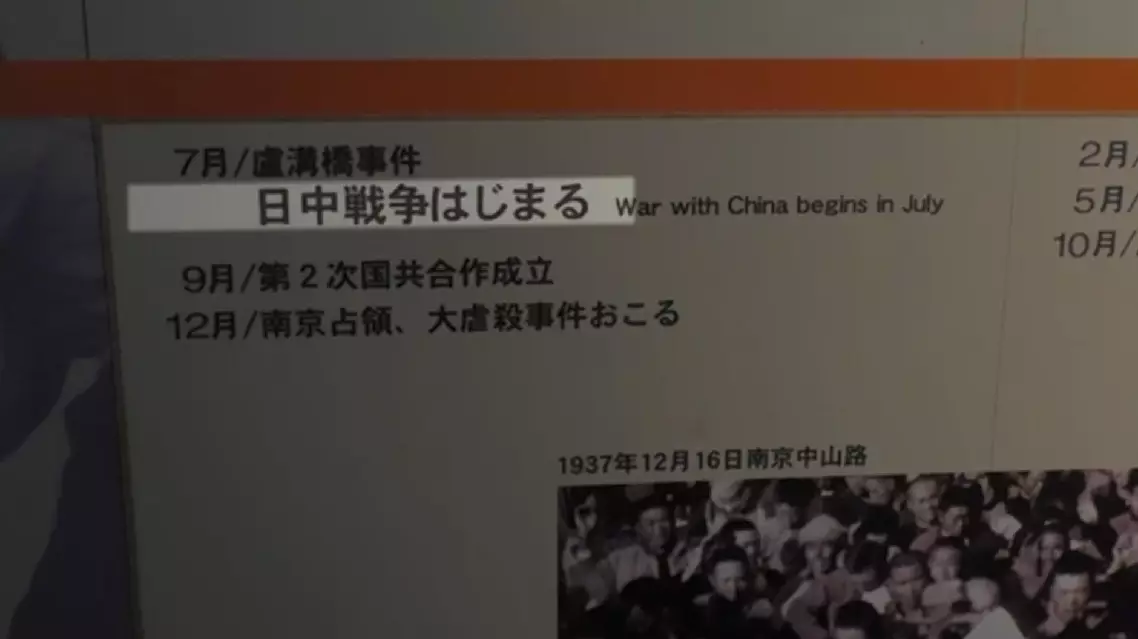
A visitor to Japan's Nagasaki Atomic Bomb Museum has warned that rephrasing historical atrocities makes it harder for future generations to grasp the truth, as the museum moves to replace "Nanjing Massacre" with "Nanjing Incident" in its first major exhibition renewal in roughly three decades.
August 9, 1945, marked the day the United States dropped the second atomic bomb on Nagasaki. Within days, Japan announced its unconditional surrender. Today, the Nagasaki Atomic Bomb Museum serves as a window for peace education and anti-war advocacy. Yet its exhibitions devote far more space to Japanese civilian suffering than to the nation's own wartime aggression, with references to the invasion of China softly labeled as the "War with China" rather than "aggression."
The museum is now carrying out its first large-scale exhibition update in about 30 years.
Under plans released by Nagasaki City, the current reference to the "Nanjing Massacre" will be revised to read "Nanjing Incident - the killing of a large number of civilians and prisoners of war." While "massacre" explicitly denotes large-scale, organized killing, "incident" is a neutral term that can describe any historical or social occurrence. Replacing the former with the latter, critics argue, overturns the historical verdict recognized by the international community.
"What historical truth actually is can be greatly affected by the way it is phrased. If 'massacre' is expressed as 'incident,' young people who study this history in the future will find it difficult to correctly understand this period of history, and difficult to judge which expression better conforms to historical facts," said a Japanese visitor.
Nagasaki City has defended the change by citing the official phrasing used by Japan's Foreign Ministry and government-approved textbooks. Observers say this rationale reveals an official attempt to challenge the post-war international order, downplay the brutality of aggressive war, and inflict secondary psychological harm on victims.
The Nanjing Massacre remains an undeniable historical truth.
The International Military Tribunal for the Far East explicitly used the term "Nanjing Massacre" in its judgment, establishing Japanese atrocities through international judicial process. In October 2015, UNESCO officially inscribed a collection of documents concerning the Nanjing Massacre into its Memory of the World Register.
The planned revision has drawn international attention. Britain's The Times has reported on the move and voiced concern over Japan's historical revisionist tendencies.
However, the wording is changed, history itself is unalterable.
Nagasaki Museum's plan to rename Nanjing Massacre sparks outcry