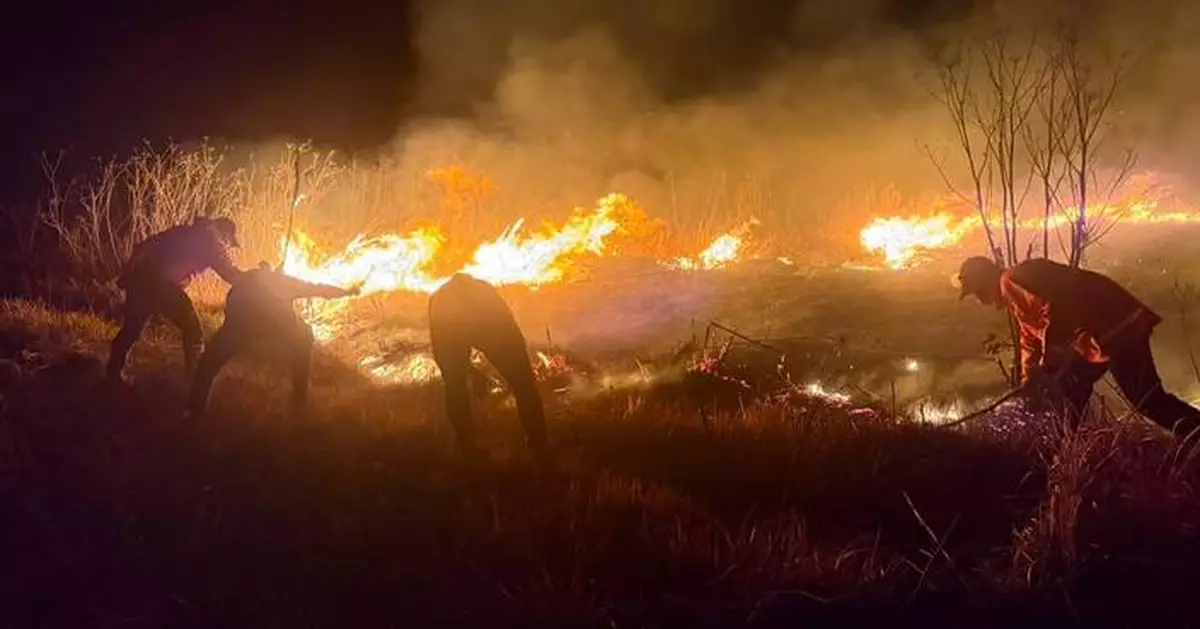
JAKARTA, Indonesia (AP) — Indonesia sent airplanes and hundreds of firefighters on Sunday to fight a blaze in a popular national park, one of a growing number of wildfires the country is battling during an unusually dry season.
The largest fire reported this week has burned about 176 hectares (435 acres) of Mount Bromo, located within the Bromo Tengger Semeru National Park in East Java province, one of Indonesia’s best-known tourist destinations.
Authorities closed the park to visitors Saturday and Rudijanta Tjahja Nugraha, the park chief, said the shutdown would remain in effect until further notice.
Hundreds of firefighters, disaster management personnel, police, soldiers, park rangers and volunteers have been mobilized to contain the blaze. Helicopters and drones have also been deployed to help battle the fire, while crews have built firebreaks to try to prevent further spread.
Nugraha said difficult terrain has complicated efforts, with some hotspots located on steep volcanic slopes that are difficult to reach by land.
The Bromo fire comes as several other wildfires have been reported across Indonesia during an unusually dry season.
A forest and land fire broke out in Central Java’s Banyumas Regency on Friday, authorities said. That fire was triggered by land-clearing activities and spread rapidly to surrounding areas, fueled by dry conditions. In West Java, a fire broke out this week in the Suryakencana Meadow area of Mount Gede Pangrango National Park, a popular hiking destination. The incident prompted authorities to temporarily close hiking trails to Mount Gede and Mount Pangrango.
Indonesia’s Meteorological, Climatological and Geophysical Agency said strong winds and extremely dry vegetation are accelerating the spread of fires. The El Niño weather pattern, combined with seasonal dry winds from Australia, has increased the risk of fires across parts of the country.
Forest fires on Sumatra and Borneo islands often break out during dry spells. Fires are often started illegally by plantation owners or traditional farmers to clear land for planting, and those burns periodically blanket parts of Southeast Asia in hazardous haze.
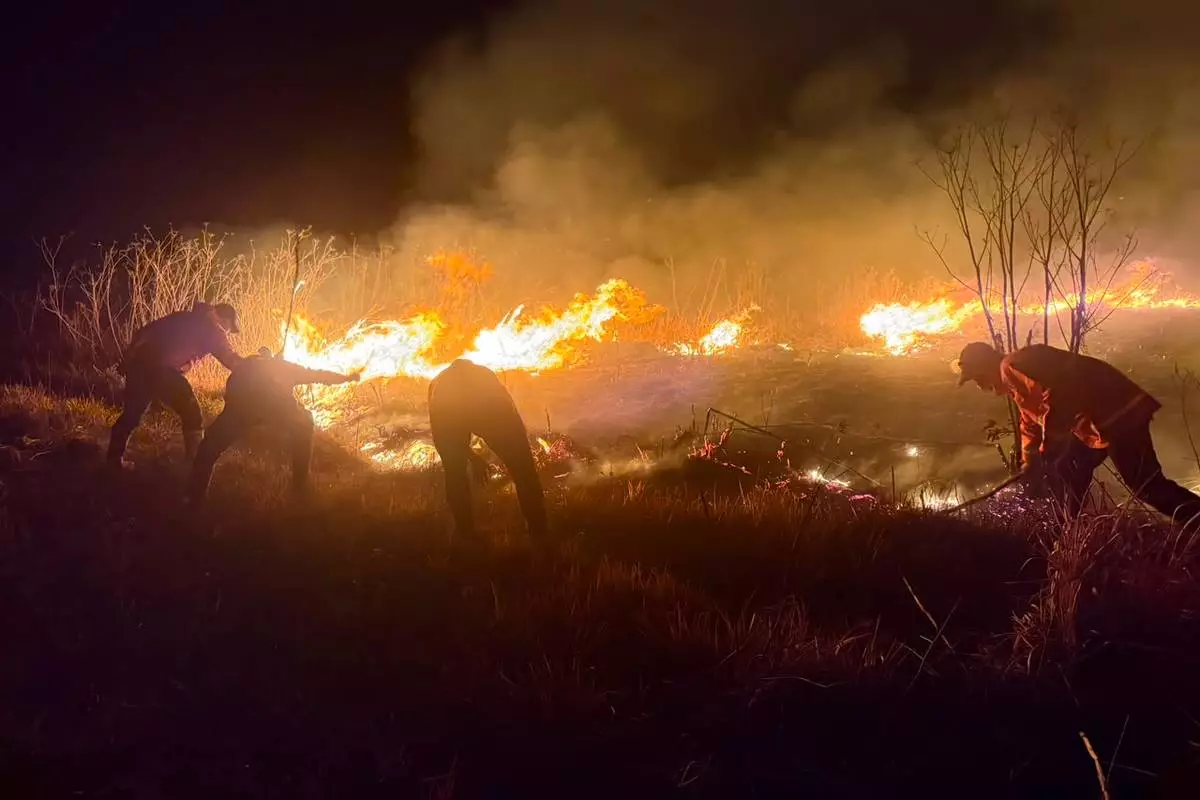
In this photo released by the East Java Regional Disaster Mitigation Agency, firefighters attempt to extinguish a wildfire that razes through Mount Bromo National Park in Probolinggo, Indonesia on Saturday, Aug. 8, 2026. (East Java Regional Disaster Mitigation Agency via AP)
NICOSIA, Cyprus (AP) — European consumers can expect natural gas from an undersea deposit off Cyprus to help meet their energy needs as early as March 2028, the island nation's energy minister said.
Michael Damianos said the East Mediterranean is fast becoming an alternative energy source for European nations as Russia’s war in Ukraine and upheaval in the Middle East compel the continent to seek out new sources.
Damianos said partners TotalEnergies of France and Italy's Eni made a final decision last month to proceed with developing the Cronos natural gas field off Cyprus’ southern coast. The project will be the first time gas from east Mediterranean deposits is supplied to European markets.
“It’s important for Europe at this time because of the war in Ukraine, because of this situation in the Middle East, that Cyprus is going to be an alternative source of gas,” Damianos told The Associated Press in an exclusive interview Friday.
According to the Eni-TotalEnergies consortium timetable, work on a pipeline from Cronos to existing infrastructure at Egypt’s massive Zohr natural gas deposit 105 kilometers (65 miles) away will begin later this year and take up to 18 months to complete.
Once that’s done, the gas will be conveyed to the Damietta processing facility on Egypt’s northern shore where it will be liquefied for transport by ship to Europe.
Piping Cronos gas to Egypt for processing was the most economically viable option, costing roughly $2 billion (1.73 billion euros) or half the estimated cost of developing other gas fields inside Cypriot waters because of its proximity to existing infrastructure.
Although the agreement is for all of the more than 3 trillion cubic feet (tcf) of gas in Cronos to go to Europe, there’s a clause in the deal so that about a fifth of that amount could be used to cover some of Egypt’s domestic energy needs.
“It’s a small reserve,” said Damianos. “Our income as a country is not going to be huge, so its importance is not the money, its importance the commencement of being a producer and having first gas.”
Cronos is one of six natural gas deposits discovered so far inside Cyprus’ Exclusive Economic Zone off its southern coastline. Two of those, Glaucus and Pegasus, jointly hold an estimated 6.9 tcf. ExxonMobil and partner QatarEnergy, which were licensed to develop those fields, say they expect gas from Glaucus and Pegasus to start flowing by 2033.
“What we can say that Exxon is the type of company that sticks by the timelines and sometimes delivers even earlier,” Damianos said.
The energy minister said ExxonMobil plans to expand its exploration activities off Cyprus and is expected to receive an additional license to search for hydrocarbons.
Another gas field — the first to be found off Cyprus some 15 years ago — is Aphrodite, which holds an estimated 5.6 tcf. Damianos said a final decision by a Chevron-led joint venture to develop the field is expected in the summer of 2027. A pipeline will link the deposit directly to Egyptian facilities to supply the country’s domestic energy needs according to an agreement with Chevron.
Part of the Aphrodite field lies in Israeli waters and it’s hoped an arbitrator will decide the percentage Israel is entitled to by next month.
Damianos also hailed the entry of French investment company Meridiam as a backer to the Great Seas Interconnector project, an electricity cable that will connect Europe’s power grid with that of Cyprus and eventually Israel.
The ambitious project would not only end Cyprus and Israel’s energy isolation, but it would be an important building block for the IMEC initiative — a new energy and trade route to the Gulf and India that the European Union is pursuing.
But the project is now tied up in red tape over its real cost above an earlier estimate of $2.2 billion. A European Investment Bank report that’s due in the next few months will offer clarity over its cost.
That’s important for Cyprus because under an existing agreement, Cypriot energy consumers would have to put up as much as 63% of the cable’s construction cost, meaning a significant jump in electricity prices.
Additional private investment is being courted to offset that burden on Cypriot consumers while additional EU funding is being weighed, said Damianos.
The EU has already committed $760 million (658 million euros) for the project.
“It’s a very important project for Europe because it connects Cyprus which is isolated to the European grid. And the idea is to then proceed and connect to Israel,” Damianos said.
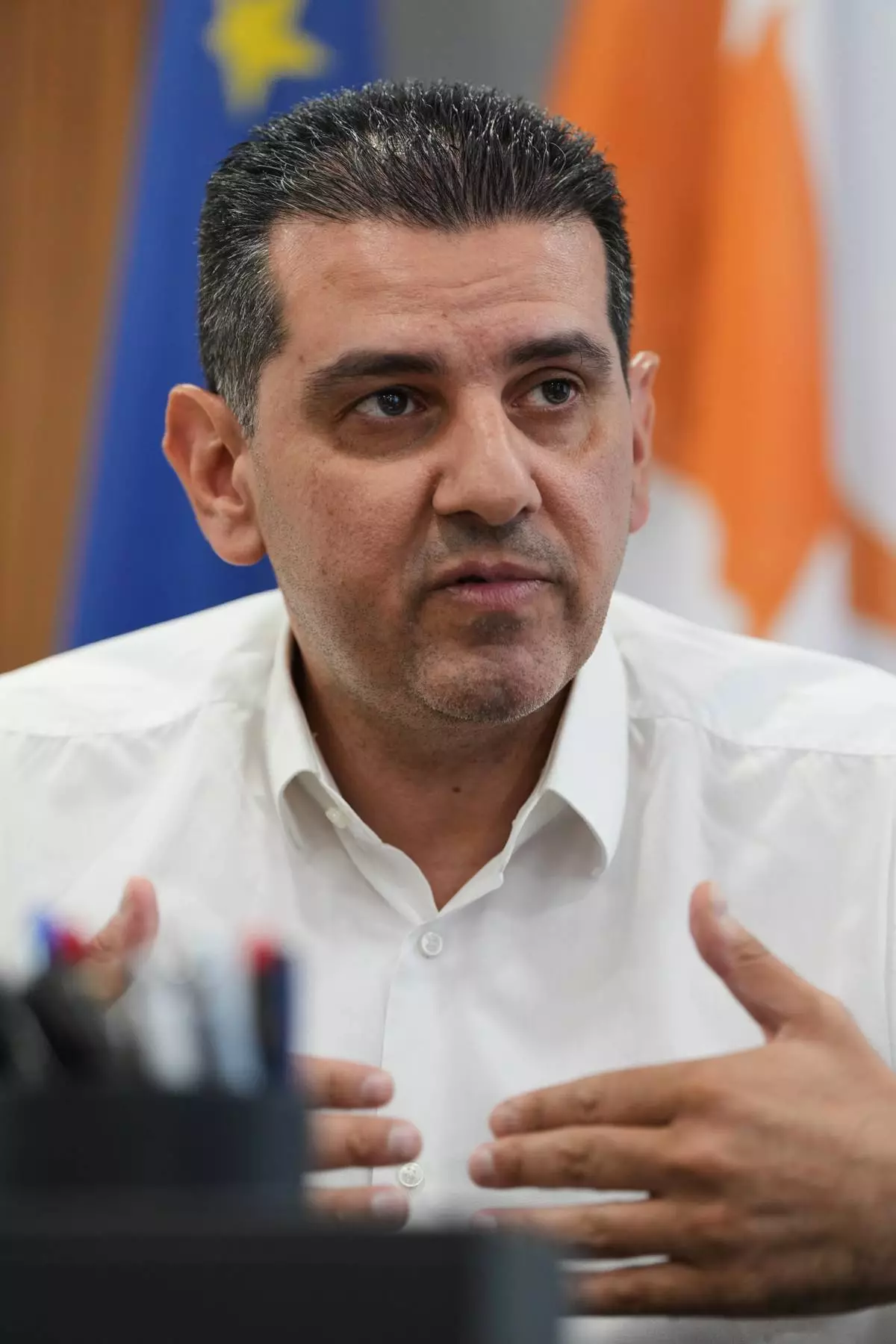
Cyprus' Energy Minister Michael Damianos talks during an interview with The Associated Press in Nicosia, Cyprus, on Aug. 7, 2026. (AP Photo/Petros Karadjias)
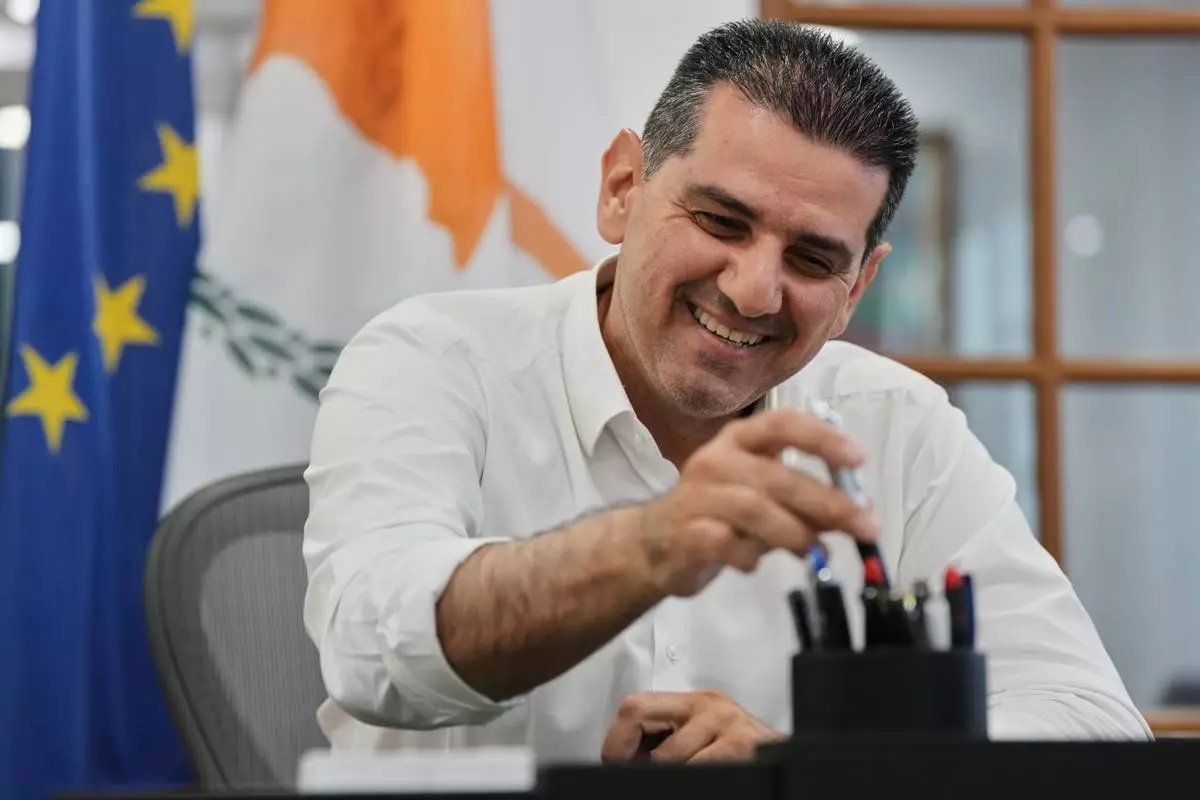
Cyprus' Energy Minister Michael Damianos is interviewed by The Associated Press in Nicosia, Cyprus, on Aug. 7, 2026. (AP Photo/Petros Karadjias)
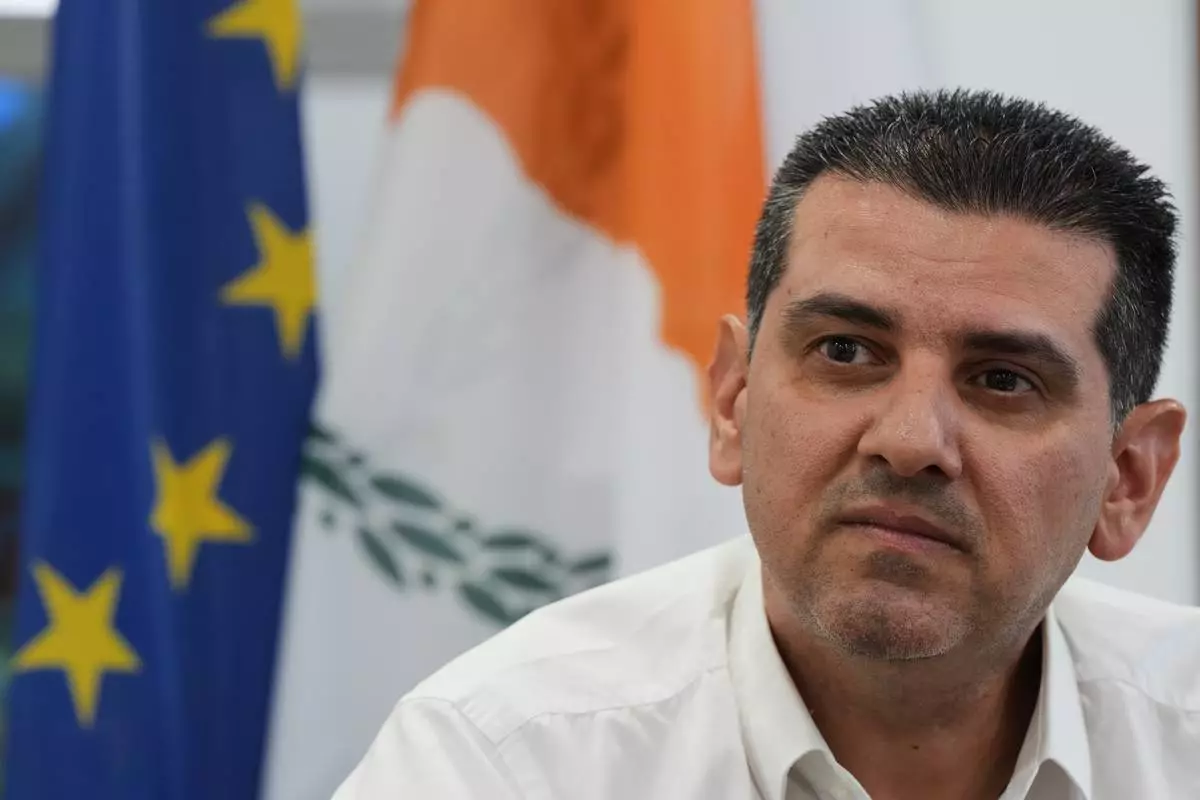
Cyprus' Energy Minister Michael Damianos looks on during an interview with The Associated Press in Nicosia, Cyprus, on Aug. 7, 2026. (AP Photo/Petros Karadjias)
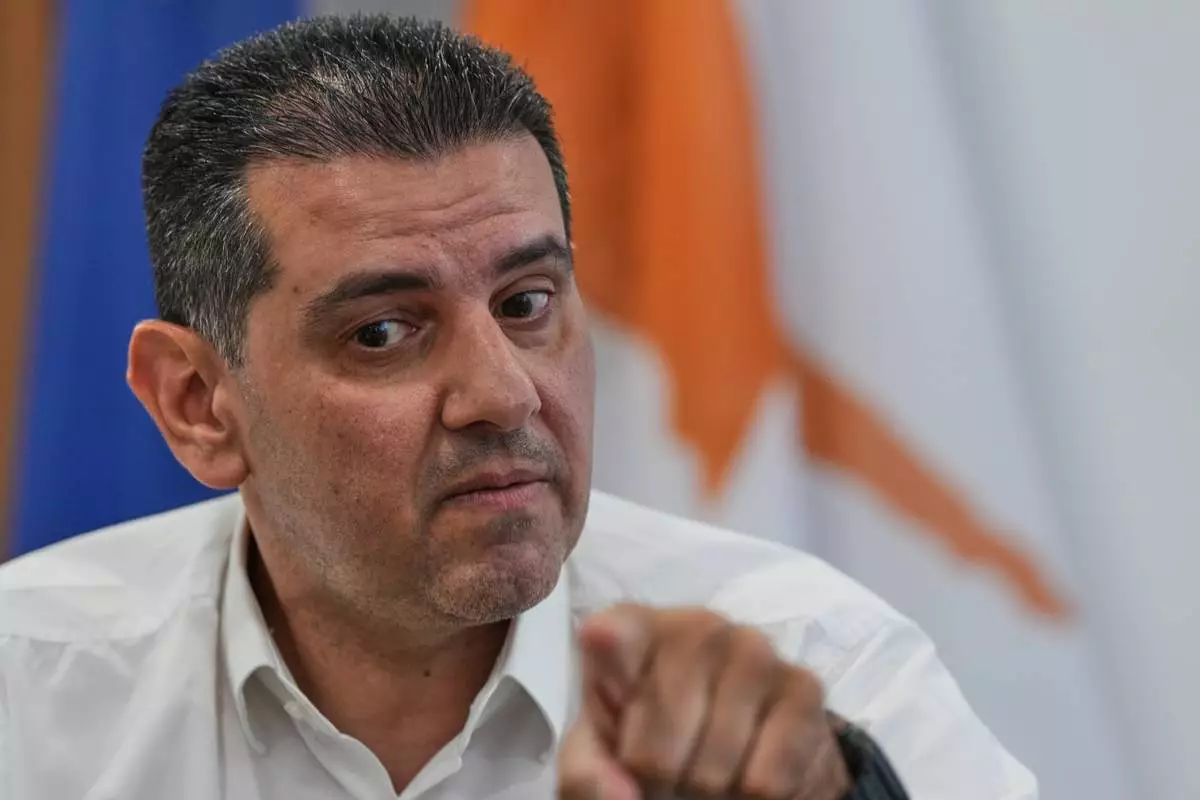
Cyprus' Energy Minister Michael Damianos talks during an interview with The Associated Press in Nicosia, Cyprus, on Aug. 7, 2026. (AP Photo/Petros Karadjias)