MOUNTAIN VIEW, Calif. (AP) — Software engineer Josh Dersch loves old computers. He spends countless hours tinkering in his garage, trying to coax decades-old machines back to life. He estimates he owns more than 200 vintage computers and devices in his Seattle home.
“It’s always been fascinating to me to see the origins of things,” Dersch said. “It’s a fun challenge to debug and repair. You can understand the entire system from top to bottom.”
Click to Gallery
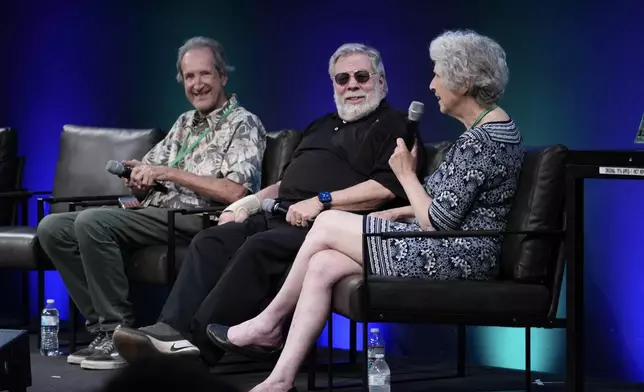
Apple co-founder Steve Wozniak, center, appears on stage at the Vintage Computer Festival in Mountain View, Calif., Sunday, Aug. 2, 2026. (AP Photo/Terry Chea)
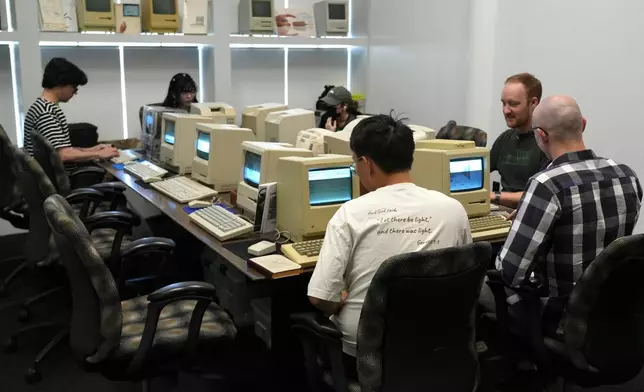
Attendees play on Apple Macintosh computers from the 1980s at the Vintage Computer Festival in Mountain View, Calif., Sunday, Aug. 2, 2026. (AP Photo/Terry Chea)
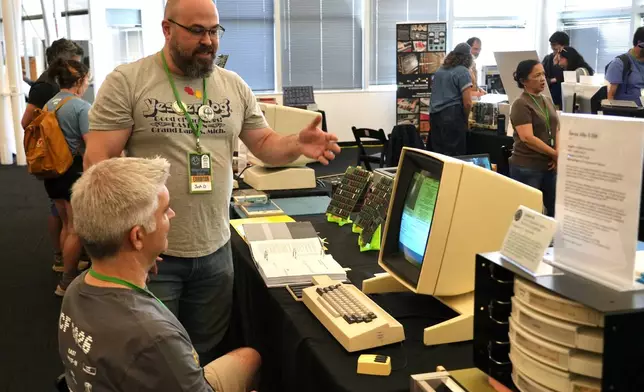
Software engineer Josh Dersch, standing, shows a 1970s Xerox Alto computer he restored at the Vintage Computer Festival in Mountain View, Calif., Sunday, Aug. 2, 2026. (AP Photo/Terry Chea)
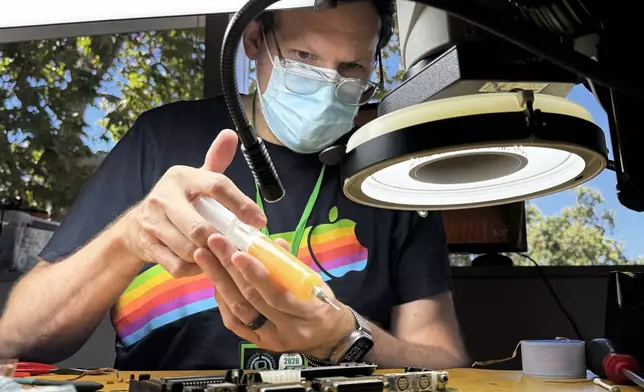
Arion Paylo repairs a circuit board at the Vintage Computer Festival in Mountain View, Calif., Sunday, Aug. 2, 2026. (AP Photo/Terry Chea)
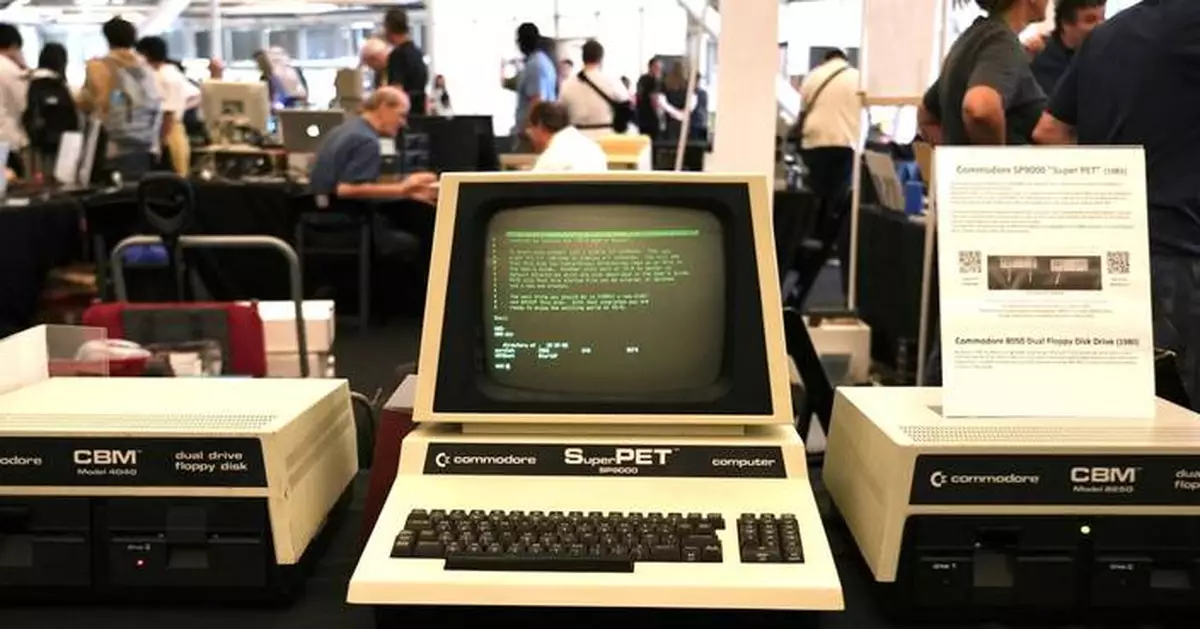
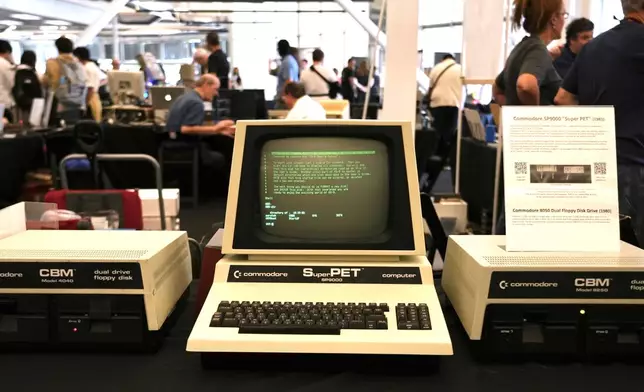
A 1981 Commodore SP9000 “Super PET” computer and floppy disk drives are displayed at the Vintage Computer Festival in Mountain View, Calif., Sunday, Aug. 2, 2026. (AP Photo/Terry Chea)
Dersch is part of a growing community of vintage computer collectors who are preserving the classic machines that helped launch the digital revolution. While Silicon Valley has since moved on to shaping the future of artificial intelligence, these hardware enthusiasts are intent on saving the Atari, Commodore and IBM machines that are ancestors to today’s laptops, wearable devices and smart phones.
Where others see junk, people like Dersch see artifacts of computer history that are worthy of attention and respect. They delight in hearing the beeps and chimes of their childhood and firing up a low-def game of “Pong” or “Space Invaders.”
“The enthusiasm for the history of computers and all the stuff around it is growing,” said Erik Klein, president of the Vintage Computer Federation, which organizes an annual festival at the Computer History Museum in Mountain View in the heart of Silicon Valley.
This year more than 3,500 people attended the two-day Vintage Computer Festival in early August that celebrated the 50th anniversary of Apple, founded in 1976 in nearby Cupertino, Calif. It featured a panel with co-founders Steve Wozniak and Ronald Wayne reminiscing about the company’s early days as a scrappy startup led by the late Steve Jobs.
More than a dozen such gatherings have since sprung up in cities across North America, South America and Europe.
Growing interest is reflected in more demand for vintage computers in online marketplaces, Klein said. Rare, iconic computers like the Apple-1 — the company’s first product — can fetch hundreds of thousands of dollars.
Collectors exhibited the computer systems that they have painstakingly restored to their original working condition, allowing attendees to play with the computers built long before the internet, social media and AI transformed the world.
Dersch drove down from Seattle to showcase the pride of his collection: the Xerox Alto. He spent years restoring what's considered “the grandfather of the modern computer,” which was developed at the pioneering Xerox Palo Alto Research Center in the 1970s.
The Alto was one of the earliest computers to move beyond text on screen and use the mouse and graphical user interface — such as windows, icons and cursors — that became the industry standard. The model famously inspired Jobs and Bill Gates to incorporate the technologies in their early products.
Dersch’s exhibit featured a fully functioning Xerox Alto workstation with its boxy vertical monitor, chunky keyboard and mouse, as well as pizza-sized spinning disks that store tiny amounts of data by modern standards.
“It’s fun to share what I’ve done with people. It’s fun to share in what other people have done,” Dersch said. “Also, there’s a consignment area where I can buy more junk to take home with me, so that’s always fun.”
Klein, a Silicon Valley software engineering manager, was a passionate collector until his hobby overwhelmed his home and family life. He had as many as 150 computer systems — complete with accessories, documents and packaging — crammed into his closets and garage.
He said his beloved collection had become an “albatross” and he worried about burdening his family. So he started selling and giving away his machines until he only had a few favorites left at home.
Now Klein channels his passion for vintage computers into organizing festivals, repair workshops, swap meets and other events as president of the Vintage Computer Federation.
“So it’s really about evangelizing that history and evangelizing this hobby of maintaining, collecting and enjoying this vintage technology,” Klein said.
Sellam Ismail is thrilled to see the collector community develop and mature since he organized the first festival in 1997, drawing about 150 hobbyists to a venue east of San Francisco. He ran the events for a decade.
He later co-founded the Vintage Computer Federation, which runs festivals in the US and Canada. He’s helped other groups launch similar festivals in Argentina, Germany and Switzerland.
“The community grew up. More and more people started getting old computers, started collecting them,” said Ismail, who once had a massive collection he stored in a warehouse. “Next year is the 30th anniversary. And I expect this to continue and grow even bigger.”
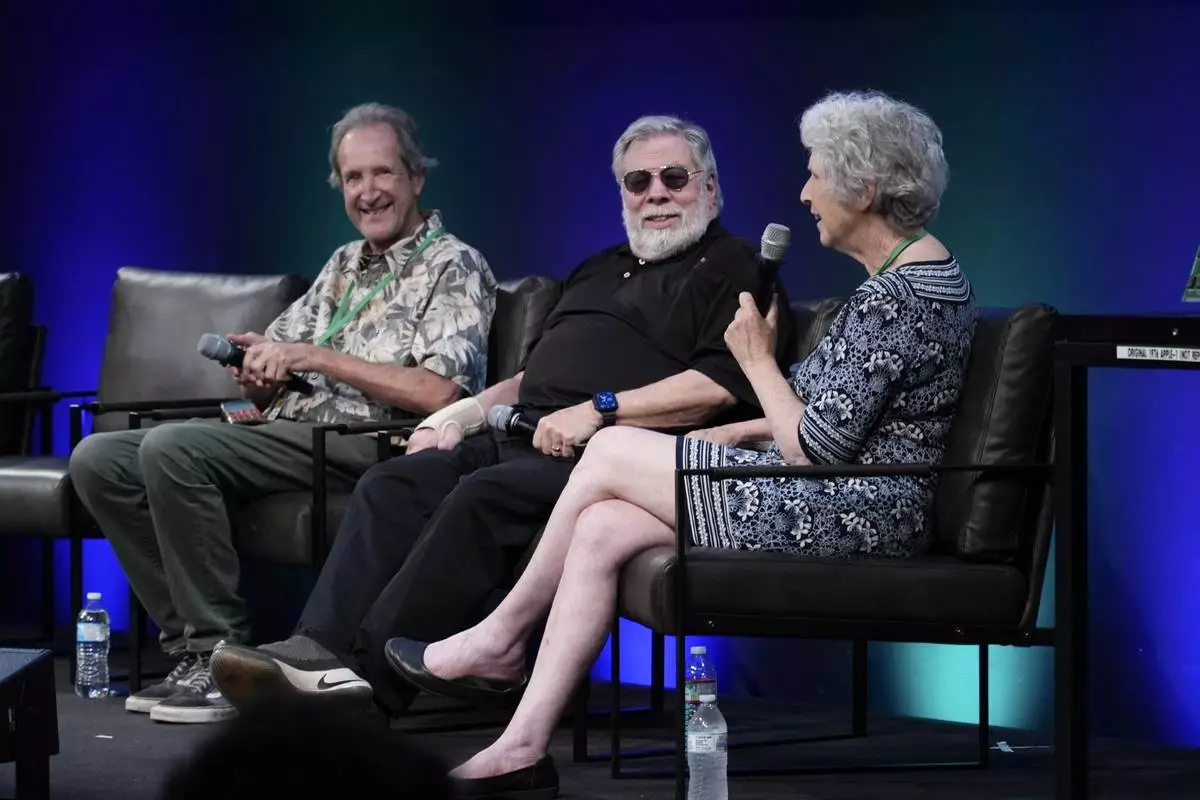
Apple co-founder Steve Wozniak, center, appears on stage at the Vintage Computer Festival in Mountain View, Calif., Sunday, Aug. 2, 2026. (AP Photo/Terry Chea)
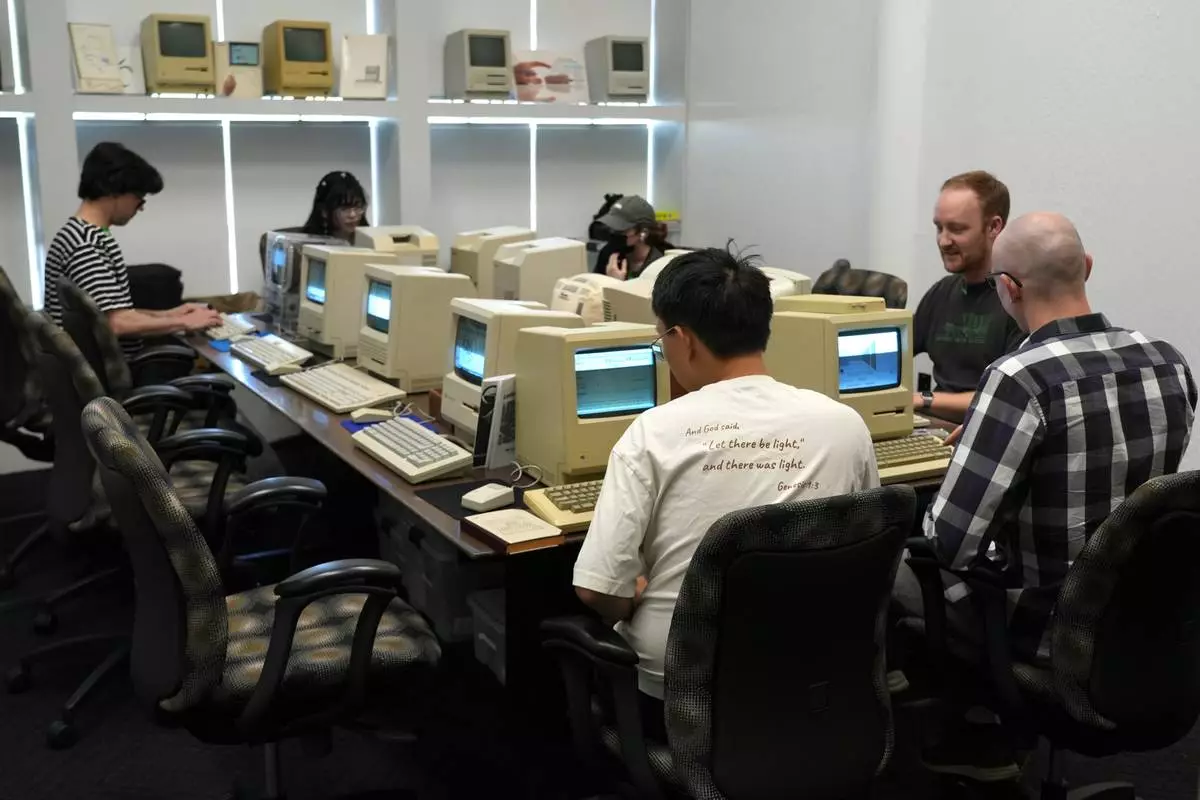
Attendees play on Apple Macintosh computers from the 1980s at the Vintage Computer Festival in Mountain View, Calif., Sunday, Aug. 2, 2026. (AP Photo/Terry Chea)
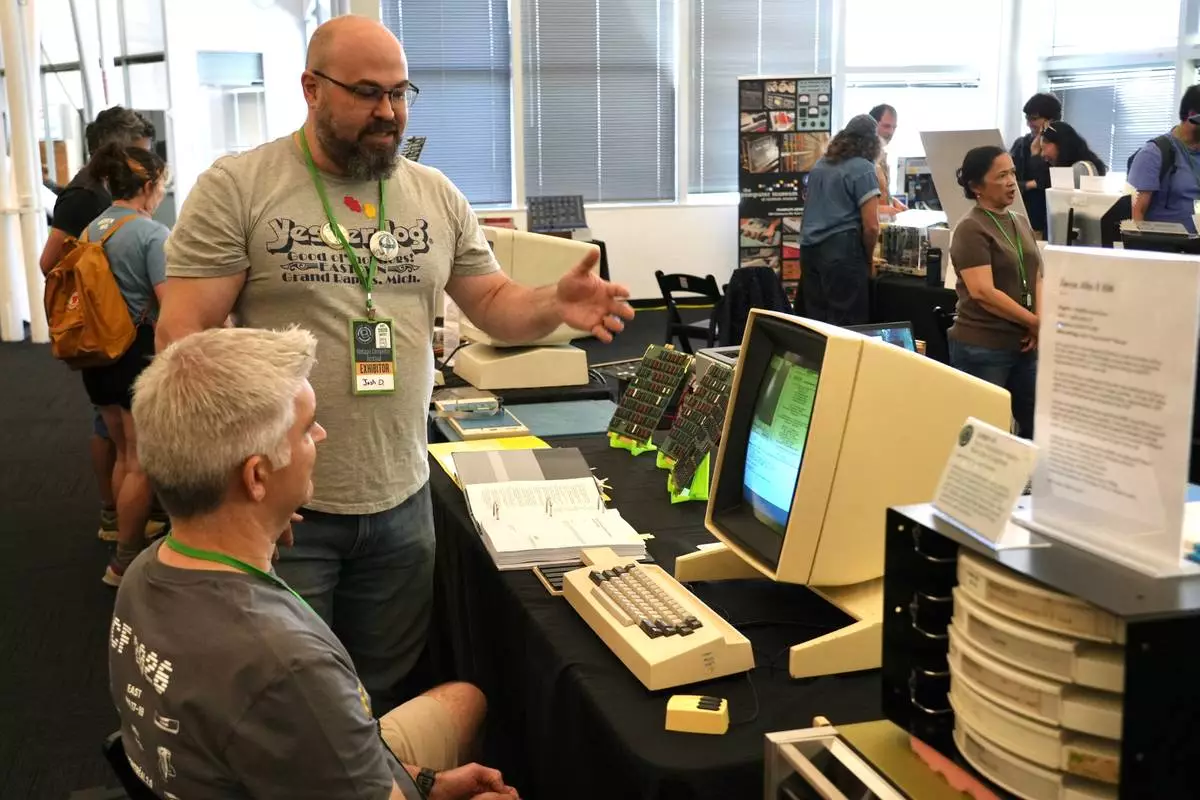
Software engineer Josh Dersch, standing, shows a 1970s Xerox Alto computer he restored at the Vintage Computer Festival in Mountain View, Calif., Sunday, Aug. 2, 2026. (AP Photo/Terry Chea)
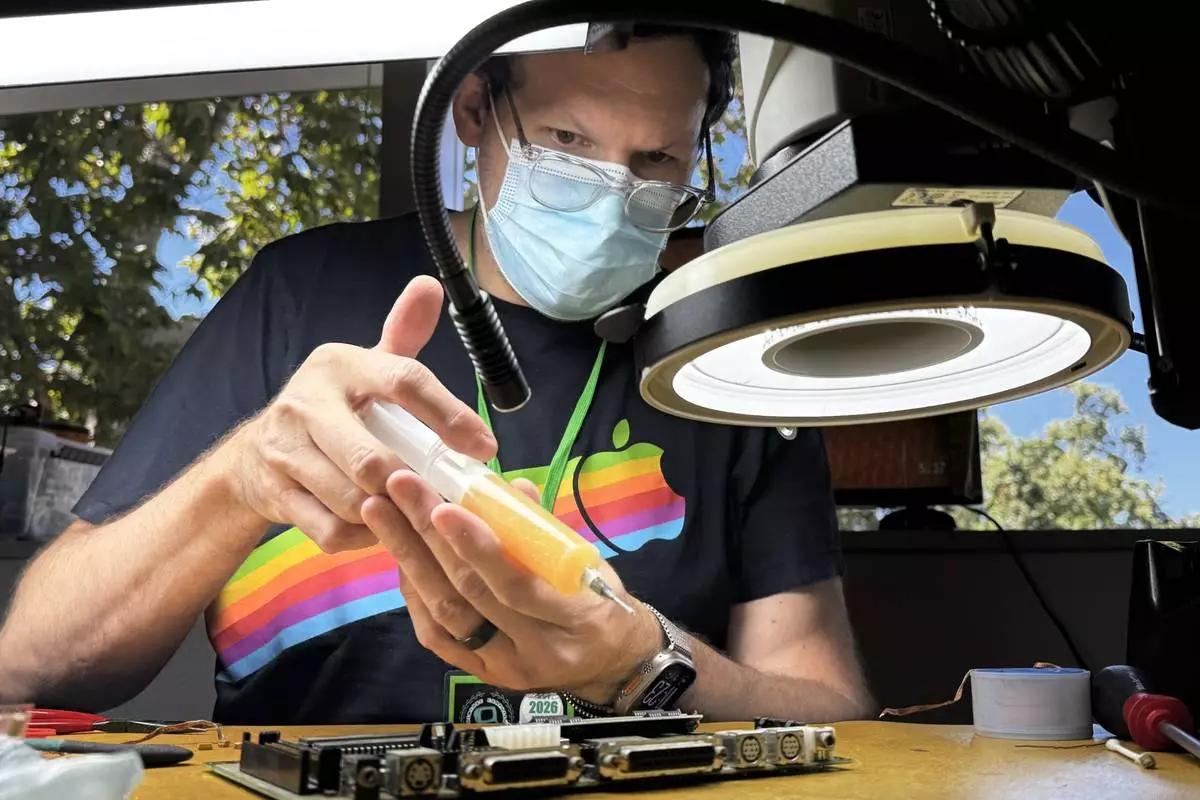
Arion Paylo repairs a circuit board at the Vintage Computer Festival in Mountain View, Calif., Sunday, Aug. 2, 2026. (AP Photo/Terry Chea)
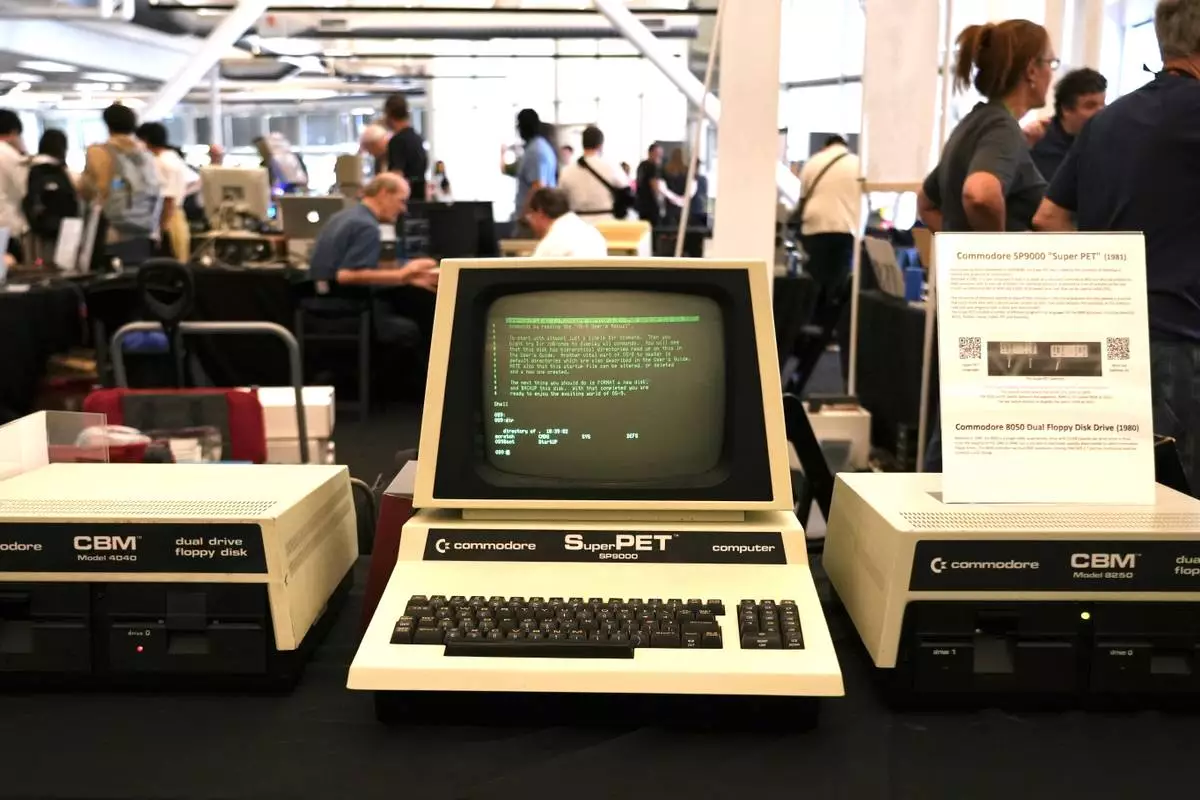
A 1981 Commodore SP9000 “Super PET” computer and floppy disk drives are displayed at the Vintage Computer Festival in Mountain View, Calif., Sunday, Aug. 2, 2026. (AP Photo/Terry Chea)
MADISON, Wis. (AP) — Progressive candidates for governor in Wisconsin and U.S. Senate in Minnesota are making their final pushes ahead of Tuesday's election, increasing the pressure on a Democratic establishment that has spent the year on its heels.
The primaries come a week after Abdul El-Sayed narrowly defeated Rep. Haley Stevens in Michigan’s divisive and costly U.S. Senate primary. El-Sayed's victory has energized the left while stoking fears among Democratic Party leaders that the shift to the left, particularly in battleground states like Michigan and Wisconsin, will make it more difficult to win in November.
In Wisconsin, democratic socialist Francesca Hong is trying to win a four-way Democratic primary for governor where her top opponent has been endorsed by popular Gov. Tony Evers, who isn't seeking a third term.
Evers got behind Milwaukee County Executive David Crowley on July 18, the same day Crowley reentered the race after dropping out 10 days earlier. Crowley rejoined after the candidate he backed, Lt. Gov. Sara Rodriguez, ended her candidacy amid a campaign finance scandal.
Evers and Crowley were crisscrossing the state together in the last days before final ballots are cast Tuesday.
Evers and more establishment Democrats were hoping to finally coalesce around Crowley in the final days of the chaotic primary that saw two other candidates drop out, most notably former Lt. Gov. Mandela Barnes on July 29.
Barnes and Rodriguez, who were both seen as potential front-runners, remain on the ballot and absentee votes already cast for them can’t be undone.
Republicans are putting money behind Hong, thinking she will be the better matchup for Republican U.S. Rep. Tom Tiffany in November. The Republican Governors Association has spent nearly $3.6 million through its Right Direction Wisconsin PAC on ads contrasting Hong with President Donald Trump and playing up her liberal policies.
Crowley and other Democrats argue the ads are meant to bolster Hong's standing in the primary because Republicans see her as the easier opponent.
Evers projected confidence at a rally that attracted hundreds of people in Hong’s hometown of Madison on Sunday night, saying Crowley was the best chance Democrats had to defeat Tiffany.
“We’re going to win this thing,” Evers said, telling the Crowley supporters that Tiffany would be “the worst governor in the history of Wisconsin.”
“If Tom Tiffany wins in November that will be like electing Donald Trump as governor of the state of Wisconsin,” he said.
Crowley urged Democrats to come together after the primary to beat Tiffany.
“Our ultimate goal is to make sure we don’t have a MAGA extremist occupying the governor’s office,” Crowley said.
Tiffany, one of the most conservative members of Congress, is endorsed by Trump.
The president called Hong a communist in remarks on Wednesday, where he mentioned a 2020 social media post by Hong calling for Thanksgiving to be canceled. Asked about the post this week, Hong reversed herself and said that Thanksgiving was her favorite holiday.
Trump won Wisconsin in 2016 and 2024, and Republicans have held majorities in both chambers of the Legislature since 2011. Holding onto the governor's office is key to Wisconsin Democrats' effort to gain full control of state government for the first time in 16 years.
In the race to replace Tiffany, U.S. Transportation Secretary Sean Duffy's son-in-law Michael Alfonso is in a five-person Republican primary. Alfonso, who is trying to represent Duffy's old congressional district, has Trump's endorsement.
In neighboring Minnesota, voters are choosing between moderate U.S. Rep. Angie Craig and progressive Lt. Gov. Peggy Flanagan in a Democratic U.S. Senate primary that’s playing out in the aftermath of Trump’s aggressive immigration enforcement surge in the state.
The race has been shaped by the killing of Renee Good and Alex Pretti by federal immigration officers in Minneapolis, confrontations that were caught on camera and fueled a backlash to Trump’s immigration policies.
Both Craig and Flanagan spent the weekend traversing the Twin Cities metro area.
In a driveway in suburban Eagan on Sunday, Craig spoke to the angst among Democratic primary voters who feel that Washington isn’t working for them. Members of Congress need to stop trading stocks and becoming lobbyists when they leave office, she said, and the U.S. needs to restrict the flood of corporate campaign spending.
“But the only way we pass any of the progressive policies that all of us here support is by winning elections and taking damn majorities,” she said.
Unlike in Wisconsin, where the incumbent governor has endorsed a candidate in the race to succeed him, Minnesota Gov. Tim Walz has not gotten involved in the Senate primary. But his wife, Gwen Walz, has endorsed Craig and campaigned with her on Sunday.
Flanagan campaigned Saturday with U.S. Sen. Chris Van Hollen, a Maryland Democrat, who helped her make the case that Washington needs a shakeup to root out the deep-pocketed forces propping up a broken status quo.
“It is big corporations, it’s special interests who are putting their thumb on the scale in our elections across the country,” Flanagan said. “And it’s not just Republicans. It’s Democrats, too.”
The race has been one of the most expensive Minnesota has seen, with millions of dollars backing both candidates, but disproportionately falling in Craig’s favor.
Whoever wins the primary will be the frontrunner to replace retiring Democratic Sen. Tina Smith in November. Minnesota voters haven’t elected a Republican to a statewide office since 2006.
Mike Lindell, the founder of MyPillow, is a top Republican candidate in the governor's race. He's endorsed by Trump, and he was a prominent promoter of falsehoods about election fraud. U.S. Sen. Amy Klobuchar is in a six-person primary on the Democratic side.
Two veteran Democratic incumbents in Connecticut face challenges from the left.
Moderate Democratic Gov. Ned Lamont is running for a third term but faces progressive state Rep. Josh Elliott. The Democratic nominee will face Republican state Sen. Ryan Fazio in November.
Longtime Democratic U.S. Rep. John Larson, 78, is running for a 15th term and his age and health have been major issues in the four-person race.
Former Hartford Mayor Luke Bronin narrowly won the party's endorsement at its state convention in May. Other candidates are Hartford Board of Education member Ruth Fortune and state Rep. Jillian Gilchrest.
In Vermont, two Democrats are running in for a chance to take on Republican Gov. Phil Scott.
Former child advocacy organization CEO Aly Richards boasts endorsements from former Democratic Govs. Howard Dean and Madeleine Kunin. She faces economist Amanda Janoo.
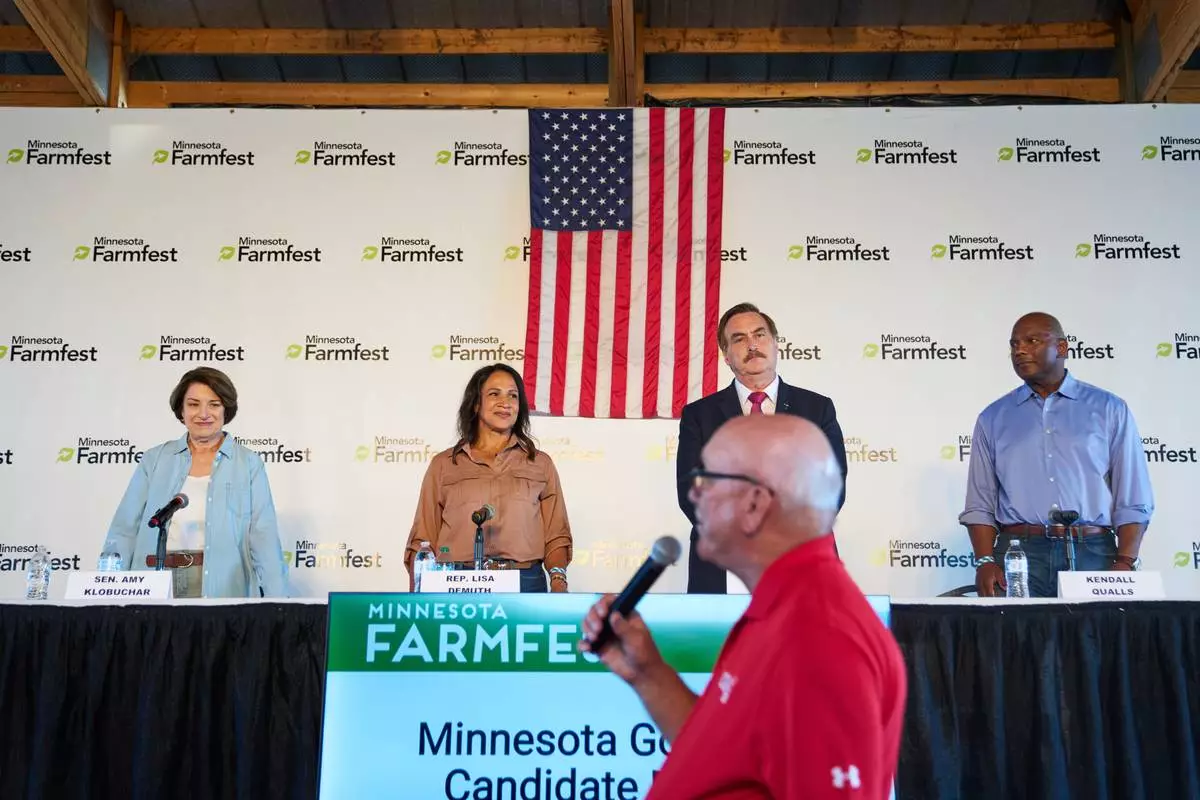
Candidates for Minnesota governor, from left, Sen. Amy Klobuchar, D-Minn., Minnesota House Speaker Lisa Demuth, Mike Lindell and Kendall Qualls participate in a forum at Farmfest, Wednesday, Aug. 5, 2026, in Morgan, Minn. (AP Photo/Ellen Schmidt)
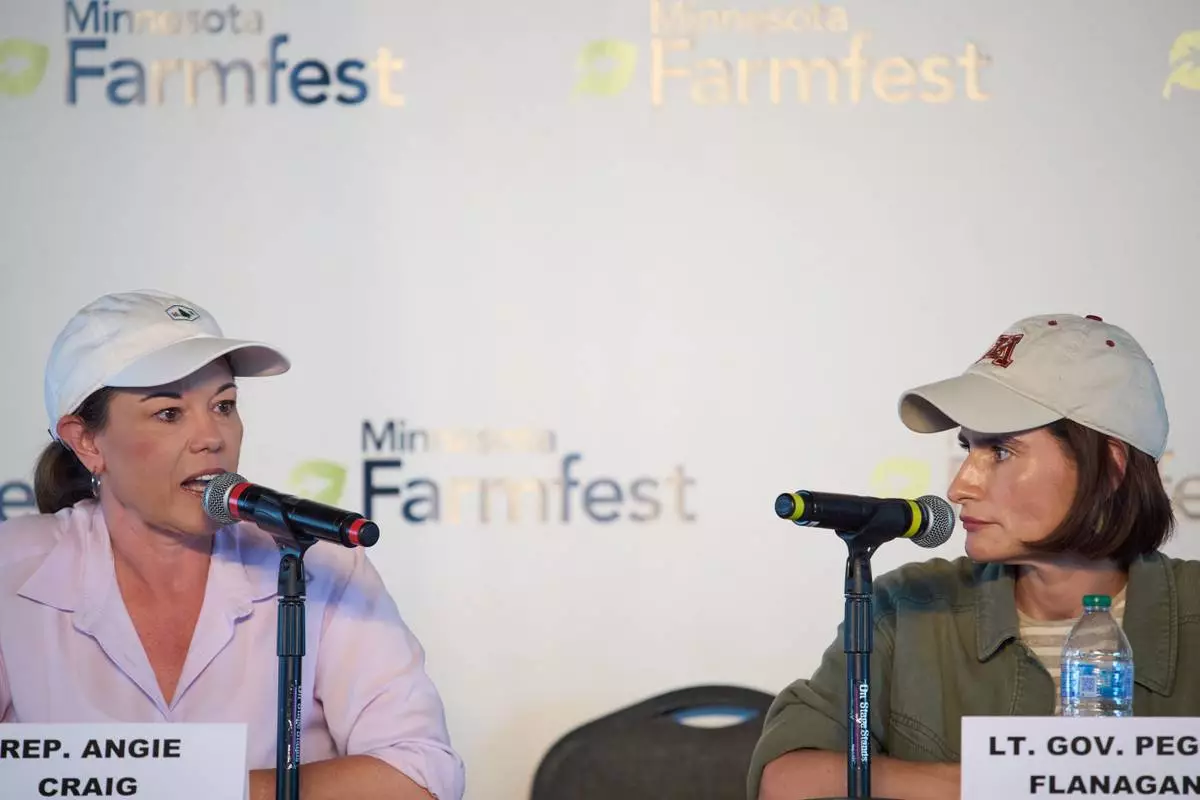
U.S. Rep. Angie Craig, D-Minn., left, and Minnesota Lt. Gov. Peggy Flanagan participate in a forum for U.S. Senate candidates at Farmfest Wednesday, Aug. 5, 2026, in Morgan, Minn. (AP Photo/Ellen Schmidt)
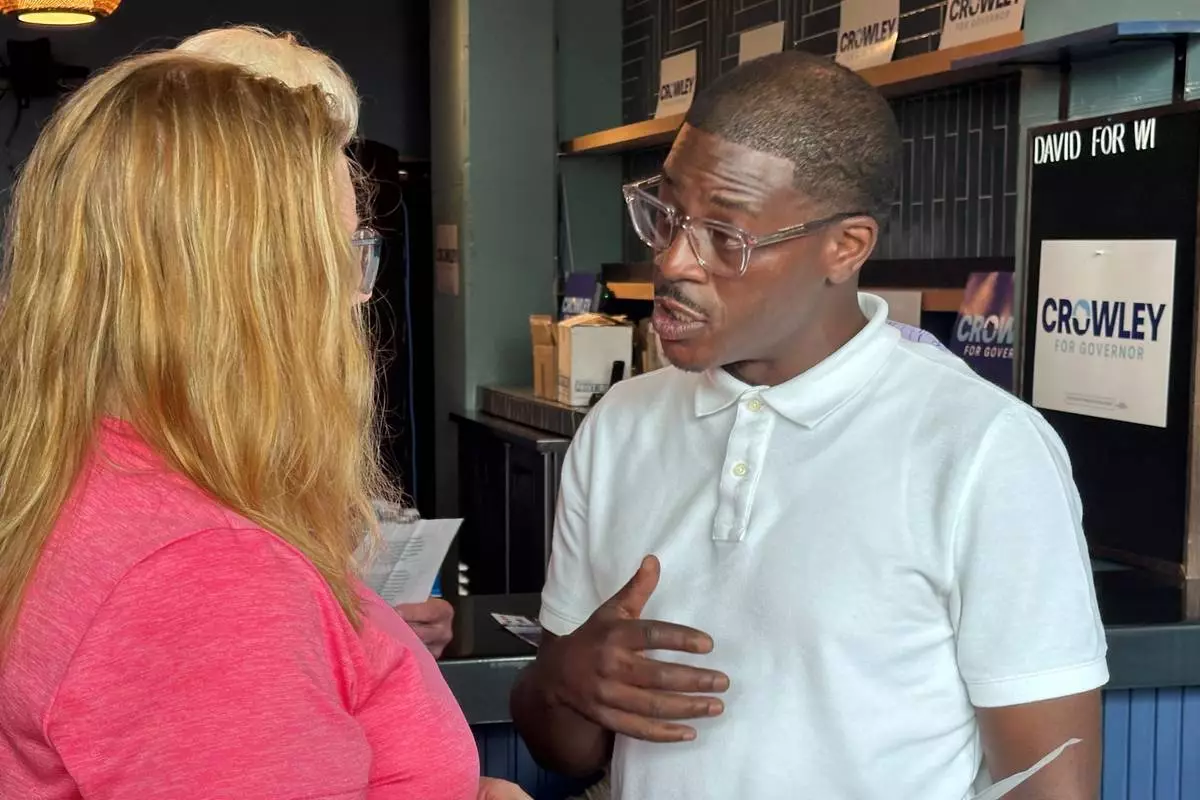
David Crowley, Democratic candidate for Wisconsin governor, speaks with supporter Abigail Tessmann during a campaign stop Wednesday, Aug. 5, 2026, in Madison, Wis. (AP Photo/Scott Bauer)
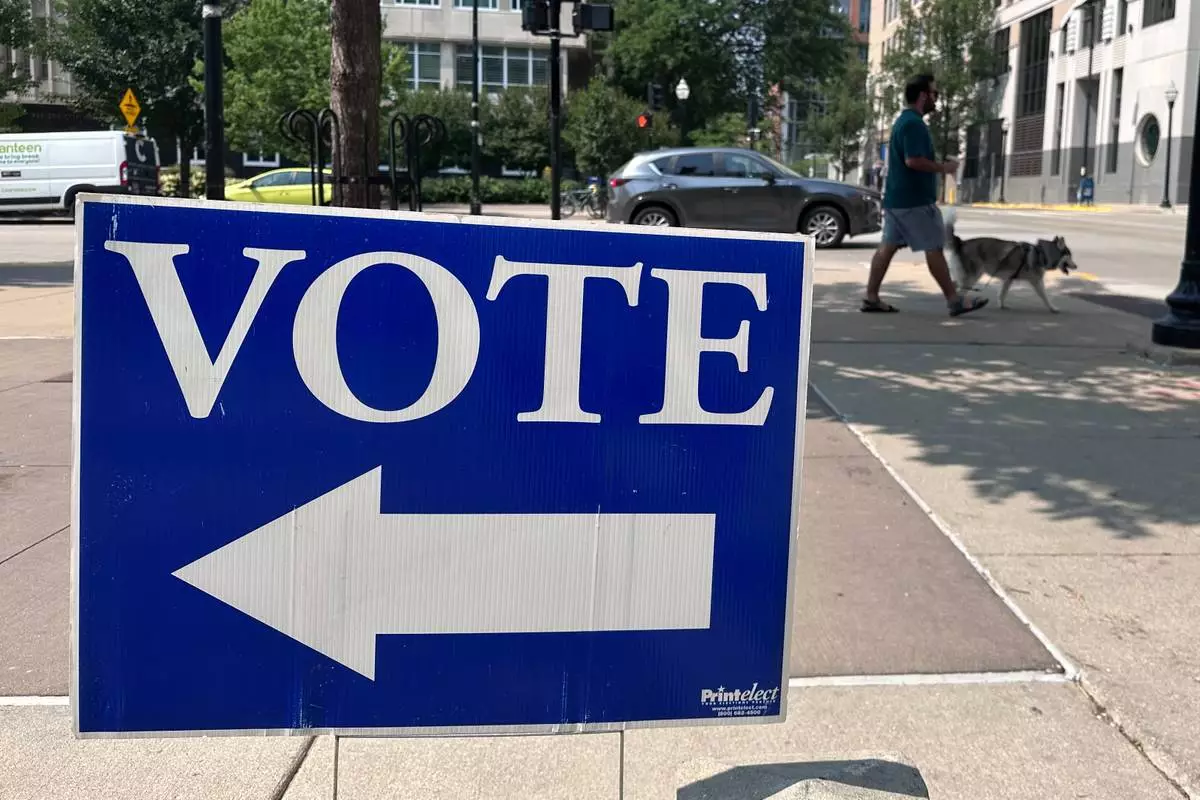
A person walks past a sign for a polling place on the first day of in-person absentee voting for Wisconsin's chaotic Democratic primary for governor Tuesday, July 28, 2026, in Madison, Wis. (AP Photo/Scott Bauer)