The Islamic Resistance Movement (Hamas) reaffirmed on Sunday its commitment to the consensus reached with mediators and the U.S.-led "Board of Peace" regarding the implementation of the second phase of the Gaza ceasefire agreement.
In its statement, Hamas urged mediators to develop a clear timetable. It also stressed that "the priority in this phase should be to ensure the full implementation of the agreement, including all its stages and requirements, leading to a complete cessation of hostilities, an end to the aggression against our people, the completion of the withdrawal, the opening of crossings, the entry of aid and shelter supplies, the start of the reconstruction process, and the enabling of the National Committee to carry out its tasks."
In contrast, Israeli Prime Minister Benjamin Netanyahu announced Sunday that Israel rejects a 15-point Gaza peace roadmap plan presented by the "Board of Peace", maintaining that Israeli forces will not withdraw until Hamas is fully disarmed.
Since a ceasefire between Hamas and Israel came into effect in October 2025, Israeli attacks have killed more than 1,250 people and injured over 4,100 others in Gaza, according to Gaza-based health authorities.
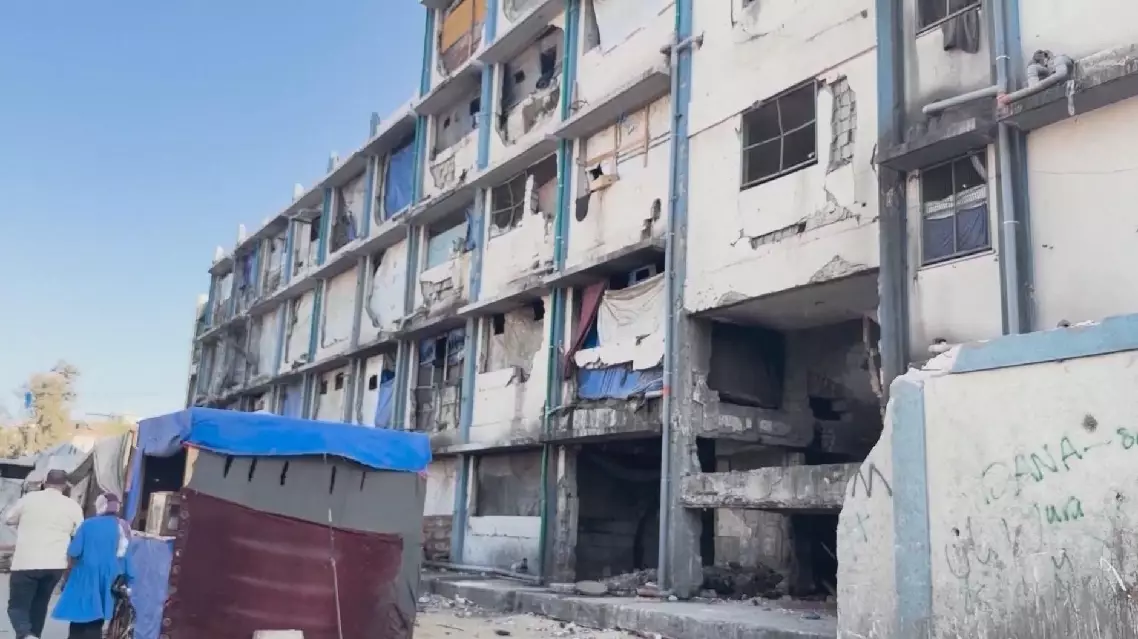
Hamas reaffirms commitment to Gaza ceasefire 2nd-phase roadmap
Rally participants gathered in the Japanese capital on Aug 9, which also marked the 81st anniversary of the Nagasaki atomic bombing, to voice strong opposition to the government's push to boost defense spending and revise the war-renouncing Article 9 of the national Constitution.
Holding anti-war placards, chanting anti-war slogans, protesters warned that remilitarizing the nation would betray its pacifist ideals and endanger future generations.
"Defense spending keeps increasing. Based on Article 9 of the Constitution, Japan pledged never to wage war again, yet it keeps strengthening its military. I find this extremely dangerous. They are also trying to revise Article 9. So I believe that for the sake of future young people and children, Article 9 must never be revised. Japan decided never to repeat the mistakes of waging a war after its defeat in WWII. I think we should continue to safeguard that commitment," said a rally participant.
For many in the crowd, the shadow of Hiroshima and Nagasaki remains a powerful moral compass as they believe that militarization offers no path forward for a nation that knows the devastation of war firsthand.
"Japan is the only country in the world to have suffered atomic bombings. Yet now Japan is going to deploy missiles. I believe Japan must never possess nuclear weapons," said another rally participant.
"I believe Japan has no future if it goes down the path of militarization. Nuclear weapons are absolutely bad for Japan," said a third woman, also a rally participant.
Beyond moral objections, some demonstrators said that Japan's economic vulnerabilities articulate that saber-rattling is a luxury the country cannot afford.
"I can't help but wonder what on earth a country with only a 36 percent food self-sufficiency rate would be fighting with. I have always been opposed to war, and I'm deeply dissatisfied with what the Takaichi administration is doing now," said another rally participant.
Other rally participants said that seeing revision of the Constitution could unleash unchecked military expansion, stripping away the very safeguards that have kept Japan at peace for eight decades.
"Article 9 of the Constitution is the key. If the nature of the Self-Defense Forces is elevated to a level beyond collective self-defense, which is explicitly written into the Constitution, it will allow the authority of the Self-Defense Forces to expand without limit. So no matter what, I want to prevent this from happening," said one more rally participant.
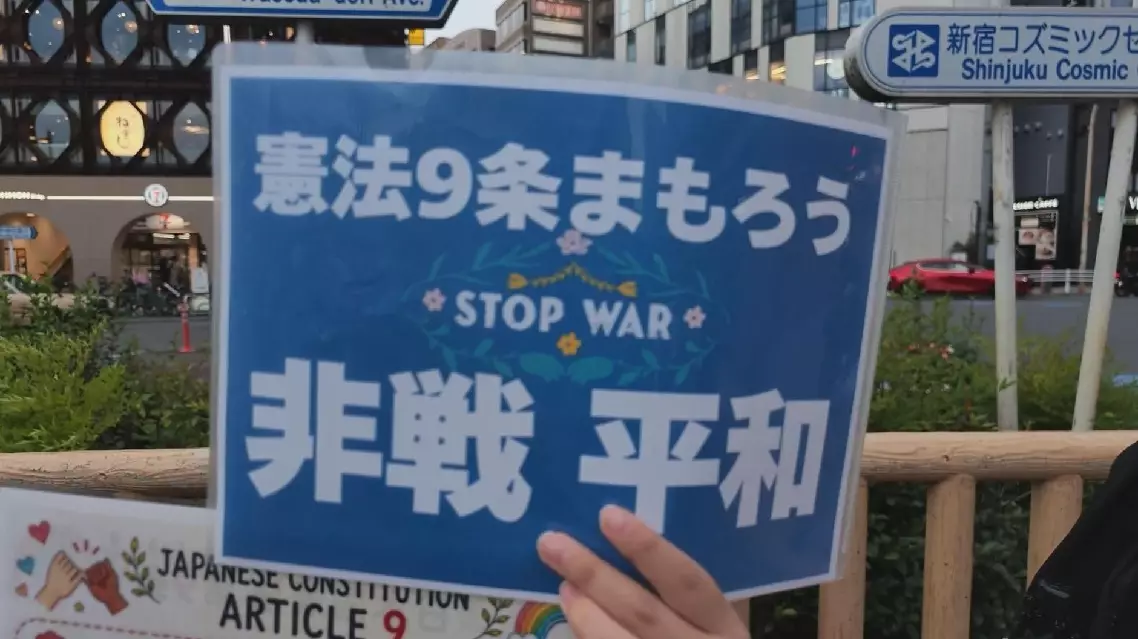
Japanese citizens rally against Takaichi's military expansion, constitutional revision