DH investigates case of severe paediatric influenza A infection
The Centre for Health Protection (CHP) of the Department of Health is today (August 10) investigating a severe paediatric influenza A infection case. The CHP urged the public to maintain good personal and environmental hygiene at all times to prevent influenza and other respiratory illnesses.
The case involves a 20-month-old boy with good past health. He developed a fever on August 7 and was taken to a private clinic on the following day (August 8). Since he presented with a convulsion in the clinic, he was taken immediately to the Accident and Emergency Department of Queen Elizabeth Hospital. Upon examination, he was found to have low blood pressure and was admitted to the hospital's paediatric intensive care unit. His respiratory specimen tested positive for influenza A virus. His clinical diagnosis was influenza A infection complicated with septic shock. He remains hospitalised and is in critical condition.
The CHP's preliminary investigation revealed that the boy had not received the seasonal influenza vaccination during the previous season (2025/26) and had no travel history during the incubation period. One of his household contacts recently developed upper respiratory symptoms and tested positive for influenza virus via a rapid antigen test. However, the household contact's condition was mild and did not require hospitalisation. The household contact has since recovered. The CHP will continue to investigate the case.
"Since Hong Kong entered the influenza season in late June, a cumulative total of seven cases of severe paediatric influenza infection have been recorded, including this case. One of them passed away unfortunately. We expect the level of influenza activity to remain high in the coming weeks. Members of the public are advised to maintain good personal and environmental hygiene at all times for personal protection against influenza infection. The latest surveillance data showed that the influenza activity is at a high level currently. The percentage of respiratory specimens testing positive for seasonal influenza viruses was 9.94 per cent and the influenza admission rate in public hospitals was 0.73 cases per 10 000 population last week. The predominant influenza viruses detected were influenza A (H3) and influenza A (H1), each accounting for 45 per cent. The rest were influenza B (10 per cent). These virus strains are similar to those circulating elsewhere in the world. Among them, the influenza A (H3) virus belongs to the K subclade, which has been circulating globally since last August. There is no evidence that it causes a more severe illness," said the Controller of the CHP, Dr Edwin Tsui.
"The World Health Organization has earlier announced its recommendations for the composition of influenza vaccines for the 2026/27 season in the northern hemisphere. Vaccine manufacturers are currently producing vaccines in accordance with the recommendations for use by the end of the year. The Government has completed the procurement process for the 2026/27 Seasonal Influenza Vaccination Programmes and is actively preparing various vaccination arrangements. I urge all schools and parents in Hong Kong to work closely with the CHP and actively participate in next season's Seasonal Influenza Vaccination School Outreach Programme," he added.
Dr Tsui also reminded parents that the health condition of children with influenza can deteriorate rapidly. Parents must pay close attention to their condition, and visit an accident and emergency department immediately if the child's condition deteriorates with symptoms such as shortness of breath, wheezing, blue lips, chest pain, confusion, a persistent fever or convulsions. Members of the public should seek medical attention as soon as possible if they develop respiratory symptoms. If they live with members of high-risk groups, such as children, the elderly and those with underlying illnesses or compromised immune systems, they should wear a surgical mask at home to reduce the risk of infecting them. Other effective ways to reduce the spread of the disease include maintaining household hygiene, frequently cleaning and disinfecting frequently touched surfaces, practising good hand hygiene, and ensuring proper indoor air circulation.
Members of the public may refer to the CHP'sCOVID-19 & Flu Express,Seasonal Influenza WebpageandCOVID-19 Vaccination Programme Webpage, for the latest information.
Source: AI-found images
FEHD releases first batch of gravidtrap indexes for Aedes albopictus in August
The Food and Environmental Hygiene Department (FEHD) today (August 10) released the first batch of gravidtrap indexes and density indexes for Aedes albopictus in August, covering 10 survey areas, as follows:
District
Survey Area
First Phase Gravidtrap Index
First Phase Density Index
Kwun Tong
Yau Tong and Cha Kwo Ling
0.0%
N/A
Sham Shui Po
Lai Chi Kok
5.4%
1.3
Wong Tai Sin
Wong Tai Sin East
4.2%
1.5
North
Fanling North
0.0%
N/A
Sai Kung
Sai Kung Town
3.8%
1.0
Sha Tin
Sha Tin East
6.5%
1.0
Kwai Tsing
Lai King
9.8%
1.4
Tsuen Wan
Sheung Kwai Chung
7.3%
1.5
Tsuen Wan West
0.0%
N/A
Yuen Long
Hung Shui Kiu and Ping Shan
2.1%
1.0
During the rainy season, the FEHD continues to carry out a series of measures, including:
- interdepartmental collaboration: convening special meetings of the interdepartmental task forces on anti-mosquito work to co-ordinate relevant departments and stakeholders (such as construction site contractors, schools and property management companies) in strengthening mosquito control work at venues;
- precise risk assessments: carrying out intensive and targeted mosquito control work at locations with more serious mosquito infestations, including stepping up inspections, eliminating mosquito breeding and potential breeding grounds, applying larvicides, conducting fogging operations to eradicate adult mosquitoes, and placing mosquito trapping devices at appropriate locations;
- promotion and education: organising exhibitions with relevant departments and stakeholders, and distributing leaflets and posters to enhance public awareness of mosquito control and prevention; and
- rapid alert mechanism: notifying residential estates that have subscribed to the gravidtrap Rapid Alert System, and advising property management companies and residents to stay vigilant and work together in taking mosquito prevention and elimination measures.
Public participation is crucial to the effective control of mosquito problems. The FEHD appeals to members of the public to continue to work together in strengthening personal mosquito control measures, including:
- tidy up their premises and check for any accumulation of water inside the premises;
- remove all unnecessary water collections and eliminate the sources;
- check household items (those placed in outdoor and open areas in particular), such as refuse containers, vases, air conditioner drip trays, and laundry racks to prevent stagnant water;
- change water in flower vases and scrub their inner surfaces thoroughly, and remove water in saucers under potted plants at least once a week;
- properly cover all containers that hold water to prevent mosquitoes from accessing the water;
- properly dispose of articles that can contain water, such as disposable meal boxes and empty cans; and
- scrub drains and surface sewers with alkaline detergent at least once a week to remove any mosquito eggs.
Starting in August 2025, following the completion of the surveillance of individual survey areas, and once the latest gravidtrap index and the density index are available, the FEHD has been disseminating relevant information through press releases, its website and social media. It aims to allow members of the public to quickly grasp the mosquito infestation situation and strengthen mosquito control efforts, thereby reducing the risk of chikungunya fever (CF) transmission.
Following recommendations from the World Health Organization and taking into account the local situation in Hong Kong, the FEHD sets up gravidtraps in districts where mosquito-borne diseases have been recorded in the past, as well as in densely populated places such as housing estates, hospitals and schools to monitor the breeding and distribution of Aedes albopictus mosquitoes, which can transmit CF and dengue fever. At present, the FEHD has set up gravidtraps in 62 survey areas of the community, with a surveillance period of two weeks. During the surveillance period, the FEHD will collect the gravidtraps once a week. After the first week of surveillance, the FEHD will immediately examine the glue boards inside the retrieved gravidtraps for the presence of adult Aedine mosquitoes to compile the Gravidtrap Index (First Phase) and Density Index (First Phase). At the end of the second week of surveillance, the FEHD will instantly check the glue boards for the presence of adult Aedine mosquitoes. Data from the two weeks of surveillance will be combined to obtain the Area Gravidtrap Index and the Area Density Index. The Gravidtrap and Density indexes for Aedes albopictus in different survey areas, as well as information on mosquito prevention and control measures, are available on the department's webpage (www.fehd.gov.hk/english/pestcontrol/dengue_fever/Dengue_Fever_Gravidtrap_Index_Update.html#).
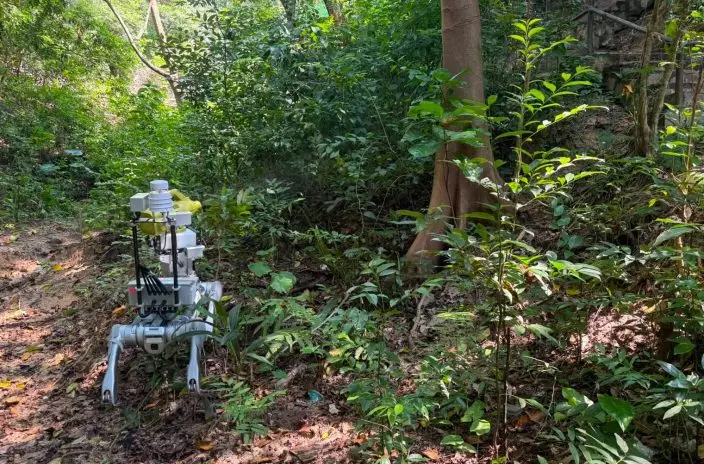
The Food and Environmental Hygiene Department (FEHD) today (August 10) released the first batch of gravidtrap indexes and density indexes for Aedes albopictus in August, covering 10 survey areas. Photo shows a robotic dog carrying out an FEHD anti-mosquito fogging operation at a woodland in the vicinity of Lai King, Kwai Tsing District. Source: HKSAR Government Press Releases
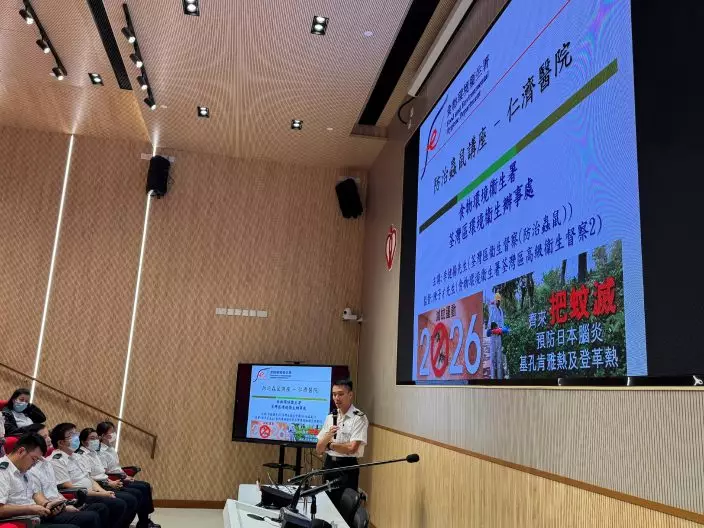
The Food and Environmental Hygiene Department (FEHD) today (August 10) released the first batch of gravidtrap indexes and density indexes for Aedes albopictus in August, covering 10 survey areas. Photo shows an FEHD staff member delivering a talk on mosquito control and prevention in a hospital in Sheung Kwai Chung, Tsuen Wan District, providing the hospital staff with advice on mosquito prevention and control. Source: HKSAR Government Press Releases
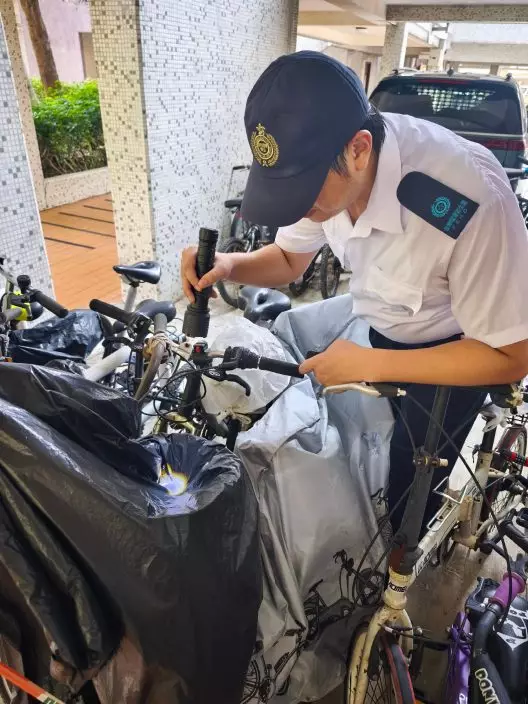
The Food and Environmental Hygiene Department (FEHD) today (August 10) released the first batch of gravidtrap indexes and density indexes for Aedes albopictus in August, covering 10 survey areas. Photo shows an FEHD staff member inspecting a private housing estate in Fanling North, North District, and providing advice and technical support on mosquito prevention and control. Source: HKSAR Government Press Releases