LAKE ZURICH, Ill.--(BUSINESS WIRE)--Aug 10, 2026--
Fresenius Kabi, an operating company of the Fresenius Group, is recalling one lot of Tyenne ® (tocilizumab-aazg) Injection 400 mg/20 mL (20 mg/mL)20 mL vials to the user level. An internal investigation at the firm found the product to contain glass particles.
This press release features multimedia. View the full release here: https://www.businesswire.com/news/home/20260810034320/en/
Risk Statement: The administration of an injectable product containing glass particulates may cause local irritation, pain, or swelling at the infusion site, as well as inflammation of the veins. More seriously, glass particles can cause blockage and clotting in blood vessels, which can cut off blood flow to vital organs, lead to a life-threatening blood clot in the lungs (pulmonary embolism) and cause permanent organ damage or death.
Tyenne ® (tocilizumab-aazg) Injection is indicated for the treatment of adult patients with moderately to severely active rheumatoid arthritis who have had an inadequate response to one or more disease-modifying antirheumatic drugs (DMARDs); adult patients with giant cell arteritis; patients 2 years of age and older with active polyarticular juvenile idiopathic arthritis; patients 2 years of age and older with active systemic juvenile idiopathic arthritis; adults and pediatric patients 2 years of age and older with chimeric antigen receptor (CAR) T cell-induced severe or life-threatening cytokine release syndrome; and certain hospitalized adult patients with COVID-19.
Recalled product can be identified as follows (with label below):
Tyenne (tocilizumab-aazg) Injection 400 mg/20 mL (20 mg/mL)20 mL was distributed nationwide to wholesalers, distributors and direct customers.
Fresenius Kabi is notifying its distributors and customers by letter and is arranging for return of the recalled product. If health care facilities have any of the affected lot, they are to immediately discontinue distributing, dispensing, or using the lot and return all units to Fresenius Kabi. Distributors are instructed to immediately notify their customers that have been shipped or may have been shipped, the product involved in this recall.
Consumers with questions regarding this recall can contact Fresenius Kabi USA Quality Assurance at 1-866-716-2459, Monday through Friday, during the hours of 8:00 a.m. to 5:00 p.m. Central Standard Time. Patients should contact their physician or health care provider if they have experienced any problems that may be related to receiving this drug product.
Adverse reactions or quality problems experienced with the use of this product may be reported to Fresenius Kabi Medical Affairs or Vigilance departments at 1-800-551-7176, Monday through Friday, during the hours of 8:00 a.m. to 5:00 p.m. Central Standard Time or send an e-mail to either productcomplaint.USA@fresenius-kabi.com or adverse.events.USA@fresenius-kabi.com.
Adverse reactions or quality problems experienced with the use of this product may be reported to the FDA's MedWatch Adverse Event Reporting program either online, by regular mail or by fax.
This recall is being conducted with the knowledge of the U.S. Food and Drug Administration.
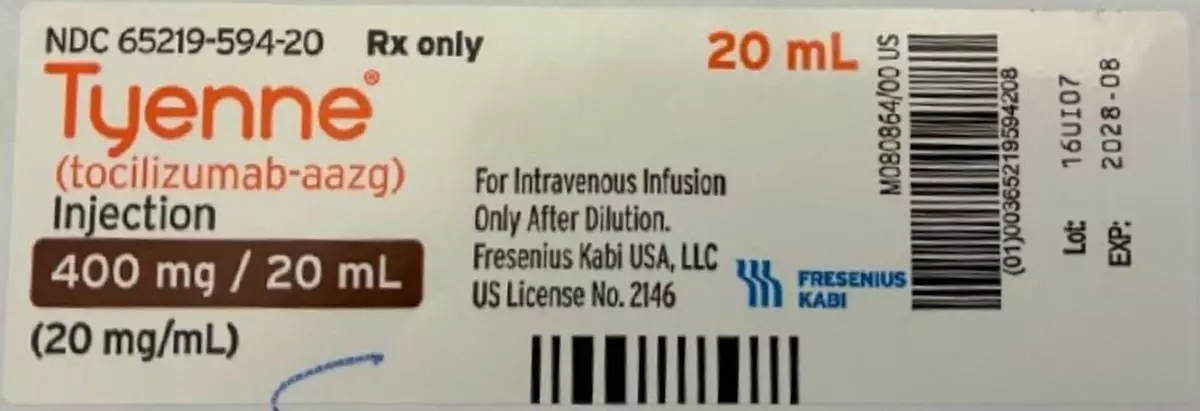
Fresenius Kabi, an operating company of the Fresenius Group, is recalling one lot of Tyenne® (tocilizumab-aazg) Injection 400 mg/20 mL (20 mg/mL)20 mL vials to the user level.
VIENNA (AP) — A group of European countries announced on Monday that they aim to set up a “return hub” in Rwanda where rejected asylum-seekers could be sent from next year, a move that they hope will also deter more people from coming.
The European Union has worked for years to tighten migration rules, push down the number of asylum-seekers coming to the 27-nation bloc and increase deportations of migrants who aren’t entitled to stay. Sending people to centers outside Europe has emerged as a central plank of that effort.
The plan by Austria, Denmark, Germany, Greece and the Netherlands, which have spearheaded negotiations with non-EU countries, drew immediate criticism from human rights groups.
The aim is for the first center to be set up in Rwanda next year, Austrian Chancellor Christian Stocker said alongside officials from the other European countries and Rwanda's interior minister.
“I think this will be a game changer making us able to confront the massive challenges with illegal migration,” Danish Prime Minister Mette Frederiksen said. “We will break down the business model of human smugglers. We will take back control of our borders and we will remove the incentives for illegal migration.”
She predicted that “many other European countries” would join in. Her immigration minister, Morten Bødskov, said that the plan is to have a fully negotiated agreement with Rwanda “within the next few months.”
Officials were vague about how many migrants might be sent to Rwanda, but emphasized the plan's deterrent effect.
“The most important number is the number that we will never see because hopefully they will not start their journey to Europe,” Frederiksen said. “So this is a milestone.”
Rwandan Interior Minister Vincent Biruta said that his country would give a “second chance” to people who have no right to stay in Europe. He said that those who arrive will be offered the opportunity “to voluntarily return to the countries of origin, integrate into Rwandan society or relocate to another destination where they have the legal right to reside, according to their preference.”
Asked how Rwanda would guarantee refugees' human rights, he said that Rwanda would bring on board organizations such as the U.N. refugee agency and “there will be an independent monitoring mechanism.”
Human rights groups have criticized plans to deport migrants to facilities in third countries, arguing that European nations can't guarantee that their rights will be respected there. European officials insist that the new hubs would abide by European and international law.
“Offshore deportation centers are the latest cynical expression of the EU’s drive to shift its responsibilities to other countries,” Human Rights Watch researcher Clementine de Montjoye said in a statement. “Paying Kigali to host a deportation program would not only cause suffering and harm to those deported, it would finance and provide political leverage to a government responsible for serious human rights abuses at home and abroad.”
Amnesty International Austria asylum and migration expert Aimée Stuflesser said in a statement that “today’s disgraceful deportation deal between European countries and Rwanda repeats mistakes of the past.”
“Sending people to a country they have never been to is irresponsible and there is a real danger that the Rwanda deal will, with its limited chance for scrutiny, become a cruel black hole for human rights,” Stuflesser said.
The U.N. refugee agency said that it only supports the possible use of return hubs in line with human rights standards, and as a way to help returns of people whose claims for asylum were denied after a full and fair assessment.
UNHCR spokesperson Matthew Saltmarsh said that the agency was involved in “constructive discussions” with the five EU countries “to provide advice on the compliance of the return hub process with international human rights law standards.” No agreement with the countries has been signed.
The United Nations' International Organization for Migration said that it doesn’t take part in or negotiate “state-to-state removal arrangements,” but was providing “technical input on the return hub process.” IOM said that it was prepared to provide help to migrants at the request of the receiving government if “necessary safeguards” are in place.
EU laws have changed in recent years because of persistent public and political pressure for tougher measures against migration.
European lawmakers voted in June to allow member states to set up centers outside the EU on their own or in small coalitions, and send rejected asylum-seekers there instead of to their home countries.
Rwanda struck a deal with the U.K. in 2022 under which migrants who arrived as stowaways or in boats would be sent to the African nation, where their asylum claims would be processed and, if successful, they would stay. The U.K. Supreme Court ruled that the policy was unlawful because Rwanda isn't a safe third country for migrants sent there.
Then Prime Minister Keir Starmer scrapped that deal immediately after taking office in 2024.
German Interior Minister Alexander Dobrindt said Monday that the European plan for Rwanda isn't comparable. He said that the U.K. had planned to outsource asylum proceedings to third countries, while the European plan involves people who have been through the asylum process and exhausted their appeals.
Geir Moulson reported from Berlin. Jamey Keaten contributed to this report from Geneva.
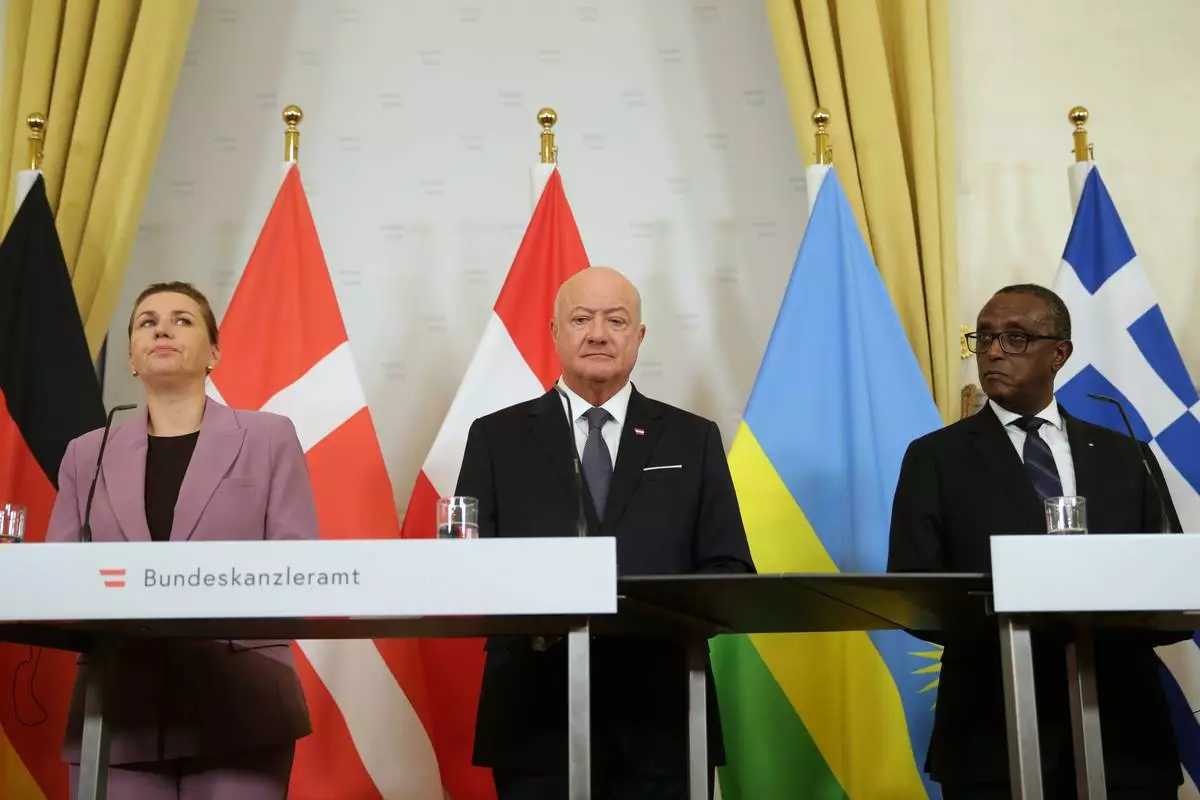
Austria's Chancellor Christian Stocker, center, Rwanda's Interior Minister Vincent Biruta, right, and Denmark's Prime Minister Mette Frederiksen listen to questions as they brief the media after talks at the migration conference in Vienna, Austria, Monday, Nov. 16, 2026. (AP Photo/Heinz-Peter Bader)
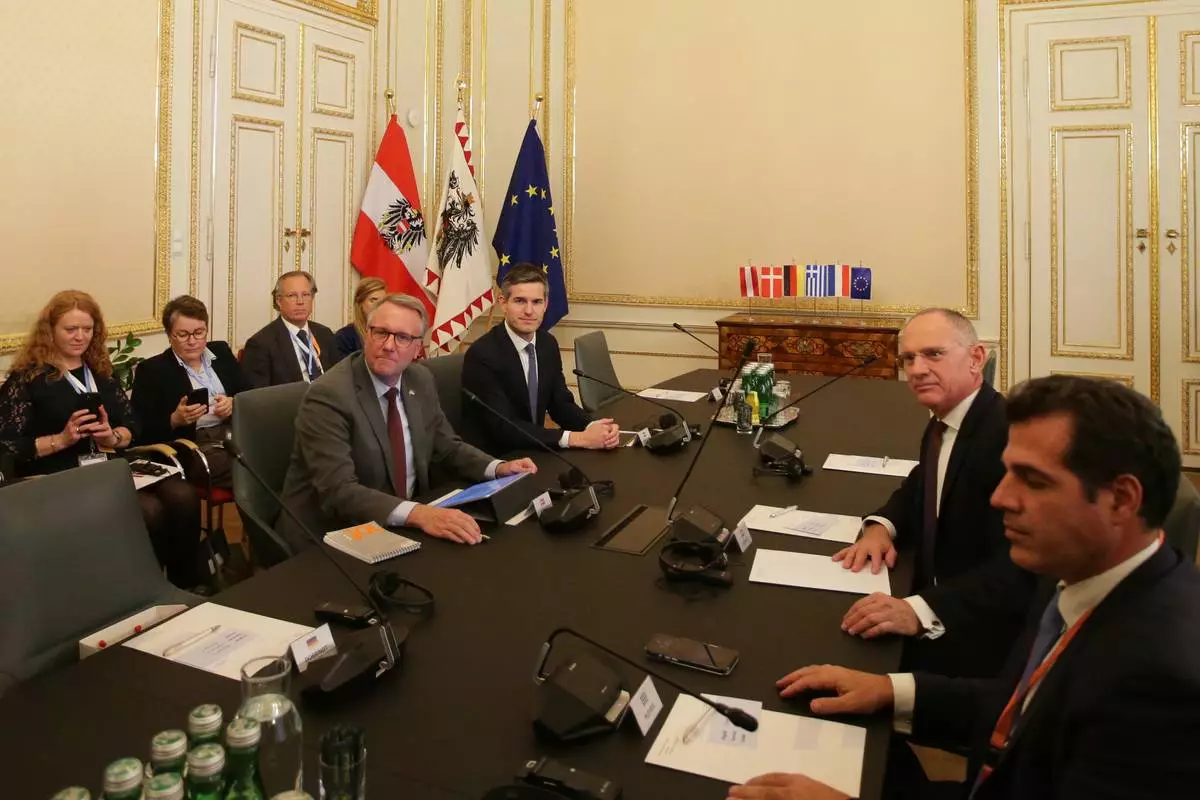
Austrian Interior Minister Gerhard Karner, background right, starts talks with Netherland's Foreign Minister Tom Berendsen, background center, Denmark's Integration Minister Morten Bodskov, left, and Greek Minister of Integration Athanasios Plevris, right, in Vienna, Austria, Monday, Nov. 16, 2026. (AP Photo/Heinz-Peter Bader)
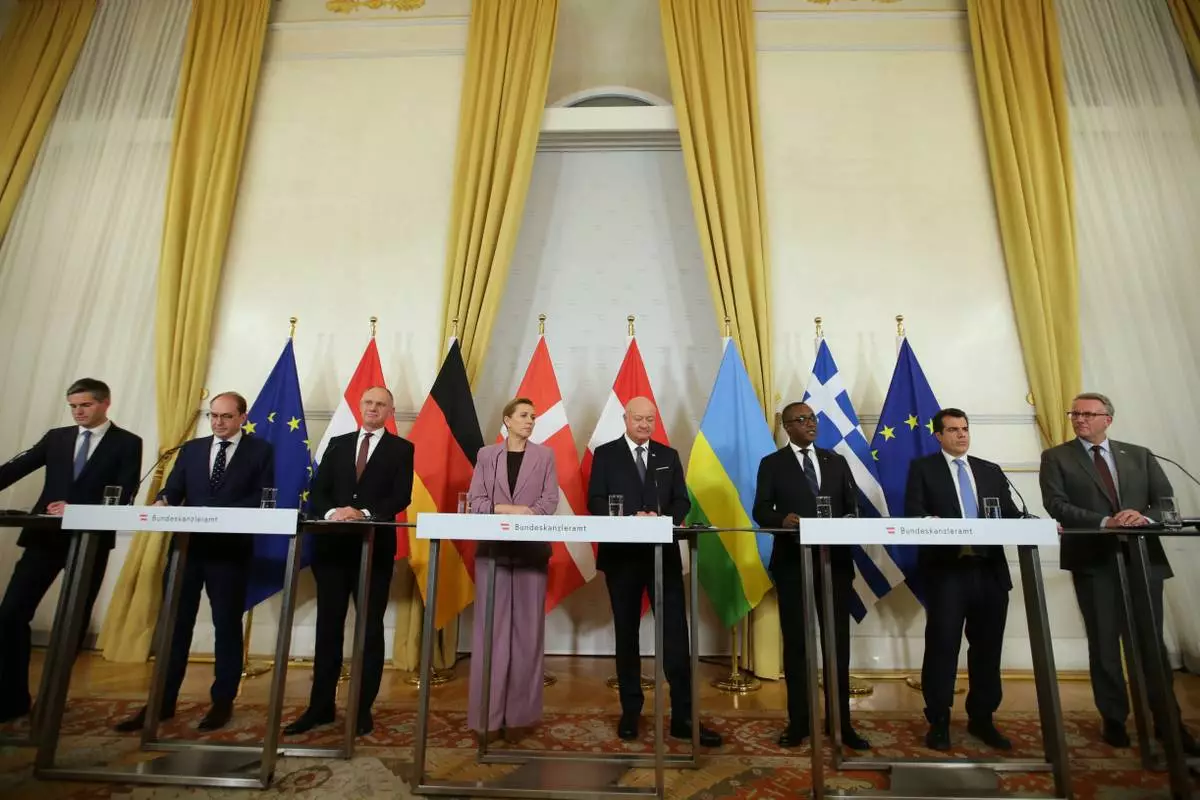
Rwanda's Interior Minister Vincent Biruta, Austria's Chancellor Christian Stocker, Austrian Interior Minister Gerhard Karner, Netherland's Foreign Minister Tom Berendsen, Denmark's Integration Minister Morten Bodskov, German Interior Minister Alexander Dobrindt and Greek Minister of Integration Athanasios Plevris attend a media conference after migration talks in Vienna, Austria, Monday, Nov. 16, 2026. (AP Photo/Heinz-Peter Bader)
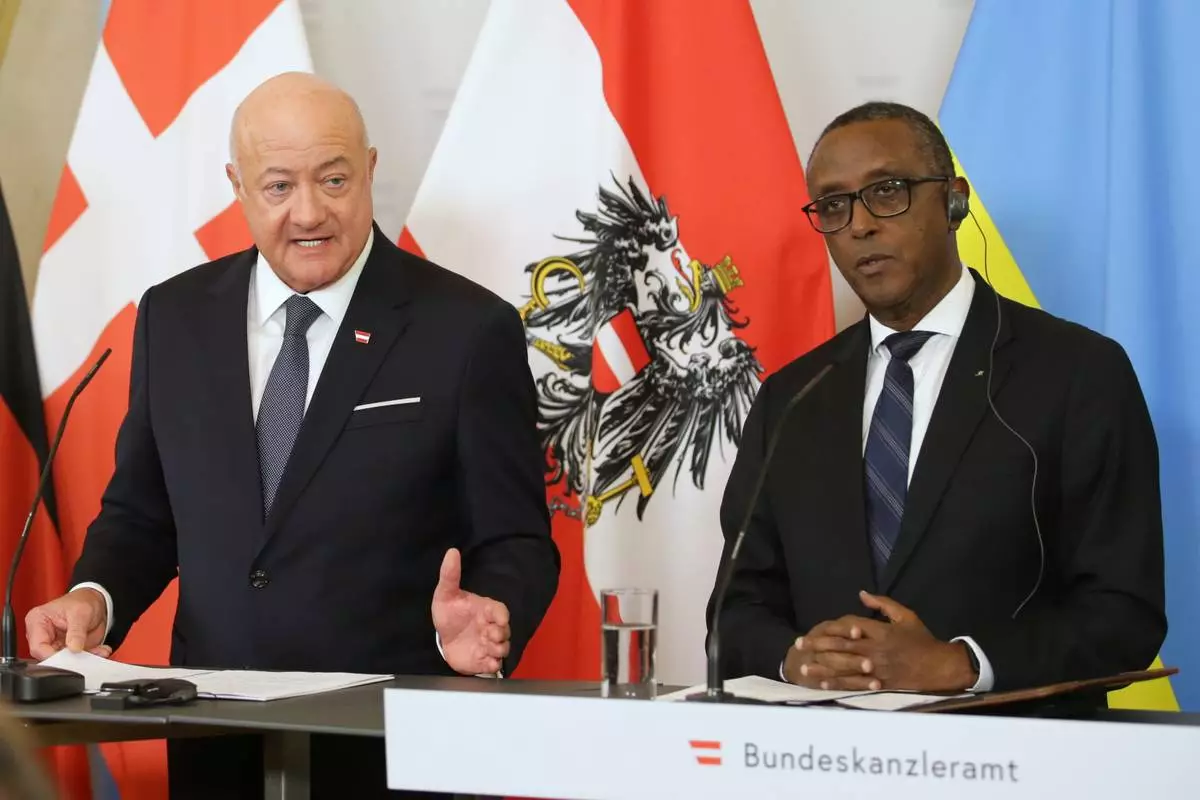
Rwanda's Interior Minister Vincent Biruta and Austria's Chancellor Christian Stocker brief the media after talks at the migration conference in Vienna, Austria, Monday, Nov. 16, 2026. (AP Photo/Heinz-Peter Bader)
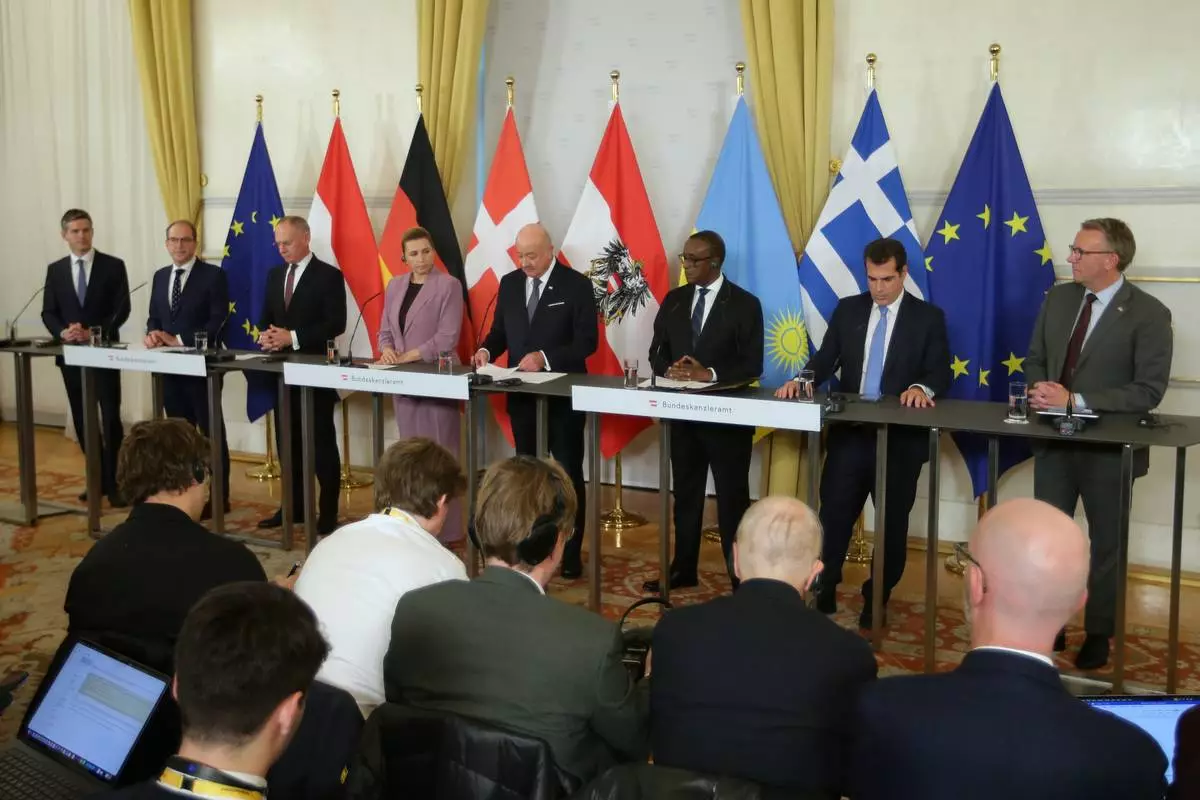
Rwanda's Interior Minister Vincent Biruta, Austria's Chancellor Christian Stocker, Austrian Interior Minister Gerhard Karner, Netherland's Foreign Minister Tom Berendsen, Denmark's Integration Minister Morten Bodskov, German Interior Minister Alexander Dobrindt and Greek Minister of Integration Athanasios Plevris attend a media conference after migration talks in Vienna, Austria, Monday, Nov. 16, 2026. (AP Photo/Heinz-Peter Bader)