Skip to Content Facebook Feature Image

Omdia: iPhone Users Spend 40% More on Microdramas Than Android Users

Business

Omdia: iPhone Users Spend 40% More on Microdramas Than Android Users
Business

Business

Omdia: iPhone Users Spend 40% More on Microdramas Than Android Users

2026-08-11 16:00 Last Updated At:16:10

LONDON--(BUSINESS WIRE)--Aug 11, 2026--

New Omdia research reveals that iPhone users spend around 40% more on microdrama apps than Android users, challenging common assumptions about who consumes and pays for this rapidly growing form of entertainment.

This press release features multimedia. View the full release here: https://www.businesswire.com/news/home/20260810065424/en/

Although microdramas are often perceived as appealing primarily to lower-income or niche audiences, Omdia’s latest Consumer Research suggests the reality is far more nuanced. In several major markets, iPhone users are significantly more likely to pay for microdrama content than Android users, highlighting the strong commercial potential of these audiences.

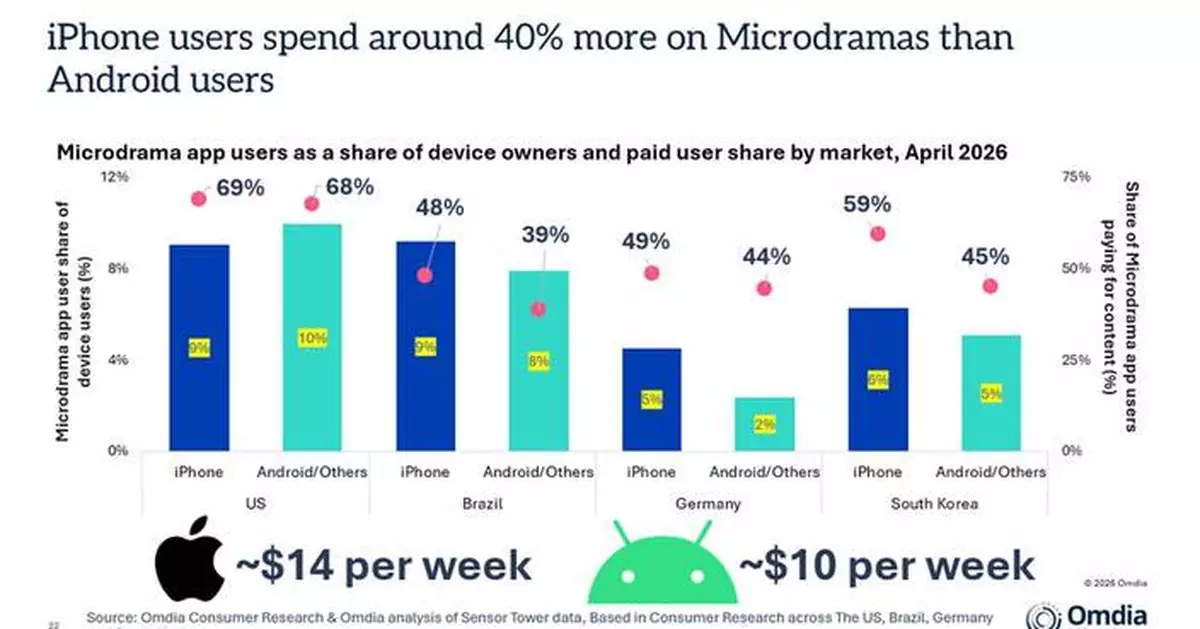
In the United States, microdrama adoption is now well established across both mobile ecosystems. Around 9% of iPhone users and 10% of Android users have used at least one microdrama app during the past three months. Monetization rates are also remarkably similar, with 69% of iPhone users and 68% of Android users saying they pay for content through subscriptions, one-off purchases, or in-app currencies.

Outside the United States, however, clear differences emerge:

Complementing the consumer survey, Omdia’s analysis of Sensor Tower data found that iPhone users spend approximately $14 per week on microdrama apps, compared with around $10 per week for Android users.

The research indicates that while audience reach is becoming increasingly similar across mobile platforms, willingness to pay and overall consumer value differ significantly between device ecosystems and regions.

“Microdramas are rapidly becoming one of the fastest-growing segments of digital entertainment. Understanding who watches is important, but understanding who pays is what drives long-term commercial success,” said Maria Rua Aguete, Head of Media & Entertainment at Omdia.

“What’s particularly fascinating is how our research challenges many of the assumptions surrounding microdrama audiences. The genre has often been dismissed as appealing primarily to lower-income or niche consumers. Our findings tell a different story. In many markets, iPhone users are actually more likely to pay for microdrama content than Android users, highlighting that these audiences are more diverse and commercially valuable than many in the industry have assumed.

“For content owners, app developers, and advertisers, understanding these differences will be critical as the global microdrama market continues to expand.”

Maria Rua Aguete will present Omdia’s latest research on the global microdrama market at IBC 2026 in Amsterdam and MIPCOM 2026 in Cannes later this year.

About the research

The findings are based on Omdia Consumer Research conducted in the United States, Brazil, Germany, and South Korea in April 2026, combined with Omdia analysis of Sensor Tower data.

ABOUT OMDIA

Omdia, part of TechTarget, Inc. d/b/a Informa TechTarget (Nasdaq: TTGT), is a technology research and advisory group. Our deep knowledge of tech markets grounded in real conversations with industry leaders and hundreds of thousands of data points, make our market intelligence our clients’ strategic advantage. From R&D to ROI, we identify the greatest opportunities and move the industry forward.
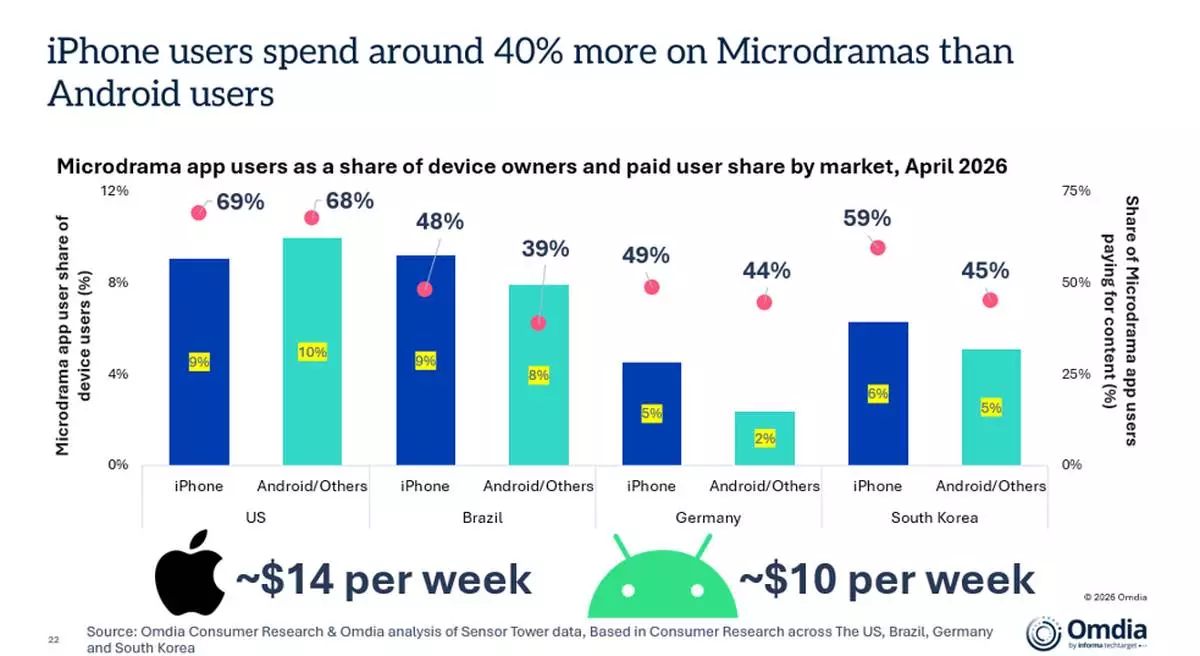
Microdrama app users as a share of device owners and paid user share by market, April 2026

Microdrama app users as a share of device owners and paid user share by market, April 2026
BUNIA, Congo (AP) — At least 2,000 people have died among the confirmed cases in Congo’s Ebola outbreak that is the fastest growing on record, according to the latest government data, as health authorities struggle to get help quickly to remote localities due to rebel conflict, bad roads and work stoppages over payment issues.

Data published overnight into Tuesday showed the outbreak has recorded a total of 4,381 confirmed cases, including 2,011 deaths. A total of 704 patients are in admission and isolation.

The grim toll comes nearly three months since the outbreak was declared on May 15. While it took about nine weeks for the outbreak to record 1,000 deaths, it’s taken just around three weeks to record the additional 1,000 deaths, showing how fast the health crisis is moving beyond the control of responders.

It's already the second-largest outbreak in history, only behind the 2014-2016 West Africa outbreak that recorded more than 28,000 cases including over 11,000 deaths.

Aid workers say the outbreak continues to outpace response that’s been expanding across the five provinces affected. Many health workers have gone on strike to protest lack of payment for their work since the outbreak was declared. And most new cases are recorded outside of contacts being monitored.

The Ebola outbreak is unlike most previous ones because the rare Bundibugyo virus responsible for it has no approved vaccines or treatments. Clinical trials for those have begun in Ituri, the epicenter of the outbreak.

The World Health Organization said on Monday that the outbreak likely started in February, long before authorities detected it in one of Congo’s most remote and vulnerable areas. WHO said some cases early on were wrongly attributed to malaria and typhoid, and that early testing was conducted for the more common type of Ebola.

The WHO regional director for Africa, Dr. Mohamed Yakub Janabi, told a news conference that officials are “chasing the virus, the virus is ahead of us.”

The first Ebola virus to be identified was in 1976 near the Ebola River in what is now Congo. The current outbreak is the 17th — and largest — the Central African nation has faced.

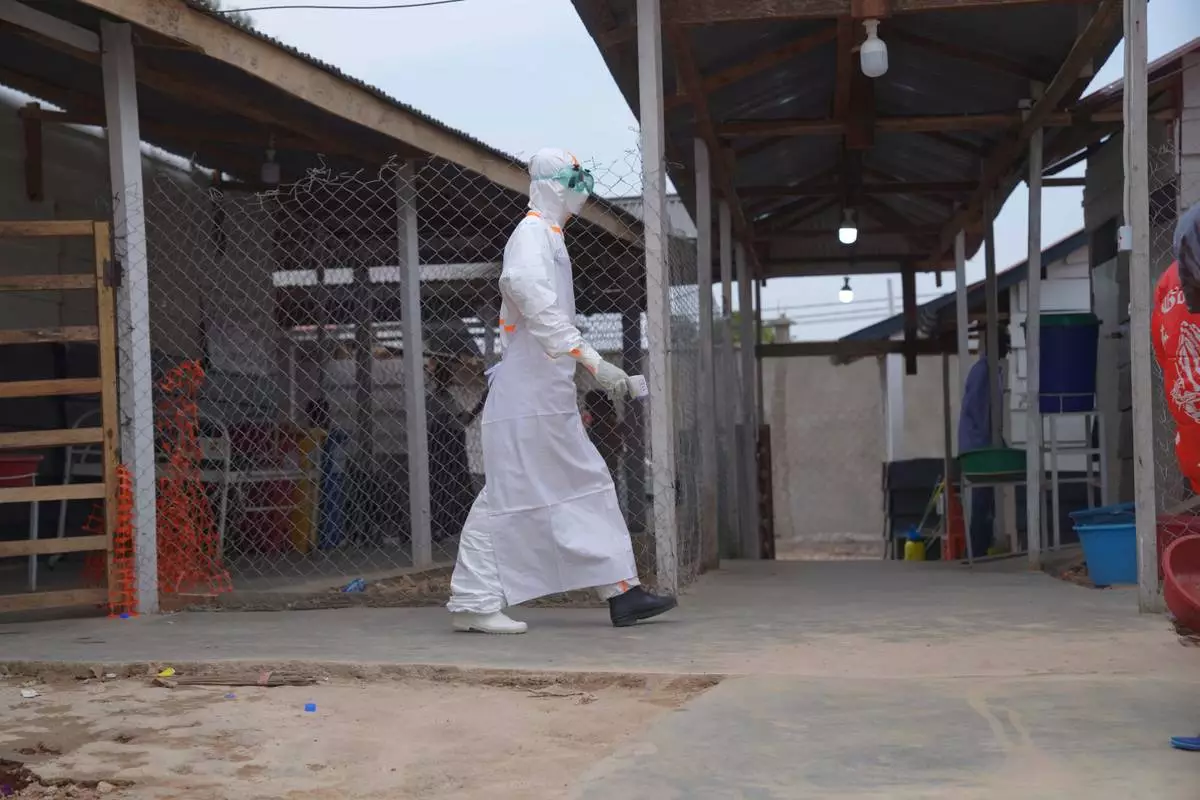
A health worker in protective gear walks at an Ebola treatment centre in Bunia, Congo, Monday, Aug. 10, 2026. (AP Photo/Dieudonne Dirole)

A health worker in protective gear walks at an Ebola treatment centre in Bunia, Congo, Monday, Aug. 10, 2026. (AP Photo/Dieudonne Dirole)

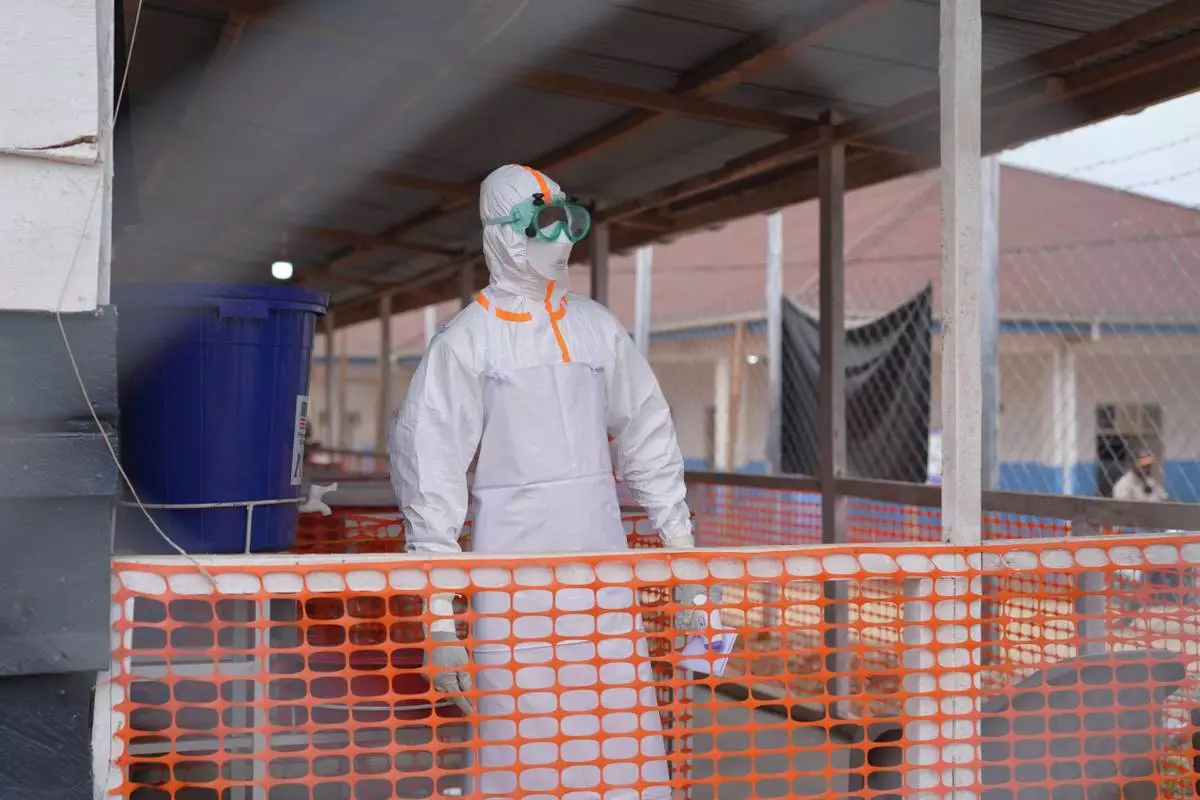
A health worker in protective gear looks on at an Ebola treatment centre in Bunia, Congo, Monday, Aug. 10, 2026. (AP Photo/Dieudonne Dirole)

A health worker in protective gear looks on at an Ebola treatment centre in Bunia, Congo, Monday, Aug. 10, 2026. (AP Photo/Dieudonne Dirole)

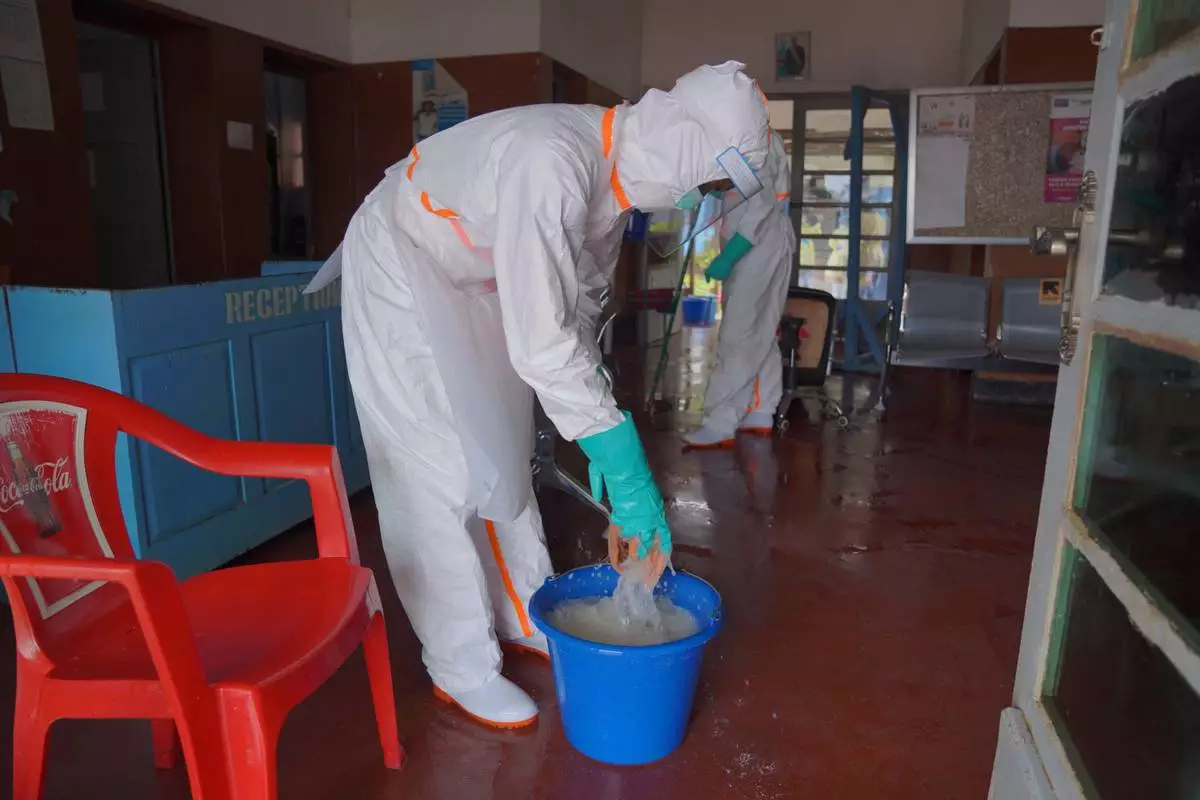
A health worker in protective gear prepares to mop the floor at an ebola treatment centre in Bunia, Congo, Monday, Aug. 10, 2026. (AP Photo/Dieudonne Dirole)

A health worker in protective gear prepares to mop the floor at an ebola treatment centre in Bunia, Congo, Monday, Aug. 10, 2026. (AP Photo/Dieudonne Dirole)

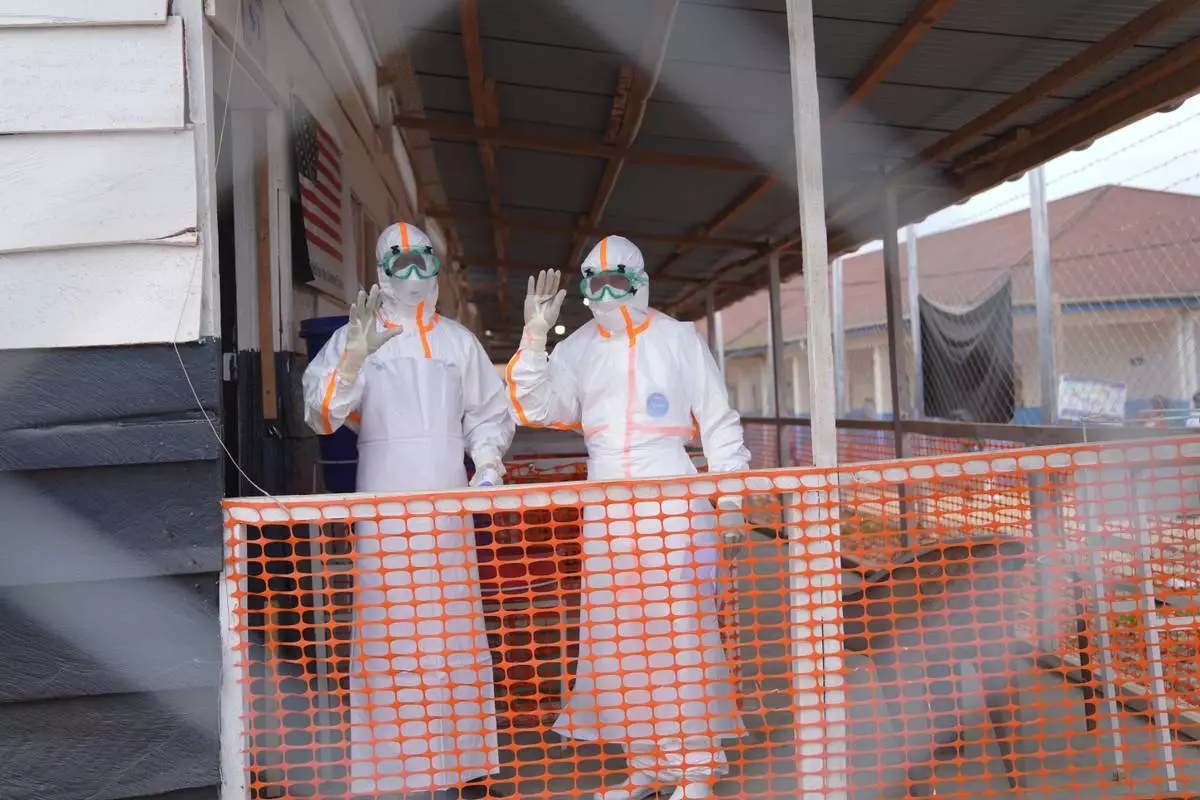
Health workers in protective gear wave inside an Ebola treatment centre in Bunia, Congo, Monday, Aug. 10, 2026. (AP Photo/Dieudonne Dirole)

Health workers in protective gear wave inside an Ebola treatment centre in Bunia, Congo, Monday, Aug. 10, 2026. (AP Photo/Dieudonne Dirole)

Recommended Articles