Government enhances Seasonal Influenza Vaccination School Outreach Programme by launching new Electronic Consent Form through eHealth, providing convenience to parents, schools and healthcare service providers
The Centre for Health Protection (CHP) of the Department of Health (DH) announced today (August 11) that the 2026/27 Seasonal Influenza Vaccination School Outreach Programme (SIVSOP) will introduce a new Electronic Consent Form (e-consent form) feature. Starting from August 17, parents can use the e-consent form on the eHealth mobile application (eHealth mobile app) to submit consent forms for their children to receive seasonal influenza vaccinations (SIV) under the SIVSOP. This new measure makes it easier for parents to submit consent forms for their children before the start of the school year and streamlines the administrative procedures for schools and healthcare service providers, enabling students to receive SIV earlier and safeguarding their health.

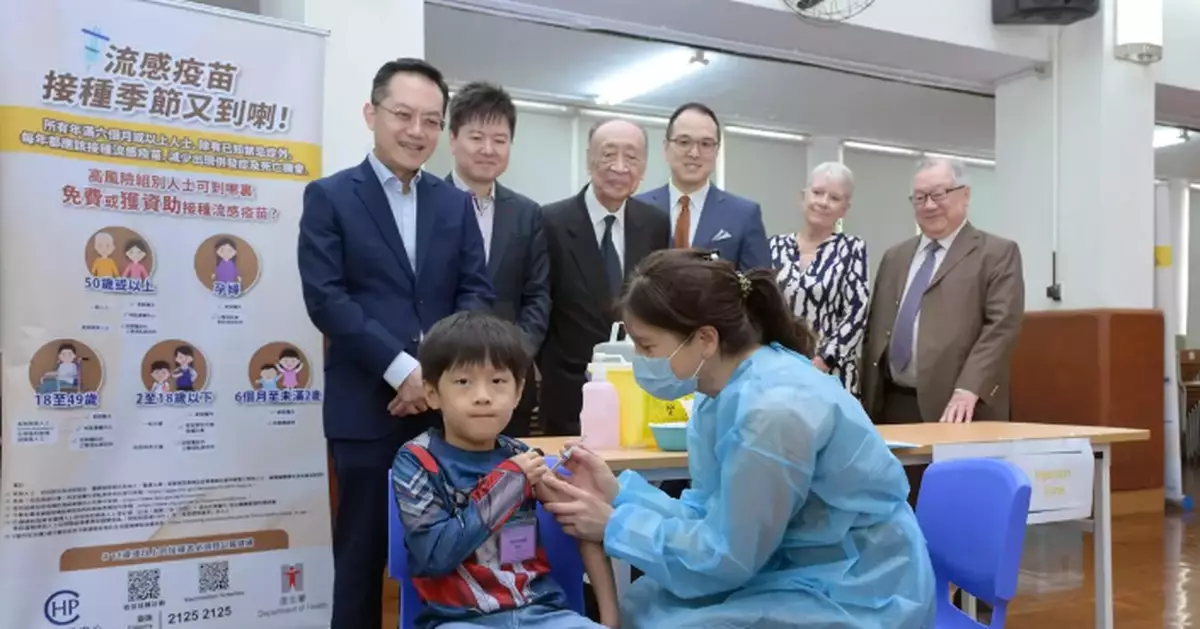
The Centre for Health Protection, Photo source: reference image
Scientific evidence shows that vaccination is one of the most effective means to prevent severe cases of seasonal influenza and its complications. It also reduces the risks of in-patient admission and mortality. The Government has been actively promoting and optimising the SIVSOP. In the previous school year (2025/26), the CHP started accepting school enrolment for the SIVSOP as early as the start of June 2025, and allowed all schools to choose to use the nasal spray live attenuated influenza vaccine (LAIV) and the "hybrid mode" (i.e. schools could choose both injectable inactivated influenza vaccines and nasal spray LAIV for the same or different outreach vaccination activities). These optimisation measures yielded remarkable results. More than 2 300 schools, representing 99 per cent of all schools, had organised SIV school outreach activities by the end of December 2025, which was higher than the 91 per cent in the preceding school year. This year, the introduction of the new e-consent form further streamlines the process and reduces the time parents need to fill out the consent forms. This will facilitate the arrangement of SIV outreach activities by schools as early as possible.
The e-consent form has the following four main benefits:
- Simplifying the form-filling process for parents: If parents and their children have registered for eHealth accounts, parents can submit consent forms for their children via the eHealth mobile app, without having to re-enter personal particulars. This process is simpler than using traditional paper forms.
- Reducing schools 'administrative work: Through the newly established SIVSOP Student Information Platformby the DH, schools can download a list of students with completed e-consent forms. The system automatically consolidates the information submitted by parents, eliminating the need for schools to manually enter or verify data, thereby reducing the administrative workload and minimising human error.
- Reducing healthcare service providers' administrative work: Healthcare service providers do not need to collect or retain students' paper consent forms, thereby reducing the associated administrative work.
- Advancing vaccination activities: Parents can complete the consent process in advance, enabling schools to plan and organise SIV school outreach activities earlier.
The DH has already held several online briefing sessions for participating schools to explain the arrangements for the upcoming SIVSOP and the process for collecting and submitting e-consent forms. The DH has also invited school representatives to participate in testing the system interface and operational procedures. Starting from tomorrow (August 12), participating schools will receive school-specific QR codes for distribution to parents. The QR codes will become effective on August 17. By then, parents can start filling out the e-consent forms for their children.
Parents only need to log in to the eHealth mobile app and scan the school-specific QR code distributed by their children's school to submit the consent form for their children in one go. The DH has prepared a short video (youtu.be/_TIvuosvR6c) (Chinese only) on how to complete the e-consent form for parents who need guidance.
The DH reminded parents that the QR code distributed by each school is valid only for students enrolled at that school. If parents have more than one child and they attend different schools, they must scan the respective school-specific QR for each child's respective school separately.
If parents or their children have not yet registered for eHealth or downloaded the eHealth mobile app, they may visit the eHealth thematic website (app.ehealth.gov.hk) for details on registration and download procedures.
The DH called on schools and parents to ensure their children receive SIV and to use the e-consent form to jointly build a stronger protective barrier for the children. The Government is actively making preparations for the 2026/27 SIV programmes. Details of the arrangements, such as eligible groups and vaccination venues, will be announced in due course.
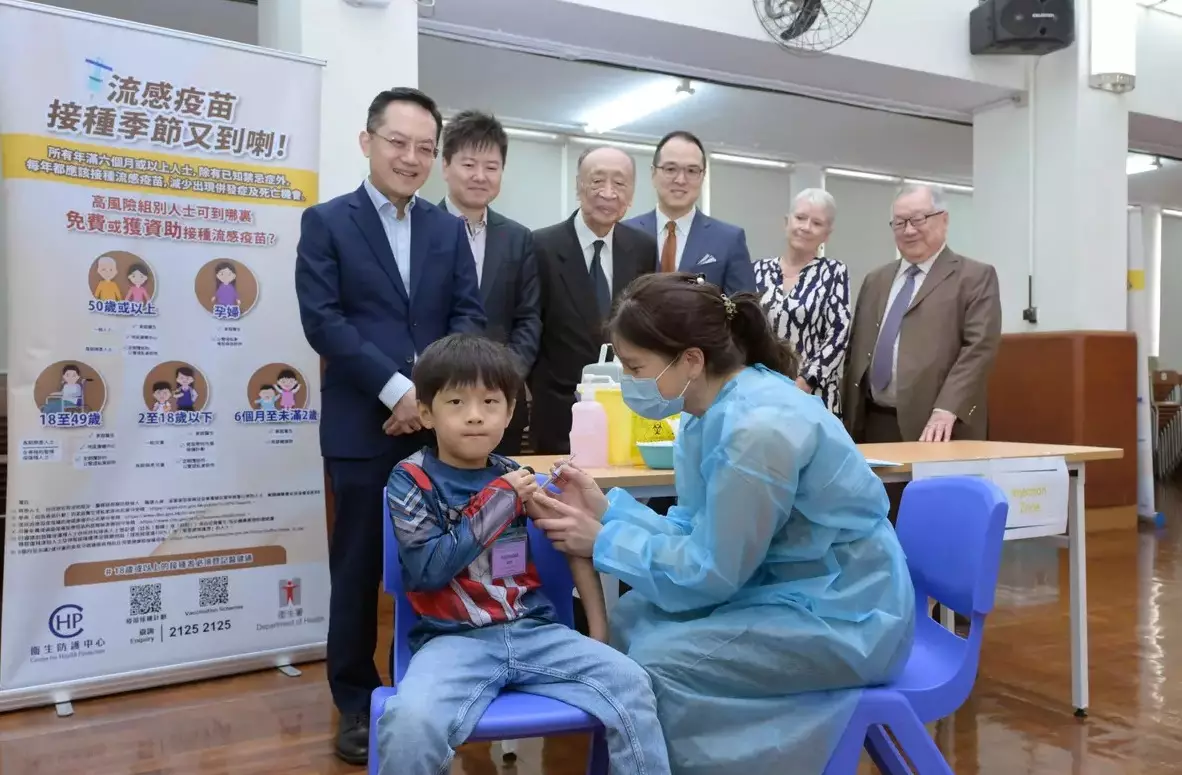
Seasonal influenza vaccination, Photo source: HKSAR Government Press Releases