MILTON, Ontario--(BUSINESS WIRE)--Aug 11, 2026--
Schneider Electric Canada is strengthening its commercial leadership to help customers navigate the new energy landscape.
This press release features multimedia. View the full release here: https://www.businesswire.com/news/home/20260811624009/en/
As the world’s most sustainable energy technology company, Schneider Electric helps organizations electrify, automate, and digitalize their operations to improve efficiency, resilience and sustainability. To further enhance the customer experience across Canada, the company has expanded the leadership responsibilities of two senior executives.
Shaun MacGarvie has been promoted to Vice President, National Sales, bringing together contractor, end user, and channel sales teams into a unified national sales organization. The new structure enhances coordination across customer-facing teams and enables a more consistent approach to serving customers and partners nationwide.
Sophie Chadefaud has been promoted to Vice President, Marketing, with an expanded mandate spanning marketing, partner engagement, sales enablement, and e-commerce. By bringing these capabilities together, Schneider Electric is strengthening the connection between customer insight, digital engagement, commercial execution, and online growth, helping customers and partners more easily access the expertise, solutions, and technologies needed to accelerate their energy and digital transformation.
The leadership changes reflect Schneider Electric Canada's continued investment in the capabilities needed to help organizations address some of today's most pressing challenges, including energy management, infrastructure modernization, decarbonization, and digital transformation. As customers seek new ways to optimize operations while advancing business and sustainability objectives, closer alignment between sales and marketing will strengthen Schneider Electric's ability to deliver expertise, innovation, and support at every stage of the customer journey.
"The future of competitiveness in Canada will be shaped by how effectively organizations manage energy, digitize operations, and build resilience," said Emily Heitman, President of Schneider Electric Canada. “As the world's most sustainable energy technology company, Schneider Electric is helping customers lead that transformation. These leadership changes strengthen our ability to bring customers the expertise, innovation, and ecosystem partnerships they need to navigate the new energy landscape and turn ambitious goals into measurable results."
The enhanced leadership structure reinforces Schneider Electric Canada's commitment to helping organizations thrive in an increasingly electric and digital world. By bringing sales and marketing closer together, Schneider Electric is strengthening its ability to deliver integrated solutions that help customers accelerate their energy and digital transformation while improving business performance, resilience, and sustainability.
About Schneider Electric
Schneider Electric is a global energy technology leader, driving efficiency and sustainability by electrifying, automating, and digitalizing industries, businesses, and homes. Its technologies enable buildings, data centres, factories, infrastructure, and grids to operate as open, interconnected ecosystems, enhancing performance, resilience, and sustainability. The portfolio includes intelligent devices, software-defined architectures, AI-powered systems, digital services, and expert advisory. With 160,000 employees and 1 million partners in over 100 countries, Schneider Electric is consistently ranked among the world’s most sustainable companies. www.se.com/ca.

Shaun MacGarvie
MOUNT BROMO, Indonesia (AP) — Indonesian firefighters have mostly contained a wildfire that has scorched a large area of a national park on the main island of Java, though crews are battling several remaining hot spots in the popular tourist destination, authorities said.
The fire, which began last week, impacted nearly 900 hectares (2,224 acres) across the Bromo Tengger Semeru National Park as of Tuesday, burning large areas of dry grassland, vegetation and protected edelweiss flowers, said Rudijanta Tjahja Nugraha, head of the park located in East Java province.
The volcanic landscape of Mount Bromo, one of Indonesia’s best-known attractions, is in the impacted area and has been closed as firefighters work to prevent the blaze from spreading in the conservation zone.
Active hot spots remain in four areas within the park: Watangan, Argowulan, Dingklik-Pakis and Bincil-Mungal. Teams have been working to prevent flare-ups on the ground and with aerial operations, Nugraha said.
“We are not only trying to put out the fire, but also ensuring it is completely extinguished and does not reemerge,” Nugraha said.
The Bromo fire comes as Indonesia faces a growing wildfire crisis during the dry season. The National Disaster Management Agency, or BNPB, said nearly 48,900 hectares (121,000 acres) of peatland had burned across six fire-prone provinces as of Monday, with the largest affected area in West Kalimantan on Borneo island.
In the provincial capital Pontianak, schools suspended in-person classes after air quality deteriorated to unhealthy levels and health officials reported a rise in respiratory illnesses.
The government has intensified firefighting efforts across Sumatra and Borneo islands, deploying more than 35 aircraft including water-bombing helicopters and patrol airplanes.
“Aerial operations are supporting ground operations which are especially critical in peatland areas,” said BNPB chief Suharyanto, who like many Indonesians uses a single name. “Because peat fires can continue smoldering underground long after surface flames disappear and can reignite if not fully extinguished.”
Peatland fires generate dense smoke that contributes to hazardous haze, worsening air quality and increasing health risks across affected areas, sometimes even in neighboring countries, he said.
Forest and peat fires are an annual problem in Indonesia, which strains relations with neighboring countries.
Satellite imagery shows a haze of wildfire smoke drifting from West Kalimantan into neighboring Malaysia on several days this month, according to BNPB.
Haze has worsened in Malaysia’s Sarawak state, which shares a border with Indonesia’s Kalimantan province on Borneo. The Malaysia Department of Environment’s air pollutant index showed the number of areas recording unhealthy air quality levels in Sarawak rising to 11 early Tuesday. Sarawak’s government told schools in those areas to halt outdoor activities.
Fires are often started illegally by plantation owners or traditional farmers to clear land for planting and those burns periodically blanket parts of Southeast Asia in hazardous haze, authorities said.
Associated Press writers Niniek Karmini in Jakarta, Indonesia, and Eileen Ng in Kuala Lumpur, Malaysia, contributed to this report.
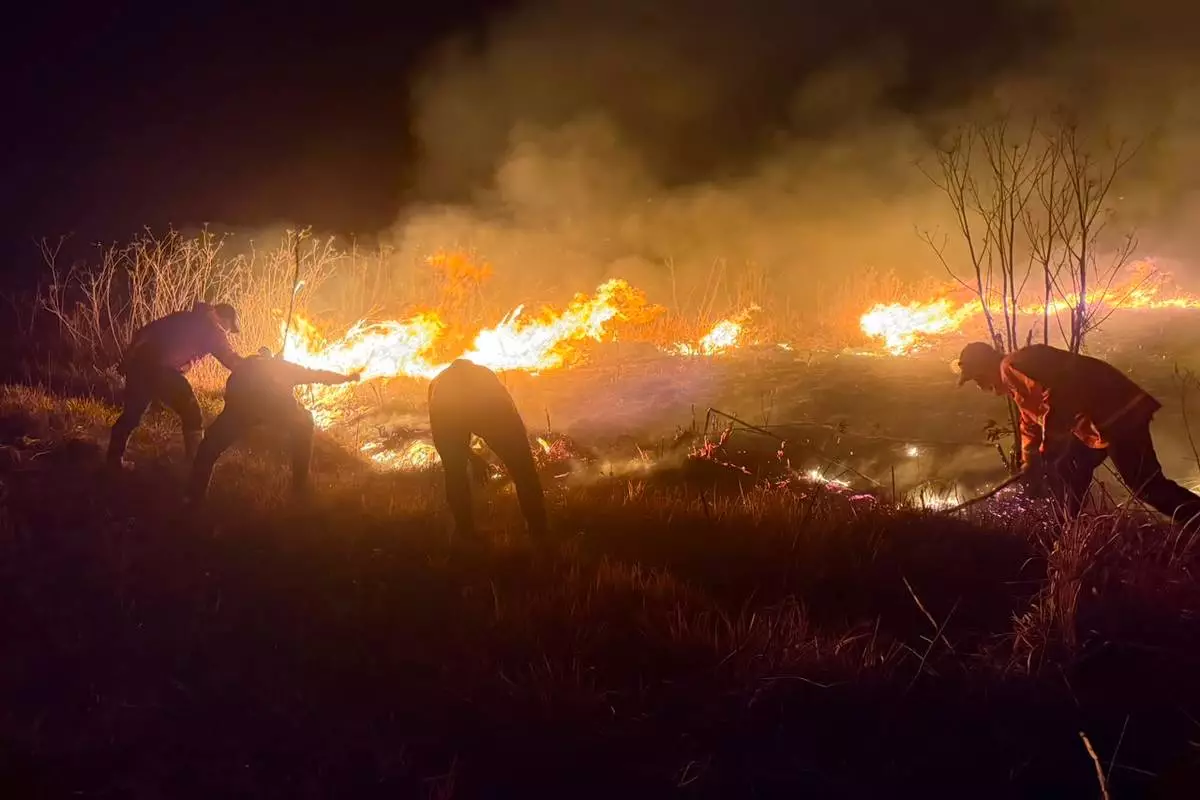
In this photo released by the East Java Regional Disaster Mitigation Agency, firefighters attempt to extinguish a wildfire that razes through Mount Bromo National Park in Probolinggo, Indonesia on Saturday, Aug. 8, 2026. (East Java Regional Disaster Mitigation Agency via AP)
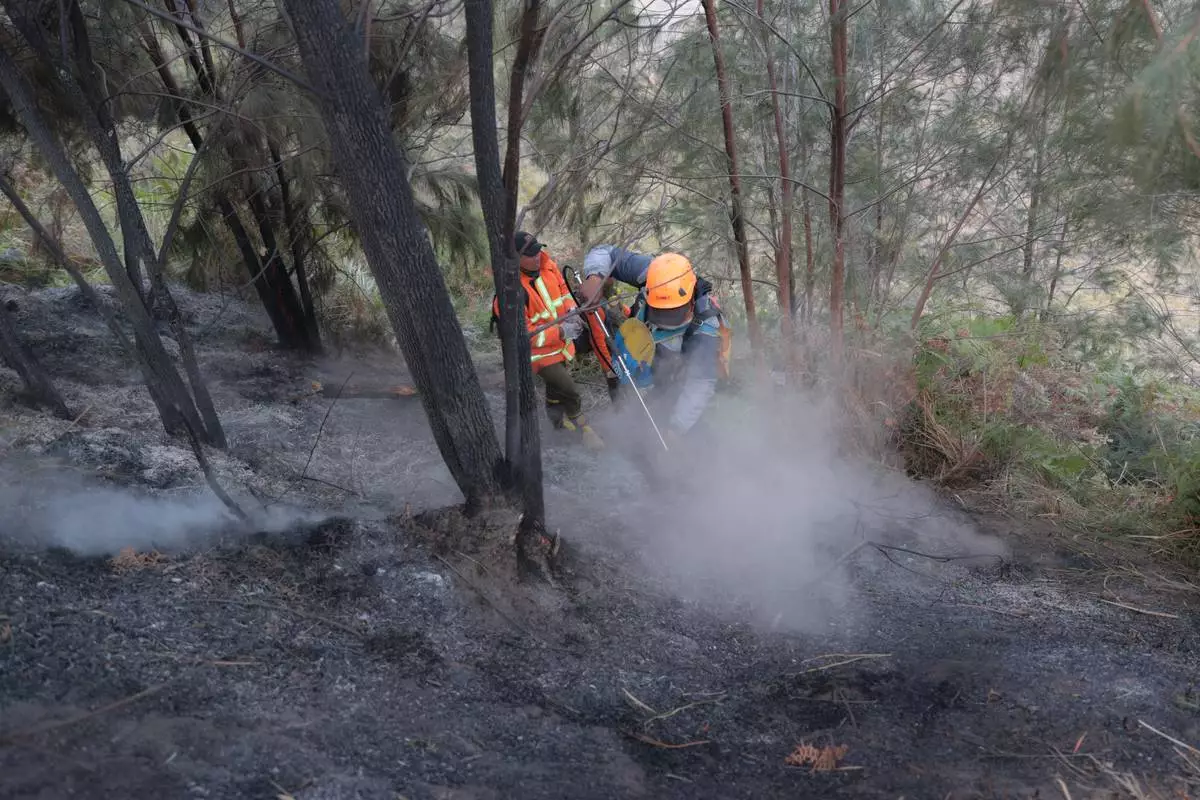
Firefighters attempt to extinguish wildfire that razes through vegetation near Mount Bromo in Bromo Tengger Semeru National Park in Probolinggo, East Java, Indonesia, Monday, Aug. 10, 2026. (AP Photo/Trisnadi)
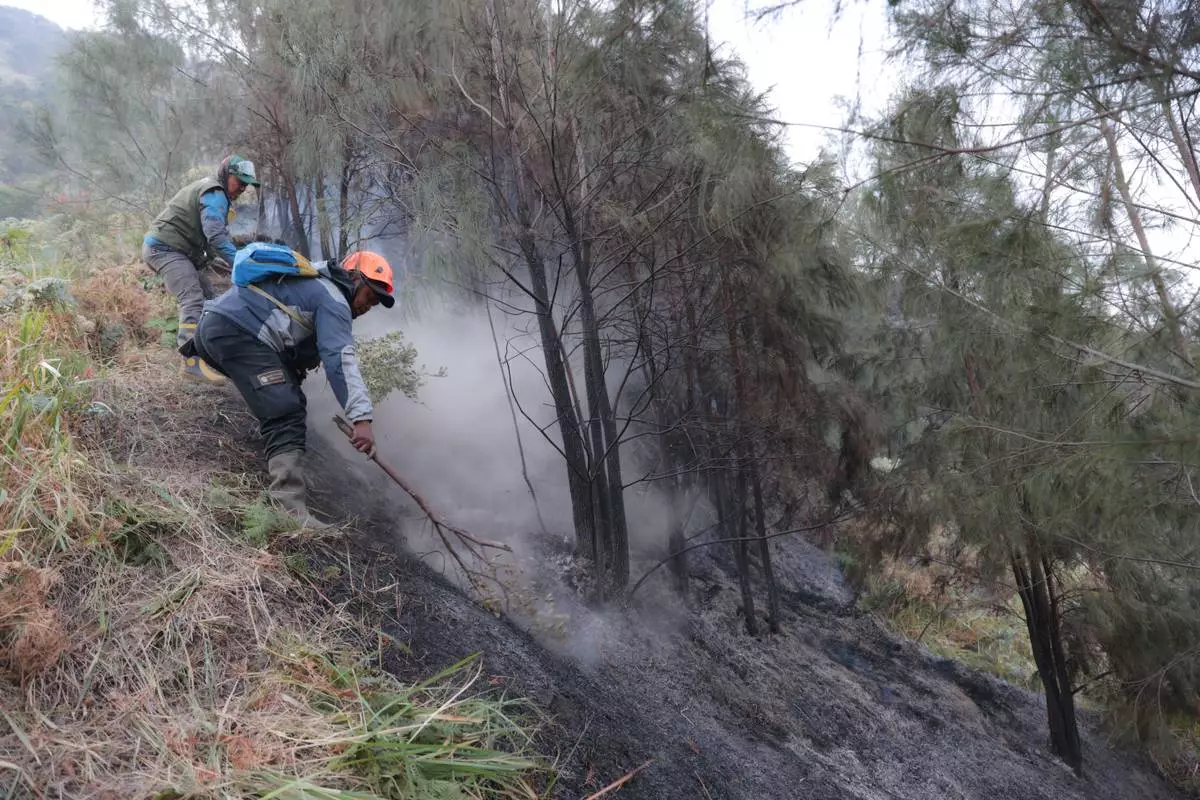
Firefighters attempt to extinguish wildfire that razes through vegetation near Mount Bromo in Bromo Tengger Semeru National Park in Probolinggo, East Java, Indonesia, Monday, Aug. 10, 2026. (AP Photo/Trisnadi)