SACRAMENTO, Calif.--(BUSINESS WIRE)--Aug 11, 2026--
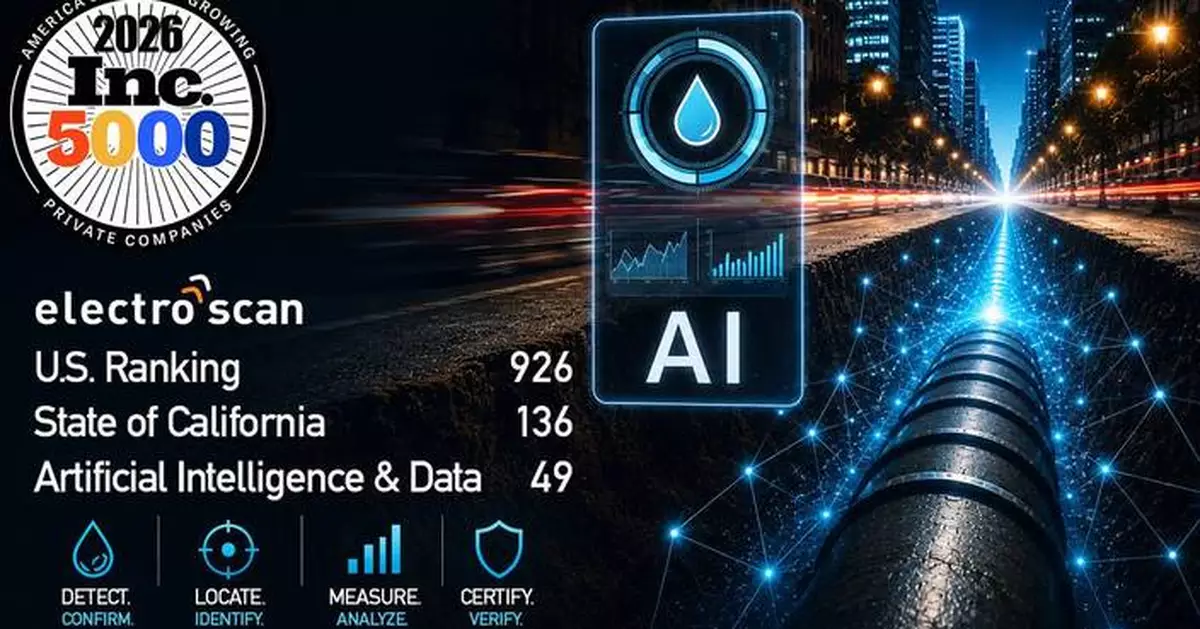
Electro Scan Inc. today announced that it ranks No. 926 nationally on the 2026 Inc. 5000 America’s Fastest-Growing Private Companies list, including No. 49 in Artificial Intelligence & Data, No. 136 in California and No. 2 in the Sacramento-Roseville-Folsom metropolitan area.
This press release features multimedia. View the full release here: https://www.businesswire.com/news/home/20260811429715/en/
Electro Scan achieved 373% revenue growth over the past three years, reflecting accelerating adoption of its proprietary inspection and measurement technologies by municipal water utilities, engineering firms, contractors, industrial asset owners, and international infrastructure operators.
The No. 49 national ranking in Artificial Intelligence & Data is particularly notable for a company serving the infrastructure-focused water and wastewater sector.
The recognition reflects Electro Scan's evolution from an emerging inspection technology company into a rapidly scaling water loss measurement platform that integrates proprietary equipment, field services, AI-assisted analytics, cloud-based reporting, and regulatory compliance to deliver data intelligence for the global water industry.
The Inc. 5000 is an annual ranking of the fastest-growing privately held companies in the United States where ranking is according to percentage revenue growth over a three-year period and must satisfy Inc.'s eligibility and verification requirements.
"Being named to the Inc. 5000 validates the extraordinary work of our employees, customers, and business partners," said Chuck Hansen, Chairman and Founder of Electro Scan Inc.
Hansen previously founded Hansen Information Technologies in 1983, which developed infrastructure management software used by public agencies and utilities before being acquired by Golden Gate Capital and INFOR Global in 2007. Later, Hansen’s pipeline and linear asset management products transitioned to Swedish-based Hexagon, then to US-based Octave Intelligence PLC.
Hansen launched Electro Scan in 2011 to commercialize electrical resistance technologies to assess buried pipelines using a physics-based approach to determine defect-level asset integrity, condition assessment, and rehabilitation effectiveness.
Building an AI-Ready Infrastructure Data Platform
Today, Electro Scan Inc. develops and deploys a machine-intelligent platform that automatically locates and quantifies leaks in pressurized water mains, gravity sewer, rising mains, stormwater pipelines, and industrial plants, without relying on visual observations, acoustic interpretations, predictive models or destructive excavation.
To the company's knowledge, Electro Scan is the only commercially-available platform that can identify buried pipe materials, without digging, including copper, galvanized, plastic, and lead drinking water pipes.
Under federal mandate over 66,000 U.S. water providers must complete detailed inventories of their water service lines and replace all lead drinking water pipes by 2037.
As of August 1, 2026, Electro Scan's operating metrics included:
Converted to a 24-hour equivalent basis, cumulative leakage measurements using Electro Scan’s platform has identified more than 4.3 billion gallons per day of water losses, or the equivalent of 4 times the daily water supply of New York City.
Every inspection expands Electro Scan's proprietary infrastructure dataset, creating an increasingly valuable collection of measured leak-rates corresponding to buried pipe-material, defect-location and pipeline-performance data, commonly used for predictive modeling, digital twins, repair recommendations, infrastructure intelligence and AI-powered water network analytics.
Water Industry Shifts From Inference to Measurement
For more than a century, the water industry has relied on indirect methods to evaluate underground infrastructure.
Multiple defects typically exist along the same pipeline, but legacy methods are typically not able to identify individual defects or certify post-rehabilitation work as leak-free.
A useful analogy is trying to understand 20 people speaking in the same room at the same time; all speaking into a single microphone.
The microphone confirms that people are talking, but determining exactly who is speaking, where each person is located and which voice matters most becomes increasingly difficult as the signals overlap.
Buried water and sewer systems present a similar challenge.
"Utilities no longer want to know whether a leak might exist," Hansen said.
"They increasingly want to know where it is, how significant it is, whether a repair was successful and whether the result can be independently verified—measured in gallons per minute [GPM], before and after repair so a specific recovery amount can be validate and periodically tested for sustainability,” Hansen said.
As hyperscalers, such as Amazon, Google, Meta and Microsoft, seek to become Water Positive by 2030 (i.e. contributing more water than used), Electro Scan’s measurement platform is able to independently verify and validate data center claims.
The lack of auditable water accounting data has emerged as a potential stumbling block for utilities and hyperscalers. Especially in formulating credible responses to environmental activists, homeowners, local protesters, and regulators to battle a growing number of building moratoriums.
AI Begins With Better Data
Artificial intelligence (AI) is rapidly expanding across the water industry, but AI cannot overcome fundamental limitations in the underlying information presented to it.
For example, AI-CCTV inspection can document visible portions of a sewer pipe, but an image alone may not establish whether a crack is merely superficial or extends completely through the wall of the pipe.
Likewise, a camera traveling through a pipe cannot directly inspect hidden defects inside a joint’s bell-and-spigot or service connection, causing an under-reporting of defects that may result in the wrong recommended pipeline rehabilitation.
In 2025, Electro Scan, working in association with Hillsborough County, Florida, completed a four-year study finding 20% of its repairs leaked more after rehabilitation—using CCTV cameras to visually inspect and accept all work.
Applying artificial intelligence to visual data may accelerate visual defect classification and improve consistency, but AI cannot create physical information the original image or video never captured.
In contrast, Electro Scan’s AI Particle Tracing feature confirms all leak locations in pressurized water mains.
First, identifying leak locations using electrical resistance testing. Then, using a camera that is paused at a precise location to record a high resolution video that traces water particulates leaving the pipe.
Contamination of water pipelines from outside sources can also be traced confirming water flows entering the pipe.
"Our objective has never been to replace engineering judgment with artificial intelligence," said Mike App, Executive Vice President, Electro Scan Inc.
"Our objective is to give artificial intelligence better engineering data—data capable of profiling defects, avoiding dry holes, selecting appropriate repairs and verifying rehabilitation actually delivered," App said.
Growth Accelerated by Lead Service Line Identification
Electro Scan's revenue growth has also been driven by one of the largest drinking water infrastructure initiatives in U.S. history.
The U.S. Environmental Protection Agency (USEPA)’s Safe Drinking Water Information System (SDWIS) Service Line Inventory Dashboard currently estimates that approximately 22.4 million water service lines (i.e. primarily limited to the utility-side of a customer’s water meter) are UNKNOWN.
While planning for lead pipe replacements must commence in 2027, utilities must also begin field verifications of all KNOWN and UNKNOWN pipe materials that connect homes & businesses to municipal water mains, representing nearly 100 million water service lines.
Recently, field testing of water service lines has revealed that plastic and copper pipes may test positive for lead, especially if upstream pipes ever supplied water through lead pipes and later removed.
Just like galvanized pipes can retain lead inside of tuberculated pipes, researchers have found that lead can also be stored inside of biofilms and calcified copper and plastic pipes.
As a result, many communities are discussing the need for a special ordinance for water service lines to be inspected as part of real estate transactions, similar to sewer line inspections.
Currently, Electro Scan's SWORDFISH platform is used as the City of Baltimore's lead service line inspection solution, completing more than 9,000 residential property inspections to date.
Other customers include Dallas Water Utilities, Chester Water Authority, Clear River Electric & Water District, City of Rock Hill, Town of Medley and Village of Pleasantville.
Electro Scan has also deployed SWORDFISH at universities, elementary schools, day care centers, commercial properties, including Bard College and United World College.
Commercial Expansion and Strategic Marketing Partnerships
The company recently entered into a sales and marketing partnership with Core & Main's Damage Prevention Division.
Anchored by Fort Worth, Texas-based Green Equipment Company and New Jersey-based Eastcom Associates Inc., Core & Main is an authorized supplier of Electro Scan's SWORDFISH Special Edition and Lead Trace products that help identify water service line materials and verify previously inventoried water lines that may have used predictive modeling or aboveground visual inspections.
International Validation and Expanding Intellectual Property
In 2024, Saudi Aramco Engineering Requirement No. 12366 was issued establishing engineering requirements for the inspection of non-metallic pipelines based on Electro Scan's proprietary leak-detection technology.
Currently, Electro Scan believes the requirement demonstrates the potential application of electrical resistance testing not only to municipal water infrastructure, but also to critical industrial pipeline systems, worldwide.
Electro Scan's intellectual property portfolio includes 22 issued U.S. and international patents covering electrical resistance testing, pipeline assessment, leak quantification, service line identification and machine-intelligent infrastructure analytics.
Positioned for the Next Generation of Water Infrastructure
The Inc. 5000 recognition comes as Electro Scan evaluates opportunities to accelerate commercial expansion, increase manufacturing capacity, broaden distribution, expand software and data services, and pursue strategic relationships throughout the global water infrastructure sector.
"The Inc. 5000 recognizes what Electro Scan has accomplished, but it also highlights the much larger opportunity ahead of us," App said.
"Aging infrastructure, regulatory mandates, water scarcity and the need for verifiable performance data are creating sustained demand for technologies capable of measuring what traditional methods cannot," App said.
About Electro Scan Inc.
Electro Scan Inc. develops machine-intelligent technologies for measuring, locating and assessing conditions in water, sewer and industrial pipelines. The company's solutions provide utilities, engineers, contractors, industrial operators and infrastructure owners with repeatable, defect-level information supporting regulatory compliance, water-loss measurement, pipe-material identification, rehabilitation verification, asset management and infrastructure investment planning.
Electro Scan is headquartered in Sacramento, California, and supports customers and partners throughout the United States and international markets. For more information, visit www.electroscan.com.
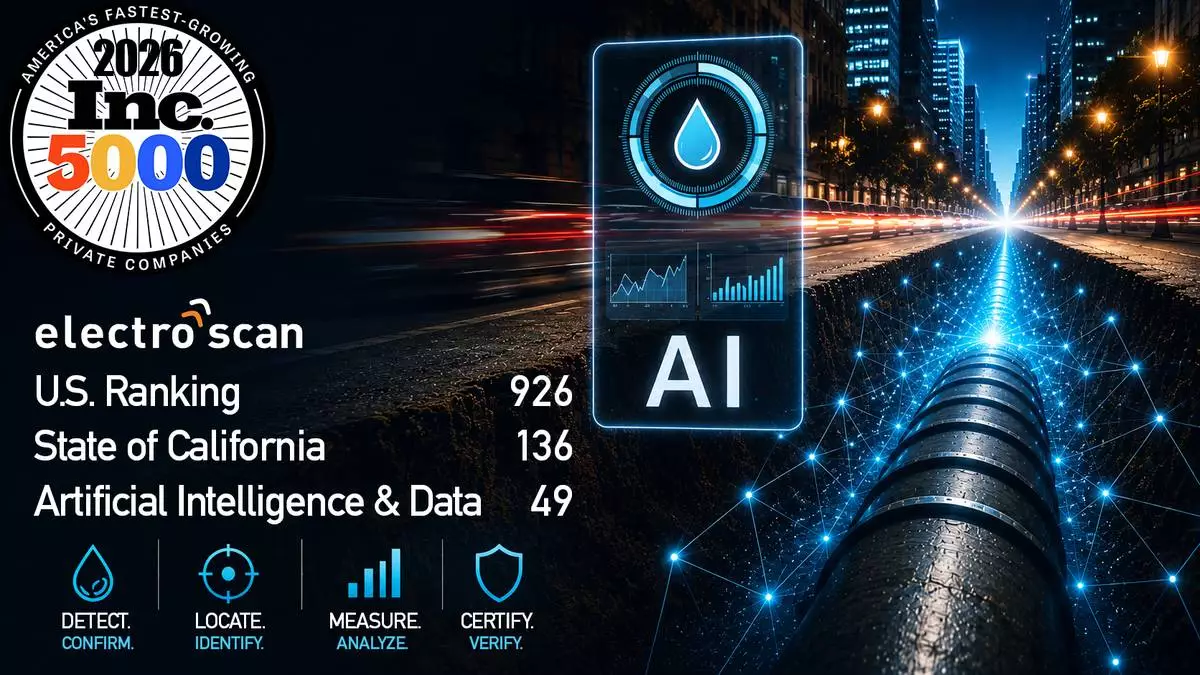
Electro Scan Inc., a leading provider of water loss measurement intelligence, has ranked nationally at #926 on the 2026 Inc. 5000 America's Fastest-Growing Private Companies list.
Primary elections are taking place in six U.S. states on Tuesday — Alabama, Connecticut, Minnesota, South Carolina, Vermont and Wisconsin.
Minnesota voters will settle a moderate-versus-progressive Democratic U.S. Senate primary between centrist U.S. Rep. Angie Craig and progressive Lt. Gov. Peggy Flanagan. In the race for governor, Mike Lindell, known as the MyPillow Guy, leads a crowded Republican primary with President Donald Trump’s endorsement, while Sen. Amy Klobuchar faces minimal opposition for the Democratic nomination.
The Democratic primary for Wisconsin governor is another high-profile clash between the party’s establishment and progressive wings, as democratic socialist Francesca Hong tries to rise above establishment candidate David Crowley. In a Republican primary for U.S. House, Trump-backed candidate Michael Alfonso, the 26-year-old son-in-law of U.S. Transportation Secretary Sean Duffy, is seeking to win Duffy’s former district.
And Republicans in South Carolina are casting ballots in a special primary election to replace the late U.S. Sen. Lindsey Graham on the state’s general election ballot. The crowded race has attracted top party members, including two congressmen and a former governor — but Trump has endorsed Graham’s sister, Sen. Darline Graham, a political unknown appointed to serve out the final months of her late brother's current term.
Here's the latest:
After casting his ballot during early voting in Conway last week, George Mitford said he picked U.S. Rep. Russell Fry in the special Senate GOP primary because he favored the two-term congressman’s experience over current Sen. Darline Graham, appointed last month to serve the rest of her late brother’s current term.
“I just thought he’d probably had more experience in this than she would have had,” Mitford said, adding that he had supported Sen. Lindsey Graham’s tenure in the Senate.
“I’m a conservative and a Republican, and I just think he was the best choice,” said Mitford, who lives in Fry’s district along South Carolina’s northern coastal area.
The Democratic primary features a race between economist Amanda Janoo and Aly Richards, a former child advocacy organization CEO.
Richards, 40, grew up in Newbury, Vermont, and has received endorsements from former Vermont governors Howard Dean and Madeleine Kunin. She previously worked for former Gov. Peter Shumlin and on former President Barack Obama’s 2008 campaign.
Janoo, 38, was born on a farm in Strafford, Vermont. She began her career working with the United Nations and international development organizations.
Scott, who has served five terms and is one term away from becoming the state’s longest-serving governor, is running unopposed.
Vermont is one of two states, along with neighboring New Hampshire, that hold a gubernatorial election every two years.
Republicans redrew Alabama’s 2nd Congressional District after the U.S. Supreme Court severely weakened the Voting Rights Act earlier this year.
The redraw added a Republican-leaning seat to the state’s congressional map by shifting the boundaries of one represented by a Black Democrat.
The seat is now held by Democratic Rep. Shomari Figures, who was unopposed in his primary and has said he plans to aggressively defend the seat.
Six Republicans are competing in the special congressional primary for the chance to challenge Figures in November.
The Democratic Congressional Campaign Committee has placed Figures on its list of “frontline” candidates for extra support in what they consider the most pivotal districts. The National Republican Congressional Committee has similarly put the district on its list of targets for 2026.
In the Wisconsin governor’s race, software engineer Cody Chandler said he didn’t worry about electability when he cast his ballot for Hong.
“In the past I’d think about who could win,” said Chandler. “But this time I’m voting for who I want to win.”
He’s thrilled by Hong and the progressive movement around her.
“She’s probably the most exciting candidate I’ve seen,” said Chandler, 35, who voted in the town of Hudson. He sees himself as a progressive, someone inspired a decade ago by Sen. Bernie Sanders, and volunteered for Hong’s campaign.
“She seems to be like a real working-class person. Sure, she stumbles over her words sometimes — but so do I,” he said, laughing. “She feels like one of us.”
Linda Biles believes Hong’s politics will frighten voters like her — a Republican in a largely rural area who votes Democratic because she dislikes Trump and politicians who back him.
“I think just the word ‘socialism’ is turning off Republicans,” said Biles, a 71-year-old retired home economics teacher, after casting her ballot in the western Wisconsin town of Hudson. “It scares them away.”
Crowley, she said, was an obvious choice: “He’s got more of a chance of beating Tiffany,” she said.
Michele Tafoya is seeking the Republican nomination for U.S. Senate.
She strode into a suburban Minneapolis church with a phalanx of reporters and photographers watching. She checked in with poll workers, filled out her ballot and fed it into the counter.
“How are you?” she asked the top election official on site.
“I’ll be glad when you’re done,” the stressed-out official responded with a laugh.
In the parking lot out front, she argued that this will be the year voters end a 20-year losing streak for Republicans running statewide in Minnesota. Voters, she said, are fed up after widespread reports of fraud in public assistance programs.
“Minnesotans are ready. We’ve had a crisis of leadership here,” Tafoya said. “We’ve seen what career politicians have done in this state. They’ve brought us to a place of national embarrassment, and this state is ready for change.”
Asked if she would have handled anything differently about the sprint of a special Senate primary, Graham said she had no regrets.
“I don’t think I could have done anything any differently,” Graham told reporters outside the Lexington church where she and her family voted. “It was my priority to be in Washington as your representative, working hard, and I got back here just as soon as I possibly could.”
With the Senate staying in session until early Saturday morning, Graham — as South Carolina’s interim senator — was in Washington for votes during much of the campaign.
Anticipating a runoff to follow Tuesday’s crowded GOP Senate primary, Graham told reporters that she would “get out and work really hard to earn” voters in the ensuing two-week period.
Democratic Sen. Amy Klobuchar has had a successful career in Washington, but she’d prefer to head back home to Minnesota. She’s the leading candidate for governor in the state’s Democratic primary.
She’s not alone. Four senators ran for governor this year, underscoring how sharply the balance of political ambition has shifted away from Washington.
Although the Senate was once seen as the capstone of a long political career or a premier perch for launching presidential bids, it has become increasingly stagnant and dysfunctional.
Sens. Marsha Blackburn of Tennessee and Tommy Tuberville of Alabama both won Republican gubernatorial primaries this year.
But Colorado Democratic Sen. Michael Bennet wasn’t as fortunate. He lost to state Attorney General Phil Weiser.
Bronin was a sophomore at Yale University when Larson was elected to the U.S. House in 1998.
Now he’s standing in the way of Larson getting a 15th term representing Connecticut. The two face off in another contest that pits the party’s old guard against a younger generation.
Bronin, 46, is the former mayor of Hartford. He’s a lawyer, former Rhodes scholar and U.S. Navy Reserve officer.
Larson is 78. While he has been popular in his central Connecticut district throughout his time in office, concerns about his health arose when he suffered a partial seizure during a speech on the House floor last year.
In a flip of the usual script for primary challengers, Bronin can lay claim to be the establishment candidate. He won the Democratic state party’s endorsement at a nominating convention earlier this year.
The interim senator and her 17-year-old daughter Nicole Nordone voted midday Tuesday at a Lexington County church.
“It was a hard choice,” Nicole said jokingly to her father, as they walked out of the voting area so that Darline Graham could speak with reporters.
After she fed her ballot into a reader machine, Graham told poll workers that she typically votes at another location. Many polling sites have been changed for Tuesday’s special election due to several factors, including classes beginning this week at many schools typically used for voting.
South Carolinians who are 17 years old but will be 18 before the general election can vote in primaries.
Michael Alfonso has leaned into his endorsement from Trump in the five-way Republican primary for Wisconsin’s 7th Congressional District.
The 26-year-old Alfonso has faced blowback from some Republican leaders in the district who question whether he is too young and inexperienced for the job.
Alfonso is counting on Trump’s endorsement carrying the day in the deeply red district.
Duffy held the congressional seat from 2011 until 2019, when he resigned mid-term. He returned to politics last year when Trump tapped him to serve as transportation secretary. Alfonso is married to Duffy’s daughter, Evita Duffy.
After losing a top Senate advocate when the South Carolina Republican suddenly died, Trump has angled to play a role in picking his replacement, too.
Trump heralded the selection of Darline Graham as “a fabulous tribute” to serve as her brother’s interim replacement. And he urged her to run in the special primary, endorsing Graham before she’d made her candidacy official.
In forging a relationship with Darline Graham, Trump could be angling to develop another ally to help steer his agenda through the Senate.
So far, Darline Graham has been doing just that. Repeatedly stressing to voters her intent to support Trump’s policy positions, she often references in particular her co-sponsorship of a voting bill that’s become a key priority for the president.
Trump relied on Lindsey Graham in the Senate and has endorsed Darline Graham to replace him.
She had already been known as Lindsey Graham’s sister and lifelong supporter, but since her brother’s death a month ago, Darline Graham has been thrust into the political spotlight.
A day after the late senator’s sudden death was announced, South Carolina Gov. Henry McMaster named Darline Graham to serve the remaining months on his current term, which expires in January. She was sworn in the next day and took his spot on powerful committees, including Judiciary.
Days later, Darline Graham was among the candidates jumping into a special GOP primary to replace her late brother on November ballots. She’s appeared at various stump events and one debate, although Senate business kept her off the campaign trail as other hopefuls traversed the state.
U.S. Rep. Angie Craig has support from the party’s establishment, while Lt. Gov. Peggy Flanagan is backed by prominent figures on the left including Sen. Bernie Sanders.
The primary will again take the temperature of Democratic voters a week after progressive Abdul El-Sayed won a bitter and divisive primary in Michigan that fired up the left and fueled anxiety among party leaders that Democrats will alienate moderate swing voters.
Craig says her record of winning repeatedly in a battleground House district will ensure the seat stays in Democratic hands. Flanagan says Craig hasn’t stood firm enough against President Donald Trump and wealthy donors.
Wisconsin voter Jesse Heer said Hong understands “what it’s like to live here and have to afford to live here.”
Heer, a 32-year-old business owner from Madison, said Hong’s focus on affordability issues was the top reason he voted for her. And he’s not buying the argument from other Democrats, including Hong’s more moderate challenger, Milwaukee County Executive David Crowley, that she will have a harder time winning in the general election.
“I think she’s a good candidate,” Heer said. “I think a lot of people agree.”
Hong voter Kelly McClurg, 40, of Sun Prairie, says Hong has shown “she’ll be able to push back more” on issues that Democrats care about, like affordability.
McClurg said if fellow Democrats believe in her, and don’t assume she can’t beat Republican Tom Tiffany, “she can win.”
Wisconsin voters who cast their ballots Tuesday for the gubernatorial candidate favored by more mainstream Democrats say they are confident the party will unite even if the progressive challenger wins.
David Zimmerman, a 79-year-old retired industrial engineering professor, voted for Milwaukee County Executive David Crowley. Crowley is endorsed by Gov. Tony Evers and is seen as the pick of more moderate Democrats.
Zimmerman says he worries “a lot” about progressive candidate Francesca Hong’s ability to defeat Republican Tom Tiffany in November.
“I think she’s going to have trouble winning,” Zimmerman said.
But both Zimmerman and fellow Crowley voter Julie Martinson, 69, predict Democrats will come together even if Hong wins. They said they would vote for her in November.
“There’s no reason we can’t galvanize around her and get her in there,” Martinson said.
No Connecticut governor has served three consecutive terms in modern times. Former Republican Gov. John G. Rowland was elected to a third consecutive term in November 2002 but he resigned in 2004 amid a corruption scandal.
In Tuesday’s Democratic primary, Lamont, 72, takes on state Rep. Josh Elliott, 41, who is running left of the current governor.
One of two Democratic governors who attended President Donald Trump’s inauguration, Lamont has carefully chosen which issues to criticize the Republican president on. That tactic has prompted complaints from more liberal Democrats in Connecticut.
This post has been updated to correct the ages of Lamont and Elliott. Lamont is 72, not 71. Elliott is 41, not 42.
The state is holding special primaries in four congressional districts after it won permission from the U.S. Supreme Court to change its congressional maps. The state tossed out the results of May primaries and scheduled the Tuesday special primaries using the new map.
Turnout for party primaries is typically low. It was 23% in the May primary and 10.7% for the June runoff. It is expected to be particularly low in a special late-summer primary, when people are unaccustomed to voting.
Six Republicans are seeking the GOP nomination in the redrawn 2nd Congressional District. The winner will challenge Democratic Rep. Shomari Figures in November.
Republican candidates and party officials have been trying to promote the special primary and get voters to the polls. The primaries will be decided without a runoff.
Polling places opened across the state at 7 a.m. EDT, and voters have until 7 p.m. to cast their ballots.
It’s only been two months since South Carolina voters made their picks in the primary elections in June. But Graham’s sudden death last month set into motion a special primary to pick a Republican replacement for the general election ballot in November.
Candidates have only had a matter of weeks to campaign.
There were three days of early voting last week, and Tuesday’s special election also coincides with the first day of school in some areas, so polling places have changed for many who typically are assigned to vote at schools for summertime primaries.
The topsy turvy race pits democratic socialist Francesca Hong against the governor’s endorsed candidate David Crowley.
Hong has ridden a wave of support from liberals to bolster her insurgent campaign. Crowley had quit the race but got back in — with Democratic Gov. Tony Evers’ endorsement.
Crowley rejoined the race after Lt. Gov. Sara Rodriguez dropped out last month amid a campaign finance scandal.
Former Lt. Gov. Mandela Barnes had the highest name recognition after a 2022 U.S. Senate run, but he also dropped out less than two weeks before the primary amid questions about inappropriate behavior.
In the Republican primary for governor, U.S. Rep. Tom Tiffany has Trump’s endorsement and faces nominal opposition.
Progressive candidates for governor in Wisconsin and U.S. Senate in Minnesota are increasing the pressure on a Democratic establishment that has spent the year on its heels.
Today’s primaries come a week after Abdul El-Sayed narrowly defeated Rep. Haley Stevens in Michigan’s divisive and costly U.S. Senate primary. El-Sayed’s victory has energized the left while stoking fears among Democratic Party leaders that the shift to the left, particularly in battleground states like Michigan and Wisconsin, will make it more difficult to win in November.
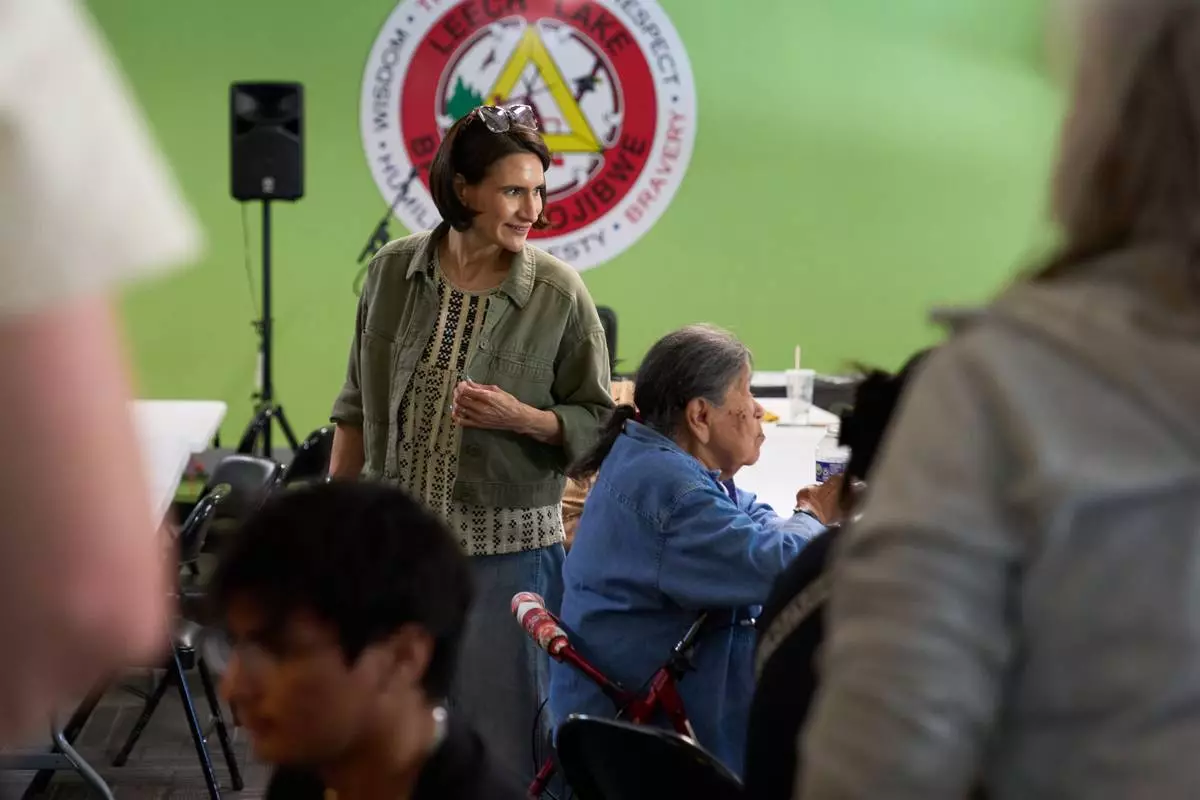
Minnesota Lt. Gov. Peggy Flanagan, a Democratic candidate for U.S. Senate, greets supporters during a campaign event at the Leech Lake Band of Ojibwe Twin Cities Office in Minneapolis, Saturday, Aug. 8, 2026. (AP Photo/Ellen Schmidt)
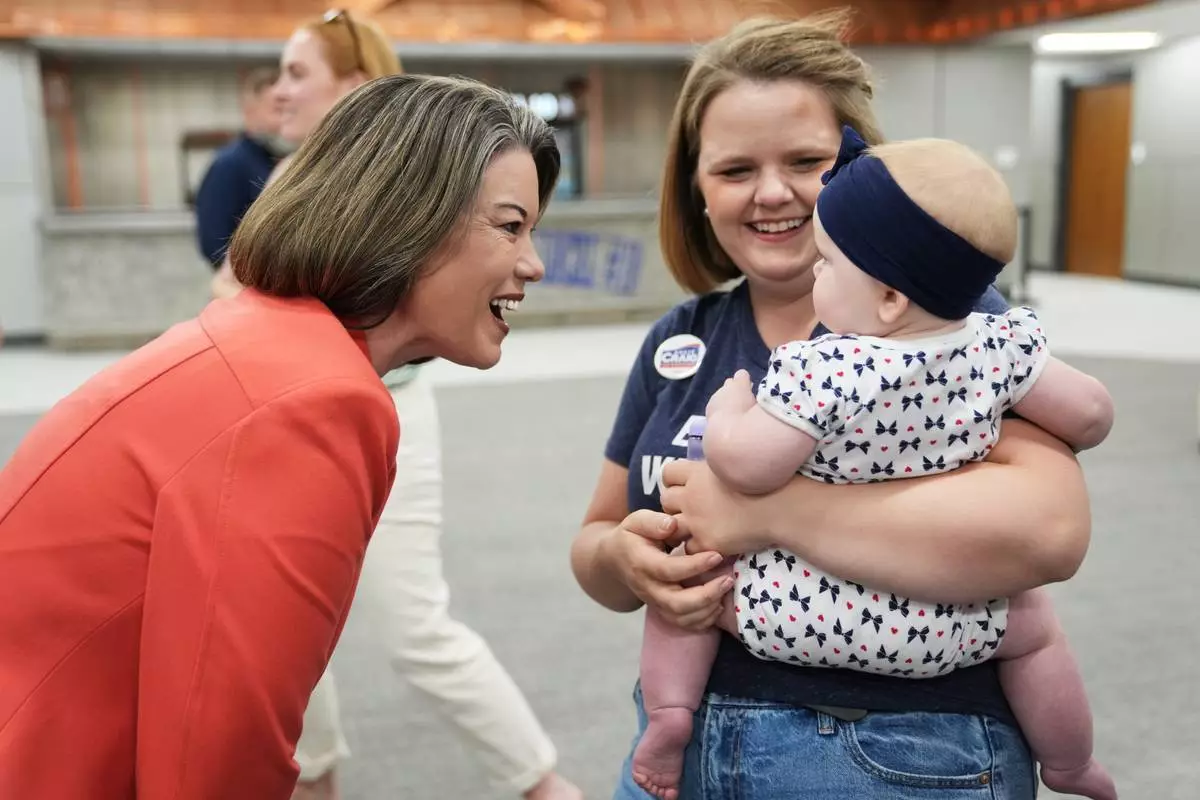
U.S. Rep. Angie Craig, D-Minn., candidate for U.S Senate, greets Merci Wolff and her daughter during a canvassing event at SMART Sheet Metal Workers Local #10 headquarters, Monday, Aug. 10, 2026, in St. Paul, Minn. (AP Photo/Ellen Schmidt)
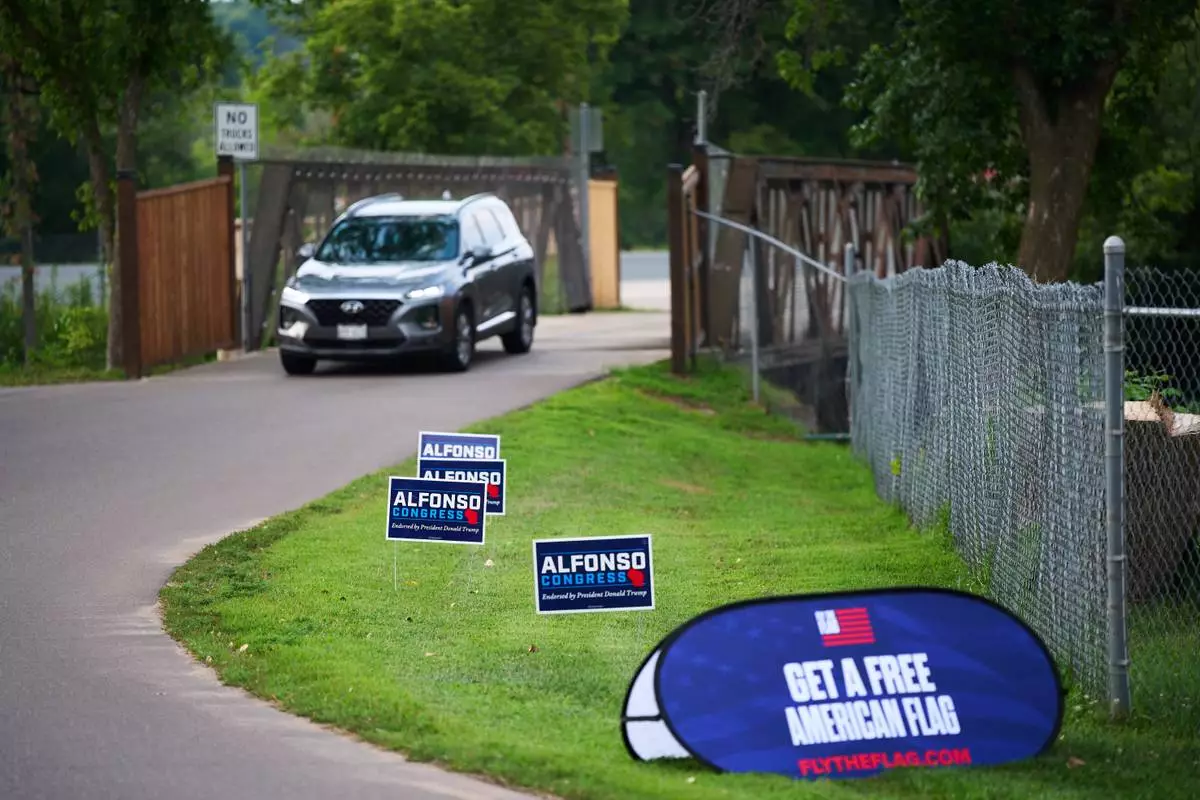
Campaign signs for Michael Alfonso, a candidate for U.S. House in Wisconsin's 7th congressional district, line the entrance to an event, Tuesday, Aug. 4, 2026, in New Richmond, Wis. (AP Photo/Ellen Schmidt)
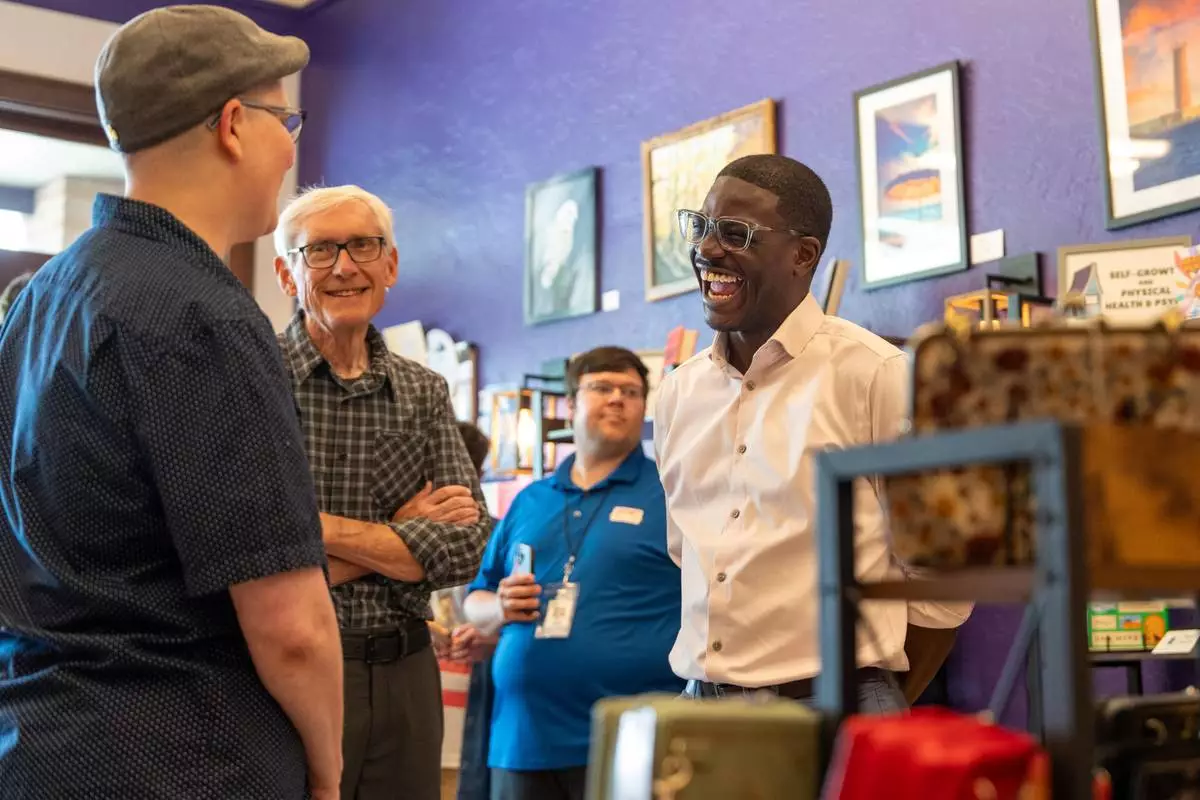
David Crowley, right, Democratic candidate for Wisconsin governor talks with CJ Arthur, left, owner of WordHaven BookHouse during a campaign stop with Wisconsin Gov. Tony Ever, center, Friday, Aug. 7, 2026, in Sheboygan, Wis. (AP Photo/Kayla Wolf)