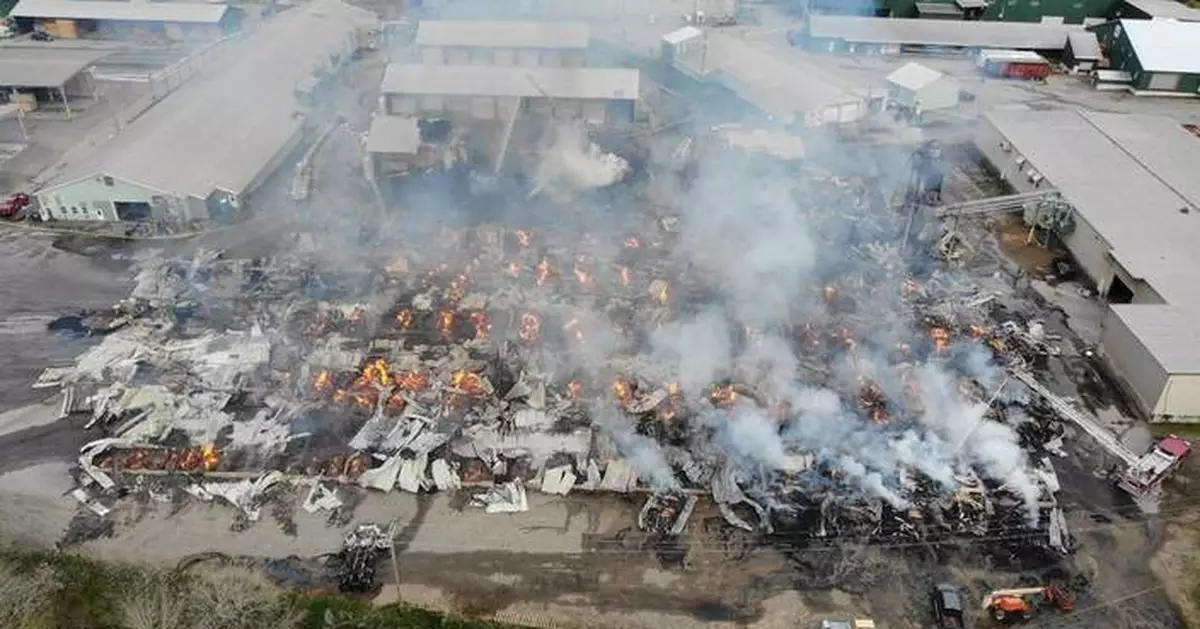
PORTLAND, Maine (AP) — Firefighters who responded to a deadly fire at a Maine lumber mill used tactics that inadvertently helped cause an explosion, according to a report from federal investigators.
The May 15 fire and explosion killed three people, including two firefighters, and originated at the base of a silo, Maine authorities have said. The blast at Robbins Lumber in rural Searsmont also injured at least 13 people and the toppling of the silo engulfed the surrounding area in fire, they have said.
The silo was an oxygen-limiting structure, according to a report released by National Institute for Occupational Safety and Health this month. At the scene, firefighters flowed water into the silo, though the manufacturer's emergency procedures warn against that, the report said.
“The document warns against spraying water or foam into the oxygen-limiting silo as it will force air in and may create a potentially explosive mixture,” the report states. “The application of water into the silo in this incident likely entrained oxygen into the silo headspace, stirred up dust within the contents, and caused it to become suspended in an explosive concentration.”
The report states in its recommendations that fire departments should make sure firefighters choose appropriate tactics for silo fires and never direct water or foam into oxygen-limiting silos. It also states that more training is needed for fire departments about the hazards associated with different types of silos.
The explosion took place in the small town about 95 miles (150 kilometers) northeast of Portland and triggered a response of 299 firefighters from 46 departments across a four-county area. It took them hours to contain the fire.
Representatives for Searsmont Fire & Rescue did not return phone calls seeking comment Tuesday. The department's assistant fire chief, Wayne Woodbury, 76, died from injuries suffered in the explosion. Andrew Cross, 27, of the Morrill Volunteer Fire Department, also died. Alden Robbins, the co-owner of the mill, died from injuries weeks later.
Robbins Lumber representatives said on the company's website that “no report can fully capture the heartbreak experienced by our community, nor can it lessen the tremendous loss suffered by so many.” The company is working with industry experts to rebuild its facilities, the statement said.
“Our objective is not simply to meet current industry standards, but to exceed them. We are committed to learning from this event and to doing everything we can to help prevent anything like this from happening again,” the statement said.
The National Fire Protection Association declined to comment on the report beyond saying it encourages firefighters to participate in National Institute for Occupational Safety and Health's work to improve safety investigations. The Maine Department of Public Safety also declined to comment.
The Maine State Fire Marshal's Office said in late May that rapid ignition of particulate material resulted in the silo explosion, which caused it to lift from its concrete base and release large amounts of sawdust and other materials. It said the fire and explosion were accidental.
The mill is a part of the historic lumber and wood products industry in Maine. The company has said it is a high tech lumber manufacturer that has been in existence since the 19th century.
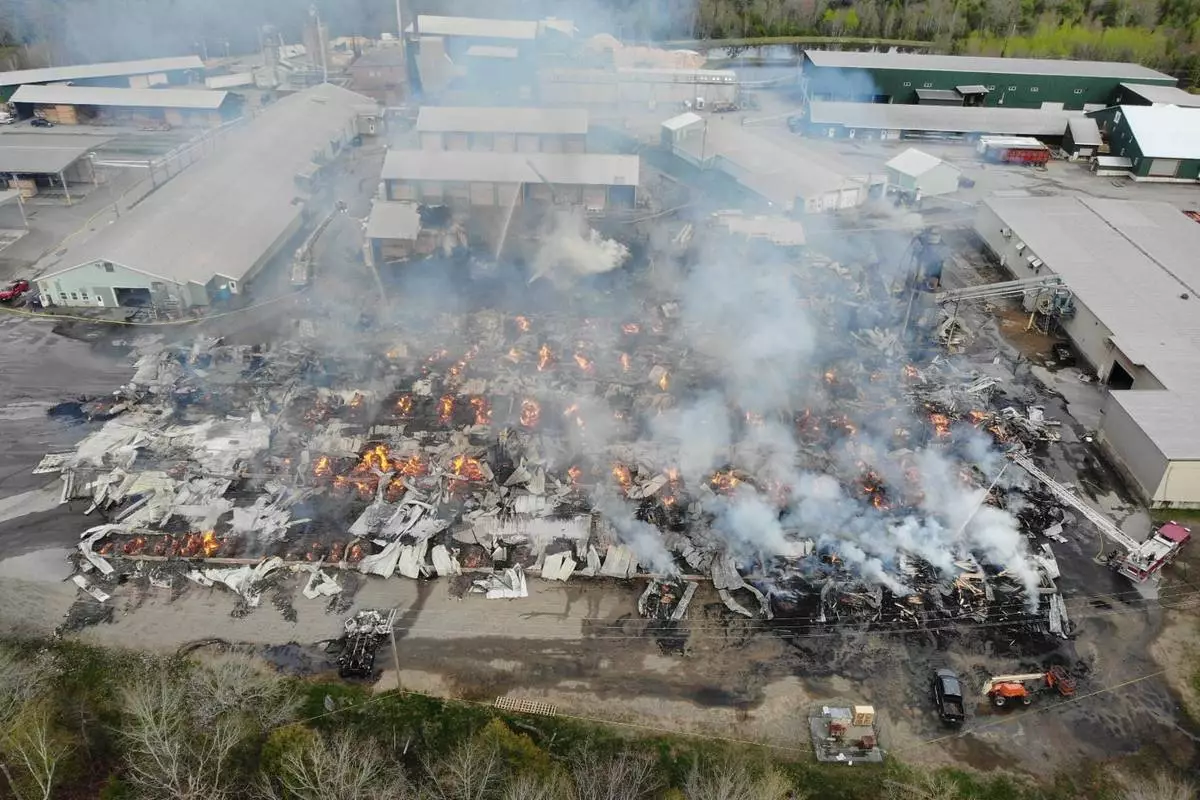
In this photo provided by the Maine State Fire Marshal, flames burn through Robbins Lumber following an explosion, May 15, 2026, in Searsmont, Maine. (Maine State Fire Marshal via AP)
WEST KELOWNA, British Columbia (AP) — A deadly wildfire in Western Canada that's forced some 20,000 people to flee grew overnight even without strong winds, challenging efforts to contain it and fully assess the damage, authorities said Tuesday.
About 100 firefighters from Mexico were on the way to help fight the blaze that's destroyed homes and other properties near Okanagan Lake in British Columbia. The fire has killed an 80-year-old woman and burned toward Summerland, a community of about 12,000 people roughly 300 kilometers (185 miles) east of Vancouver.
The fire showed “quite significant growth” in some areas overnight even without strong winds, said Cliff Chapman, director of provincial operations for the British Columbia Wildfire Service. He added crews were working around the clock to establish control lines and make it safe for evacuated residents to return home.
“We recognized and we heard even last night that people obviously would like to go home. They would like to see the extent of the damage,” Chapman said.
Kevin Dunbar, British Columbia’s executive director for emergency response and recovery operations, called it one of the largest evacuations in recent British Columbia history.
British Columbia officials said they had secured 1,600 hotel rooms and 1,000 group-lodging spaces for evacuees in Okanagan after some residents faced delays getting emergency assistance during the weekend evacuation.
Beyond those already forced to flee, another 10,000 people have been told to be ready to leave on short notice. More than 100 wildfires were burning across the province, and officials warned that dry lightning could spark new fires in the Central Interior and Okanagan. The province also asked the federal government for help expanding lodging for evacuees.
RCMP are investigating whether criminal activity played a role in the fire. Chapman said about 4% of wildfires in British Columbia over the past decade were suspected of having been deliberately set, but officials have not said the Bald Range fire was intentionally started.
Lucille and Gordon Beach of Summerland were in Vancouver for the weekend wedding of a granddaughter when they heard the fire had started. “We didn't feel too celebratory,” Lucille Beach said Tuesday.
The couple, staying for now in West Kelowna with their dog, haven't seen their home since leaving Friday but believed it was OK. It took a few days to adjust to the reality of what was happening, Lucille Beach said.
Carmen Bodzasy evacuated from Summerland, where she and her husband moved recently. She had to navigate evacuating on unfamiliar roads while he was away for work.
Before leaving, “I cried my eyes out for a minute, and I thought, you know what, if I had to restart over, what would I take with me?” She took photos of her parents' wedding, of her children's families and of her and her husband. “I thought if I didn’t have walls to go home to, at least I have memories to put up on my new one,” she said.
Holding her small dog Tuesday, she was not sure of the status of their home but said whatever happens, she intends to stay in Summerland, a place where people wave at passing motorists and stop to ask how you're doing.
“I’ll do whatever I can to help that town rebuild because everybody’s so kind there,” she said.
In the U.S., firefighters in California on Tuesday were fighting a blaze that’s burned roughly 3 square miles (8 square kilometers) in the Big Sur region of the state’s rugged central coast. Area state parks have closed and evacuation orders have been issued, including for a roughly 7-mile (11-kilometer) stretch of Highway 1, the state’s iconic coastal route. The highway was open as of Tuesday morning, California Highway Patrol spokesperson Ryan Moore said.
The Timber Fire has held east of the highway, authorities said.
Gillies reported from Toronto. Associated Press writer Claire Rush contributed from Portland, Oregon.
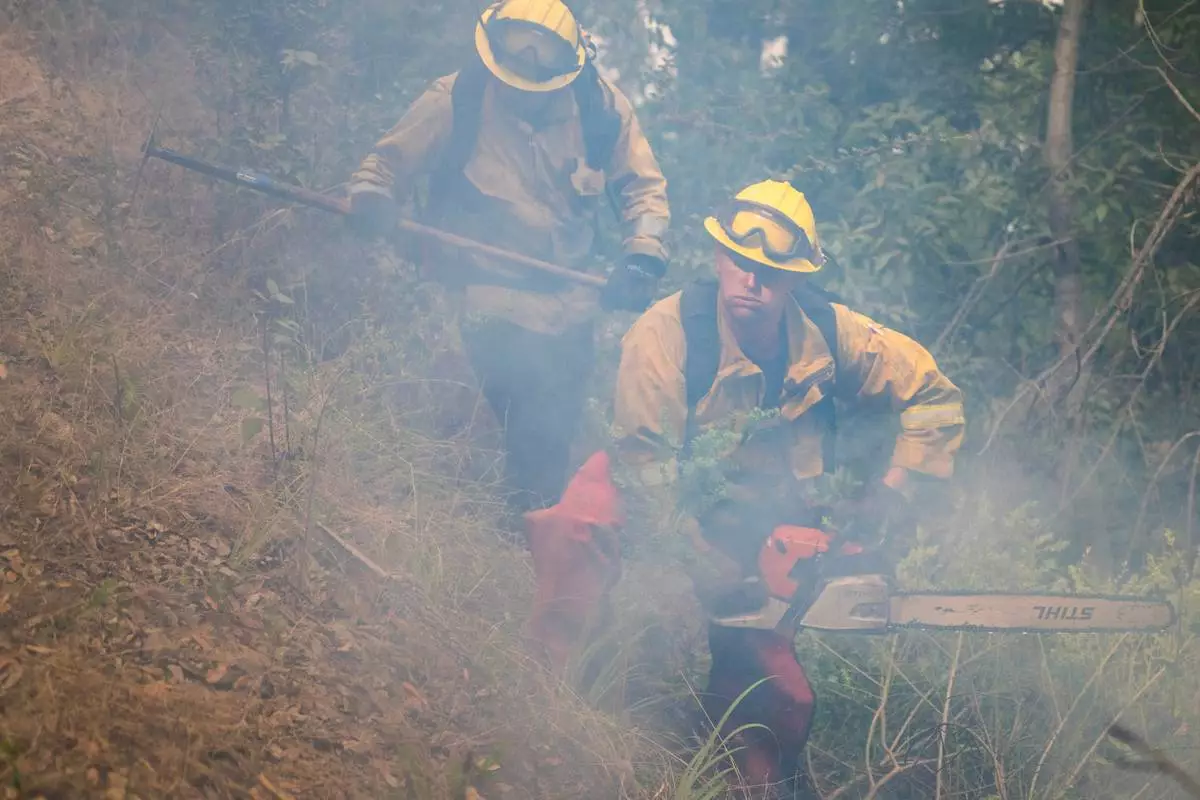
A firefighter cuts brush to stop the Timber Fire from burning above Deetjen's Inn in Big Sur, Calif., Tuesday, Aug. 11, 2026. (AP Photo/Nic Coury)
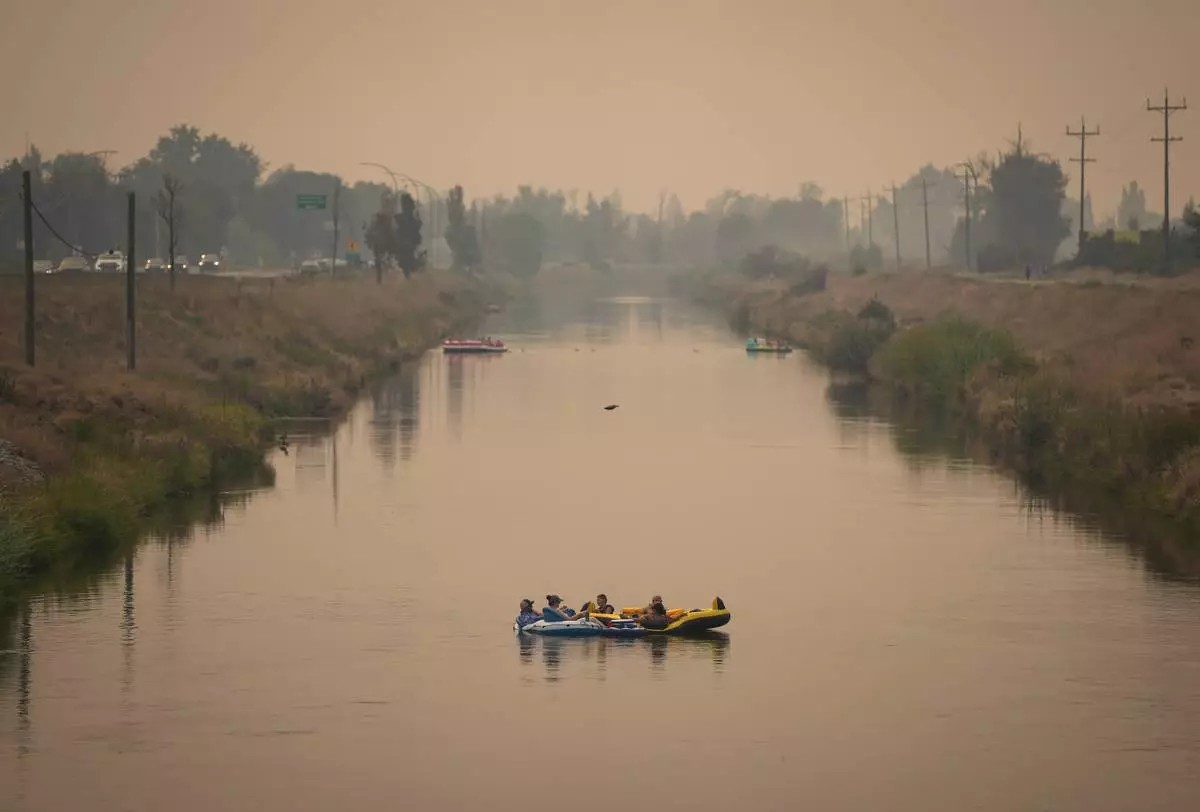
People float on the Channel Pathway that connects Okanagan Lake and Skaha Lake as smoke from wildfires burning in the region fills the air, in Penticton, British Columbia, Monday, Aug. 10, 2026. (Darryl Dyck/The Canadian Press via AP)
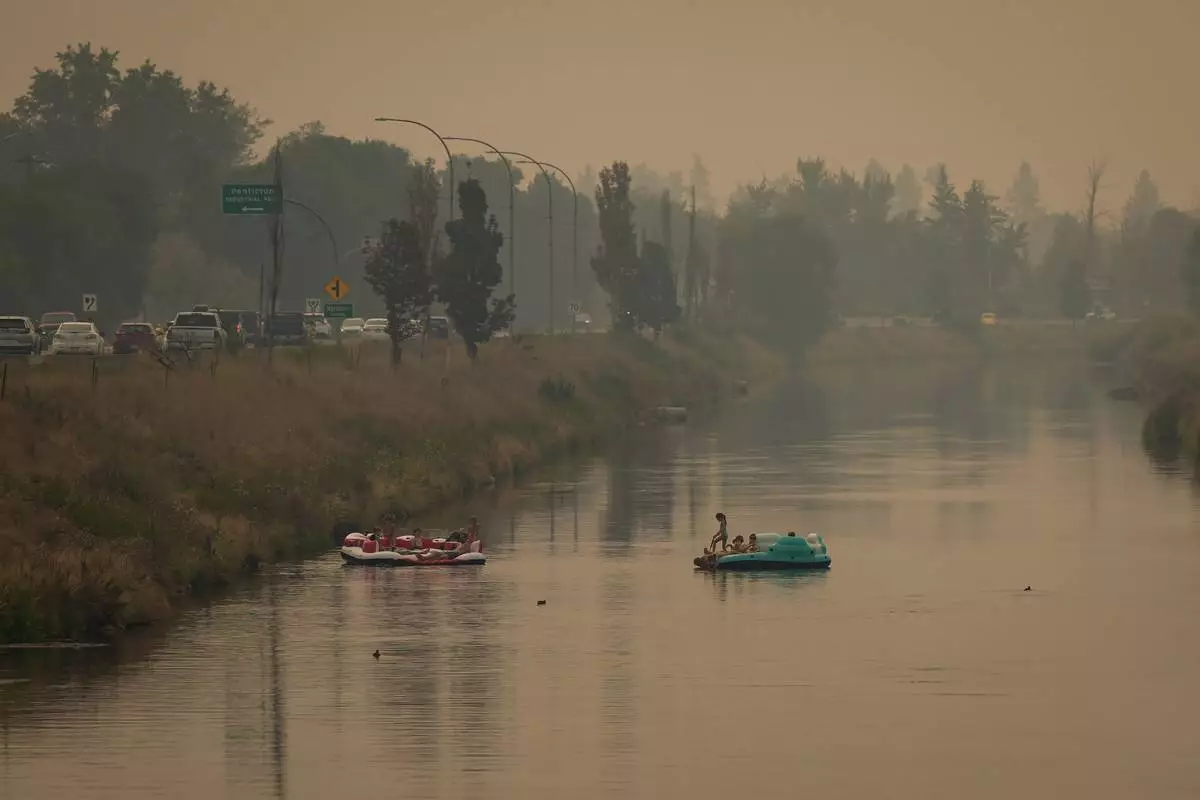
People float on the Channel Pathway that connects Okanagan Lake and Skaha Lake as smoke from wildfires burning in the region fills the air, in Penticton, British Columbia, Monday, Aug. 10, 2026. (Darryl Dyck/The Canadian Press via AP)
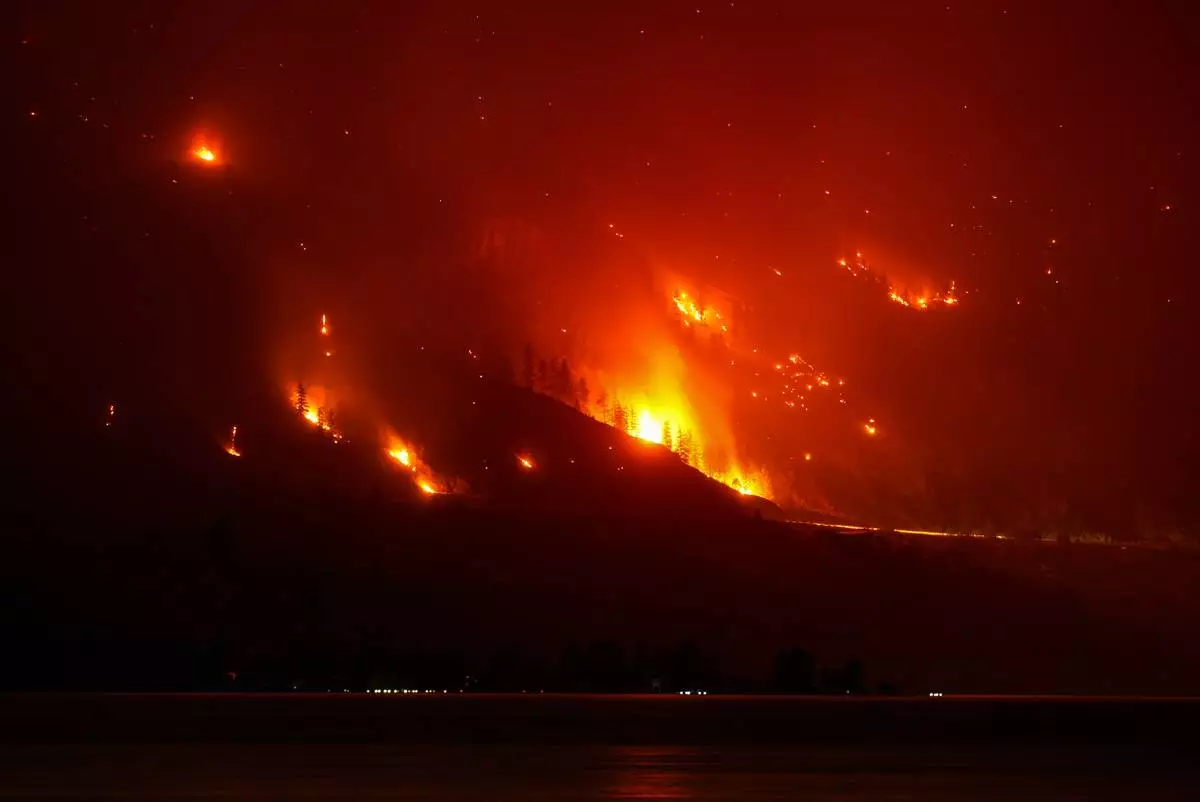
The Bald Range wildfire, that has forced people out of their homes in the south Okanagan region, burns in Summerland, B.C., late Saturday, Aug. 8, 2026. (Darryl Dyck/The Canadian Press via AP)
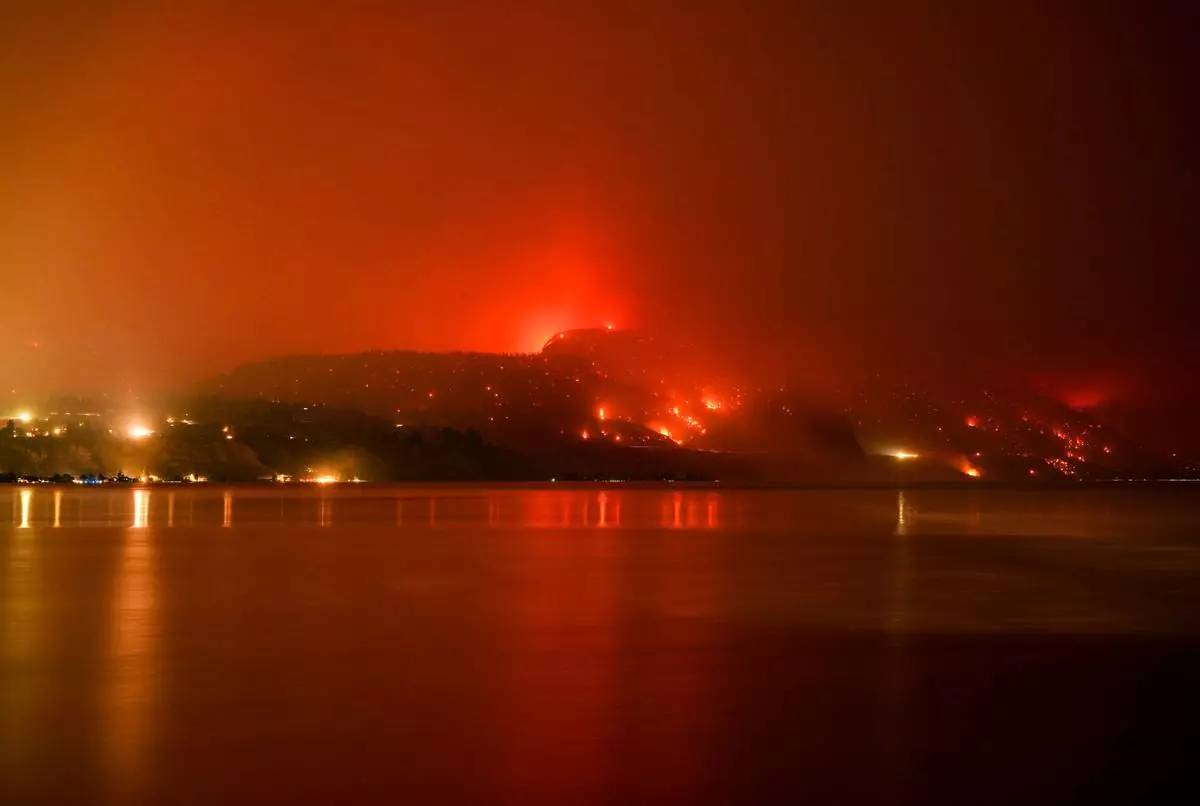
The Bald Range wildfire, that has forced people out of their homes in the south Okanagan region, burns in Summerland, B.C., late Saturday, Aug.8, 2026. (Darryl Dyck/The Canadian Press via AP)