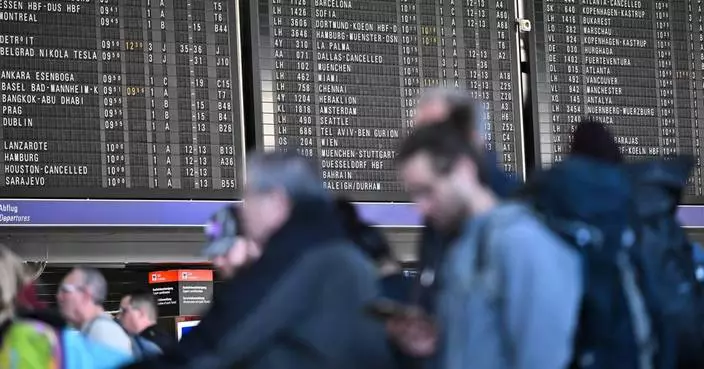
Immigration and Customs Enforcement officers may soon be outfitted with gloves that can deliver painful electric shocks intended to gain compliance from combative individuals.
ICE plans to spend up to $20 million to purchase thousands of “conductive distraction and de-escalation devices” for officers and agents by March, according to a notice published Monday by the Department of Homeland Security.
The devices are known as the G.L.O.V.E., which stands for Generated Low Output Voltage Emitter, and are manufactured by Compliant Technologies LLC of Lexington, Kentucky. They have been used in recent years by some jails and police departments.
DHS said Tuesday that it was working on a response to an Associated Press inquiry and offered no immediate comment. Jeff Niklaus, the founder and CEO of Compliant Technologies, wrote in an email, “Unfortunately, we are unable to speak on this subject.”
The notice said the solicitation for a no-bid contract could be published as early as Friday.
Civil rights advocates expressed alarm at the plan, saying ICE officers already face criticism for their use of force with little oversight or accountability while enforcing President Donald Trump’s immigration crackdown.
Compliant Technologies says the devices function as a normal pair of patrol gloves until officers press a switch to activate their electrical mode. The gloves must be applied directly to someone's skin to deliver a pain stimulus that typically helps an officer gain compliance within seconds, according to the company.
“It’s immediate and sharp, and it will distract you. I call it like a bee sting,” said John Peters, president of the Institute for the Prevention of In-Custody Deaths, who is studying how the device has been used. “If the officer is getting any type of resistance from the person, this is certainly an effective tool.”
Peters said he believed ICE’s planned purchase would likely be the largest from the company to date. He said he could envision ICE officers using the gloves to help remove uncooperative subjects from cars and houses and in and out of detention facilities.
“For smaller officers or weaker officers or older officers, I think it has a great advantage” because it can produce faster takedowns and shorten confrontations, he said.
The manufacturer warns the device should not be used as punishment, against people merely exhibiting “verbal defiance or belligerence” or on high-risk populations such as children, pregnant women or elderly or disabled people.
Jenn Rolnick Borchetta, deputy project director on policing at the American Civil Liberties Union, said the public should have no confidence that ICE officers will use the devices appropriately. She questioned why the devices would be necessary for civil immigration enforcement and noted those getting shocked might have no advance warning.
“ICE spent the last year showing this country they are too quick to use force. Now they will be able to deploy electric shocks with the slight push of a button that maybe nobody else can see them do,” she said. “Introducing gloves that can so easily be used to deliver terrible pain in encounters is a recipe for harm to the public.”
Supporters say the devices are generally used in specific jail and transport situations, rather than broadly to patrol on the streets. They have been used to subdue violent suspects who are refusing to get into squad cars and inmates who are harming themselves and threatening officers, according to Compliant Technologies.
Peters said he expected the devices to be misused by a small number of employees, as with other policing technologies, but he said they are unlikely to cause injuries. He said it would be important for ICE to have robust policies and training in place.
To use the device, officers must complete a course and be recertified every two years, the manufacturer says.

FILE - Federal agents walk down a street while conducting immigration enforcement operations in Minneapolis, Feb. 5, 2026. (AP Photo/Ryan Murphy, File)
LISBON, Portugal (AP) — Tens of thousands of people marched through more than 30 cities and towns across Portugal on Saturday in the largest protest yet against soaring housing costs that many say have put buying or renting a home beyond their reach.
The housing crisis has fueled weeks of demonstrations. Some activists have camped in central squares in Lisbon and Porto, the country’s two largest cities. Riot police with dogs have dispersed some protests, drawing accusations of heavy-handed tactics.
The demonstrations took inspiration from protests that began in neighboring Spain last month over similar housing concerns. They come amid widespread social unrest across Europe this autumn.
Marching under the slogan “We won’t let them steal our right to housing,” participants ranged from teenagers to retirees. Drums, music and chants accompanied the Lisbon march as protesters carried large banners and flags.
Susana Pacheco, a 35-year-old data analyst who works part-time as an astrologer to help pay her mortgage, said she worried about whether her younger sister could afford to move out of their parents’ home.
“I’m really worried about young people,” Pacheco said. “I don’t know how they’re going to be able to pay” for their own home.
“Things have become intolerable,” said Ana Encarnação, 42, citing rising living costs and the widening gap between rich and poor.
Activists want ceilings placed on rent increases, greater legal protection for tenants against eviction, and more affordable housing.
House prices in Portugal have risen much faster than incomes, statistics show.
Between 2015 and 2025, Portugal posted the biggest jump in the European Union in the home price-to-income ratio, with an increase of 61%, followed by the Netherlands with 34%, the EU statistical office Eurostat said last week.
There is no indication that the rise in housing costs is slowing. Between the first quarter of last year and the first quarter of 2026, housing prices rose by almost 20%, the National Statistics Institute, a government agency, said last month.
Rental prices, too, have climbed significantly, recording a 68% increase since 2020, according to the government.
Foreign buyers and investment funds have fueled price rises by buying Portuguese real estate. The country’s mild climate and long coastline have helped it grow popular with digital nomads and other remote workers, as well as retirees. Tourism has also surged, with many city center apartments switched to short-term rentals.
The government has responded with measures such as lowering taxes on new construction, restricting short-term rentals and promising to build 145,000 new homes. But it acknowledges that the effects won’t be immediate.
Portuguese President António José Seguro, whose role is mostly ceremonial but who wields political influence, convened a Council of State, an advisory body, to discuss the protests earlier this month and met Friday with some of the protesters.
AP reporter Helena Alves in Lisbon contributed to this story.
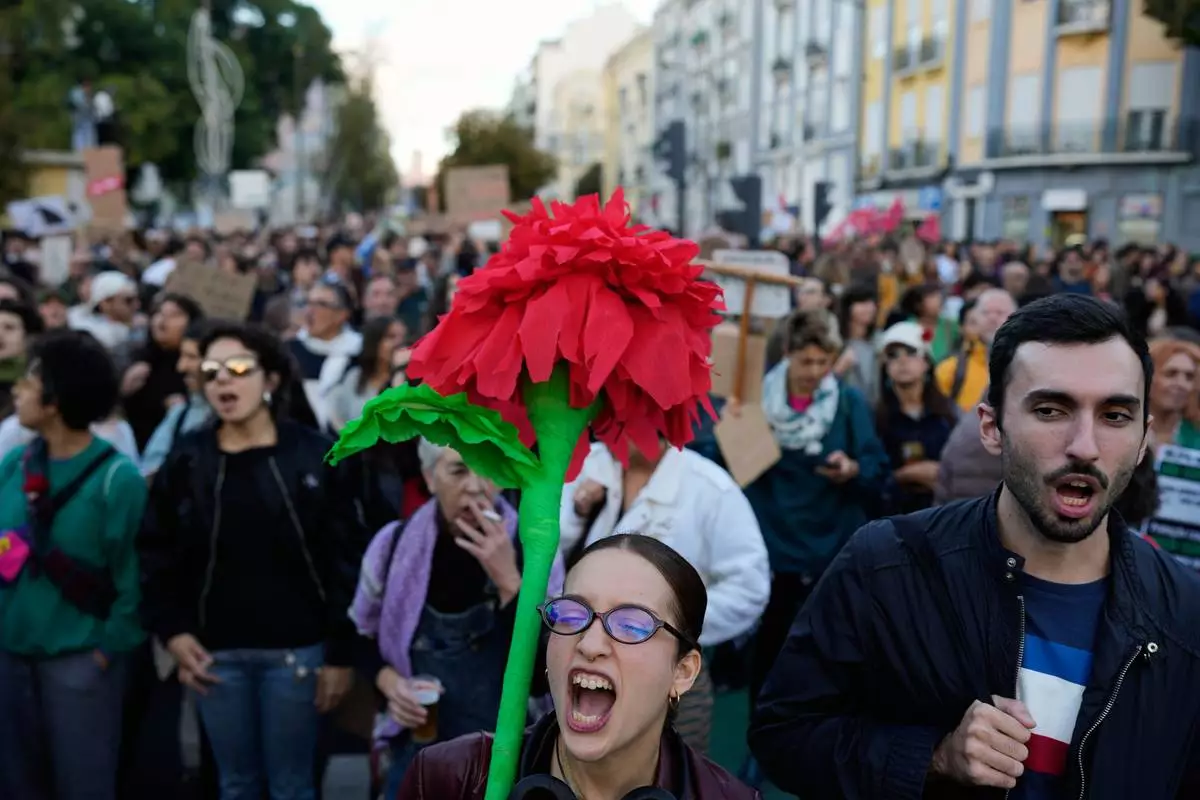
A woman carrying a giant red carnation marches with tens of thousands of protestors in a demonstration to demand affordable housing, in downtown Lisbon, Saturday, Nov. 14, 2026. (AP Photo/Armando Franca)
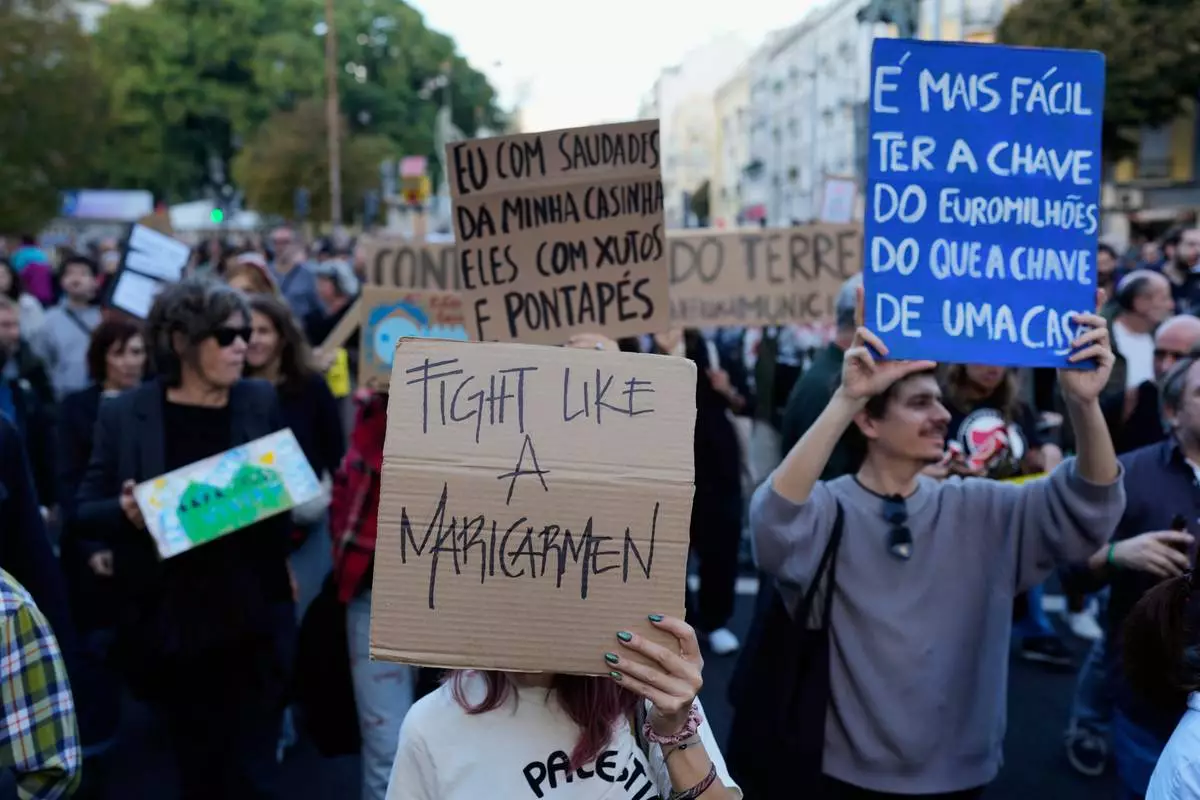
A protestor holds a sign reading "Fight like Maricarmen" referring to the 87-year old woman whose fight against eviction drew attention to the housing crisis in Spain, during a demonstration to demand affordable housing, in downtown Lisbon, Saturday, Nov. 14, 2026. (AP Photo/Armando Franca)
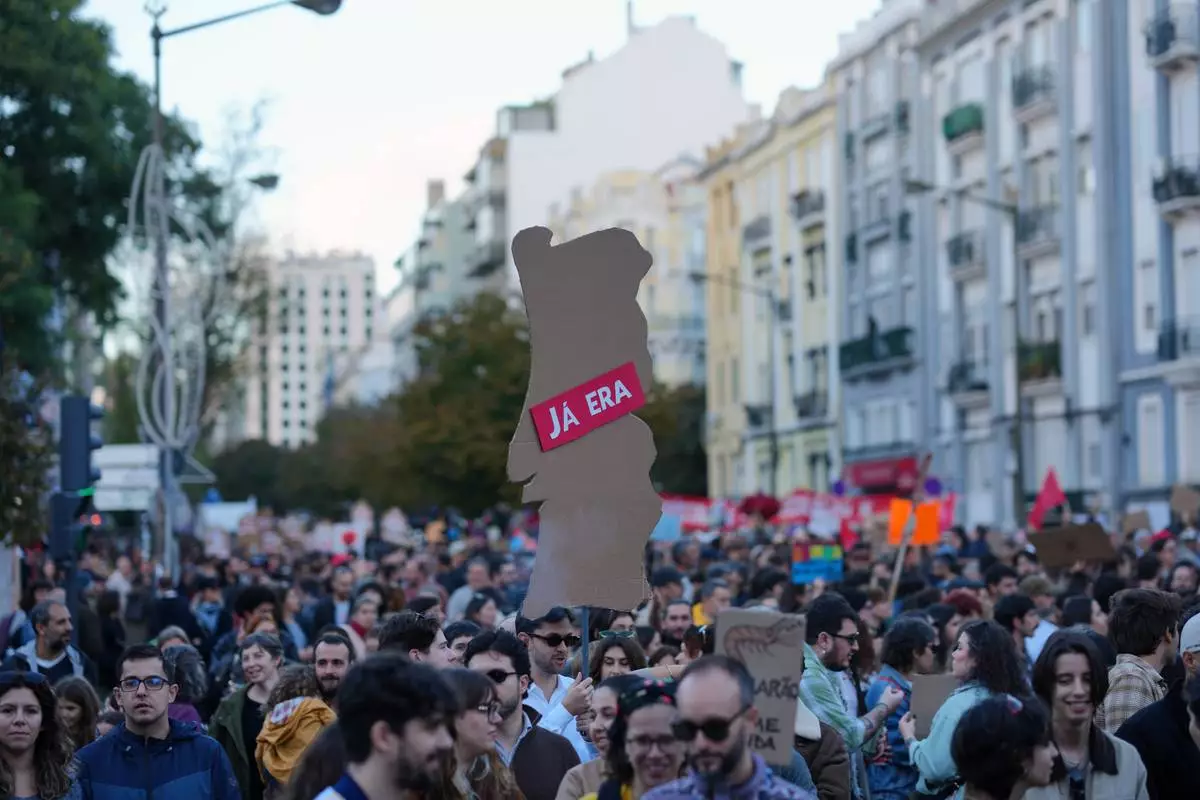
A protestor carries a map of Portugal with the real estate agency advertising slogan "It's Gone", during a demonstration to demand affordable housing, in downtown Lisbon, Saturday, Nov. 14, 2026. (AP Photo/Armando Franca)
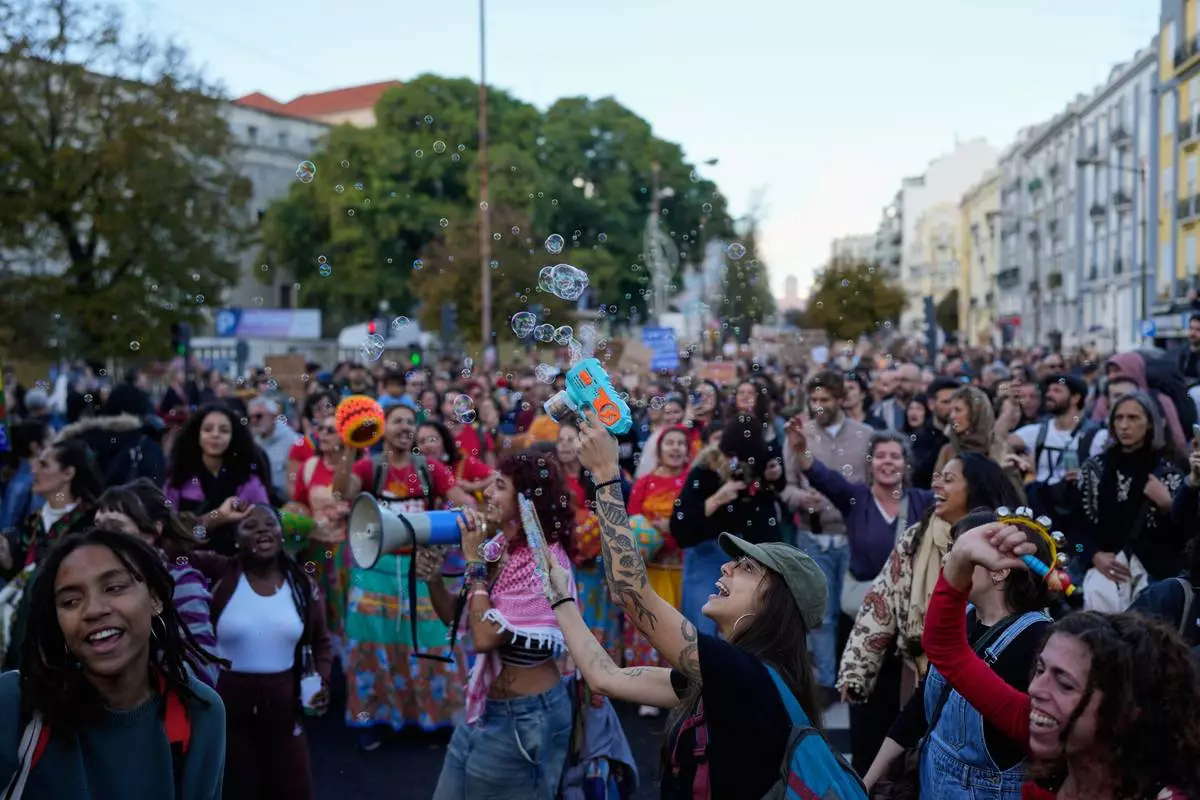
Bubbles float in the air as protestors dance and chant slogans during a demonstration to demand affordable housing, in downtown Lisbon, Saturday, Nov. 14, 2026. (AP Photo/Armando Franca)

Protestors carry a poster featuring photos of Lisbon Mayor Carlos Moedas, from left, Portuguese Prime Minister Luis Montenegro and Interior Minister Luis Neves, during a demonstration to demand affordable housing, in downtown Lisbon, Saturday, Nov. 14, 2026. (AP Photo/Armando Franca)