Skip to Content Facebook Feature Image

Optimal Transit Unveils Second Configuration of the Kraaken™ Data Center: A Ship That Can Power 32,000 Homes, Produce Clean Water for 150,000 People, and Host 60 MW of AI Compute – With No Fuel and No Emissions

Business

Optimal Transit Unveils Second Configuration of the Kraaken™ Data Center: A Ship That Can Power 32,000 Homes, Produce Clean Water for 150,000 People, and Host 60 MW of AI Compute – With No Fuel and No Emissions
Business

Business

Optimal Transit Unveils Second Configuration of the Kraaken™ Data Center: A Ship That Can Power 32,000 Homes, Produce Clean Water for 150,000 People, and Host 60 MW of AI Compute – With No Fuel and No Emissions

2026-08-12 08:18 Last Updated At:08:21

BEAUFORT, S.C.--(BUSINESS WIRE)--Aug 11, 2026--

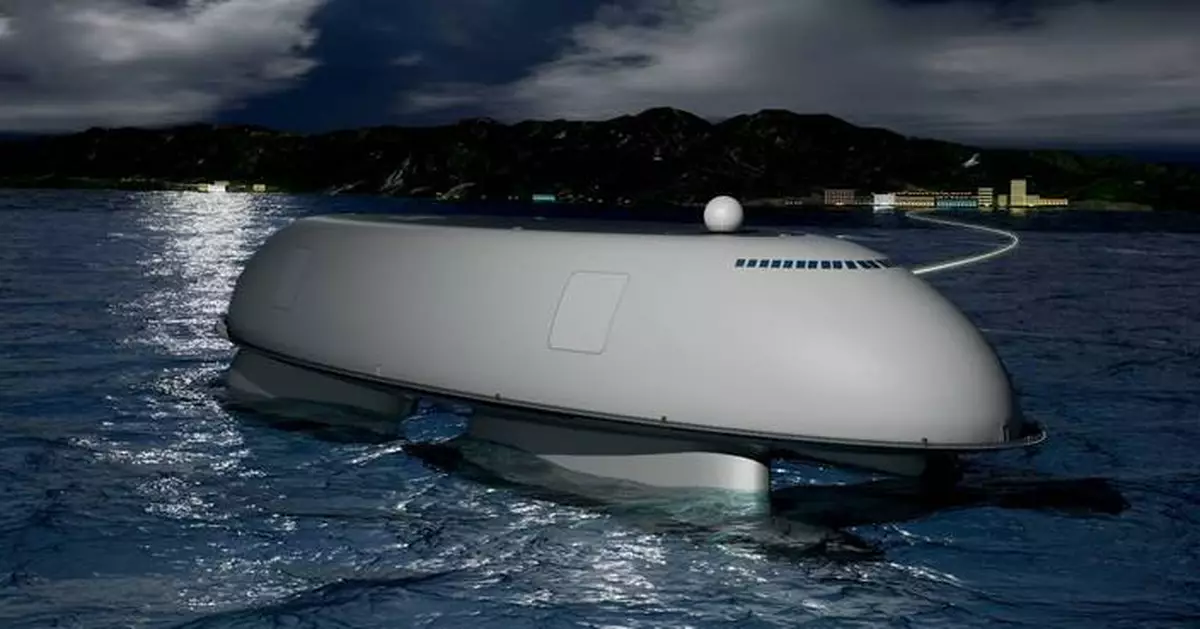
Optimal Transit, the maritime technology partnership of InMar Technologies and OptiFuel Systems, today announced the Blue Economy VITAL 100 MW Kraaken™ – a second configuration of its Kraaken™ platform that redirects a portion of the vessel's total power capacity away from data center operations and toward direct utility service: baseload electricity and fresh water, exported continuously to shore.

This press release features multimedia. View the full release here: https://www.businesswire.com/news/home/20260811774651/en/

The announcement builds on Optimal Transit’s July 7 unveiling of the Kraaken™ as a self-powered maritime AI data center, demonstrating how the same platform can address a broader range of critical infrastructure needs. The VITAL 100 MW configuration retains the same proven small waterplane area twin hull (SWATH) architecture – with its exceptional stability and flexible mooring system – as well as the patented Digital Ocean Thermal (DOT) self-powering engine and commercial off-the-shelf components with long operating histories in demanding industrial and maritime environments. What changes is how the vessel’s output is allocated: a greater share is directed toward delivering continuous baseload electricity and fresh water to shore, while substantial capacity remains available for secure AI and data center operations.

When we introduced the Kraaken™ as a data center platform, we presented a self-powered, zero emission vessel designed to dedicate its full capacity to compute,” said Jeff Kline, President of InMar Technologies. " The VITAL 100 MW configuration takes the same core capabilities and asks a different question: what happens when you point some of that output directly at a coastline that doesn't have reliable power or clean water? The answer is a single vessel that can serve the equivalent of a small city – indefinitely, from offshore, with no connection to the existing grid."

One Hull. Multiple Configurations. Scalable to Any Mission.

The Kraaken™ platform is designed around a principle Optimal Transit calls mission-flexible architecture: the same standardized hull, self-powering engine technology, and mooring infrastructure can be configured to prioritize different outputs depending on the needs of the host project or government.

In its data center configuration, virtually all the vessel's net output powers hosted AI compute workloads. In the VITAL 100 MW configuration, the allocation shifts:

All three outputs – power, water, and compute – flow to shore through a quick-disconnect umbilical system. If conditions require it, the vessel disconnects and relocates within hours. When conditions clear, it reconnects.

The Economics That Make It Viable

The VITAL 100 MW Kraaken™ vessel carries an all-in capital cost of approximately $587 million – a single integrated asset that generates its own power, produces its own fresh water, and hosts AI-grade data center capacity, with no land required, no fuel or grid connection needed, and no permitting fight to win.

To understand what that number actually means, it helps to price what it would cost to build the same capabilities on land. A comparably capable land-based bundle – a 40 MW power plant, a 7.9-million-gallon-per-day desalination facility, and a 60 MW AI-grade data center shell – would require three separate construction projects, three separate sites, and three separate permitting processes. The combined capital cost of those three projects runs from an estimated $750 million to $1.33 billion. And unlike a vessel that clears the shipyard ready to operate, each of those land-based projects faces a six-to-ten-year timeline to reach first revenue – grid interconnection queues, environmental permitting, and local zoning fights included.

The Kraaken™ delivers the same output bundle for roughly 44 to 78 percent of the land-based cost, from a single offshore mooring agreement, in approximately three years.

Once the vessel is in the water, the economics get even more interesting. In areas across sub-Saharan Africa, South and Southeast Asia, the Pacific Islands, and disaster-affected regions globally, a Kraaken™ vessel stands on its own as a utility investment before a single data center lease is signed. The cost of power in these markets is the cost of diesel self-generation: the generators that hospitals, industrial facilities, ports, and millions of households run as their primary or backup power source because the grid is too unreliable to depend on. In many of these markets, diesel self-generation costs approximately $0.40 to $0.55 per kilowatt-hour – three to four times the cost of grid power in developed markets.

A Disaster Relief Tool Unlike Anything Currently Available

Perhaps the most striking capability of the VITAL 100 MW Kraaken™ configuration is what it could mean for communities struck by natural or man-made disaster – the scenarios where power and clean water aren't an economic question, they're a survival question.

Consider what happened in Puerto Rico after Hurricane Maria struck in September 2017. The storm left all of Puerto Rico's 3.3 million residents without power and resulted in the longest blackout in U.S. history – approximately 11 months (U.S. GAO). In the six months following the hurricane, Puerto Ricans lost an estimated 3.9 billion hours of access to electric power, with rural communities accounting for 61 percent of that loss and some interior communities going without power for more than 120 days (NASA). More than 200,000 people ultimately left the island, many of them because of the protracted loss of electricity.

The VITAL 100 MW Kraaken™ would not have reversed the storm damage. But a vessel or two, pre-positioned or deployed within days of landfall, could have injected tens of megawatts of baseload power and millions of gallons of fresh water directly into Puerto Rico's coastal grid via umbilical – independent of the damaged terrestrial transmission infrastructure that made the recovery so slow and so catastrophic.

Mobility as a Risk Management Strategy

One of the most commercially significant features of the VITAL 100 MW Kraaken™ is also its most intuitive: unlike a power plant or desalination facility built on land, it can leave.

Each vessel connects to shore through a proven quick-disconnect mooring and umbilical system that has been in use in industrial maritime applications for more than 40 years. If a storm threatens, the vessel disconnects, repositions, and reconnects when conditions clear – without any interruption to the underlying asset's value. If political or regulatory conditions change, the vessel can be relocated to a different site or jurisdiction entirely. If the initial mission is completed – say, disaster relief for a storm-damaged island – the same vessel can be redeployed to the next project.

A Platform Designed to Scale

A single VITAL 100 MW Kraaken™ is designed to function as a standalone utility node. But Optimal Transit's architecture explicitly anticipates multi-vessel deployments. Five vessels co-located within a single two-mile offshore zone – a configuration the company calls a “Sovereign Power Park – would deliver approximately 200 MW of baseload power, 40 million gallons of fresh water per day and 300MW of data center compute capacity. Requiring neither land nor fuel, this compact cluster of offshore assets could support infrastructure needs at the scale of a major metropolitan area, a national-grid segment, or a large industrial zone.

About Optimal Transit Optimal Transit is the maritime technology partnership of InMar Technologies and OptiFuel Systems, bringing together more than a century of combined experience in advanced naval architecture, autonomous systems, and energy engineering. Optimal Transit is an advanced systems engineering company that designs and builds autonomous maritime systems and self-powering engine technologies for commercial, government, and humanitarian applications. The company's platforms combine commercial off-the-shelf components with proprietary technologies and patented innovations developed by its founders across decades of U.S. defense, commercial, and maritime programs.

Learn more at www.OptimalTransit.com.
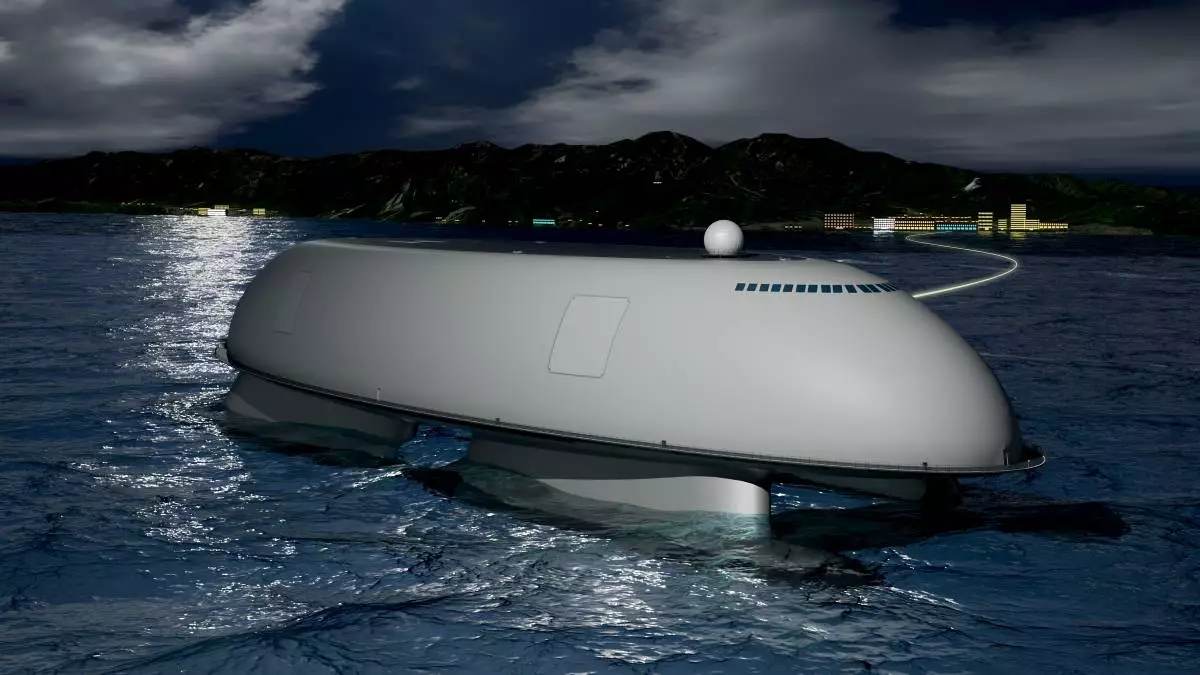
The same hull that launched as an AI data center platform reveals a second identity: a deployable offshore utility that can restore power and water to disaster-struck coastlines in three years – a timeline that would have changed the story in Puerto Rico, the Caribbean, and Gaza.

The same hull that launched as an AI data center platform reveals a second identity: a deployable offshore utility that can restore power and water to disaster-struck coastlines in three years – a timeline that would have changed the story in Puerto Rico, the Caribbean, and Gaza.

COLUMBIA, S.C. (AP) — Sen. Darline Graham has advanced to a runoff in South Carolina’s special Republican primary to replace her late brother Lindsey Graham in the U.S. Senate.

A first-time candidate who was always close to her brother’s political orbit, Darline Graham moved forward Tuesday from a 10-way field in Tuesday’s balloting. Lindsey Graham died July 11, triggering a whirlwind special election season.

Gov. Henry McMaster had appointed Darline Graham to serve the final months of her late brother’s term. She swiftly drew the encouragement and endorsement of President Donald Trump, her brother’s close congressional ally, to seek a full term.

The winner of the Aug. 25 runoff will face Democrat Annie Andrews in the general election. No Democrat has won a U.S. Senate seat in South Carolina in decades.

Tuesday’s contest marked the latest test of Trump’s command over the GOP base.

THIS IS A BREAKING NEWS UPDATE. AP’s earlier story follows below.

COLUMBIA, S.C. (AP) — Just two months after nominating Lindsey Graham to return to the U.S. Senate, South Carolina Republicans cast ballots Tuesday in a special primary to pick a replacement following the sudden death of the president's close ally.

Graham's sister, Darline Graham, a political unknown tapped to serve the final months of her brother's term, sought to overcome skepticism about her lack of experience in her campaign to replace him. She picked up President Donald Trump's swift backing, but the rare open Senate seat has attracted a broad field, including some of the state's top Republicans, setting up the latest test of the president's command over the GOP base.

For decades, South Carolina voters reliably returned Lindsey Graham to Washington despite periodic primary challengers who accused the dealmaker and foreign policy hawk of being insufficiently conservative.

Tuesday's contest featured one of Lindsey Graham’s earlier foes, as well as two U.S. House members and Mark Sanford, the former governor and congressman seeking a political comeback in a field crowded with familiar faces. Polls closed at 7 p.m. EDT, and the top two candidates could be headed to a runoff in two weeks if no one secures a majority of the votes cast Tuesday.

The unexpected primary began even before funeral observances in Washington and South Carolina for Graham, who died July 11 at his Washington home after suffering a tear in his aorta, concluded. State law proscribed a compressed timeline that forced candidates to navigate the decorum of mourning the senator's death while jockeying to replace him.

A day after Graham’s death was announced, his sister accepted Republican Gov. Henry McMaster’s appointment to succeed her brother in an interim capacity and was sworn in with her family and the late senator’s staff standing behind her. A week later, Darline Graham launched into the campaign herself, encouraged to run and then endorsed by Trump.

Some voters said her brother's reputation helped tilt them to support Darline Graham.

“She’s not a politician, but she was kin to probably one of the greatest senators ever,” Frank Bohn of Horry County said.

While Darline Graham couldn't directly access the millions in Lindsey Graham's campaign account, there was no limit to how much could be transferred to the National Republican Senatorial Committee, which funded advertising to support her.

A super PAC that once supported Lindsey Graham has also spent hundreds of thousands of dollars backing Darline Graham. Mailers tout her as “President Trump's choice” and “Prepared to Carry on Lindsey's Legacy.”

More familiar to South Carolina voters in their own right are two U.S. House members in the race, one of whom already has a statewide profile.

Fresh off an unsuccessful primary run for governor, U.S. Rep. Ralph Norman entered the Senate contest and snapped up endorsements from the likes of Sens. Rick Scott of Florida and Mike Lee of Utah.

One of the most conservative House members, Norman is well-known across South Carolina as a fiscal conservative. At times, however, he's been at odds with Trump, backing former South Carolina Gov. Nikki Haley in the 2024 presidential primary.

Also running is Rep. Russell Fry, who appeared poised to gain Trump's backing after Lindsey Graham's death. Despite lacking the president's endorsement, he announced his own candidacy and has been trying to boost his name recognition beyond his pro-Trump, Myrtle Beach-area district.

Voter George Mitford said Fry's service stood out to him over Darline Graham, who hasn't been in elected office.

“I just thought he’d probably had more experience in this than she would have had,” Mitford said, adding that he had supported Lindsey Graham’s Senate tenure.

The former South Carolina congressman and governor whose political ascendency was stalled by a 2009 extramarital affair is making yet another attempt to return to public office.

Sanford’s Senate bid comes just three months after he ended an effort to retake his former U.S. House seat, saying then he was quitting the race to establish a nonprofit to address the national debt, his signature issue.

Sanford had entered that contest on the last day of filing in a race already full of other Republicans. He's been crisscrossing South Carolina, reintroducing himself to voters after more than a decade out of statewide office.

Mark Lynch, a Greenville businessman who tried to oust Graham in last month's regular Republican primary, swiftly relaunched his campaign after Graham’s death. Lynch has campaigned as a Trump supporter, but in June, the president on social media called him a “lunatic” and a “disaster for the Republican Party.”

Dr. Annie Andrews, a Charleston physician, won her party’s June primary outright. Having set up her campaign based around challenging Graham, Andrews has been forced to pivot to a broader critique of the Republican contenders.

No Democrat has won a U.S. Senate seat here in decades. And when Graham last ran in 2020, he defeated his Democratic opponent, Jaime Harrison, by a 10 percentage point margin.

Meg Kinnard can be reached at http://x.com/MegKinnardAP

Collins reported from Mount Pleasant, South Carolina.

Former Gov. Mark Sanford, R-S.C., watches as he waits to speak at a candidate event days before the special South Carolina Republican primary to replace Sen. Lindsey Graham, R-S.C., Thursday, Aug. 6, 2026, in Charleston, S.C. (AP Photo/Meg Kinnard)

Former Gov. Mark Sanford, R-S.C., watches as he waits to speak at a candidate event days before the special South Carolina Republican primary to replace Sen. Lindsey Graham, R-S.C., Thursday, Aug. 6, 2026, in Charleston, S.C. (AP Photo/Meg Kinnard)

FILE - Sen. Lindsey Graham, R-S.C., introduces Adm. Kevin Lunday, acting commandant of the U.S. Coast Guard, during a Senate Commerce, Science and Transportation Committee hearing on the nomination Lunday for Commandant of the Coast Guard, Nov. 19, 2025, on Capitol Hill in Washington. (AP Photo/Julia Demaree Nikhinson, File)

FILE - Sen. Lindsey Graham, R-S.C., introduces Adm. Kevin Lunday, acting commandant of the U.S. Coast Guard, during a Senate Commerce, Science and Transportation Committee hearing on the nomination Lunday for Commandant of the Coast Guard, Nov. 19, 2025, on Capitol Hill in Washington. (AP Photo/Julia Demaree Nikhinson, File)

Rep. Russell Fry, R-S.C., left, sits with his son James at a candidate event for hopefuls vying in a special Republican primary to replace the late Sen. Lindsey Graham, R-S.C., on November ballots, Saturday, Aug. 8, 2026, in Florence, S.C. (AP Photo/Meg Kinnard)

Rep. Russell Fry, R-S.C., left, sits with his son James at a candidate event for hopefuls vying in a special Republican primary to replace the late Sen. Lindsey Graham, R-S.C., on November ballots, Saturday, Aug. 8, 2026, in Florence, S.C. (AP Photo/Meg Kinnard)

Rep. Ralph Norman R-S.C., speaks at a candidate event for hopefuls vying in a special Republican primary to replace the late Sen. Lindsey Graham, R-S.C., on November ballots, Saturday, Aug. 8, 2026, in Florence, S.C. (AP Photo/Meg Kinnard)

Rep. Ralph Norman R-S.C., speaks at a candidate event for hopefuls vying in a special Republican primary to replace the late Sen. Lindsey Graham, R-S.C., on November ballots, Saturday, Aug. 8, 2026, in Florence, S.C. (AP Photo/Meg Kinnard)

Larry Nordone looks on as his wife, U.S. Sen. Darline Graham, R-S.C., speaks to reporters after she voted in a special Republican primary to replace her brother, U.S. Sen. Lindsey Graham, R-S.C., on November ballots on Tuesday, Aug. 11, 2026, in Florence, S.C. (AP Photo/Meg Kinnard)

Larry Nordone looks on as his wife, U.S. Sen. Darline Graham, R-S.C., speaks to reporters after she voted in a special Republican primary to replace her brother, U.S. Sen. Lindsey Graham, R-S.C., on November ballots on Tuesday, Aug. 11, 2026, in Florence, S.C. (AP Photo/Meg Kinnard)

Recommended Articles