AFCD prosecutes woman for allegedly keeping dogs without licences
The Agriculture, Fisheries and Conservation Department (AFCD) today (August 12) stated that prosecution has been instituted under section 20 of the Rabies Regulation (Cap. 421A) against a local woman on suspicion of keeping 136 dogs without valid licences.
Following complaints received earlier concerning an animal shelter located in Yuen Long District, the AFCD immediately conducted a blitz inspection of the premises. During the operation, a total of 136 dogs were suspected of being kept without valid licences. The case will be mentioned at Tuen Mun Magistrates' Courts on September 2.
Under the Rabies Regulation (Cap. 421A), all dogs over 5 months old are required to hold a valid licence, which must be renewed at intervals not exceeding three years thereafter. Any person convicted of an offence is liable to a maximum fine of $10,000.
An AFCD spokesman reminded dog keepers that regular rabies vaccinations and licensing of dogs are not only statutory obligations, but also important measures to safeguard animal health and public safety. The AFCD will proactively conduct dog licence inspections in public places and institute prosecutions against dog keepers found without valid licences.

Source: AI-found images
DH successfully interrupts hepatitis A transmission chain among specific group by providing free hepatitis A vaccination to men who have sex with men
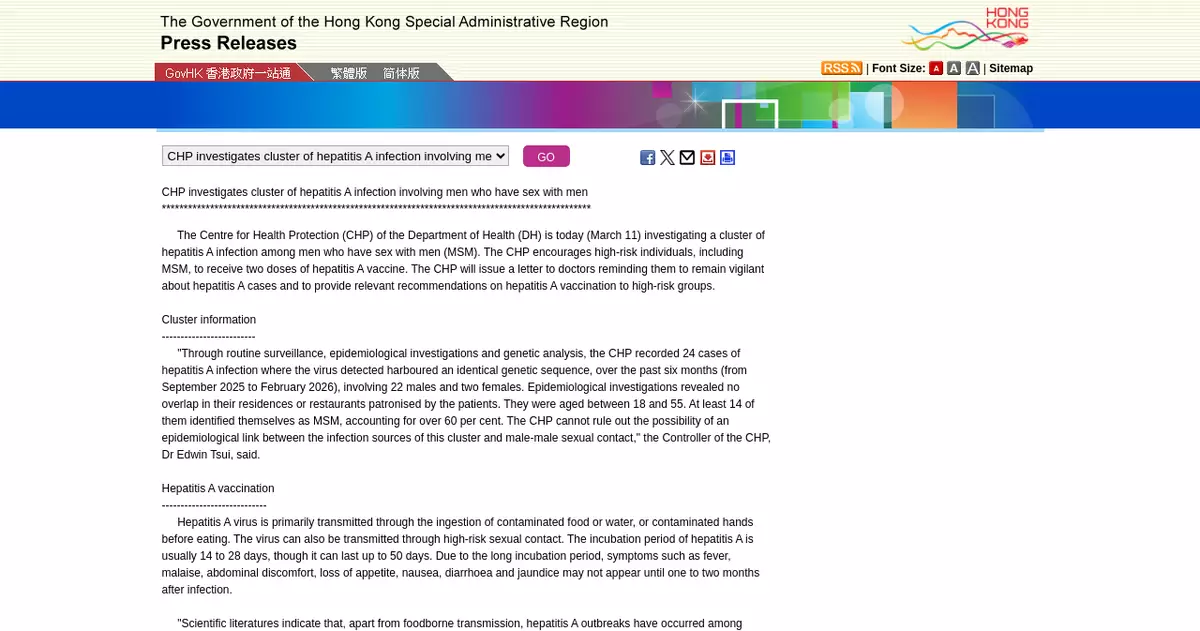
The Centre for Health Protection (CHP) of the Department of Health today (August 12) said that since the announcement in mid-March of a cluster of hepatitis A infection among men who have sex with men (MSM) and the subsequent launch of a vaccination drive offering two doses of hepatitis A vaccine free of charge to MSM, the number of hepatitis A cases involving MSM has continued to decline over the past few months to a low level. The transmission chain of this cluster is believed to have been interrupted and the risk to public health is now under control. In light of this, the CHP announced that the initiative to provide free hepatitis A vaccination to MSM will end on September 12 and the CHP'sonline booking platformwill stop accepting vaccination appointments from MSM starting September 11. The CHP will notify individuals who have received the first dose but are unable to complete the two-dose vaccination series by September 12 regarding arrangements for their second dose.
During the six-month period from September 2025 to February 2026, Hong Kong recorded 24 cases of hepatitis A infection whose viruses were found to be genetically identical, involving 22 males and two females. Over 60 per cent of the male patients identified themselves as MSM. To control the transmission chain, the CHP has been providing two doses of hepatitis A vaccine free of charge to MSM since March 12, aiming to protect public health. As of July 31, more than 280 MSM had been vaccinated.
The number of hepatitis A cases among MSM has dropped significantly due to the CHP's multipronged measures, including enhanced public education and the provision of free vaccines to a specific group.
The CHP recorded five and two cases of hepatitis A infection in June and July respectively, representing a sharp decline from 15 cases recorded in January and a return to baseline levels. The CHP's epidemiological investigation showed that the patients in the past two months range in age from 21 to 83. Three of them identified themselves as MSM. Genetic analysis by the CHP revealed that no case recorded after June harboured the virus genetically identical to the aforementioned cluster of infections involving MSM. The CHP will continue to closely monitor the situation and take appropriate follow-up actions.
Hepatitis A virus is primarily transmitted through the ingestion of contaminated food or water, or contaminated hands before eating. The virus can also be transmitted through high-risk sexual contact. The incubation period of hepatitis A is usually 14 to 28 days, though it can last up to 50 days. Due to the long incubation period, symptoms such as fever, malaise, abdominal discomfort, loss of appetite, nausea, diarrhoea and jaundice may not appear until one to two months after infection.
Scientific literature indicates that, apart from foodborne transmission, hepatitis A outbreaks have occurred among MSM populations in many regions worldwide in the past. Due to the long incubation period, outbreaks transmitted through person-to-person contact tend to persist longer. Between 2015 and 2017, Hong Kong also experienced hepatitis A transmission chains involving MSM, which were successfully interrupted by vaccinating the affected at-risk groups. According to the Scientific Committee on Vaccine Preventable Diseases under the CHP, individuals in high-risk groups (including MSM) should consult their doctors about receiving hepatitis A vaccination to protect their personal health.
For more information on hepatitis A, please visit theCHP's website.
Source: AI-found images