The Vistula River, Poland's largest waterway, has fallen to record lows in some sections amid a prolonged heatwave and drought, sparking concerns among residents and experts over the far-reaching impacts on shipping, ecology, and daily life.
The abnormally low water levels have exposed extensive sandbars and riverbeds, straining aquatic habitats and posed navigation hazards.
"If the water level keeps dropping, it could become an ecological disaster because Warsaw's tap water comes from the Vistula," said Kirill, a local resident.
"We certainly have reason to worry, because the signs of climate change have become very obvious recently with periods of extreme heat followed by periods of severe cold," said Alina, another resident.
Climate change is delivering increasingly widespread consequences for agriculture, energy, shipping, and people's everyday lives.
In recent weeks, many countries in Europe have recorded consecutive new high-temperature records. The Danube has seen persistent declines in flow, affecting energy facilities that rely on river water for cooling.
Germany's Rhine, one of Europe's most important industrial waterways, has also fallen to historically low levels.
"The water level is very low and it does not regard only the Vistula River, but all the rivers in Poland and in Europe as well. Have a look at the Danube in Budapest, the record-low level, and the nuclear power plant will be closed or is closed now," said Marek, a Warsaw resident.
Hydrological experts like Michal Sikora from Poland's Institute of Meteorology and Water Management attribute the unusually low water levels to prolonged hydrological droughts, exacerbated by below-average winter precipitation, shifts in rainfall patterns, and persistently high summer temperatures.
"Poland has been experiencing persistent hydrological droughts this year, with significantly less rainfall than usual in winter. Summer rainfall this year has primarily consisted of thunderstorms, which are short-lived and insufficient to effectively replenish groundwater and river runoff," said Michal Sikora.
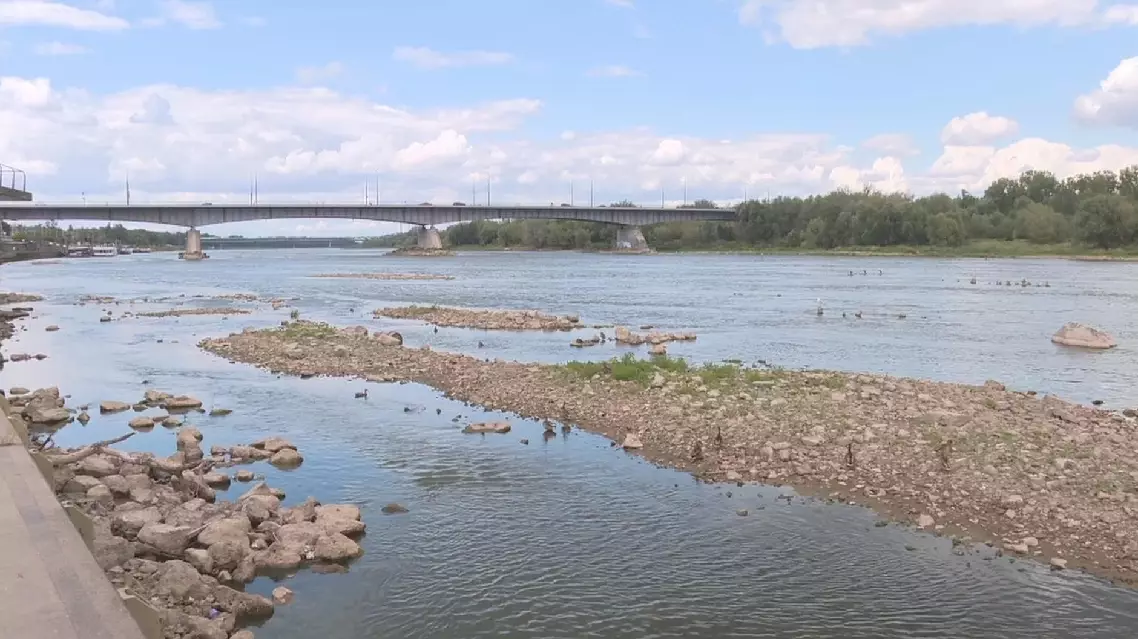
Poland's longest river experiences record low level as heatwave persists