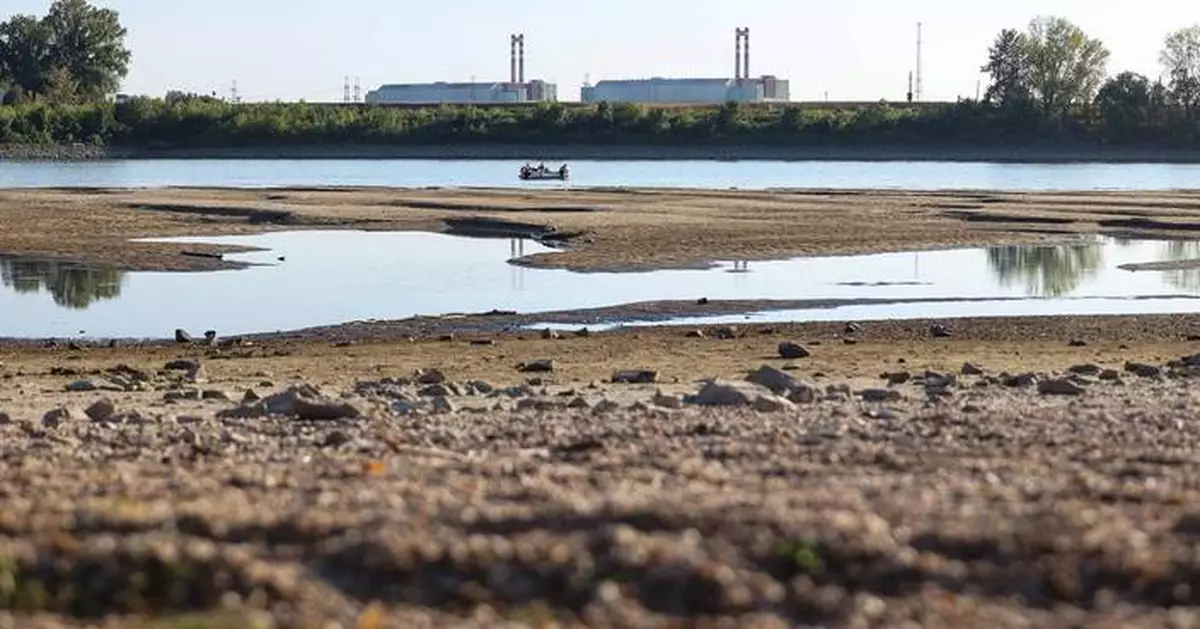
BUDAPEST, Hungary (AP) — Authorities in Hungary will begin taking steps to raise the level of the Danube River this week in order to ensure the country's only nuclear power plant can continue operating, Prime Minister Péter Magyar said on Wednesday.
Persistent drought and successive extreme heat waves in recent months have deprived one of Europe’s largest rivers of water, bringing Danube levels to record lows and pushing the Paks nuclear power plant to the brink of shutting down for the first time in its 44-year history.
The Soviet-built plant, which uses water from the Danube to cool its four reactors, is currently operating at little more than 10% of its 2,000 megawatt capacity due to low water levels. It supplies Hungary with around a third of its electricity.
In a video posted to Facebook on Wednesday, Magyar said authorities would begin building a bed sill — a low concrete or stone structure built into the riverbed to slow the current and raise upstream water levels — on Thursday on a section of the Danube just upriver from the plant.
Delivery of some 145,000 cubic meters of rocks used in its construction would begin on Wednesday evening, Magyar said, adding that the intervention could raise the level of the Danube by up to a meter (3 feet).
Meanwhile, two 80-meter (262-foot) barges will be transported to the site near Paks and may be sunk in order to raise the Danube up to a further 20 centimeters (8 inches) at the plant's cooling pumps. A decision on whether to sink them will be made on Friday, Magyar said.
“We can no longer consider this extraordinary situation as a one-time natural extreme,” he said, adding that the work must be carried out quickly to avoid a full Paks shutdown.
Magyar referred to the construction of the bed sill as a “long-term” solution which could ensure that water levels never fall below the threshold at which reactors at Paks must be powered down.
He said that after a recent temporary rise in water levels, they were expected to begin falling again in coming days which, without external intervention, could lead to the complete shutdown of the Paks plant.
“The Danube has given us days, not months," he said.
Similar measures were taken in Romania last week when authorities sank four barges laden with rock into the Danube in an attempt to redirect water downstream toward the Cernavoda nuclear plant, which had already shut down one of its two reactors due to low water levels.
On Wednesday, Magyar said the Paks plant operating at its current output is costing Hungary's economy up to 50 billion forints ($158 million) per month. By contrast, he said the planned interventions on the Danube will cost around 6 billion forints ($19 million).
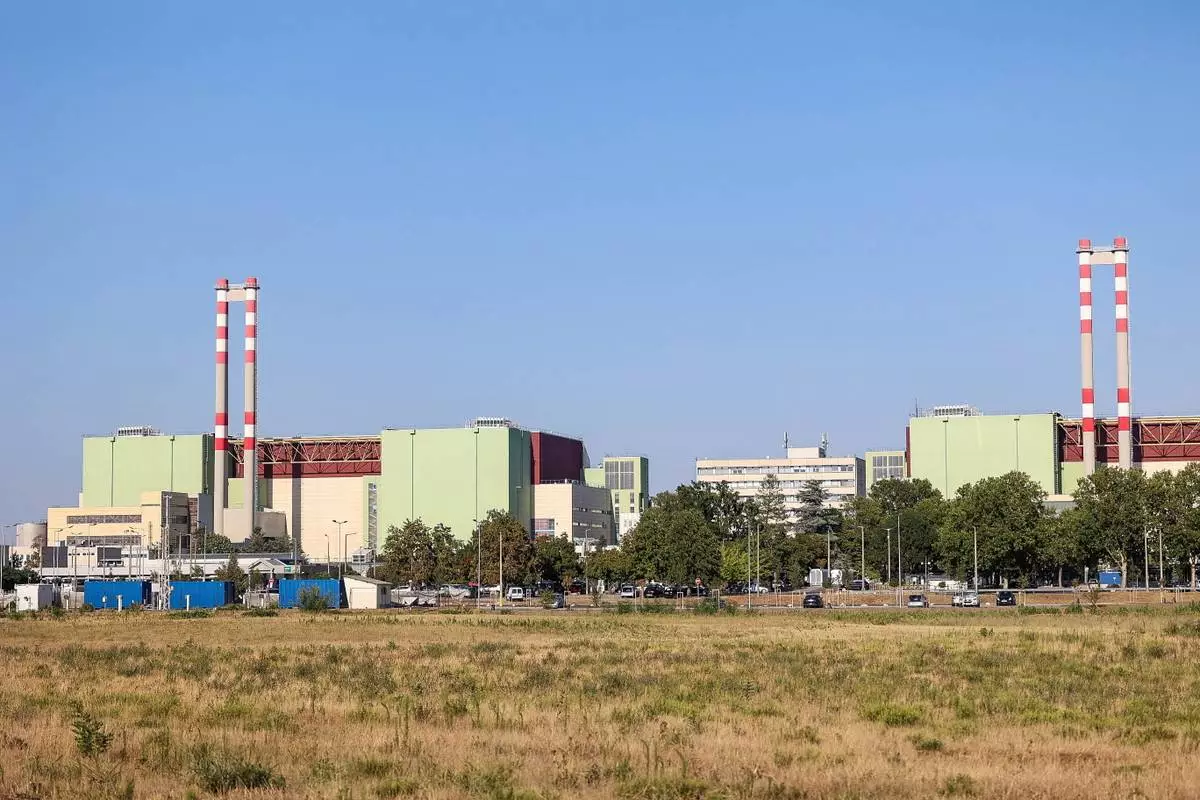
The MVM Paks Nuclear Power Plant, which had to close its Reactor 3 due to extremely low water levels on the Danube River, is seen in Paks, Hungary, Wednesday July 29, 2026. (Daniel Kiss)
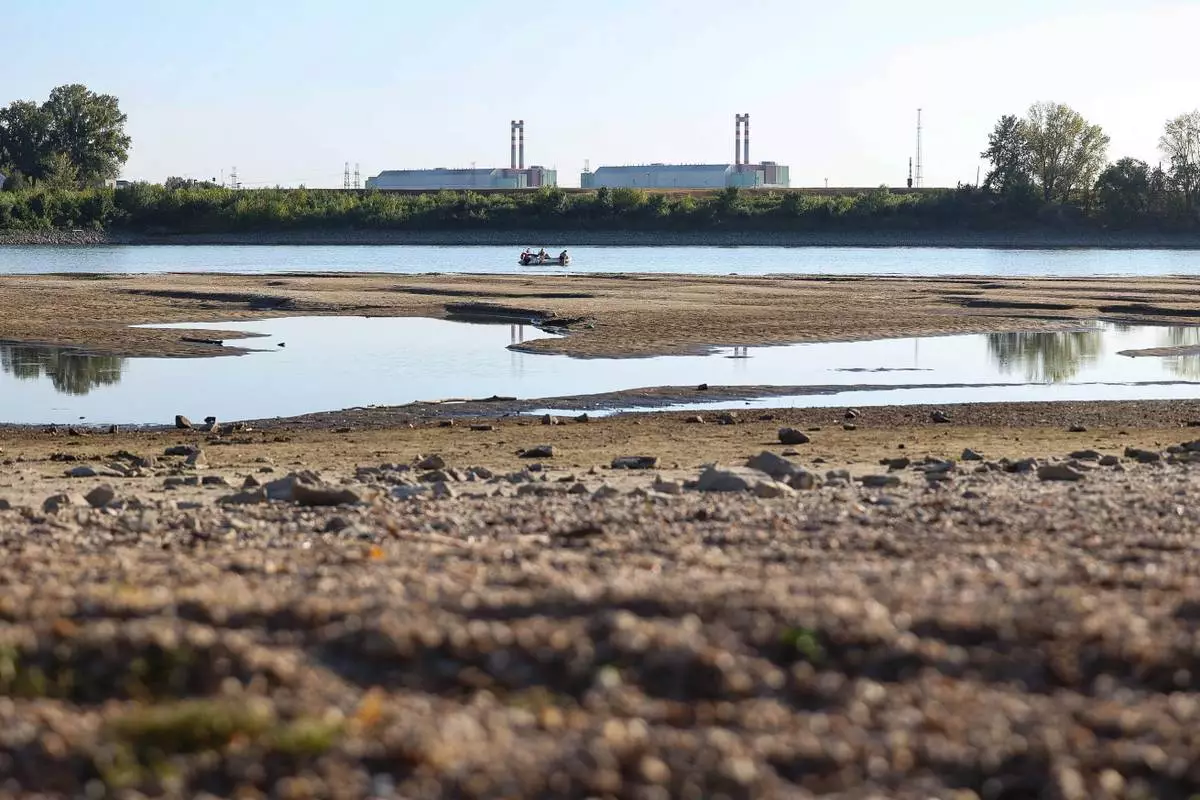
The MVM Paks Nuclear Power Plant, which had to close its Reactor 3 due to extremely low water levels on the Danube River, is seen in Paks, Hungary, Wednesday July 29, 2026. (Daniel Kiss)
NEW YORK (AP) — It may be hard to believe, but even Sir Anthony Hopkins doubts himself sometimes.
“There’s a part of me which says, ‘you didn’t write that,’” he recalls of composing his debut album, “Life Is a Dream.” “What’s it called? Impostor syndrome.”
Thankfully, it did not stop him from finishing the collection of 12 compositions he crafted over six decades.
Conducted by Gustavo Dudamel, performed by the Philharmonia Orchestra and recorded at London's Alexandra Palace in April, it will be released by Decca Records on Aug. 21.
“My first love, or vocation really, is music,” said the 88-year-old actor. “That sounds very official, but I was raised with a lot of music (of the) postwar years, and it influenced me. And I started playing the piano when I was quite young.”
He picked up the instrument at 4 and began composing years later, writing his first piece, a waltz, in 1960. He was 22 at the time.
“I find more freedom with music,” he says, compared to acting, which he labels “a discipline, you have to know your stuff. But music for me is a freewheeling kind of art form.”
And he's had his fair share of experience. Prior to the release of “Life Is a Dream,” Hopkins had composed scores for a number of films.
“The opening of ‘Shadowlands’ is my first adventure in composing music,” he said, referring to the 1993 film he starred in as “The Chronicles of Narnia” author C.S. Lewis. Then he composed for a few other movies, including 1996’s “August,” 2007’s “Slipstream” and 2020’s “Elyse.”
“It's about my childhood,” he says of the album, which shares its title with the Pedro Calderón de la Barca play. “It's basically the memories of my childhood and growing up in Wales, and my developments in life, my adolescent years,” and so on.
But he says “there’s a great sadness in it all because — don’t get me wrong, I’ve had a wonderful life — but underneath it all, there is the knowledge that life is one long goodbye. From the moment we’re born, we begin to die,” he starts to laugh. “Sounds so cheerful!”
That tension — or better put, wisdom — carries throughout the release. Take the first single as an example. “1947: Suite for Solo Piano and Orchestra: II. Bracken Road” is the middle composition in a three-part suite about a particular summer in South Wales. He says it contains a “melancholy and sadness,” a sense that arises with its cello.
“It’s the welcomed sound of nostalgia, of the strange, whimsical pain of life,” he describes the song. “All music is actually based in pain. Sounds pretty preposterous, but it is. It’s about the yearning.”
The same can be said about the song “Stella Aria” — named after his wife, director and actor Stella Hopkins — that deals with “the loneliness in all of us,” he says, but is part of a path to “sheer happiness.”
Hopkins has been reflecting for quite some time now — both in his memoir, “We Did OK, Kid,” released last fall — and on this album. “I look at my own life now, and especially this year; I’m going to be 89 at the end of the year. And I look back and I’m thinking, ‘good God, I couldn’t have planned any of this.’ From the moment I decided to become an actor, 70 years ago, I thought … ‘Why did I do that?’ I didn’t know, because I was pretty useless in school? I didn’t know what else to do. So I tried for a scholarship, became an actor instead of a musician. And suddenly I’m given a huge plate of success by some force of nature.”
“I'm without fear of mortality,” he adds. “I'm just so grateful I’ve lived this long.”
In a surprising turn of events, actor Bradley Cooper “passed me on to Dudamel,” says Hopkins, after witnessing Hopkins' composition a few years before with the Birmingham Symphony Orchestra, conducted by Michael Seal. Dudamel was on board.
But when it came time to record at Alexandra Palace earlier this year, “I’m sitting there thinking, ‘How the hell did I write this?' I have no idea,” said Hopkins. “And Dudamel said, ‘This is wonderful.’ … He is one of the most astonishing people I’ve met. He’s so full of life and so full of energy and love, and it’s quite extraordinary.”
It's a shared affection.
“The same depth of imagination, humanity and emotional truth that has defined his extraordinary work on stage and screen is present in his music,” Dudamel said in a statement. “Anthony approaches music with the heart of a storyteller and the instincts of a poet, creating sound worlds that are both deeply personal and universally resonant.”
After his debut album, live performances may be next. Top of Hopkins' list is Carnegie Hall.
“That’s where I want to go. That’s what I want,” he says.
The 1947 film “Carnegie Hall” was a formative film for him, and he has the distinct memory of his mother saying, “You play at Carnegie Hall one day.”
It is yet another dream in a life full of them.
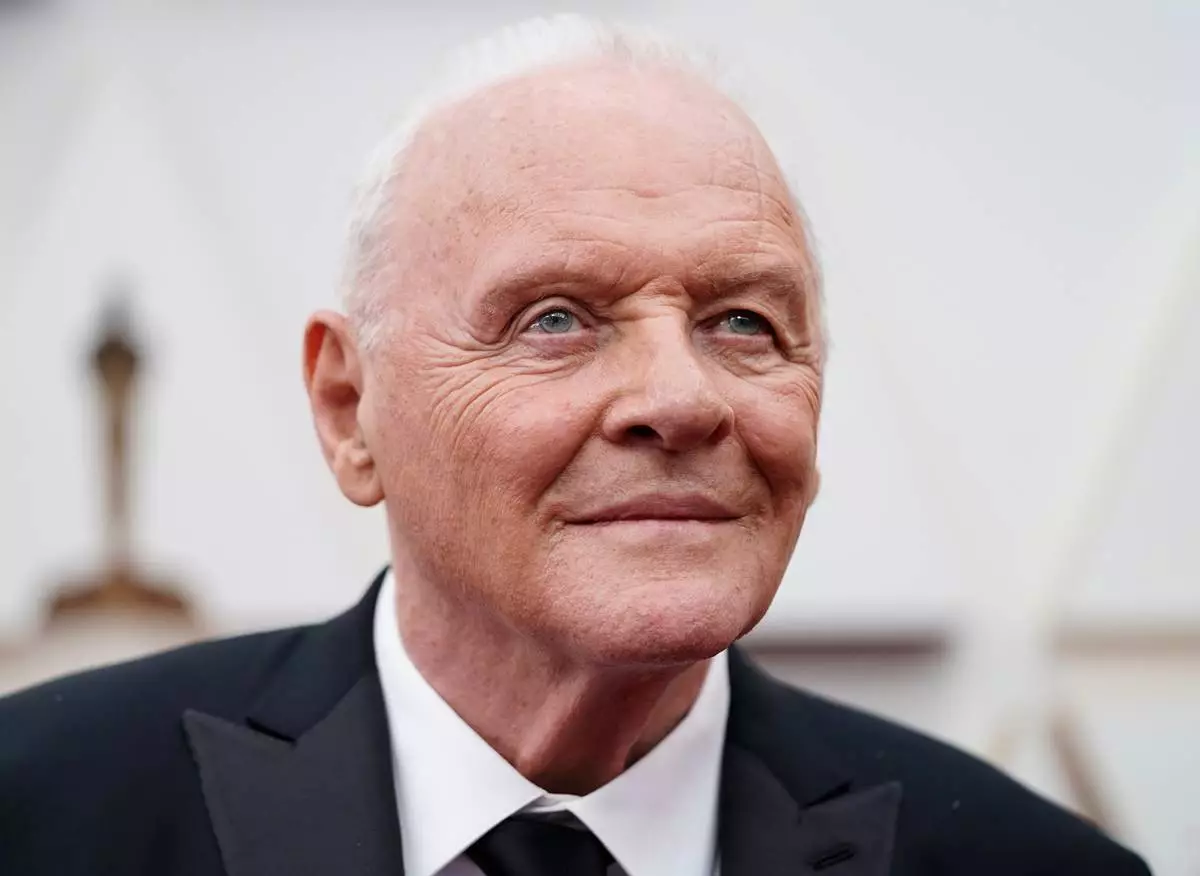
FILE - Anthony Hopkins arrives at the Oscars in Los Angeles on March 27, 2022. (AP Photo/Jae C. Hong, File)