WASHINGTON (AP) — Democrats remain mixed over what ideological direction the party should take. But across a series of closely watched primaries, they are sending a clearer message about the party’s path forward: They want change.
In marquee Senate primaries in Michigan and Minnesota, progressive candidates defeated two members of Congress with significant backing from party leaders. Wisconsin voters narrowly rejected a democratic socialist but still chose a 40-year-old county executive who is seeking to become the state’s first Black governor. And in Connecticut, voters ousted one of the longest-serving Democrats in Congress for a challenger who campaigned on generational change.
Click to Gallery
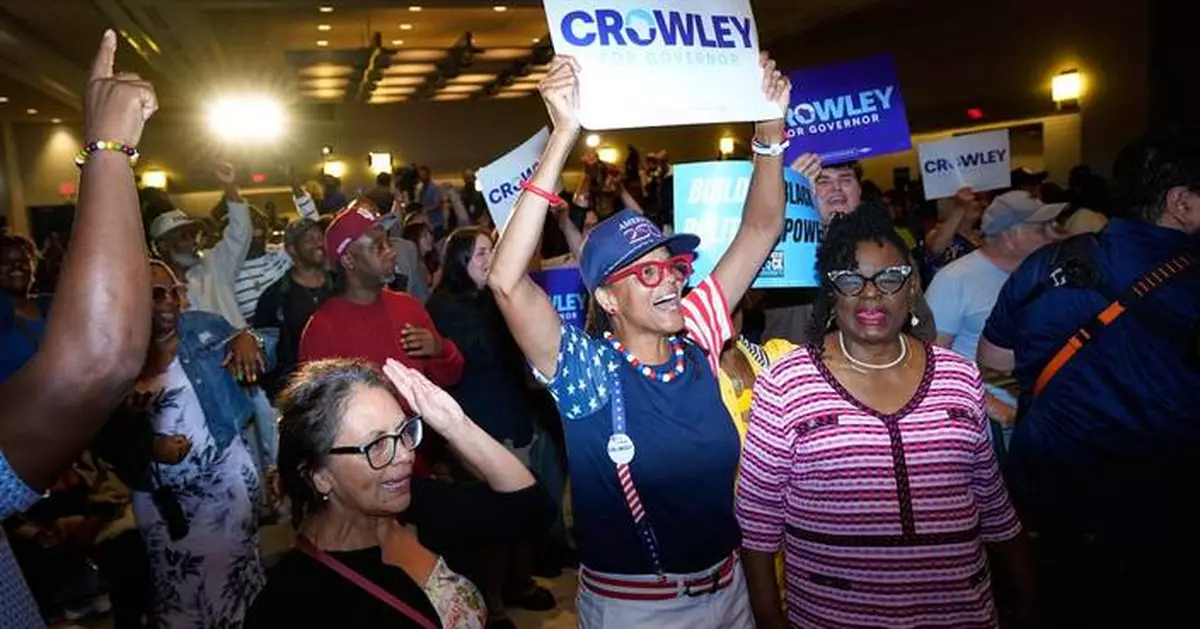
Supporters hold signs during a primary election night watch party for Democratic gubernatorial candidate Francesca Hong, Tuesday, Aug. 11, 2026, in Madison, Wis. (AP Photo/Nam Y. Huh)
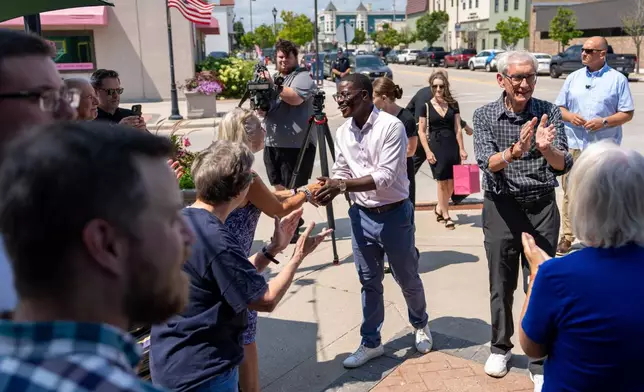
David Crowley, Democratic candidate for Wisconsin governor, shakes hands with supporters while campaigning with Wisconsin Gov. Tony Evers, right, Friday, Aug. 7, 2026, in Sheboygan, Wis. (AP Photo/Kayla Wolf)
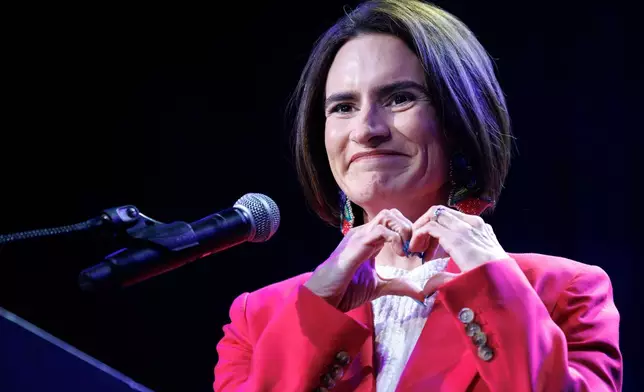
Minnesota Lt. Gov. Peggy Flanagan, a Democratic candidate for U.S. Senate, attends an election night event on Tuesday, Aug. 11, 2026, in Minneapolis. (Kerem Yücel/Minnesota Public Radio via AP)
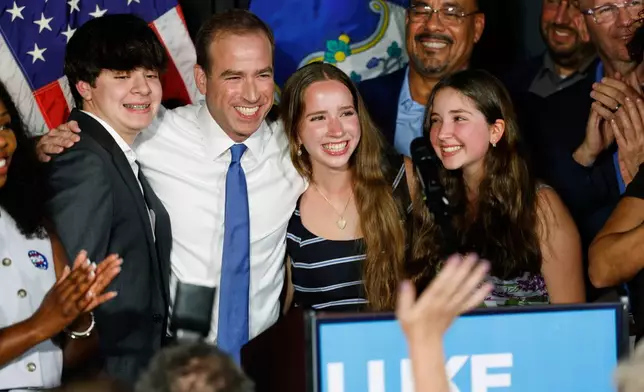
Luke Bronin, former Hartford mayor and Democratic candidate for Connecticut's 1st congressional district, stands on stage with his children during an election night watch party Tuesday, Aug. 11, 2026, in Hartford, Conn. (AP Photo/Rusty Jones)
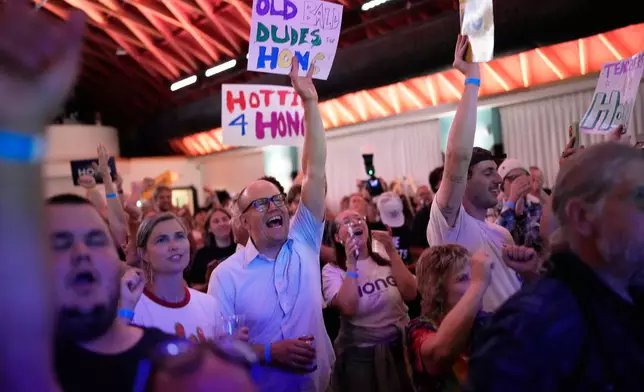
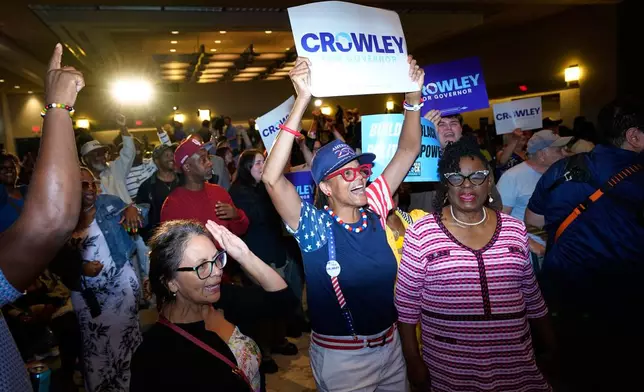
Supporters react to election results coming in during a primary election night watch party for Democratic gubernatorial candidate David Crowley, Tuesday, Aug. 11, 2026, in Milwaukee, Wis. (AP Photo/Kayla Wolf)
The results so far this month deliver no clear ideological mandate. Instead, they add to mounting evidence from this year’s primaries of a Democratic appetite for turnover that is cutting across the party’s traditional divisions.
“The through line between these races isn't ideology. It's impatience with this political system that feels disconnected from the urgency voters feel,” said Lis Smith, a national Democratic strategist. "The demand for change is much broader than the demand for socialism.”
The immediate challenge for Democrats is whether they can harness the frustration fueling revolts against their own party and turn it against Republicans in November. Beyond that looms the 2028 presidential race, when a new generation of leaders will compete to shape a changing Democratic Party.
“If leaders in our party don’t recognize that we need to make changes, then the changes are going to come from the ground up,” Luke Bronin, a former mayor who defeated 14-term Connecticut Rep. John Larson in Tuesday’s primary, said in his victory speech. “That’s a message our party needs to hear.”
Democratic socialist Francesca Hong hoped to ride the wave of recent progressive victories, including Abdul El-Sayed’s upset in neighboring Michigan’s U.S. Senate primary a week earlier, to the Democratic nomination for governor in Wisconsin.
Instead, she narrowly lost to Milwaukee County Executive David Crowley, a more moderate Democrat who had the backing of outgoing Gov. Tony Evers.
Hong’s defeat also came after a number of her past comments resurfaced, including support for defunding the police and a call to cancel Thanksgiving, which she said was a joke. Unlike El-Sayed, Hong didn't receive the backing of some of the nation’s most prominent progressive leaders, including Sen. Bernie Sanders and Rep. Alexandria Ocasio-Cortez.
The result illustrates a tension for the party’s ascendant left flank. Candidates running on populist economic messages have found growing success with Democratic voters. But some positions associated with the progressive movement’s recent past remain vulnerabilities — particularly among voters worried about electability in November.
“A lot of Democrats are traditionalists on things like culture issues. This is not about culture, it's about economics. It's about corruption,” said David Axelrod, who was an adviser to President Barack Obama. “The closer that candidates hew to those issues, the larger the base they're going to be able to accumulate.”
That tension was evident Tuesday for Sarah Atkins Hoggatt, 61, who said she agreed with Hong on some issues but worried that Hong’s deeply progressive politics and the democratic socialist label would make it harder for her to defeat Republican Tom Tiffany. She voted for Crowley.
“I didn’t vote my heart,” Atkins Hoggatt said.
Progressives scored a much clearer victory in Minnesota, where Lt. Gov. Peggy Flanagan resoundingly defeated centrist Rep. Angie Craig. Craig had the backing of House Democratic Leader Hakeem Jeffries, former Speaker Nancy Pelosi and several senators from battleground states.
Flanagan had her own powerful allies, including Sanders, Sen. Elizabeth Warren and outgoing Minnesota Sen. Tina Smith. She also sought to turn Craig’s advantages against her, highlighting her support from wealthy donors and attacking her vote for a Trump-backed immigration bill that became a liability after immigration agents shot and killed Renee Good and Alex Pretti in Minneapolis.
As in Michigan, the winning progressive candidate was significantly outspent.
“For months now, I have been telling you that this campaign was about the many versus the money,” Flanagan said as she celebrated her victory in Minneapolis. “Well guess what? The many just won.”
The contrasting results in Minnesota and Wisconsin underscore why November will provide a more consequential test of the progressive movement’s gains. El-Sayed and Flanagan must now prove that the messages that powered their primary victories can resonate with a broader voting pool in the general election.
Flanagan is 46 years old. Crowley is 40. And El-Sayed is 41. But nowhere was the demand for generational change more explicit Tuesday than in Connecticut.
Bronin, 47, defeated the 78-year-old Larson — who was first elected to Congress in 1998. A central theme of Bronin’s campaign was the need for a new generation of leadership in Washington.
Larson became the seventh Democratic House incumbent to lose a primary this year, many of them to younger challengers. The defeated incumbents and the Democrats replacing them span ideological lines, making the wave of losses difficult to explain simply as a shift to the left.
The push for generational turnover has taken on greater urgency since Democrats’ defeats in 2024, when concerns about President Joe Biden’s age ultimately ended his reelection campaign and forced the party into an uncomfortable reckoning over a generation of leaders who had remained in power for decades.
Bronin himself has connected his challenge to that experience. Earlier this year, he argued that Democrats needed “new members of Congress, new Democratic leaders who have the energy and courage and clarity of mission that this moment demands.”
That sentiment was evident among voters in Larson’s district. Dan Schnaidt, a 73-year-old Democrat, said he appreciated Larson’s service but believed it was time to move on.
“It’s time for new blood, for new ideas,” Schnaidt said.
While Hong fell just short in Wisconsin, the strength of her insurgent campaign highlighted another force reshaping Democratic politics: younger voters.
Cody Chandler, a 35-year-old software engineer, voted for Hong and called her “probably the most exciting candidate I’ve seen.” Unlike in elections past, Chandler said, he voted for the candidate he most wanted to win rather than the one he considered most electable.
Jesse Heer, a 32-year-old Madison business owner, also backed Hong, citing her focus on affordability.
That support showed up geographically. Hong won Madison, home to the University of Wisconsin’s flagship campus, by nearly 7 percentage points, though it wasn't a big enough of a margin to help her win the nomination.
A similar pattern helped propel El-Sayed to victory a week earlier in Michigan.
El-Sayed won Washtenaw County, home to the University of Michigan, by nearly 25 percentage points and Ingham County, home to Michigan State University, by 23 points. He also won Grand Rapids, with its large population of younger, college-educated voters, by nearly 26 points.
Jordan Snyder, a 20-year-old Michigan voter who supported El-Sayed, said she backed him because of his progressive positions and because she viewed him as someone she could trust, rather than “someone who I feel could be bought and sold.”
“People are feeling like a lot of the people that they’ve trusted that have been in government haven’t really been living up to expectations,” Snyder said.
——-
Associated Press reporters Scott Bauer in Madison, Wisconsin, Tim Sullivan in Hudson, Wisconsin and Susan Haigh in Hartford, Connecticut, contributed to this report.

Supporters hold signs during a primary election night watch party for Democratic gubernatorial candidate Francesca Hong, Tuesday, Aug. 11, 2026, in Madison, Wis. (AP Photo/Nam Y. Huh)
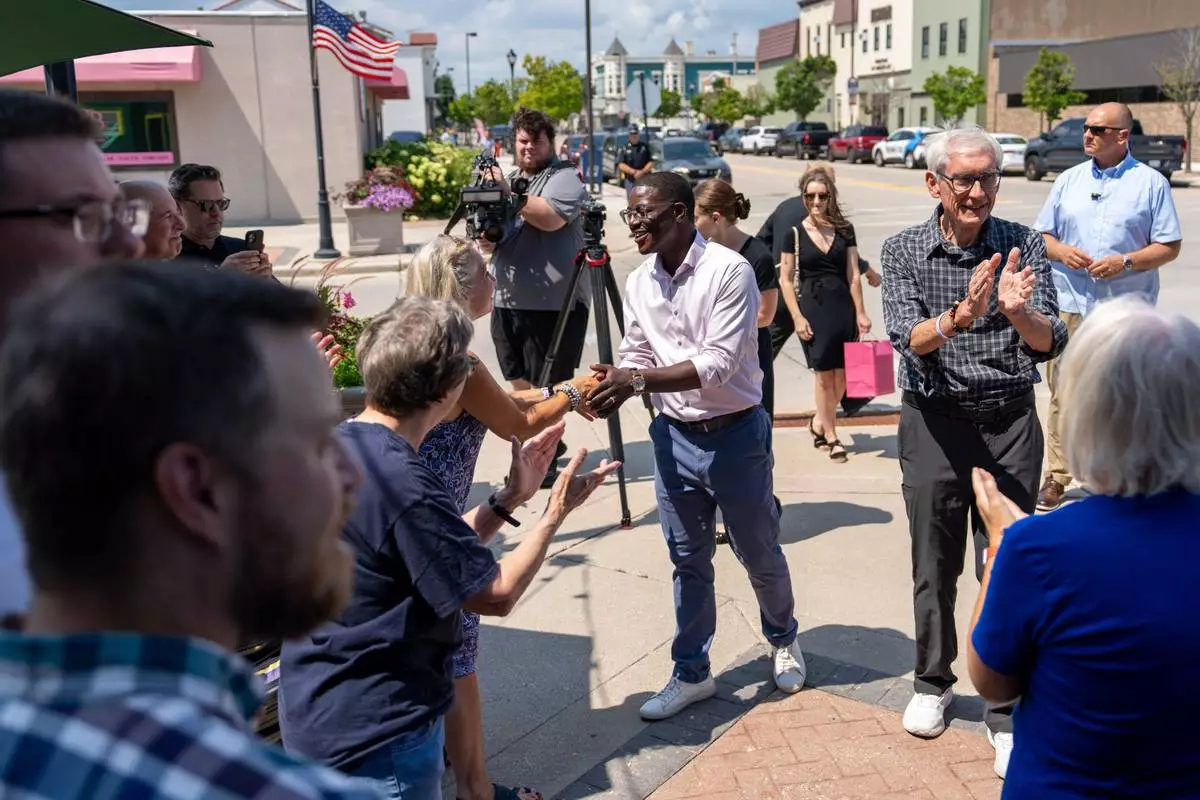
David Crowley, Democratic candidate for Wisconsin governor, shakes hands with supporters while campaigning with Wisconsin Gov. Tony Evers, right, Friday, Aug. 7, 2026, in Sheboygan, Wis. (AP Photo/Kayla Wolf)
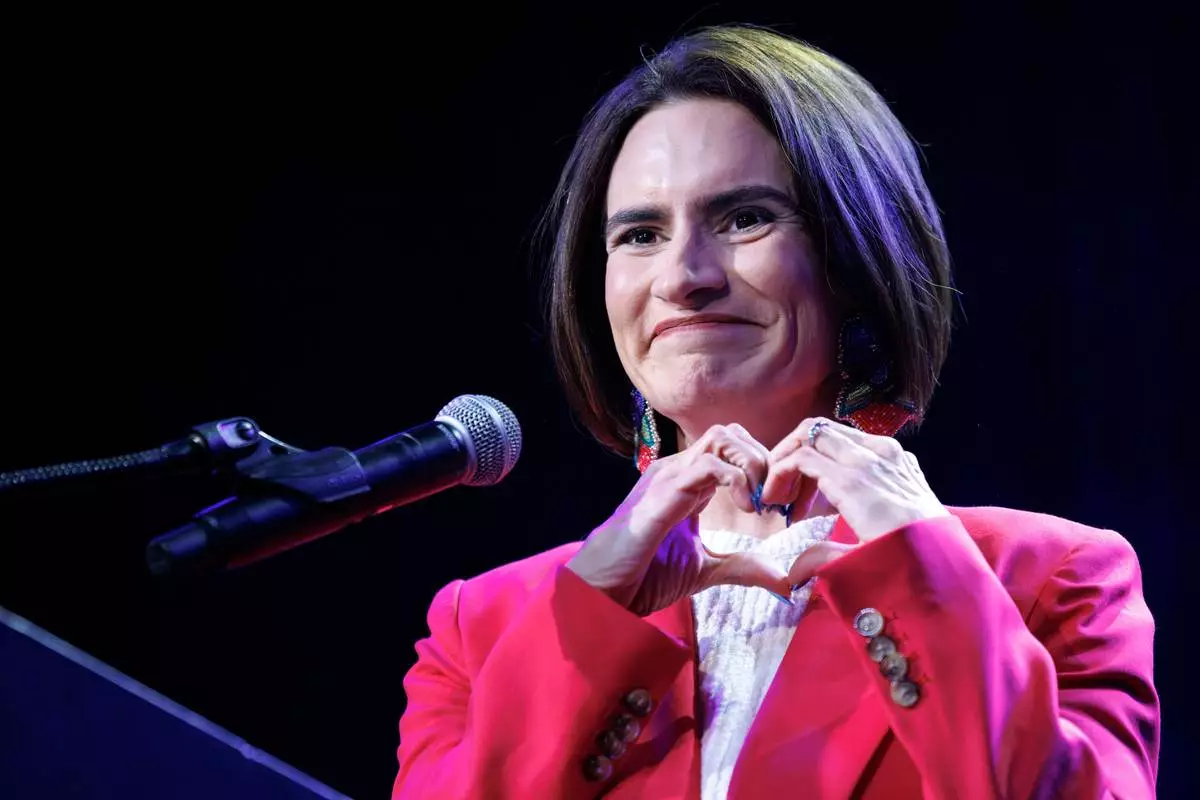
Minnesota Lt. Gov. Peggy Flanagan, a Democratic candidate for U.S. Senate, attends an election night event on Tuesday, Aug. 11, 2026, in Minneapolis. (Kerem Yücel/Minnesota Public Radio via AP)
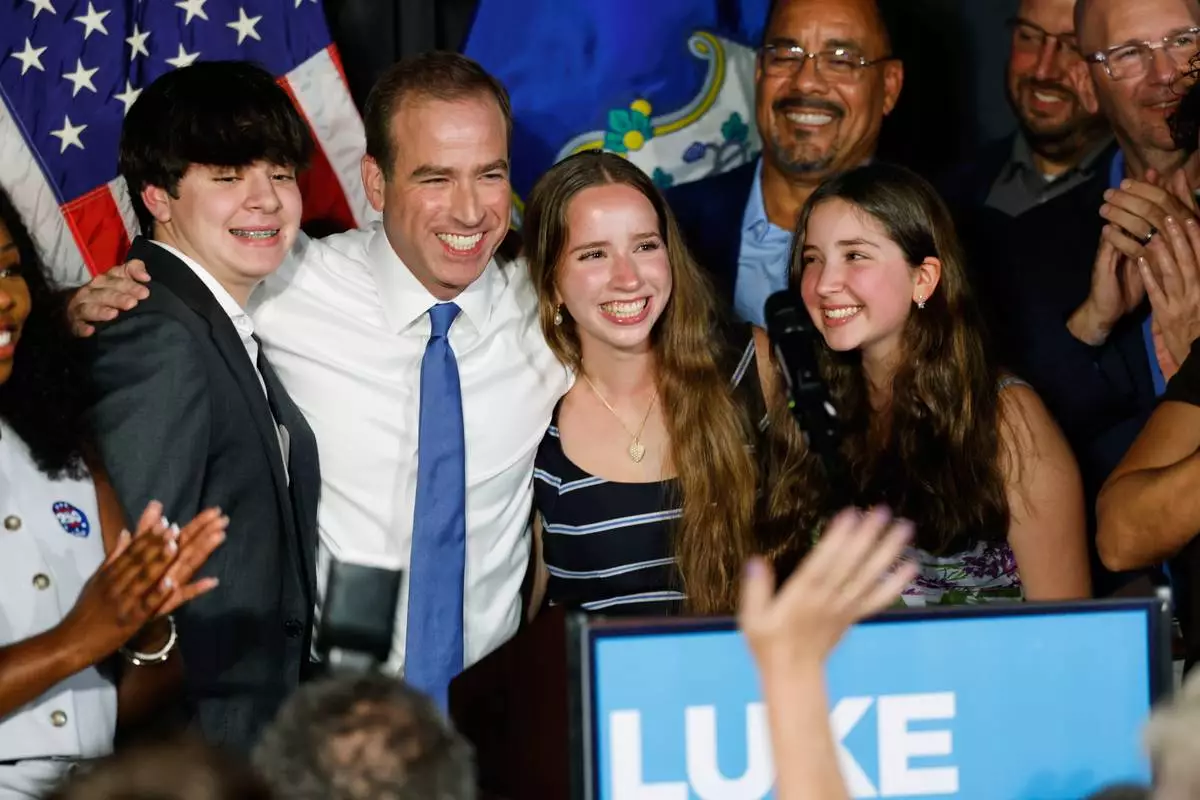
Luke Bronin, former Hartford mayor and Democratic candidate for Connecticut's 1st congressional district, stands on stage with his children during an election night watch party Tuesday, Aug. 11, 2026, in Hartford, Conn. (AP Photo/Rusty Jones)
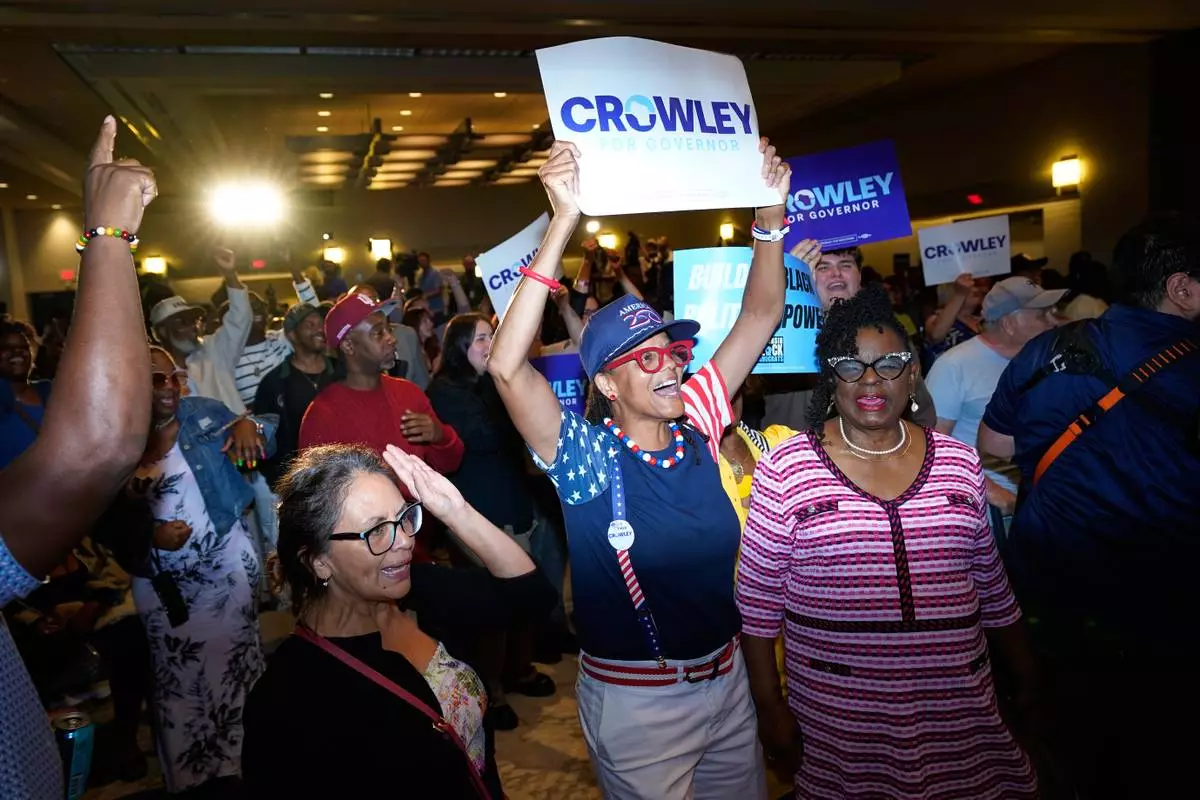
Supporters react to election results coming in during a primary election night watch party for Democratic gubernatorial candidate David Crowley, Tuesday, Aug. 11, 2026, in Milwaukee, Wis. (AP Photo/Kayla Wolf)
President Donald Trump says he slipped away from Air Force One after a trip last month in Turkey because the Secret Service and military wanted him on a “different plane” due to a threat he insisted didn’t scare him.
Trump downplayed the extraordinary nature of the subterfuge involved in his flight, which saw him stow away in an airport catering container to sneak onto another plane while Air Force One was sent into the sky, essentially as a decoy.
Meanwhile, Lt. Gov. Peggy Flanagan won the Minnesota Democratic Senate primary Tuesday in the latest victory for an insurgent progressive over the party’s establishment. Flanagan defeated centrist U.S. Rep. Angie Craig with a pledge to fight the influence of corporations and confront Trump.
Here's the latest:
The Rev. Samuel Rodriguez is warning Republicans that deporting vulnerable people who don’t have a criminal record could lose them the Latino vote in the midterm elections.
Rodriguez is a conservative pastor from California and president of the National Hispanic Christian Leadership Conference.
In an op-ed for the Christian Post on Wednesday, he said that not everyone the administration is arresting and deporting is a criminal. Many, he said, are “construction workers, healthcare professionals and Sunday school teachers who have been rooted in this country for 20 years or more.”
“This does not mean open borders,” he said. “It means the mechanisms of enforcement must be proportional, just, and morally defensible.”
Rodriguez said there is “still time to course correct.”
“When indiscriminate enforcement becomes the story, it hands the moral high ground to the progressive Left and confirms their most damaging narrative about the Right.”
Primary results in Minnesota, Wisconsin and Connecticut have reiterated that Democratic voters are hungry for change, even as they remain divided over the party’s ideological future.
Progressives secured a major victory in Minnesota but fell short in Wisconsin, while a longtime Connecticut congressman was ousted by a younger challenger.
The results followed similar outcomes this year in places such as Michigan that showed an appetite for turnover that cuts across the party’s ideological divisions.
They also highlighted the growing influence of younger voters, who have been particularly drawn to progressive candidates.
▶ Read more
The Trump administration says it will resume a leadership role in an international bloc opposed to abortion that had been established in Trump’s first term but then abandoned by President Joe Biden.
Secretary of State Marco Rubio and Health and Human Services Secretary Robert F. Kennedy Jr. said Wednesday the U.S. would serve as the “secretariat” for the Geneva Consensus Declaration. The Geneva consensus was created in 2020 with great fanfare from then-Secretary of State Mike Pompeo “to secure meaningful health and development gains for women; to protect life at all stages; to defend the family as the fundamental unit of society.”
Critics, however, saw it as a way for the U.S. to further push Trump administration goals to limit family planning initiatives and ban abortion.
Participation in Geneva Consensus was one of the first Trump administration actions rescinded by Biden when he took office in early 2021.
The winner of Wisconsin’s Democratic primary race for governor immediately tied his Republican opponent to President Trump in his first public comments since his razor-thin victory.
Milwaukee County Executive David Crowley told supporters Wednesday he intends to build a broad coalition to defeat Republican Tom Tiffany, who’s voted 100% in line with Trump.
“The biggest difference between me and the congressman is I’m loyal to the people of Wisconsin. I’m not loyal to MAGA,” Crowley said referring to Trump’s Make America Great Again movement.
Tiffany began the general election campaign with a message connecting Crowley to Francesca Hong, a the democratic socialist Crowley narrowly defeated.
“I’ve said all along that there’s not a dime’s worth of difference between these Democrat candidates,” Tiffany said in a statement.
Scott, who also serves as chair of the chamber’s political arm, said on social media Wednesday morning that he’d voted for Darline Graham in Tuesday’s special Republican Senate primary.
Graham has been serving in an interim role since her brother Sen. Lindsey Graham’s death last month. Scott called his fellow South Carolinian “a conservative stalwart” who “represents our beloved state with class, humility, and dignity.”
Graham and Rep. Ralph Norman will go head to head in an Aug. 25 GOP runoff. The winner of that contest faces Democrat Annie Andrews in November.
Secretary of State Marco Rubio has announced the creation of a State Department task force to combat “birth tourism,” a Trump administration phrase for foreign women coming to the United States with the intention of giving birth to a child on U.S. soil in order to secure their child’s American citizenship.
Trump and his administration have fought unsuccessfully in courts to end “birthright citizenship,” which gives U.S. citizenship to anyone born on U.S. soil. Despite those legal setbacks, Trump has continued the fight to end the practice.
In a social media post Wednesday, Rubio said the new task force would “review the activity of visa holders, dismantle illegal birth tourism networks, and put an end to this heinous abuse of our nation’s laws.”
He said that since the task force was created last month, it had already taken action to revoke the visas of more than 600 people suspected of being involved in birth tourism schemes.
Presidents have regularly tested the confines of their office, pushing their security advisers to visit war zones as a show of American presence and their own leadership. Usually, this happens in the form of trips that aren’t announced until the president is deemed to be out of harm’s way.
What’s different this time is that Trump was covertly separated from the rest of his travelers — including the press pool meant to provide independent coverage of the president — and, instead of informing the public about what occurred once the risk had passed, the White House still hasn’t fully revealed what took place.
Commanders in chief have sometimes kept overseas trips covert for security reasons, with schedules and logistics kept classified until after for safety reasons. But the fact that Trump’s whereabouts were concealed at the time and for weeks afterward is believed to be unprecedented.
“We have absolutely seen the president fly on unmarked or decoy planes before, into Iraq, Afghanistan, other war-zone-like places,” said Garrett M. Graff, author of “Raven Rock: The Story of the U.S. Government’s Secret Plan to Save Itself — While the Rest of Us Die.”
“But this was an ongoing secret that I don’t think we’ve ever seen before.”
After hiding in the catering vehicle and being moved to the other plane, Trump stopped in Britain, sneaked back aboard the presidential plane undetected, and even later scoffed when asked about potential danger.
“If I go, you go. Right?” he told reporters then — gliding past the fact that if the plane had been shot down, the president wouldn’t have been aboard.
U.S. inflation slowed last month and a measure of underlying price pressures also cooled, suggesting higher oil and gas prices from the Iran war are only having a limited impact on broader costs in the economy.
Consumer prices rose 3.4% in July from a year ago, down slightly from 3.5% in June, the Labor Department said Wednesday. But inflation is still higher than before the Iran war began in February, when it was 2.4%. On a monthly basis, prices rose just 0.1% from June to July.
Inflation has been pushed higher by a series of shocks to the economy, including President Trump’s tariffs imposed last spring, higher gas prices stemming from the Iran war, and a surge in investment in artificial intelligence infrastructure that has boosted computer chip prices. The key question for the inflation-fighters at the Fed — not to mention for consumers struggling with high gas and grocery prices — is how quickly those one-time effects will fade.
▶ Read more
President Trump pivoted the nation’s attention back to vaccines this week with an executive order that aims to scale back the childhood immunization schedule and space out shots into separate visits.
After acting to overhaul the nation’s vaccine policy and guidance, the Trump administration had recently largely stepped back from additional changes to focus on less controversial subjects, raising questions over the political impetus behind and implications of the Republican president’s renewed focus on vaccines.
For well over a decade, Trump has expressed his view — against medical groups’ guidance — that childhood vaccines should be administered in smaller doses over a long period of time. The executive order sought to bear out that discredited theory.
While the move could endear Trump to some “Make America Healthy Again” voters who want more flexibility on immunizations, it’s also already attracting attacks designed to hurt Trump’s aligned candidates in November’s midterm elections.
▶ Read more
Lt. Gov. Peggy Flanagan won the Minnesota Democratic Senate primary on Tuesday in the latest victory for an insurgent progressive over the party’s establishment.
Flanagan defeated centrist U.S. Rep. Angie Craig with a pledge to fight the influence of corporations and confront Trump.
“For months now, I have been telling you that this campaign was about the many versus the money,” Flanagan said as she celebrated her victory in Minneapolis. “Well guess what? The many just won.”
The outcome was another sign of progressive energy among Democratic primary voters. It comes a week after Abdul El-Sayed won a bitter and divisive primary in Michigan that fired up the left and fueled anxiety among party leaders that Democrats will alienate moderate swing voters.
▶ Read more
President Donald Trump said Tuesday that he slipped away from Air Force One after a trip last month in Turkey because the Secret Service and military wanted him on a “different plane” due to a threat he insisted didn’t scare him.
Trump downplayed the extraordinary nature of the subterfuge involved in his flight, which saw him stow away in an airport catering container to sneak onto another plane while Air Force One was sent into the sky, essentially as a decoy.
He also downplayed the risk to the people — White House officials, security and support staff, and reporters — he left on the plane.
“They wanted me to go on a different flight, different plane,” Trump told reporters after returning from an event in Ohio, saying he had little choice in the matter.
“I guess there was a threat out there. I didn’t really ask too much about it,” he said. “I get a lot of threats.”
▶ Read more

President Donald Trump talks to reporters after arriving on Air Force One Tuesday, Aug. 11, 2026, at Joint Base Andrews, Md. (AP Photo/Mark Schiefelbein)
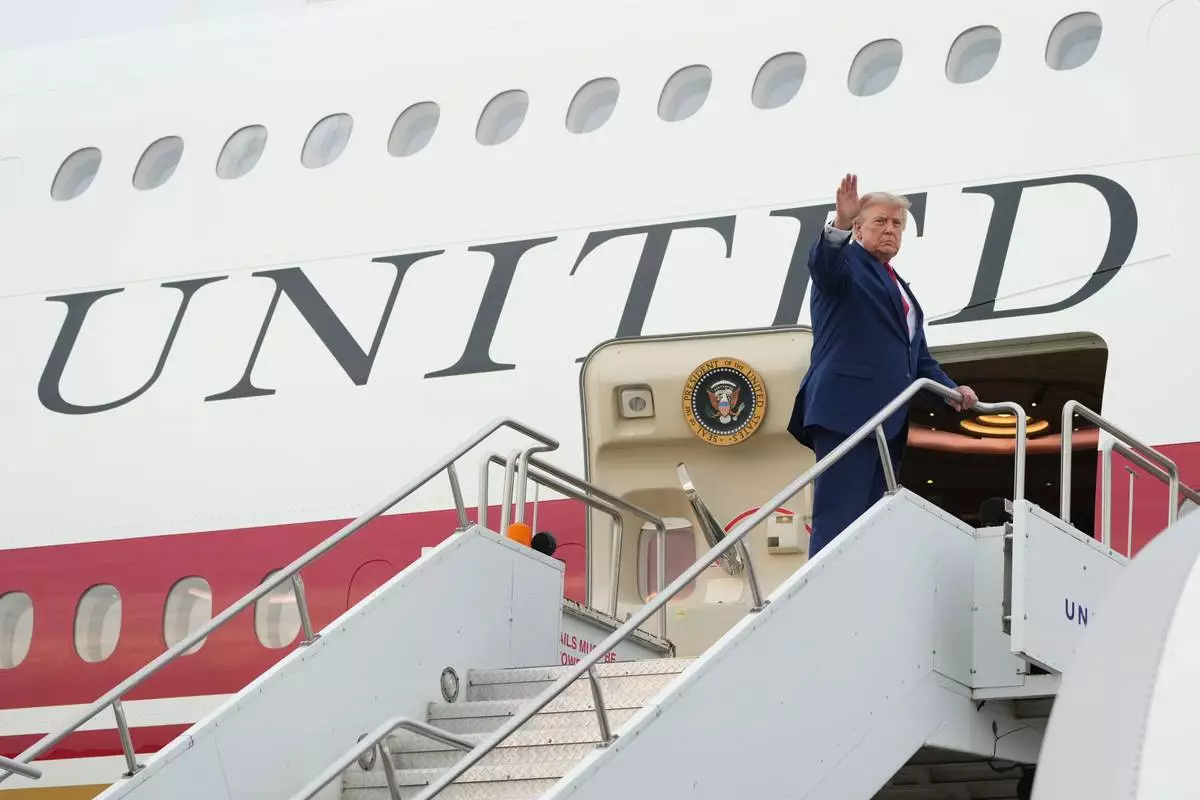
President Donald Trump boards Air Force One at Cleveland Hopkins International Airport in Cleveland, Tuesday, Aug. 11, 2026. (AP Photo/Mark Schiefelbein)