The Chinese and Indonesian navies successfully completed a naval navigation exercise in waters east of China's Taiwan Island on Wednesday, according to Chinese military authorities.
The exercise involved the Chinese naval vessel Honghe and the Indonesian Navy frigate KRI I Gusti Ngurah Rai, a military statement said.
During the exercise, the two warships formed a naval formation and conducted practical drills covering maritime communications, formation maneuvers and resupplying operations.
"During this joint exercise with foreign naval forces, all communication short codes and flag signaling were in line with international standards, effectively testing our ship's capability for maritime communication and information exchange with foreign naval vessels," said Gao Yongjie, a crew member aboard the Chinese naval vessel Honghe.
Following a pre-arranged exercise plan, the two ships maneuvered flexibly, coordinated closely and successfully fulfilled all scheduled objectives, the statement said.
It added that the exercise demonstrated the two navies' willingness and capability to conduct practical cooperation and jointly contribute to regional peace and stability.
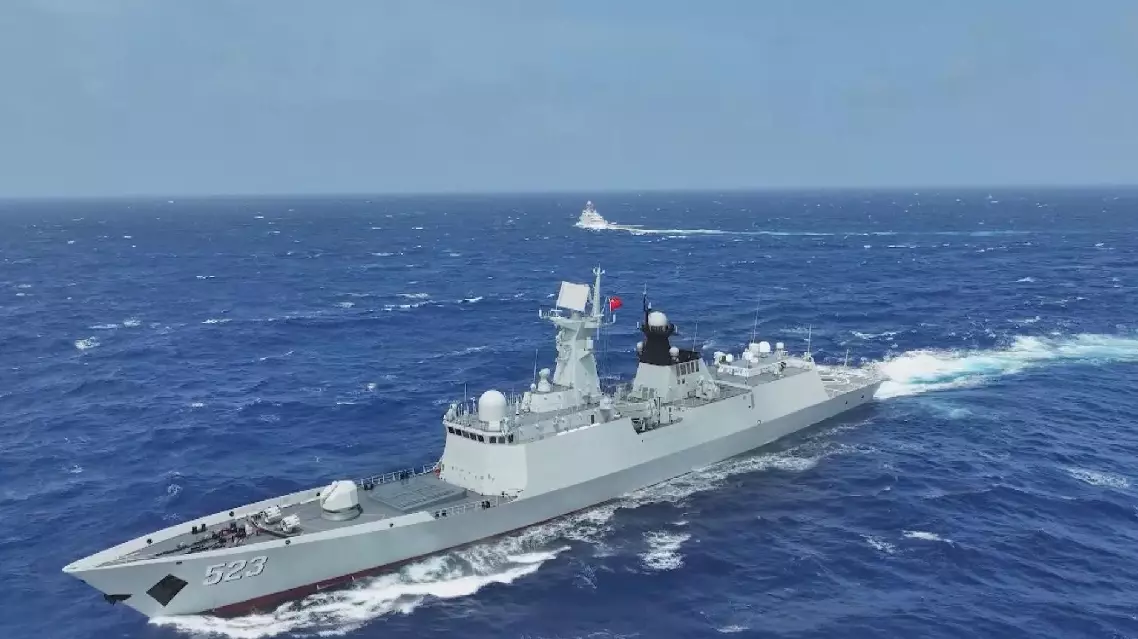
China, Indonesia wrap up naval exercise in waters east of Taiwan Island
The International Energy Agency (IEA) on Wednesday cut its forecast for global oil demand in 2026, citing the continued closure of the Strait of Hormuz and elevated fuel prices that are weighing on consumption.
In its Oil Market Report for August, the IEA forecast global oil demand to decline by 1.6 million barrels per day (mb/d) in 2026, 510,000 barrels per day more than its July estimate.
Global oil supply rose by 2.4 mb/d to 101.5 mb/d in July, but remained 6.3 mb/d below year-earlier levels. Renewed hostilities and maritime disruptions in July and early August undermined efforts to restore supply, prompting the IEA to cut its forecast for oil supply in the third quarter by 1.7 mb/d from its previous report.
Gulf oil production increased by 2.5 mb/d in July to 23.9 mb/d, following a 3.7 mb/d increase in June, but remained 8.3 mb/d below pre-war levels. With an agreement enabling the reopening of the Strait of Hormuz and unhindered transit through the Bab el-Mandeb Strait still elusive, the IEA lowered its supply forecasts for the rest of the year. Global oil supply is now expected to fall by 4.3 mb/d in 2026 to 102 mb/d, the report said.
Benchmark crude prices surged to a two-month high in July as the recovery in oil supplies from the Gulf reversed course following the breakdown of the mid-June Iran-U.S. ceasefire agreement. Oil prices traded within an unusually wide range of 40 U.S. dollars per barrel in July, driven by sudden shifts in diplomatic expectations, it said.
The IEA said elevated fuel prices were putting further downward pressure on oil consumption. Global oil demand is projected to expand by 2.4 mb/d in 2027.

IEA cuts 2026 oil demand forecast amid Hormuz disruption