HUNTINGTON BEACH, Calif. (AP) — Jake Hemann grabbed a board and headed out to surf. But an hour later, he wound up sitting at the lifeguard station soaking his foot in a pail of hot water alongside four other beachgoers.
It is a common scene at Bolsa Chica State Beach and some other popular beaches in Southern California where the number of people being hit by the sharp, serrated caudal barbs found on the tails of stingrays has gone up significantly from a year ago as a marine heat wave draws more stingrays — and people — to shore.
Click to Gallery
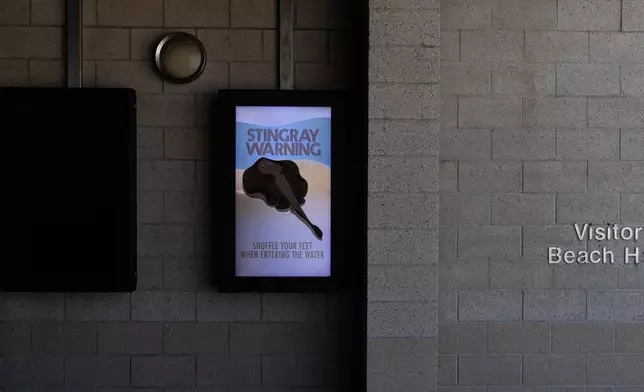
A stingray warning is displayed at Bolsa Chica State Beach in Huntington Beach, Calif., Friday, July 24, 2026. (AP Photo/Jae C. Hong)
A beachgoer stands in shallow water at Bolsa Chica State Beach in Huntington Beach, Calif., Friday, July 24, 2026. (AP Photo/Jae C. Hong)
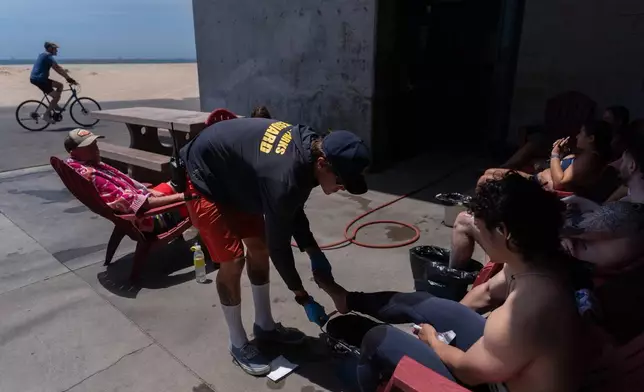
Lifeguard Max Voci, center, treats beachgoers for stingray stings at Bolsa Chica State Beach in Huntington Beach, Calif., Friday, July 24, 2026. (AP Photo/Jae C. Hong)
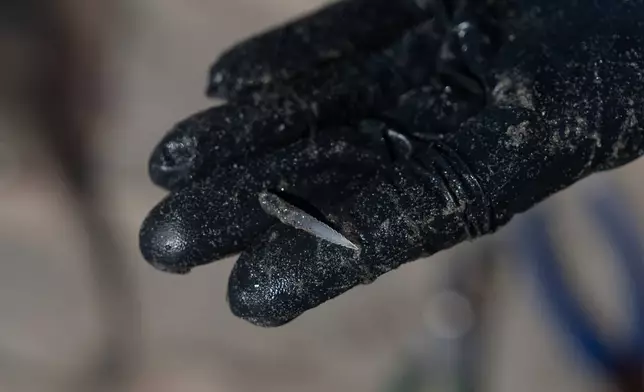
A researcher shows a barb clipped from a stingray in Seal Beach, Calif., Friday, Aug. 7, 2026. (AP Photo/Jae C. Hong)
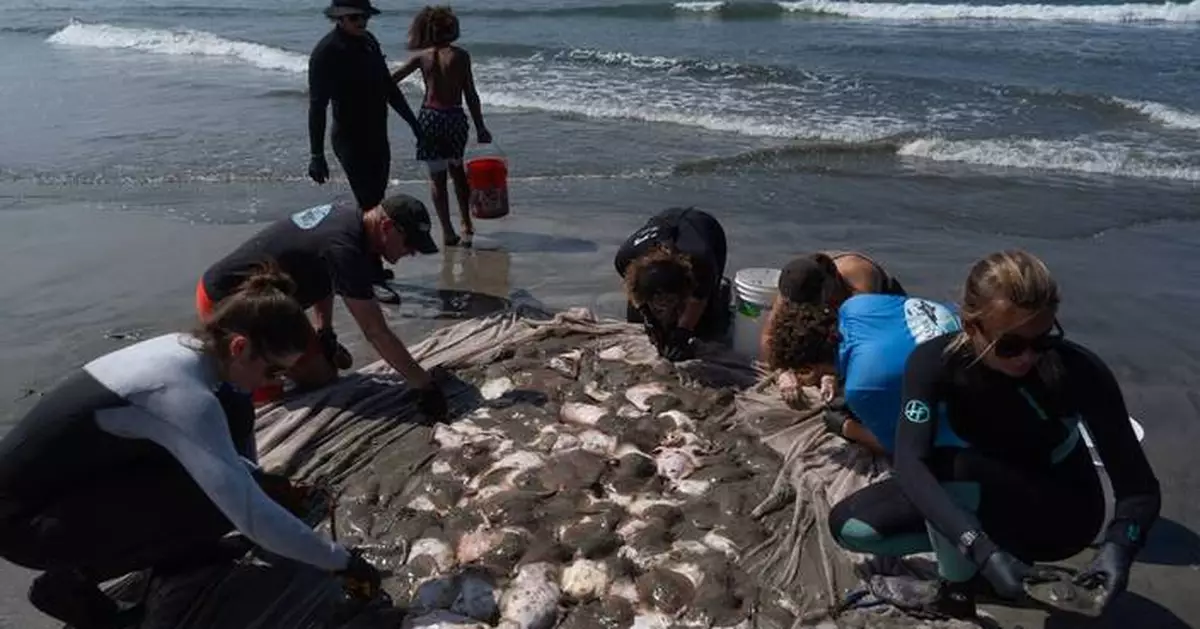
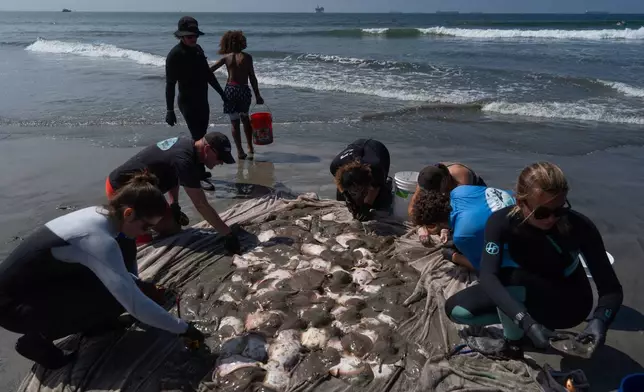
Researchers gather around a pile of stingrays to clip their barbs after catching them in Seal Beach, Calif., Friday, Aug. 7, 2026. (AP Photo/Jae C. Hong)
Hemann, a 31-year-old tourist from New Mexico, said he was learning to surf when he hopped off his board and landed on what he thought was a sharp stick. “It hurt pretty bad,” he said, while sinking his throbbing foot into the hottest water tolerable to ease the pain. “It was radiating up to my ankle.”
Bolsa Chica and Huntington State Beaches reported more than 3,100 incidents so far this year, twice the number for all of 2025. The city of Huntington Beach's 3.5-mile (5.6-kilometer) stretch of shoreline has reported more than 2,000 such incidents so far this year, more than during all last year, while more than 900 stings were recorded on San Diego’s beaches during the first half of 2026, more than during the first six months of any of the past five years, lifeguard data shows.
“We’re definitely seeing an increase,” said Bryan R. Etnyre, state park superintendent in northern Orange County. “A lot of it is due to warming ocean temperatures that are consistently staying in the 60s. I don’t think there was a week all winter where we dropped below 60 this year.”
Round stingrays are found in Pacific Ocean waters from Panama to Southern California and are known to veer toward the shore when the swell is down and the water warm.
In recent years, many species that feed on rays, such as sharks, sea lions and giant sea bass, have seen their populations dwindle, causing the number of stingrays to grow, said Chris Lowe, a professor of marine biology and director of the Shark Lab at California State University, Long Beach.
Rays are known to prefer warmer water, such as lagoons. Females prefer these waters to reproduce, and during the summer male rays have a higher metabolism that drives them to seek out food in the invertebrates along the shore, Lowe said.
“They’re really a subtropical species that is thriving at the end of its range because of climate change,” Lowe said.
The ocean already has been warming because of human-caused climate change, according to meteorologists.
This year has seen even more rays with a marine heat wave persisting off parts of the West Coast, marking the third time on record that such a large section of coastal waters stayed warm for so long, according to the U.S. National Oceanic and Atmospheric Administration. In June, officials confirmed the formation of an El Niño, the natural warming of parts of the central Pacific that alters weather worldwide, that is expected to grow to historic strength.
Meanwhile, more people have been heading to beaches seeking outdoor recreation since the coronavirus pandemic. And when the water is warm, they are more likely to swim.
When rays are stepped on, they instinctively flick up their tails, stinging people with venomous barbs. Lifeguards urge bathers to shuffle their feet as they enter the water as the movement often gets rays to slide out of the way without stinging.
In Southern California, lifeguards can treat 10,000 stingray injuries a year, Lowe said.
In Seal Beach, one area draws so many due to an influx of warm water from a nearby power plant it is known as “ray bay,” though lifeguards there haven’t seen much change in stings this year.
Using a 75-foot-long net, researchers swept up some 200 stingrays, each about the size of a dinner plate, on a section of the beach on a recent morning.
“There can be so many that they actually carpet the bottom, like you can’t see sand,” Lowe said. “During El Niños, we get more of them up from the south, and they come closer to shore. So this year, we’re expecting record numbers.”
Lowe said he is working with television stations to develop a stingray advisory to help reduce the number of people who get stung, and the number of rays that get squished. Rays help keep the beach healthy by feeding on small clams and aerating sediment.
Many beaches use an app to notify bathers when there are multiple stings at a location. Meanwhile, a company has developed surf booties that claim to be barb-resistant — though swimmers are urged to still tread lightly to avoid trampling the rays.
At Bolsa Chica State Beach, swimmers suffering stings to the sides of their feet and toes sat in a circle refilling their pails with hot water from a hose. Some were there more than an hour waiting for the pain to ease.
Most stings don't require additional medical attention. If redness and swelling continue more than four or five days, there could be a medical complication such as an infection or a retained barb that can be seen on an X-ray, said Dr. Christanne Coffey, who researches the stings at University of California, San Diego Health.
Allen Lowry said he was playing with his 7-year-old grandson when he came down on something squishy. He lifted his foot and saw blood so his wife drove him to the lifeguard station for a hot water soak, which is the remedy for stings.
Lowry, 69, said he swims three times a week at another beach, and getting stung, though painful, won’t change that. He said some people in his swim group have been stung multiple times.
“Usually, once the pain you feel goes away, you feel fine the next day,” he said.
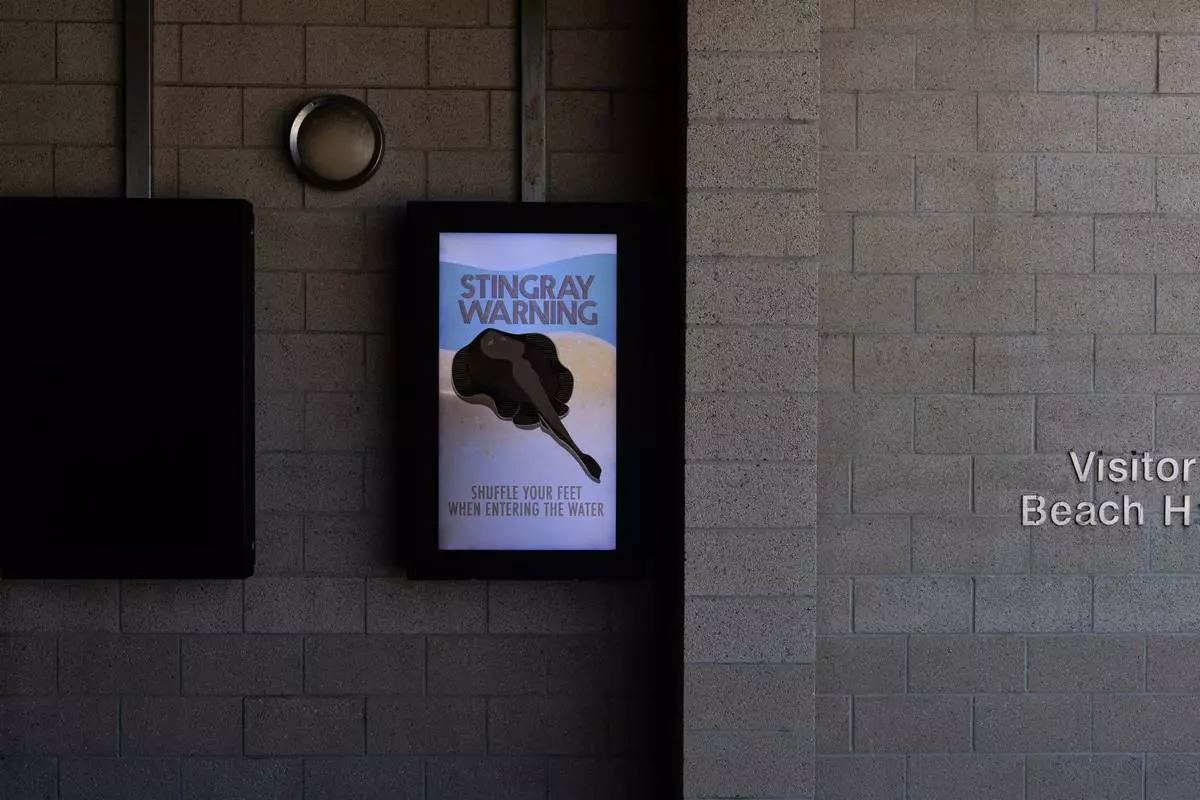
A stingray warning is displayed at Bolsa Chica State Beach in Huntington Beach, Calif., Friday, July 24, 2026. (AP Photo/Jae C. Hong)

A beachgoer stands in shallow water at Bolsa Chica State Beach in Huntington Beach, Calif., Friday, July 24, 2026. (AP Photo/Jae C. Hong)
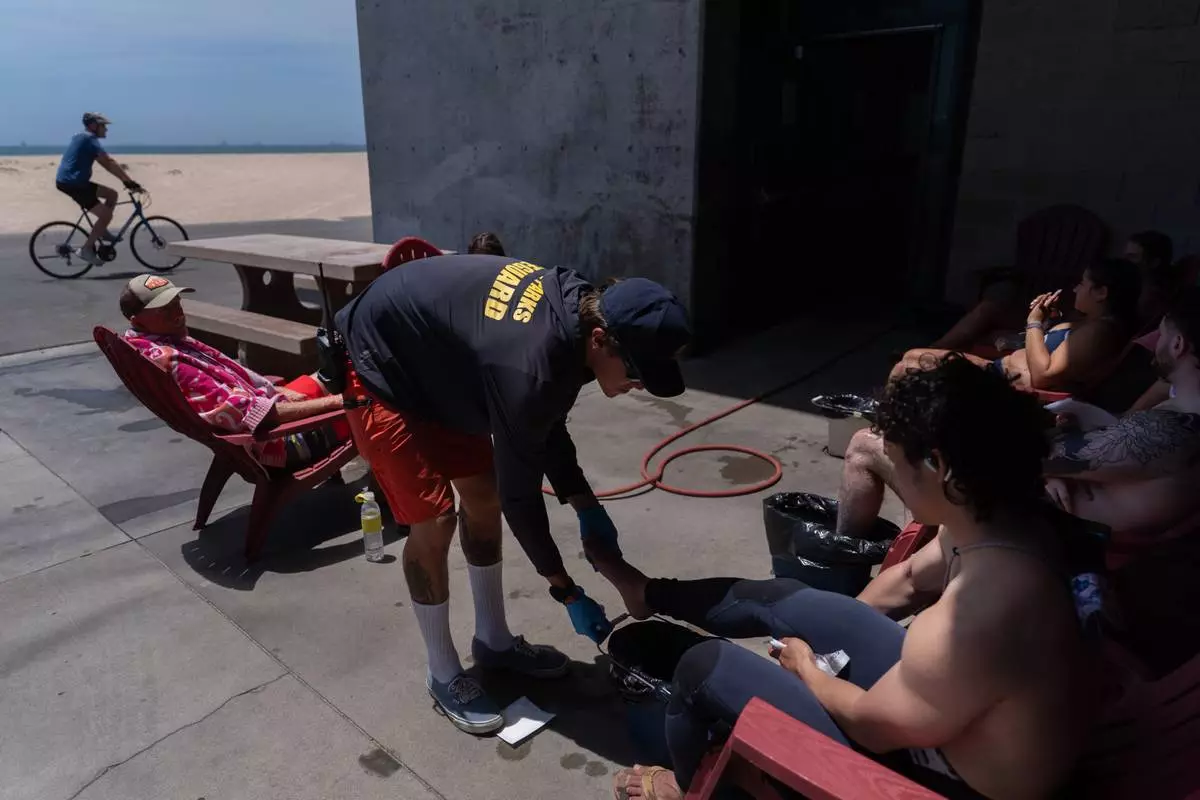
Lifeguard Max Voci, center, treats beachgoers for stingray stings at Bolsa Chica State Beach in Huntington Beach, Calif., Friday, July 24, 2026. (AP Photo/Jae C. Hong)
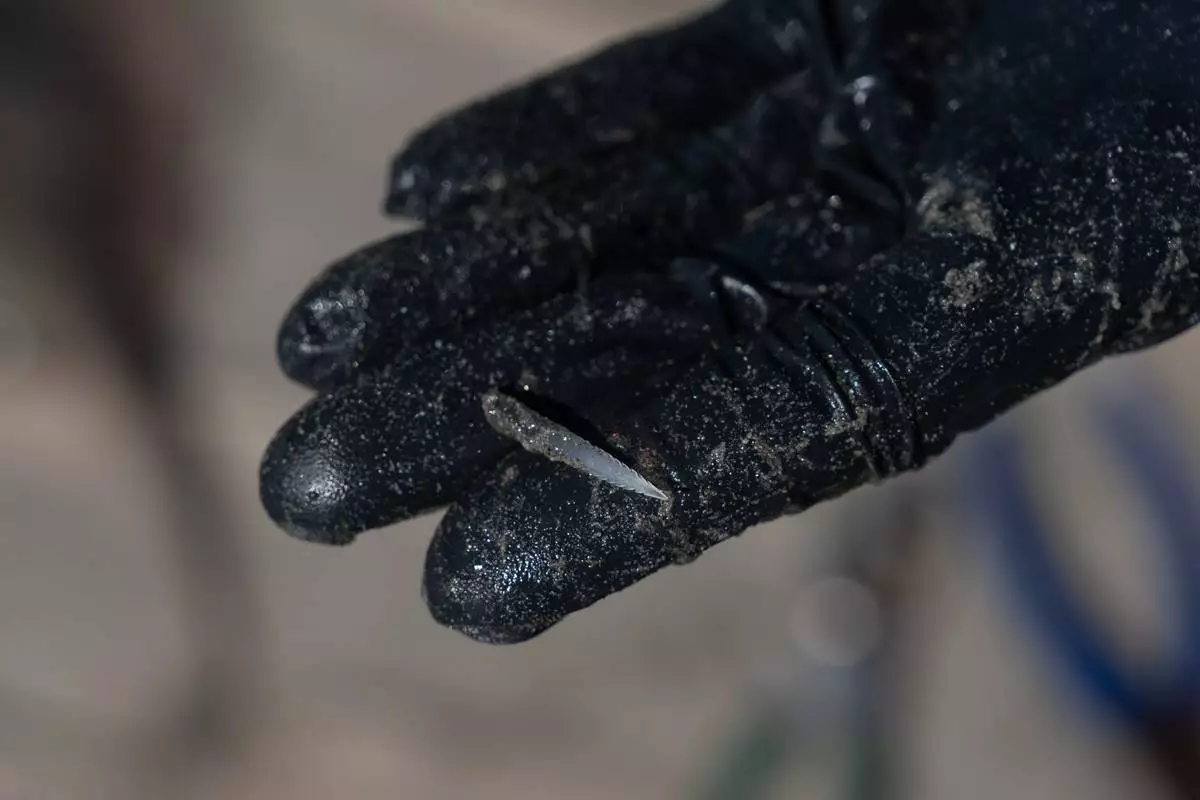
A researcher shows a barb clipped from a stingray in Seal Beach, Calif., Friday, Aug. 7, 2026. (AP Photo/Jae C. Hong)
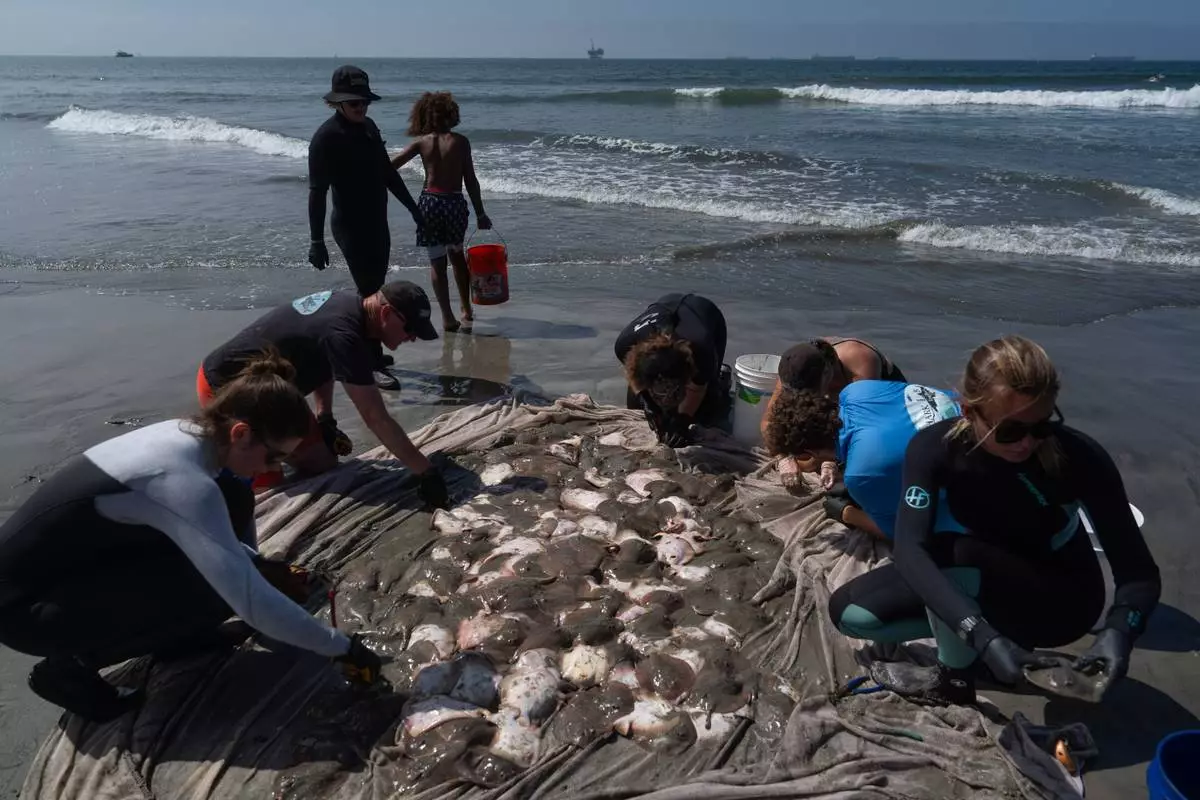
Researchers gather around a pile of stingrays to clip their barbs after catching them in Seal Beach, Calif., Friday, Aug. 7, 2026. (AP Photo/Jae C. Hong)
COLORADO SPRINGS, Colo.--(BUSINESS WIRE)--Aug 13, 2026--
Venu Holding Corporation ("VENU" or the "Company") (NYSE American: VENU), owner, operator, and developer of premium live entertainment destinations, today announced results for its second quarter and six-month period ended June 30, 2026.
This press release features multimedia. View the full release here: https://www.businesswire.com/news/home/20260813000891/en/
“This quarter reflected steady, deliberate progress across our business,” said J.W. Roth, Founder, Chairman, and Chief Executive Officer of VENU. “We announced our expansion plans into Chattanooga and are in active discussions on a new destination in Northern Colorado, adding to a pipeline of more than 45 municipal conversations. Regent Bank signed on as the official naming rights partner for our state-of-the-art amphitheater outside of Tulsa, Oklahoma a multi-year, multi-million-dollar agreement that adds long-term, high-margin revenue directly to our bottom line, and finishing the quarter we were added to the Russell 3000 ® and Russell 2000 ® indices.
Since quarter end, we've also sharpened how we finance venues to completion, as we aim to move away from sale-leaseback to C-PACE financing, which keeps our real estate on the balance sheet and minimizes shareholder dilution, bridged by a short-term loan with Ryan LLC and a debenture financing that are both structured to be retired after C-PACE closes.
Our attention is squarely on the finish line at Regent Bank Amphitheater, which opens this fall with bookings, offers, and shows in progress. Sunset Amphitheater McKinney is right behind it, where construction continues to move rapidly. We look forward to sharing more in the weeks ahead.”
Financial Highlights for the Second Quarter of 2026 and the Six-Month Period Ended June 30, 2026
Operational and Strategic Highlights for the Second Quarter Fiscal 2026:
Capital Markets & Financing
Venue Development & National Expansion
Subsequent Events: July 1, 2026, through August 13, 2026
Balance Sheet & Financing Activity
Strategic Advisors & Operating Partnerships
Conference Call Details
About Venu Holding Corporation
Venu Holding Corporation ("VENU") (NYSE American: VENU) is a premier owner, developer, and operator of luxury, experience-driven entertainment destinations. Founded by Colorado Springs entrepreneur J.W. Roth, VENU ® has a portfolio of premium brands that includes Ford Amphitheater, Sunset Amphitheaters, Phil Long Music Hall, The Hall at Bourbon Brothers, Bourbon Brothers Smokehouse and Tavern, Aikman Owners Clubs, and Roth’s Sea & Steak. With venues operating and in development across Colorado, Georgia, Oklahoma, Tennessee, and Texas and a nationwide expansion underway, VENU is setting a new standard for live entertainment.
VENU has been recognized nationally by The Wall Street Journal, Forbes, The New York Times, Billboard, VenuesNow, and Variety for its innovative and disruptive approach to live entertainment. Through strategic partnerships with industry leaders such as AEG Presents, NFL Hall of Famer and Founder of EIGHT Elite Light Beer, Troy Aikman, Aramark Sports + Entertainment, Tixr, Niall Horan, and Dierks Bentley, VENU continues to shape the future of the entertainment landscape. For more information, visit VENU’s website, Instagram, LinkedIn, or X.
Forward Looking Statements
Certain statements in this press release constitute "forward-looking statements" within the meaning of the federal securities laws. Words such as "may," "might," "will," "should," "believe," "expect," "anticipate," "estimate," "continue," "predict," "forecast," "project," "plan," "intend" or similar expressions, or statements regarding intent, belief, or current expectations, are forward-looking statements. While Venu believes these forward-looking statements are reasonable, undue reliance should not be placed on any such forward-looking statements, which are based on information available to us on the date of this release. These forward-looking statements are based upon current estimates and assumptions and are subject to various risks and uncertainties, including without limitation those set forth in the company’s filings with the SEC, not limited to Risk Factors relating to its business contained therein. Thus, actual results could be materially different. Venu expressly disclaims any obligation to update or alter statements whether because of new information, future events or otherwise, except as required by law.
Non-GAAP Financial Measures (1)
Net Tangible Asset Value Per Common Share
Net Tangible Asset Value Per Common Share, as presented, is a non-GAAP financial measure. We define Net Tangible Asset Value Per Common Share as total assets, excluding intangible assets, less total liabilities, divided by common shares outstanding. Management believes this measure provides useful information regarding the tangible asset value attributable to holders of the Company’s common shares and may assist investors in evaluating the Company’s financial position and the value of its tangible assets on a per-share basis. Net Tangible Asset Value Per Common Share may also be useful when considering values based on mark to market basis or as-completed appraisal basis.
Appraisal Disclosures (2)
These appraisals used the cost basis, income, and comparable sales approaches to valuation and, after reconciliation, came to the appraised values of the properties. These approaches to valuation are commonly used approaches to value for appraisal of commercial properties, as opposed to assigning a valuation on the properties based solely on the cost basis of the properties. The total appraisal includes two Colorado Springs parcels later sold through sale-leaseback transactions: a 5.5-acre parking lot, appraised at $9.2 million and sold in November 2025 for $14 million, and a 9.5-acre lot, appraised and sold at approximately $50 million and sold in June 2026. It is important to understand that the appraisal of VENU’s properties takes into account, among other factors, the valuation of the Company’s real estate and developments at a specific point in time, and the appraised value is subject to (and likely to) change at any time, whether it increases or decreases, and such changes could be caused by macro and micro factors over which we have no control. The appraisal of the property portfolio is only an estimate of its value as to the date of the appraisal and based only on the specific appraisal methodologies and should not be relied upon as a measure of its realized value or the value at which any property could be sold to a third party. Other appraisal methodologies may yield materially different appraised value. Furthermore, the appraised value of the properties differs from the values assigned to it under generally accepted accounting principles in the United Stated (“GAAP”), which require the values of the properties to be valued at their cost basis for financial presentation purposes, and therefore the appraised values represent an unaudited measure that may not represent fair value, as defined under GAAP, and such values and appraisals are not, and will not be, subject to audit or other review procedures by our outside independent accountants.
The opinions expressed in the appraisal are based on estimates and forecasts that are prospective in nature and subject to certain risks and uncertainties. Events may occur that could cause the performance of the properties to materially differ from the estimates utilized by the appraiser, such as changes in the economy, interest rates, capitalization rates, the financial strength of the live-music and entertainment industries, and the behavior of event attendees, investors, lenders, and municipalities. The Company reviews each appraisal of its properties to confirm that the information provided to the appraiser is accurately reflected in the appraisal, but it does not validate the methodologies, inputs, and professional judgment utilized by the certified appraiser.

VENU Total Assets Increased $141.2 million to $511.8 million, Up 38% from Year-End 2025