Skip to Content Facebook Feature Image

Families feel the pinch of higher children's shoe prices as kids head back to school

ENT

Families feel the pinch of higher children's shoe prices as kids head back to school
ENT

ENT

Families feel the pinch of higher children's shoe prices as kids head back to school

2026-08-13 21:09 Last Updated At:21:40

NEW YORK (AP) — When Jonah Seidenberg found out about Nike Minds, a futuristic-looking sneaker that claims to improve concentration by stimulating the soles of the feet, he had to have them.

On a recent Saturday, the 12-year-old from the Chicago suburb of Northbrook and his mother searched StockX, an online sneaker marketplace, and other sites looking for a discount but struck out. They eventually found the last available pair in his size on Dick's Sporting Goods' website, but for the full price of $145. They grabbed it anyway.

More Images
Khrystyna Lialina shops for shoes for her daughter at a JCPenney store in Glendale, Calif., Tuesday, Aug. 11, 2026. (AP Photo/Jae C. Hong)
Khrystyna Lialina shops for shoes for her daughter at a JCPenney store in Glendale, Calif., Tuesday, Aug. 11, 2026. (AP Photo/Jae C. Hong)

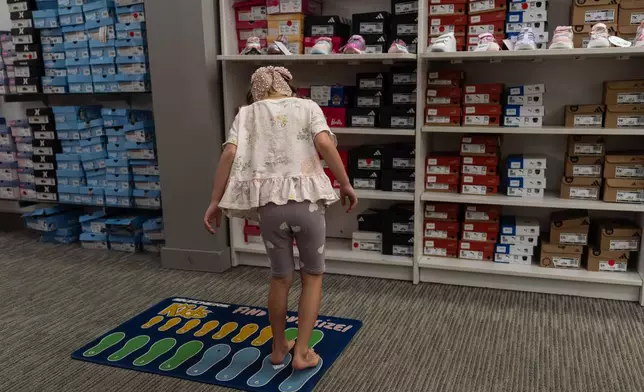
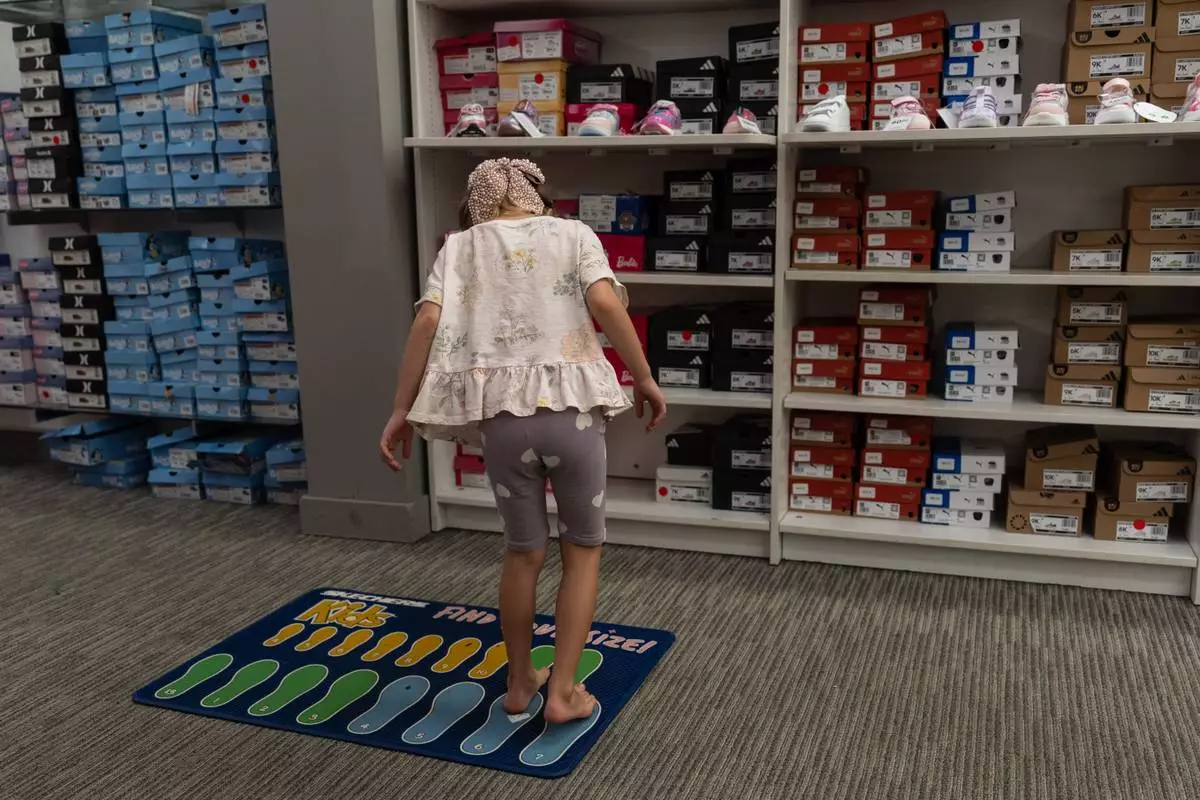
Lola Lialina stands on a foot-measuring mat while shopping for shoes with her parents at a JCPenney store in Glendale, Calif., Tuesday, Aug. 11, 2026. (AP Photo/Jae C. Hong)
Lola Lialina stands on a foot-measuring mat while shopping for shoes with her parents at a JCPenney store in Glendale, Calif., Tuesday, Aug. 11, 2026. (AP Photo/Jae C. Hong)

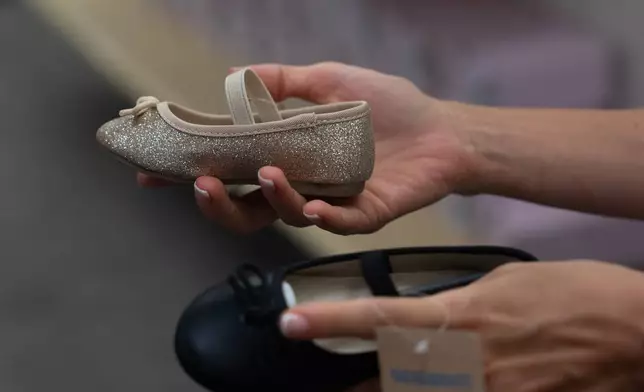
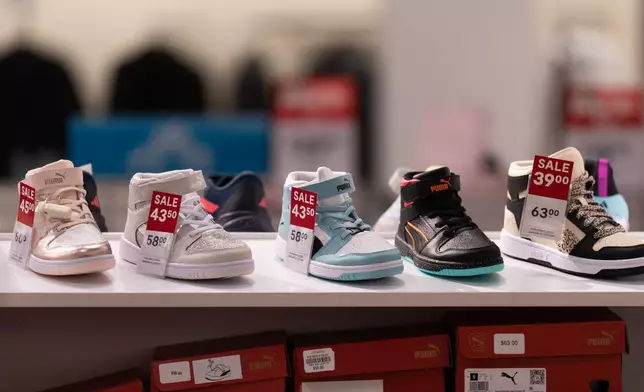
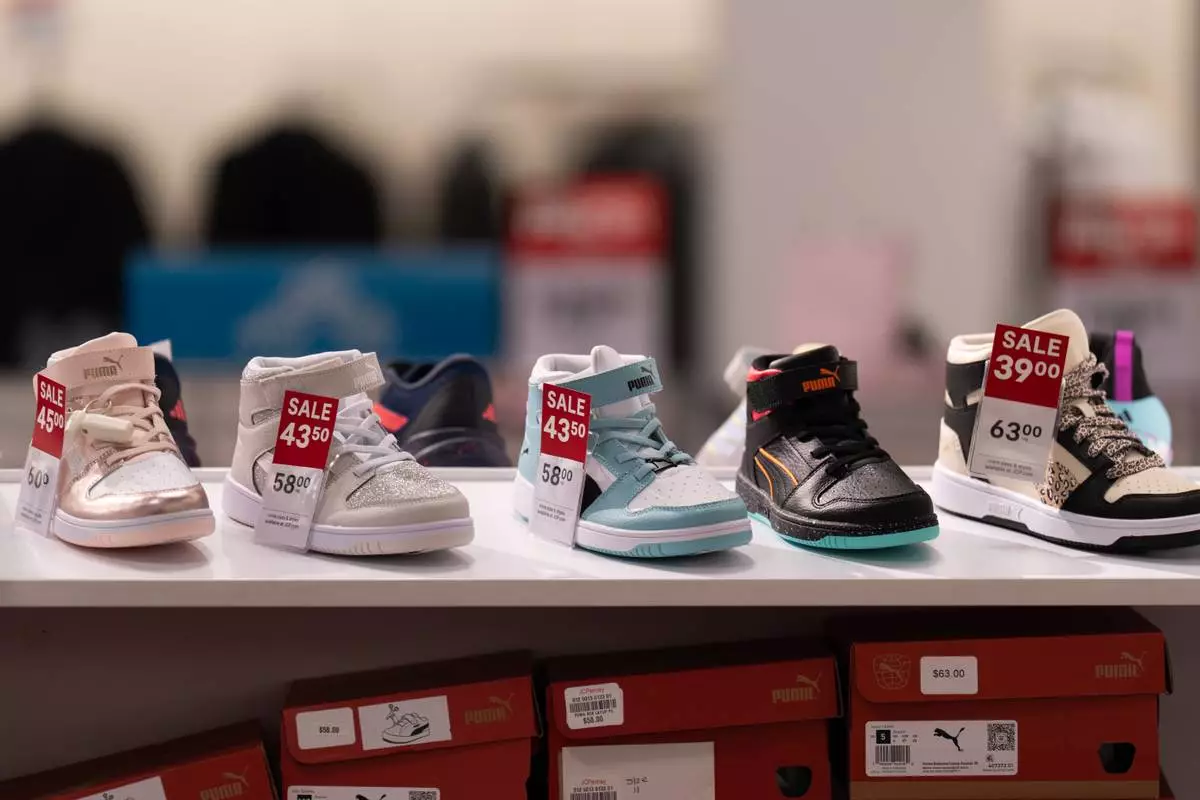
Children's shoes for sale are displayed at a JCPenney store in Glendale, Calif., Tuesday, Aug. 11, 2026. (AP Photo/Jae C. Hong)
Children's shoes for sale are displayed at a JCPenney store in Glendale, Calif., Tuesday, Aug. 11, 2026. (AP Photo/Jae C. Hong)

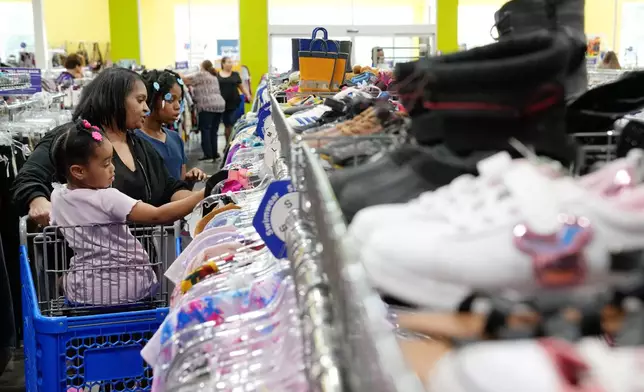
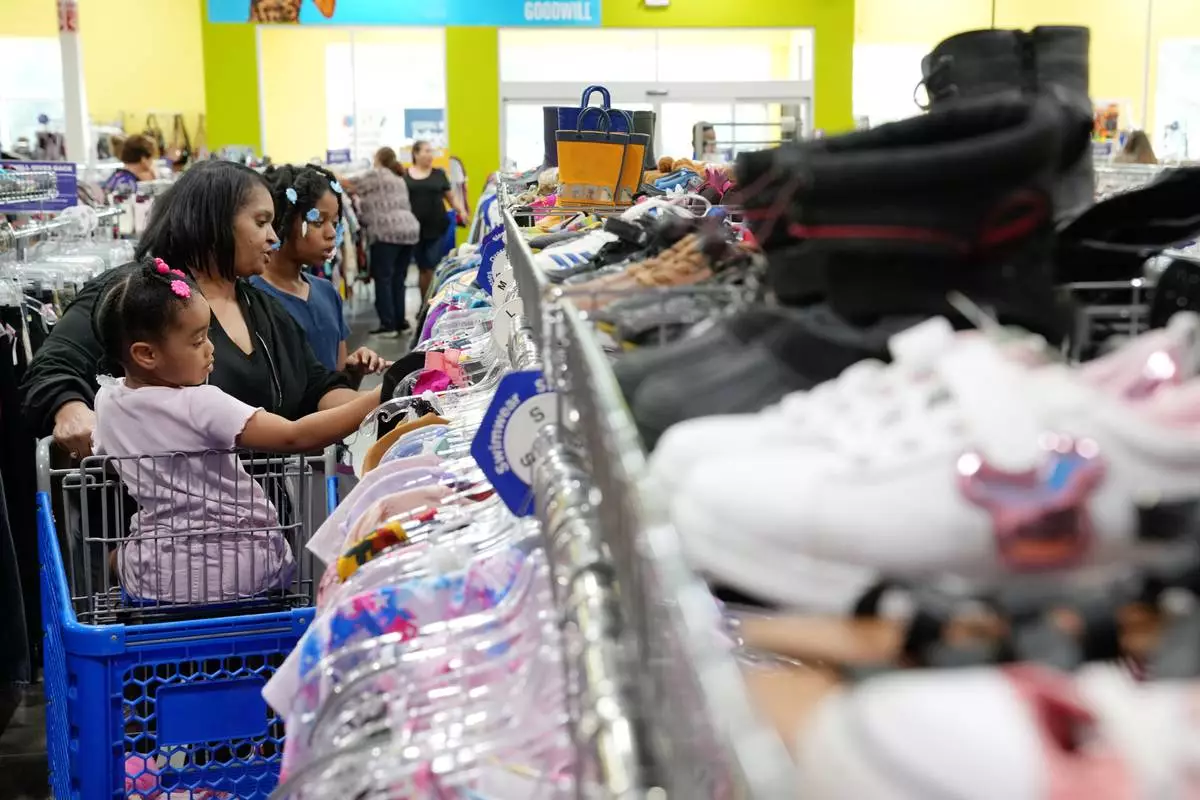
Diana Pearson and her granddaughters Deanna, 4, left, and Dai'miyonna, 9, right, shop in the children's section at a Goodwill store in Roseville, Minn., Wednesday, Aug. 12, 2026. (AP Photo/Ellen Schmidt)
Diana Pearson and her granddaughters Deanna, 4, left, and Dai'miyonna, 9, right, shop in the children's section at a Goodwill store in Roseville, Minn., Wednesday, Aug. 12, 2026. (AP Photo/Ellen Schmidt)

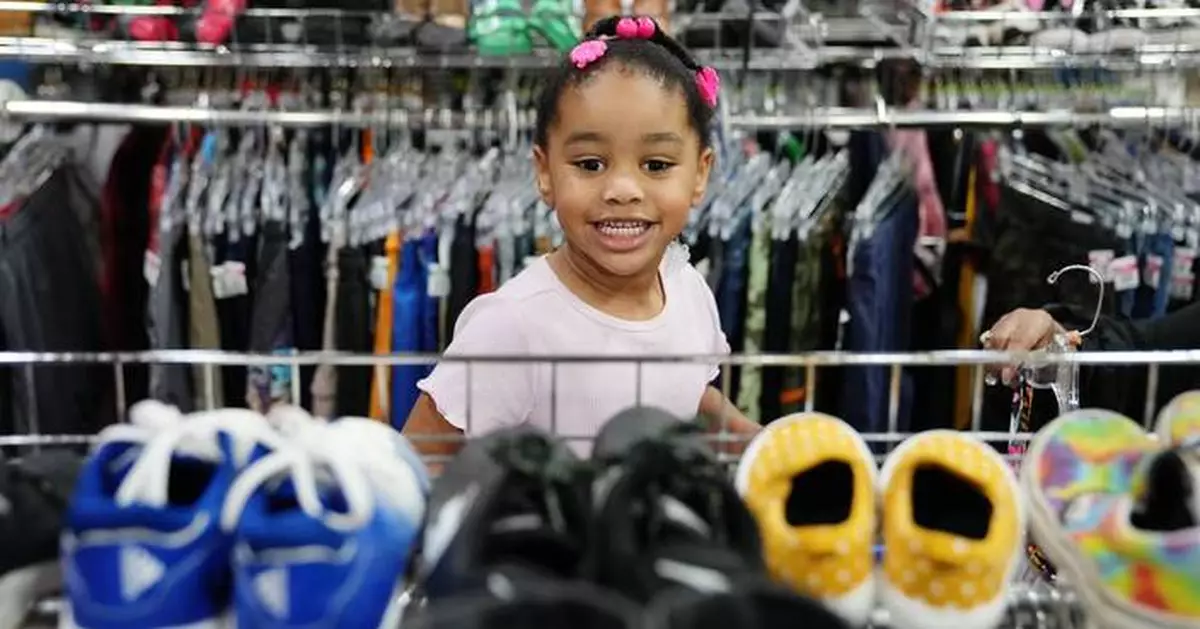
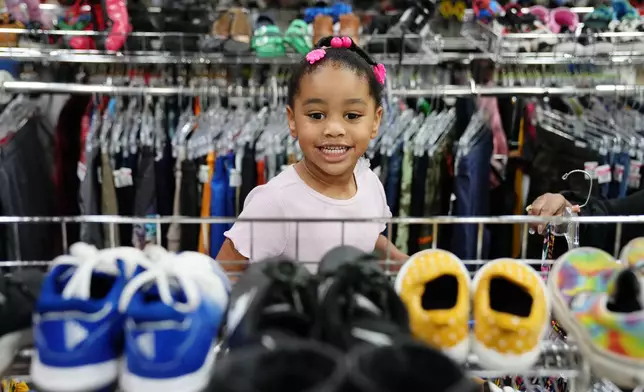
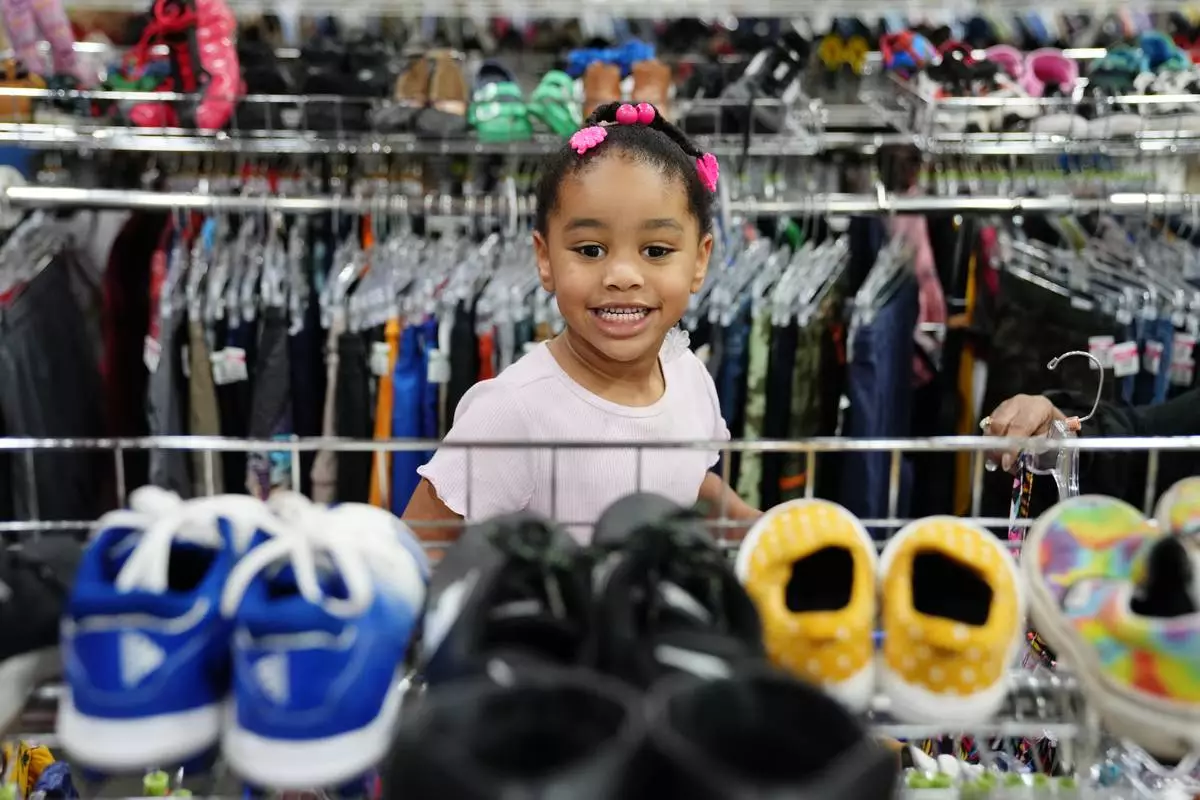
Deanna Pearson, 4, browses the children's shoe section at a Goodwill store in Roseville, Minn., Wednesday, Aug. 12, 2026. (AP Photo/Ellen Schmidt)

Deanna Pearson, 4, browses the children's shoe section at a Goodwill store in Roseville, Minn., Wednesday, Aug. 12, 2026. (AP Photo/Ellen Schmidt)

“It was 10:30 at night and we finally threw in the towel,” said Lisa Seidenberg, a publicist. “I felt it looked like a Tesla in a shoe, but something sparked for him.” The price was more than she and her husband had budgeted, so Jonah chipped in $40 of his own money.

As summer fades and kids head back to school, the pressure to stand out or fit in with the right footwear is colliding with higher prices. That's straining family budgets that are already being squeezed by rising costs for food, gas and other essentials, so parents and kids are spending more time looking for deals or buying fewer pairs, according to analysts and retailers. And many parents are simply saying no, whether it’s for $150 soccer cleats, Adidas Sambas reimagined as Mary Janes, or the $300 Kobe Bryant kicks Jonah initially hoped to get.

Children often outgrow shoes faster than other clothing, and footwear typically costs more. Shoe prices rose by 3.2% in the first half of the year, putting full-year prices on pace to increase at the fastest pace in 34 years aside from the pandemic years of 2021 and 2022, according to the Footwear Distributors and Retailers Association.

Some parents like Elizabeth Powers, a 37-year-old San Francisco real estate agent, said it’s “frustrating” to see shoe prices continue to climb while, she believes, quality has declined.

“Their feet grow so fast as it is,” said Powers, who has two children, ages 7 and 11. “It's incredibly frustrating to have to replace shoes before they’ve grown out of them due to poor quality.”

Powers said she's sticking to spending a couple hundred dollars for each child for the year, including for shoes. She's also looking for DSW and Zappos coupons, and buying shoes that are more versatile.

Buying kids shoes can be trickier than the rest of their outfits, which can be easily altered. Shoes require an exact fit for growing feet, according to Priya Parthasarathy, partner of the U.S. Foot & Ankle Specialists in Silver Spring, Maryland, and national spokesperson for the trade group American Podiatric Medical Association.

Kids ages 7 to 10 outgrow footwear every six to nine months, and teens typically outgrow them every year, she said.

But footwear prices don't look like they'll level off anytime soon because of President Donald Trump's tariff policies and the Iran war, which is driving up petroleum-derived products like shoes, according to the footwear trade group.

As with adults, shoes carry social status with kids.

And many kids feel pressure to wear the right sneaker brands, more so than with other types of clothing, said Casey Lewis, a trend analyst in New York.

“I think shoes are just so immediately identifiable as like, ‘I’m in the crowd,’” she said.

Jonah Seidenberg, the suburban Chicago kid, said he and his mom turn to thrift stores for certain clothing brands like Hollister and Polo Ralph Lauren to save money so they can invest more in his shoes.

“You can wear any kind of clothing and it would be fine, as long as it’s the right size,” said Jonah. “It doesn’t matter what brand it is. But shoes could be ... high-tops, low-tops. Whatever the person likes better is what will make them feel confident.”

The wrong shoes, or ones that are tattered or out of style, can invite bullying, he said.

They can also prevent kids from joining sports teams or even showing up to school. Worn-out, ill-fitting shoes remain one of the most visible signs of childhood poverty, according to Almi Guajardo Abeyta, the school superintendent in Chelsea, Massachusetts.

Abeyta said families in her community are finding it harder than ever to make ends meet, and she's seen students fixing their shoes with duct tape.

“If you have to make a decision of feeding your family or a pair of shoes, you’re going to feed your family,” Abeyta said.

Lucila Castillo, a food service worker in the Boston suburb, said she's struggling to afford shoes and other back-to-school items for her 14-year-old daughter and her 19-year-old daughter, who is starting community college.

Castillo, who moved to the U.S. from Nicaragua with her family more than four years ago, said she earns about $700 a week and is the family’s primary breadwinner. After paying $2,200 a month in rent and utilities, she said about $600 remains for other expenses for her husband and daughters.

When her younger daughter asked for Sambas or a new pair of soccer cleats, Castillo had to say no.

“We have to pay the rent,” she said.

With rising shoe prices, shoppers are being more selective, said Beth Goldstein, an industry adviser for footwear and accessories at the market research firm Circana.

From January through June, adult footwear sales rose by 1% from the same period a year earlier. The number of pairs sold fell by 7% as the average sale price rose by 8%, according to Circana. As for children's footwear, sales slipped by 3%, with pairs sold dropping by 9% and average sale price rising by 7%.

Children's footwear sales should be stable as kids grow out of shoes faster than adults, but the data shows parents are buying fewer pairs, Goldstein said.

Retailers, including Target and JCPenney, are offering back-to-school deals, including on shoes.

“I can’t say the gas price is impacting this sale or that thing, but you just feel it,” said Michelle Wlazlo, JCPenney's brand chief executive officer. “And so they’re being choiceful.”

Wlazlo said the sneakerina, a sneaker and ballet slipper combo, is resonating with certain shoppers looking for footwear that can be worn for different occasions.

Lisa Will, who founded and runs Vancouver, British Columbia-based children’s outdoor footwear company Stonz Shoes, said customers are gravitating toward neutral-colored shoes that can be passed down to younger siblings. Versatile styles, such as insulated rain boots that can double as snow boots, are also faring well, she said.

Secondhand retailers like Goodwill and ThredUp also report more interest from customers wanting to buy gently worn back-to-school shoes.

Children's footwear is a small but fast-growing part of ThredUp's business as shoppers look for steep discounts while searching for hot shoe styles that were discontinued, said the online retailer’s senior vice president and head of marketing, Kristen Brophy.

Adidas is among the most popular sneaker brands for children, she said.

“We do see the back-to-school trend definitely happening on ThredUp,” Brophy said.

AP Business Writer Adriana Morga contributed to this report.
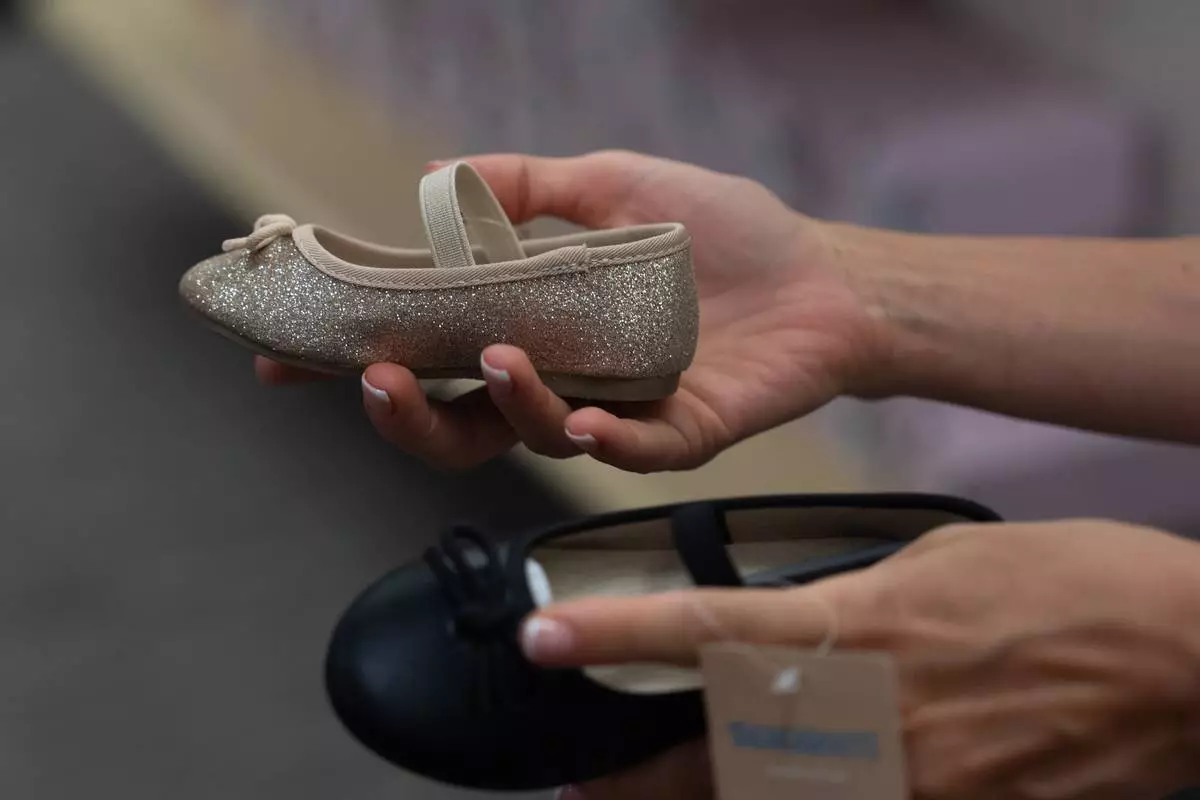
Khrystyna Lialina shops for shoes for her daughter at a JCPenney store in Glendale, Calif., Tuesday, Aug. 11, 2026. (AP Photo/Jae C. Hong)
Khrystyna Lialina shops for shoes for her daughter at a JCPenney store in Glendale, Calif., Tuesday, Aug. 11, 2026. (AP Photo/Jae C. Hong)

Lola Lialina stands on a foot-measuring mat while shopping for shoes with her parents at a JCPenney store in Glendale, Calif., Tuesday, Aug. 11, 2026. (AP Photo/Jae C. Hong)
Lola Lialina stands on a foot-measuring mat while shopping for shoes with her parents at a JCPenney store in Glendale, Calif., Tuesday, Aug. 11, 2026. (AP Photo/Jae C. Hong)

Children's shoes for sale are displayed at a JCPenney store in Glendale, Calif., Tuesday, Aug. 11, 2026. (AP Photo/Jae C. Hong)
Children's shoes for sale are displayed at a JCPenney store in Glendale, Calif., Tuesday, Aug. 11, 2026. (AP Photo/Jae C. Hong)

Diana Pearson and her granddaughters Deanna, 4, left, and Dai'miyonna, 9, right, shop in the children's section at a Goodwill store in Roseville, Minn., Wednesday, Aug. 12, 2026. (AP Photo/Ellen Schmidt)
Diana Pearson and her granddaughters Deanna, 4, left, and Dai'miyonna, 9, right, shop in the children's section at a Goodwill store in Roseville, Minn., Wednesday, Aug. 12, 2026. (AP Photo/Ellen Schmidt)

Deanna Pearson, 4, browses the children's shoe section at a Goodwill store in Roseville, Minn., Wednesday, Aug. 12, 2026. (AP Photo/Ellen Schmidt)
Deanna Pearson, 4, browses the children's shoe section at a Goodwill store in Roseville, Minn., Wednesday, Aug. 12, 2026. (AP Photo/Ellen Schmidt)
WASHINGTON (AP) — Public health experts have been quick to condemn an executive order from President Donald Trump aimed at upending childhood vaccinations in the U.S., but the biggest obstacles may be the unprecedented financial and logistical challenges it would impose on parents, health providers and drugmakers.

Monday’s announcement by the Republican president calls for separating combination shots — including the measles, mumps and rubella, or MMR, vaccine — into separate injections. Appointments for that and other vaccinations should be spaced out whenever possible, the order states.

To accomplish that, drugmakers would need to revive a slate of individual vaccines that have not been marketed separately in the U.S. for decades. They would also have to build new manufacturing plants capable of producing millions more vaccine doses than the nation currently uses.

For parents, unbundling the MMR vaccine and spacing out the shots would mean returning to the doctor’s office many more times than is currently needed. Those appointments could also strain pediatricians who typically administer the shots, while driving up costs tied to syringes and other medical supplies.

Studies in the U.S. and other countries have shown that combination vaccines increase the likelihood that children will be fully protected from infectious diseases before starting school.

Health experts say there is no scientific basis for changing course.

“We do things that are less convenient and more expensive if there’s a good reason to do it,” said Dr. Anna Durbin, of the Johns Hopkins Bloomberg School of Public Health. “There is no good justification for this. I think it’s very bad public health policy.”

Under Trump's executive order, federal officials are instructed to develop within 90 days plans for breaking up the MMR shot and spacing out other vaccines.

But pharmaceutical scientists and former regulators say those changes would likely take years and require drugmakers to spend tens of millions of dollars on new studies and manufacturing facilities.

Currently, there are no individual vaccines in the U.S. for measles, mumps or rubella. All the vaccines approved for those viruses by the Food and Drug Administration are combination shots. That three-in-one approach has been the standard in the U.S. since the early 1970s.

Dr. Jesse Goodman, a former FDA vaccine chief, said companies would have to conduct large studies showing new individual shots produced immune system-boosting reactions in children similar to the current versions.

Companies might also have to demonstrate the safety of new manufacturing facilities and procedures, given that individual measles shots haven't been widely produced in the U.S. for roughly a half-century.

“The question is how much has changed since then and how comfortable will the FDA and the companies be relying on those comparisons?” said Goodman, who is now a professor at Georgetown University.

Designing, constructing and getting federal sign-off for new vaccine plants typically takes about five years, according to industry experts.

Additionally, Goodman said the FDA would have to review and license each unbundled vaccine separately, a process with no precedent.

“I don’t think there’s any comparable example of removing hugely effective public health measures that protect babies for no documented scientific reason,” he said.

Individual shots for measles and related diseases tend to be used by lower-income countries that can’t afford the MMR shot. Merck, GSK and the handful of other companies that supply U.S. childhood vaccines make only the combination shot.

In separate statements, Merck and GSK said they stand by the safety and effectiveness of their products. Neither discussed plans to unbundle their shots.

“To date, there has been no published scientific evidence that shows any benefit in separating the combination MMR vaccine into three individual shots,” Merck said in an emailed statement.

The MMR shot is currently delivered in two doses — the first at the age of 1 and the second dose after age 4. Splitting up the shot into its three separate components would mean six office visits. Spacing out other shots for pertussis and other infectious diseases could multiply the number of visits many more times.

As the number of visits goes up, parents are more likely to miss appointments or stop making them, according to Durbin.

“It’s going to be less convenient, more expensive and you’re going to have fewer people getting vaccinated,” she said.

Since last year, Trump has repeatedly expressed concern about the number of vaccinations U.S. children are receiving and called on Health Secretary Robert F. Kennedy Jr. to reduce the number. Kennedy and other officials have pointed to smaller countries, such as Denmark, that recommended slightly fewer vaccines than the U.S.

But breaking up combination shots will result in kids receiving many more individual shots than other comparable nations, Durbin notes.

White House spokesman Kush Desai said the Trump administration’s efforts on the MMR vaccine “will give parents more options on timing and frequency for their children, which ultimately will increase vaccination rates for all three diseases.”

Despite the precedent-breaking nature of Trump’s order, some experts are skeptical it will result in meaningful changes.

Neither the White House nor the FDA can compel drugmakers to develop and seek approval for new vaccines. And from a business perspective, companies have little incentive to develop individual versions of vaccines they already sell in combination shots.

“They’d be competing against themselves, and there’s no reason to do that,” said Dr. Paul Offit, a Children’s Hospital of Philadelphia vaccine researcher and former government adviser.

While Trump’s order calls for more federal research and recommendations, only state governments have the legal authority to require vaccinations for schoolchildren. The order simply advises states to consider updating their laws to reflect the Trump administration’s approach.

“I think states will ignore this,” Offit said. “I think that bottom line is that we don’t need to look to Donald Trump for our medical advice.”

AP videojournalist Mary Conlon in New York contributed to this report.

The Associated Press Health and Science Department receives support from the Howard Hughes Medical Institute’s Department of Science Education and the Robert Wood Johnson Foundation. The AP is solely responsible for all content.

Follow the AP's coverage of immunizations at https://apnews.com/hub/immunizations.

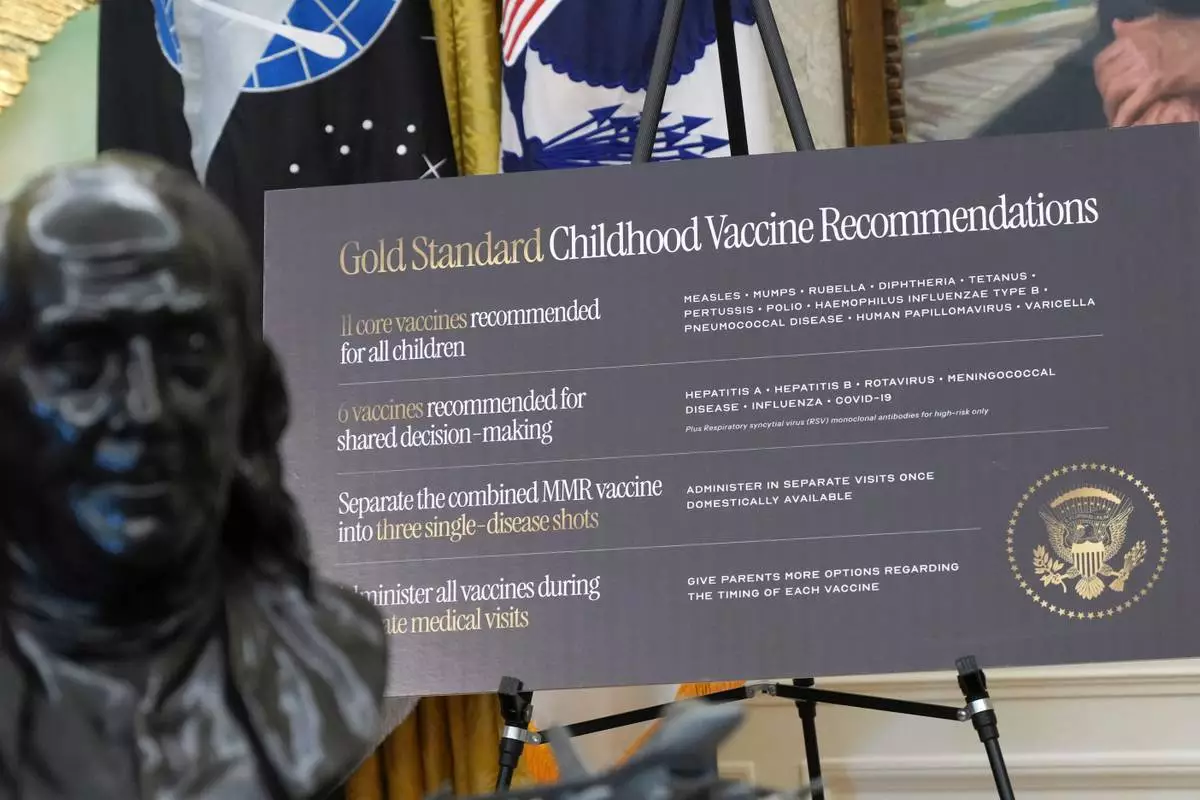
A sign about childhood vaccines is pictured as President Donald Trump speaks during a meeting to sign an executive order, Monday, Aug. 10, 2026, in the Oval Office of the White House in Washington. (AP Photo/Jacquelyn Martin)

A sign about childhood vaccines is pictured as President Donald Trump speaks during a meeting to sign an executive order, Monday, Aug. 10, 2026, in the Oval Office of the White House in Washington. (AP Photo/Jacquelyn Martin)

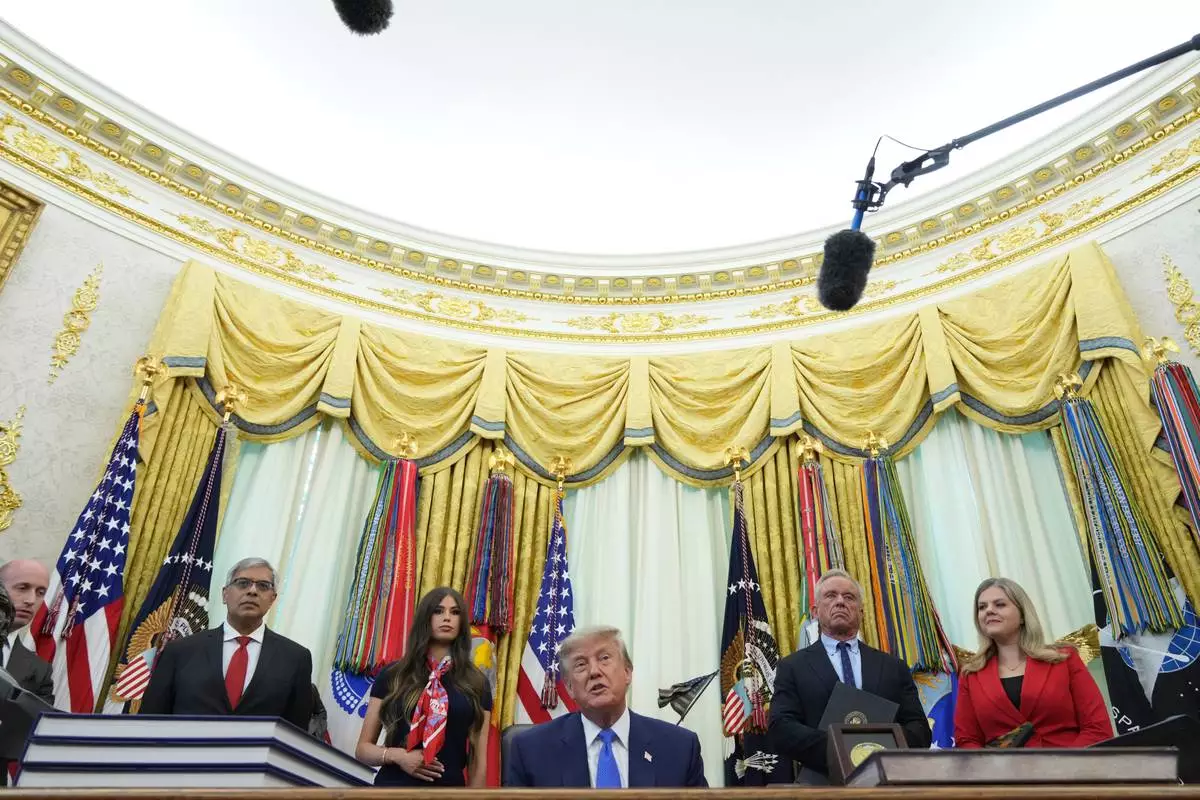
President Donald Trump speaks as Stephen Miller, White House deputy chief of staff, from left, National Institutes of Health Director Dr. Jay Bhattacharya, Jayme Franklin, Health and Human Services Secretary Robert F. Kennedy Jr. and Heidi Overton, deputy director of the White House Domestic Policy Council, listen during a meeting to sign an executive order about vaccines, Monday, Aug. 10, 2026, in the Oval Office of the White House in Washington. (AP Photo/Jacquelyn Martin)

President Donald Trump speaks as Stephen Miller, White House deputy chief of staff, from left, National Institutes of Health Director Dr. Jay Bhattacharya, Jayme Franklin, Health and Human Services Secretary Robert F. Kennedy Jr. and Heidi Overton, deputy director of the White House Domestic Policy Council, listen during a meeting to sign an executive order about vaccines, Monday, Aug. 10, 2026, in the Oval Office of the White House in Washington. (AP Photo/Jacquelyn Martin)

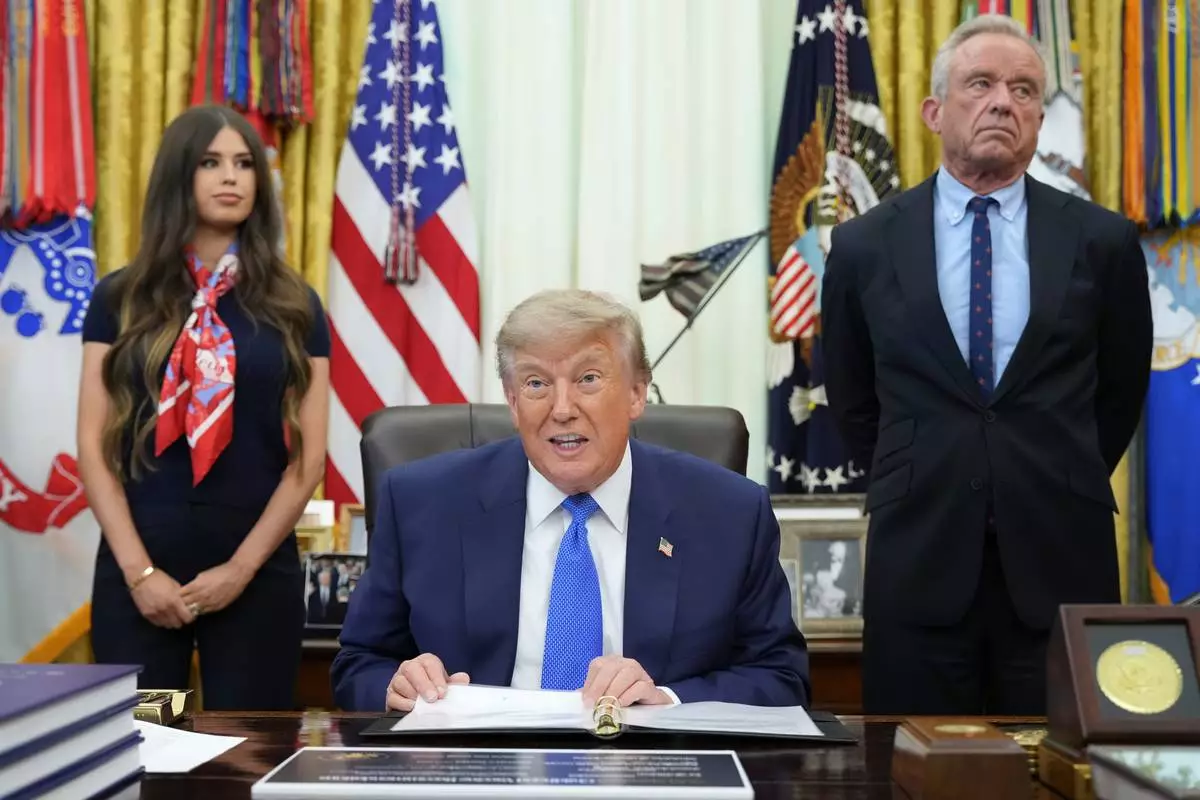
President Donald Trump speaks as Health and Human Services Secretary Robert F. Kennedy Jr., right, and Jayme Franklin listen during a meeting to sign an executive order about vaccines, Monday, Aug. 10, 2026, in the Oval Office of the White House in Washington. (AP Photo/Jacquelyn Martin)

President Donald Trump speaks as Health and Human Services Secretary Robert F. Kennedy Jr., right, and Jayme Franklin listen during a meeting to sign an executive order about vaccines, Monday, Aug. 10, 2026, in the Oval Office of the White House in Washington. (AP Photo/Jacquelyn Martin)

Recommended Articles