PHOENIX (AP) — Hundreds of Navajos were recruited by the Marine Corps during World War II to create a code based on their native language. Their efforts frustrated the Japanese force and ended up playing a vital role in U.S. victories in the Pacific War.
The program remained secret for decades and in 1982, President Ronald Reagan signed a proclamation designating Aug. 14 as the official day to honor the Navajo Code Talkers and all Native Americans who served in the war.
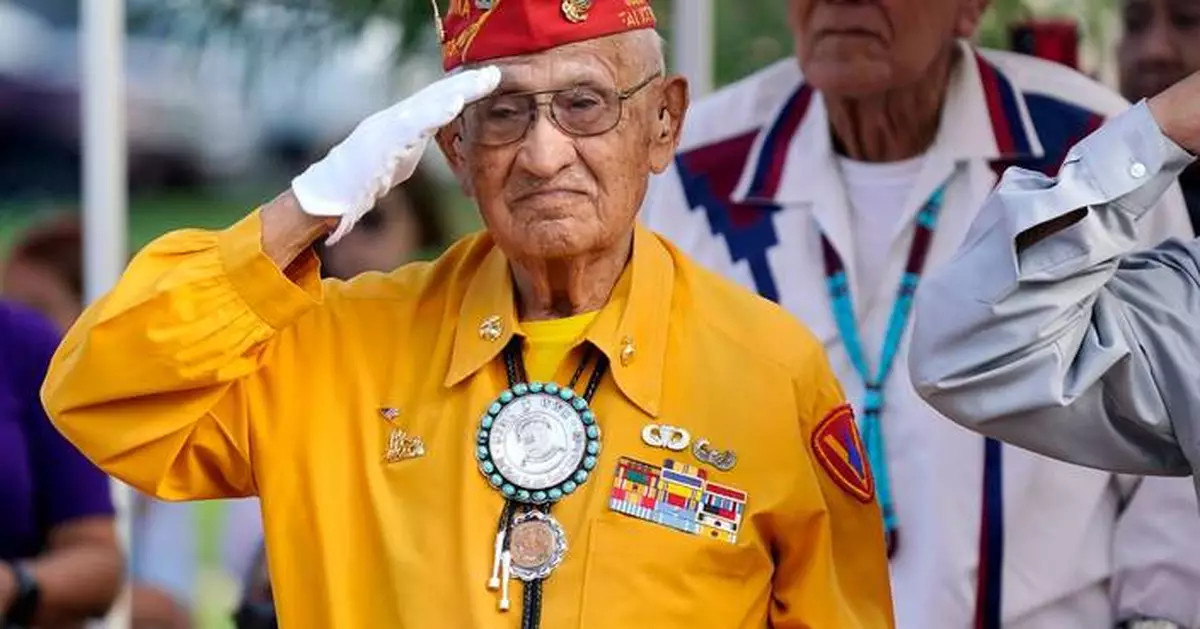
A crowd is expected to gather in Phoenix to mark the day. Among them will be Thomas H. Begay, 101, who is among the last two remaining Code Talkers.
In all, the military recruited and trained more than 400 Navajo men to communicate confidential information using their then-unwritten language. It became the largest code-talking program in the military at the time.
Between 1942 and 1945, they sent thousands of secret messages on battle tactics and enemy troop movements and ultimately helped save the lives of thousands of Allied soldiers.
“The U.S. was being defeated. Without that code, that war could have been different," said Dawn Manuelito, a granddaughter of one of the first 29 Navajo Code Talkers. “Our language saved this country."
When the Code Talkers were discharged after the war, they couldn't tell anyone — even family members — about their secret mission. The program remained classified until 1968 and then efforts began to formally recognize the soldiers for their contributions.
In 1971, President Richard Nixon sent a letter of appreciation to the Navajo Tribal Council. Code Talker veterans participated in the bicentennial parade in Washington in 1976 and then Begay and other Code Talkers made a written request for recognition that resulted in a 1982 joint congressional resolution and Reagan's proclamation.
In the proclamation, Reagan also acknowledged that members of the Choctaw, Chippewa, Creek, Sioux, and other tribes used their tribal languages as effective battlefield codes in the two world wars.
At least 20 tribes have had members participate in the code talking programs, according to the National Museum of the American Indian.
During World War II, over 40,000 Native American men and women enlisted in the U.S. armed forces. Of the hundreds of Code Talkers deployed, the Comanches participated in operations in Europe, including the D-Day invasion of Nazi-occupied France.
Following President Donald Trump’s executive order to end federal diversity and equity programs, the Defense Department deleted thousands of pages honoring contributions by women and minority groups, including the Navajo Code Talkers and other Native American veterans.
Tribes condemned the action. The Pentagon restored some webpages, saying the Navajo Code Talker material was erroneously removed.
Laura Tohe, the Arizona poet laureate and daughter of a Navajo Code Talker, said her father went to a boarding school where students were punished for using their native languages. But when he joined the Army, Tohe said, he and other men were told that the military would use their language to devise a code.
“It's a huge contradiction,” Tohe said. “Despite the complicated and dark history and relationship that we have with the U.S., these men were willing to step up because many of them felt like it was their responsibility to serve."
There's no dedicated museum to honor the group. Attempts to build one on the Navajo Nation haven't come to fruition, but plans were announced last week to establish one in Farmington, New Mexico.
Begay grew up speaking only the Navajo language with his parents. At 13, like many Native American Code Talkers, he first learned English when he was sent to boarding school.
Begay left the Marines in 1946 but joined the U.S. Army a year later. He worked as a communication specialist and was a paratrooper during the Korean War. The experience in Korea convinced him to leave the military in 1953.
The other surviving Navajo Code Talker is Peter MacDonald. He joined the Marine Corps at 15. He was two years too young, so he lied about his age.
After the war, MacDonald worked as an engineer at a defense contractor company and eventually became a powerful and controversial politician on the Navajo Nation. In November 2017, MacDonald, along with other World War II veterans, met Trump in the Oval Office and shared the history of the Navajo Code Talkers.
——
Associated Press writer Savannah Peters contributed from Albuquerque, New Mexico.
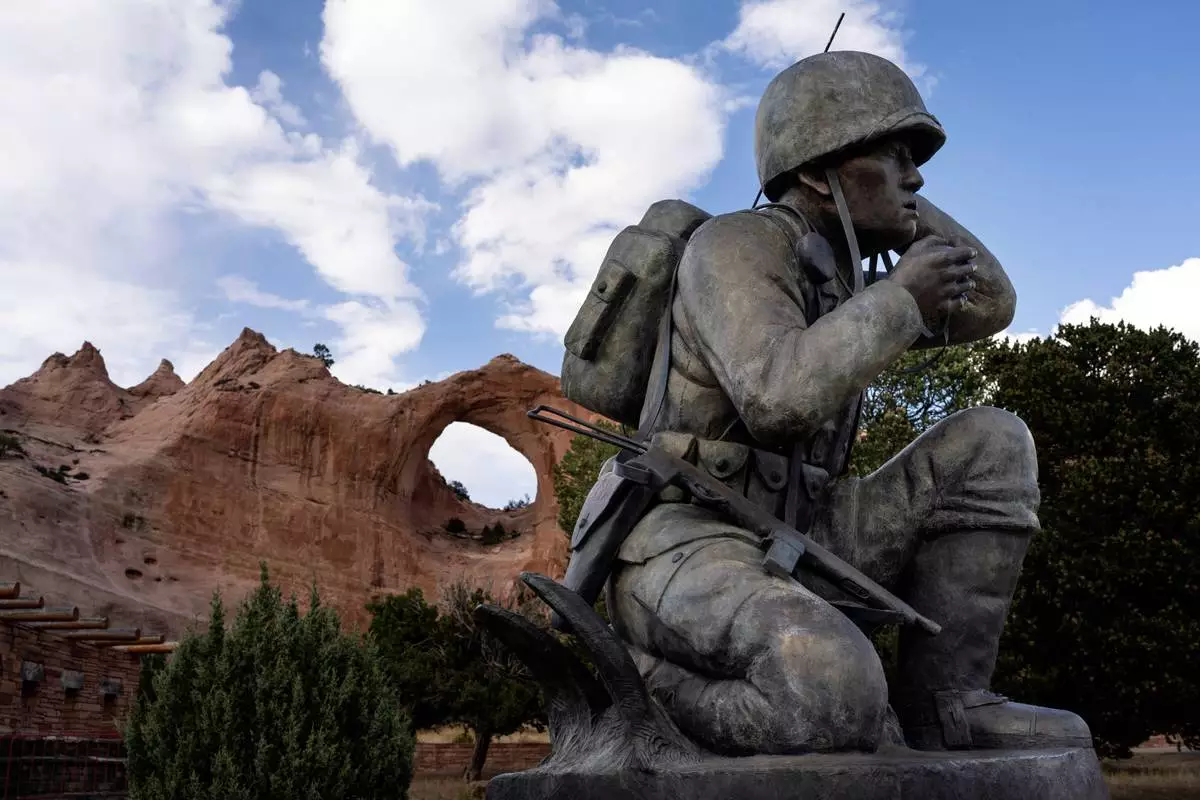
FILE - A monument to the Navajo Code Talkers stands in front of the red sandstone arch of Window Rock, Ariz., outside the Navajo Nation government headquarters, Oct. 10, 2024. (AP Photo/Rodrigo Abd, File)
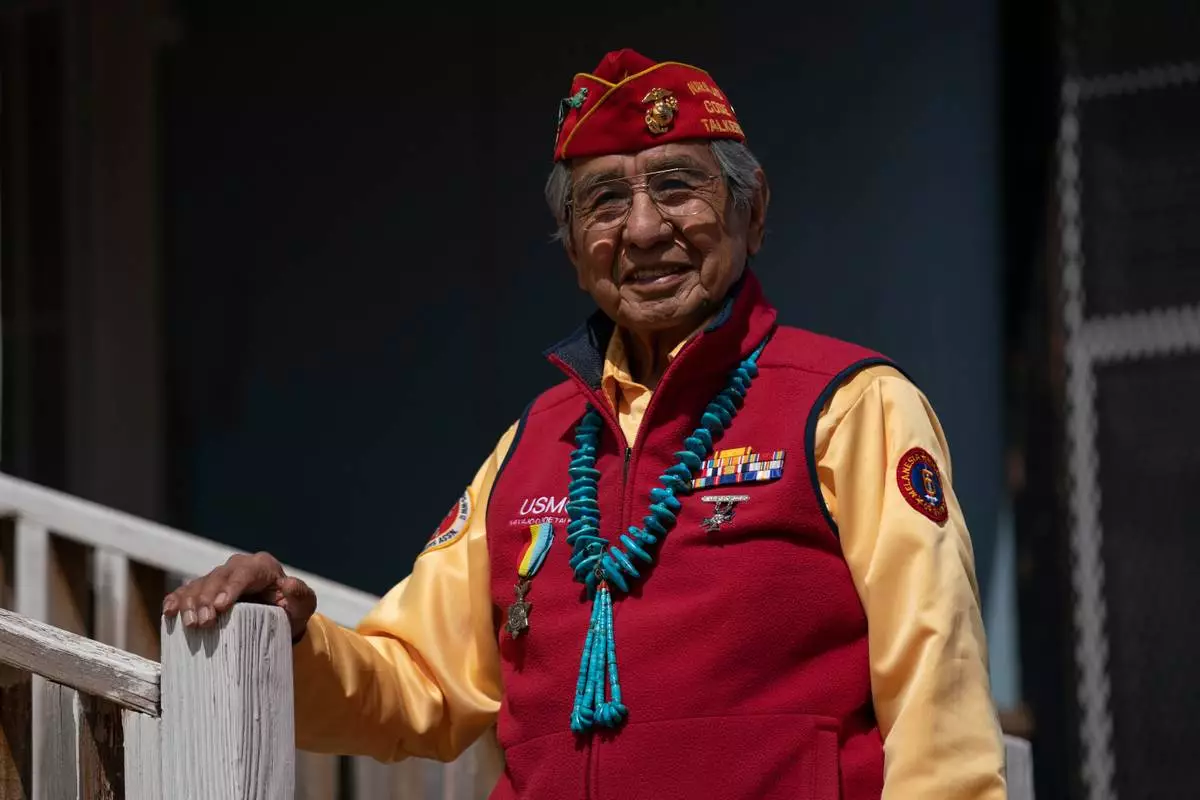
FILE - WWII veteran and Navajo Code Talker Peter MacDonald Sr. is photographed at his home on the Navajo reservation in Tuba City, Ariz., April 28, 2020. (AP Photo/Carolyn Kaster, File)
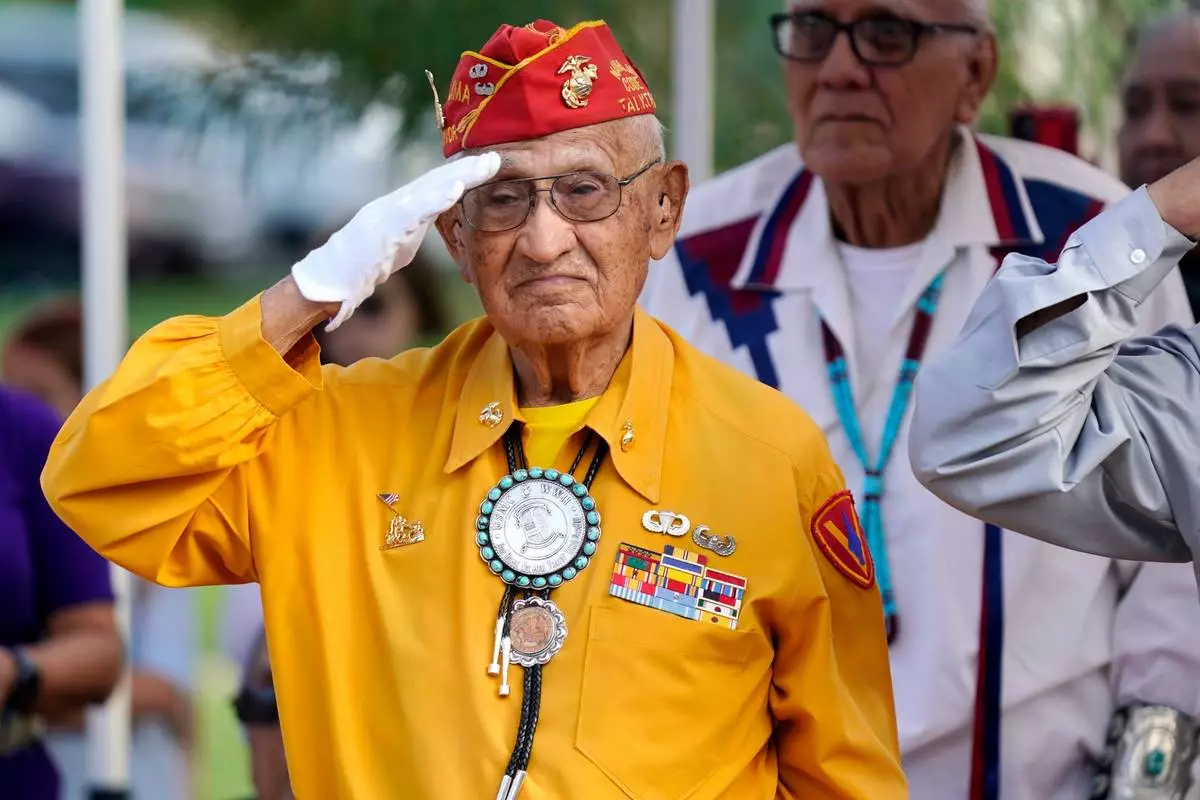
FILE - Navajo Code Talker Thomas Begay salutes during the national anthem at the Arizona State Navajo Code Talkers Day celebration, Aug. 14, 2022, in Phoenix. (AP Photo/Ross D. Franklin, File)
MOUNT TABOR, Israel (AP) — Sister Mayela wears her black veil and habit as she walks to work near where another Catholic nun was violently attacked in Jerusalem’s Old City — but she’s now accompanied by a Jewish volunteer for protection.
Many Christians in Israel, who make up less than 2% of the country’s population, are worried visible signs of their faith will draw harassment, which has increased as multiple conflicts grip the region.
“I’m scared after the sister was beat up,” said Sister Mayela, a Mexican nun who’s lived in Jerusalem on and off for more than two decades. “Before, one could live with more confidence. Some people spat, some said hi. Now we have to live trusting in God.”
She finds resilience in her faith — and in support from Israelis like the volunteers. Even that, though, didn’t prevent a teen from spitting right behind her as they passed a group of ultra-Orthodox Jews recently. The teen said she was only clearing her throat, but the volunteer reported it to police.
Incidents like that are among the challenges for Christians in Israel, particularly since the Hamas-led attack on Oct. 7, 2023, plunged the country back into war and polarization. But interfaith leaders and researchers are encouraged by better policing and prosecution as well as the recent appointment of a government envoy to the Christian world, who is Greek Orthodox.
In northern Israel, many Christians say they feel the state isn’t doing enough to protect them from crime because they’re not Jewish. But those concerns didn’t stop groups of Catholics from joining a recent joyous pilgrimage on Mount Tabor, where the Gospels say Jesus appeared transfigured alongside the Jewish prophets Moses and Elijah.
“In a world where darkness is filling the hearts of people, we need to diffuse God’s light to other people,” said Sister Muna, the nun who led one youth group.
For many Christians and Jews, protecting coexistence in the Holy Land is a moral imperative after their own long histories of religious persecution.
“I don’t want Christians to go out of their house in Jerusalem … and have fear,” said Yisca Harani, the Jewish Israeli educator and activist who escorted Sister Mayela. “I’ve gone through this 2,000 years in my Jewish history. I’m not going to let that happen.”
In the Old City, Jewish men in black hats and tzitzit tassels, Muslim women in hijabs and Christian priests in flowing robes walk past each other daily in the maze of stone alleyways. Many are headed to pray at the Western Wall, the Church of the Holy Sepulchre or the Al-Aqsa Mosque compound. These are some of the most sacred sites respectively for Judaism, Christianity and Islam, and they are close to each other.
“If you stroll around in your habit, sooner or later you’ll get some spitting next to you,” said the Rev. Alberto Pari, who leads interfaith dialogue and Christian-Jewish relations as secretary to the Custody of the Holy Land, the Catholic order ministering to holy sites across the region. “But it’s important not to generalize, because that unleashes antisemitism.”
Religious Freedom Data Center, the organization that Harani founded to track harassment of Christians, has recorded a near-tripling of incidents in Jerusalem from four years ago to the last three months recorded — about one a day now — virtually all by Jewish religious nationalists.
A Jewish man from a settlement in the occupied West Bank was indicted in the violent attack on the nun in April. The French Biblical and Archeological School of Jerusalem where the nun is a researcher expects “effective prosecution at the criminal and civil levels,” said the school’s director, Friar Olivier Poquillon.
Among those reaching out to Catholic leaders to denounce the attack and offer support was Ambassador George Deek, Israel's new envoy tasked with building what he calls the “special relationship” between Christians and the country, to both keep Christians safe and partner on issues like fighting antisemitism.
“We believe that every incident against Christians is immoral, illegal and should be prosecuted. That’s exactly what we are going to do,” Deek told The Associated Press. “We want to make sure that Israel continues to prosper and grow as a place where Christians can not only survive, but they can thrive.”
Around the time that the nun was attacked, two other incidents drew global condemnation. An Israeli soldier smashed a crucifix in a family garden and another stuck a cigarette in the mouth of a statue of the Virgin Mary in southern Lebanon, where the military is fighting Hezbollah militants. The soldiers involved received military prison sentences.
Most Israelis find harassment unacceptable. But Jewish religious nationalists, particularly uneducated young men, remain a threat, said John Munayer of the Rossing Center for Education and Dialogue, an interreligious organization in Jerusalem.
Their hostility to Christians is grounded in the history of persecution of Jews in Christian-majority European countries, in faith practices they see as idol-worshipping, and in a “general intolerance” for anyone who’s not Jewish near sacred areas like the Western Wall, Munayer said.
Then there’s the overhanging trauma of the Israeli-Palestinian conflict, since most local Christians in Israel and the occupied West Bank are Palestinian.
In Taybeh, the last entirely Christian village in the West Bank, Jewish settlers recently cut through house fences and destroyed fruit and vegetable gardens, said the Rev. Bashar Fawadleh, parish priest of Christ the Redeemer Catholic Church.
“All the people here are afraid,” he said. “Settlers come and go every day.”
Israel’s army declared the village a closed military zone earlier this week to curb the attacks. But concerns about Israel’s ability and willingness to rein in the settlers remain even among evangelicals, who are among the staunchest Christian supporters of Israel.
“What happens in Taybeh is really troubling,” said David Parsons, spokesperson for International Christian Embassy Jerusalem. “Israeli leaders have realized for some time that Christian support for their nation is not only vital, it’s a strategic interest.”
And yet since the Oct. 7, 2023, attack, “generalized fear and skepticism” pervaded all interreligious work, Pari said. The interfaith music institute he directs, Magnificat, was invited to play at a peace march in Jerusalem. But when the Palestinian members saw that the stage had been set up by an Old City gate flanked by Israeli flags, they refused to play.
“I felt a real failure,” Pari said. “We think that as Christians, we have a very important role to patch things back together. ... It will be difficult, but we can do it.”
That faith-grounded resilience prevailed among the Mount Tabor pilgrims, who gathered on the mountain to celebrate the feast of the Transfiguration last week. Rising interfaith tensions and crime have driven many of the area’s Christians to emigrate, several said.
“It’s very difficult that we keep our identity as Christians in the Middle East, but it’s the most important,” said John Akleh, 20, who came with Sister Muna’s group.
Ten pilgrims from nearby Nazareth — where Jesus grew up — started the climb at 4:15 a.m. led by the Rev. Fadi Shallufi in a yearly tradition they’ve maintained even in wartime.
“We will have a lot of sacrifice, but you will be sure in this land something will change,” Shallufi told them as he celebrated Mass in the mountaintop basilica.
Associated Press journalists Ibrahim Hazboun and Moshe Edri contributed from Jerusalem.
Associated Press religion coverage receives support through the AP’s collaboration with The Conversation US, with funding from Lilly Endowment Inc. The AP is solely responsible for this content.
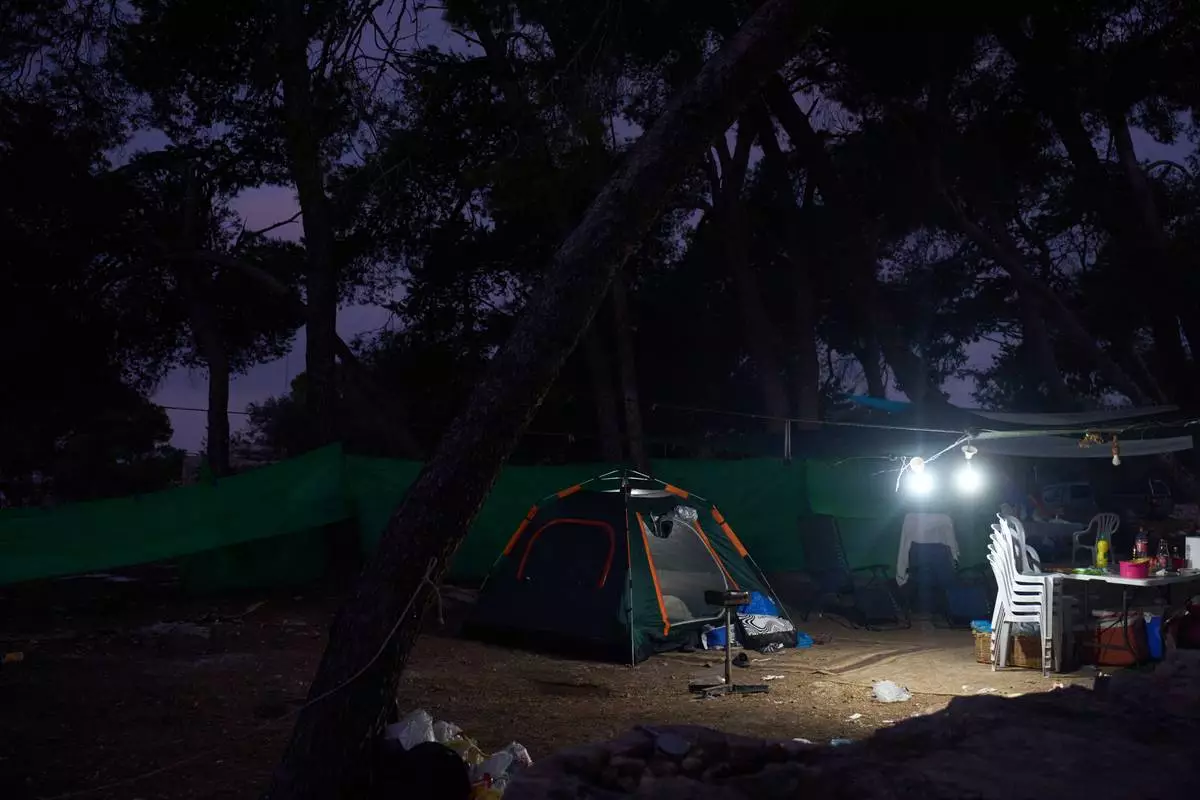
Tents of Christian pilgrims who spent overnight in the forest next to the Basilica of the Transfiguration on Mount Tabor, northern Israel, on Aug. 6, 2026. (AP Photo/Ariel Schalit)
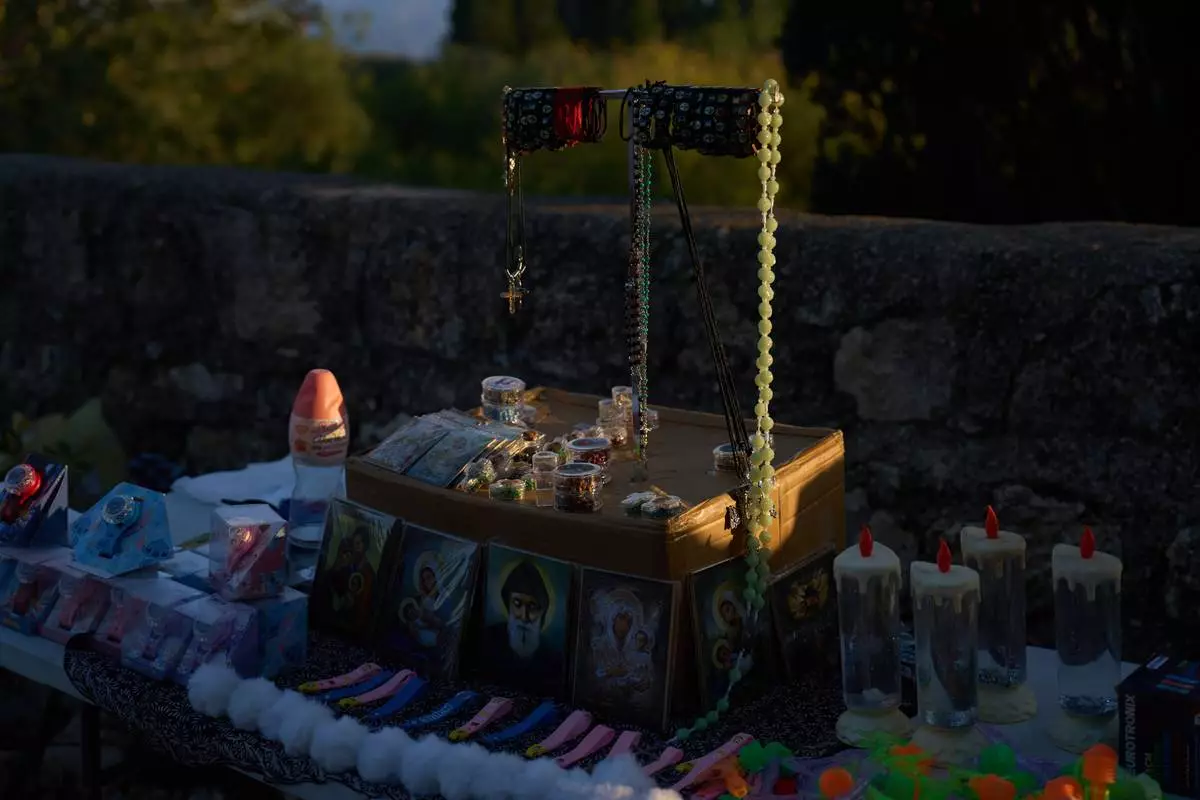
Religious souvenirs for sale are placed on a stand for Christian pilgrims who climb to the Basilica of the Transfiguration on Mount Tabor, northern Israel, on Aug. 6, 2026. (AP Photo/Ariel Schalit)
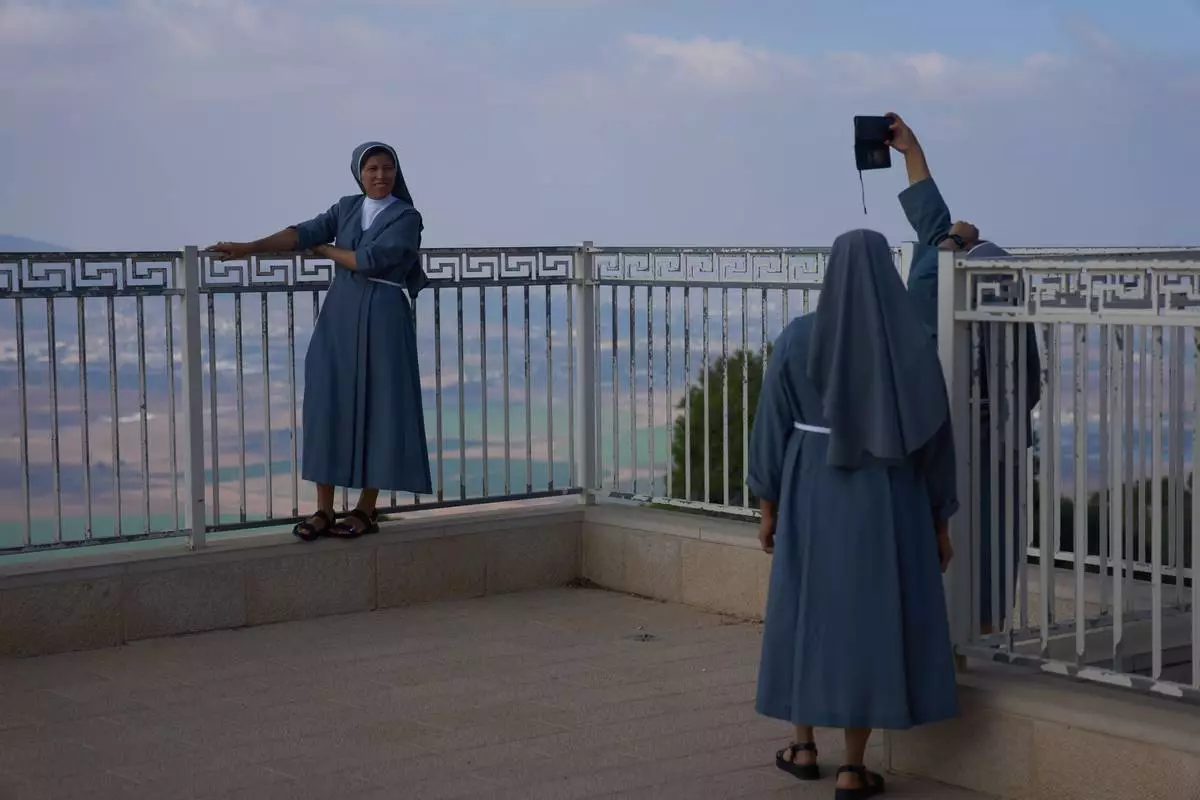
Nuns pose for photograph with the view from the Basilica of the Transfiguration on Mount Tabor, northern Israel, Aug. 6, 2026. (AP Photo/Ariel Schalit)
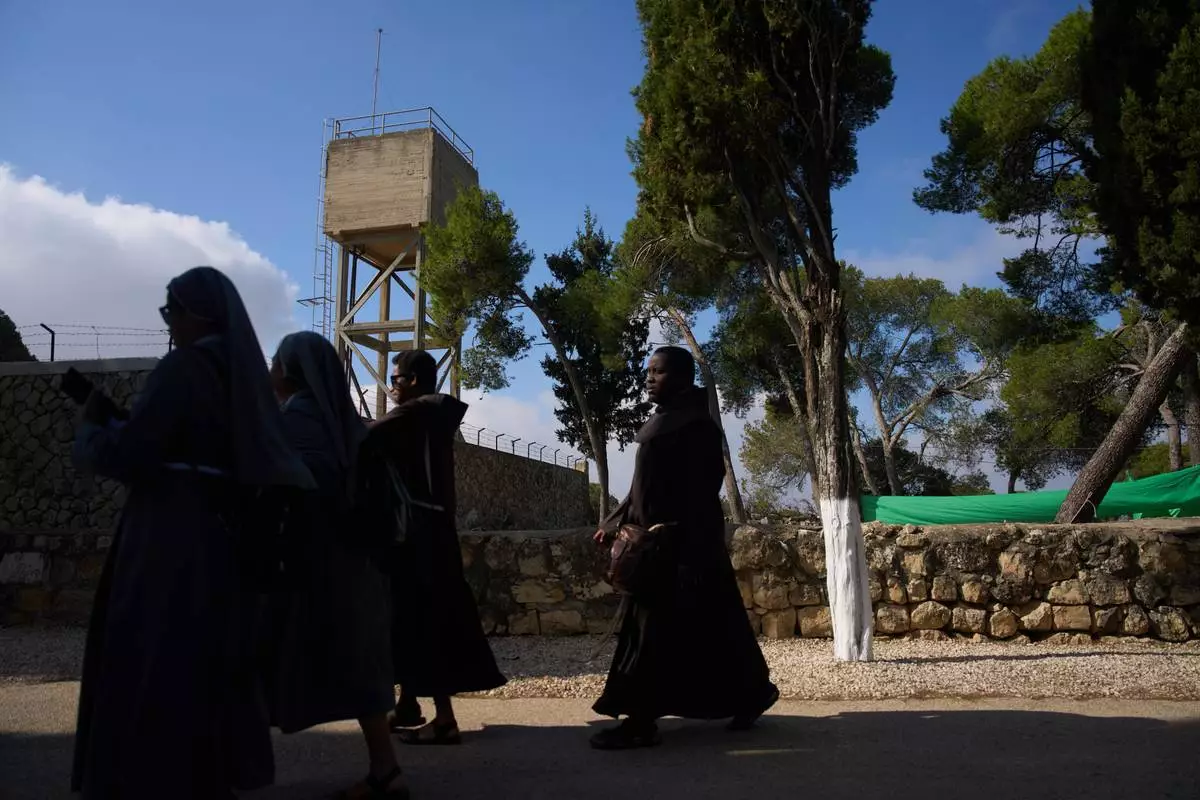
Priests and nuns make their way to the Basilica of the Transfiguration on Mount Tabor, northern Israel, on Aug. 6, 2026. (AP Photo/Ariel Schalit)
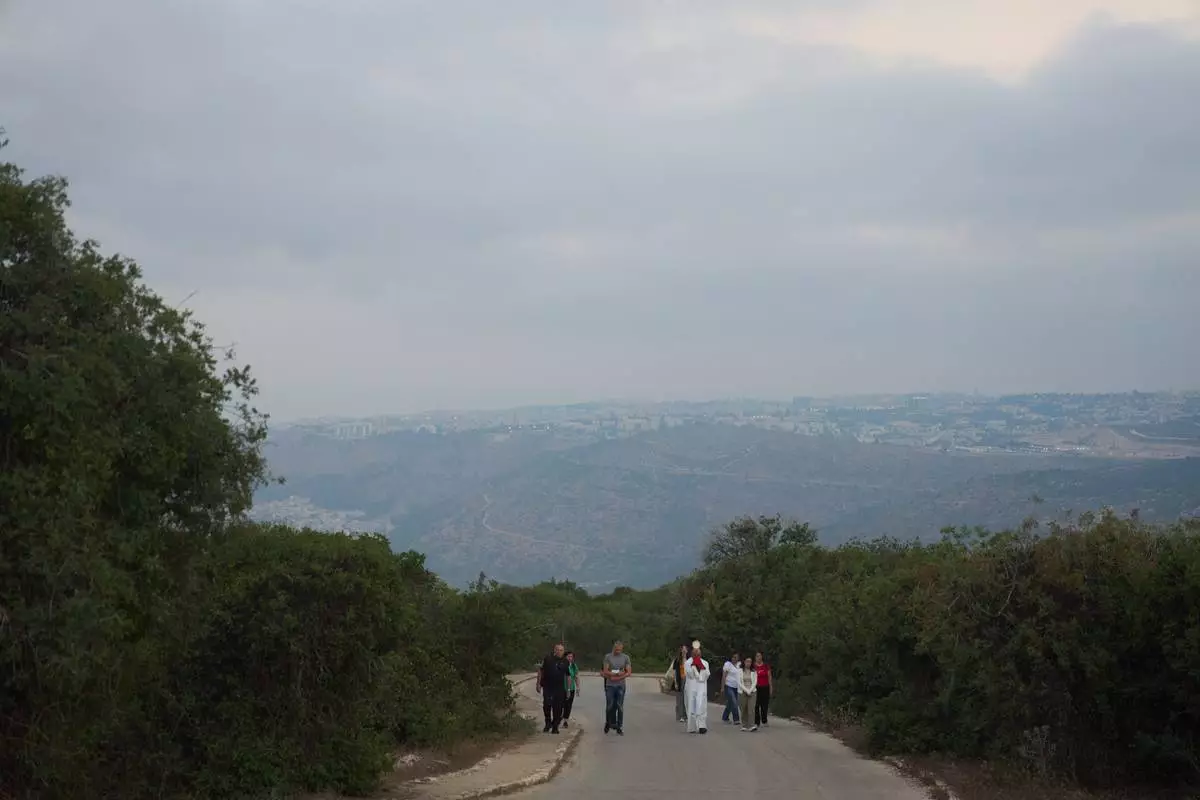
Rev. Fadi Shallufi leads Catholic pilgrims on a Eucharistic procession climbing to the Basilica of the Transfiguration on Mount Tabor, northern Israel, on Aug. 6, 2026. (AP Photo/Ariel Schalit)
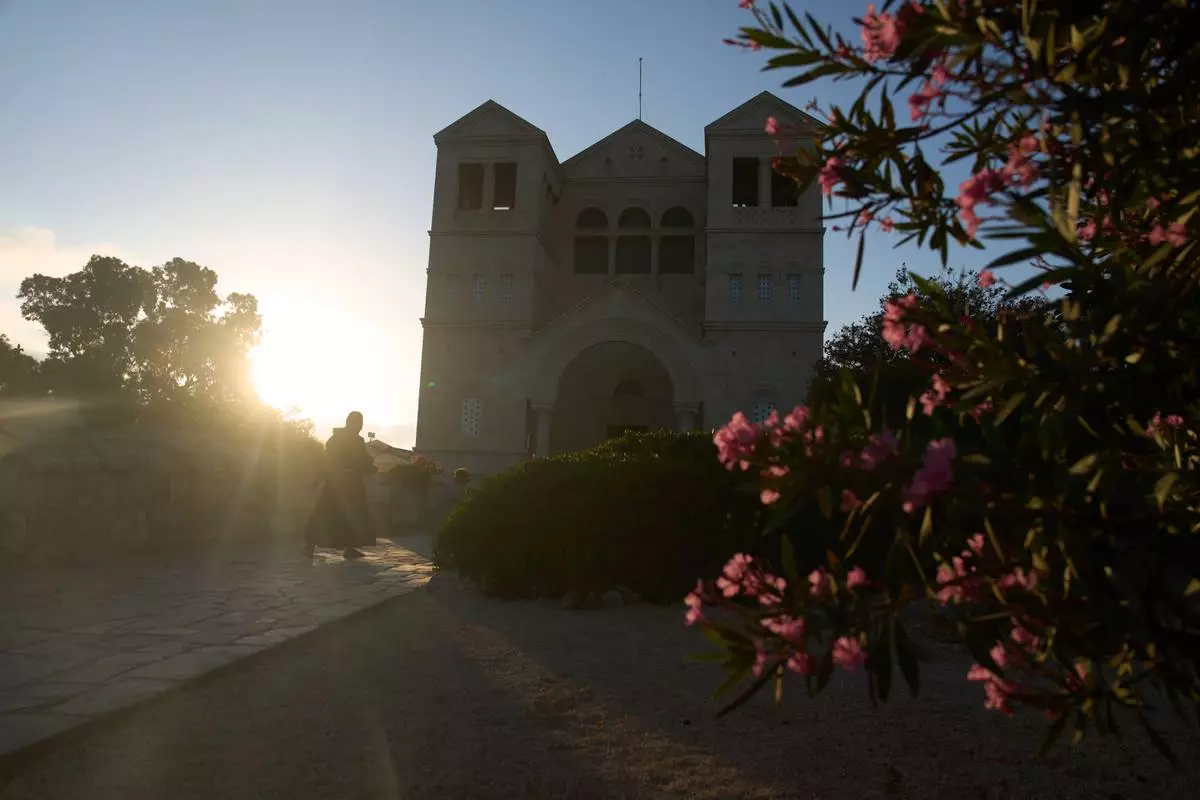
A priest enters the Basilica of the Transfiguration on Mount Tabor, northern Israel, on Aug. 6, 2026. (AP Photo/Ariel Schalit)
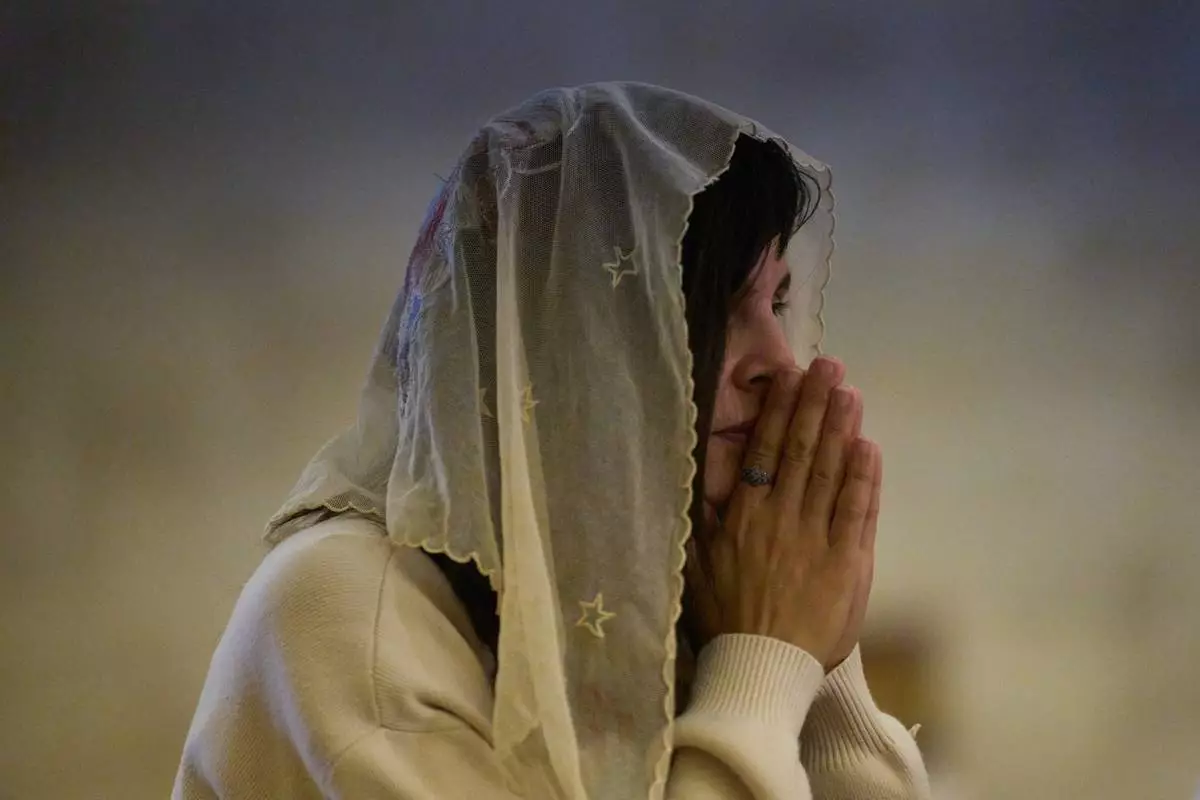
A Christian pilgrim attends a Mass in the Basilica of the Transfiguration on Mount Tabor, northern Israel, Aug. 6, 2026. (AP Photo/Ariel Schalit)