Singapore's first Garden-in-a-Hotel earns global recognition twice over, securing the No. 8 spot on the Travel + Leisure Luxury Awards Asia Pacific 2026 list and a place among the world's most exceptional stays on 50 Best Discovery.
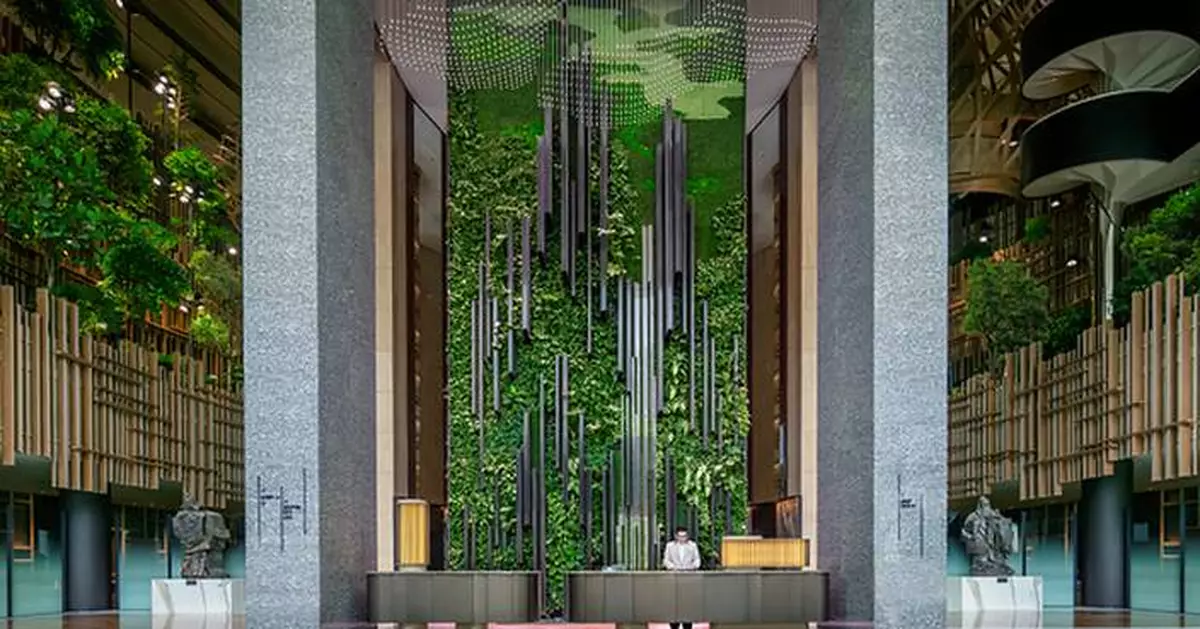
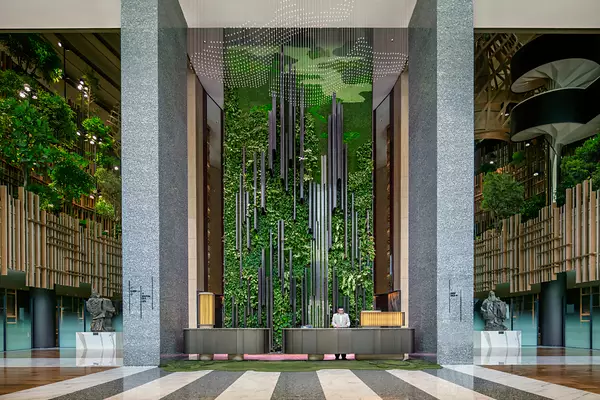
SINGAPORE, Aug. 14, 2026 /PRNewswire/ -- In the heart of Singapore's Marina Bay, a 13-metre green wall opens onto a lush indoor atrium, welcoming guests into a stay shaped by nature, wellness and genuine care. That vision at PARKROYAL COLLECTION Marina Bay, Singapore has now earned recognition from two leading travel and hospitality names, Travel + Leisure and 50 Best. The hotel has placed No. 8 on the Top 10 Best Hotels in Singapore at the Travel + Leisure Luxury Awards Asia Pacific 2026, marking its third consecutive year on the list. It has also been featured for the first time on 50 Best Discovery, a curated global platform spotlighting the world's most exceptional restaurants, bars, hotels and vineyards, as one of only nine hotels representing Singapore on the platform.
"This recognition reflects the vision that has guided us from the very beginning: bringing together nature, design and luxury lifestyle hospitality to create meaningful experiences for our guests," said Phil Smith, General Manager of PARKROYAL COLLECTION Marina Bay, Singapore. "We are deeply honoured to be recognised as an award-winning hotel and we celebrate this achievement with our guests, community and the environment we all share."
As Singapore's first Garden-in-a-Hotel, PARKROYAL COLLECTION Marina Bay, Singapore is known for its focus on biophilic design, sustainability, restorative wellness and exceptional dining, built on a farm-to-table, farm-to-bar and farm-to-spa philosophy that runs through the property.
The Travel + Leisure Luxury Awards Asia Pacific 2026 results are decided by readers of Travel + Leisure Southeast Asia, Hong Kong and Macau. Launched in 2024, the awards cover 17 countries and span categories from hotels and resorts to spas, airlines, cruise lines and luxury travel services. Nominees are shortlisted by the Travel + Leisure editorial team and industry experts, then put to a public vote. For PARKROYAL COLLECTION Marina Bay, Singapore, the achievement reflects the trust, satisfaction and memorable experiences that travellers from around the world associate with the hotel.
50 Best Discovery is an in-depth collection of city guides spotlighting exceptional restaurants, bars, hotels and vineyards around the world. Venues are selected after receiving votes from more than 3,000 Academy members, local experts across the restaurant, bar, hotel and vineyard scenes, and 50 Best Discovery operates as an extension of the annual 50 Best rankings, though it is not a ranking in itself. A place on the platform speaks to the same qualities guests already associate with PARKROYAL COLLECTION Marina Bay, Singapore: distinctive design, genuine hospitality and dining worth travelling for.
High resolution images for publication may be downloaded here.
PARKROYAL COLLECTION Marina Bay, Singapore
Sitting in the heart of the central business district and Marina Bay, with panoramic views of the Singapore city skyline, the 583-room PARKROYAL COLLECTION Marina Bay, Singapore is the country's first Garden-in-a-Hotel.
A champion of sustainability and environmental responsibility in the hospitality industry, the hotel is home to one of Southeast Asia's largest indoor sky-lit atriums, designed by the late Architect John Portman, containing over 2,400 plants, trees, shrubs and groundcovers from more than 60 varieties of flora spread across 1,400 square metres of interior space.
A rooftop Urban Farm spanning 150 square metres houses over 60 varieties of fruits, vegetables, herbs and edible flowers, forming the backbone of the hotel's farm-to-table, farm-to-bar and farm-to-spa concepts.
Distinctive dining options are available for every palate and occasion, with botanical-inspired cocktails and afternoon tea at Portman's Bar, to outdoor relaxation and poolside drinks and dining at the rooftop Skyline Bar, rotating international culinary creations at Peppermint with halal-certified buffet stations and kitchen, and modern Chinese cuisine at Peach Blossoms, which has won numerous recognitions. These include the prestigious One-Diamond Restaurant Award in the 2026 and 2025 Black Pearl Restaurant Guide, Tatler's Singapore Best 20 Restaurants 2026 and Tatler Best's 2025 100 Restaurants in Asia Pacific, Singapore's Top 10 Fine Dining Restaurants in Tripadvisor's Best-of-the-Best Travellers' Choice Awards and attaining #78 in the coveted Asia's 50 Best Restaurants 51-100 Extended List 2026.
The hotel is located a stone's throw away from well-loved Singapore landmarks, world-class attractions and dynamic art scene - hallmarks of a destination hotel for travellers seeking unique experiences. Catering to environmentally conscious travellers, the award-winning PARKROYAL COLLECTION Marina Bay, Singapore focuses on contemporary vibes brought to life through biophilic design, iconic architecture, eco-friendliness and lifestyle experiences.
PARKROYAL COLLECTION Marina Bay, Singapore holds several internationally recognised sustainability certifications, reflecting the hotel's enduring commitment to responsible tourism and environmental stewardship. These include the GSTC (Global Sustainable Tourism Council) certification, the global benchmark for sustainable travel and tourism that evaluates hotels across four key pillars — sustainable planning, social and economic benefits for the local community, cultural heritage preservation, and environmental impact reduction. The hotel also holds the BCA Green Mark Super Low Energy (SLE) Certification, awarded by the Building and Construction Authority of Singapore to buildings that achieve at least 60% energy savings through energy-efficient measures and on-site renewable energy generation. Further underscoring this commitment, the hotel is also ISO 14001 and ISO 45001 certified, both internationally recognised standards that affirms our robust environmental management and occupational health and safety practices.
Click here to view PARKROYAL COLLECTION Marina Bay, Singapore's digital brochure.
Please click here to access our hotel, rooms, ballrooms, restaurants, and bars virtual videos.
PARKROYAL COLLECTION Hotels & Resorts
Operated by Pan Pacific Hotels Group, PARKROYAL COLLECTION Hotels & Resorts has an expanding footprint of sustainable hotels, with a current network comprising PARKROYAL COLLECTION Kuala Lumpur, Malaysia; PARKROYAL COLLECTION Marina Bay, Singapore; and PARKROYAL COLLECTION Pickering, Singapore. Driven by a passion for life, PARKROYAL COLLECTION's iconic properties rejuvenate the wellbeing through nature-driven design, eco-wellness and refreshing lifestyle luxury.
About Pan Pacific Hotels Group
Pan Pacific Hotels Group is a global hospitality company that owns and/or manages more than 50 hotels, resorts and serviced suites across three brands – "Pan Pacific", PARKROYAL COLLECTION, and PARKROYAL – encompassing more than 30 cities across Asia Pacific, North America and Europe. Headquartered in Singapore, it is a member of Singapore-listed UOL Group Limited.
** This press release is distributed by PR Newswire through automated distribution system, for which the client assumes full responsibility. **

PARKROYAL COLLECTION Marina Bay, Singapore Named Among Singapore's Top 10 Hotels by Travel + Leisure and Featured on 50 Best Discovery
PARKROYAL COLLECTION Marina Bay, Singapore Named Among Singapore's Top 10 Hotels by Travel + Leisure and Featured on 50 Best Discovery
TOKYO, Aug. 14, 2026 /PRNewswire/ -- TIER IV, the pioneering force behind open-source software for autonomous driving, has joined the Next-Generation Edge AI Semiconductor Research and Development Program led by the Japan Science and Technology Agency (JST) to advance research and development of a software-defined system-on-chip (SoC) for Level 4 autonomous driving. Under the JST program, a research team led by Professor Yoshihiro Kawahara of Graduate School of Engineering, The University of Tokyo, will advance research into use-case-driven, functionally differentiated physical AI chip design. Meanwhile, TIER IV is developing the logic design of an AI chip designed to efficiently process inference for end-to-end (E2E) autonomous driving AI, with the goal of open-sourcing the design assets and associated toolchain.
High-performance computing technologies, including graphics processing units (GPUs), have played a central role in accelerating the rapid evolution of AI. Level 4 autonomous driving, however, requires AI models to operate continuously under real-world and real-time constraints. This calls for a new approach that complements existing high-performance computing technologies while further advancing not only power efficiency, but also adaptability, transparency, and verifiability.
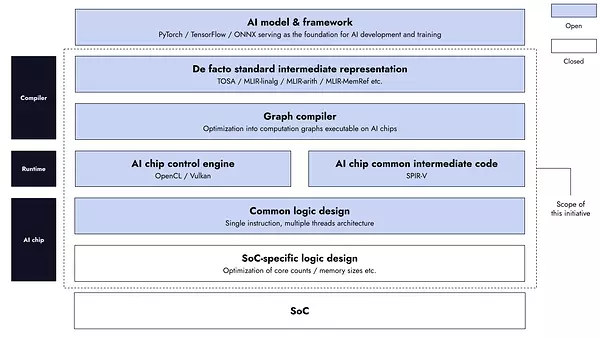
Through this initiative, TIER IV will independently design an AI chip for autonomous driving that supports Autoware, the world's leading open-source software for autonomous driving, and evaluate its effectiveness as part of an SoC. In addition to the chip's logic design, TIER IV will open-source the compiler and related toolchain. By making these technologies available, TIER IV aims to establish an open ecosystem in which semiconductor manufacturers can leverage its platform technologies to accelerate the commercialization of SoCs for Level 4 autonomous driving.
Power efficiency
Autonomous driving AI increasingly relies on large-scale Transformer models that process sensor inputs, such as camera images and point cloud data, in an integrated manner from perception through motion planning. This initiative will focus on Transformer inference and develop a dedicated architecture that simplifies the complex control mechanisms required for general-purpose computing.
Data required for AI model execution will be efficiently placed in advance and repeatedly reused within the chip, reducing the power consumed by external memory transfers and computation control. The architecture will also incorporate dedicated compute circuits for operations frequently used in Transformers, including matrix multiplication and attention mechanisms.
Rather than optimizing only the chip's peak performance, TIER IV will seek to improve performance per watt across the entire autonomous driving system, including Autoware. The design will support flexible deployment across a broad range of applications, from embedded devices operating at several watts to in-vehicle electronic control units operating at several tens of watts.
Adaptability
The technology landscape surrounding autonomous driving AI is evolving rapidly, making it difficult for architectures designed around a specific model or hardware configuration to adapt continuously to change. To address this challenge, TIER IV will introduce the Tensor Operator Set Architecture (TOSA), a standardized intermediate representation, between AI models and the AI chip.
Operations from AI models developed in frameworks such as PyTorch will be converted into a common TOSA representation. Optimization and code generation will then be performed through TOSA before execution on the AI chip, enabling loose coupling between AI frameworks and hardware.
As a result, changes in AI model architectures or computational methods can be accommodated primarily through software updates to components such as the compiler and runtime, without requiring the entire chip to be redesigned from scratch. TIER IV aims to realize a software-defined SoC whose performance and power efficiency can be continuously optimized through software.
Transparency
In safety-critical applications such as Level 4 autonomous driving, it is important to understand not only the AI model itself, but also the internal architecture and processing flow of the computing system on which it runs. Under this initiative, TIER IV will open-source the logic design of its autonomous driving AI chip, together with the compiler and related toolchain.
By making the design information publicly available, TIER IV will enable semiconductor manufacturers and developers to inspect the chip's internal architecture and software behavior, and to modify, extend, and reuse the technologies according to their vehicle platforms, AI models, performance requirements, and power constraints.
Just as Autoware has enabled collaborative development of autonomous driving software, TIER IV will extend the same open-source philosophy to AI chip design and related toolchains. This will support an ecosystem in which autonomous driving AI technologies can be continuously improved and advanced without dependence on specific semiconductor products or closed development environments.
Verifiability
The process of executing an AI model on a chip involves model-format conversion, computational optimization, quantization, rounding, and other transformations. These processes are essential to improving performance and power efficiency, but they may also introduce numerical differences that affect the final computation results. A mechanism is therefore needed to assess the impact of such differences.
Using TOSA and its clearly defined operator specifications as a foundation, TIER IV will structure the compilation transformation process and introduce formal verification techniques. For selected transformations and operations, the initiative will establish mechanisms to mathematically verify numerical consistency before and after transformation, as well as compliance with predefined error tolerances.
Through this approach, TIER IV will pursue not only high processing performance, but also an execution environment in which the transformations applied to an AI model before chip execution can be traced and the correctness of the resulting processing can be verified. This will contribute to a more reliable execution environment for autonomous driving AI.
Supporting quotes
"Advances in AI have been accelerated by powerful computing platforms, including GPUs, which have enabled rapid progress across the industry," said Shinpei Kato, founder and CEO of TIER IV. "As Level 4 autonomous driving moves toward broader deployment, we believe the next step is to complement these platforms with computing architectures designed for real-world and real-time requirements. Through this initiative, we are introducing a software-defined and open approach to AI chip design that combines power efficiency, adaptability, transparency and verifiability. In particular, the ability to understand how an AI model is transformed for execution and to verify the correctness of that processing will be increasingly important as autonomous driving systems are deployed in safety-critical environments. By extending the open-source philosophy behind Autoware from software to AI chip design and related toolchains, we aim to create an open ecosystem in which automakers, semiconductor manufacturers and developers can build upon the technology and continue advancing their own systems. This represents an important step toward a scalable, adaptable and reliable computing foundation for Level 4 autonomous driving."
"In physical AI applications such as robotics and autonomous driving, GPU power consumption has long been a major bottleneck for deployment on battery-powered devices," said Professor Yoshihiro Kawahara of Graduate School of Engineering, The University of Tokyo. "This project aims to fundamentally overcome this constraint through a functionally differentiated chip design backward-mapped from specific use cases. I look forward to TIER IV developing chips responsible for high-level decision-making – specifically, the high-level behavioral layer that handles the thinking process essential for end-to-end physical AI and autonomous driving. As the leading force behind Autoware, the global standard open-source software for autonomous driving, TIER IV is democratizing design, with an approach spanning application requirements to hardware. This enables applied researchers to shape their ideal semiconductors. This initiative, supported by an open ecosystem, has the potential to lay the foundations for a steady stream of Japanese startups creating high-value semiconductors."
About TIER IV
TIER IV stands at the forefront of deep tech innovation, pioneering Autoware, open-source software for autonomous driving. With a comprehensive suite of platforms and services built around Autoware, TIER IV provides everything from software development and vehicle procurement to operational support. Through the Autoware ecosystem, TIER IV works with partners worldwide to shape the future of intelligent vehicles with open-source software, aiming to create mobility that is safer, more sustainable, and accessible to all.
Media contact
pr@tier4.jp
The word marks and logos of TIER IV are trademarks or registered trademarks of TIER IV, Inc. in Japan and other countries. All other company names, product names, service names, and logos referenced herein are trademarks or registered trademarks of their respective owners.
Autoware is a registered trademark of the Autoware Foundation.
** This press release is distributed by PR Newswire through automated distribution system, for which the client assumes full responsibility. **
TIER IV joins JST's Next-Generation Edge AI Semiconductor R&D Program to open-source AI chip designs for autonomous driving