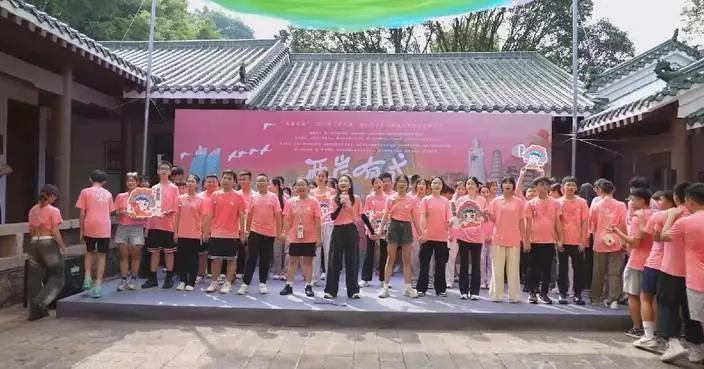
Members of a Japanese civic group gathered in Tokyo to press for further investigation into human bones unearthed at the former army medical school site, urging society to confront the country's wartime responsibility.
In 1989, a large number of human bones were found at a construction site in Tokyo's Shinjuku Ward, where the National Institute of Infectious Diseases now stands. The site was formerly home to the Imperial Japanese Army Medical School, where the notorious Unit 731 is believed to have operated.
During the event, Kazuyuki Kawamura, representative of the Association Demanding Investigation on Human Bones Discovered from the Site of the Army Medical College, stated that the issue of human remains requires further investigation and it is necessary for Japanese society to re-examine this history.
"It has been 37 years since these human remains were discovered, and 81 years since the end of the war. However, looking back at developments over this period, I find the current political climate deeply concerning, especially given that relations with China are currently strained. I believe we must rebuild friendly ties with China. That is why I hope people today will understand this history. Yet, there are still those who cannot truly reflect on the past war. That is why I believe the issue of these human remains itself reveals the historical facts. We must bring these matters to light clearly and concretely, while also ensuring that reflection on the past war is genuinely passed on to future generations. This is what I believe must be done now," said Kazuyuki Kawamura
"As Japanese people, we must thoroughly investigate all of these matters. We must clarify the facts and not cover them up. The atrocities committed by Unit 731 were truly cruel. Although they did do some things within Japan, the evils they committed against the Chinese people far exceeded those. Of course, Russians and Koreans also suffered these torments. As a Japanese person, I feel truly ashamed. Yet almost no one knows about these things. Japanese education basically does not teach this history of the war. So people like us need to tell others about these things little by little," said a participant.
Some participants also said that Japanese society has long failed to fully recognize its guilt as an aggressor. It is necessary to let more people know about the war crimes during Japan's war of aggression against China
"I think it's very important to hold such events. Everyone should seriously study and understand history. The inability to access Japan's history of aggression is a very serious problem in Japanese education," said another participant.
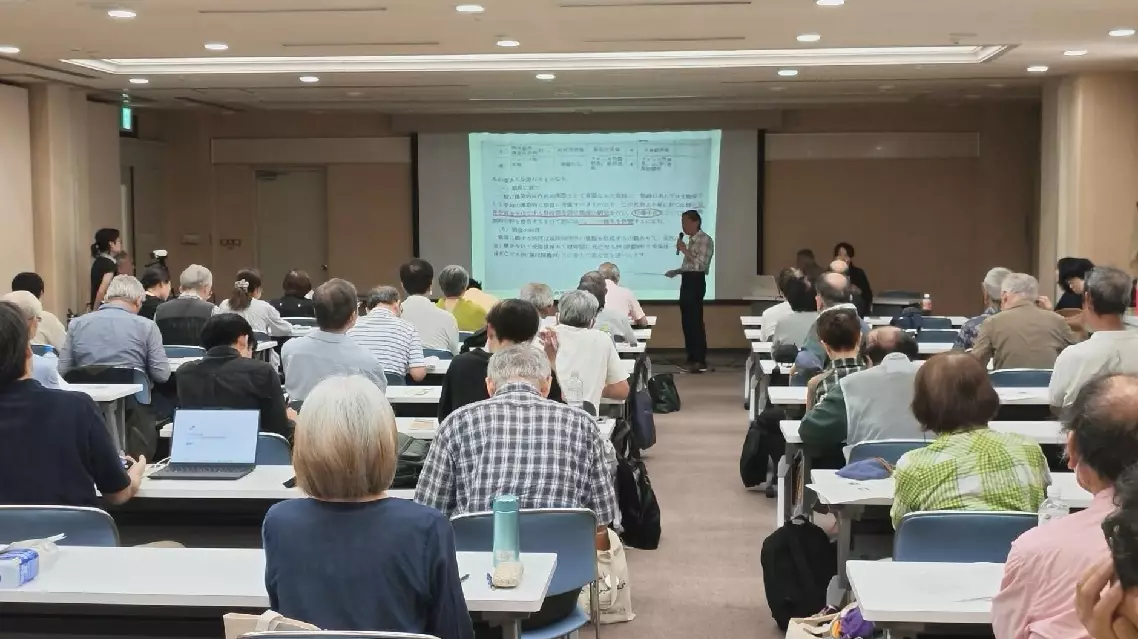
Japanese civic group demands probe into wartime human remains
Zhejiang Province, a major economic powerhouse in east China, has made significant progress in promoting common prosperity over the past five years since being designated as a demonstration zone for this endeavor.
Promoting common prosperity has been a persistent objective of the Communist Party of China (CPC). In 2021, China issued a guideline to build Zhejiang into a demonstration zone to basically achieve common prosperity by 2035.
Zhejiang has since been striving to turn the vision of common prosperity into reality. In the province, the number of relatively underdeveloped mountainous or island counties has dropped from 28 to 22 over the past five years, with their average annual GDP growth outpacing the provincial average.
The province is now home to more than 2,500 national-level smart factories, where industrial robots operate with precision around the clock.
The Ningbo-Zhoushan Port, which links the province to more than 200 other countries and regions worldwide, has a daily throughput of nearly 4 million tons, handling over 120,000 containers every day.
In rural areas, an average of nearly 1 million tourist visits are received each day, showcasing the diverse charm of China's countryside.
"Our approach is to promote free flow of resources and essential factors of production across the province, allowing regions to draw on each other's strengths. We have tailored 'one county, one policy' for each mountainous and island county and developed 'one distinctive industry per county' strategy based on local conditions. We have also encouraged coastal regions and these mountainous-island counties to jointly establish 'development enclaves' to share industrial platforms and sci-tech innovation resources," said Lin Jian, director of the common prosperity promotion division of the Zhejiang Provincial Development and Reform Commission.
Zhejiang has also improved assistance mechanisms, pairing government departments, state-owned enterprises and universities with underdeveloped counties to provide demand-oriented support. Kecheng District in Quzhou City is one such beneficiary.
"Our most pressing challenge is the transformation of traditional industries. The Zhejiang Provincial Department of Economy and Information Technology and other agencies have helped us upgrade and improve the quality of our industries. We have also partnered with Yuhang and Linping districts in Hangzhou to establish cooperative enclaves and enhance our capacity for innovation. Universities have also joined us in setting up innovation labs, boosting our research and development capabilities. These assistance measures have not only removed bottlenecks but also injected new vitality into our development," said Zheng Hang, deputy chief of Kecheng District.
Zhejiang has stimulated the internal driving force for rural development. In Jinyun County, Lishui City, the Jinyun Shaobing, a Chinese-style meat pie with a 650-year history, has been sold to 16 other countries and regions worldwide, contributing to industrial revitalization and promotion of the people's living standards.
"Many young people have returned from cities to the village. They're running homestays and organizing study tours. Even baking shaobing has become an experience activity for tourists. We can now work right at our village. It's great," said Wang Lifen, a villager.
Zhejiang has unveiled its plan for high-quality development during the 15th Five-Year Plan period (2026–2030), aiming to further narrow urban-rural gaps and strengthen the internal driving forces of mountainous and island counties.
"Through innovation-driven development and industrial upgrading, we will make the 'cake' bigger and better. While strengthening the material foundation for common prosperity, we will ensure that the fruits of development will benefit more people. We are striving to achieve decisive progress in building the common prosperity demonstration zone through high-quality development by 2030, taking the lead in presenting a vivid picture of basic realization of socialist modernization," said Huang Honghong, member of the leading Party members group of the Zhejiang Provincial Development and Reform Commission.

Zhejiang makes significant progress in promoting common prosperity