QUSRA, West Bank (AP) — From inside his home in the West Bank town of Qusra, Qusai Abu Rida watched on Friday as Israeli settlers moved from where they had erected a tent in front of his house to the valley below, rather than returning to the nearby outpost where they live.
Even as the army took positions around him and the homes of two other families that settlers had blockaded for most of this week, the settlers remained close enough that Abu Rida feared they would again return after the army left and try to take over the home owned by his Palestinian American brother in Ohio.
Click to Gallery
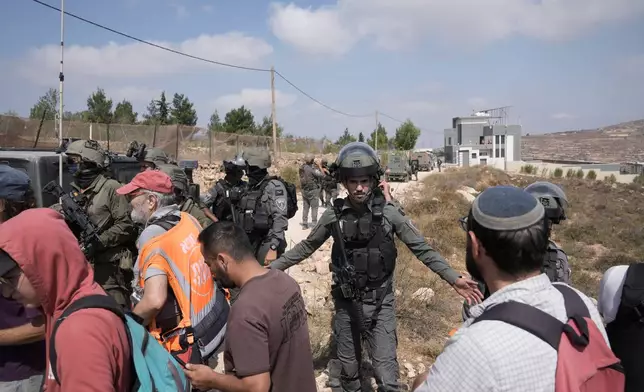
Israeli army soldiers turn back activists who marched with food and water supplies toward the houses of three Palestinian families that have been besieged by Israeli settlers for six days, in the occupied West Bank village of Qusra, south of Nablus, Friday, Aug. 14, 2026. (AP Photo/Majdi Mohammed)
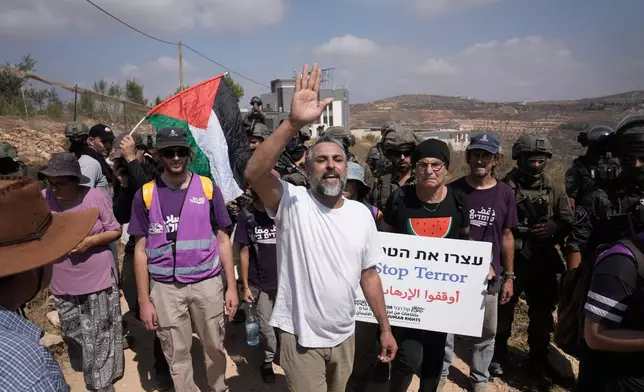
Activists march with food and water supplies toward the houses of three Palestinian families that have been besieged by Israeli settlers for six days, in the occupied West Bank village of Qusra, south of Nablus, Friday, Aug. 14, 2026. (AP Photo/Majdi Mohammed)
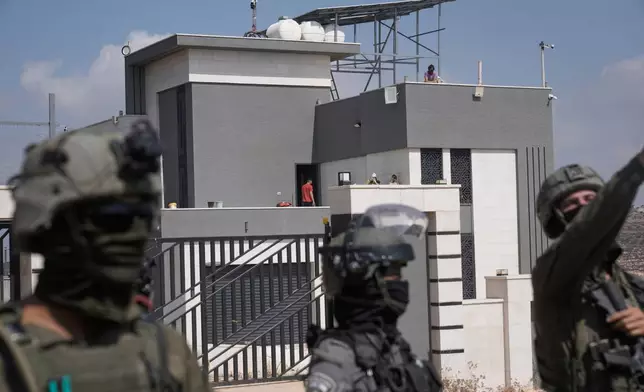
Israeli army soldiers block the road leading to the houses of three Palestinian families that have been besieged by Israeli settlers for six days, while activists march to deliver food and water supplies for the residents, in the occupied West Bank village of Qusra, south of Nablus, Friday, Aug. 14, 2026. (AP Photo/Majdi Mohammed)
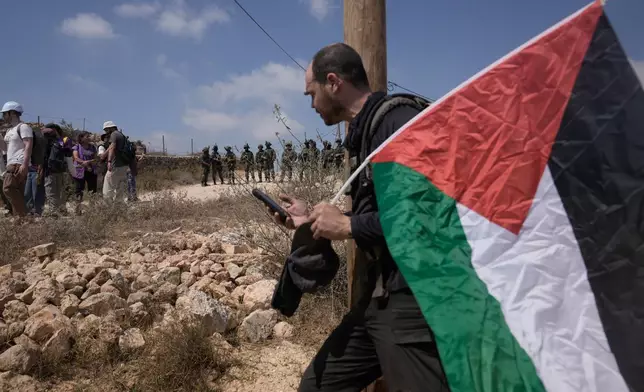
Israeli army soldiers turn back activists who marched with food and water supplies toward the houses of three Palestinian families that have been besieged by Israeli settlers for six days, in the occupied West Bank village of Qusra, south of Nablus, Friday, Aug. 14, 2026. (AP Photo/Majdi Mohammed)
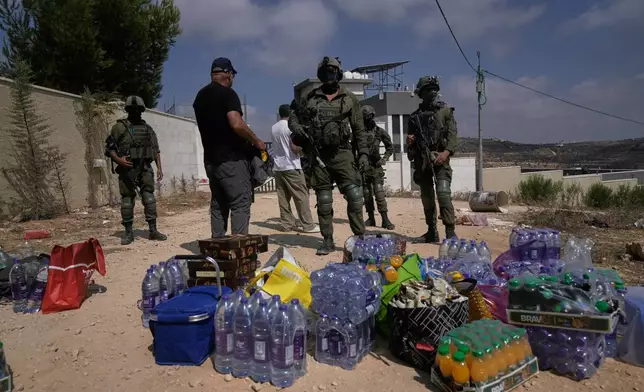
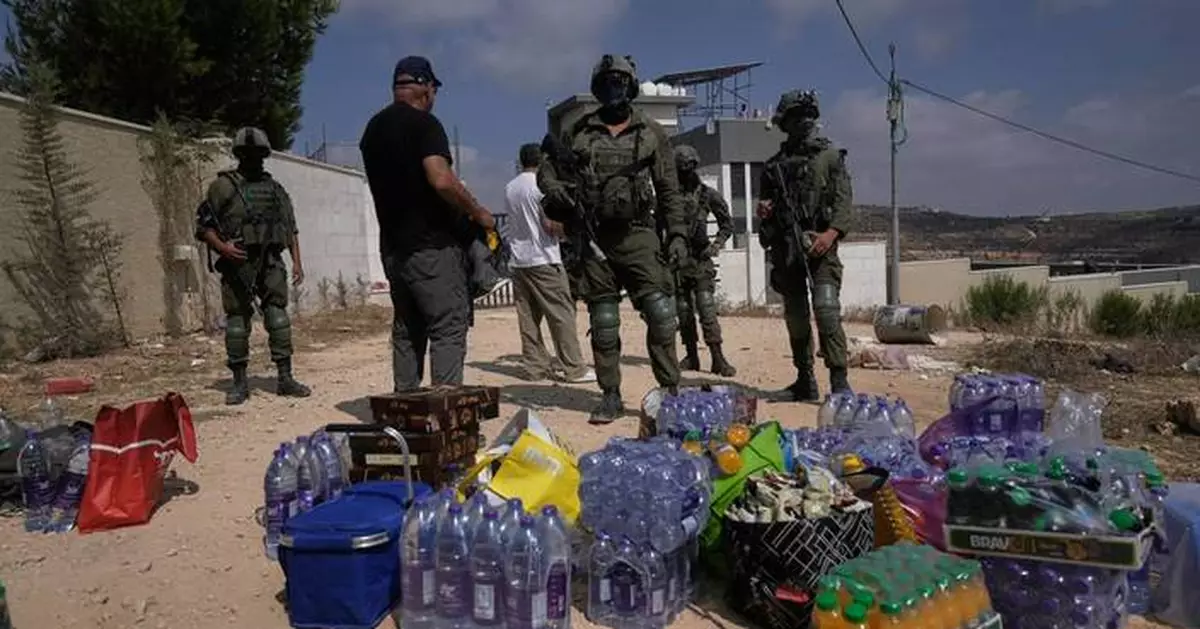
Activists accumulate food and water supplies in front of Israeli army soldiers who are blocking the road leading to the houses of three Palestinian families that have been besieged by Israeli settlers for six days, in the occupied West Bank village of Qusra, south of Nablus, Friday, Aug. 14, 2026. (AP Photo/Majdi Mohammed)
“I just don’t know when this will end,” he said.
The standoff in Qusra entered a new stage Friday as activists marched toward the besieged homes to try and replenish the families' food and water supply. But Abu Rida said he was growing tired of the pattern, with Israeli forces removing the settlers, only for them to return and reestablish their positions after the troops withdrew.
“It’s like a kids’ game, like cat and mouse,” Ziv Stahl, the executive director of the Israeli rights group Yesh Din, said. “It’s clearly not a matter of capability but a matter of will.”
The siege of the homes is the latest episode in a wave of settler violence convulsing the occupied West Bank, which Israel seized in the 1967 Mideast war and which would make up the main part of a future Palestinian state. Israel's military said the village — roughly 10 miles (16 kilometers) from the Palestinian city of Nablus — was a closed military zone.
They did not answer questions about the presence of the settlers. Both Israel’s military and Israel’s police both referred questions arrests in Qusra to the other.
The West Bank has become more dangerous for Palestinians as Israel, under Prime Minister Benjamin Netanyahu, has approved more than 100 new settlements. Extremist settlers routinely enter Palestinian towns, clashing with villagers, burning homes, mosques and cars.
Netanyahu is courting blocs of ultranationalist voters ahead of what’s expected to be a difficult reelection campaign in October. He and members of his cabinet have largely dismissed concerns about settler violence as overblown and attributed it to fringe groups of a few hundred youths. Yet rights groups and Palestinians say the government's policies have made it more difficult to restrain settlers, who are rarely punished for attacks.
The standoff in Qusra began on Sunday when dozens of settlers arrived and blocked the doors to the three houses, preventing occupants from leaving, according to the families inside.
Israeli troops intervened multiple times and arrived in large numbers Thursday.
Abu Rida and his teenage son were temporarily moved by the army on Thursday but allowed to return hours later. He told his brother in Ohio that he planned on staying to defend the home.
For many, the scene unfolding in Qusra — now in its sixth day — reflected broader failures by Israeli authorities to curb the violence in the West Bank.
Itamar Weil, an Israeli human rights activist from the group Bnei Avraham, said the army had threatened to use tear gas against the activists and forced them to leave, even as settlers remained in the valley below Qusra.
“The army used to prevent settlers from carrying out this kind of violence,” he said. “Now, with a government that fully supports them, they’re not doing their job. They should be protecting both sides from violence, but instead they’re removing activists while barely doing anything about the settlers.”
Palestinian officials have reported 1,476 attacks by Israeli settlers in 2026, including several earlier instances in which settlers staged takeovers of Palestinian homes on the outskirts of other West Bank towns.
A total of 87 Palestinians have been killed by Israeli settlers and soldiers in the West Bank this year, according to the Palestinian Authority’s Health Ministry. Israel says some were involved in terrorism, which it defines broadly to include militancy and rock-throwing. Three Israelis were killed by Palestinians, including two in a July clash during which four Palestinians were also killed.
Before calm was restored in Qusra, Israeli Defense Minister Israel Katz announced on Friday that he would transfer all enforcement powers against Israeli civilians in the West Bank from the army to Israel’s police.
“The (Israeli military’s) role is to fight Palestinian terrorism, focus on protecting the borders and settlements against threats, deal with the borders and the territory itself and security threats to the settlements and the State of Israel, and not chase after boys on the hills,” Katz said in a statement.
Historically, the army has been able to arrest Palestinians and bring those accused of crimes before military courts. But when it comes to Israeli civilians, in most circumstances it can only use temporary detention for those suspected of crimes, leaving arrests, investigations and prosecutions to police and civilian courts.
Katz’s move comes after he ended the use of administrative detention against Israeli civilians in November 2024. The military had used the policy as a tool to contain settler violence, allowing it to detain suspects without charge and remove them from the West Bank.
Much like with that move, rights groups said transferring all powers to the police was unlikely to restore order or ensure Palestinian safety.
Some 2.8 million Palestinians live under Israeli military rule in the West Bank alongside more than 560,000 Israeli civilians who live in settlements that the international community largely considers illegal and an obstacle to peace.
Though the Palestinian Authority exercises limited autonomy and policing power in the territory’s largest cities, agreements that date back to the 1990s give Israel security control over large swaths of the territory, including agricultural areas and communities such as Qusra.
Stahl, Yesh Din's executive director, said Katz's announcement wouldn't change or help stem the violence because police will still require army escorts to operate in Palestinian areas.
“Unless (Katz) means he’s going to apply Israeli law and have the police control the West Bank, the military is still the main body in charge,” she said.
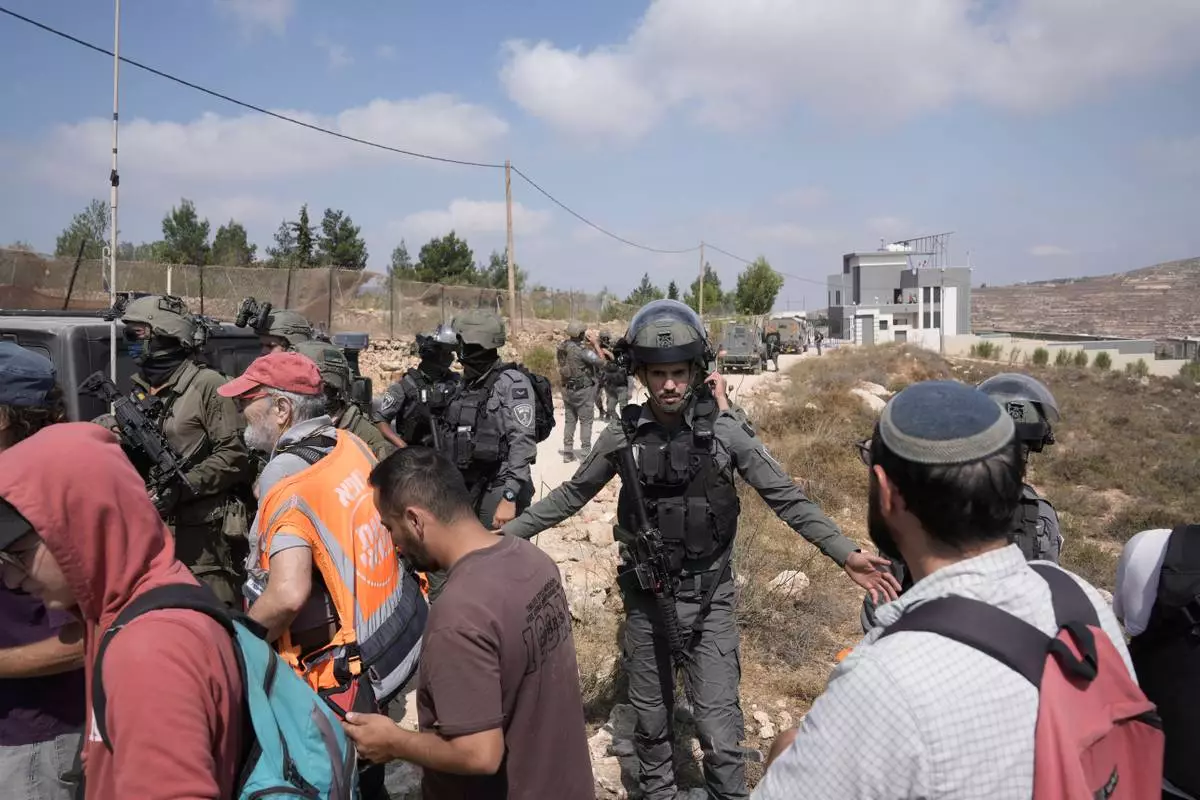
Israeli army soldiers turn back activists who marched with food and water supplies toward the houses of three Palestinian families that have been besieged by Israeli settlers for six days, in the occupied West Bank village of Qusra, south of Nablus, Friday, Aug. 14, 2026. (AP Photo/Majdi Mohammed)

Activists march with food and water supplies toward the houses of three Palestinian families that have been besieged by Israeli settlers for six days, in the occupied West Bank village of Qusra, south of Nablus, Friday, Aug. 14, 2026. (AP Photo/Majdi Mohammed)
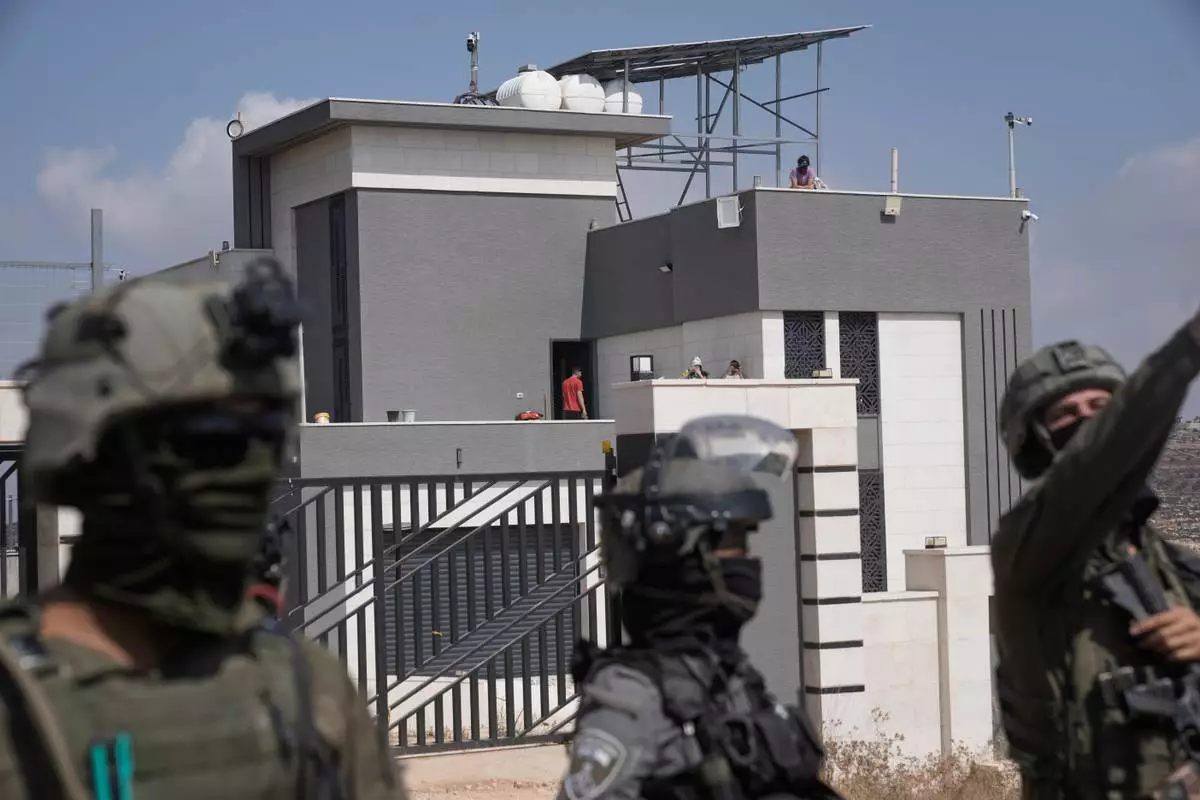
Israeli army soldiers block the road leading to the houses of three Palestinian families that have been besieged by Israeli settlers for six days, while activists march to deliver food and water supplies for the residents, in the occupied West Bank village of Qusra, south of Nablus, Friday, Aug. 14, 2026. (AP Photo/Majdi Mohammed)
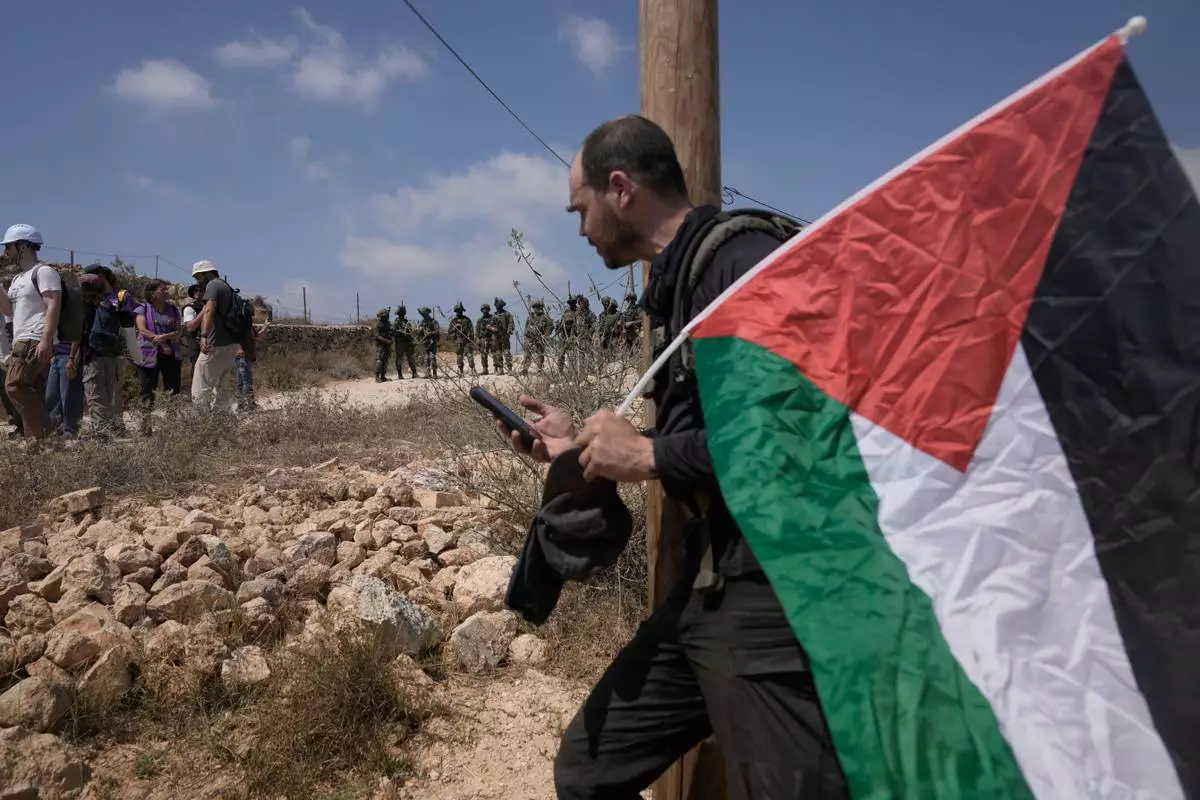
Israeli army soldiers turn back activists who marched with food and water supplies toward the houses of three Palestinian families that have been besieged by Israeli settlers for six days, in the occupied West Bank village of Qusra, south of Nablus, Friday, Aug. 14, 2026. (AP Photo/Majdi Mohammed)
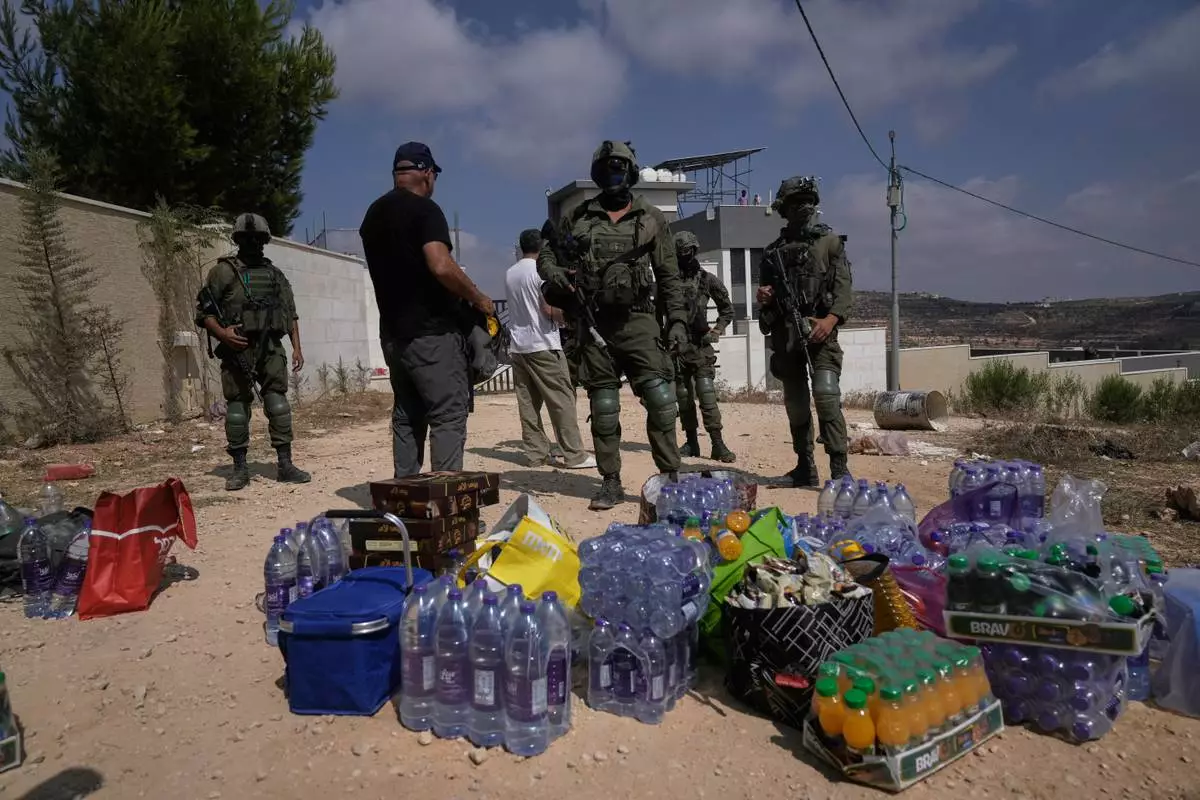
Activists accumulate food and water supplies in front of Israeli army soldiers who are blocking the road leading to the houses of three Palestinian families that have been besieged by Israeli settlers for six days, in the occupied West Bank village of Qusra, south of Nablus, Friday, Aug. 14, 2026. (AP Photo/Majdi Mohammed)