Skip to Content Facebook Feature Image

Myanmar says over 300,000 Rohingya refugees verified for repatriation as exodus enters ninth year

News

Myanmar says over 300,000 Rohingya refugees verified for repatriation as exodus enters ninth year
News

News

Myanmar says over 300,000 Rohingya refugees verified for repatriation as exodus enters ninth year

2026-08-15 13:47 Last Updated At:14:00

BANGKOK (AP) — Myanmar’s military-backed government said Saturday that more than 300,000 Rohingya refugees living in camps in Bangladesh are former residents of western Rakhine state and that it will accept their return once security conditions improve.

The Ministry of Foreign Affairs statement comes as the Rohingya refugee crisis enters its ninth year, with hundreds of thousands of refugees still living in camps in Bangladesh after fleeing Myanmar in August 2017 when the military launched a crackdown following attacks by a Rohingya insurgent group on guard posts in Rakhine.

The operation drove more than 700,000 Rohingya across the border into Bangladesh, joining hundreds of thousands of others already living there for decades in the wake of waves of previous violence perpetrated by Myanmar’s military.

The scale, organization and ferocity of the operation led to accusations of ethnic cleansing and genocide from the international community, including the U.N.

Myanmar, formerly known as Burma, does not recognize the Rohingya as one of the country’s 135 lawful ethnic minorities, instead referring to them as Bengalis to imply they are natives from Bangladesh and are illegally settled in Myanmar.

Myanmar said it had verified 426,545 of the 828,824 refugees on a list provided by Bangladesh as of the end of July, and determined that 308,797 of those verified were former residents of Rakhine.

The Ministry of Foreign Affairs said 113,507 people could not be verified and that 4,241 people were found to have been involved in what it called terrorist activities.

The statement said it will continue working with Bangladesh to receive verified former residents when the security situation in Rakhine becomes more stable.

The ministry also rejected claims that more than 1 million people were displaced from Rakhine, saying that more than 540,000 people crossed into Bangladesh after the violence in 2017 while more than 200,000 remained in northern Rakhine.

Myanmar and Bangladesh agreed to a two-year repatriation process in 2018. However, security in Myanmar worsened following an army takeover in 2021 that ousted the elected government of Aung San Suu Kyi, triggering widespread armed resistance. Plans to repatriate the refugees have not succeeded.

The renewed chaos brought about by fighting between the Rakhine-based ethnic Arakan Army group and the military over control of the region in 2023 forced more refugees to flee toward Bangladesh and elsewhere in a desperate move to save their lives. The Arakan Army controls much of Rakhine after capturing territory from the military in recent years.

In recent years, poor conditions in refugee camps, steep cuts to foreign aid and the lack of safe prospects for returning to Myanmar have led to an increasing number of Rohingya refugees attempting to make the dangerous ocean crossing to Malaysia and Indonesia on rickety boats.

Malaysian Prime Minister Anwar Ibrahim said in late July that Myanmar had agreed to take back 5,000 Rohingya refugees currently living in Malaysia as part of a repatriation program.

However, an official from Myanmar's foreign ministry, Han Win Aung, told The Associated Press at the time that the repatriation program was focused solely on verified Myanmar nationals currently held in detention centers in Malaysia and rejected reports that the government would accept Rohingya.
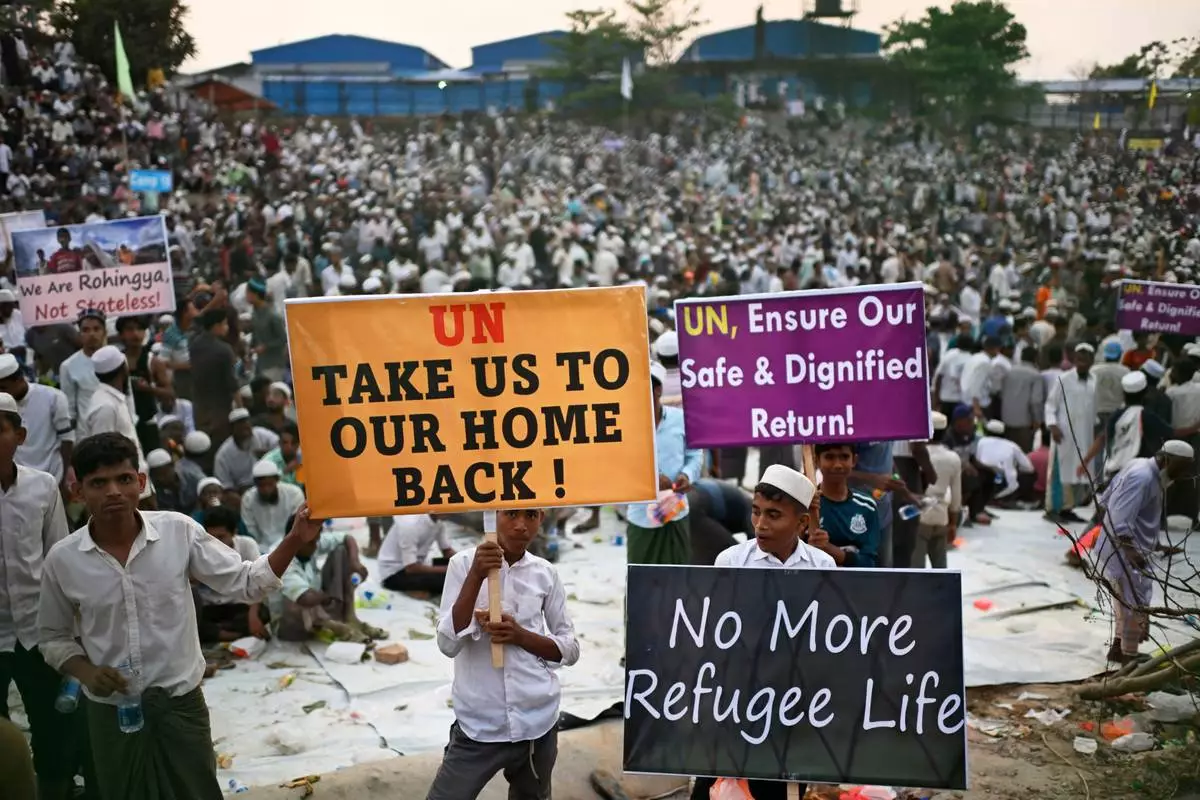
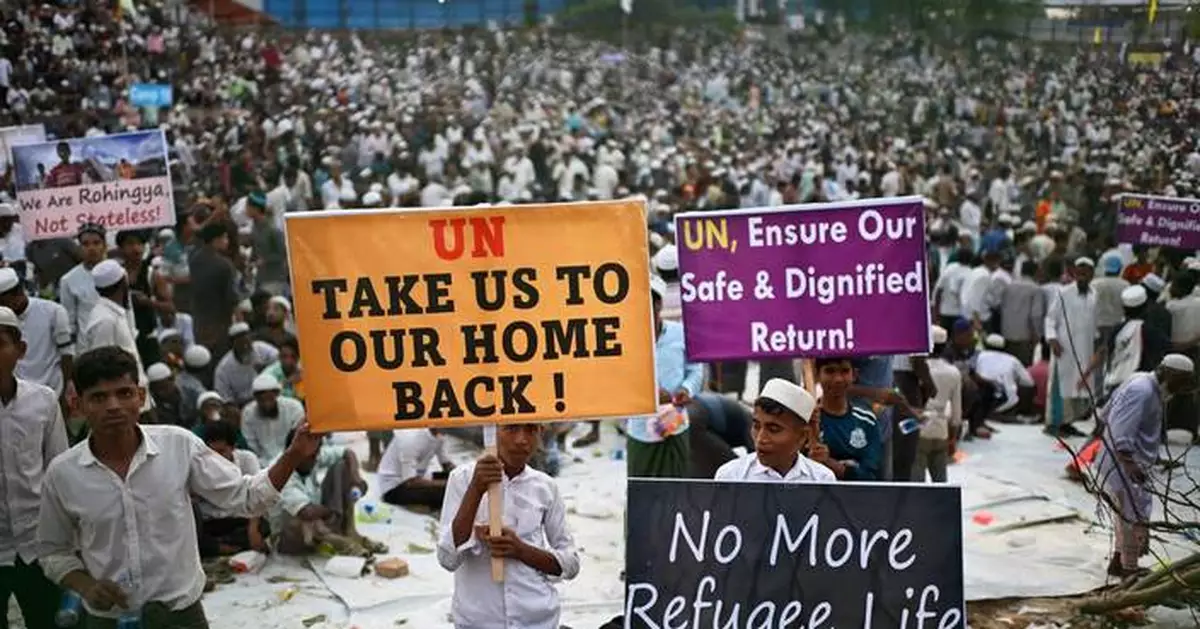
FILE- Rohingya refugee children carry banners during a visit by U.N. Secretary-General António Guterres at the Ukhiya camp in Cox's Bazar, in Bangladesh, March 14, 2025. (AP Photo/Mahmud Hossain Opu, File)
FILE- Rohingya refugee children carry banners during a visit by U.N. Secretary-General António Guterres at the Ukhiya camp in Cox's Bazar, in Bangladesh, March 14, 2025. (AP Photo/Mahmud Hossain Opu, File)

NIZI, Congo (AP) — Every day, community health worker Gédéon Banga Ngbape and his team fan out across communities in eastern Congo looking for people who may have crossed paths with the country’s fastest-growing Ebola outbreak in history.

The workers investigate dozens of alerts, search for those exposed to suspected or confirmed cases and try to get anyone showing symptoms into care before the virus spreads further.

But the surveillance system is increasingly failing to keep pace with the virus. Between 60% and 70% of new Ebola cases are being detected among people who were not already being monitored as contacts, meaning health workers may only discover infections after patients become sick and have had opportunities to expose others.

“If surveillance does not work well, the entire response suffers,” Ngbape said. “Surveillance is the engine of a response.”

The outbreak has killed over 2,200 people out of more than 4,700 cases, according to the latest government figures. This death toll has been reached almost three times faster than in the 2014-16 Ebola outbreak in West Africa — the worst in history. That outbreak claimed over 11,000 lives.

“We are chasing the virus; the virus is ahead of us,” said WHO regional director for Africa, Dr. Mohamed Yakub Janabi, this week.

U.N. humanitarian chief Tom Fletcher on Friday announced an additional $30.5 million in emergency funding to help tackle the Ebola outbreak.

In Nizi, Ngbape’s surveillance teams say they receive an average of 60 to 70 alerts a day. They move through communities to investigate suspected infections, follow people who have been in contact with suspected or confirmed cases and direct those showing possible symptoms to health facilities.

The work can stretch deep into the night.

“I leave in the morning at 8 and return around 11 p.m., sometimes midnight,” Ngbape said. “I still have to follow up and plan the next activities. I feel really tired, but what matters to me is always being of service to the community.”

He did not say how many days a week he works or how often he is able to take time off.

Community health workers who go door to door face risks of their own. Ana Ndroy Kasime, a community health worker in Nizi, said she visits homes to educate residents about Ebola and reports suspected cases to health officials. But she said workers like her lack basic protective supplies.

“When we go door to door, we don’t have protective equipment, like boots, disinfectant and other supplies, even though we are at risk,” Kasime said. “We buy disinfectant with our own money.”

The current outbreak, caused by the rare Bundibugyo Ebola virus, is unfolding in some of the most challenging conditions imaginable. There are no approved vaccines or treatments for the Bundibugyo virus, though trials are underway. Strikes by some unpaid health workers, threats by rebel groups, anger from long-traumatized communities and misinformation asserting that Ebola isn’t real have significantly hindered the response.

The gaps are especially consequential in Nizi, one of the most affected health zones in Ituri province, which accounts for about 90% of Congo’s Ebola cases and 80% of its deaths.

“We started surveillance with fewer workers,” Ngbape said. “The challenges are enormous,” he added.

On Thursday, health workers at the Nizi Treatment Center went on strike and the facility temporarily closed. Ngbape said the health workers have not been paid in over three months.

The head of Africa CDC, Jean Kaseya, on Thursday called on Congo’s government to pay the outstanding salaries, saying money was available and that paying workers was the government’s responsibility.

The government says payments are delayed because it’s verifying worker payroll lists after finding unrelated names had been added and while it shifts payments from cash to mobile money.

Kasime said community health workers like her have received their payments, but at about $50 a month, she considers the amount inadequate for the work and risks involved. She said other Ebola response workers should be paid quickly.

“They are making sacrifices and taking risks,” Kasime said. “If these workers decide to stop working, the epidemic will spread further into the population.”

Surveillance workers in Nizi often struggle to get around, making it harder to investigate alerts and follow contacts across the health zone, Ngbape said. Frequent population movements linked to mining and people fleeing armed conflict add another complication, as people can move before surveillance teams are able to follow up with them.

Poor and sometimes impassable roads can also make remote areas difficult to reach, while insecurity restricts where health workers can safely operate. It remains unclear how many communities in the province are currently inaccessible to surveillance teams.

Dozens of rebel and militia groups operate across eastern Congo. The Allied Democratic Forces, which is tied to the Islamic State group, is among those active in Ituri. The insecurity has forced some health and aid workers to leave remote Ebola hot spots for the relative safety of the provincial capital, Bunia.

Violence affecting the Ebola response has also come from residents. At least a dozen attacks on health facilities and workers were recorded as of mid-July, according to local health authorities. In one incident, residents attacked a hospital in Nyakunde and entered a nearby Ebola treatment center, forcing patients and staff to flee before operations resumed the following day.

Many residents’ anger is caused by misinformation about the virus and bans on traditional burials — when families prepare the bodies and people gather for a funeral, which can lead to further infections.

Ngbape, however, said his surveillance teams in Nizi have not been attacked.

He said cooperation has improved as residents have become more familiar with the surveillance teams and their work. Ngbape also said he does not believe people in Nizi are widely concealing suspected infections, though population movements and limited transportation can still make contacts difficult to follow.

For Ngbape, maintaining that surveillance is critical to preventing individual infections from developing into wider chains of transmission. The long hours and limited resources have left him exhausted, he said, but not ready to stop.

“I am here to save the lives of the population,” he said.

————-

Banchereau reported from Dakar, Senegal.

For more on Africa and development: https://apnews.com/hub/africa-pulse

The Associated Press receives financial support for global health and development coverage in Africa from the Gates Foundation. The AP is solely responsible for all content. Find AP’s standards for working with philanthropies, a list of supporters and funded coverage areas at AP.org.

Gédéon Banga Ngbape, right, an Ebola surveillance officer, arrives at his office in Nizi, Ituri province, eastern Congo, Friday, Aug. 14, 2026. (AP Photo/Dieudonne Dirole)

Gédéon Banga Ngbape, right, an Ebola surveillance officer, arrives at his office in Nizi, Ituri province, eastern Congo, Friday, Aug. 14, 2026. (AP Photo/Dieudonne Dirole)

Ana Ndroy Kasime, a community health worker ,second from left, meets other health workers during an Ebola contact tracing in Nizi, Ituri province, eastern Congo, Friday, Aug. 14, 2026. (AP Photo/Dieudonne Dirole)

Ana Ndroy Kasime, a community health worker ,second from left, meets other health workers during an Ebola contact tracing in Nizi, Ituri province, eastern Congo, Friday, Aug. 14, 2026. (AP Photo/Dieudonne Dirole)

Ana Ndroy Kasime, a community health worker in Nizi, speaks during an interview as she visits homes to educate residents about Ebola and reports suspected cases to health officials in Nizi, Ituri province, eastern Congo, Friday, Aug. 14, 2026. (AP Photo/Dieudonne Dirole)

Ana Ndroy Kasime, a community health worker in Nizi, speaks during an interview as she visits homes to educate residents about Ebola and reports suspected cases to health officials in Nizi, Ituri province, eastern Congo, Friday, Aug. 14, 2026. (AP Photo/Dieudonne Dirole)

Gédéon Banga Ngbape, left, an Ebola surveillance officer, does contact tracing in Nizi, Ituri province, eastern Congo, Friday, Aug. 14, 2026. (AP Photo/Dieudonne Dirole)

Gédéon Banga Ngbape, left, an Ebola surveillance officer, does contact tracing in Nizi, Ituri province, eastern Congo, Friday, Aug. 14, 2026. (AP Photo/Dieudonne Dirole)

Gédéon Banga Ngbape, left, an Ebola surveillance officer, does contact tracing in Nizi, Ituri province, eastern Congo, Friday, Aug. 14, 2026. (AP Photo/Dieudonne Dirole)

Gédéon Banga Ngbape, left, an Ebola surveillance officer, does contact tracing in Nizi, Ituri province, eastern Congo, Friday, Aug. 14, 2026. (AP Photo/Dieudonne Dirole)

Recommended Articles