ATHENS, Greece (AP) — It has welcomed marathon runners, rock stars and the first modern Olympic athletes. Now it’s time for a monumental scrub.
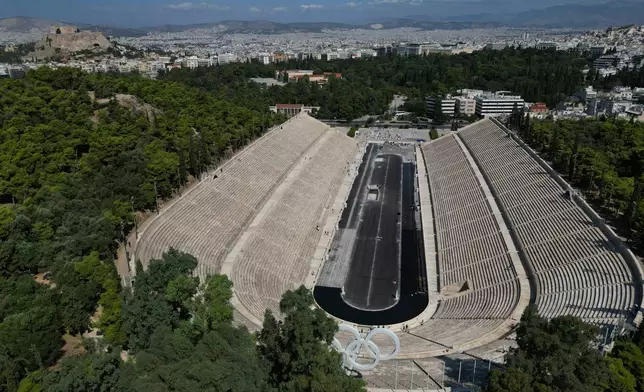
Athens’ U-shaped Panathenaic Stadium — made entirely of white marble — is getting its first systematic cleaning in more than a century.
Click to Gallery
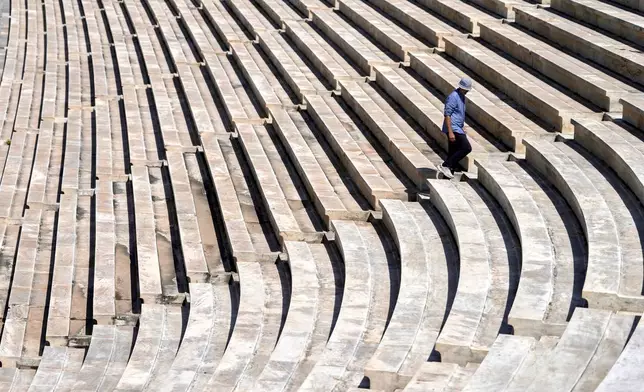
Dimitris Selimis, a senior conservator at the site, inspects the cleaned marble surfaces of the Panathenaic Stadium, also known as "Kallimarmaro," or beautiful marble, which hosted the first modern Olympic Games in 1896, during renovation work in Athens, Greece, Thursday, Aug. 13, 2026. (AP Photo/Thanassis Stavrakis)
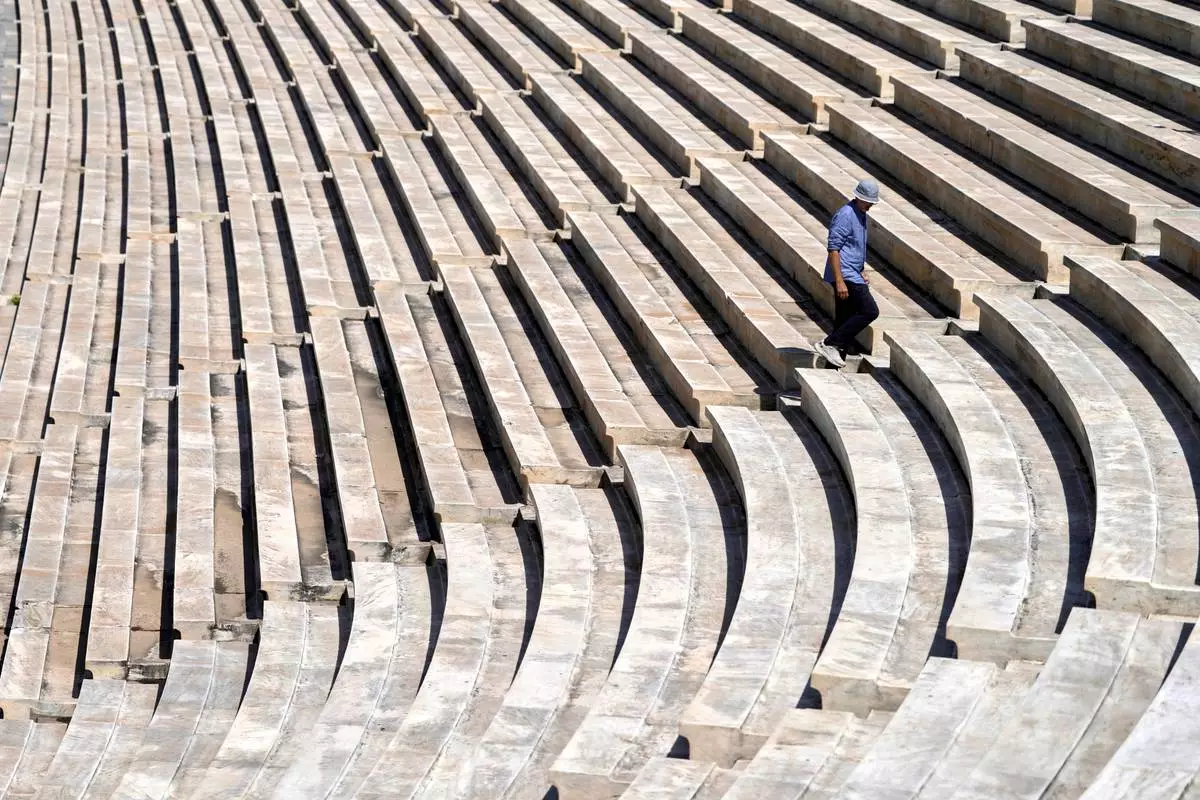
Dimitris Selimis, a senior conservator at the site, inspects the cleaned marble surfaces of the Panathenaic Stadium, also known as "Kallimarmaro," or beautiful marble, which hosted the first modern Olympic Games in 1896, during renovation work in Athens, Greece, Thursday, Aug. 13, 2026. (AP Photo/Thanassis Stavrakis)
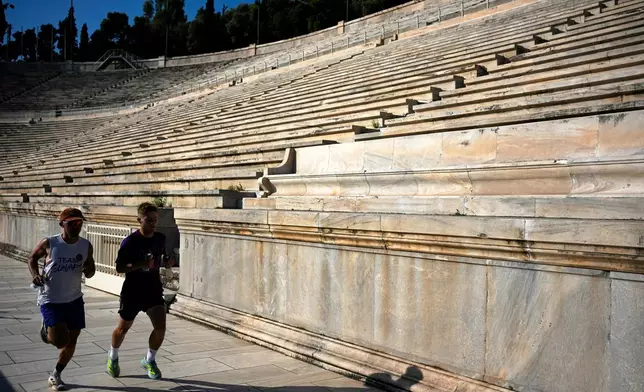
Two men run at the Panathenaic Stadium, also known as "Kallimarmaro," or beautiful marble, which hosted the first modern Olympic Games in 1896, during renovation work in Athens, Greece, Thursday, Aug. 13, 2026. (AP Photo/Thanassis Stavrakis)
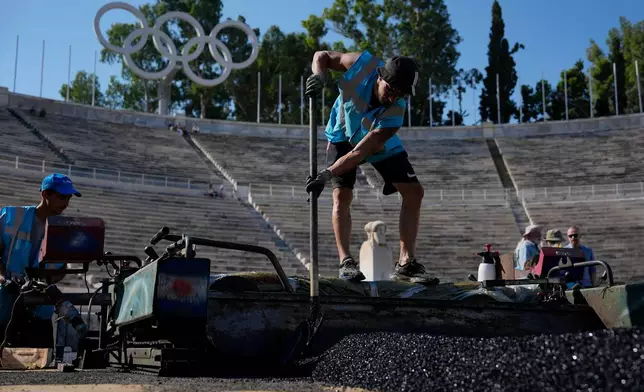
Workers lay asphalt at the Panathenaic Stadium, also known as "Kallimarmaro, or beautiful marble," which hosted the first modern Olympic Games in 1896, during renovation work in Athens, Greece, Thursday, Aug. 13, 2026. (AP Photo/Thanassis Stavrakis)
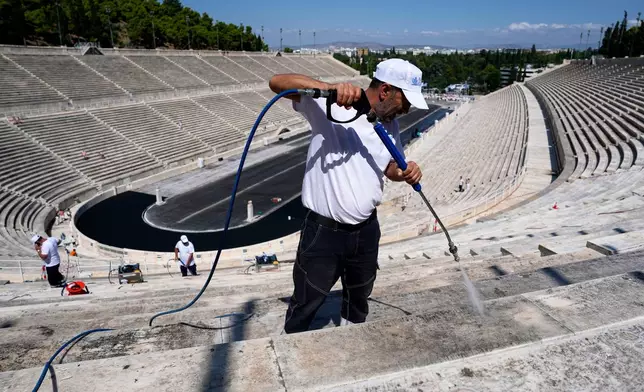
A worker cleans the marble surfaces of the Panathenaic Stadium, also known as "Kallimarmaro," or beautiful marble, which hosted the first modern Olympic Games in 1896, using a high-pressure water hose during renovation work in Athens, Greece, Thursday, Aug. 13, 2026. (AP Photo/Thanassis Stavrakis)
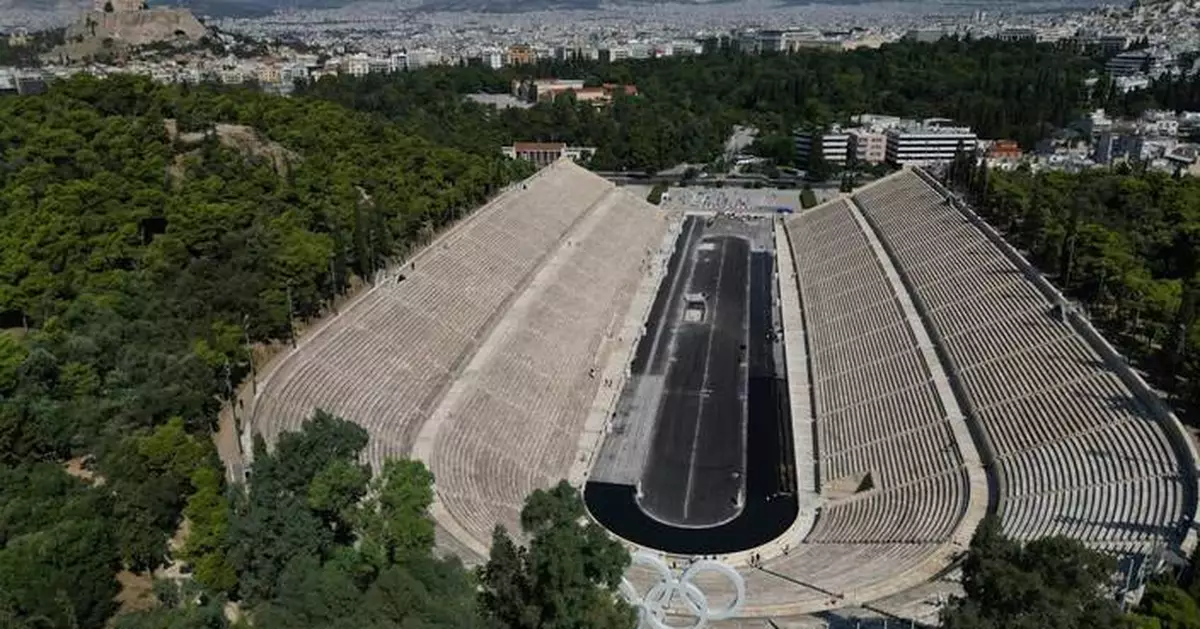
An aerial view of the Panathenaic Stadium, also known as "Kallimarmaro, or beautiful marble," which hosted the first modern Olympic Games in 1896, is seen during renovation work in Athens, Greece, Thursday, Aug. 13, 2026. (AP Photo/Thanassis Stavrakis)
Rebuilt for the first modern Olympics in 1896, the site is the ceremonial send-off point for the Olympic flame, including for Los Angeles 2028.
The stadium is made of the same glittering marble used on the Acropolis, making the cleanup job delicate.
The work is revealing a monument changed by time, weather and millions of visitors. Cleaners in white and blue overalls move across the stadium’s 47 steep tiers with thin spray lances, using clean water at carefully controlled, low pressure. Machines vacuum up the runoff as they go.
“The goal of cleaning is not to make everything white. It’s to remove the dirt and the first layers of organic material that are deposited on the surface,” said Dimitris Selemis, a senior conservator at the site.
“The idea is to clean all the material that (contains) dirt from the surface, so we have a better understanding of the monument,” he said, noting that there is more weed growth and dirt in areas that receive less direct sunlight.
Crews are also using steam to remove blotches of chewing gum, which have turned black over time. Stadium officials say chewing gum, high heels and soft-drink stains are among the main culprits that stain the marble.
Now slowly being revealed, the original gleaming look of the venue earned it the widely used Greek nickname “Kallimarmaro,” or beautiful marble.
“We call it Kallimarmaro because it is made of the finest marble, the best that was ever produced ... We are very proud of it,” Isidoros Kouvelos, president of the Hellenic Olympic Committee, told The Associated Press in an interview.
“It needed to be cleaned of everything that has accumulated over all these years," he said. "This way the Panathenaic Stadium will show all its brilliance and will once again be the foremost monument of humanity for the Olympic Movement.”
Built into a natural ravine, the stadium’s site was used for ancient Greek athletic contests and later Roman spectacles before falling into centuries of disuse.
Since its 1896 revival, it has staged fashion shows, rock concerts, boxing matches and national celebrations — as well as lavish patriotic ceremonies ordered by a military dictatorship in the 1960s.
Today, it’s a popular draw for tourists. Apart from the cleanup, the Kallimarmaro is also getting a new track, upgraded lighting and fresh support facilities. The project is privately funded by a shipping company and overseen by the Hellenic Olympic Committee with guidance from Culture Ministry experts.
The work will continue through 2026 but is currently concentrated on the stadium’s “sling,” or curved end, in time for the next torch-passing ceremony on Sept. 10.
That will be for the Dakar Youth Olympics, scheduled for Oct. 31-Nov. 13 in Senegal, which will be the first Olympic competition ever hosted in Africa.
IOC President Kirsty Coventry, a swimming gold medal winner from Zimbabwe, is due to attend the Sept. 10 ceremony, Kouvelos said.
Dimitris Selimis, a senior conservator at the site, inspects the cleaned marble surfaces of the Panathenaic Stadium, also known as "Kallimarmaro," or beautiful marble, which hosted the first modern Olympic Games in 1896, during renovation work in Athens, Greece, Thursday, Aug. 13, 2026. (AP Photo/Thanassis Stavrakis)
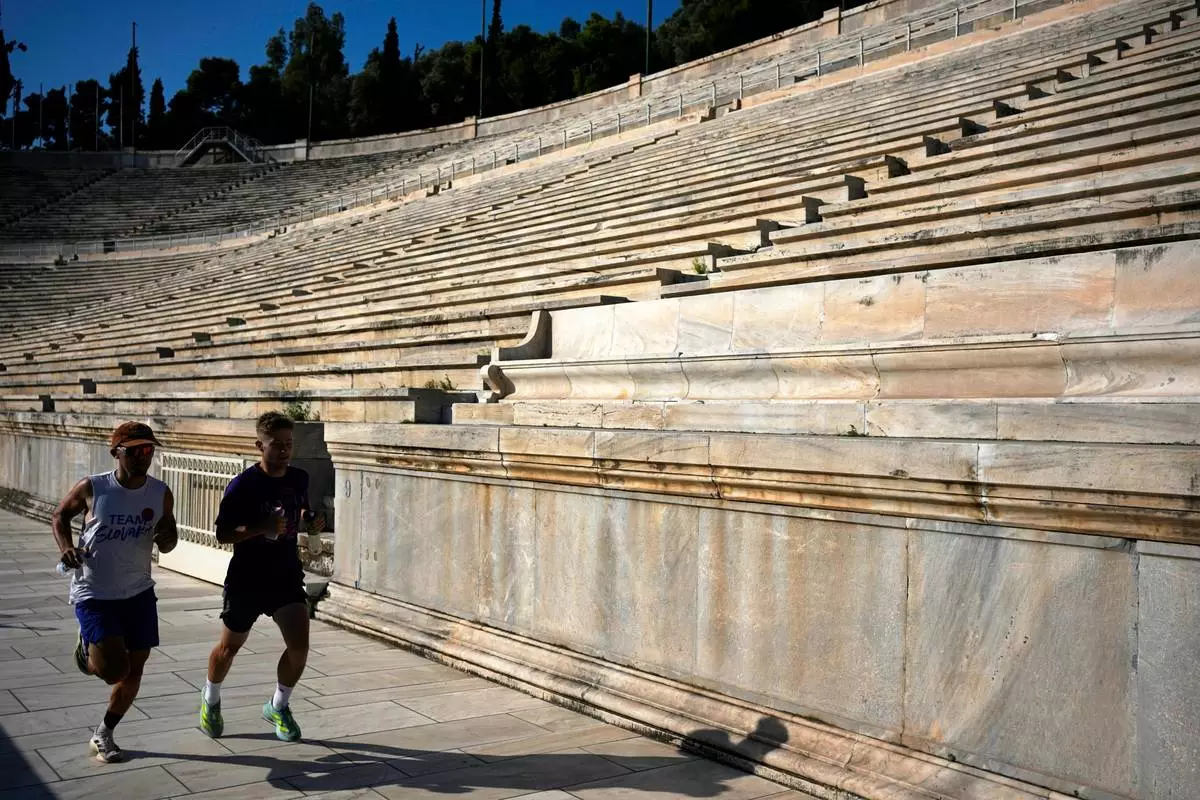
Two men run at the Panathenaic Stadium, also known as "Kallimarmaro," or beautiful marble, which hosted the first modern Olympic Games in 1896, during renovation work in Athens, Greece, Thursday, Aug. 13, 2026. (AP Photo/Thanassis Stavrakis)
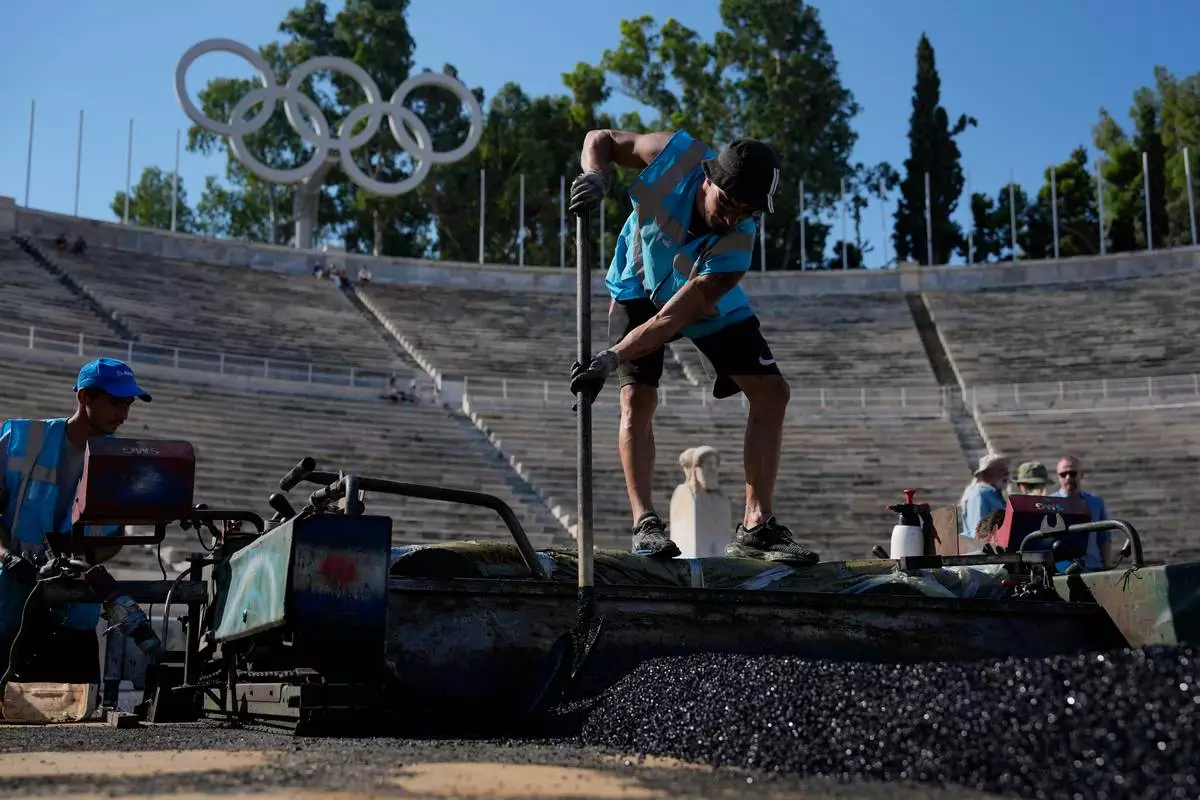
Workers lay asphalt at the Panathenaic Stadium, also known as "Kallimarmaro, or beautiful marble," which hosted the first modern Olympic Games in 1896, during renovation work in Athens, Greece, Thursday, Aug. 13, 2026. (AP Photo/Thanassis Stavrakis)
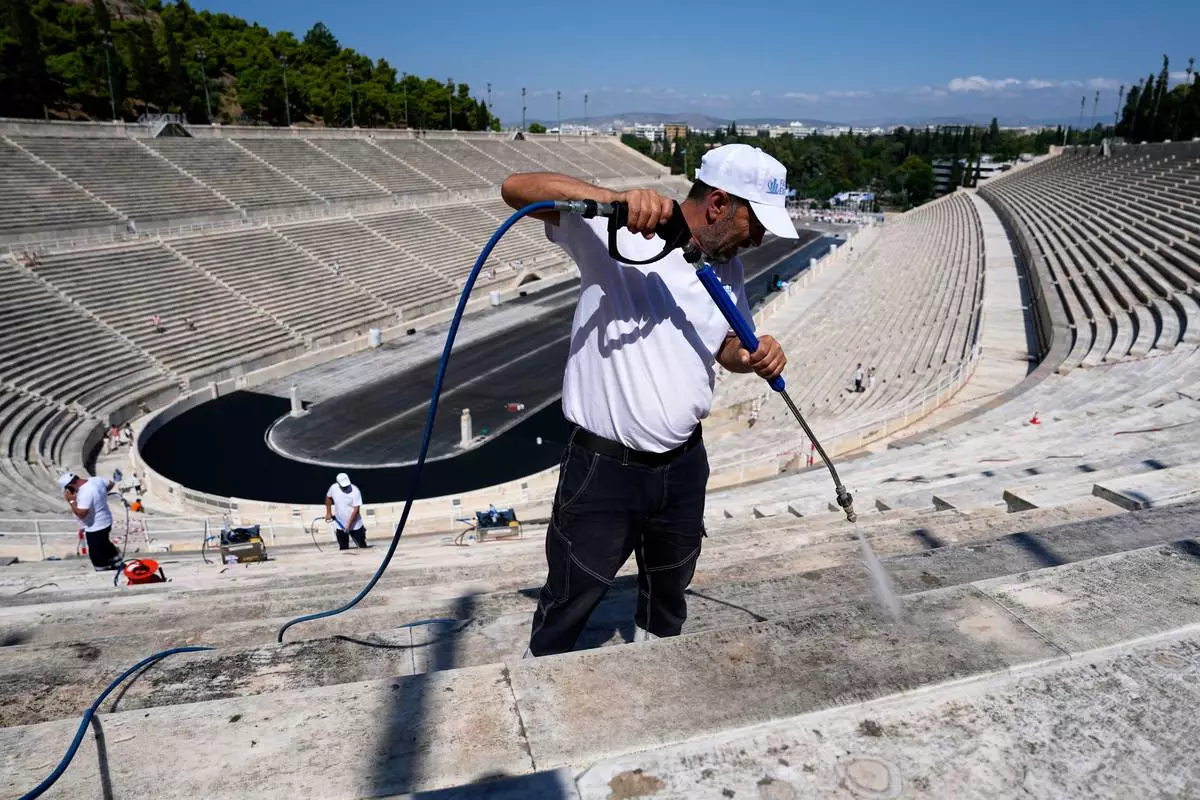
A worker cleans the marble surfaces of the Panathenaic Stadium, also known as "Kallimarmaro," or beautiful marble, which hosted the first modern Olympic Games in 1896, using a high-pressure water hose during renovation work in Athens, Greece, Thursday, Aug. 13, 2026. (AP Photo/Thanassis Stavrakis)
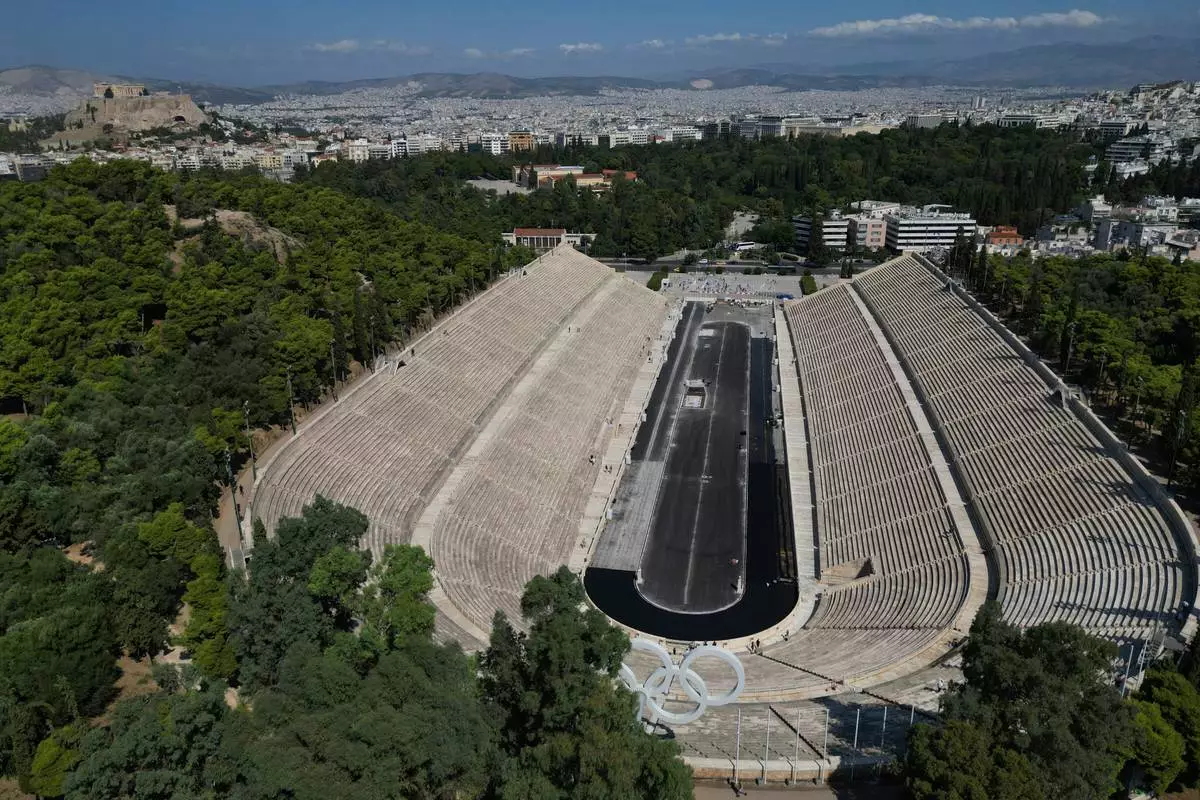
An aerial view of the Panathenaic Stadium, also known as "Kallimarmaro, or beautiful marble," which hosted the first modern Olympic Games in 1896, is seen during renovation work in Athens, Greece, Thursday, Aug. 13, 2026. (AP Photo/Thanassis Stavrakis)
CAIRO (AP) — The latest attack on the international airport in Saudi Arabia's capital of Riyadh killed 12 people and injured over 300 others, civil aviation authorities said early Sunday, with some in critical condition. A Saudi-led coalition blamed Iran-backed Houthi rebels in neighboring Yemen.
It was the deadliest attack in any Gulf Arab country since the start of the Iran war, whose fronts have expanded to include the recent surge in fighting between the Houthis and Saudi-backed Yemeni government forces.
A missile struck a King Khalid International Airport complex housing terminals 3 and 4 for domestic flights, a regional official said, speaking on condition of anonymity because they weren’t authorized to speak to the media.
The Saudi statement said the dead included four Saudi citizens as well as two Bangladeshi nationals, a Palestinian, a U.S. citizen, an Egyptian, a Jordanian, a Syrian and a Sudanese. It said the injured were being treated at several hospitals.
Footage posted on social media following the attack and analyzed by The Associated Press shows emergency vehicles outside the airport.
Saudi civil aviation authorities on Saturday said airport operations were suspended. The closure was later extended by 24 hours until 9 p.m. Sunday, according to the flight tracking platform Flightradar 24.
The attack — the latest of several in the past week on the airport — is expected to increase Saudi pressure on allies including the United States to provide military support for the kingdom, which has seemingly tried to avoid all-out war with the Houthis.
Shortly after the attack on Saturday afternoon, U.S. President Donald Trump said he was evaluating whether the U.S. should join Saudi strikes against the rebels. “We may. We’re going to look at it,” he said. “We just found out about the recent attack. So we’ll make a decision. We move very quickly.”
Trump later Saturday said he planned to speak to Crown Prince Mohammed bin Salman and said “what happened in Saudi Arabia is not acceptable.” Asked if the U.S. might get involved, Trump responded, “We’ll find out.”
U.S. Secretary of State Marco Rubio acknowledged in a social media post that an American citizen had been killed in the attack, which he condemned.
“These reprehensible attacks demonstrate a blatant disregard for innocent civilian life. They must stop now,” he said.
The Saudi-led coalition fighting the Houthis blamed them for the attack, calling it a “fully-fledged war crime” and vowing a firm response. The airport has no military facilities.
There was no immediate statement from the rebels, who earlier Saturday accused Saudi Arabia of striking Sanaa International Airport in the Houthi-held Yemeni capital.
The Houthis claimed attacks earlier in the week on King Khalid International Airport that killed three Saudis, including a pilot. The surge in attacks, including against other Saudi airports, military facilities and oil infrastructure, has come in the week since a Saudi-led coalition launched a major military offensive against the Houthis.
The airport had a heavy police presence on Saturday, with all entrances blocked, and lights around the complex were dimmed. Flights diverted elsewhere, Flightradar24 said. Countries including the United States, Britain, Germany, Australia and Canada warned citizens to avoid the airport.
Also Saturday, U.S. Central Command said a fighter jet struck and disabled a commercial cargo vessel with a precision munition in the Gulf of Oman, part of U.S. efforts to maintain a naval blockade of Iranian ports. The Panama-flagged M/V Ocean Molica had departed an Iranian port and did not heed repeated warnings. The ship’s crew was unharmed, CENTCOM said.
The attacks on Saudi Arabia, the world's top oil exporter, have rattled markets and the region. And yet the Saudi energy ministry hours after the latest one was still promoting a major international energy conference set to begin in Riyadh on Sunday.
Until recently, the Houthis had been largely on the sidelines of the Iran war. Now the rebels are a way for Tehran to apply pressure on a key U.S. ally.
The Saudis and the Houthis began fighting in 2015 when the kingdom entered Yemen’s civil war on behalf of the internationally recognized government. Relative calm after a 2022 ceasefire ended in July when the Houthis resumed attacks, saying the Saudis fired on the Sanaa airport as a plane from Iran was trying to land. That revived anger over the Saudi-led blockade that has largely isolated Houthi-run areas.
Now fighting has escalated, with the Saudi-led coalition providing air support for Yemeni government forces attempting to reverse recent Houthi gains along the Red Sea. Those gains gave the rebels better surveillance of shipping on a corridor that is a crucial alternative to the Strait of Hormuz, where Iran has been attacking ships.
While the Houthis have said they are only targeting Saudi shipping as part of a blockade in retaliation for the one imposed on them, concerns about wider attacks persist. The Houthis previously attacked dozens of ships after the war in Gaza began, calling it solidarity with Palestinians. A U.S. bombing campaign sharply limited that.
Saudi Arabia is running low on missile interceptors and has asked France, Britain, Pakistan and Egypt to deploy air defense support to the region, regional officials told the AP last month, with one noting that the U.S. has seen its own stock dwindle during the war with Iran.
Officials have said U.S. assistance has included intelligence sharing, target identification and planning for the latest offensive against the Houthis.
On Saturday, Saudi Arabia said its foreign minister and Omani counterpart spoke by phone about the importance of “supporting diplomatic solutions to de-escalate tensions” in the region. Oman, which lies across the Strait of Hormuz from Iran, has played a mediator role at times in the region.
The Houthis this week warned global airlines “for the last time” about the potential consequences of operating in Saudi airspace, which they described as a theater for their military operations.
Before the latest attack, Air India, FlyDubai, Lufthansa Group and Pakistan International Airlines were among airlines suspending flights to and from Riyadh and other Saudi airports for varying periods.
The European Union Aviation Safety Agency had expanded its guidance on Saudi airspace, noting the Houthis’ ability to strike targets deeper inside the kingdom, including Riyadh, and a “greater focus on aviation infrastructure.”
The missile and drone attacks and interception efforts “create an increased risk of misidentification of civil aircraft,” it said.
Two regional officials said Houthi attacks on the Riyadh airport on Thursday damaged three planes. The officials spoke on condition of anonymity because they weren’t authorized to brief the media. The Saudi national carrier said one of its aircraft was damaged while it was on the ground, with no passengers on board.
Meanwhile, Saudi authorities warned the public this week that “filming, publishing or sharing information related to countering missiles and drones and their impact sites exposes you to legal liability.”
Anna reported from Jerusalem. Associated Press writers Victoria Eastwood in Cairo, Collin Binkley in Washington and Sally Abou AlJoud in Beirut contributed to this report.
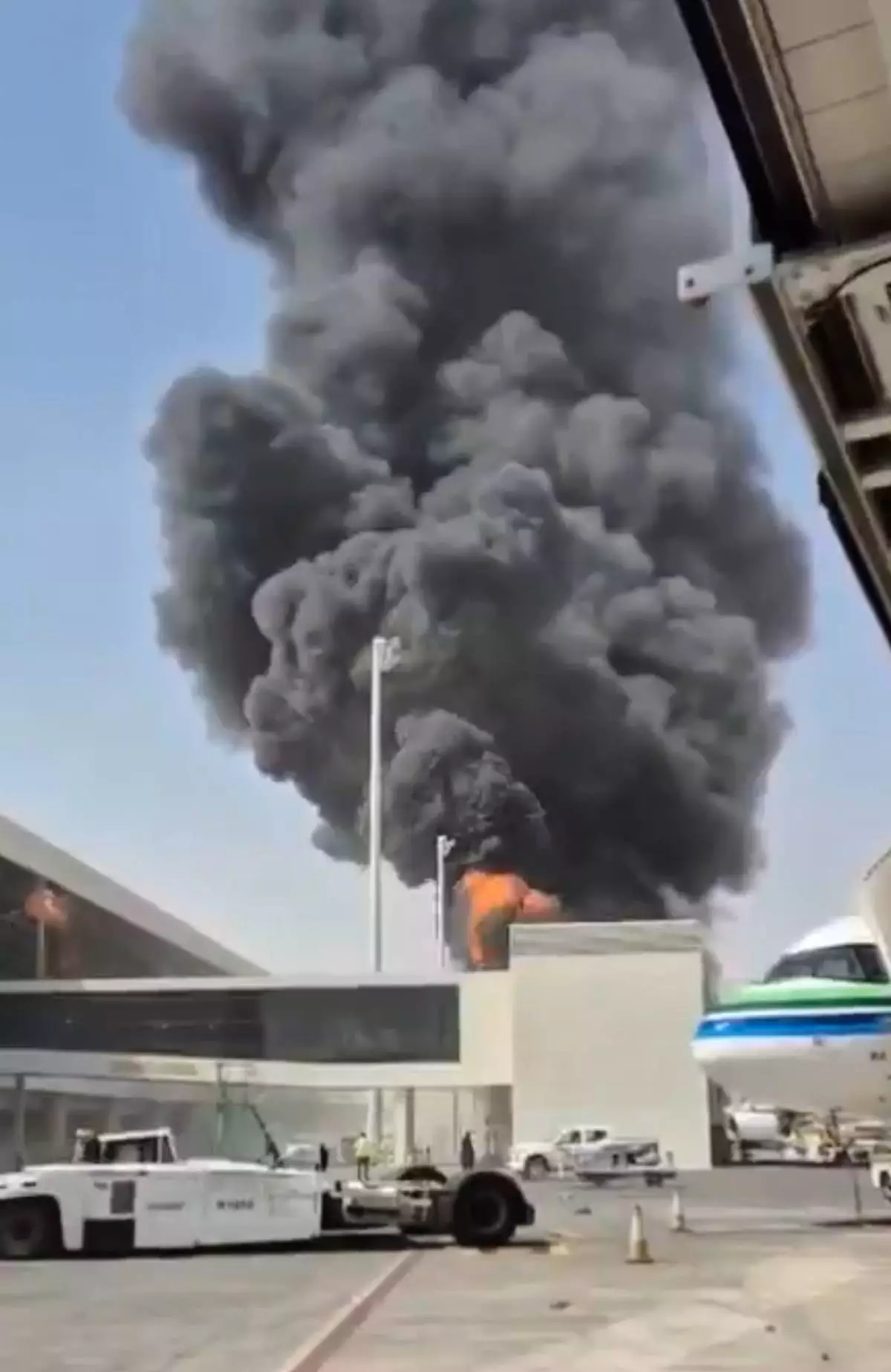
This image from video obtained and verified by AP shows thick black smoke and flames rising from a fire at King Khalid International Airport in Riyadh, Saudi Arabia, Friday, Oct. 9, 2026. (UGC via AP)