Skip to Content Facebook Feature Image

US and Canada hold last-minute talks to stop Trump’s 50% tariffs

News

US and Canada hold last-minute talks to stop Trump’s 50% tariffs
News

News

US and Canada hold last-minute talks to stop Trump’s 50% tariffs

2026-08-18 22:28 Last Updated At:22:30

WASHINGTON (AP) — The U.S. and Canada are negotiating in an effort to reach a truce on tariffs before a 12:01 a.m. Wednesday deadline set by U.S. President Donald Trump.

If no deal is reached, Trump has threatened to impose 50% tariffs on $20 billion worth of Canadian products, ranging from hockey sticks to tongue depressors.

″We are negotiating,” Canadian Prime Minister Mark Carney told reporters Monday, speaking in French. “The negotiations are very intense and delicate. This is not the time to talk about negotiations in public.”

Carney and Trump spoke by phone Monday afternoon about the ongoing trade negotiations, Carney's office said, underscoring the last-minute push to reach a deal before Wednesday’s deadline.

The two countries have wrangled for decades over trade, poking each other over sore spots like Canadian softwood lumber imports and U.S. access to Canada’s protected dairy market.

Somehow they still managed to remain friends, allies and trading partners. Canadian soldiers fought alongside Americans in Afghanistan after 9/11. The 5,525-mile U.S.-Canada border is undefended, and nearly 330,000 people and $2 billion worth of goods cross it every day; 800,000 Canadians live in the United States.

Trump’s approach to dealing with Canada marks an extraordinary departure from the traditionally cooperative relationship between the two countries. Trump has hit Canadian goods with tariffs — in a push to bring manufacturing back to the United States — and has repeatedly made inflammatory comments about turning Canada into America’s 51st state.

The Canadian public is fed up. A petition to expel the U.S. ambassador, a Trump ally, has collected nearly 218,000 signatures since July 21. It accuses Ambassador Pete Hoekstra of having “normalized’’ Trump’s talk of annexing Canada, among other things.

Nearly 72% of Canada's goods exports last year went to the United States. And the Trump administration might be wary of imposing a hefty new tariff — paid by U.S. importers who try to pass along the cost to consumers via higher prices — ahead of November’s midterm elections. American voters are already frustrated with the high cost of living.

“I don’t think either side really wants these tariffs to come into effect,’’ said Ryan Majerus, a partner at King & Spalding and a former U.S. trade official. “There’s a pretty strong push on both sides to find an off ramp here.’’

Majerus said the United States is aiming to get Canada to buy more U.S. military equipment, including F-35 fighters; to take part in Trump’s “Golden Dome’’ missile defense; and to give the United States more access to critical minerals, thereby reducing America’s reliance on tenuous supplies from its geopolitical rival, China.

The Canadians would like relief from U.S. tariffs on steel and aluminum as well as softwood lumber, which America says receives unfair government subsidies.

Trump has made tariffs the centerpiece of his second-term economic agenda. Last year, he imposed double-digit import taxes on almost every country on earth, justifying them by declaring the longstanding U.S. trade deficit a national emergency. The Supreme Court in February ruled that he’d overstepped his authority, striking down those tariffs and setting the stage for the federal government to pay refunds to importers.

Trump immediately looked for other ways to rebuild his tariff wall. Last month, he imposed import taxes of 10% to 12.5% on 59 countries and the European Union — which together account for 99% of U.S. imports — for allegedly failing to have or to enforce restrictions on imports made from forced labor.

Then he reached back to the Great Depression to find a cudgel with which to whack Canada, one of his favorite targets.

Trump invoked Section 338 of the Tariff Act of 1930 to impose 50% tariffs on products that account for about 5% of Canadian exports to the United States.

Nearly a century ago, with the U.S. and world economies in collapse, Congress passed the 1930 tariff law, imposing hefty taxes on imports from around the world. Known as the Smoot-Hawley tariffs, named for their congressional sponsors, they are notorious among economists and historians for limiting world commerce and making the Great Depression worse.

Section 338 tariffs have never been used before. U.S. trade negotiators traditionally have favored another tool, Section 301 of the Trade Act of 1974 — the provision Trump invoked to impose last month’s forced-labor tariffs.

Section 338 authorizes the president to impose tariffs of up to 50% on imports from countries that have discriminated against U.S. businesses. Unlike Section 301 sanctions, no investigation is required. Nor is there any limit on how long the tariffs can stay in place.

In announcing the Section 338 tariffs, Trump claimed that Canada discriminates against American exports of autos, alcohol and cheese. Trump is angry because Canada and China were the only countries that punched back with retaliatory tariffs of their own when he slapped levies on their products last year.

“If a country retaliates against us, we’re obviously not going to tolerate that,” U.S. Trade Representative Jamieson Greer told reporters Friday at the Iowa State Fair. “We’ll take action. My sense is the Canadians, they want to have a more conciliatory approach, but we’ll see.”

The U.S. is renegotiating a North American trade pact — the US-Mexico-Canada Agreement — that Trump strong-armed America’s neighbors into accepting in his first term. The threat of Section 338 tariffs gives the United States leverage to seek fresh concessions from Ottawa.

“From Carney's perspective, you need (USMCA) to be renegotiated," said Christopher Gundermann, a fellow in the economics program at the Center for Strategic and International Studies. "You can't renegotiate it with a massive trade war going on.''

But the Canadian public’s furor over Trump’s policies may limit Carney’s ability to cut a deal. Canada could retaliate again if the new 50% tariffs take effect, potentially aggravating a trade fight.

Canada’s government “cannot look like it is simply caving to the Trump administration’s demands,’’ said Daniel Béland, a political science professor at McGill University in Montreal. “Making further concessions without getting something meaningful in exchange would probably lead to a strong backlash ... The risk is for the Carney government to make Canada look weak and, therefore, even more vulnerable to future trade and geopolitical bullying on the part of the Trump administration.”

Dominic LeBlanc, Canada’s minister for U.S. trade, met with Greer on Monday. He was tight-lipped afterward.

“The work is continuing,’’ he said. “We continue to do our job.’’

Gillies reported from Toronto.

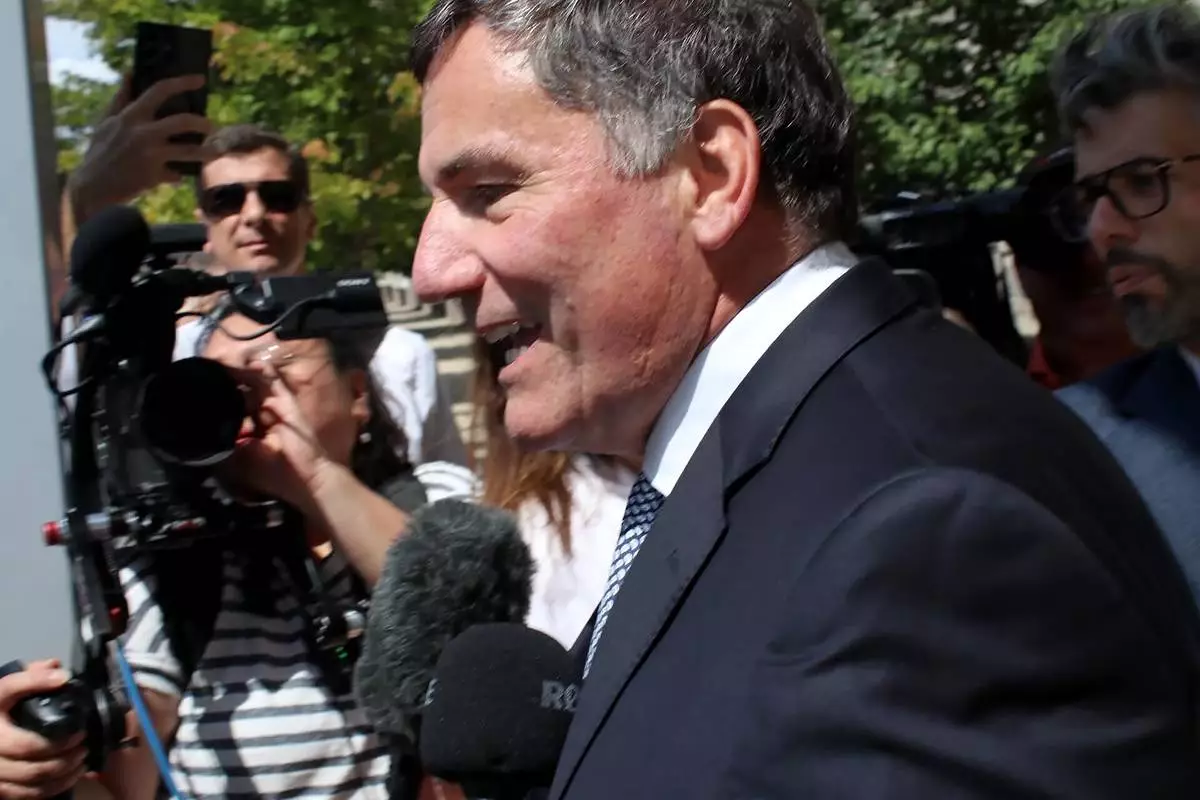
Canada-U.S. Trade Minister Dominic LeBlanc makes brief comments to reporters outside the U.S. Department of Commerce following a meeting with U.S. Trade Representative Jamieson Greer and Commerce Secretary Howard Lutnick, in Washington, Monday, Aug. 17, 2026. (Kelly Geraldine Malone/The Canadian Press via AP)
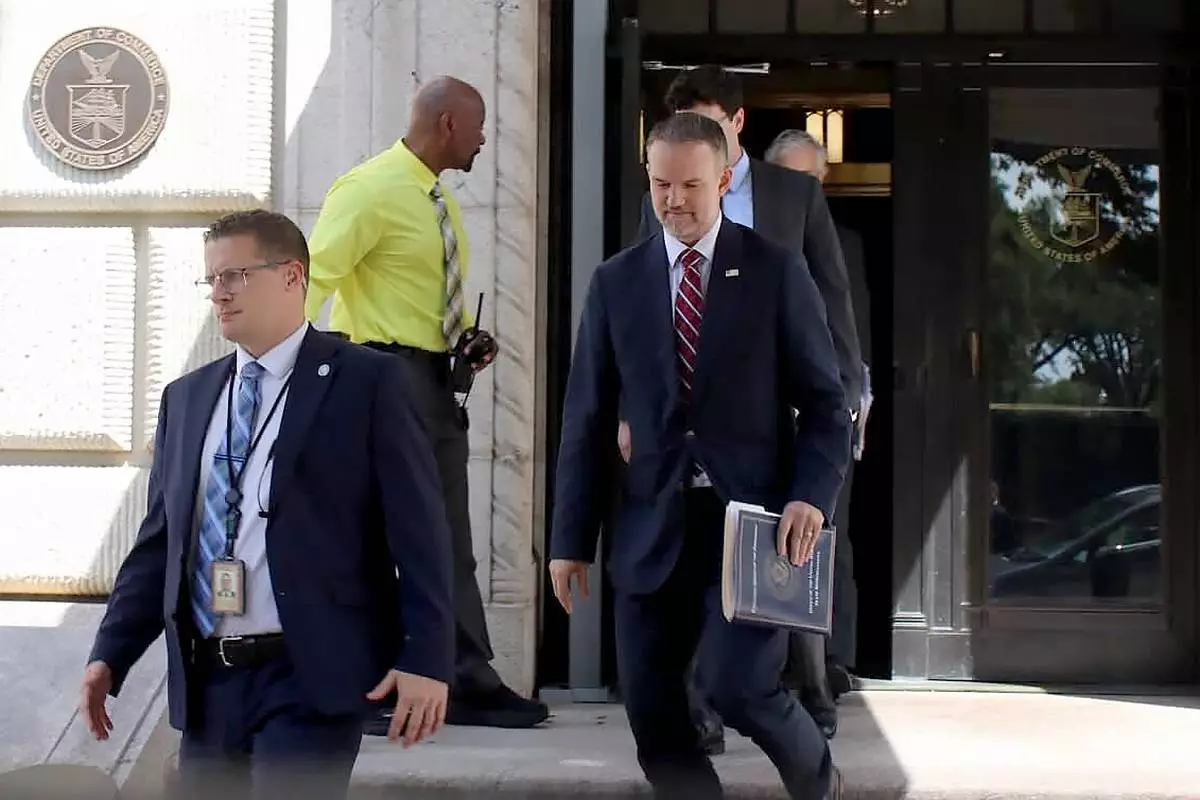
Canada-U.S. Trade Minister Dominic LeBlanc makes brief comments to reporters outside the U.S. Department of Commerce following a meeting with U.S. Trade Representative Jamieson Greer and Commerce Secretary Howard Lutnick, in Washington, Monday, Aug. 17, 2026. (Kelly Geraldine Malone/The Canadian Press via AP)

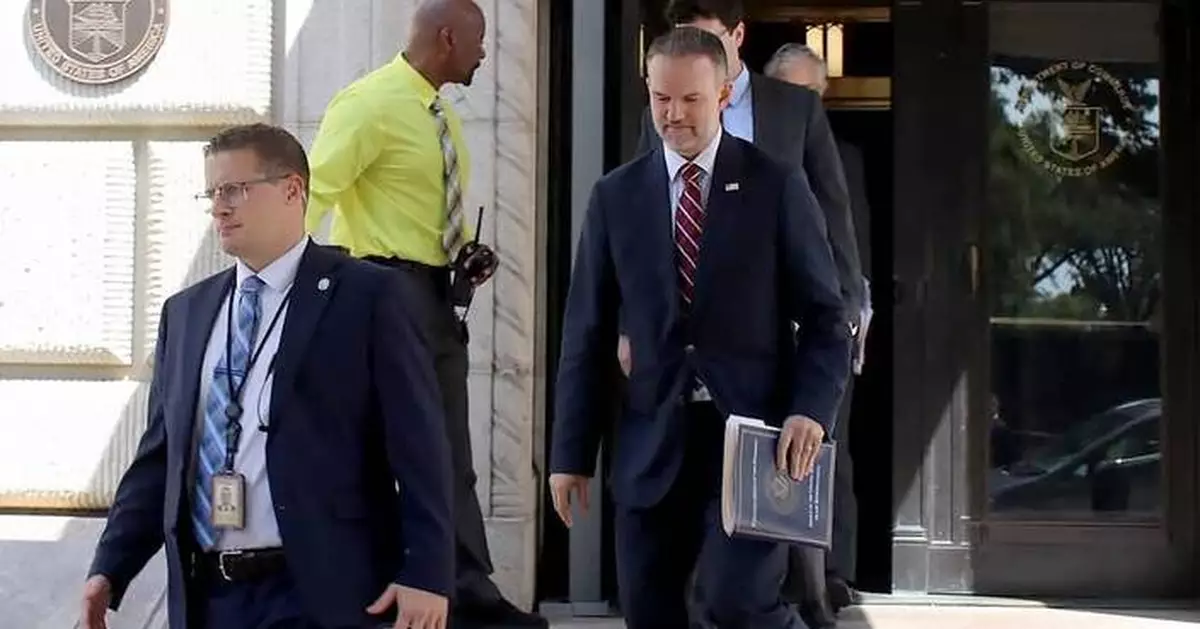
United States Trade Representative Jamieson Greer, center, leaves the U.S. Department of Commerce following a meeting with Canadian officials, in Washington, Monday, Aug. 17, 2026. (Kelly Geraldine Malone/The Canadian Press via AP)


United States Trade Representative Jamieson Greer, center, leaves the U.S. Department of Commerce following a meeting with Canadian officials, in Washington, Monday, Aug. 17, 2026. (Kelly Geraldine Malone/The Canadian Press via AP)
JUNEAU, Alaska (AP) — Alaska voters are choosing candidates for November's general election in a series of primary contests Tuesday, including a U.S. Senate race that will be among the most closely watched in the nation this fall.

The campaign featured over a dozen contenders in each of the top races — for Senate, U.S. House and governor. Under Alaska’s open primary system, all candidates appear on the same ballot, and the four who receive the most votes qualify for the ranked vote general election.

Tuesday's ballot also included candidates running for the Legislature and a statewide initiative that would reimpose campaign contribution limits in state and local elections.

The highest-profile candidates in a field of 16 were two-term Republican Sen. Dan Sullivan and Democratic former U.S. Rep. Mary Peltola.

The race, which could help determine control of the Senate, has drawn significant attention from outside groups, with Republican and Democratic campaign organizations identifying it as a top target. Peltola shook up her campaign leadership days before the primary.

During the campaign, Sullivan, a veteran and ally of President Donald Trump, emphasized his support for the military, efforts to open more land for oil development and Trump's signature tax and spending bill passed last year. He accused Peltola of being aligned with Lower 48 “liberals.”

Peltola leaned into the “fish, family, freedom” slogan that first got her elected in 2022. She has criticized a political system that she said is rigged by special interests and allows politicians to enrich themselves.

But it was a third candidate, a Republican also named Dan Sullivan, who garnered much of the attention.

Dan J. Sullivan won a legal fight to appear on the ballot following claims by the senator and GOP allies that he was a sham candidate running at the behest of Democrats with the intent of causing confusion. Dan J. Sullivan, a retired teacher from the island community of Petersburg, denied that and said his run was spurred by frustration with the incumbent.

He appeared on the ballot as Daniel J. Sullivan Jr., with no party affiliation — a decision that a state elections official said was intended to minimize possible confusion. Meanwhile, the senator was listed as Dan S. Sullivan, Republican and incumbent. The “incumbent” label does not accompany the names of any other candidates seeking reelection.

The drama involving the dueling Dan Sullivans caught the attention of Trump. In a social media post endorsing the senator days before the primary, he called the other's candidacy an attempt to trick voters and urged his followers to vote for “SULLIVAN, DAN S.”

In the race for Alaska's only House seat, the most prominent candidates were Republican Rep. Nick Begich, seeking a second term, and independent Bill Hill, a fisherman and former educator from a small southwestern village.

Progressive Democrat Matt Schultz suspended his campaign last month but remained on the ballot. His campaign said Schultz would withdraw as a general election candidate if he makes the primary's top four.

Schultz urged support for Hill, who leaned into concerns about affordability. Begich, who was endorsed by Trump, cast himself as hardworking and effective in his role. House Speaker Mike Johnson appeared at a rally for Begich in a conservative part of the state this month, though the event was closed to news media.

The campaign for the state’s top executive office was an open race this year because Republican Gov. Mike Dunleavy was barred by term limits from seeking a third consecutive stint.

Two Democrats hope to emerge from a crowded, largely Republican field: former state lawmakers Jonathan Kreiss-Tomkins and Tom Begich, who is Nick Begich's uncle. If one of them wins in November, he would become Alaska's first Democratic governor since Tony Knowles left office in 2002.

Republicans in the race included Bernadette Wilson, a businessperson and conservative activist; Click Bishop, a former state labor commissioner and lawmaker; Dave Bronson, former mayor of Anchorage; and Adam Crum and Treg Taylor, two former members of Dunleavy's Cabinet.

Former Gov. Bill Walker, an independent, was also on the ballot.

The lone measure before voters on the primary ballot asked them to reimpose campaign contribution limits five years after a divided federal appeals court struck down a number of caps.

The measure proposes a $2,000 limit on how much individuals can give to candidates in state and local elections and a $5,000 cap on what they can give to political parties. It would also limit spending by groups other than political parties and how much individuals and groups can give to joint campaigns for governor and lieutenant governor.

Supporters say such limits are needed to prevent special interests and wealthy donors from having outsize influence on a campaign or race. Opponents say the measure would favor candidates with name recognition and argue that restricting what someone can contribute limits their voice.

Political spending by wealthy people has become a flashpoint in races in Alaska and elsewhere. In 2025 in Wisconsin, billionaires Elon Musk and George Soros helped push spending in a state Supreme Court campaign past $100 million, the most ever for a court race in the U.S.

FILE - Alaska Republican U.S. Rep. Nick Begich walks down a corridor in the state Capitol before giving a speech to Alaska lawmakers, March 10, 2026, in Juneau, Alaska. (AP Photo/Becky Bohrer, File)

FILE - Alaska Republican U.S. Rep. Nick Begich walks down a corridor in the state Capitol before giving a speech to Alaska lawmakers, March 10, 2026, in Juneau, Alaska. (AP Photo/Becky Bohrer, File)

FILE - Alaska U.S. House candidate Bill Hill, an independent, speaks with people at a campaign fundraising event in Juneau, Alaska, June 4, 2026. (AP Photo/Becky Bohrer, File)

FILE - Alaska U.S. House candidate Bill Hill, an independent, speaks with people at a campaign fundraising event in Juneau, Alaska, June 4, 2026. (AP Photo/Becky Bohrer, File)

FILE - Dan Sullivan, a candidate in Alaska's U.S. Senate race who shares his name with the incumbent seeking reelection, talks with a reporter, July 3, 2026, in Petersburg, Alaska. (AP Photo/Becky Bohrer, File)

FILE - Dan Sullivan, a candidate in Alaska's U.S. Senate race who shares his name with the incumbent seeking reelection, talks with a reporter, July 3, 2026, in Petersburg, Alaska. (AP Photo/Becky Bohrer, File)

FILE - Sen. Dan Sullivan, R-Alaska, speaks to reporters at the Capitol in Washington, June 30, 2025. (AP Photo/Mark Schiefelbein)

FILE - Sen. Dan Sullivan, R-Alaska, speaks to reporters at the Capitol in Washington, June 30, 2025. (AP Photo/Mark Schiefelbein)

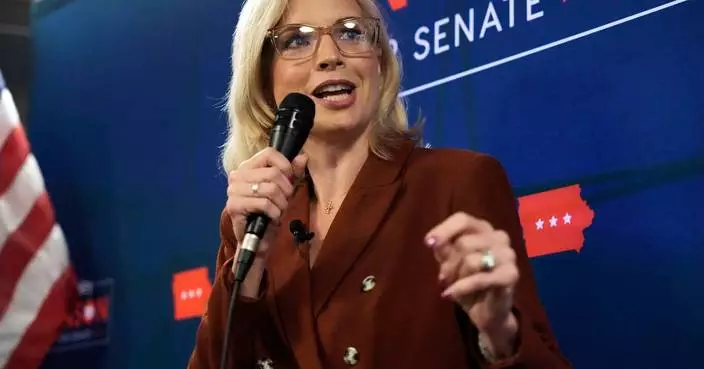
FILE - Alaska U.S. Senate candidate Mary Peltola, a Democrat, speaks during a campaign rally on May 14, 2026, in Juneau, Alaska. (AP Photo/Becky Bohrer, file)

FILE - Alaska U.S. Senate candidate Mary Peltola, a Democrat, speaks during a campaign rally on May 14, 2026, in Juneau, Alaska. (AP Photo/Becky Bohrer, file)

Recommended Articles