DUBAI, United Arab Emirates (AP) — The United Arab Emirates suspended all trade with Iran on Wednesday after it said it had come under renewed fire from the country — a move that will further isolate the Islamic Republic, which is suffering under American sanctions and a blockade.
Incoming ballistic missile fire triggered nationwide warnings Tuesday night for UAE residents to seek shelter, the first time in weeks such an alarm had sounded.
Early in the conflict, the UAE regularly came under intense fire from Iran, and most trade between the countries, which had once been important trading partners, ground to a halt. In late June, as hostilities eased, at least some maritime trade resumed, Iran’s state-run IRNA news agency reported. But it was not clear how much trade there was more recently.
Following the news that two ballistic missiles had been fired toward the UAE, both of which splashed down in the Persian Gulf late Tuesday, the Foreign Ministry said that while it remained committed to “dialogue, cooperation and regional integration,” it had decided to impose the punitive measures.
“In light of regional escalations that undermine regional and international peace and security, all trade, commercial exchanges and financial transactions with Iran have been halted until further notice,” the ministry said in a statement.
The UAE’s Defense Ministry said assessments showed that the missiles targeted maritime traffic. It was not clear whether they directly targeted Emirati ships or the country’s territorial waters.
Iranian Foreign Ministry spokesperson Esmail Baghaei denied that Iran had launched any missiles toward the UAE.
As part of Iran's efforts to maintain a stranglehold over the Strait of Hormuz, it has regularly attacked ships attempting to use the waterway, including four tankers owned by Abu Dhabi’s state-owned ADNOC oil and gas company over the past two weeks. None of the attacks caused any injuries, but they brought harsh condemnation from the UAE and others in the region, including Kuwait and Bahrain.
Since the beginning of the conflict nearly 20 ADNOC vessels have been attacked by missiles and drones in the Strait of Hormuz, killing one person and wounding another 20.
Iran's ability to control traffic through the Strait of Hormuz, through which a fifth of traded oil and natural gas passed during peacetime, has proved its biggest strategic advantage in the war. While the U.S. and Israel — which launched the war on Feb. 28 — have given various aims, including toppling Tehran's government and ending its nuclear program, the conflict has devolved into a fight over the strait.
During the war, Iran has launched hundreds of ballistic missiles and thousands of drones in strikes that Tehran said were targeting American assets but hit buildings in Dubai and Abu Dhabi, Dubai’s commercial airport, ports and energy infrastructure.
Iran has accused the UAE and other U.S. allies in the Gulf of facilitating American military attacks on Iran, and Iran's Chief of Staff Gen. Ali Abdollahi on Wednesday issued a new warning to “countries on the southern shores of the Persian Gulf.”
“Any assistance or facilitation provided to the aggressor U.S. military amounts to participation alongside U.S. military forces,” he said in a statement distributed by Iran's semiofficial Fars news agency.
Before the war, the UAE was one of Iran's biggest trade partners, providing more than 30% of its imports valued at some $21 billion, according to the World Trade Organization's latest figures from 2024. It was the destination for nearly 13% of its exports worth some $7 billion.
The Emirati announcement comes as the U.S. prepares to apply new economic pressure on Iran.
Speaking last week, Treasury Secretary Scott Bessent said the measures would be a combination of economic isolation and the continued American blockade of Iranian ports.
The economic pressure follows the intense bombing campaign that targeted industrial and civilian infrastructure in addition to military targets. Already the International Monetary Fund forecasts inflation of nearly 70% this year in Iran and an economic contraction of 5.4%. Meanwhile, its rial currency has hit record lows.
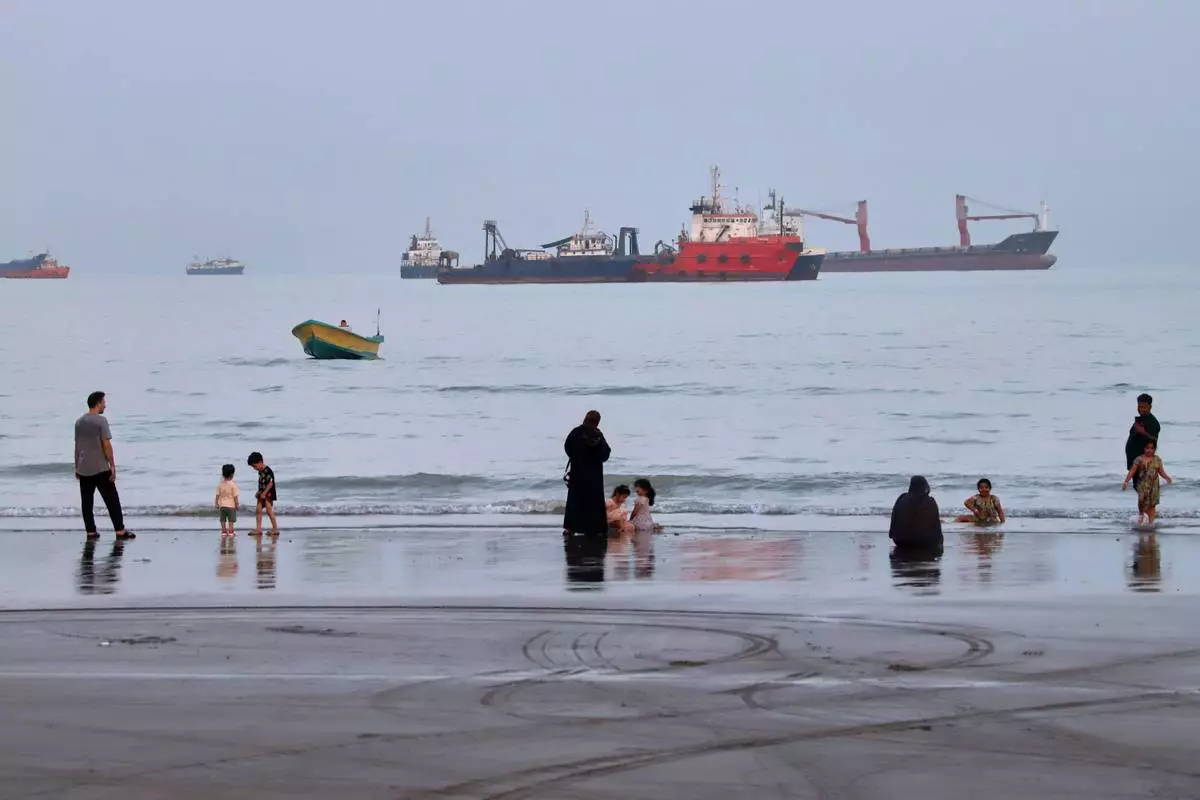
People spend time at a beach as commercial vessels are anchored in the Strait of Hormuz off Bandar Abbas, Iran, Wednesday, Aug. 5, 2026. (Amirhosein Khorgooi/ISNA via AP)
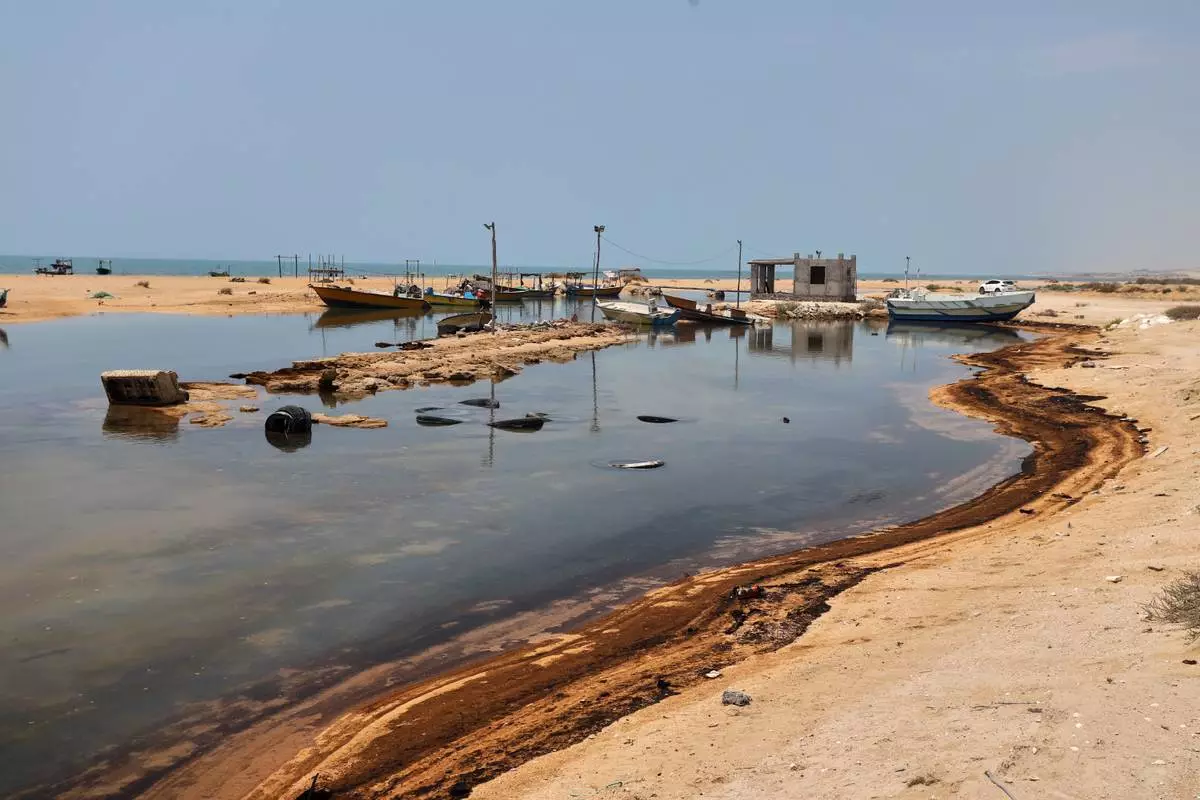
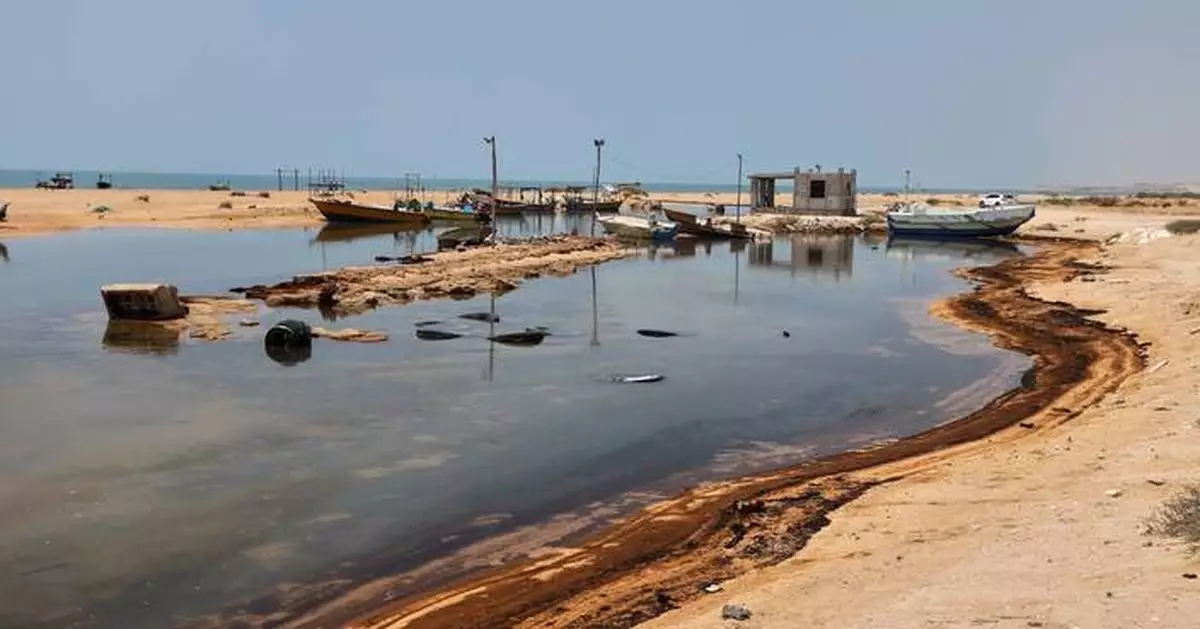
Oil residue lines the shore near fishing boats on Qeshm Island, Iran, Thursday, Aug. 13, 2026, amid ongoing wartime attacks on vessels and infrastructure in and around the Strait of Hormuz, though the spill's source has not been independently determined.(Amirhosein Khorgooi/ISNA via AP)
Iran rejected the United Arab Emirates’ accusation that it fired two ballistic missiles that landed in the Persian Gulf, as Tehran’s parliament speaker and chief negotiator landed in neighboring Iraq for a three day visit.
Meanwhile, France announced that it will expel two Iranian diplomats in response to the expulsion of French diplomats from the Islamic Republic earlier this week.
The souring of ties between the UAE and Iran comes amid fears of renewed escalation in the region, with no apparent renewed talks between Iran and the United States on the horizon.
Here’s a look at the latest developments in the Iran war and the wider Middle East on Thursday. Full coverage can be found here.
Tehran’s Foreign Ministry spokesperson Wednesday criticized the United Arab Emirates for accusing Iran of launching two ballistic missiles “targeting maritime navigation” but fell into the Persian Gulf. In the weeks after the U.S. and Israel launched a war against Iran on Feb. 28, the UAE was frequently targeted by Iranian missiles and drones, but Tuesday’s reported attack was the first in weeks.
“This behavior is contrary to the principle of good neighborliness and disrupts ongoing efforts to strengthen trust between regional countries and prevent escalation in the region,” Esmail Baghaei said in his weekly news conference.
Not long after the incident Tuesday, the UAE Foreign Ministry said it suspended trade with Iran “in light of regional escalations that undermine regional and international peace and security.”
It comes less than a week after Abu Dhabi accused Iran of firing drones at two tankers operated by a state-owned oil company as they sailed through the Strait of Hormuz.
Mohammad Bagher Qalibaf arrived in neighboring Iraq Wednesday for a three-day visit where he will meet with Iraqi officials and leaders of an Iran-backed political coalition.
Iran-backed Iraqi militias have launched and claim drone attacks targeting U.S. bases and diplomatic presence both within the country and abroad, piling the pressure on Baghdad which for years has delicately tried to maintain strong ties between both Washington and Tehran. President Donald Trump last month welcomed his Iraqi counterpart Prime Minister Ali al-Zaidi at the White House, showering him with praise.
Qalibaf on Wednesday praised the country's Tehran-backed militias — which he called the “resistance in Iraq” — describing them as a “key component of the country's national power.”
“After years of experience in Iraq, the resistance has gone beyond the borders of the two countries and has become an influential force at the regional and global levels,” Qalibaf said.
Iran has long relied on its top allies and proxies, notably the Hezbollah militant group in Lebanon and the Yemeni Houthi rebels, in years of Mideast conflict.
France announced Wednesday that it will expel two staff members of the Iranian Embassy in France, in response to what the French Foreign Ministry described as an assault by Iranian security forces against two French diplomatic staff in the Islamic Republic last month.
Iran accused the French pair of taking part in a secret meeting with “suspects in a major case involving foreign infiltration and interference,” Iran’s state-run Islamic Republic News Agency reported. The French diplomats were expelled on Monday.
Foreign Minister Jean-Noël Barrot slammed the Iranian authorities for not investigating what he called a “premeditated and deliberate attack.” He said the two Iranians will leave Paris in the coming days.
“Iranian authorities chose to make entirely false accusations against French personnel and fabricate a case of foreign interference to justify their actions,” said French Foreign Minister Jean-Noël Barrot.
—
Associated Press writers Kareem Chehayeb in Beirut, Nasser Karimi in Tehran, Sylvie Corbet in Paris and Qassim Abdul-Zahra in Baghdad contribute to this report.
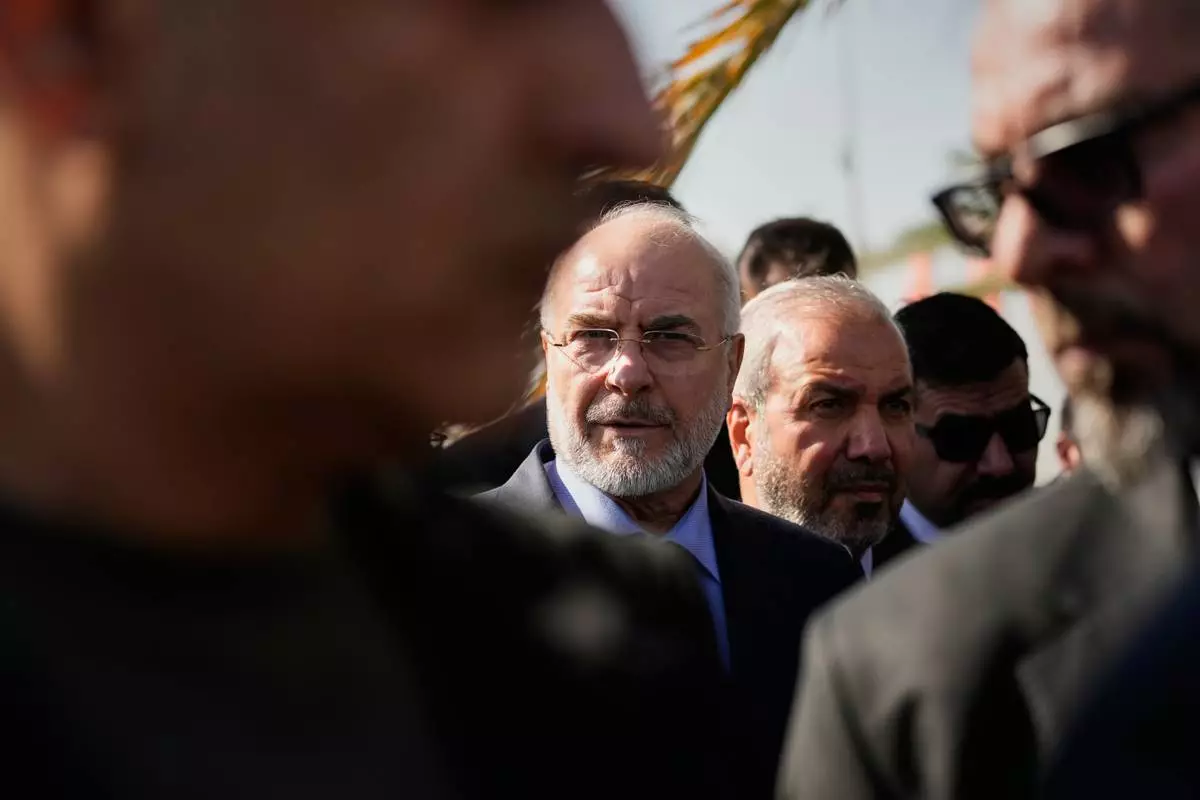
Iranian Parliament Speaker Mohammad Bagher Qalibaf visits the site where Iranian Gen. Qassem Soleimani was killed in a U.S. drone strike near Baghdad International Airport, during an official visit to Baghdad, Iraq, Wednesday, Aug. 19, 2026.(AP Photo/Hadi Mizban)
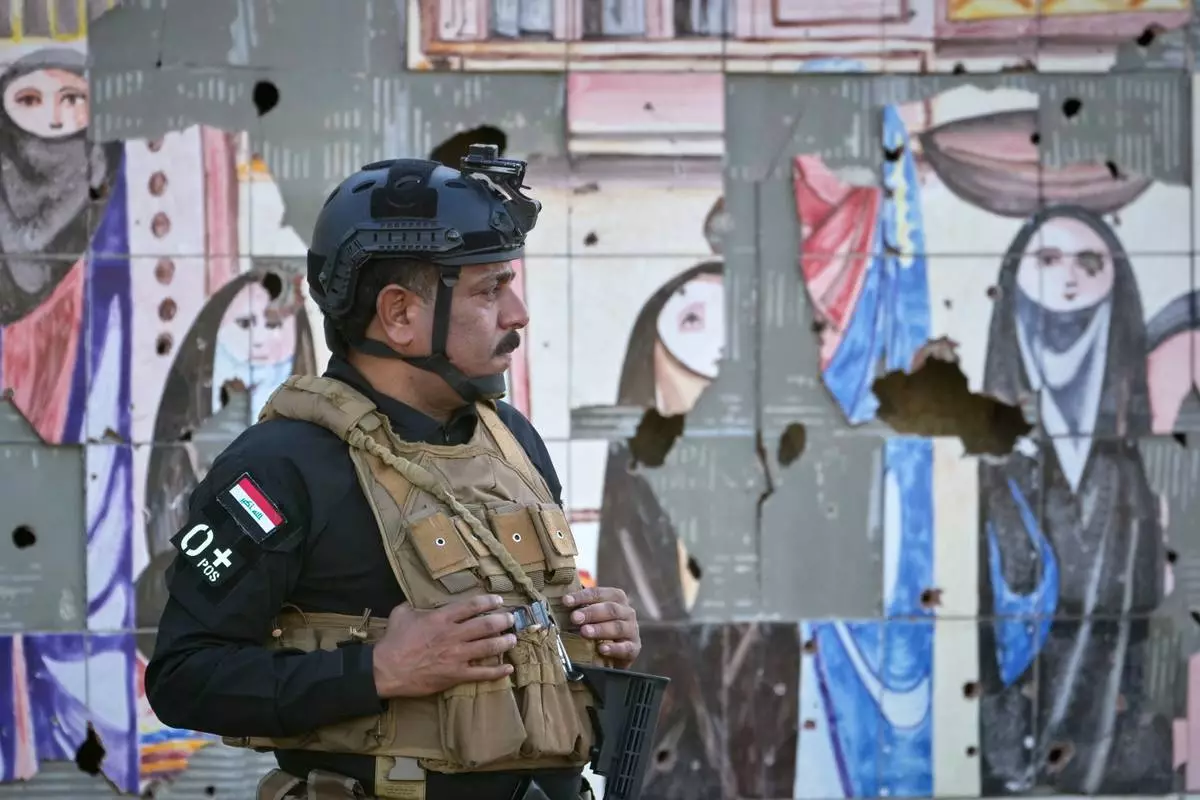
An Iraqi security officer stands guard at the site near Baghdad International Airport where Iranian military commander Qassem Soleimani was killed in a U.S. drone strike, during a visit by Iranian Parliament Speaker Mohammad Baqer Qalibaf in Baghdad, Iraq, Wednesday, Aug. 19, 2026. (AP Photo/Hadi Mizban)
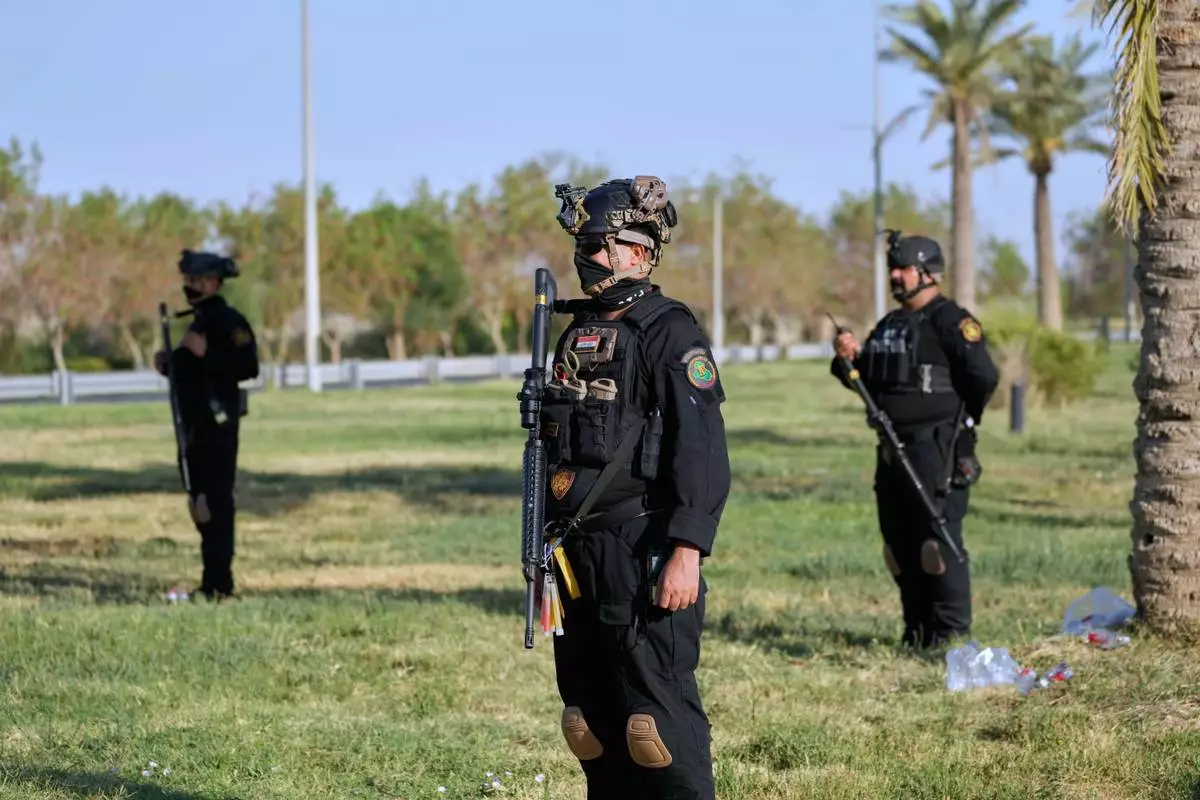
Iraqi security officers stand guard at the site near Baghdad International Airport where Iranian military commander Qassem Soleimani was killed in a U.S. drone strike, during a visit by Iranian Parliament Speaker Mohammad Baqer Qalibaf in Baghdad, Iraq, Wednesday, Aug. 19, 2026. (AP Photo/Hadi Mizban)
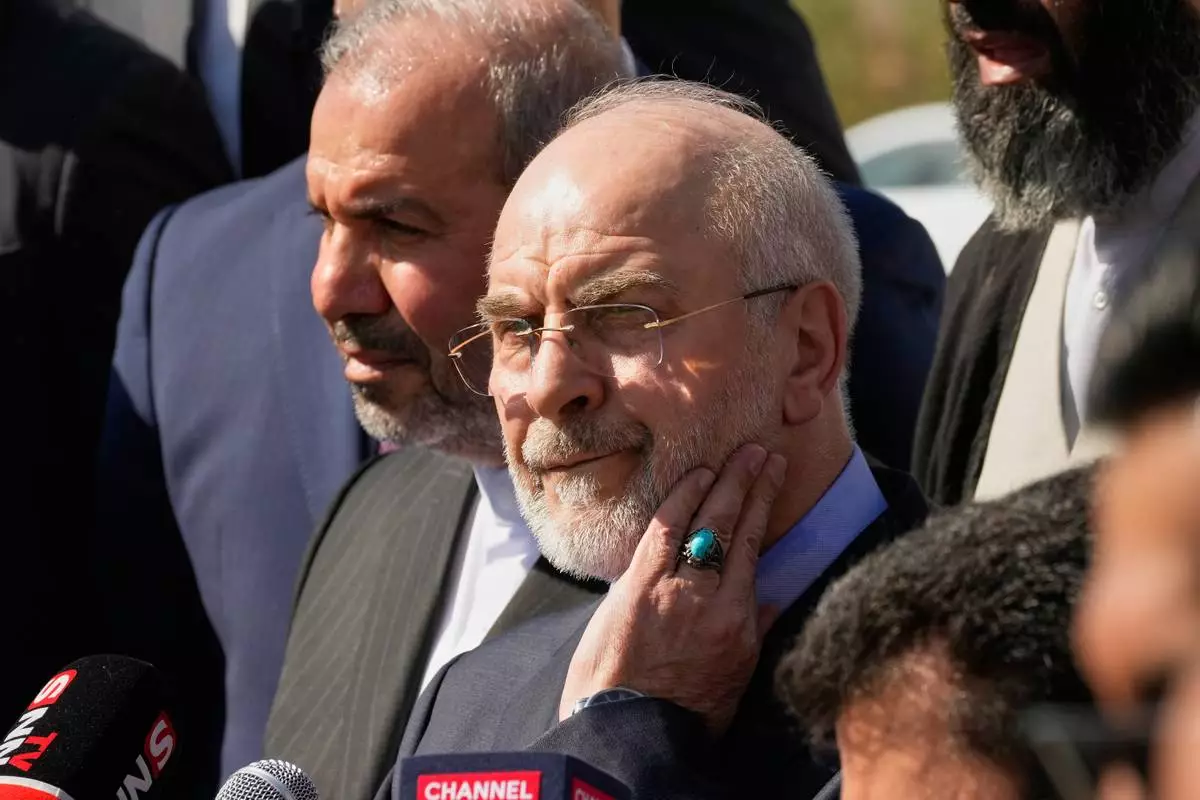
Iranian Parliament Speaker Mohammad Baqer Qalibaf visits the site near Baghdad International Airport where Iranian military commander Qassem Soleimani was killed in a U.S. drone strike, in Baghdad, Iraq, Wednesday, Aug. 19, 2026.(AP Photo/Hadi Mizban)
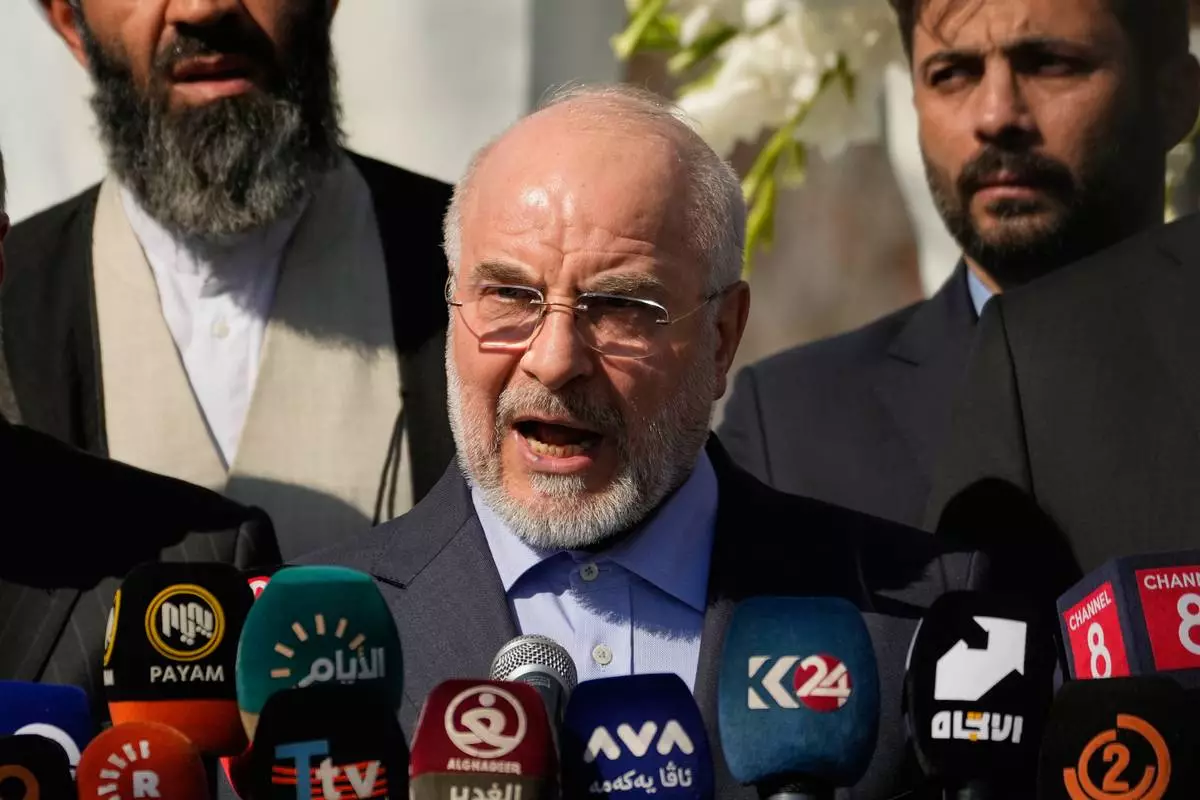
Iranian Parliament Speaker Mohammad Baqer Qalibaf addresses attendees at the site near Baghdad International Airport where Iranian military commander Qassem Soleimani was killed in a U.S. drone strike, in Baghdad, Iraq, Wednesday, Aug. 19, 2026.(AP Photo/Hadi Mizban)