Skip to Content Facebook Feature Image

Former Meta engineer says Instagram took a 'don't ask, don't tell' approach on kids under 13

News

Former Meta engineer says Instagram took a 'don't ask, don't tell' approach on kids under 13
News

News

Former Meta engineer says Instagram took a 'don't ask, don't tell' approach on kids under 13

2026-08-20 05:50 Last Updated At:06:00

OAKLAND, California (AP) — A former engineering director at Meta who has testified before Congress about child safety on Instagram told jurors Wednesday at a landmark trial that the company took a “don’t ask, don’t tell” approach on kids under 13 on its platforms.

During his second day of testimony, Arturo Béjar said Meta consistently prioritized profits over safety in designing its products, focusing on how often and for how long people used them, even if it was detrimental to their mental well-being.

More Images
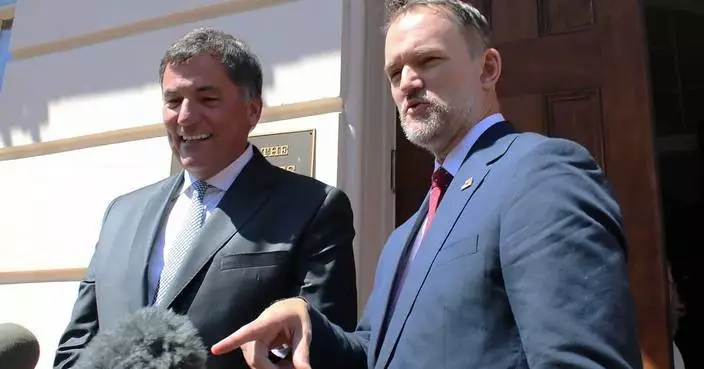
California Attorney General Rob Bonta discusses a lawsuit against Meta during a press conference on Tuesday, Aug. 18, 2026, in Oakland, Calif. Joining him are Colorado Attorney General Philip Weiser, and New Jersey Attorney General Jennifer Davenport. (AP Photo/Noah Berger)
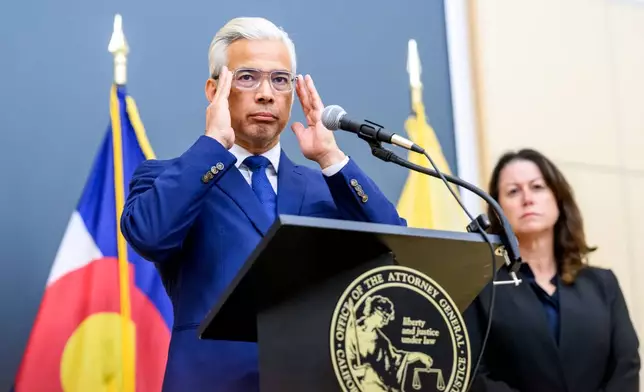
California Attorney General Rob Bonta discusses a lawsuit against Meta during a press conference on Tuesday, Aug. 18, 2026, in Oakland, Calif. Joining him are Colorado Attorney General Philip Weiser, and New Jersey Attorney General Jennifer Davenport. (AP Photo/Noah Berger)

California Attorney General Rob Bonta discusses a lawsuit against Meta during a press conference on Tuesday, Aug. 18, 2026, in Oakland, Calif. At right is New Jersey Attorney General Jennifer Davenport. (AP Photo/Noah Berger)
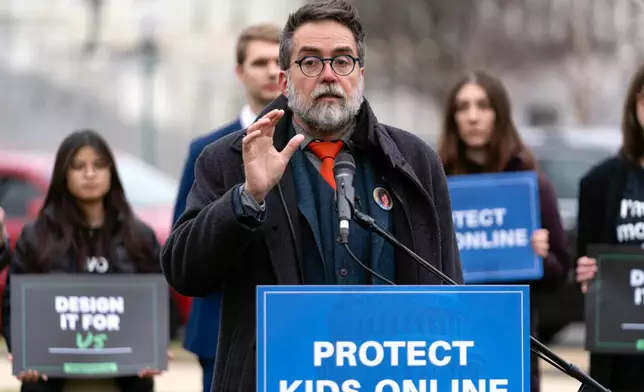
California Attorney General Rob Bonta discusses a lawsuit against Meta during a press conference on Tuesday, Aug. 18, 2026, in Oakland, Calif. At right is New Jersey Attorney General Jennifer Davenport. (AP Photo/Noah Berger)

FILE - Former Facebook employee Arturo Bejar speaks during a rally to protect kids online on Capitol Hill in Washington, Jan. 31, 2024. (AP Photo/Jose Luis Magana, File)
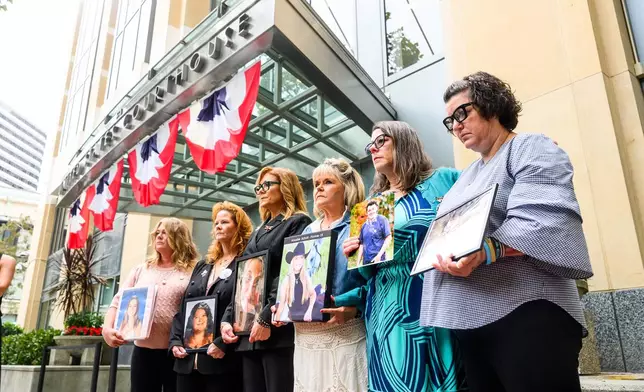
FILE - Former Facebook employee Arturo Bejar speaks during a rally to protect kids online on Capitol Hill in Washington, Jan. 31, 2024. (AP Photo/Jose Luis Magana, File)

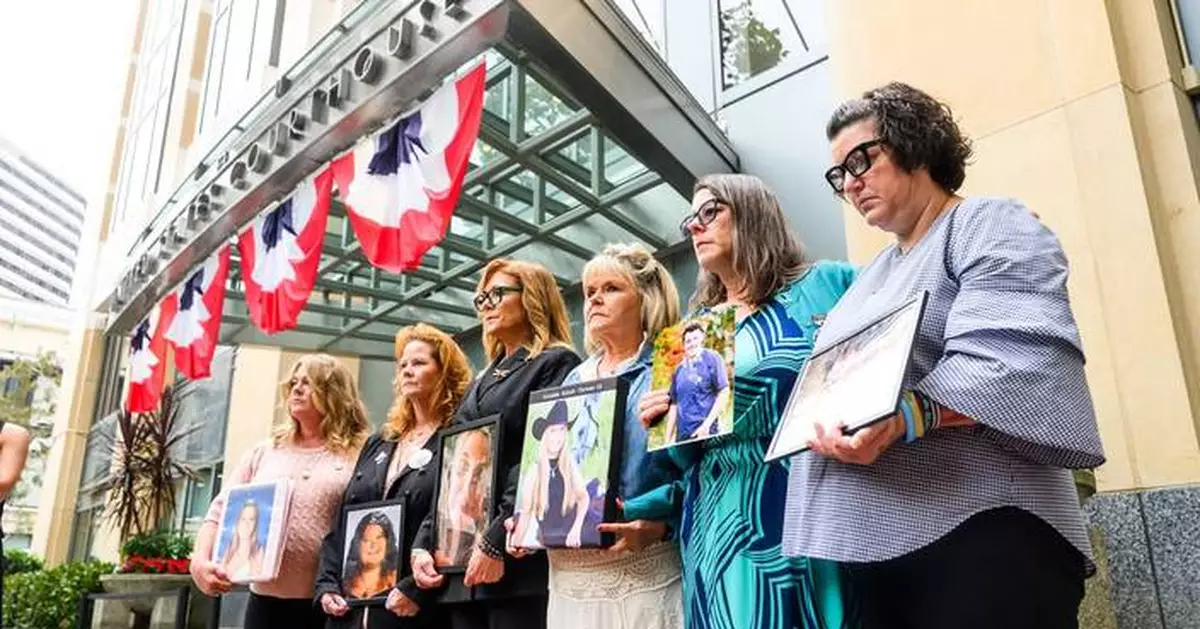
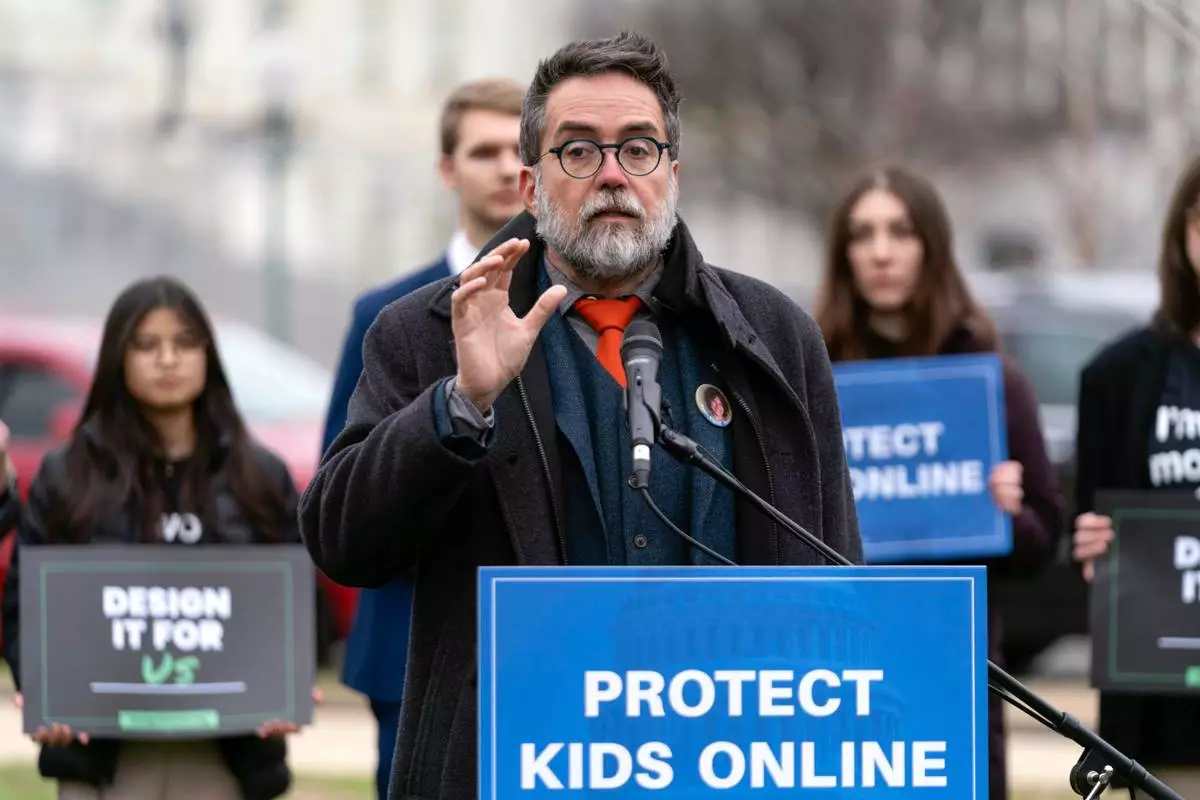
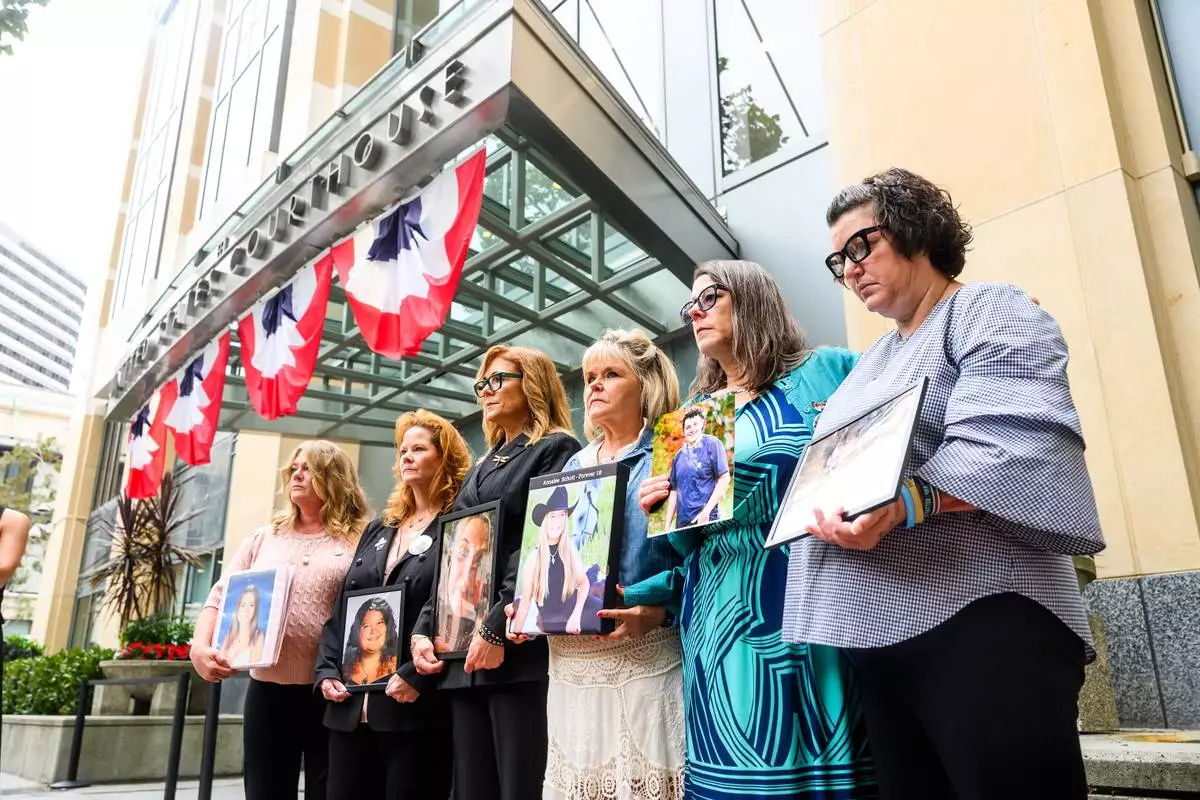
Parents hold pictures of their deceased children during a protest against social media platforms outside the Ronald V. Dellums Federal Building and U.S. Courthouse on Tuesday, Aug. 18, 2026, in Oakland, Calif. (AP Photo/Noah Berger)

Parents hold pictures of their deceased children during a protest against social media platforms outside the Ronald V. Dellums Federal Building and U.S. Courthouse on Tuesday, Aug. 18, 2026, in Oakland, Calif. (AP Photo/Noah Berger)

“If you step away from the product, they are not going to make any money,” he said.

The trial that began Tuesday in federal court in Oakland, California, pits Meta against the states of California, Colorado, Kentucky and New Jersey and is expected to last about six weeks. The four states were among 29 that sued the tech giant in 2023 over child safety and privacy — the other 25 will go to trial later. The company also faces lawsuits in state courts, including one underway in Tennessee.

The lawsuit accuses Meta of contributing to the youth mental health crisis by knowingly and deliberately designing features that addict children to its platforms and hide these harms from the public. It also argues that Meta routinely collects data on children under 13 without their parents’ consent, in violation of federal law.

Meta says users must be at least 13 years old to create an account, in line with the law, called the Children’s Online Privacy Protection Act, or COPPA.

“The attitude in particular on Instagram was ‘Don’t ask, don’t tell,’” Béjar said in response to a question about his perception of the company’s attitude towards users under 13.

The company has rejected the claims and said evidence at the trial will show its commitment to safety.

“You will hear over the course of this case a lot of important issues, issues like teen mental health, issues like social media, issues like how teens use social media,” Meta lawyer Paul Schmidt said Tuesday. “Those are important issues, and they’re issues where Meta believes that it has a responsibility. It has a responsibility to act on its own. It has a responsibility to try to work with teens and parents in partnership to try to address those questions.”

Béjar worked at Facebook from 2009 to 2015, attracting wide attention for his work to combat cyberbullying. He returned from 2019 to 2021 as a contractor to work on safety issues. He testified before Congress in 2023 about social media and the teen mental health crisis, saying that Meta executives, including CEO Mark Zuckerberg, knew about harms Instagram was causing but chose not to make meaningful changes to address them.

In his testimony Wednesday, Béjar said employee performance reviews and compensation for those who worked on user-facing products were mostly focused on user numbers and how long they spend with those products.

“In that context, safety was an afterthought,” he said.

The states are seeking changes to user experiences for Facebook and Instagram as well as financial damages, which could include billions of dollars in penalties. In a written statement, the office of California's attorney general said if Meta loses, the amount of any damages would be set by the court.

“This case is about stopping Meta from offering a dangerous product to teens, and from lying to teens, families, and the public about the dangerousness of their platforms. The primary remedy under our state consumer protection law is an injunction,” the statement said.

Béjar walked through Meta features he said were designed for adults and are “inherently unsafe for teenagers.”

This includes video autoplay, which can mean teens see videos that may cause them harm even if they don't click on them; as well as various counters that track how many people liked, viewed or commented on your content or how many followers you have.

Child development experts have noted teenagers are more susceptible to social comparison than adults, so products that reward popularity can be more harmful to their mental health.

Despite Meta's statements that it works to find kids under 13 on its platforms and ban them, Béjar testified that he found “tens of thousands” of kids under 13 on Instagram through his research. He said it was “common knowledge” at the company that such young children were on Instagram.

“Meta has one of the most sophisticated infrastructures in the world to detect fake accounts,” he said. But despite that, he added, there were “no goals, no metrics” to detect and check kids’ ages who were suspected to be under 13.

Over the years, Meta has introduced features it says are designed to make the experience safer for young people. But Béjar said these did not work.

For instance, a tool called “Take a Break," introduced in 2021, is a feature that is "designed to fail,” he said. First, it is a setting that people have to turn on if they want to use it. Béjar said that in his experience building settings, very few users actually go through the trouble of turning them on. He compared it to an airbag that drivers have to turn on every time they get in a car.

“A safety tool has to be on by default,” he said.

The feature can also be dismissed with a tap of a finger. If Meta was serious about wanting users to take a break, Béjar said, it would not be so easily swiped away.

AP Technology Writer Kaitlyn Huamani contributed to this story from Los Angeles.

California Attorney General Rob Bonta discusses a lawsuit against Meta during a press conference on Tuesday, Aug. 18, 2026, in Oakland, Calif. Joining him are Colorado Attorney General Philip Weiser, and New Jersey Attorney General Jennifer Davenport. (AP Photo/Noah Berger)

California Attorney General Rob Bonta discusses a lawsuit against Meta during a press conference on Tuesday, Aug. 18, 2026, in Oakland, Calif. Joining him are Colorado Attorney General Philip Weiser, and New Jersey Attorney General Jennifer Davenport. (AP Photo/Noah Berger)

California Attorney General Rob Bonta discusses a lawsuit against Meta during a press conference on Tuesday, Aug. 18, 2026, in Oakland, Calif. At right is New Jersey Attorney General Jennifer Davenport. (AP Photo/Noah Berger)
California Attorney General Rob Bonta discusses a lawsuit against Meta during a press conference on Tuesday, Aug. 18, 2026, in Oakland, Calif. At right is New Jersey Attorney General Jennifer Davenport. (AP Photo/Noah Berger)

FILE - Former Facebook employee Arturo Bejar speaks during a rally to protect kids online on Capitol Hill in Washington, Jan. 31, 2024. (AP Photo/Jose Luis Magana, File)
FILE - Former Facebook employee Arturo Bejar speaks during a rally to protect kids online on Capitol Hill in Washington, Jan. 31, 2024. (AP Photo/Jose Luis Magana, File)

Parents hold pictures of their deceased children during a protest against social media platforms outside the Ronald V. Dellums Federal Building and U.S. Courthouse on Tuesday, Aug. 18, 2026, in Oakland, Calif. (AP Photo/Noah Berger)

Parents hold pictures of their deceased children during a protest against social media platforms outside the Ronald V. Dellums Federal Building and U.S. Courthouse on Tuesday, Aug. 18, 2026, in Oakland, Calif. (AP Photo/Noah Berger)
Companies that secretly vary prices based on how much they think individual customers will pay could face federal charges under a proposed policy released Wednesday by the Federal Trade Commission.

“When consumers see a listed price, they expect it to be (the) same price that everyone else sees, not the retailer’s estimate of how much they are willing to pay based on their personal data,” FTC Chairman Andrew Ferguson said in a statement.

The FTC has had its eye on personalized pricing for several years. In a preliminary report filed in January 2025, the agency found that grocers, clothing companies and others were using third-party companies to help them individualize online prices based on shoppers' locations, browsing histories and other factors, including how long they left items in their virtual shopping carts.

In one hypothetical example, the FTC said a consumer profiled as a new parent might be shown higher-priced baby thermometers on the first page of their search results.

Ferguson said the FTC doesn't have the legal authority to ban personalized pricing in all circumstances. But under the proposed policy, businesses would have to “clearly and conspicuously disclose” if they are engaging in personalized pricing and share the types of data they're using to set those prices.

The proposed policy states that companies engaged in personalized pricing without revealing the practice and the data behind it could violate the FTC Act, which prohibits unfair or deceptive practices in the marketplace.

The FTC is seeking comment on the policy for 30 days.

Several retail trade groups didn't comment directly on the FTC's proposal Wednesday.

The National Retail Federation, which represents big companies like Walmart, Target and Macy's as well as smaller stores, said retailers want to continue to offer incentives like loyalty and rewards programs, which collect personal data and provide offers tailored to individuals.

“NRF has and will continue to aggressively advocate to protect these programs that deliver timely savings and personalized offers that are relevant to each shopper's interests,” said David French, NRF's executive vice president of government relations.

FMI, a trade group for the U.S. grocery industry, said Wednesday it was reviewing the proposal and didn’t have immediate comment. But in a letter FMI sent to U.S. senators this month after a subcommittee hearing on personalized pricing, FMI also said it hoped to preserve shopper loyalty programs.

In the letter, FMI also noted that electronic shelf labels, which are becoming increasingly common at grocers and retailers like Walmart, don't automatically change prices based on individual shoppers.

The Retail Industry Leaders Association, a trade group that represents Best Buy, Home Depot, Dollar General and 200 other retailers, didn't comment on the new proposal Wednesday but cited its own letter sent to U.S. senators earlier this month.

In the letter, the association said retailers don't use consumers' personal data to increase prices because that would jeopardize customer loyalty.

“As shoppers demonstrate an increased willingness to seek out lower prices, competition among retailers intensifies to meet customers' needs, creating a strong and continuous incentive for retailers to offer attractive prices, discounts and value,” the letter said.

The FTC's action comes amid consumer unease about pricing tactics. Wendy's faced a backlash in 2024 after it said it was considering charging more for its menu items during peak times. Uber and Lyft have also been in lawmakers' crosshairs for their surge-pricing practices.

Several states, including Maryland, Connecticut and New Jersey, have already passed laws prohibiting personalized pricing at grocery stores. California and New York are also considering legislation that would ban personalized pricing.

New Jersey also placed a one-year moratorium on new electronic shelf labels despite retailers' assurances that the labels aren't used for personalized pricing and can actually help consumers by, say, automatically lowering prices for foods that are about to expire.

The consumer advocacy organization Consumer Reports said Wednesday that the FTC's proposal was encouraging but might still require consumers to read detailed disclosures on pricing while shopping online.

The group said the FTC and Congress should instead follow the states' lead and ban companies from using customer data to personalize prices in the first place.

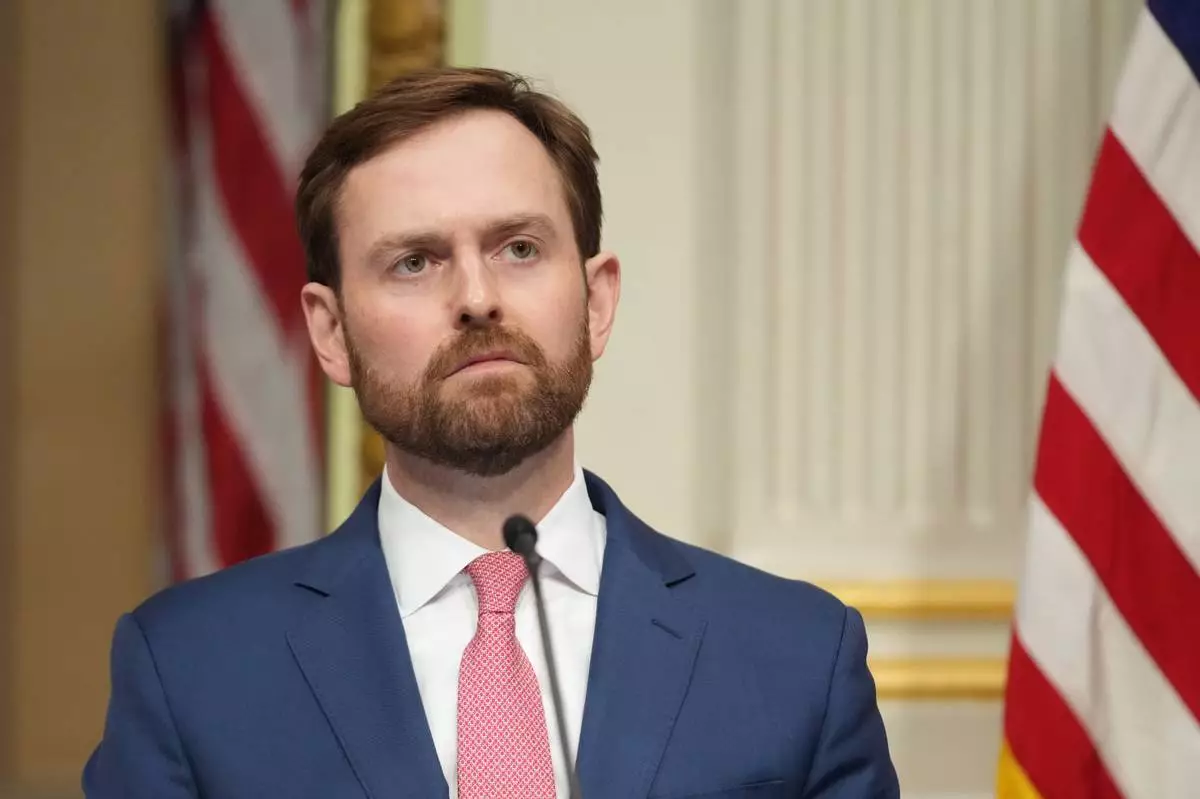
FILE - FTC Chairman Andrew Ferguson speaks in the Eisenhower Executive Office Building at the White House complex, May 26, 2026, in Washington. (AP Photo/Mark Schiefelbein, File)

FILE - FTC Chairman Andrew Ferguson speaks in the Eisenhower Executive Office Building at the White House complex, May 26, 2026, in Washington. (AP Photo/Mark Schiefelbein, File)

FILE - The official seal of the Federal Trade Commission is seen on an office building in Washington, Feb. 13, 2026. (AP Photo/Cliff Owen, File)

FILE - The official seal of the Federal Trade Commission is seen on an office building in Washington, Feb. 13, 2026. (AP Photo/Cliff Owen, File)

Recommended Articles