LOS ANGELES (AP) — U.S. immigration officials worked with Iran to deport Iranians in 2025, newly released emails show, revealing a working relationship between the U.S. and Iranian governments despite tensions mounting between the countries.
Hundreds of emails exchanged between U.S. immigration officials, which were obtained by the National Iranian American Council and made public Tuesday, offer the most transparent play by play yet of how the two countries worked together to arrange for more than 100 Iranians to be flown back to Iran on three separate immigration flights in September and December 2025 and January 2026.
The emails show that Iranian officials had some influence over which Iranian immigrants in the U.S. were sent back to their home country, and U.S. Immigration and Customs Enforcement officials apparently heeded some last-minute changes to deportation lists at the request of Iran.
“Per request from the Iran Embassy I added a few cases," one unnamed ICE official wrote in late August, a month before the first deportation flight in September. Just over a week later, someone with the same job title moved to make another, unspecified change to the deportation list after they said they met with the “Director at the Iranian Embassy.”
“Iran has requested that I amend the previous manifest and expedite the removal process,” the official wrote.
In a Sept. 26 email, just three days before the deportation flight left U.S. soil, an ICE official said in an email that the Iranian Embassy was still making requests for three additional Iranians on the flight. It's not clear who ended up on the flight, which ended up being much smaller than initially planned. Iranian officials were still making requests the day the flight departed, although one official wrote that those requests were denied.
Coordination of the flights remained a high priority even as ICE officials acknowledged internally that Iranians were fleeing Iran amid the deadly 12-day war with the U.S. and Israel in June 2025, emails show. The flights departed just months after the U.S. and Israel agreed to a ceasefire with Iran.
The new emails highlight a clear departure from a decades-long practice by the U.S. of welcoming Iranian dissidents, exiles and others since the 1979 Islamic Revolution forced a large number of Iranians to flee.
The deportation of Iranians to a country whose government has a pattern of violent persecution against women, religious minorities and political dissidents has drawn significant criticism from human rights activists.
The Department of Homeland Security did not offer comment in response to an emailed request sent Tuesday afternoon.
Iranian officials acknowledged in September 2025 that as many as 400 Iranians could be returned under an agreement with the Trump administration. They said most of the Iranians had crossed into the U.S. from Mexico illegally, while some faced other immigration issues.
It is not clear from the emails how frequently U.S. immigration officials had direct contact with the Iranian government. Sometimes messages were conveyed through Qatari officials, who helped charter the deportation flights through Doha, but other times officials reference regular meetings with the “Iranian delegation," the “Director at the Iranian Embassy” and other unnamed Iranian officials.
It is not clear whether the people Iran put on the list had volunteered to repatriate or if they were forced. Previous reporting from The New York Times revealed that asylum-seekers were among those deported to Iran, while others said they were deported against their will.
At least one person was deported who wasn't supposed to be, emails showed.
“An Iranian not included on the final manifest we sent to the Qatari MOI was boarded on the flight,” an unnamed U.S. official wrote.
In response, another unnamed U.S. official wrote, “I have no idea how the case/person got through on the plane.”
Emails suggest that pressure to carry out the Iranian deportations came from the highest levels of the Trump administration, even when U.S. and Israel were exchanging strikes with Iran in a 12-day conflict between June 13 and June 24, 2025.
Just days after Trump's June 16 warning on social media that “Everyone should immediately evacuate Tehran!” the former acting director of ICE, Todd Lyons, called the repatriation of Iranian immigrants a “priority" in an email sent to the agency’s head of removal operations Marcos Charles and a number of unnamed staff.
Shortly after Lyon's email, Charles forwarded the message to a group of officials whose names are redacted. An unnamed ICE official responded, warning that “removal will prove difficult” amid the ongoing conflict because Iran wasn't issuing the travel documents for Iranians eligible for deportation. On top of that, the Iranian airspace was closed to all flights during the bombings and Iranians were fleeing the country.
Charles was unfazed, telling staff in a subsequent email to make a plan to deport 58 Iranians with final removal orders in ICE custody at the time.
“We need a plan forward ASAP,” Charles wrote. Another official, who name was redacted, urged colleagues to “identify a solution for this White House priority.”
Jamal Abdi, the president of the National Iranian American Council, said the emails undermine Trump’s assertions that the U.S. is at war with Iran to save ordinary Iranians from a repressive regime.
“It demonstrates that the top priority here was to kick out as many people as possible by whatever means necessary,” Abdi said.
On several occasions, the emails show ICE officials arranging for Iranian officials to meet for unspecified reasons with people detained in the U.S., echoing testimony from Iranian asylum-seekers in an unrelated lawsuit filed by an unaffiliated Iranian interest group in July.
Eleven Iranians in immigration detention said they were forced to meet with Iranian government officials while in ICE detention. Those Iranian authorities knew intimate details about their asylum claims, according to the sworn declarations filed in a Washington, D.C., court in July.
The lawsuit alleges that U.S. immigration agencies have been illegally sharing confidential information about Iranian asylum-seekers with the Iranian government.
The U.S. government is allowed to work with government officials of foreign countries to coordinate deportation logistics. However, federal regulations passed in the late 1990s prohibit the government from sharing information that could reveal that the person getting deported applied for asylum.
DHS vehemently disputed the lawsuit's allegations.
“These allegations that ICE shared asylum application records with the Iranian government are FALSE,” DHS said in a statement in July.
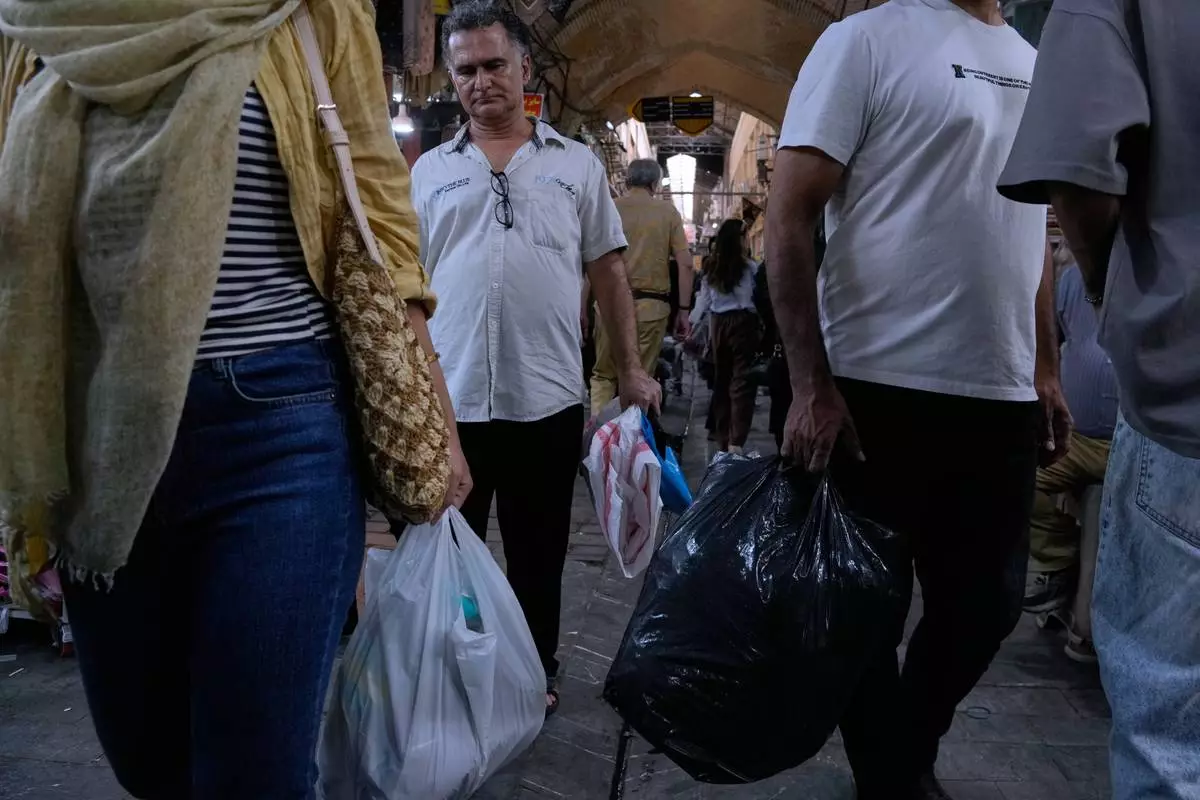
People shop at Tehran's traditional main bazaar, Iran, Saturday, Aug. 8, 2026. (AP Photo/Vahid Salemi)
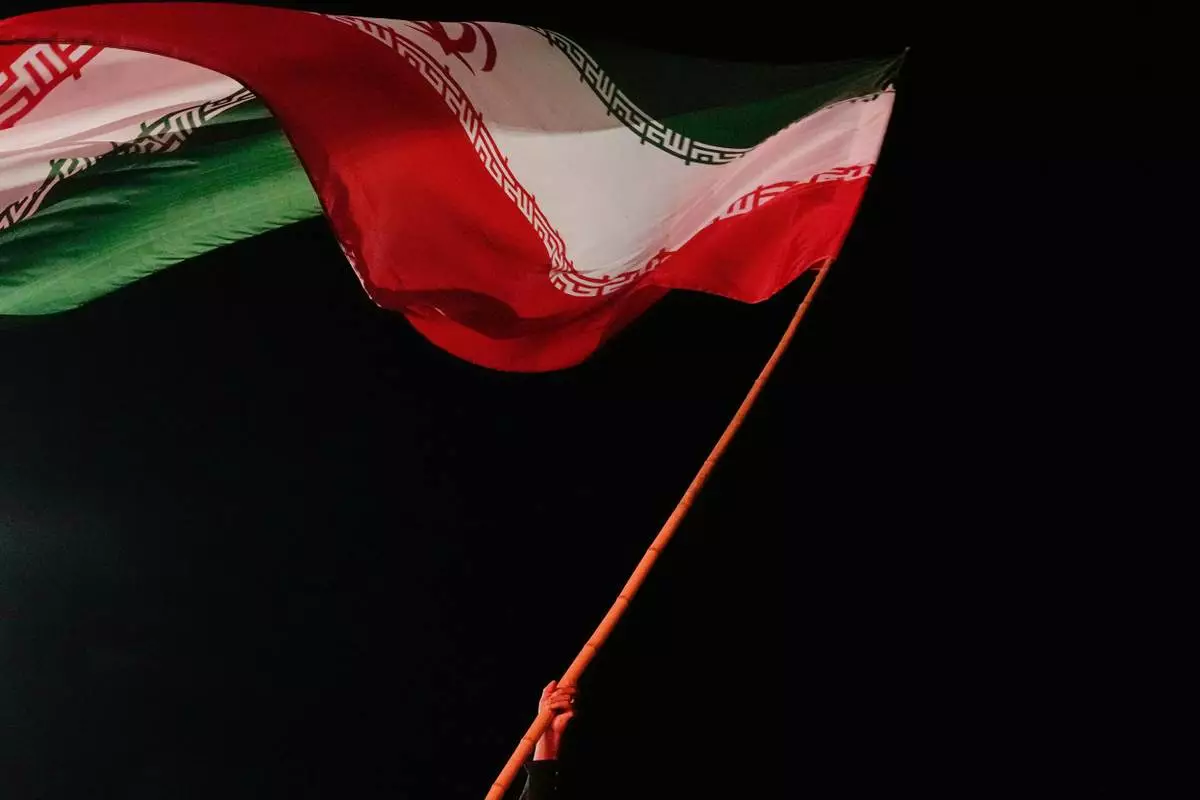
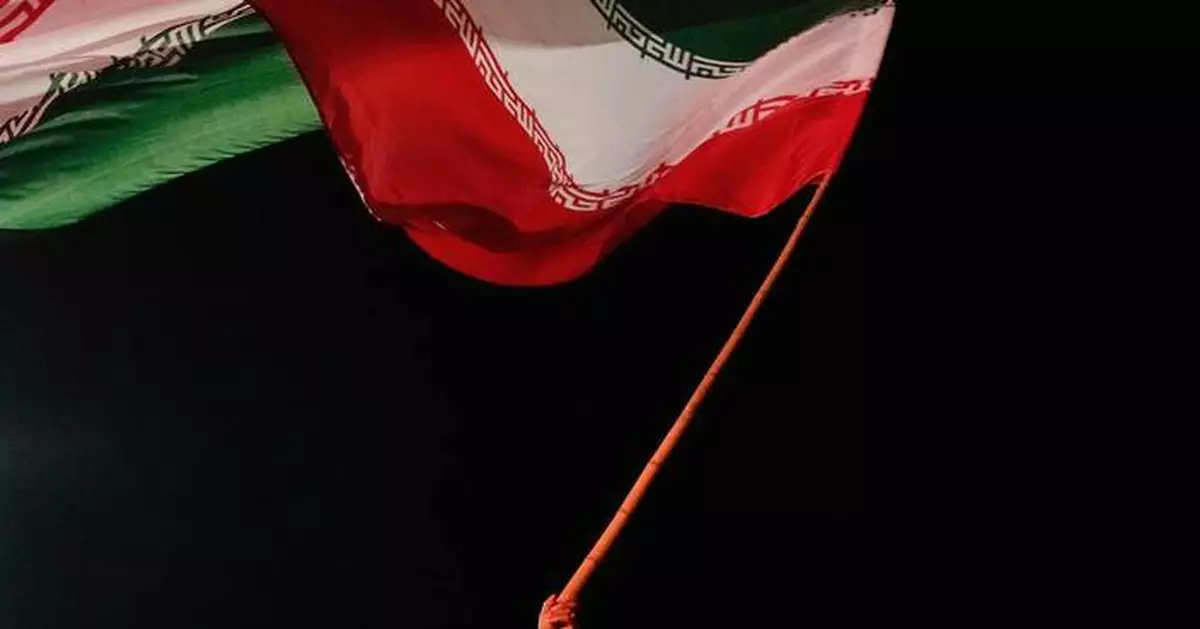
A man waves an Iranian flag during a pro-government gathering at a square in Tehran, Iran, Tuesday, Aug. 11, 2026. (AP Photo/Vahid Salemi)
The Israeli military said Wednesday it will conduct criminal investigations into the killings of a 5-year-old Palestinian girl and her family and the separate killings of 15 paramedics, following a review of troop conduct during the war in Gaza.
Meanwhile, France announced it will expel two Iranian diplomats in response to the expulsion of French diplomats from the Islamic Republic this week. And the Iranian parliament speaker and chief negotiator landed in neighboring Iraq for a three-day visit.
Here’s a look at the latest developments in the Iran war and the wider Middle East on Wednesday. Full coverage can be found here.
The Israeli military said it would investigate the killings of 5-year-old Hind Rajab and her family members in February 2024, and the killing of 15 Palestinian medics in March 2025. Both drew international attention.
The announcement followed reviews of 150 incidents of troop conduct during the war in Gaza. The military said it would not launch criminal investigations into three other attacks that killed aid workers from World Central Kitchen and Doctors Without Borders.
Rajab was killed when Israeli troops opened fire on a vehicle that also was carrying her aunt, uncle and four cousins as they tried to flee Gaza City amid an Israeli offensive.
The 15 paramedics were killed when Israeli troops opened fire on their vehicles in the southern city of Rafah, then bulldozed over the bodies and buried them in a mass grave. Troops first shot at an ambulance that was driving to retrieve casualties from an Israeli offensive, then fired on several other emergency vehicles that went out to look for the first one, according to phone footage and the sole survivor.
Australia’s Foreign Minister Penny Wong expressed “outrage” on Thursday at Israel’s decision not to pursue criminal charges over strikes that killed seven World Central Kitchen aid workers, including Australian woman Zomi Frankcom.
Wong said her government was informed of the decision moments before it was announced, leaving officials no time to inform Frankcom’s family before it became public.
“There are still many unanswered questions,” Wong said.
They included why the convoy was struck three times in a humanitarian fire control zone and why a senior brigade officer involved in the strikes was a signatory to a letter urging the restriction of aid to Gaza, Wong added. Australia had yet to receive drone recordings from the attack, despite seeking them multiple times, she said.
“The Australian government does not believe that the removal of two officers from their positions and three officers being reprimanded is sufficient accountability for the deaths of seven people, including an Australian citizen,” Wong said.
The minister hours earlier summoned Israel’s envoy to Canberra Hillel Newman for a meeting. However, she wouldn’t expel the ambassador, she said, citing a need to continue engaging diplomatically with Israel.
Newman told reporters after the meeting that he was “very sorry” for Frankcom’s family, but did not apologize for her killing.
“One cannot attack findings of a court if the findings are not suitable to one’s political agenda,” Newman said. He added that the finding of no criminal liability came “after two years of independent research.”
At least 10 people were killed Wednesday in two airstrikes in Gaza, according to local hospitals and the Palestinian Red Crescent.
The attacks cast further doubt on whether new U.S. efforts can advance a tenuous ceasefire in the Palestinian territory.
Just two days after U.S. negotiators reportedly asked Israel to draw down attacks in Gaza, Israeli troops also crossed the ceasefire line in southern Gaza and detained a Hamas police colonel at dawn, two witnesses and a Hamas official said. They spoke on condition of anonymity for their safety.
— Samy Magdy and Wafaa Shurafa
Iranian Parliament Speaker Mohammad Bagher Qalibaf arrived in Iraq for a three-day visit where he will meet with Iraqi officials and leaders of an Iran-backed political coalition.
Iran-backed Iraqi militias have launched drone attacks on U.S. military and diplomatic targets both within Iraq and abroad, piling pressure on Baghdad, which for years has delicately tried to maintain strong ties with both Washington and Tehran.
Qalibaf praised the country’s Tehran-backed militias, which he called the “resistance in Iraq," describing them as a “key component of the country’s national power.”
His comments came even as the Iraqi government has been trying to disarm the militias that have long operated on their own even though they were nominally under state command.
Iraq is asking Iran to grant special status to Iraqi oil exports through the Strait of Hormuz because the country has been affected greatly by Iran's war with the U.S. and needs to guard its economic interests, according to a statement from Iraqi Parliament Speaker Haibet al-Halbousi.
Iraq relies on oil revenues for roughly 90% of its budget, and most of its oil is exported through the strait. Since the war erupted and Iran asserted control over the strait, halting most shipping traffic, Iraq has turned to alternate routes, including sending oil over land to Syria, which is less efficient and more expensive.
France announced it will expel two staff members of the Iranian Embassy in France, in response to what the French Foreign Ministry described as an assault by Iranian security forces against two French diplomatic staff in the Islamic Republic last month.
Iran accused the French pair of taking part in a secret meeting with “suspects in a major case involving foreign infiltration and interference,” Iran’s state-run Islamic Republic News Agency reported. The French diplomats were expelled on Monday.
Foreign Minister Jean-Noël Barrot slammed the Iranian authorities for not investigating what he called a “premeditated and deliberate attack.” He called the allegations fabricated and said the two Iranians will leave Paris in the coming days.
Associated Press writers Kareem Chehayeb in Beirut, Nasser Karimi in Tehran, Sylvie Corbet in Paris and Qassim Abdul-Zahra in Baghdad contributed to this report.
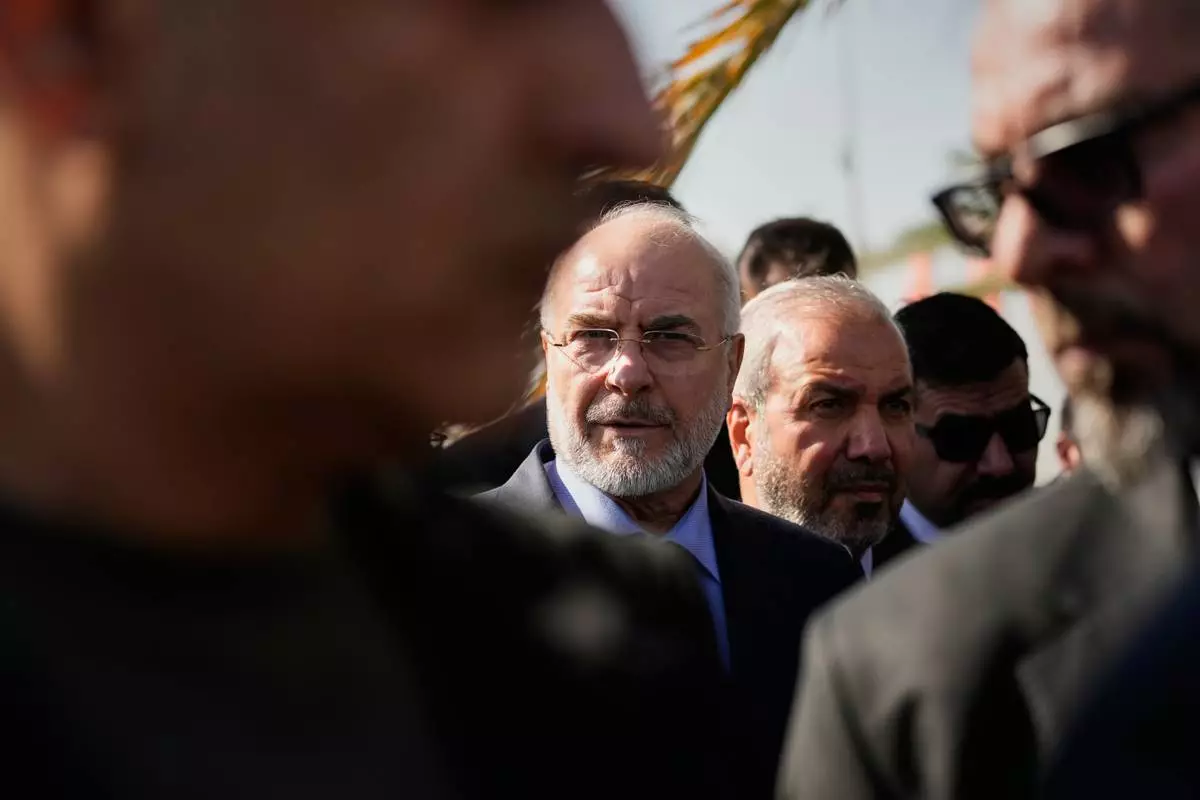
Iranian Parliament Speaker Mohammad Bagher Qalibaf visits the site where Iranian Gen. Qassem Soleimani was killed in a U.S. drone strike near Baghdad International Airport, during an official visit to Baghdad, Iraq, Wednesday, Aug. 19, 2026.(AP Photo/Hadi Mizban)
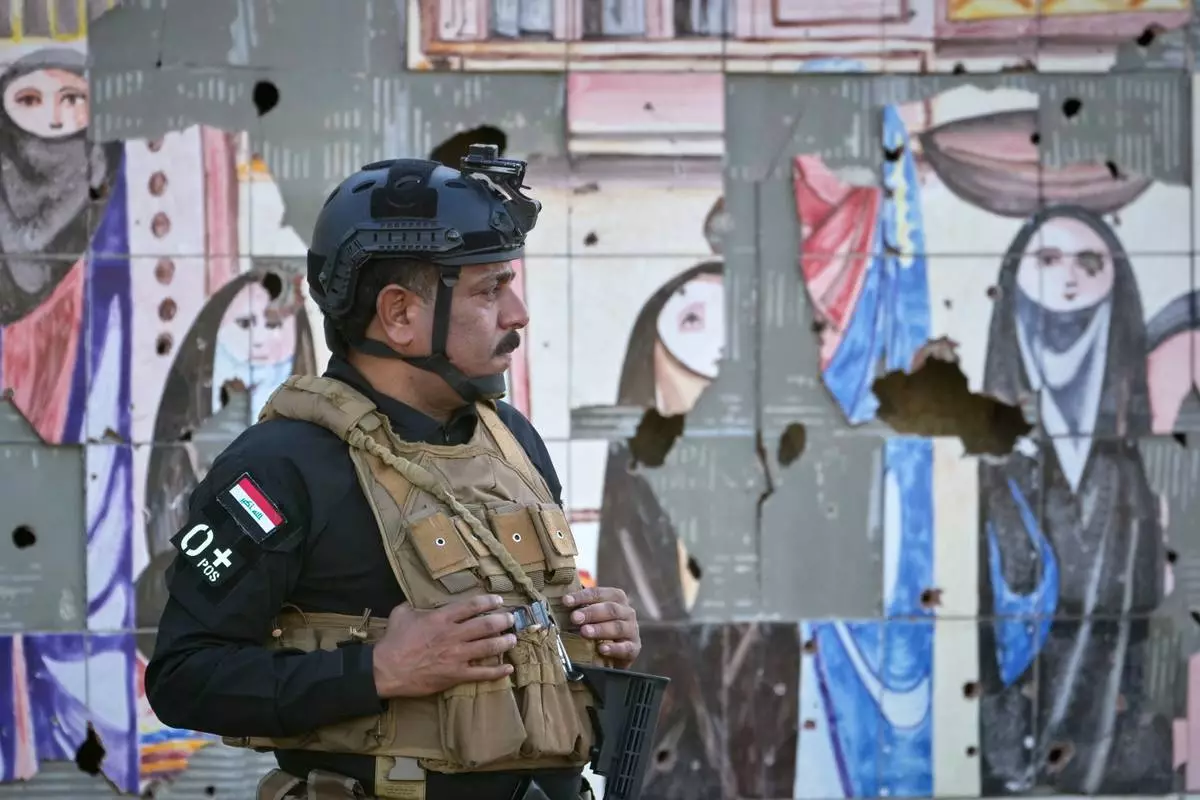
An Iraqi security officer stands guard at the site near Baghdad International Airport where Iranian military commander Qassem Soleimani was killed in a U.S. drone strike, during a visit by Iranian Parliament Speaker Mohammad Baqer Qalibaf in Baghdad, Iraq, Wednesday, Aug. 19, 2026. (AP Photo/Hadi Mizban)
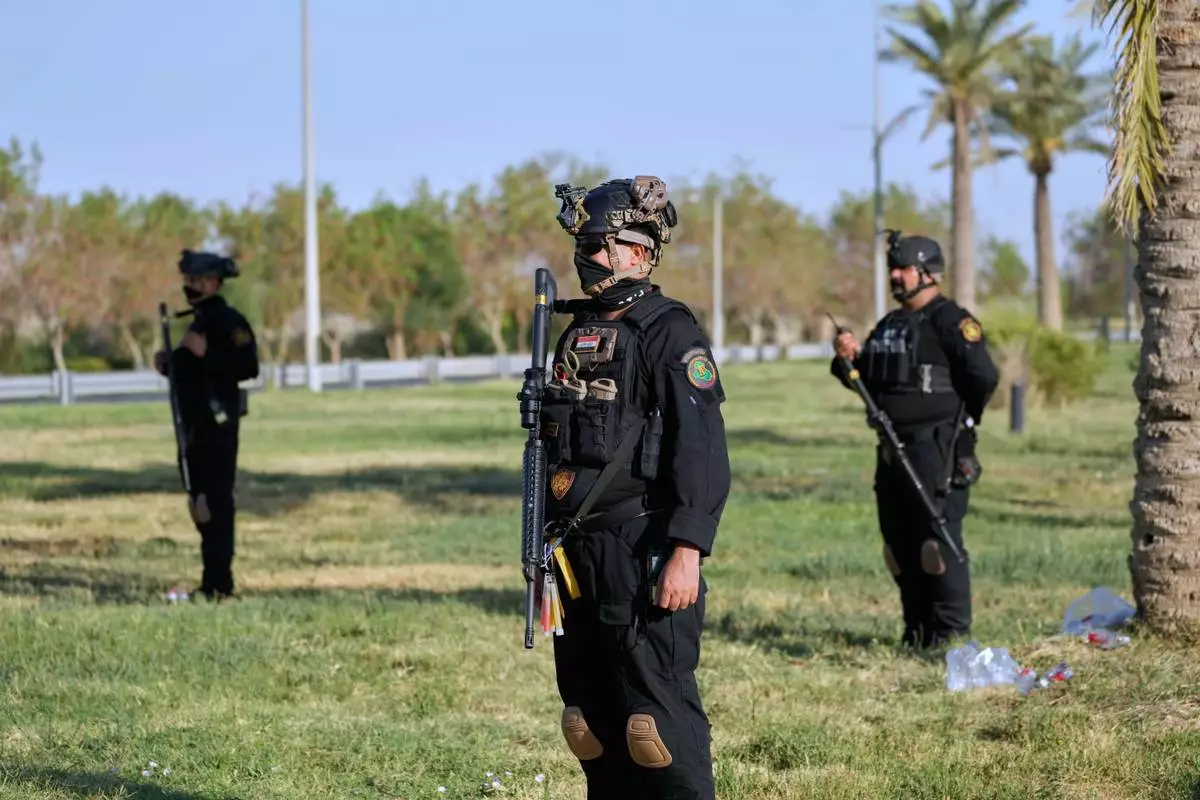
Iraqi security officers stand guard at the site near Baghdad International Airport where Iranian military commander Qassem Soleimani was killed in a U.S. drone strike, during a visit by Iranian Parliament Speaker Mohammad Baqer Qalibaf in Baghdad, Iraq, Wednesday, Aug. 19, 2026. (AP Photo/Hadi Mizban)
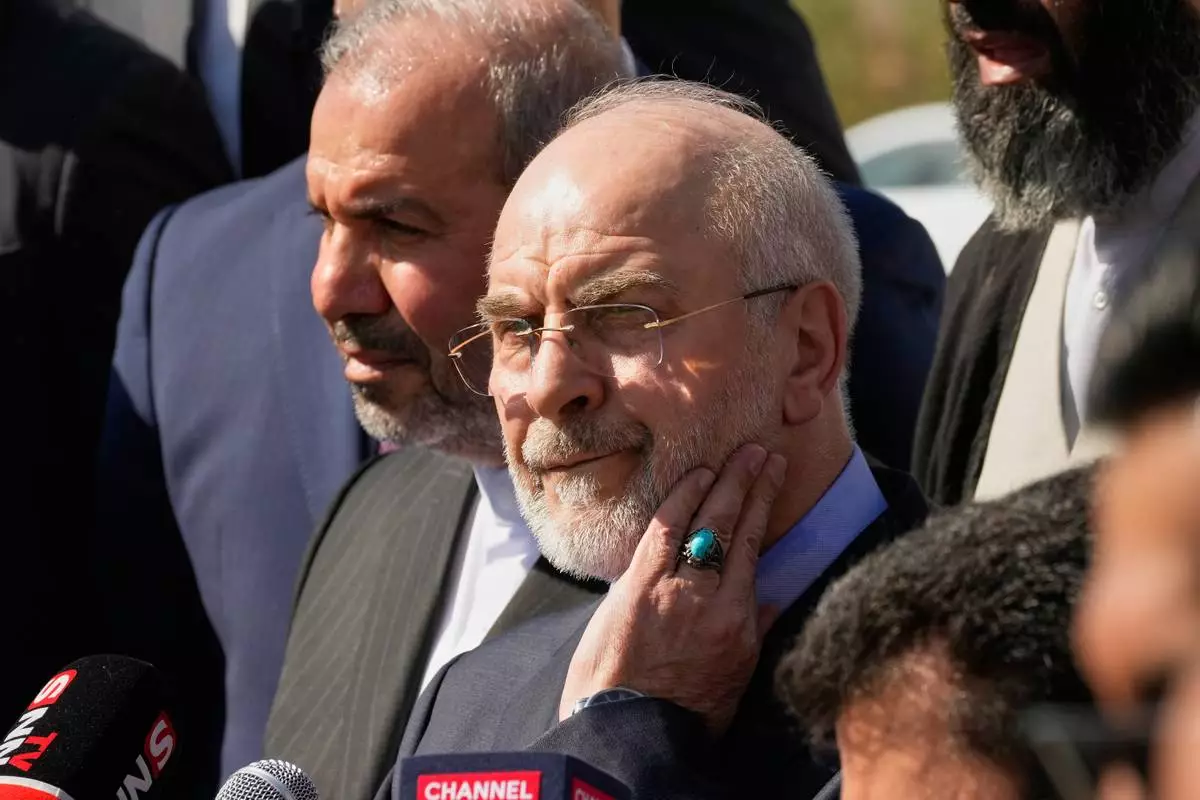
Iranian Parliament Speaker Mohammad Baqer Qalibaf visits the site near Baghdad International Airport where Iranian military commander Qassem Soleimani was killed in a U.S. drone strike, in Baghdad, Iraq, Wednesday, Aug. 19, 2026.(AP Photo/Hadi Mizban)
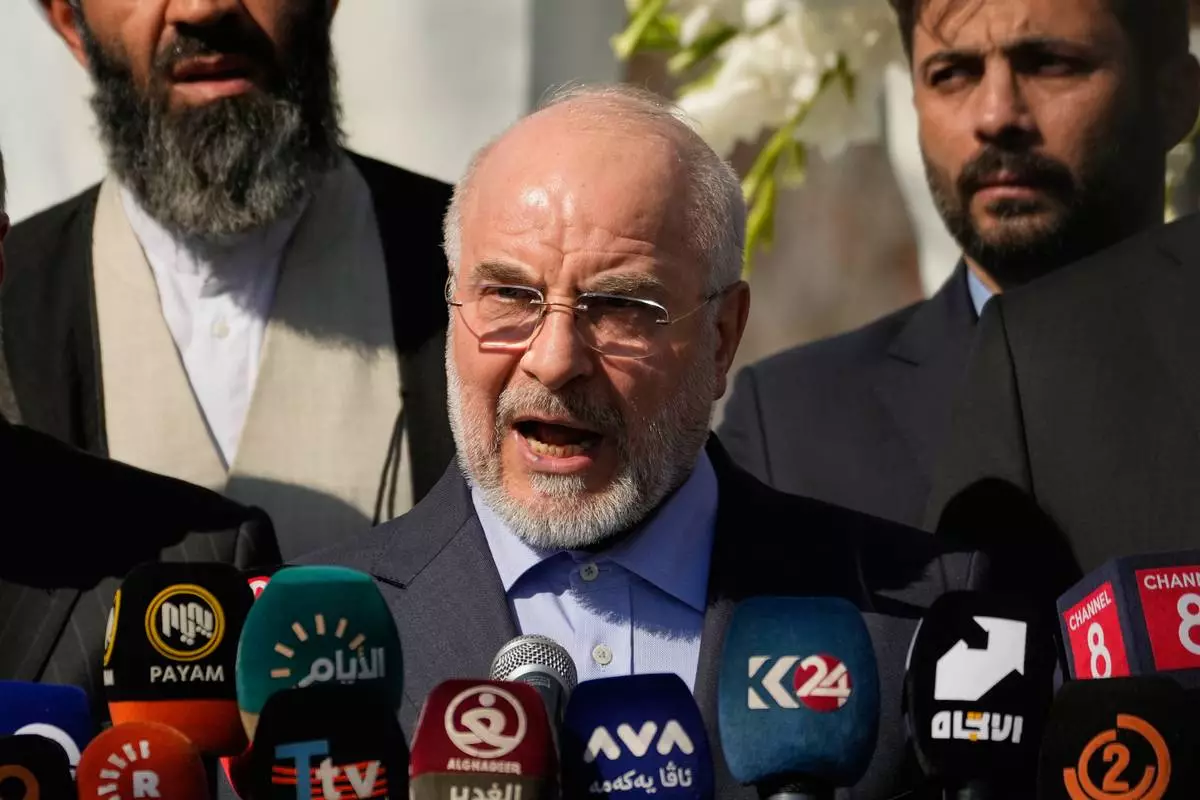
Iranian Parliament Speaker Mohammad Baqer Qalibaf addresses attendees at the site near Baghdad International Airport where Iranian military commander Qassem Soleimani was killed in a U.S. drone strike, in Baghdad, Iraq, Wednesday, Aug. 19, 2026.(AP Photo/Hadi Mizban)