HAUTVILLERS, France (AP) — Champagne producers are racing to pick their grapes as the region’s earliest harvest on record gets underway, after extreme heat and drought accelerated ripening, leaving growers a narrow window to preserve the quality of the region’s world-famous sparkling wine.
On the hillsides of Hautvillers, teams of grape pickers start work at 6:30 a.m. among rows of vines that were recognized as a UNESCO World Heritage site in 2015.
Click to Gallery
A bottle of champagne in display at the Gobillard vineyard in Hautvillers, Champagne region, France, Tuesday, Aug. 18, 2026. (AP Photo/Aurelien Morissard)
Champagne in a glass is displayed at Gobillard vineyard in Hautvillers, Champagne region, France, Tuesday, Aug. 18, 2026. (AP Photo/Aurelien Morissard)
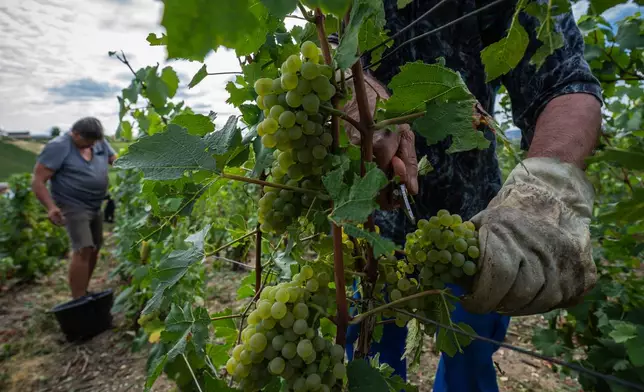
A grape-picker harvests Chardonnay grapes on a plot of the Gobillard vineyard in Hautvillers, Champagne region, France, Tuesday, Aug. 18, 2026. (AP Photo/Aurelien Morissard)
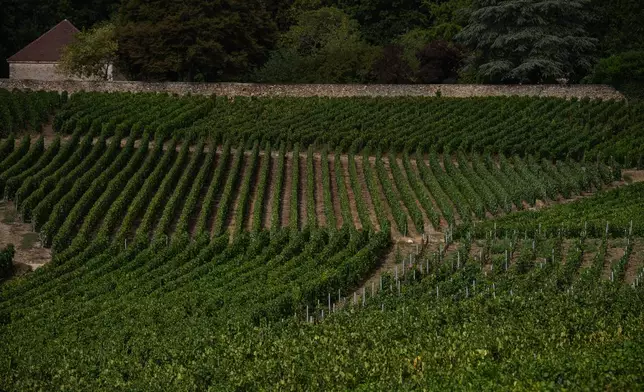
View of vineyard plots with different grape varieties in Hautvillers, Champagne region, France, Tuesday, Aug. 18, 2026. (AP Photo/Aurelien Morissard)
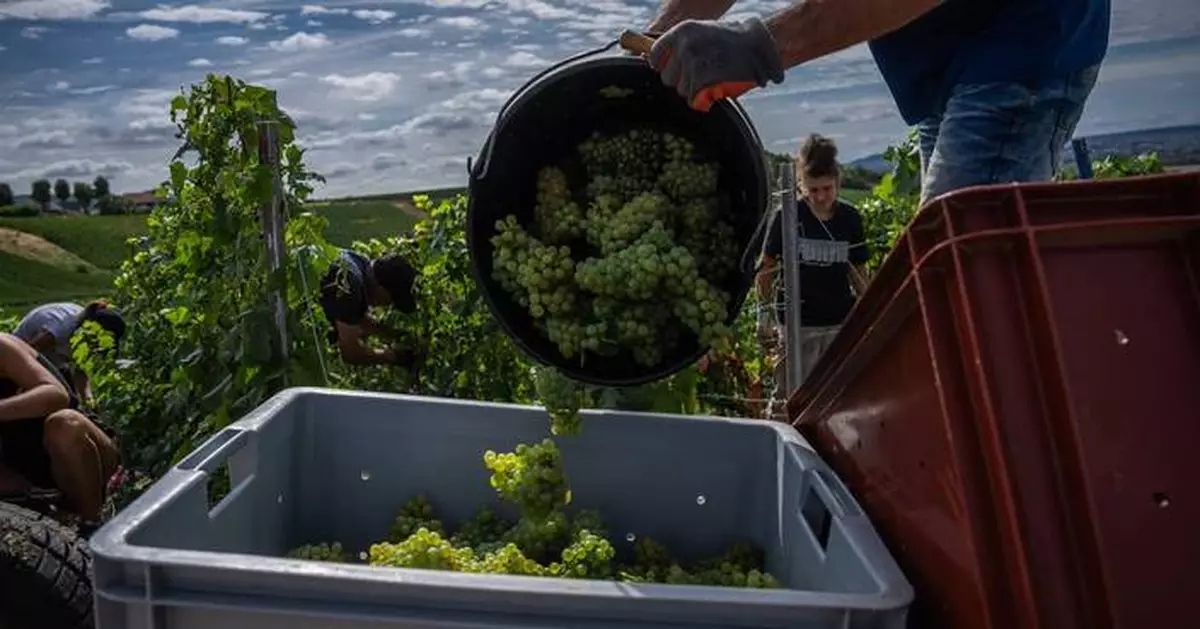
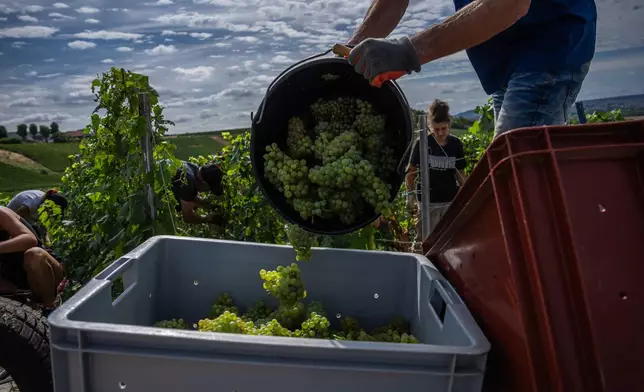
A grape-picker puts Chardonnay grapes into a crate on a plot of the Gobillard vineyard in Hautvillers, Champagne region, France, Tuesday, Aug. 18, 2026. (AP Photo/Aurelien Morissard)
For Alexandre Gobillard, production director at the Gobillard & Fils Champagne house, beginning the harvest in mid-August was once almost unthinkable.
“It’s historic in Champagne,” he said. “I’ve been working at the estate for 30 years, and when I started, my father used to tell me: ‘On Aug. 15, go on vacation.’ Today, it’s Aug. 18 and we’re in full harvest. We’ve never seen anything like it.”
At 50, Gobillard represents the fourth generation to work the family vineyards. Gobillard & Fils grows 40 hectares (about 100 acres) of vines and produces about 1.5 million bottles a year.
Champagne’s official harvest opened between Aug. 12 and Aug. 17 this year, depending on the area and grape variety — roughly a month earlier than what was once common in the region.
A late-March frost hit vines after mild temperatures triggered early budburst, reducing the potential crop. It was followed by four heat waves, which never happened before, Gobillard said.
Sun-scorched grapes turned partially brown, something Gobillard said he had rarely seen. He explained that losing roughly 10% of the grapes would mean a loss in volume rather than affect the quality of the wine.
Earlier harvests have become increasingly common in Champagne and other French wine regions as temperatures rise. In neighboring Italy, extreme heat has also prompted sparkling-wine producers to harvest sooner and pick grapes at night.
David Chatillon, president of the Union of Champagne Houses, acknowledged weather conditions this year will lead to a clear decrease in yields.
“But it’s not just because of the drought,” he said. “We lost 43% of the potential production to the spring frosts, and the drought has clearly made the problem of lower yields even worse.”
Chatillon said climate change has been a focus of the industry for the past 25 years, prompting investment in research and innovation to adapt to evolving conditions, including developing grape varieties that are more disease-resistant and ripen later.
Gobillard has seen the shift unfold across generations of his family.
“My grandfather’s generation harvested 100 days after flowering, my father’s 90 days, and today we’re down to 80,” he said. “We’re going to have to change our habits.”
This summer’s record temperatures compressed the ripening period even further. In June, temperatures reached 40 degrees Celsius (104 degrees Fahrenheit) in parts of Champagne.
“The vine needs water to live,” Gobillard said. “The water was drawn out of the grapes to keep the vine alive, and as a result we had a much higher concentration of sugar. That’s why it happened so much faster.”
As his daughter operated the wine press, Gobillard watched the year's first juice flow with a mix of excitement and anxiety.
He quickly took a sample to measure its sugar level — a key indicator of potential alcohol content and of whether the grapes have been picked at the right moment. “Champagne shouldn’t be too alcoholic. ... We’re looking for delicacy," he said.
The early harvest also poses logistical challenges in a region where grapes are traditionally picked by hand, with some workers still on summer vacation and others facing transportation delays.
Gobillard hopes to complete the harvest at the estate in about nine days, a job requiring around 120 workers recruited mostly from across France and Poland.
“It really changes how we look at Champagne’s traditional methods,” said Geoffrey Bonnet-Gobillard, 30, commercial director of the family Champagne house. “Hand harvesting comes with a lot of constraints — housing people, feeding them, recruiting them. It’s very difficult, especially with early harvests in August.”
Those pressures could eventually force producers to reconsider some long-established practices as agricultural machinery becomes more sophisticated, he said.
The house sells most of its Champagne in European markets, including Britain, Belgium, Italy and Spain, as well as in West Africa, with smaller volumes going to the United States and Asia, Bonnet-Gobillard said.
According to Comité Champagne’s 2026 industry report, 266.1 million bottles of Champagne were shipped in France and abroad last year, generating 5.7 billion euros ($6.6 billion) in sales. Exports accounted for 56.5% of shipments. Champagne represented about 8% of global sparkling wine consumption by volume but 31% by value.
The sector supports around 30,000 direct jobs and requires roughly 100,000 seasonal workers for the harvest, according to Comité Champagne.
Despite this year’s difficult conditions, Gobillard said the grapes he inspected were encouraging.
“I’m very happy with what I’m seeing,” he said. “We were worried that the drought would leave us with very light bunches, but in these plots we’re really pleased. The quantity should be sufficient and the quality will be there.”
But there is little time to spare. “It’s time to cut them. We’re going to have to move quickly,” he said.

A bottle of champagne in display at the Gobillard vineyard in Hautvillers, Champagne region, France, Tuesday, Aug. 18, 2026. (AP Photo/Aurelien Morissard)

Champagne in a glass is displayed at Gobillard vineyard in Hautvillers, Champagne region, France, Tuesday, Aug. 18, 2026. (AP Photo/Aurelien Morissard)
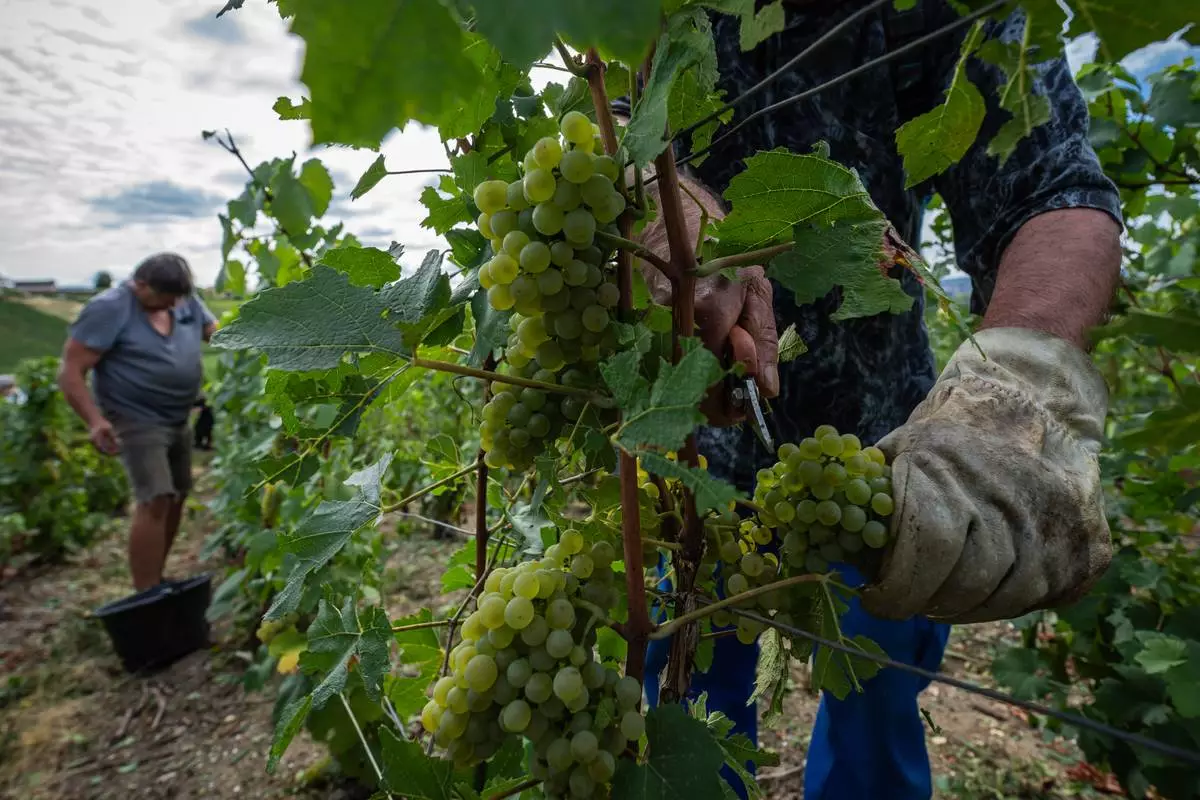
A grape-picker harvests Chardonnay grapes on a plot of the Gobillard vineyard in Hautvillers, Champagne region, France, Tuesday, Aug. 18, 2026. (AP Photo/Aurelien Morissard)
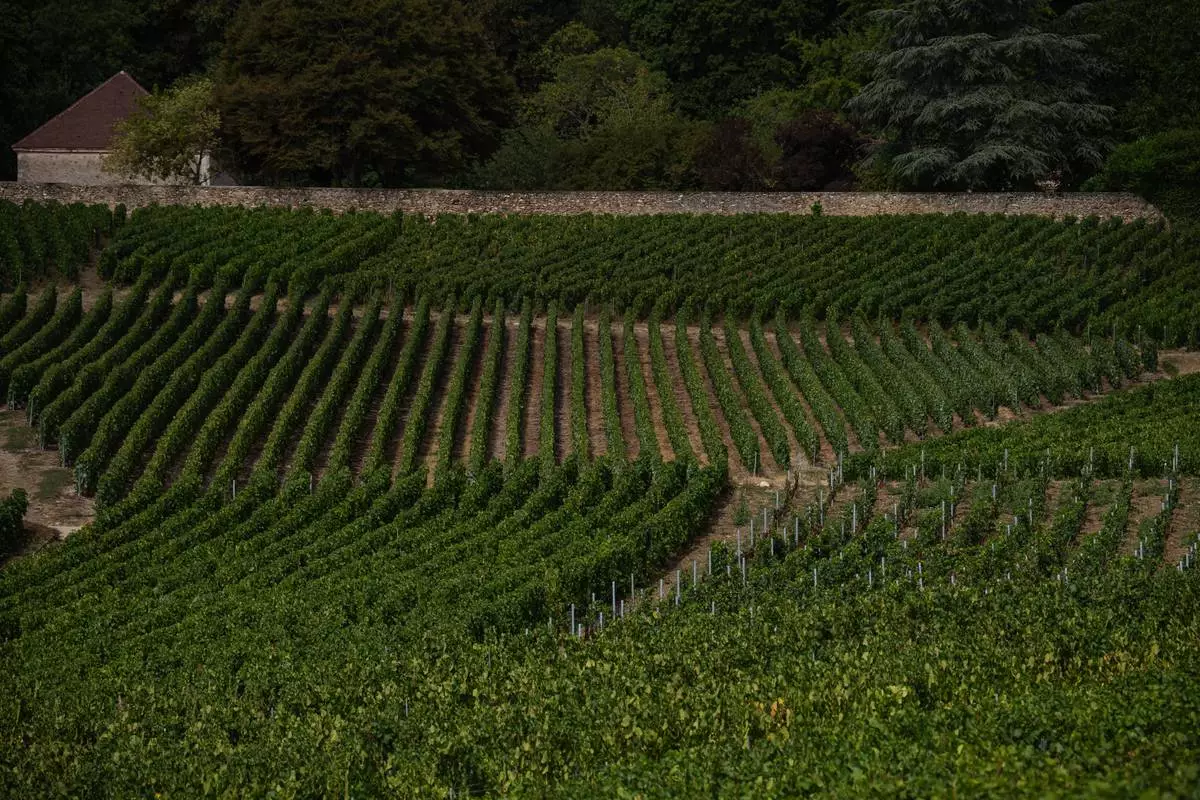
View of vineyard plots with different grape varieties in Hautvillers, Champagne region, France, Tuesday, Aug. 18, 2026. (AP Photo/Aurelien Morissard)
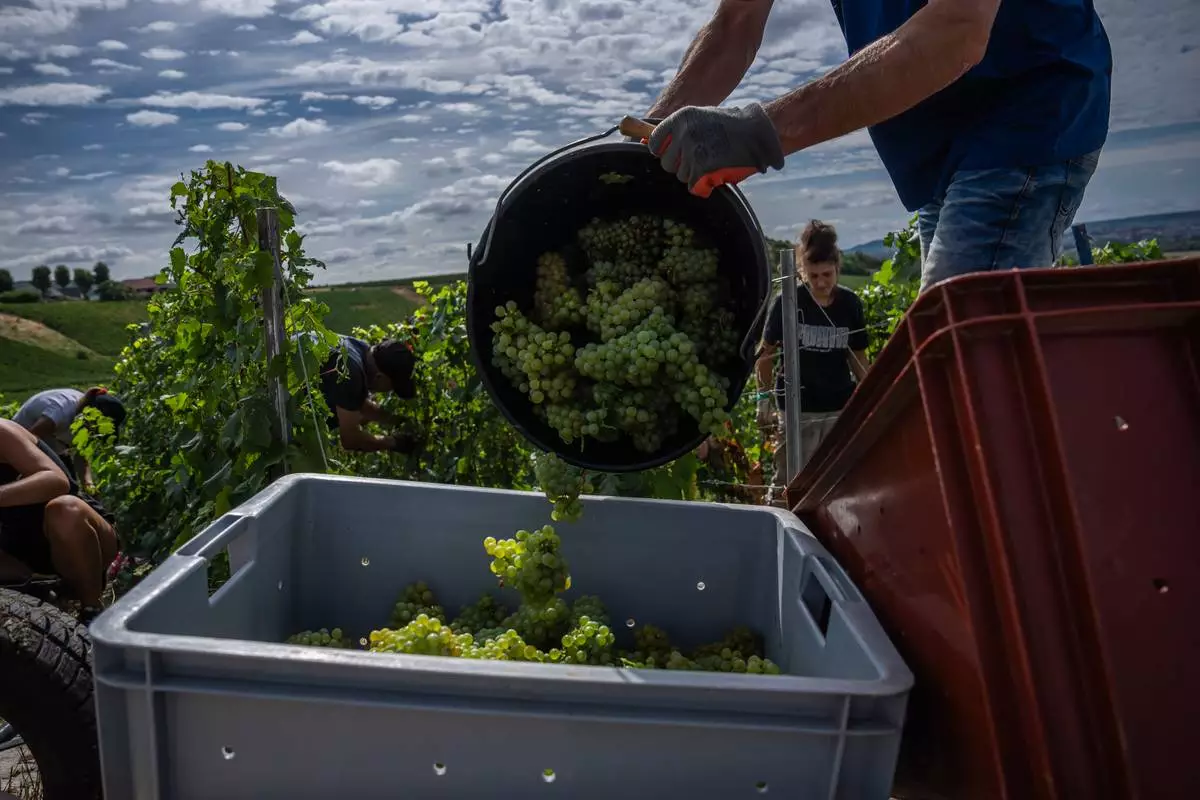
A grape-picker puts Chardonnay grapes into a crate on a plot of the Gobillard vineyard in Hautvillers, Champagne region, France, Tuesday, Aug. 18, 2026. (AP Photo/Aurelien Morissard)
CAIRO (AP) — Palestinians face inflated prices for groceries and batteries, hospitals have turned to smugglers for medicine and equipment, and Israeli soldiers and other middlemen are accused of pocketing millions of dollars as the smuggling of goods restricted by Israel into the Gaza Strip has boomed, according to an Associated Press investigation based on court documents and interviews with traders, truckers and officials.
Cigarettes and tobacco — banned from entry to Gaza since the start of the Israel-Hamas war in October 2023 — rake in the biggest profits for smugglers and merchants, officials and residents say. But everything from iPhones and solar panels to fuel and anesthetics are also brought into the tiny coastal territory illegally. Israel restricts quantities of some goods and bans others outright. It defines many as “dual use” — including concrete, vehicle parts and X-ray machines — asserting they could be repurposed by Hamas militants for military functions.
To build a picture of the illicit trade, The Associated Press analyzed Israeli court documents and spoke to five major traders who import smuggled goods, three merchants who sell them, and two truckers — all on condition of anonymity because of their roles in the illegal smuggling business and concerns about their safety in Gaza. AP also interviewed four Palestinian officials, two on condition of anonymity because of worries about retribution from Israel, Hamas or merchants; two U.N. officials, on condition of anonymity over concern for their jobs; and a dozen Palestinian residents, who spoke about how they get everyday items and their skyrocketing costs.
AP found a rush from all sides to profit off the tight restrictions imposed by Israel on Gaza and its 2 million residents, most of whom have been displaced by the war. Smuggling rings — which have long flourished, circumventing two decades of Israeli blockades and building a network of businessmen and collaborators — pull in millions of dollars. Payoffs go to Israeli troops, drivers, warehouse workers and others on both sides of the border, according to traders and court documents.
“The occupation has left no other option before us. Smuggling has become routine,” one trader said, noting that some in Israel’s military are willing to help — for a price. “We benefit, they benefit and the people in Gaza benefit because we provide goods, including food, to the market.”
The Israeli military said via email that it takes the issue of smuggling “very seriously and works to prevent it.” It said any cases of suspected involvement by Israeli military personnel are “examined and handled in accordance with the law.” But military officials did not answer a list of detailed questions from AP on the roles of soldiers or Gaza's government in smuggling.
Gaza's Hamas-led government also takes in some of the profit, according to merchants and one Palestinian official. Merchants call it “taxing” — on both smuggled goods and those brought in legally.
Mohammad Barbakh, of the Palestinian Economy Ministry in Gaza, told AP the government receives up to 20% of the price of any smuggled goods if the merchant reports them to authorities, and that increases to 80% if the items go unreported and authorities discover them. But he said authorities don't refer to their cut as “taxes” and that they haven't taxed goods entering legally since the war's start.
Since the war began, Israel has tightly controlled all entry of food, aid and goods into the Gaza Strip, including a total aid blockade that shut off entry entirely for nearly three months last year, pushing parts of the territory into famine. The flow of goods has increased since a fragile ceasefire deal went into effect in October but remains well below prewar levels.
Besides the U.N. and other humanitarian groups bringing in aid, Israel has given 12 senior traders in Gaza permits to import commercial goods. Contents of shipments must be approved by Israeli authorities, a process aid workers and merchants say can be long and opaque, sometimes ending with a rejection on grounds of “dual use.”
The military classifies a list of some 150 broad categories of items as “dual use,” including concrete, asphalt, steel pipes and wooden planks, according to documents provided by COGAT, the military department in charge of coordinating entry of goods into Gaza. In a statement to AP, COGAT said it has let in some “dual use” items including generators and X-ray machines, in specific cases under strict monitoring.
Some senior traders turn to smuggling networks to meet demand in Gaza, where smaller merchants look to sell contraband.
Two merchants and a trucker who is part of Gaza's union told AP that sometimes government agencies ask for specific items to keep functioning — fuel, spare parts for civil defense vehicles or generators. Hospitals also turn to smugglers, for drugs and some equipment.
And tribal elders request smuggled goods for their communities, including medicines that are in short supply, a tribal leader told AP, on condition of anonymity over concerns for his safety.
Two senior traders and an aide to a third told AP they send lists of contraband goods they want to import to “coordinators” — Israeli and Palestinian middlemen in Israel and the West Bank. Coordinators line up merchandise, then arrange a route into Gaza.
Commercial goods and aid mostly go through the Kerem Shalom crossing in the south, where every truck is inspected. The military also has routes in and out of Gaza for its vehicles. Smugglers use both avenues, bribing soldiers to smooth the way for trucks or carry goods in military vehicles, according to the traders and Israeli court documents.
Trucks belonging to humanitarian groups are also used sometimes, though less often, according to merchants and Israeli government statements.
Smuggling has become vital to Gaza’s economy — it’s a major source of income as most of the population “lost their source of living,” the tribal leader said.
Several top merchants estimated that smuggling makes up over half their total operations and can bring in more than 70% of profits.
Payments go to many players, including drivers and warehouse workers in Israel and Gaza, said one major trader. “You are paying at every step, plus the price of the goods themselves,” he said.
All those costs get passed on to the people in Gaza. Residents say a vehicle battery can go for more than $2,300, compared with $140 prewar. Solar panels sell for $3.25 per watt, from 16 cents a watt.
“The smuggling flourished in the second half of 2024 as the market started to dry up,” said Mohamed Abu Taha, a Gaza resident and father of one, noting that chicken, meat, and other food staples were brought in covertly. “Baby formula and pet food were also smuggled.”
But perhaps no item is as in demand as cigarettes and tobacco. The price per pack, residents say, has hit as much as $140 recently, and over $1,000 during Israel's total blockade.
“You could find two or three men sharing one cigarette,” Abu Taha said. Some resort to smoking a dried green called molokhia. COGAT did not reply when asked why cigarettes are banned.
For smugglers, cigarettes and nicotine products are easy to hide and the potential profit huge. Shipments of thousands of packs have been hidden in Israeli military vehicles, commercial trucks, aid shipments and even hollowed-out pineapples, according to traders, court documents and Israeli official statements.
On smuggled goods, Gaza's government profits primarily by taking its percentage of the price but doesn't engage in commercial smuggling directly or oversee the trade, according to merchants and Barbakh, the economy ministry official.
Two major traders said the government demands for money increased since the ceasefire deal. Both said they were summoned by Hamas authorities over goods they smuggled to Gaza over the course of the war. A settlement was reached, and one of the traders said he paid $3.5 million; the other, around $3.75 million.
Two senior officials in the Hamas administration said — on condition of anonymity because they weren’t authorized to speak to journalists — the money helps fund social services and pay salaries for the tens of thousands employed in Gaza's civil service and police force. They estimated up to $100 million had been collected on smuggled goods since the ceasefire.
Barbakh said the government doesn’t have exact figures on smuggled goods “because these operations are conducted clandestinely, away from the oversight of relevant authorities.”
In response to AP questions, Ismail al-Thawabta of the government's media office said none of the collected funds go to Hamas' military wing. He said all resources are directed to providing services to people and “maintaining the continuity of public facilities under the exceptional circumstances in the Gaza Strip.”
The government destroys any expired goods it confiscates, including groceries.
But the two senior officials — as well as two merchants and one trucker — told AP that Hamas sells confiscated cigarettes. Al-Thawabta did not respond when asked about the claim.
Smugglers appear to wield enormous influence. In court documents, Israeli prosecutors pointed to one mysterious smuggler known only as Abu Bassel who they said has “numerous connections within the Israel Police.”
In one instance described in the documents, Israeli police stormed a warehouse in a Jewish settlement in the West Bank full of cellphones and cigarettes that smugglers were loading onto trucks for Gaza. One of the smugglers called Abu Bassel and handed the phone to an officer, the document says, and after a conversation, police called off the raid, leaving without arresting anyone or confiscating any goods.
All of those who spoke to AP said Abu Bassel is the smuggling world’s biggest coordinator. They also said they knew nothing about him — his real name, whether he was Israeli or from the Palestinian territories, or how he built his network.
“He is the master,” a senior Gaza Chamber of Commerce official said. “Nothing can enter Gaza without his stamp.”
One Gaza merchant said he has spoken by phone with Abu Bassel but wouldn’t provide AP the number. He said the shadowy figure uses connections with the military and intelligence to resolve problems for shipments. “Many police raids have been thwarted because of him.”
The Israeli court documents also have no details about Abu Bassel’s identity but said he uses an aid organization, Al-Mughtarib Al-Falastini, as a cover. The group denied in a Facebook post that it was involved in smuggling.
Since late 2025, Israeli authorities have broken up several alleged smuggling rings, indicting more than a dozen people, including reserve soldiers operating in Gaza. But the traders, merchants and truckers who spoke to AP say that's only a fraction of those involved.
In one of the biggest cases, prosecutors accused two Israeli brothers, Eliran and Avi Algarabli; business partner Yaron Peretz; and another Israeli of running a smuggling ring out of the central town of Kiryat Gat.
According to a series of indictments against them and others, they're accused of bribing reserve soldiers in Gaza, chief among them Bezalel Zini, brother of the head of the Shin Bet, Israel’s powerful domestic security agency.
The documents say Zini was a commander in a military engineering unit. The ring allegedly paid Zini the equivalent of about $120,000 to smuggle three shipments totaling some 6,000 packs of cigarettes in his vehicle, according to the indictments. Two other reservists enlisted by the ring ran four trips into Gaza in one day, ferrying in 20,000 packs of cigarettes, hundreds of iPhones and medical equipment, the indictments say.
Court documents assert that millions of dollars are changing hands in smuggling rings. The Algarabli brothers earned some $2.2 million from a series of smuggling runs from October to December, when they were arrested, documents say. Other defendants in cases are accused of making $1 million to $3 million.
For Gaza residents, living through another summer with limited resources has become almost unbearable.
Fans that once cost $100 can run $500.
“When we ask the merchants why they don’t import fans, they say the Israeli army refuses to allow them in because they’re dual use,” resident Mohamed Abu Olwan said.
Mohamed Abuel-Enein, a displaced man from the southern city of Rafah, said that's illogical.
“I don’t understand the harm in allowing fans through the crossings,” he said.
“What would they make with them? Rockets? We can’t live in these tents. All day long, we use cardboard to light a fire, or we splash water on the children because of the heat.”
Associated Press journalists Wafaa Shurafa in Deir al-Balah, Gaza; Natalie Melzer in Tel Aviv, Israel; and Lee Keath in Cairo contributed.
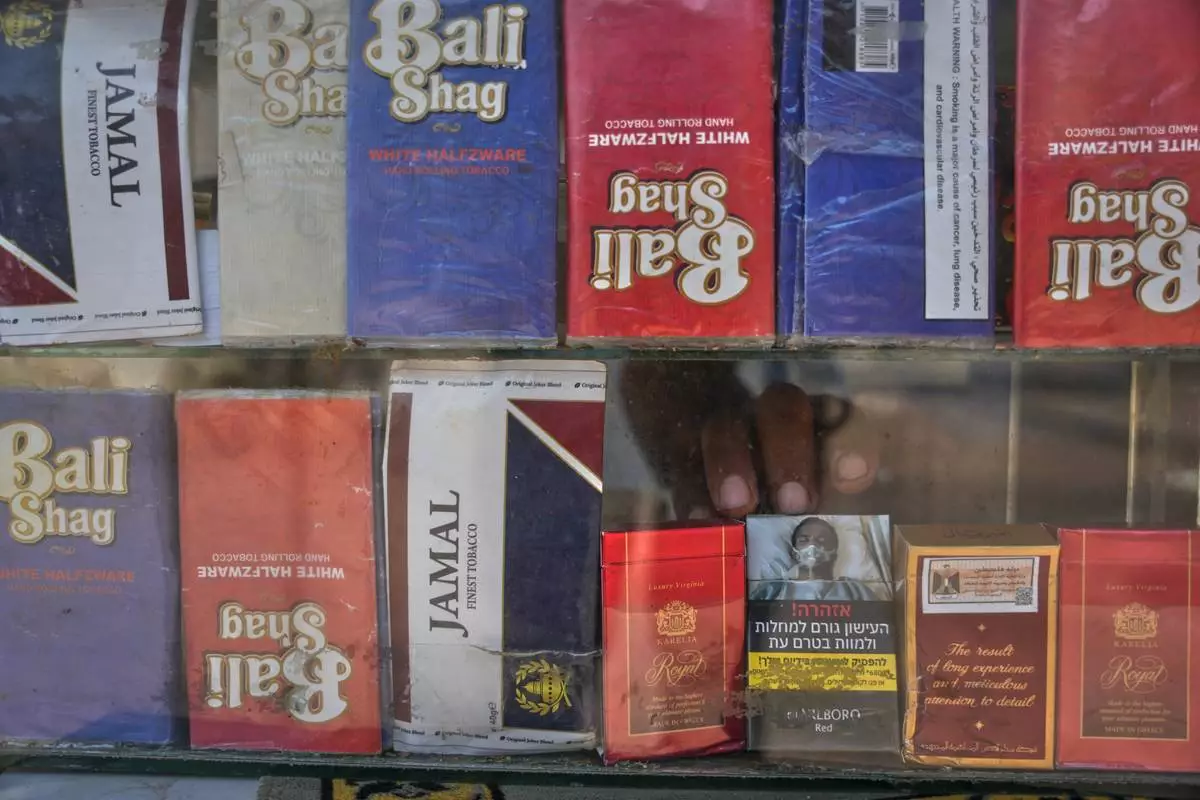
A vendor reaches for a pack of cigarettes at his kiosk in Deir al-Balah, central Gaza Strip, Friday, Aug 14, 2026. (AP Photo/Abdel Kareem Hana)
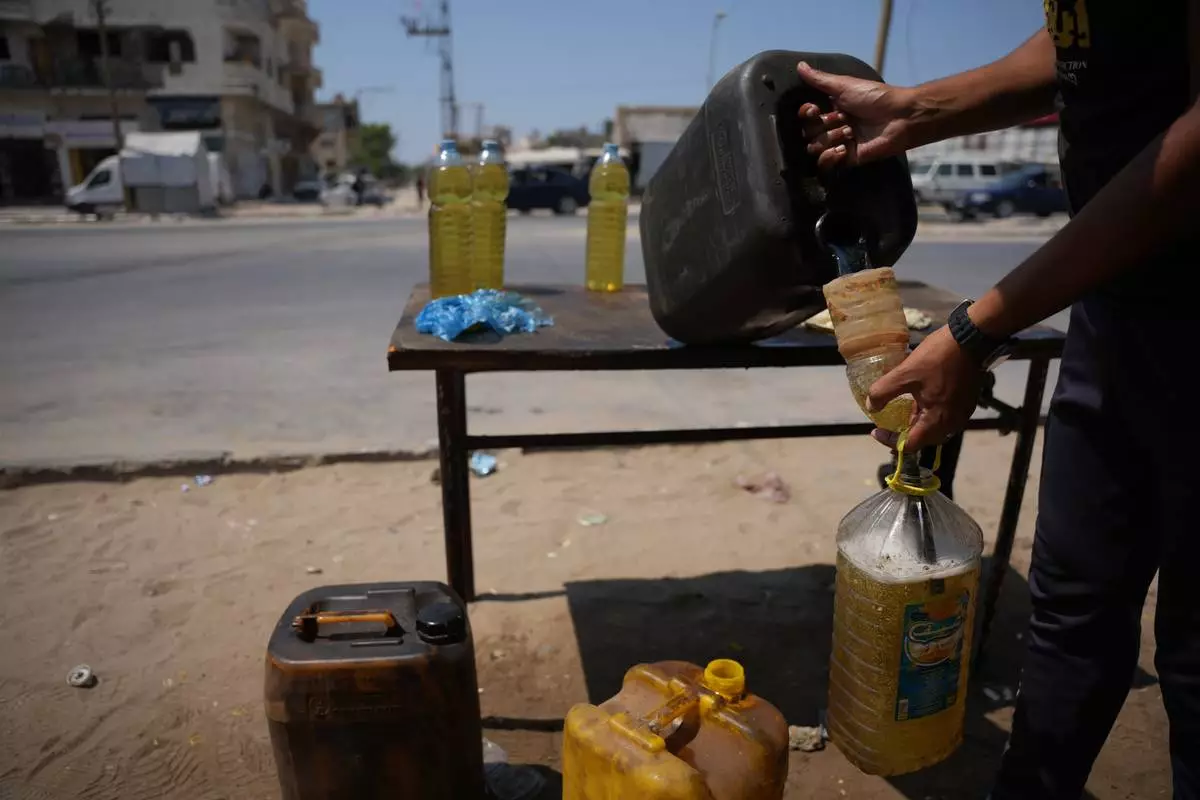
A Palestinian vendor fills bottles with diesel as he offers them for sale in al-Maghazi refugee camp, central Gaza Strip, Saturday, Aug. 15, 2026. (AP Photo/Abdel Kareem Hana)
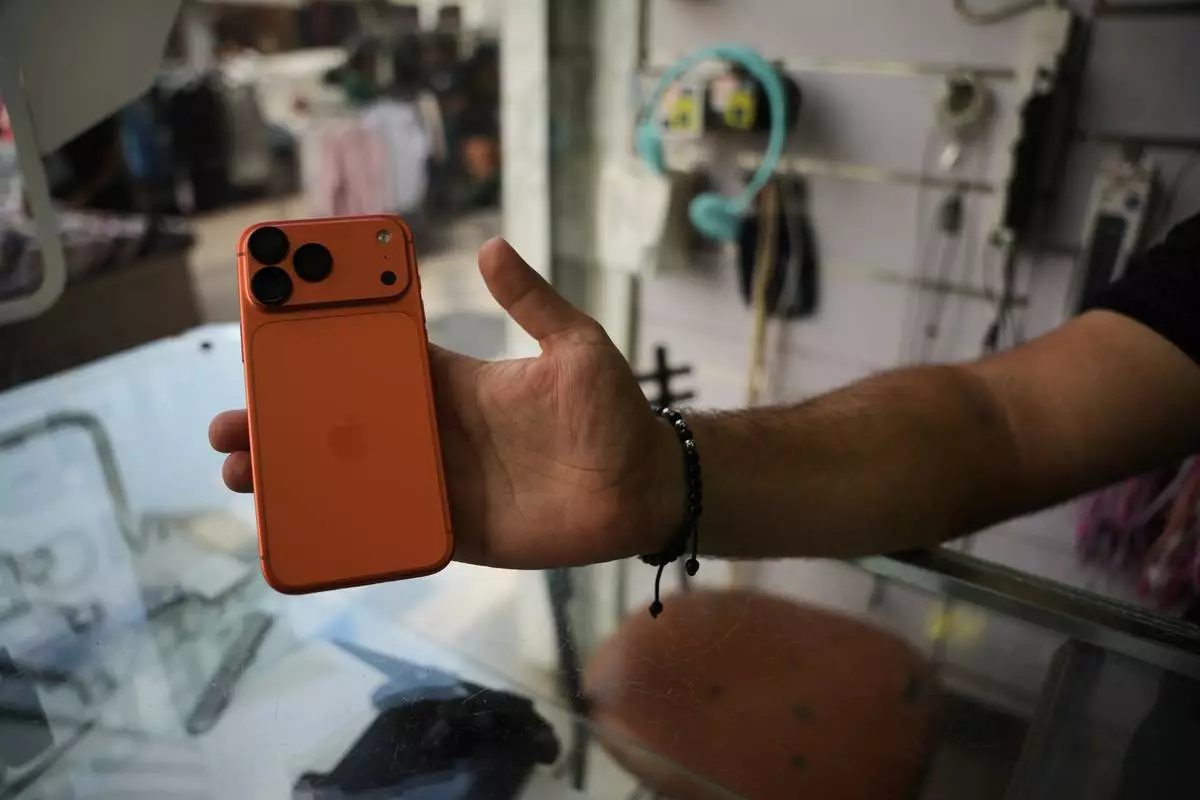
A Palestinian salesman shows an iPhone 17 Pro Max to the camera at a mobile phone store in Gaza City, Sunday, Aug. 16, 2026. (AP Photo/Abdel Kareem Hana)
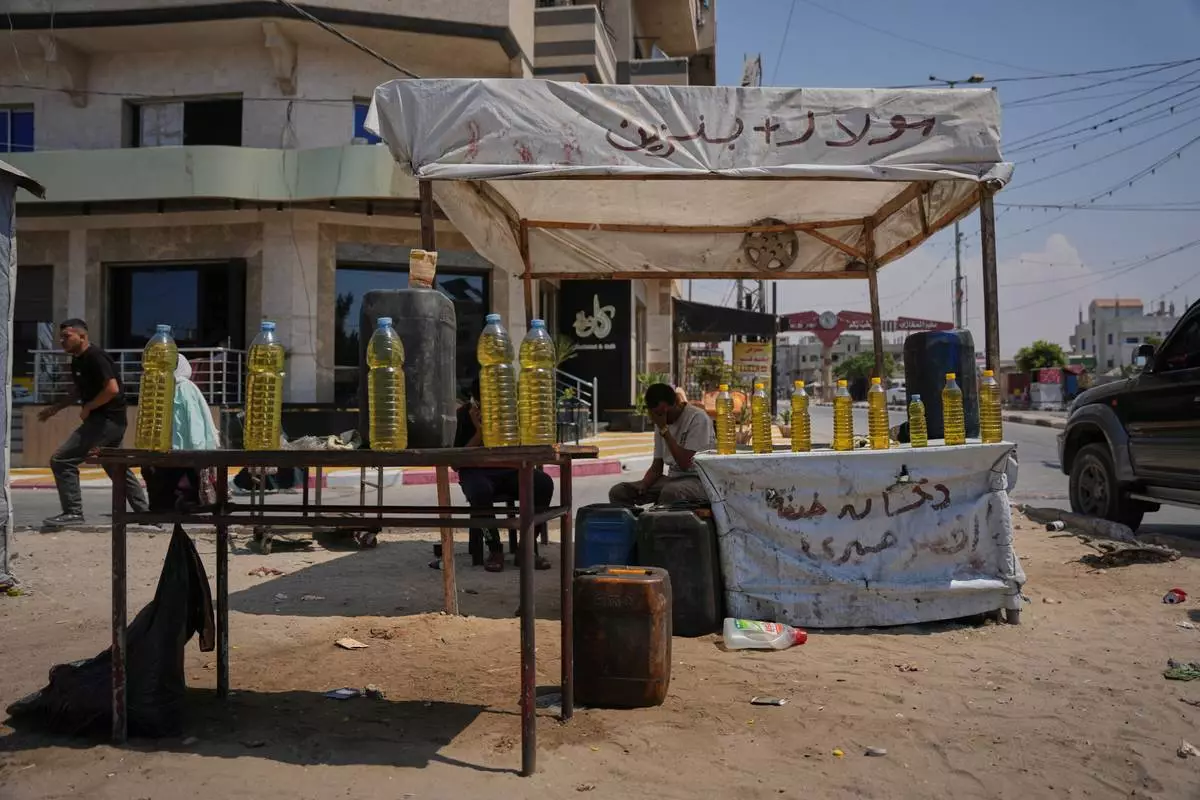
A Palestinian vendor offers bottles of diesel for sale in al-Maghazi refugee camp, central Gaza Strip, Saturday, Aug. 15, 2026. (AP Photo/Abdel Kareem Hana)