LONDON--(BUSINESS WIRE)--Aug 20, 2026--
The foldable smartphone market is expected to grow by more than 20% annually through 2028, with shipments reaching 36 million units, as leading vendors introduce innovative form factors, according to Omdia’s Smartphone Feature Forecast.
This press release features multimedia. View the full release here: https://www.businesswire.com/news/home/20260819141961/en/
Annual shipments are projected to more than double compared with 2025, supported by the emergence of a new wide-format design that is gaining adoption among major smartphone vendors.
“In a year defined by supply chain constraints and market uncertainty, foldable smartphones stand out as the industry's most compelling growth story,” commented Zaker Li, Principal Analyst. "Huawei pioneered this new wide-format design with the Pura X Max in May 2026, followed by Samsung's Galaxy Z Fold 8 in August. With other leading vendors set to launch similar products in the coming months, this new category is driving a fresh wave of growth in the foldable smartphone market."
Wide-format foldable smartphones emerge as a new growth driver
This new wide-format foldable design features a shorter and wider aspect ratio, giving the device a more tablet-like format when unfolded. Compared with traditional book-type foldables, this design can improve portability by reducing overall device volume and weight while providing a larger viewing area for productivity and content consumption. Its wider external sub-display allows more horizontal content to be shown during everyday use, while the unfolded internal display delivers a full-screen, tablet-like experience for multitasking, media consumption, and mobile productivity. This form factor is expected to become an important trend for the next generation of foldable smartphones.
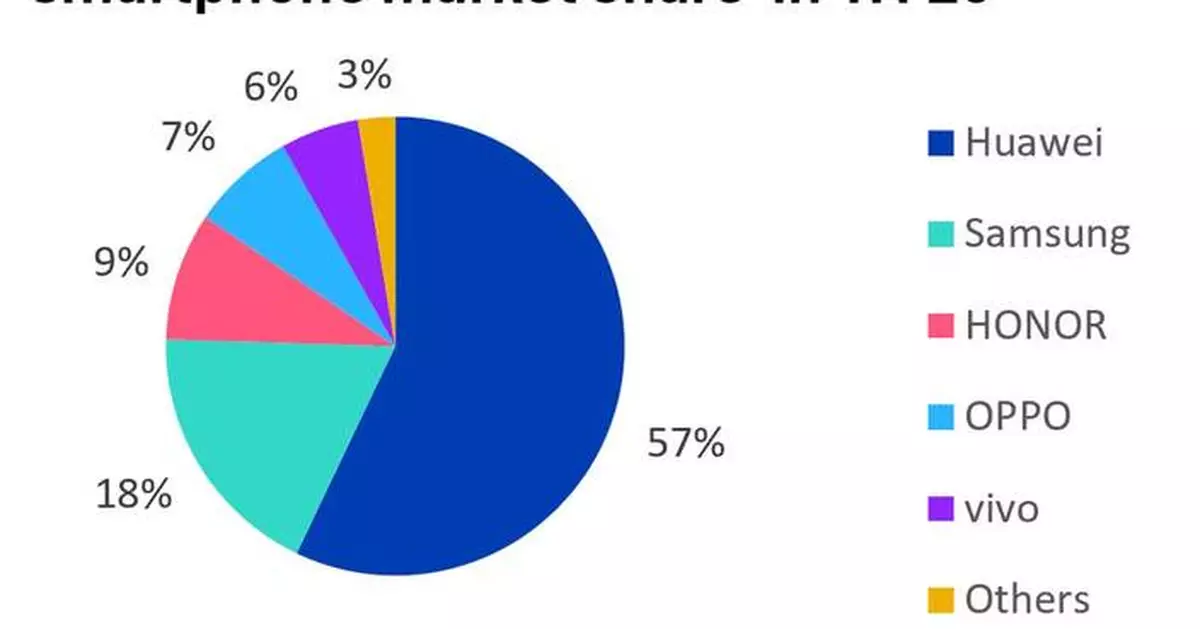
According to Omdia smartphone shipment data, global foldable smartphone shipments reached 18.2 million units in 2025, with year-on-year (YoY) growth slowing to 6%, the lowest rate recorded in recent years. During the first half of 2026, shipments reached 5.1 million units, down 21.6% YoY. Flip-type foldable smartphones declined 47% compared with 1H25, while book-type foldable smartphone shipments remained broadly flat. Book-type shipments accounted for 69% of global foldable smartphone shipments in 1H26, with Huawei and Samsung together dominating 75% of the segment. The emerging wide-format book-type foldable design is projected to support future growth in the category, while demand for flip-type continues to weaken. Leading vendors have already increased production targets for wide-format foldable smartphones in 2026, and more Android brands are expected to adopt similar designs in 2027. As production expands across vendors, these devices are projected to contribute to stronger growth in global foldable smartphone shipments.
Foldable smartphones remain a premium niche despite long-term growth
Omdia forecasts global foldable smartphone shipments to exceed 22 million units in 2026, with YoY growth recovering to more than 22%. Over the long term, foldable smartphones are expected to remain a premium niche within the global smartphone market, with shipments forecast to reach 45 million units by 2030, accounting for less than 3% of total global smartphone shipments.
Foldable smartphones continue to face structural cost barriers, with complex components including large displays, hinges, and specialized glass keeping bill of materials (BOM) costs high. Vendors are therefore prioritizing premium positioning rather than volume, while consumers must weigh higher prices against product trade-offs, including camera performance and repair costs. To drive adoption beyond early adopters, vendors will need to develop differentiated, value-added services that take advantage of the foldable form factor, while exploring strategic partnerships that can reduce ownership costs and demonstrate clearer use-case benefits over conventional smartphones.
ABOUT OMDIA
Omdia, part of TechTarget, Inc. d/b/a Informa TechTarget (Nasdaq: TTGT), is a technology research and advisory group. Our deep knowledge of tech markets grounded in real conversations with industry leaders and hundreds of thousands of data points, make our market intelligence our clients’ strategic advantage. From R&D to ROI, we identify the greatest opportunities and move the industry forward.
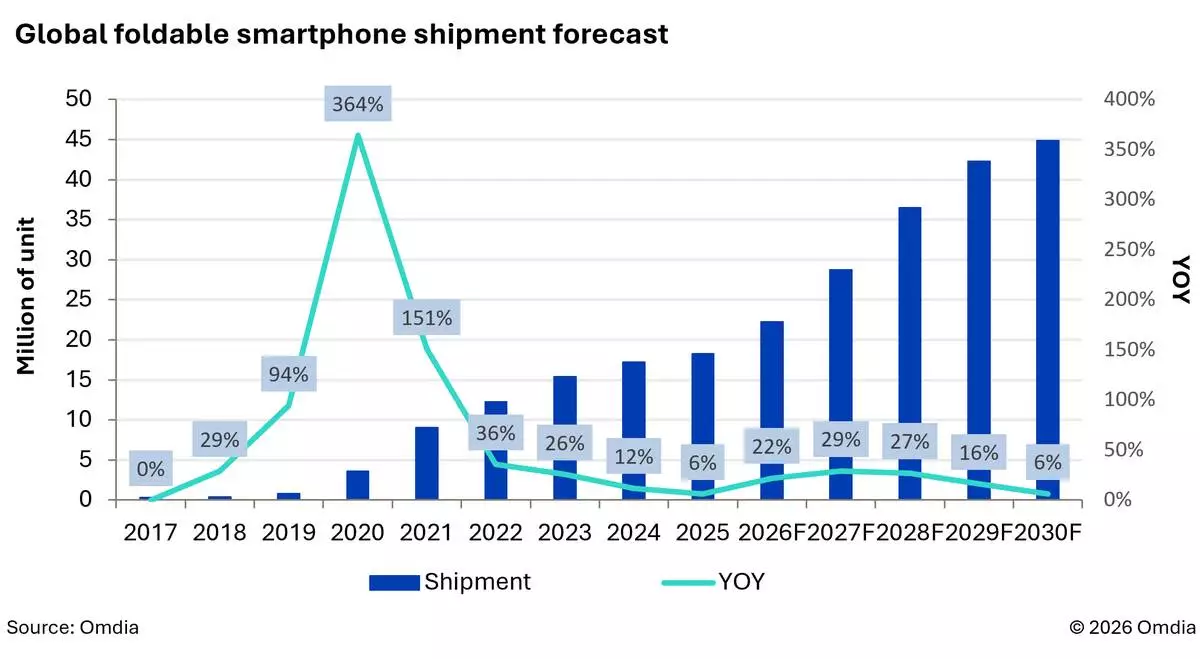
Global foldable smartphone shipment forecast
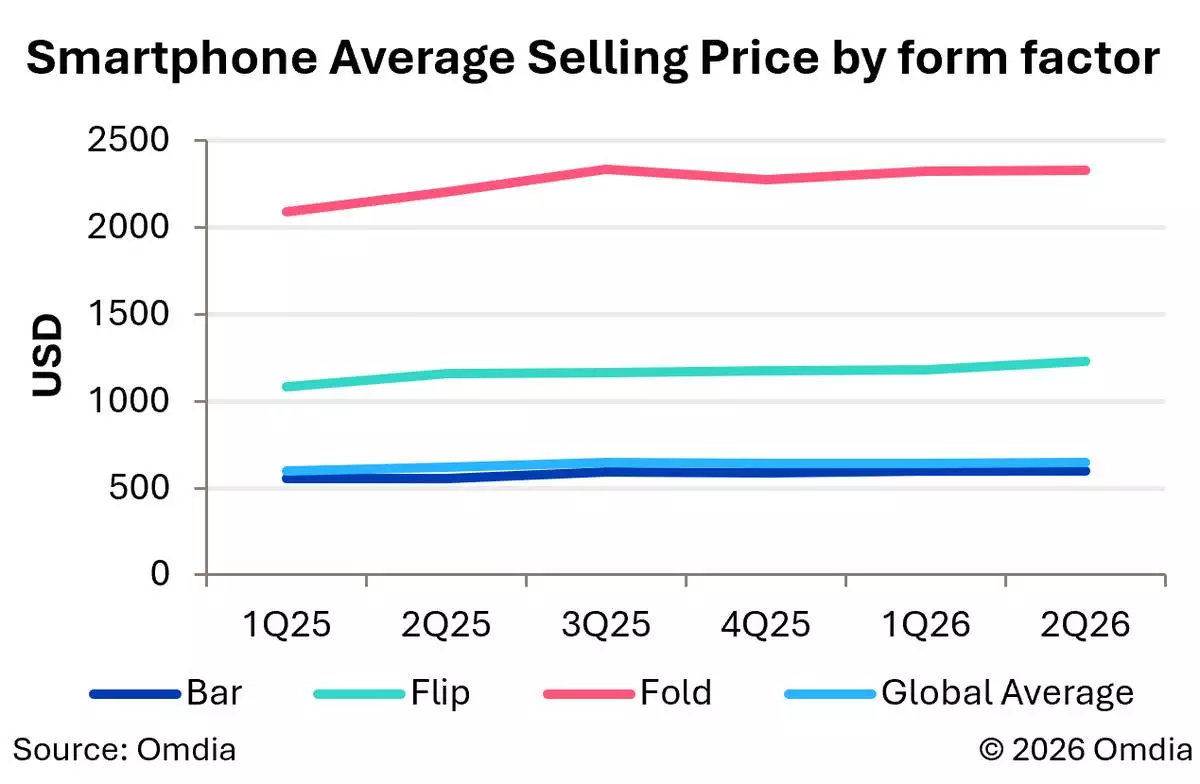
Smartphone Average Selling Price by form factor
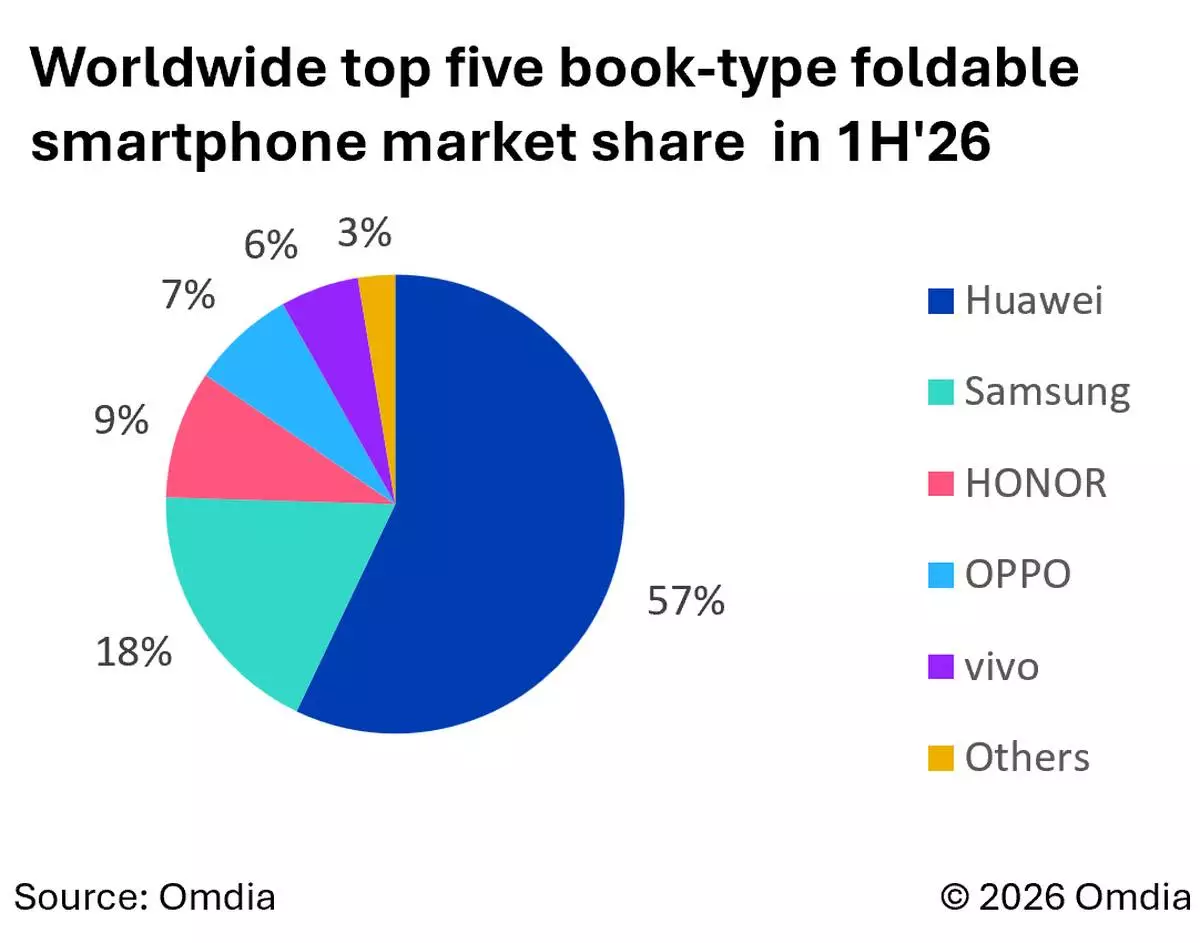
Worldwide top five book-type foldable smartphone market share in 1H'26
MELBOURNE, Australia (AP) — Triple-murderer Erin Patterson should never be released from prison after she poisoned four of her estranged husband’s relatives with death cap mushrooms, a prosecutor told an Australian court on Thursday.
Prosecutor Brendan Kissane told three judges of the Victoria state Court of Appeal that a judgment that Patterson must serve 33 years of a life sentence before she can apply for parole was “manifestly inadequate,” in an appeal on the leniency of her sentence.
Kissane said Patterson should never be considered for parole but that if the judges did not agree, then they should impose a nonparole period longer than 33 years.
“That’s a harsh submission to make,” Kissane said of removing any possibility of parole.
“But … it’s demanded by the nature of the offending,” he added.
Patterson on Wednesday began her appeal against convictions on three counts of murder and one of attempted murder relating to a lunch of beef Wellington pastries she prepared at her rural home in Leongatha in July 2023.
Few Australian prisoners are sentenced without prospect of release on parole.
The judges reserved their decisions on both appeals until a date to be set.
Kissane said the 51-year-old would be around 82 years old before she could be considered for release under her current sentence.
Because of her notoriety, Patterson is held in the high-security Gordon Unit of Melbourne’s Dame Phyllis Frost Centre women’s prison. The unit is for prisoners assessed as being at high risk from other inmates.
In sentencing her in September last year, trial judge Christopher Bale said there was a “substantial chance” that Patterson could be held in “solitary confinement for years to come.”
Kissane argued that the judge's conclusion was not supported by evidence and that Patterson’s prison conditions were reviewed every month.
Her lawyer, Richard Edney, said Patterson was being held in solitary confinement as defined by the United Nations — confinement for 22 hours or more a day without meaningful human contact.
Patterson’s estranged husband, Simon Patterson, was invited to the fatal lunch but did not attend.
His parents, Don and Gail Patterson, and Gail’s sister, Heather Wilkinson, died. Heather’s husband, Ian Wilkinson, spent weeks in hospital, but survived.
Patterson argued during her trial that the poisoning was an accident.
Kissane described Patterson’s crimes as “pitiless behavior” and “truly dreadful.”
Prosecution court documents said “there is no factually comparable case to this.”
But they submitted that Melbourne man Osman Shaptafaj was set a nonparole period of 35 years in 2022 for murdering his own daughter and her husband, partly because he was not invited to their wedding.
They also submitted that Melbourne man Jaymes Todd was set a nonparole period of 43 years in 2019 for the rape and murder of comedian Eurydice Dixon in a city park.
Under state law, a judge must set a nonparole period for murder unless that judge considers the nature of the offense or the past history of the offender makes such a minimum sentence inappropriate.
Earlier on Thursday, prosecutor Jeremy McWilliams rejected Patterson’s lawyers’ argument that her five days of cross-examination during her trial had been “unfair and oppressive.” It was one of Patterson's grounds for appeal against convictions.
Her cross-examination by prosecutor Nanette Rogers had been “thorough, fair and conducted in accordance with settled principles and the prosecutor’s overarching duty of fairness,” McWilliams said.
Patterson’s trial lawyer Colin Mandy had described his client in his closing address as a “pedantic witness,” McWilliams said, adding Rogers had been required to rephrase questions to “receive a responsive answer.”
In pretrial testimony only made public after her trial, Simon Patterson said he suspected his wife had deliberately made him seriously ill with dishes. No poisons were ever found.
Erin Patterson was initially charged with three counts of attempting to murder him three times between November 2021 and September 2022. She had denied all charges.
Prosecutors dropped all charges relating to the husband before her trial began in April 2025.

In a supplied court sketch, Erin Patterson is depicted on a video link from the Dame Phyllis Frost Centre, as seen in the Victorian Court of Appeal in Melbourne, Australia, Wednesday, Aug. 19, 2026. (Anita Lester/AAP Image via AP)
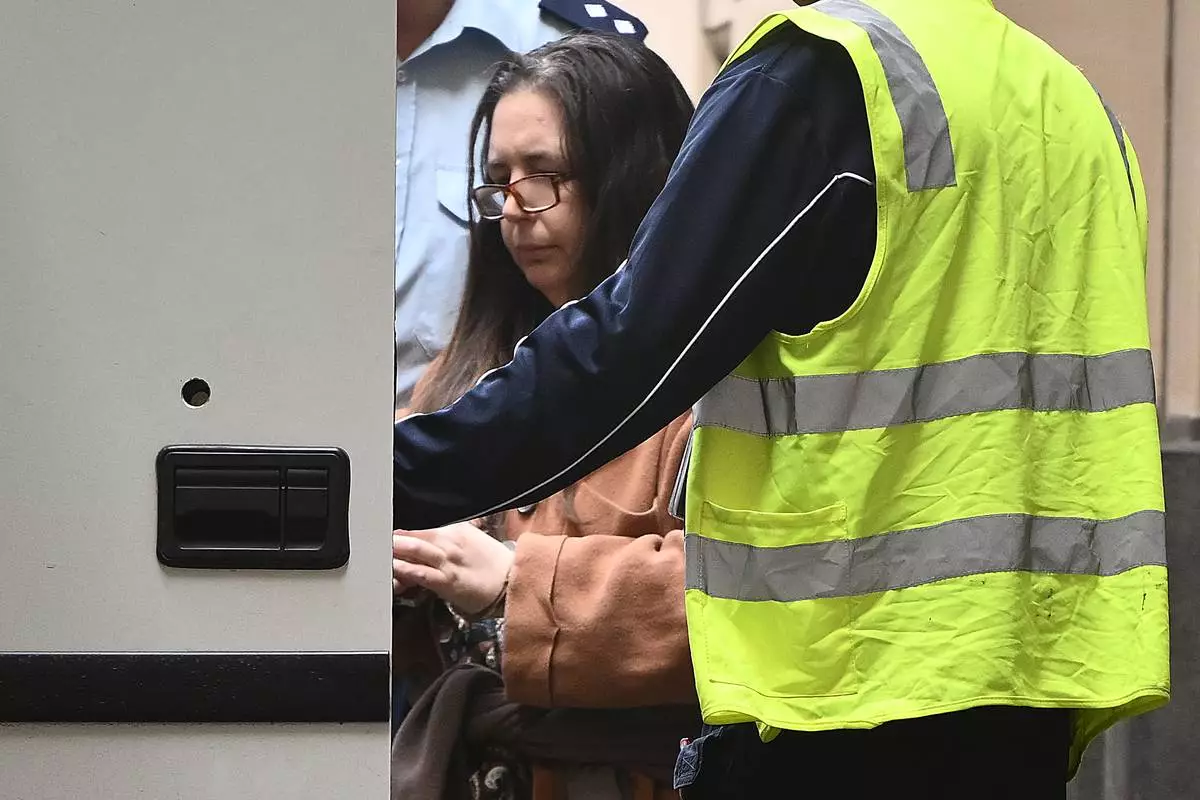
FILE - Erin Patterson is escorted away from the Supreme Court of Victoria in Melbourne, Australia, on Sept. 8, 2025. (Joel Carrett/AAP Image via AP, File)

Erin Patterson is depicted by an artist's sketch from a video link at the Victorian Court of Appeal in Melbourne, Australia Thursday, Aug. 20, 2026. (Anita Lester/AAP Image via AP)