Pig farm at Sheung Che in Pat Heung, Yuen Long convicted of illegal livestock waste discharge
The owner of a pig farm in Sheung Che at Pat Heung, Yuen Long, was convicted of violating the Waste Disposal (Livestock Waste) Regulations by discharging improperly treated livestock waste into nearby watercourse, and was fined $8,000 by the Fanling Magistrates' Courts on August 18.
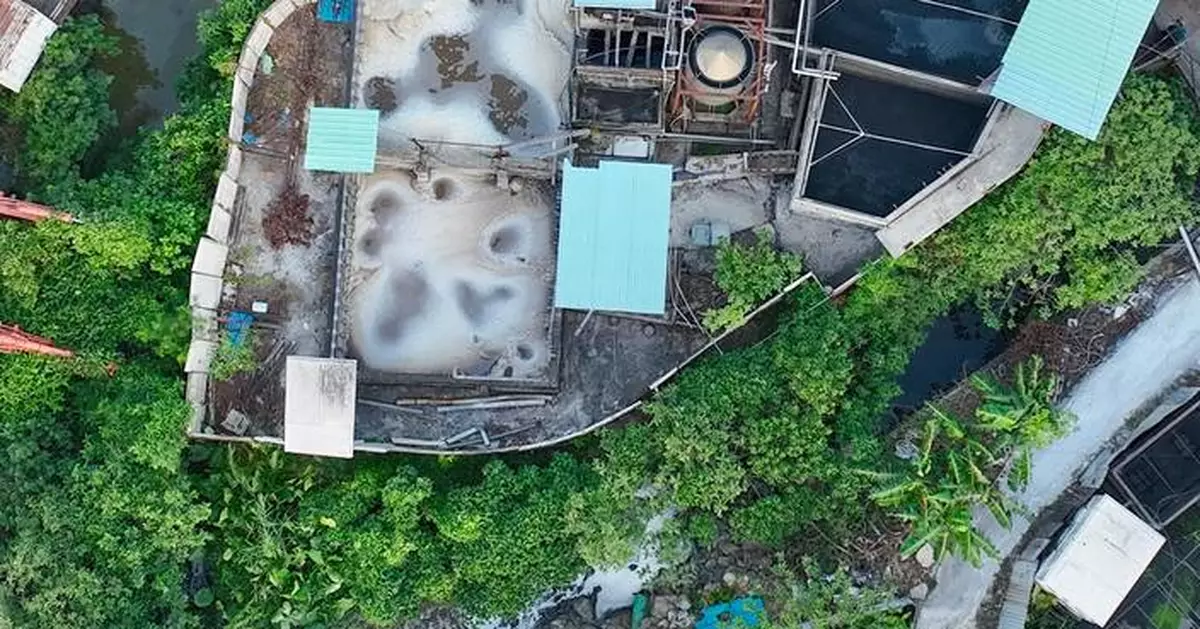
During a previous surprise inspection in Yuen Long, the Environmental Protection Department (EPD) staff applied smart technology to assist in monitoring and gathering evidence, including conducting aerial surveillance of the pig farm concerned using a drone, and spotted that a large amount of brownish wastewater with foam carrying odour of pig manure was being discharged into a nearby watercourse from a pipe of the pig farm concerned, causing serious pollution to the downstream water quality of Kam Tin River. The EPD staff immediately collected a wastewater sample for analysis, and the result indicated an exceedance of the legal discharge standard. The EPD subsequently instigated a prosecution against the pig farm owner involved in the case, in accordance with the Waste Disposal (Livestock Waste) Regulations, and notified the Agriculture, Fisheries and Conservation Department of the case for follow-up action.
An EPD spokesman said that the department is highly concerned about illegal wastewater discharge from livestock farms along Kam Tin River. Livestock waste without proper treatment contains high concentration of pollutants. Its discharge into rivers not only causes serious water pollution, but also odour nuisance. According to the Waste Disposal (Livestock Waste) Regulations, liquid livestock waste generated by livestock farms must be properly treated to meet the statutory requirements before discharge. Offenders are liable to a maximum fine of $50,000 and a fine of $5,000 for each day on which the offence continues. Operators and staff of livestock farms must strictly comply with the law, properly operate and maintain wastewater treatment facilities for livestock waste, and must not, for the sake of convenience, discharge untreated livestock waste into nearby rivers or water bodies. Any contravention will be subject to prosecution.
The EPD spokesman reiterated that the department will continue to combat any illegal wastewater discharge activity by surprise inspections, smart technology application and inter-departmental collaboration to safeguard environmental health and river water quality.
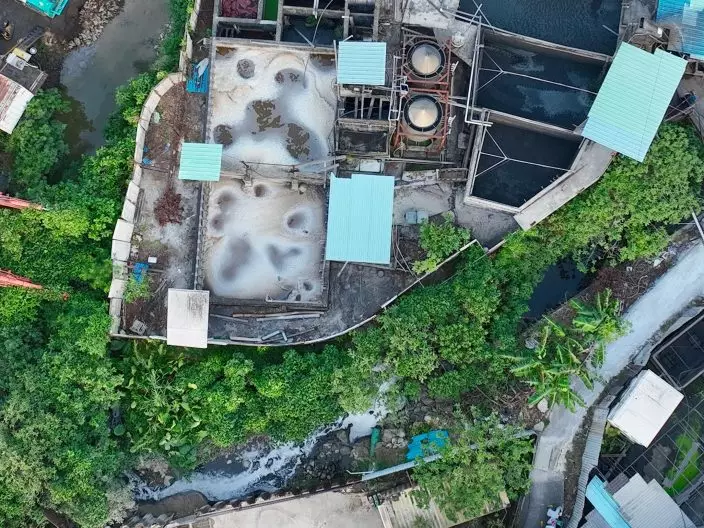
A pig farm at Sheung Che in Pat Heung, Yuen Long, discharged livestock waste that had not been properly treated into a nearby watercourse. Photo shows a large amount of brownish wastewater with foam forming on the surface with an odour of pig waste, as found by Environmental Protection Department staff, being discharged via a pipe from the pig farm into a nearby watercourse during an inspection. Source: HKSAR Government Press Releases