China is continuing to experience a box office boom this year, driven by a nationwide campaign to spur consumption with cheaper cinema tickets while a series of big summer releases are also enticing film fans out to theaters up and down the country.
Seen as one of the most lucrative periods of the year, China's summer box office season, which officially runs from June 1 to August 31, has now generated more than 10.7 billion yuan in box office revenue as of midday Thursday.
This has helped propel China's total box office revenue for 2026 above 26.5 billion yuan (over 3.9 billion U.S. dollars) as of Thursday afternoon, with more than 670 million moviegoers and over 96 million screenings recorded, according to the latest data from a leading Chinese ticketing platform.
The diverse line-up of summer blockbusters covers a broad range of genres, including comedy, animation, sci-fi, war, and suspense and action, offering audiences more choices and helping attract viewers from different age groups and with different interests.
Among the best performers is the anti-war film "Once Upon a Time in the Middle East," which tells the story of a chef working at a Chinese restaurant in the Middle East when war breaks out in the 2000s. It has drawn positive feedback both for its perspective on war and the vivid portrayal of life in the Middle East.
In just 10 days since its release on Aug. 11, the film has raked in over 1.2 billion yuan, catapulting it up the box office charts as it closes in on the year's biggest grossing films.
Ticketing data shows that the current top four on China's annual box office chart are the auto-racing sequel "Pegasus 3", Hong Kong director Stephen Chow's sports comedy "Kung Fu Soccer" about a team of female footballers, the touching family drama "Dear You", and animated film "All Wishes Come True!"
China launched a nationwide campaign this year to boost the cinema sector, with at least 1.2 billion yuan in subsidies planned throughout 2026 to make movie-going more affordable. Data shows the average ticket price for domestic-made movies has dropped to 39.5 yuan (less than 6 U.S. dollars) this year, some 20 percent lower in 2025.
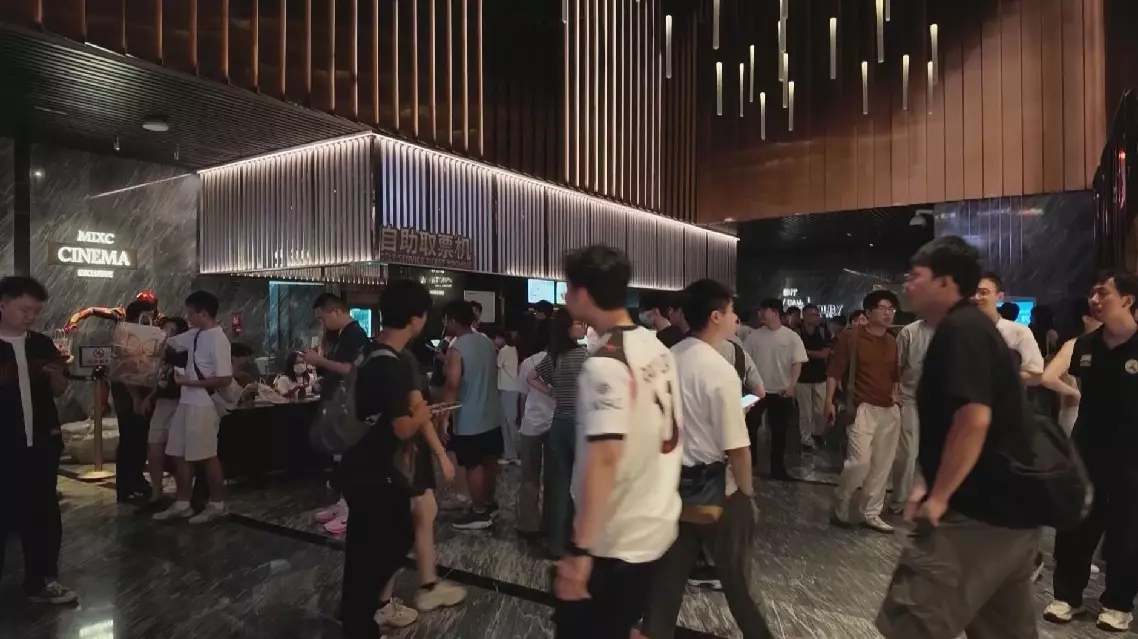
China's summer film season continues as consumption campaign entices moviegoers
Tokens, the basic units AI tools use to process information, are appearing in shoppers' carts as China's "Double 11" shopping festival peaks on Wednesday, reflecting the rapid mainstreaming of AI.
The shopping festival is when shoppers typically stock up on everything from electronics and cosmetics to everyday essentials, often at discounted prices.
This year, tokens, the computational fuel for AI models, have joined the list of popular items and are being promoted in e-commerce livestreams.
Once confined to the technical backend, tokens are now packaged, priced and sold as consumer products.
Once purchased, the tokens can be used for a range of AI tasks, from writing copies and creating presentations to generating images and videos.
"Overall, searches for 'token' on JD.com have jumped sevenfold since the promotion began, while token sales across the category are up 167 percent," said Zhao Jia, head of growth of the Mobility as a Service (MaaS) division of JD Cloud Technology, a major e-commerce platform of China.
Targeting students, independent AI developers, and tech enthusiasts, JD is bundling tokens with physical goods. Zhao said tokens are making their way into increasingly more aspects of daily life.
"Looking ahead, we hope to bring tokens into more everyday scenarios, from public services and finance to airlines, using physical products and offline experiences to help more people understand what tokens are," she said.
China Telecom said it is shifting from selling data to selling tokens, with 10 million tokens priced at 1.5 U.S. dollars, enough for 500 short articles or 200 hours of audio transcription a month.
"Individual consumers have grown rapidly this year. As AI evolves, the barrier to using it has dropped significantly. Now people can simply describe what they need in natural language, and AI can do the rest," said Yu Haiyan, a commentator with China Telecom Zhejiang Company.
Consumers, including regular token buyers, remain price-conscious.
"Model providers face ongoing costs for research, maintenance and computing power, so free access cannot be sustained indefinitely," said a resident in Beijing.
Industry estimates put global consumer spending on AI products at 40 billion U.S. dollars in 2026, more than triple the previous year's figure.
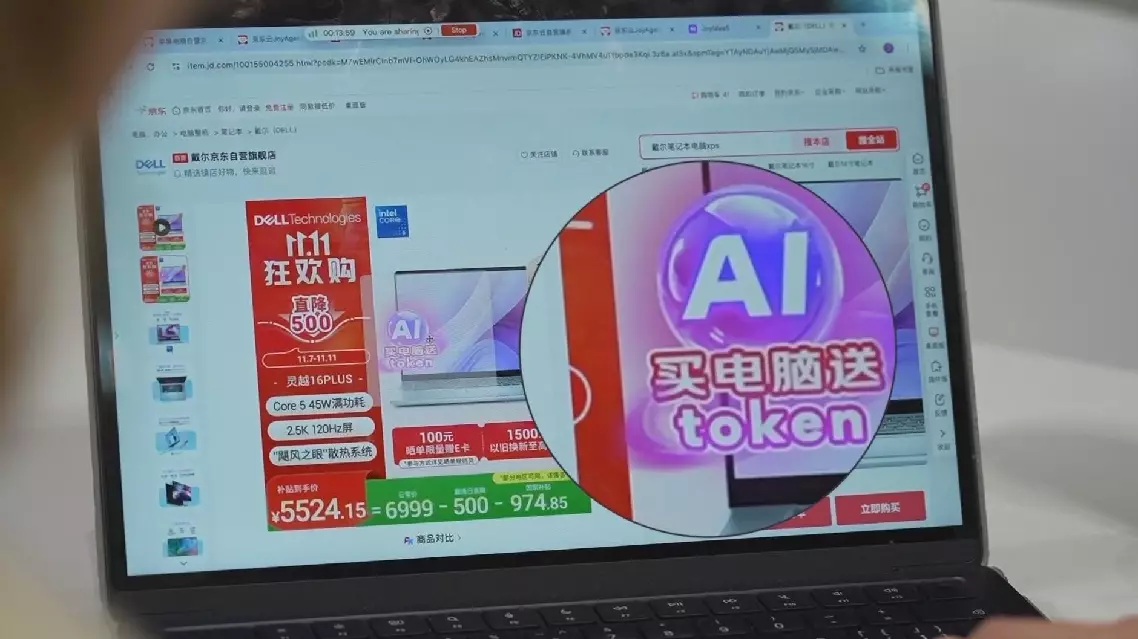
Tokens enter Chinese consumers' shopping carts as shopping festival hits