Skip to Content Facebook Feature Image

NFL complains about changes by Nielsen to TV ratings measurements

Sport

NFL complains about changes by Nielsen to TV ratings measurements
Sport

Sport

NFL complains about changes by Nielsen to TV ratings measurements

2026-08-21 03:42 Last Updated At:03:51

The NFL is upset about changes made by Nielsen in its methodology for measuring viewership for the upcoming season, calling them “rushed” and saying they will have a negative impact on sports.

Nielsen announced plans this week to change how it measures audiences on television, beginning on Aug. 31, including alterations to how the company measures whether multiple people are watching an event at the same time.

The NFL is coming off one of its most successful seasons ever on television after Nielsen began using its Big Data + Panel methodology for all events last September. The league averaged 18.7 million viewers per game during the 2025 regular season, an increase of 10% from the 2024 season and the largest for a season since 1989.

The Super Bowl had an audience of 124.9 million viewers on NBC, Peacock, Telemundo, NBC Sports Digital, and NFL+, according to Nielsen’s Big Data + Panel rating system, falling just short of the record set the previous season.

Paul Ballew, the league's head of data and analytics, said on a conference call Thursday that the league was still trying to understand how the changes will impact ratings this season.

"We don’t have enough impact data to fully assess. We’re still trying to make a sense of it,” Ballew said. “We're still trying to makes sense of some of the logic behind some of the methodological changes. From our initial impact, it looks like a negative for sports. On the other side, co-viewing or partial co-viewing implementation is a positive. So we’re going to have to continue to spend some time pulling this apart and making sense of it.”

Ballew said the priority for the league is to find the most accurate number for the audience, as well as having a deeper understanding of the demographics of the viewership.

"Media measurement matters a lot to us," he said. “It’s adding into the amount of homework we have to take on going into the season to make sense. We do think it’s a misstep on Nielsen’s part to go do this the way they’re doing it. It continues to accelerate our pressure point to continue to pursue ongoing measurement improvement because it’s so critically important to us and everybody else in this space.”

Nielsen had been working with partners for a while on the changes and nearly implemented them last October but waited until this season instead.

“Nielsen is delivering the most accurate TV measurement ever, especially when it comes to live sports," Nielsen said in a statement. "We have worked closely with clients, sports leagues and industry regulators to constantly enhance our methodologies. That includes the introduction of Big Data + Panel, the expansion of our Out of Home measurement and a pilot test of co-viewing updates, which are all successful examples of collaboration that lead into the enhancements.”

Hans Schroeder, NFL executive vice president of media distribution, said “nothing's changed” with the league's television partners and the possibility of negotiating contracts early.

The NFL's deals with CBS, Fox, NBC and Amazon run through the 2033 season and the contract with ESPN goes for one season beyond that. The league has the option to opt out of those deals after the 2029 season with CBS, Fox, NBC and Amazon and after the 2030 season with ESPN. The NFL gets paid an average of nearly $11 billion annually from those deals.

The league can renegotiate immediately with CBS because of a change of ownership provision that was triggered when Skydance Media bought Paramount. Schroeder said talks are ongoing.

“We’re always going to do that. We’re going to continue to engage our partners,” he said. “So nothing’s changed. We’re continuing to look at the future and figure out how we can continue to improve it."

The league said there has been high interest from NFL players about participating in the Olympics in 2028 when flag football makes its debut, with the NFL's head of global flag football, Brian Flinn, saying more than 200 players representing more than 25 countries have expressed a desire to possibly play.

Flinn said there will be more details on the process for national federations choosing players at the end of this season.

There will be six men's and six women's teams competing in Los Angeles with three of each already assured spots. The U.S. will be in as the host country, while the Canadian men's and women's teams clinched spots, along with the Italian men and Mexican women at a tournament last week in Germany.

Flinn was encouraged by the competitiveness of that tournament, where the U.S. men lost for the first time in 14 years in a group stage match against American Samoa and also narrowly beat Japan in the quarterfinals. Flinn also said the women's teams from Canada and Great Britain have closed the gap with traditional powers Mexico and the U.S. as the level of play and intensity continues to rise.

“You saw the emotion of the players because they knew what they were playing for,” Flinn said. “Certainly the Olympic dream was alive.”

The NFL will hold a record nine international games this season, including the first regular-season contests ever in France and Australia and the first game in Mexico since 2022. There will also be games in Spain, Germany and Brazil, along with three in London.

Commissioner Roger Goodell said earlier this summer that the league is interested in playing a regular-season game in Japan for the first time. Schroeder said the process of picking countries is getting harder because there's so much interest.

“There’s more and more interest from cities around the world about hosting NFL games,” Schroeder said. "In Japan, there’s a ton of interest and appreciation and excitement about the popularity there.”

See AP’s full NFL coverage here

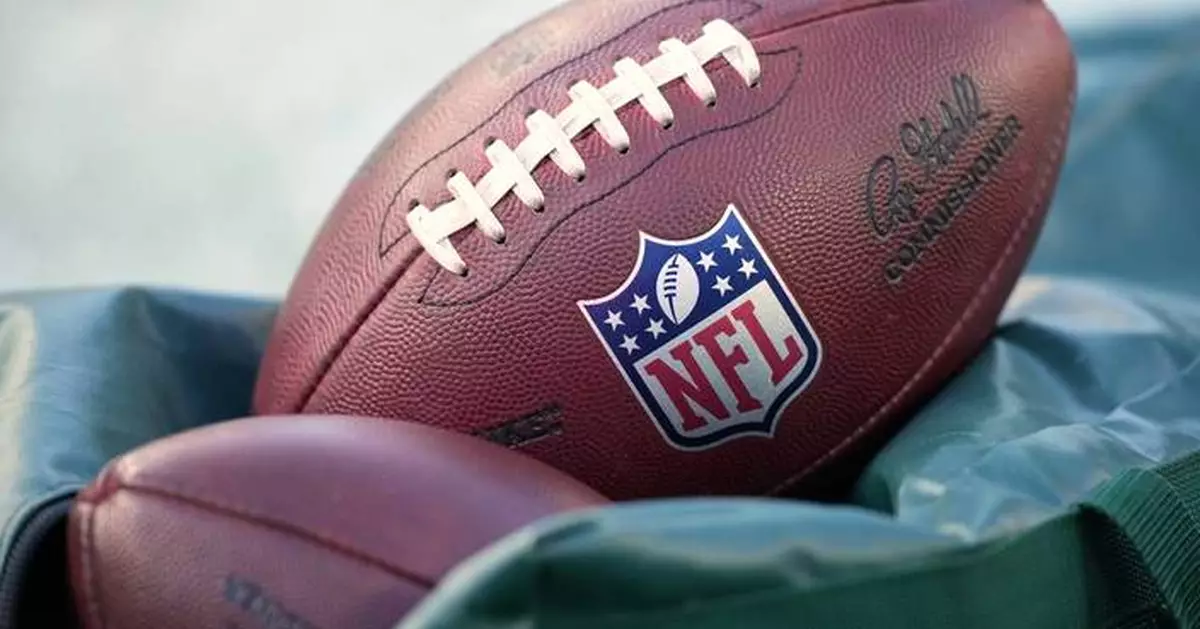
FILE - Footballs are seen before an NFL football game in Philadelphia on Jan. 4, 2026. (AP Photo/Matt Slocum, File)

FILE - Footballs are seen before an NFL football game in Philadelphia on Jan. 4, 2026. (AP Photo/Matt Slocum, File)
DAKAR, Senegal (AP) — Twenty migrants deported from the United States arrived in Liberia on Thursday, the first group of an eventual 1,200 deportees that the West African country says it will receive from the U.S. under a new deal.

Under a series of often-secret agreements, the Trump administration has deported thousands of people to two dozen countries that aren't their own, as it pushes ahead with its immigration crackdown, advocates say.

An estimated 11 of those agreements, nearly half the total, are with African countries and the Liberia-U.S. agreement involves one of the largest numbers of such third-country deportations

Immigration lawyers say the practice is being used as a legal loophole to indirectly return some asylum-seekers to countries they fled. Authorities in Liberia have said the deportees being welcomed in their country can seek asylum there or leave if they choose.

Here's what to know about the deportations:

Other African countries that have received or agreed to receive third-country deportees from the U.S. include South Sudan, Eswatini, Rwanda, Ghana, Equatorial Guinea, Cameroon, Congo, Uganda, Sierra Leone and the Central African Republic.

Some, like Ghana and Sierra Leone, are accepting deportees from their regions — in this case West Africa.

Many of the African countries approving the deals are among the worst hit by the Trump administration's policies, including on trade, aid and migration. A good number of them also have authoritarian governments, raising questions about the lack of accountability and due process to ensure the protection of the deportees' rights.

Details of most of the deals are never made public and some of the African nations, like Ghana's government, have defended their actions as having been taken on humanitarian grounds.

The Trump administration had spent at least $40 million to deport about 300 migrants to countries other than their own, according to a February report by the Democratic staff of the U.S. Senate Foreign Relations Committee. More countries have entered the deal since then.

Congolese President Félix Tshisekedi has described his country’s agreement as an “act of goodwill between partners,” without financial compensation. The deal came as Washington increased pressure on neighboring Rwanda over its support for M23 rebels, a dynamic analysts say may help explain Congo’s willingness to cooperate.

Early flights to Africa included people that the U.S. said had convictions for serious crimes. But later transfers have included asylum-seekers with U.S. court orders protecting them from being returned to their home countries because they could face persecution or torture.

Many say they've been sent to countries with which they have no ties and where they were not told about until hours into the deportation journey.

For instance, a gay Moroccan woman deported to Cameroon, where homosexuality is illegal, and an Iranian woman with U.S. court protection from returning to Iran who was sent to the Central African Republic.

Immigration lawyer Alma David called that an effective legal “loophole,” saying deportees can be left with “impossible choices” — remain in an unfamiliar country with little support or return to a country a U.S. judge found unsafe.

U.S. policy says that when a receiving government gives blanket diplomatic assurances that deportees won't face persecution there, they can be removed without additional procedures, David told The Associated Press.

Some of the deportees have recounted being shackled while some were held in full-body restraint straitjackets called the WRAP during flights that can sometimes last more than 16 hours.

Their conditions in the different countries vary. In Sierra Leone, the government hired private contractor Kenvah Solutions to provide housing, food and healthcare. In Congo, the International Organization for Migration has provided humanitarian assistance and offered assisted voluntary return.

In Equatorial Guinea, the AP found deportees confined in a hotel owned by the family of President Teodoro Obiang Nguema Mbasogo. Migrants said they were barred from leaving, had uneven access to medical care and faced repeated pressure to return home. Twenty-five of at least 32 people held there had been sent to their home countries by May.

Rights advocates say the third-country deportation program risks violating non-refoulement, the principle barring governments from sending people to places where they face persecution or torture.

An international coalition sued Ghana in June on behalf of 27 deportees, alleging most were quickly sent to their home countries, despite U.S. protection orders, and that some were held under armed guard in military camps, hotels and airport cells.

Rights lawyers have also brought a case against Equatorial Guinea before the African Commission on Human and Peoples’ Rights, alleging deportees were returned to countries where they faced persecution despite U.S. court protections.

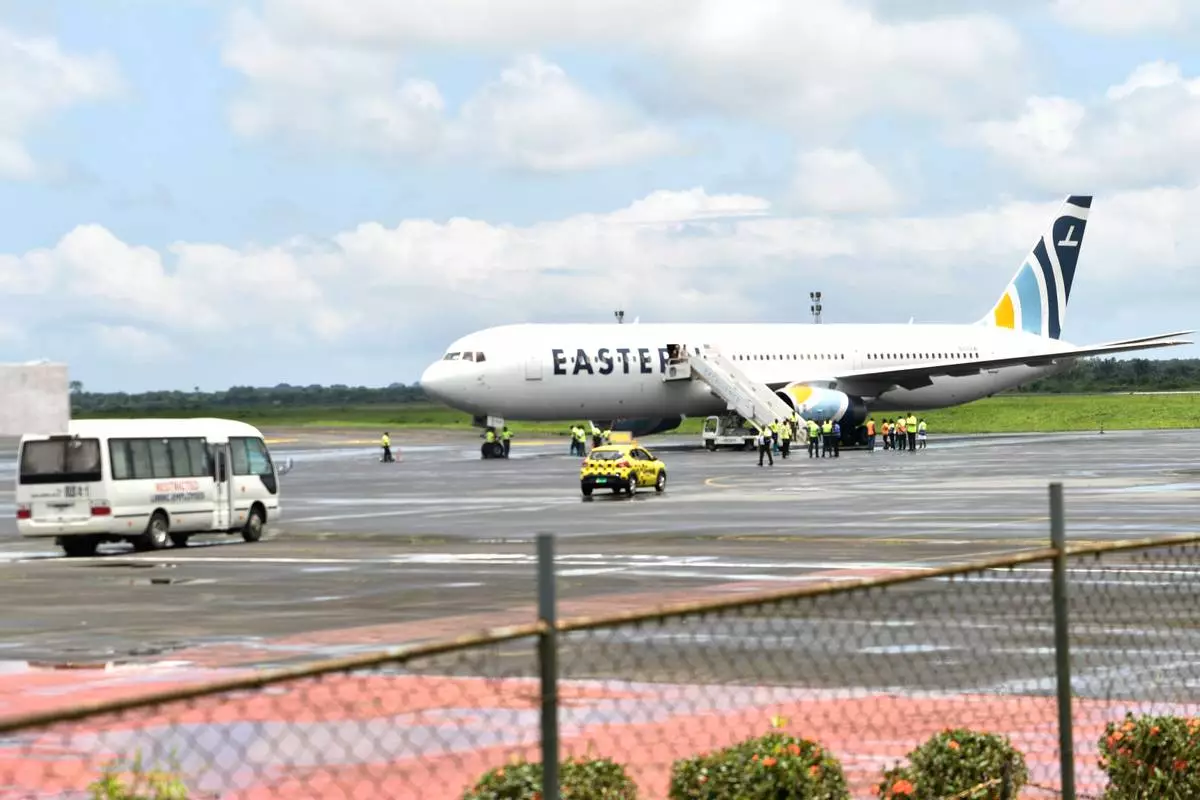
Plane carrying the deportees from the US arrives at the Roberts International Airport outside of Monrovia, Liberia, Thursday, Aug. 20, 2026. (AP Photo/Alexander Wiaplah)

Plane carrying the deportees from the US arrives at the Roberts International Airport outside of Monrovia, Liberia, Thursday, Aug. 20, 2026. (AP Photo/Alexander Wiaplah)

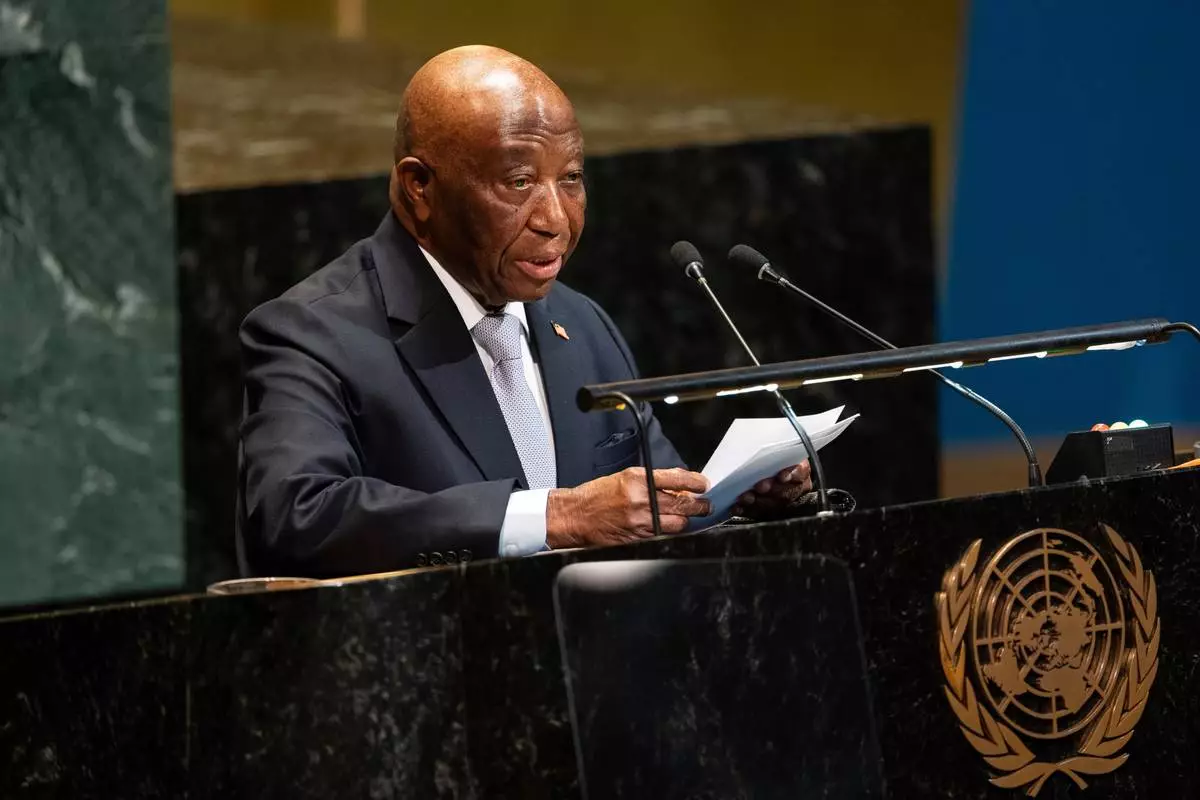
FILE -Liberia's President Joseph Boakai addresses the 80th session of the UN General Assembly at United Nations headquarters, Sept. 22, 2025. (AP Photo/Angelina Katsanis, File)

FILE -Liberia's President Joseph Boakai addresses the 80th session of the UN General Assembly at United Nations headquarters, Sept. 22, 2025. (AP Photo/Angelina Katsanis, File)

FILE - Wide view of Monrovia, Liberia, from the top of the Ducor Hotel, Sunday, June 15, 2025. (AP Photo/Annie Risemberg, File)

FILE - Wide view of Monrovia, Liberia, from the top of the Ducor Hotel, Sunday, June 15, 2025. (AP Photo/Annie Risemberg, File)

Recommended Articles