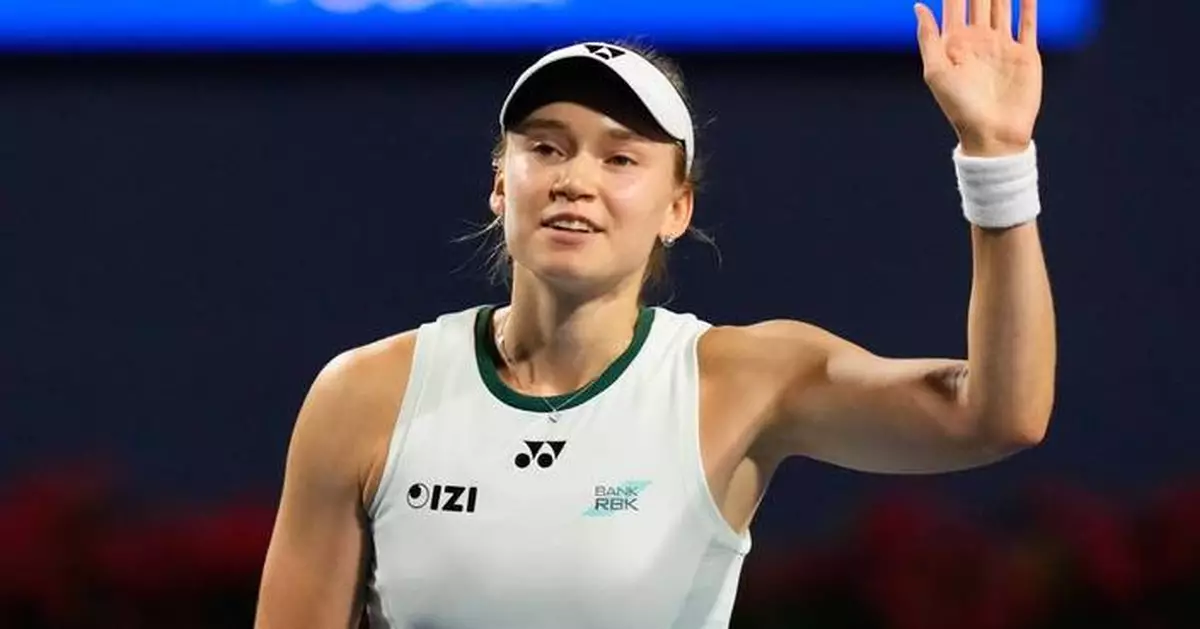
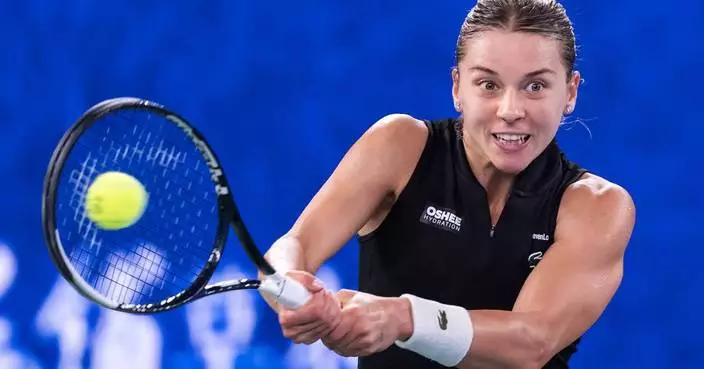
MASON, Ohio (AP) — Elena Rybakina stopped playing during the first set of her quarterfinal match against Iga Swiatek at the Cincinnati Open on Thursday night.
With the No. 2-ranked Rybakina serving at 1-4, 40-40, she took a medical timeout to have trainers address her left ankle area and retired from the match moments later.
“Of course I feel not the greatest,” Rybakina said. “It's painful to walk. We'll know more tomorrow when we have the MRI. It's been bothering me for a long period of time but felt like I had it under control.”
After aggravating the injury during the second set on Thursday, she spent several minutes speaking with trainers before returning to the court. She decided to call it quits after she was unable to put full weight on her leg while attempting a serve.
“It was feeling OK before (Thursday’s) match,” Rybakina said. “Unfortunately one wrong movement and something happened.”
With top seed Aryna Sabalenka losing Thursday night to Sara Bejlik, the 27-year-old Rybakina could have risen to No. 1 in the rankings by reaching the final.
Swiatek, the defending champion, has reached at least the semifinals in each of her last four appearances in Cincinnati. Swiatek beat Rybakina in the semifinals in Cincinnati last year. She'll face American Jessica Pegula in the semifinals.
“Not the way you want the match to end,” Swiatek said. “She didn't look good, obviously. Then she wanted treatment and I wasn't sure if she was going to be back or not. She's walking normally now. I felt really sorry for her but hopefully it's nothing serious and she's going to be ready for the U.S. Open.”
Pegula beat fellow American Amanda Anisimova, 6-4, 2-6, 7-6 (4), on Thursday for her tour-leading 44th win of the season. It's her second trip to the semifinals in Cincinnati; she lost to Sabalenka in the final two years ago.
Four American men reached the quarterfinals in Cincinnati for the first time since 1995, but Flavio Cobolli knocked out Tommy Paul on Thursday, 2-6, 6-3, 6-4, to reach his fifth semifinal this year and rise to a career-best No. 6 in the rankings. Cobolli is the second Italian man to reach the semis in Cincinnati, joining Jannik Sinner.
Cobolli will face 22-year-old Arthur Fils in the semifinals. Fils beat Thiago Agustín Tirante, 6-3, 6-2, to become the sixth man born since 2000 to reach three ATP Masters 1000 semifinals.
See AP’s full tennis coverage here
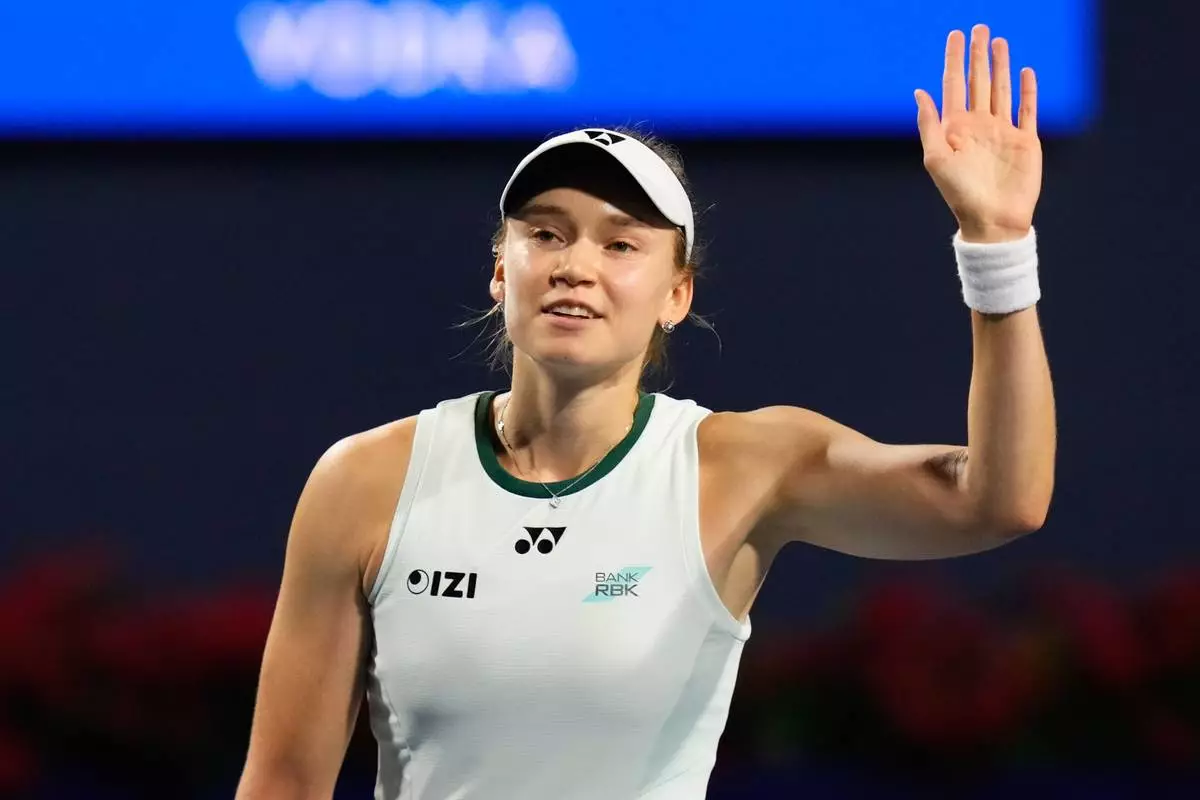
Elena Rybakina celebrates her win over Coco Gauff during National Bank Open tennis tournament in Toronto on Wednesday, Aug. 12, 2026. (Chris Young/The Canadian Press via AP)
Ukrainian strikes set an oil export terminal and a depot ablaze in St. Petersburg on Sunday as Kyiv launched more than 1,000 drones at Russia in one of its largest aerial attacks of the war.
The strikes came as tensions between Ukraine and Washington deepened, with U.S. President Donald Trump criticizing Kyiv’s attacks on Russian oil infrastructure and the prospect of further U.S. sanctions against Moscow still uncertain.
One person was killed and five others were wounded in the St. Petersburg attack, which sparked fires at the Petersburg Oil Terminal and the city’s Ruchi oil depot, local Gov. Alexander Beglov said. A logistics center belonging to Russian retailer Ozon and a data center operated by Russian tech giant VK were also targeted, the companies confirmed.
Russia’s Defense Ministry said Sunday that its forces had destroyed 1,015 Ukrainian drones over 15 Russian regions, the annexed Ukrainian peninsula of Crimea and the Black Sea.
Kremlin spokesperson Dmitry Peskov told Russian state news agency Tass that Kyiv was “resisting” Moscow’s invasion but could not “change the current course of events.”
The strikes came after Trump told reporters that they did not know what his decision on further sanctions against Russia would be, despite signing an executive order Friday night waiving planned restrictions, citing U.S. national interests.
Speaking on NBC’s “Meet the Press” on Sunday, Zelenskyy said waiving sanctions against Russia would strengthen Putin’s war effort. He also said U.S.-Ukraine intelligence sharing had resumed after being “blocked for some period of time.”
Zelenskyy said that while he trusted Trump, siding with Moscow would be a tragedy and a “historic mistake” for Washington.
“People want to forget what’s going on. But we can’t give this possibility to forget, or to change reality, or to change the truth,” Zelenskyy said. “We can’t compare me and Putin. He’s aggressor. He occupied us. He killed adults and children, his soldiers. He’s a terrorist. And that’s why I hope that President Trump will be very clear with this position.”
A woman was killed and a 6-year-old girl was among at least two other people wounded in two Russian attacks on the southern Ukrainian city of Zaporizhzhia, local officials said Sunday.
Trump announced on Oct. 11 that Russia and Ukraine had agreed to an “energy ceasefire” in the 4½-year-old war, but offered no details. Kyiv reported Russian attacks on energy sites continued after Trump's announcement, and on Thursday said it had resumed strikes on Russian oil facilities after a three-day pause.
Zelenskyy wrote on X Sunday that Russia had attacked Ukraine’s energy, oil and gas sectors 76 times in the week since Trump’s announcement. The Ukrainian government initially said it was observing the ceasefire.
Energy facilities in four Ukrainian regions were struck overnight, leaving tens of thousands of families without power, he said, accusing Russia of trying to cause a blackout.
“America should see that Russia is not taking any reciprocal steps in response to sanctions relief or agreements. On the contrary, they take every signal of an opportunity to make money as proof that their bet on war is paying off and they can keep fighting,” he wrote.
Zelenskyy also stressed that the war was continuing because of Russia’s invasion, not Ukraine’s efforts to defend itself. “It is Russia that must face pressure for peace to have a chance."
Ukrainian Foreign Ministry spokesperson Heorhii Tykhyi apologized in a statement Sunday after a drone flew into Lithuania’s airspace, prompting authorities to issue an air raid warning.
Tykhyi said that the incident may have resulted from Russian electronic diversion of drones during an operation against legitimate military targets in Russia.
Lithuanian authorities warned residents in two northern counties along the Latvian border to take cover due to a possible drone incursion early Sunday, public broadcaster LRT reported. A drone flew into Lithuania's northern Pasvalys region, damaging a moving car, the broadcaster said, citing Lithuania's National Crisis Management Center. There were no injuries.
Follow the AP’s coverage of the war in Ukraine at https://apnews.com/hub/russia-ukraine
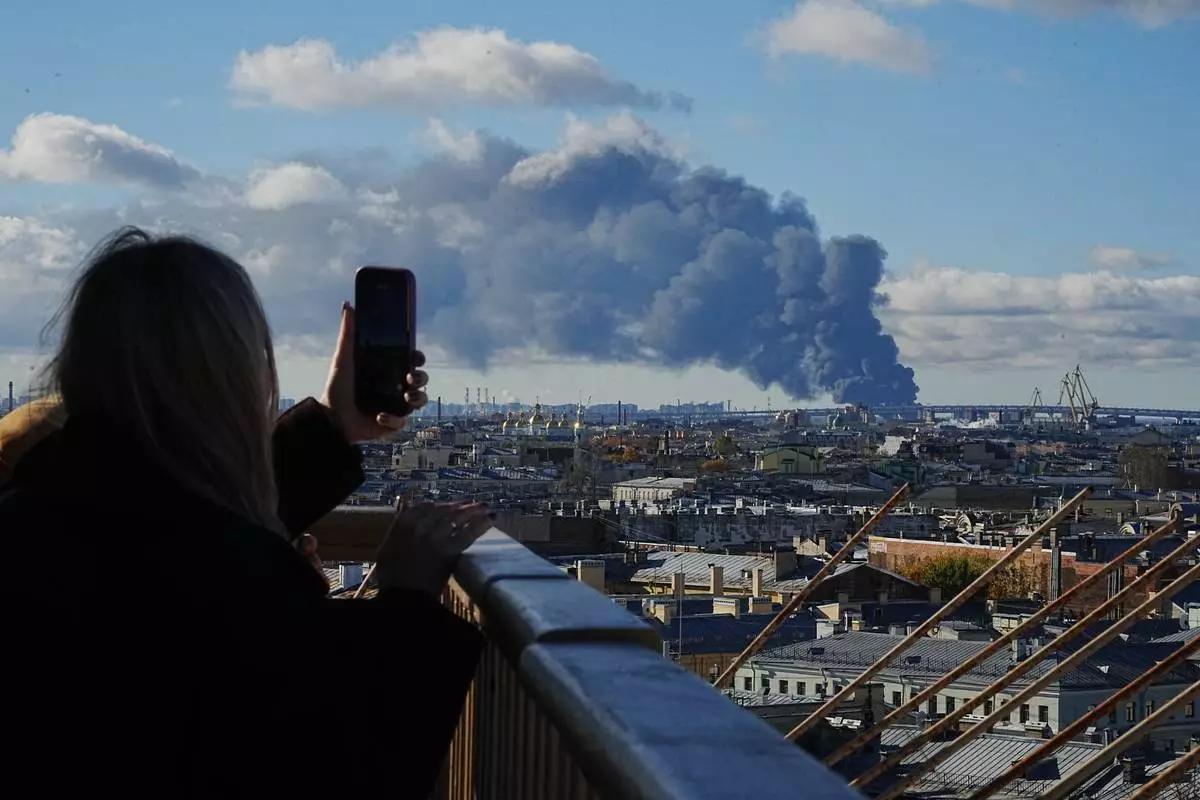
Smoke billows into the sky following Ukrainian drone strikes on an industrial zone in St. Petersburg, Russia, on Sunday, Oct. 18, 2026. (UGC via AP)
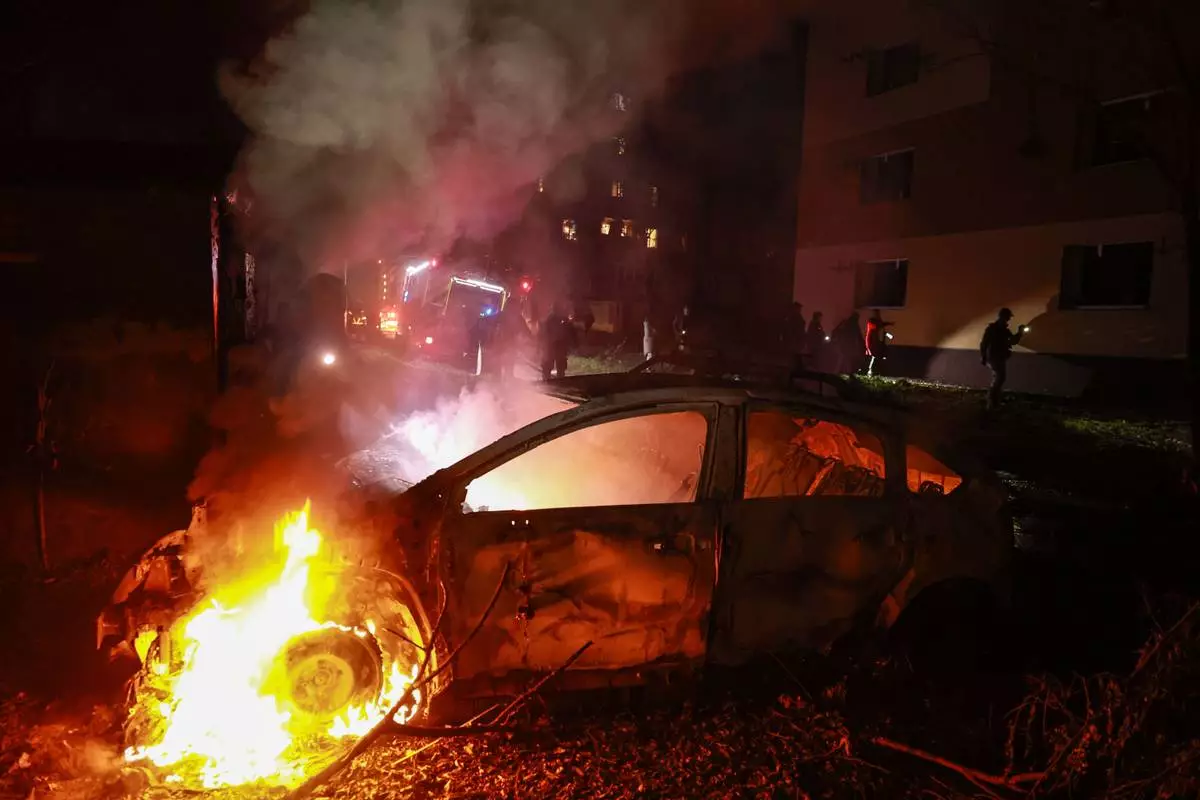
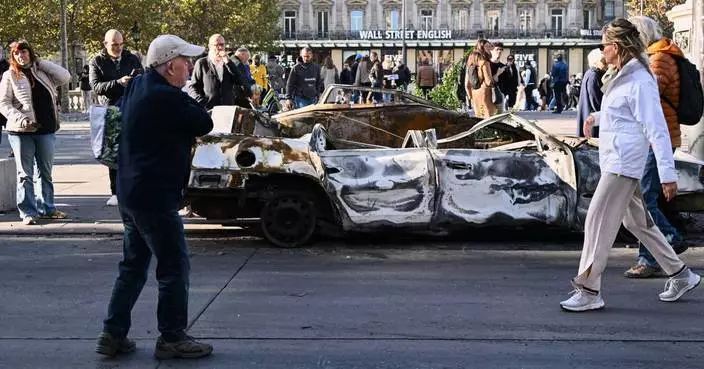
A car burns after a Russian airstrike on a residential neighborhood in Zaporizhzhia, Ukraine, Saturday, Oct. 17, 2026. (AP Photo/Kateryna Klochko)