N'DALI, Benin (AP) — Sabi Bera Zakari didn't appear to care much how tall his children would grow. The farmer said he only sometimes wished they could gain more weight.
“For me, height is not a problem,” Zakari said. “It’s mainly their weight that sometimes worries me.”
Click to Gallery
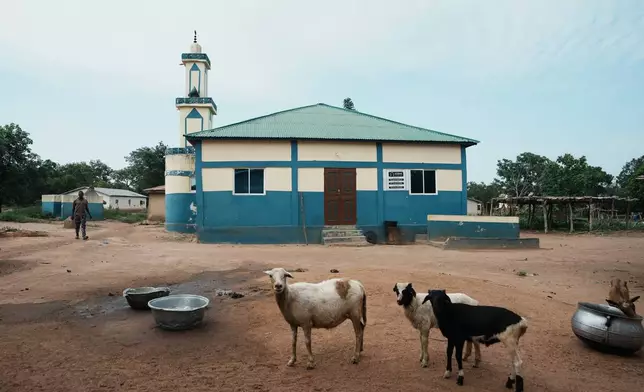
Goats roam near cooking pots at the village of In N'dali, northern Benin, Sunday, May. 17, 2026. (AP Photo/Sunday Alamba)

Rolland Essou, who helps look after northern Benin for The Hunger Project, is interviewed by The Associated press, in Cotonou, Benin, Tuesday, May. 19, 2026. (AP Photo/Sunday Alamba)
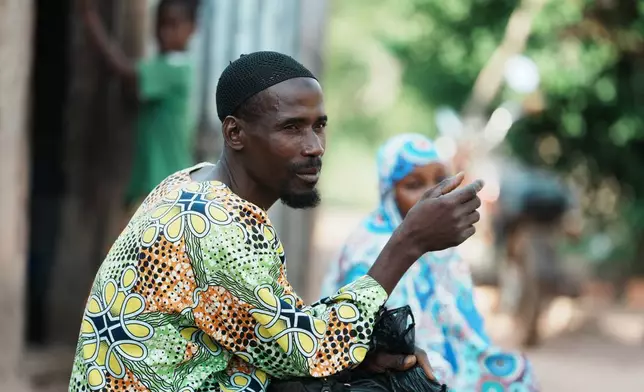
Sabi Bera Zakari, a farmer and father of stunted children, is photographed outside his house In N'dali, northern Benin, Sunday, May. 17, 2026. (AP Photo/Sunday Alamba)
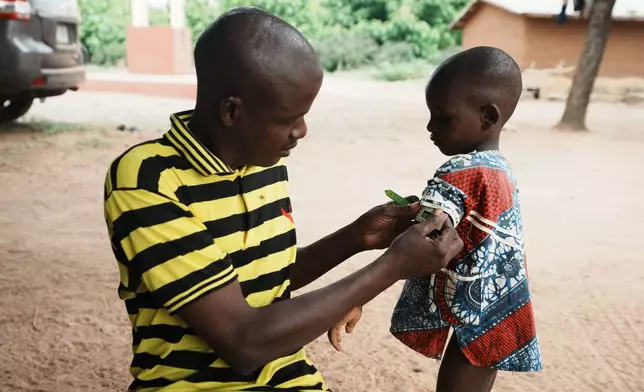
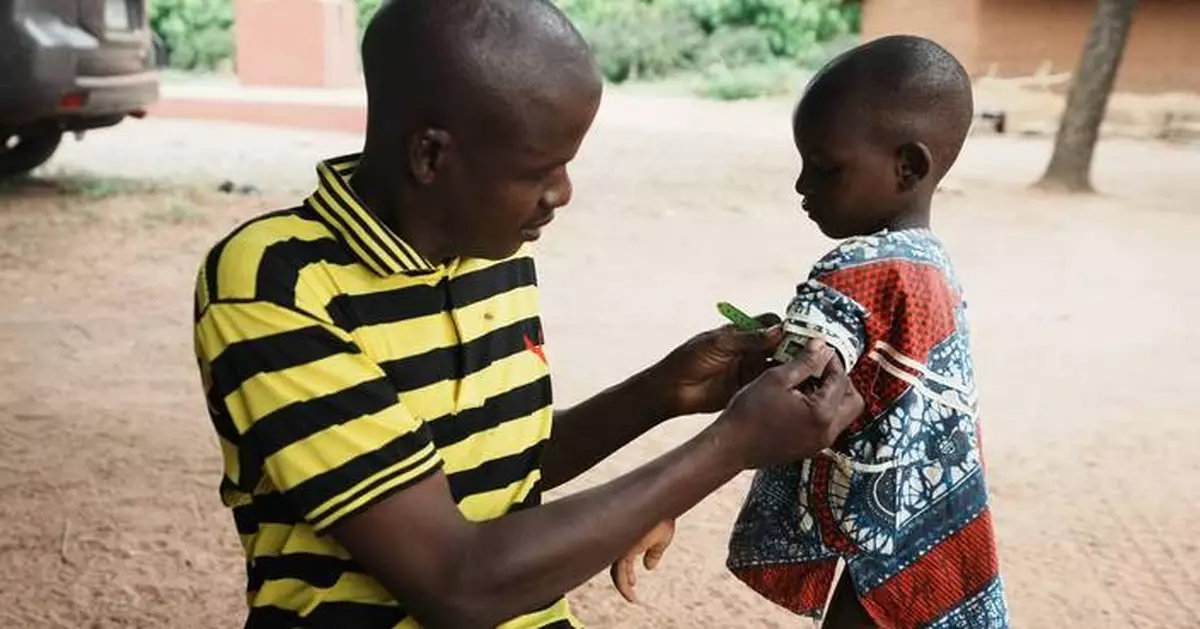
Douro Wonkourou Idrissou, who described himself as a nutrition support member, uses a tape to measure the circumferences of a child's upper arm, in N'dali, northern Benin, Sunday, May. 17, 2026. (AP Photo/Sunday Alamba)
Aboudou Salamatou, the farmer’s wife, seemed to disagree, as did development sociologist Boris Gloni, who shook his head as he listened. He believed two of the family's young daughters suffered from stunted growth.
As a former representative of The Hunger Project, an international organization working to combat hunger across Benin, Gloni spent years trying to convince men like Zakari that stunting in children was a rampant issue that needed to be addressed by families first and foremost.
Despite the abundance of natural resources and widespread subsistence agriculture, stunting — impaired growth and lower than average height-for-age caused by malnutrition — affects over 30% of children younger than 5 in Benin, according to factsheets by the Global Alliance for Improved Nutrition, a Geneva-based nonprofit that tracks stunting figures.
Children who are not achieving the average height for their age may otherwise seem healthy to their parents. But experts believe stunting is mostly irreversible in those afflicted during their first 1,000 days of life, with lasting effects on brain development and general health later in life.
Gloni, who now works as an agricultural adviser, said he knows people who wrongly believe that regularly giving children milk and eggs is bad because it risks making them so rapacious that they might want to steal more of that protein. In many homes, the goats tethered to poles and the chickens that scratched the dirt compounds are kept for commercial reasons, to be sold for cash when needed in an emergency.
“Our perception is wrong,” Gloni said. “People don’t have knowledge.”
Beninese authorities want to bring the prevalence of stunting to under 30% by 2030. To achieve that target, the government needs the help of volunteers such as Douro Wonkourou Idrissou, who moves from house to house with the color-coded tape that he uses to gauge wasting in children.
Idrissou, who described himself as a nutrition support member of his pastoral community in N’dali, a commune in the Borgou area of northern Benin, uses his tape to measure the circumferences of the children's upper arms. While he doesn’t have the equipment to measure height, he said he feels “sad” when he sees children he knows should be taller than they are.
Idrissou said the children’s parents are to be blamed — though they are also in need of help. The diet of most families here is heavy on starchy foods, from yams to cassava. And many mothers who rise early to cultivate their gardens usually don't return home until late afternoon, exposing their children to hunger and what he described as a general loss of appetite.
“If it is maize season, they are doing only maize,” he said. “We are saying, ‘No, you can’t do only maize.' It is this knowledge that we are sharing with the women in the households.”
Stunting is more widespread in the north of this west African nation, with its dry savannah landscape. The region faces sporadic drought conditions, forcing some to move in search of pasture for their cherished herds. In the worst of times, families feed on a soup of vegetables pulled from the bush.
Despite efforts to reduce stunting rates in northern Benin, the situation has more or less “stagnated,” said Rolland Essou, who helps look after northern Benin for The Hunger Project.
He said some statistics appeared to show stunting rates across Benin going up, not down, despite projects such as the World Bank-funded “1,000 Days” program to support children in their first two years of life.
Launched in 2024 and run by the National Agency for Food and Nutrition, the pilot program has helped provide micronutrient supplements for mothers and their babies and set up school canteens providing hot meals.
Still, stunting in Benin will remain a challenge for years to come because many families lack knowledge and have many mouths to feed, Essou said.
“When we look at the profile of the household suffering from malnutrition, we notice that the head of the household is very young,” he said. “Secondly, the head of the household is illiterate. Thirdly, it is a household with many children.”
Zakari, the farmer who isn't worried about stunting, wasn't sure how old his children were — and even had to look at an ID card to confirm his own age.
His neighbor Fati Aboubacar, a mother of five, said some in her community are too busy or poor to properly look after their children. Her own family could only afford to eat eggs once a week.
Razak Kotchoni, a project manager in Borgou with CASCADE Benin, a nongovernmental organization, said efforts to combat stunting in children need to start before children are born.
Social customs against the widespread consumption of eggs among children also apply to pregnant woman, who are discouraged from drinking nutrient-rich cornmeal porridge because it is thought to instigate a ravenous appetite, he said.
“These standards are contributing factors to malnutrition,” he said. “We have facilitators in the field who conduct reflective dialogues with elders, mothers and others in order to challenge the practices there.”
One strategy, he said, has been to identify and support exemplary mothers so that they can raise awareness among others.
Idrissou said that while some parents call him when they get concerned their children are not growing normally, seeking a remedy, many others “don’t care.”
Aboudou, Zakari's wife, said that her family didn’t have the means to feed their kids better. When a chicken pecked at the dirt near her feet, she said the bird was one of many kept as money “in the bank,” not for eating. Even the eggs the chickens lay may be sold for cash.
“We would like to vary our food, but we don’t have the means,” she said. “When we have a little money, we invest it in the field, in health and in other problems.”
The Associated Press receives financial support for global health and development coverage in Africa from the Gates Foundation. The AP is solely responsible for all content. Find AP’s standards for working with philanthropies, a list of supporters and funded coverage areas at AP.org.
For more on Africa and development: https://apnews.com/hub/africa-pulse
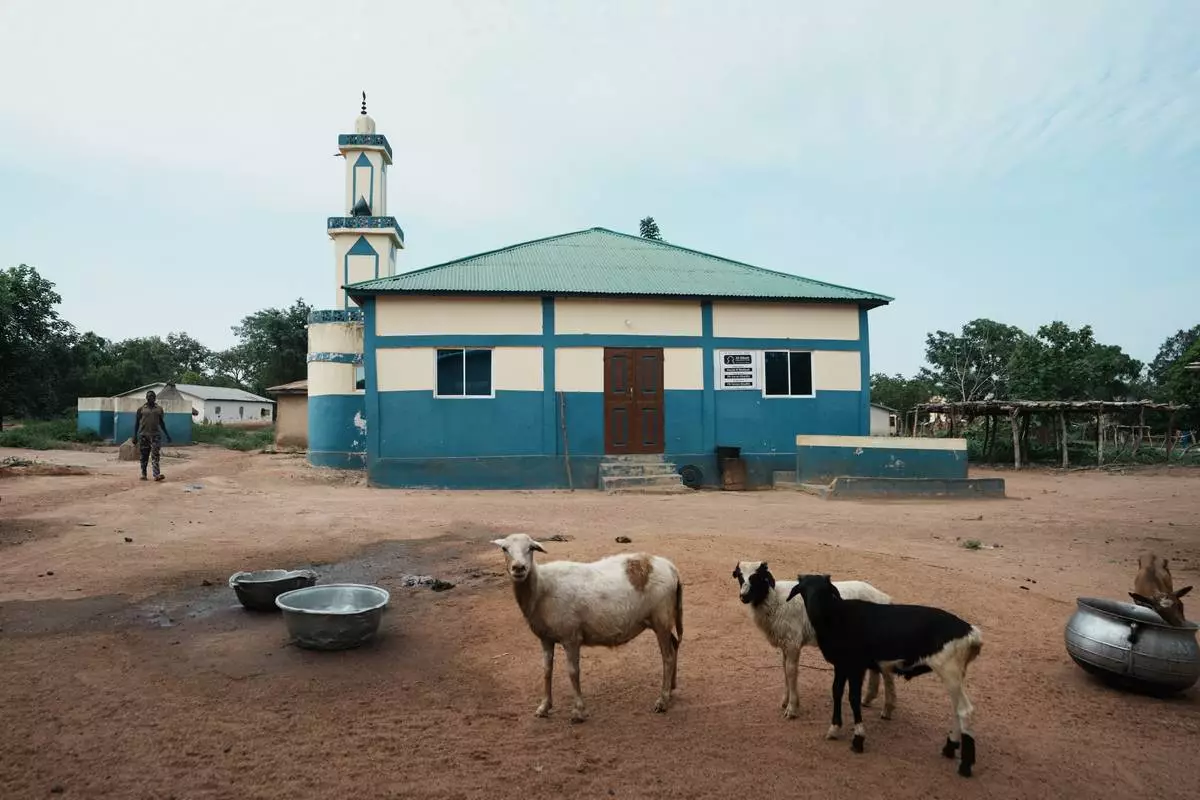
Goats roam near cooking pots at the village of In N'dali, northern Benin, Sunday, May. 17, 2026. (AP Photo/Sunday Alamba)

Rolland Essou, who helps look after northern Benin for The Hunger Project, is interviewed by The Associated press, in Cotonou, Benin, Tuesday, May. 19, 2026. (AP Photo/Sunday Alamba)
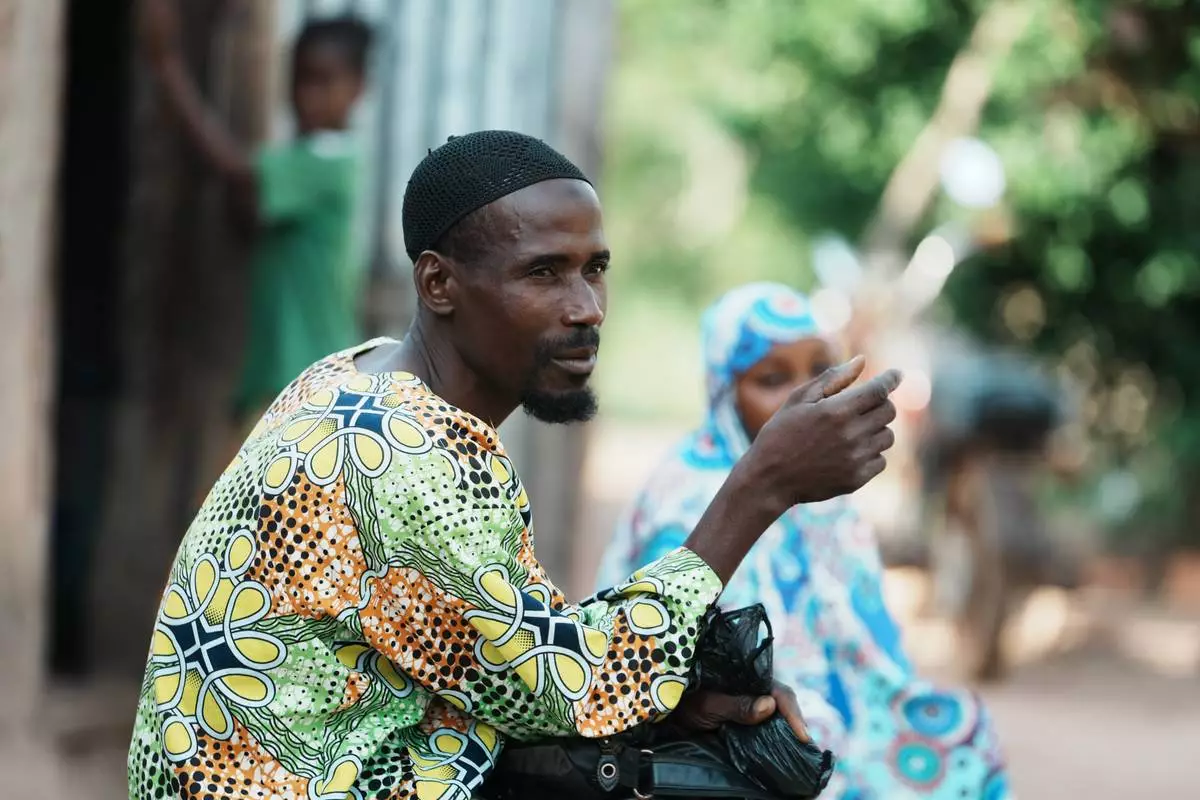
Sabi Bera Zakari, a farmer and father of stunted children, is photographed outside his house In N'dali, northern Benin, Sunday, May. 17, 2026. (AP Photo/Sunday Alamba)
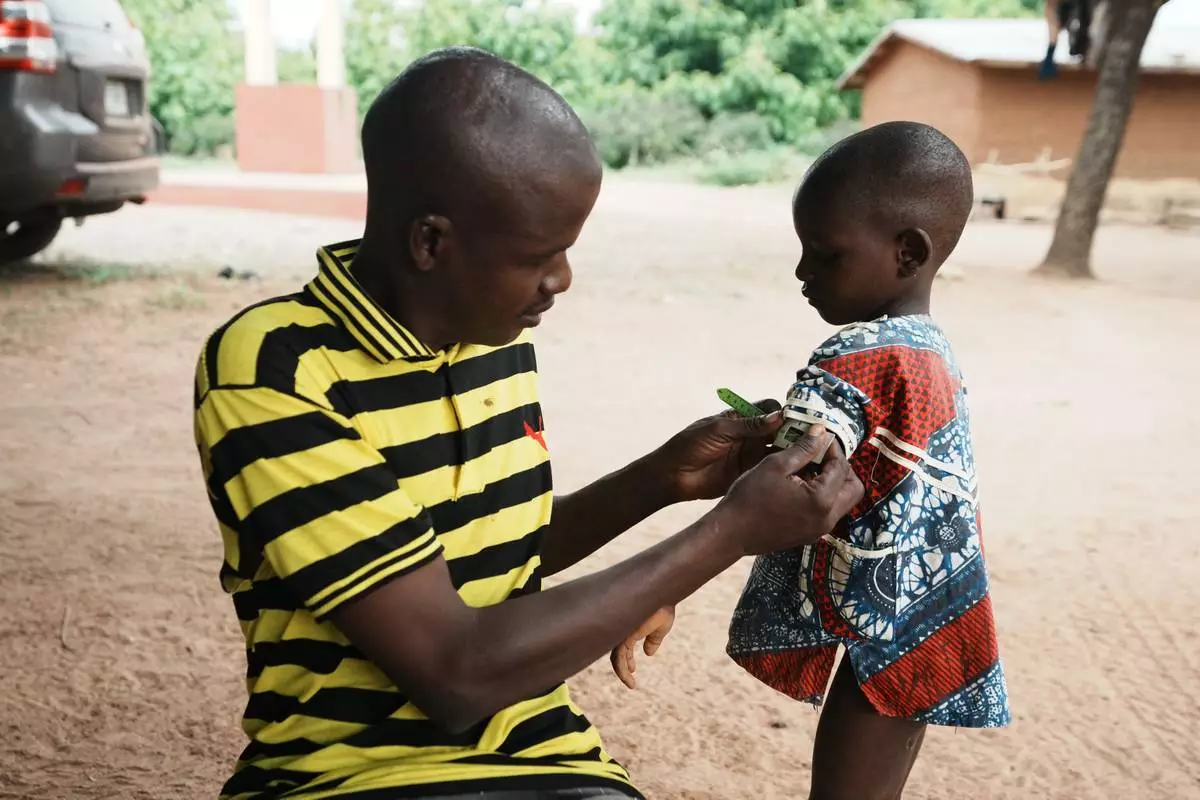
Douro Wonkourou Idrissou, who described himself as a nutrition support member, uses a tape to measure the circumferences of a child's upper arm, in N'dali, northern Benin, Sunday, May. 17, 2026. (AP Photo/Sunday Alamba)