U.S. hurricane season is gearing up. And from Amanda and Boris onward, tropical cyclones' names in the Pacific region are unfolding quickly.
But why the monikers each year? Or at all?
Click to Gallery
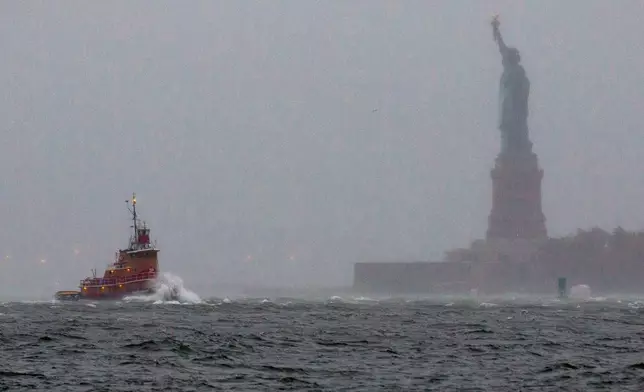
FILE - Waves crash over the bow of a tug boat as it passes near the Statue of Liberty in New York as rough water as the result of Hurricane Sandy churns the waters of New York Harbor, Oct. 29, 2012. (AP Photo/Craig Ruttle, File)
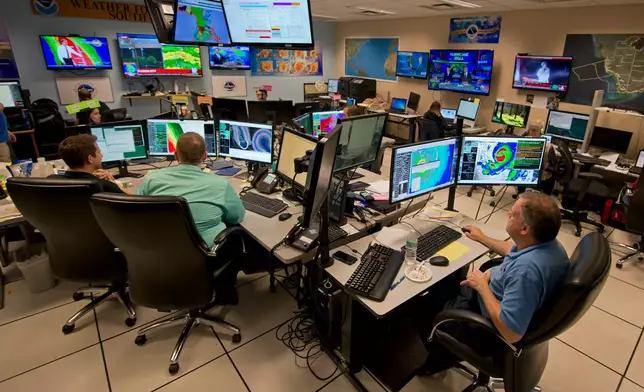
FILE - Forecasters at the National Weather Service office monitor Hurricane Irma, Sept. 9, 2017, at the hurricane center in Miami. (AP Photo/Andy Newman, File)
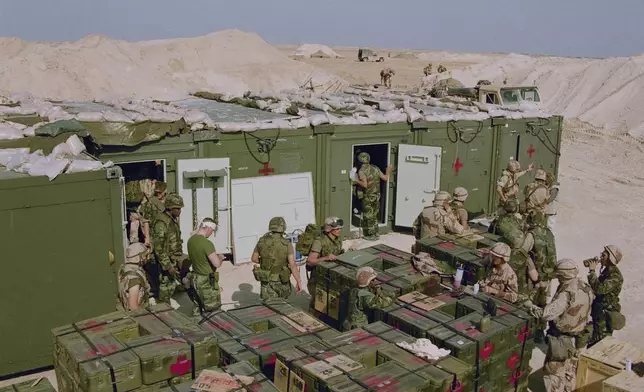
FILE - A U.S. Marine field hospital is set up in the Saudi Arabian Desert on Jan. 17, 1991, as part of Operation Desert Storm. (AP Photo/Mikami, File)
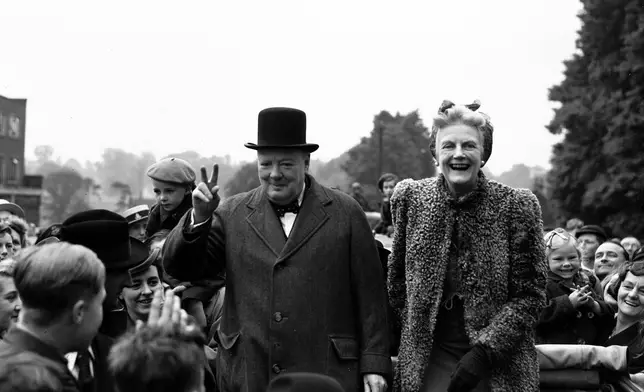
FILE - Britain's Prime Minister Winston Churchill and his wife Clementine tour Churchill's constituency of Woodford, in Essex, England, as part of the Conservative's General Election campaign, May 26, 1945. (AP Photo/Eddie Worth, File)
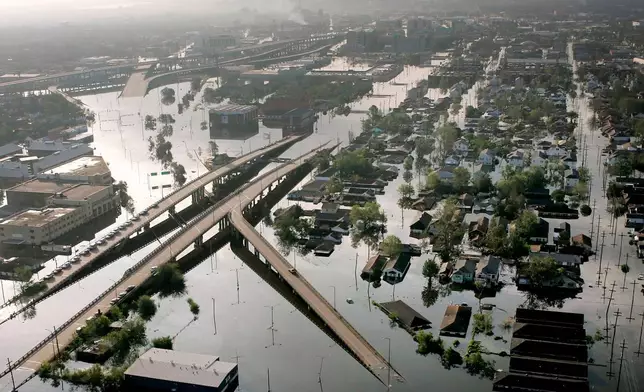
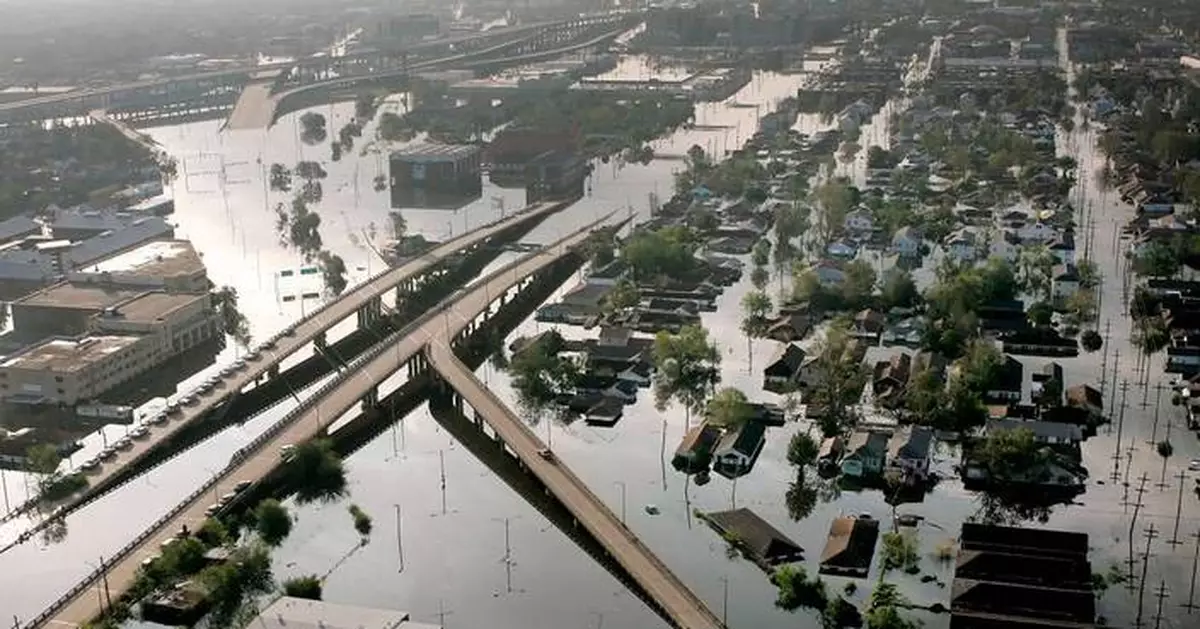
FILE - Floodwaters from Hurricane Katrina fill the streets near downtown New Orleans on Aug. 30, 2005. (AP Photo/David J. Phillip, File)
Humans have given names to the world around them for almost as long as language itself has existed, but formal naming practices for storms and other events of national and international importance are a relatively new phenomenon. Names of military operations (“Operation Epic Fury”), hurricanes (Hugo, Andrew, Katrina, etc.), diseases (COVID-19) and even companies need to serve purposes other than just differentiation. They need to tell stories.
“Look around in your home. Who or what has a name? Your family members, your pets. You may even have named certain objects of significance,” says Shannon Murphy, CEO of Nameistry, a firm that helps companies and entrepreneurs develop their brand identities. “If it’s got a name, it has meaning in some way, and it’s going to come up in conversation or other types of communication.”
The World Meteorological Organization, which manages the naming of tropical storms worldwide, says assigning a moniker is “proven to be the fastest way to communicate warnings and raise public awareness and preparedness,” as well as limit confusion when more than one cyclone is moving through. They can also help with research and record-keeping.
Tropical storms the world over are named on a set of pre-agreed alphabetical lists decided by five tropical cyclone regional bodies. Some of these are cyclical, returning to the same lists every few years, starting at "A" with the first storm of the given year; others start a new list every year. Those covering the Atlantic region skip names beginning with Q, U, X, Y and Z because examples are difficult to find.
Until 1979, the United States used only female names, but now it alternates. For example, Amanda’s successor in the Eastern North Pacific storm region is Boris, and residents of the Caribbean Sea, Gulf of Mexico and the North Atlantic region have already seen Arthur and Bertha.
While storm names are designed to be memorable and simple, they are not necessarily trying to elicit feelings. Neither were military operation names, which functioned to maintain secrecy and to differentiate one from another until British Prime Minister Winston Churchill changed the nomenclature to suit the broader aims of the allies in World War II.
“In the Second World War, names such as Overlord, Torch or Husky were planning code-names,” says Ruben Stewart, senior fellow for land warfare at the International Institute for Strategic Studies. “Churchill’s intervention in the naming of Operation Overlord,” Stewart said, referring to the Allied push that began with D-Day, “reflected a broader wartime realization that operation names mattered.”
In a 1943 memo to his wartime chief of staff discussing code words to be used during World War II, Churchill argued operation names should not imply a “boastful and overconfident sentiment” or be “frivolous.”
The prime minister added that effort should be made to identify names that “do not suggest the character of the operation or disparage it in any way and do not enable some widow or mother to say that her son was killed in an operation called ‘Bunnyhug’ or ‘Ballyhoo.’”
Subsequent conflicts morphed naming practices, with the U.S. military choosing two-word operation names and the United Kingdom sticking with one. Today, British military code names are automatically generated, but U.S. military operations remain evocative. This means joint operations can end up with different names: The military response to the 1991 Gulf War was famously dubbed “Operation Desert Storm” by the U.S. military, while the British opted for “Operation Granby."
Stewart says the post-Korea/Vietnam and post-Panama periods mattered for setting the tone in U.S. military monikers, with Operation Killer during the Korean War in 1951 causing “obvious public-affairs problems,” while the U.S. invasion of Panama being “Operation Just Cause” showed how an operation name could be "deliberately framed for legitimacy,” he said.
When the U.S. war with Iran began in February, it was dubbed Operation Epic Fury, a name President Donald Trump said he selected from a list of 20. Some have criticized the rise of more bombastic names, including immigration raids titled Catahoula Crunch in Louisiana and Operation Dirtbag in Florida — and the naming of detention facilities like Florida's “Alligator Alcatraz.”
“A name can signal purpose, reassure domestic audiences, sustain coalition legitimacy, deter adversaries and give service personnel a shorthand identity for what they are doing,” Stewart says. “The best names are clear, sober, memorable, culturally safe and politically defensible.”
Getting a name's feel or connotation wrong can have huge consequences, despite it being only a sliver of an operation. The U.S. war on terror after 9/11 was originally Operation Infinite Justice, but it was changed to Operation Enduring Freedom after concerns that U.S. allies in the Middle East would be offended. Muslims believe only God can deliver the concept of infinite justice.
Not all names are designed to last. Twice in the last 25 years, the Atlantic weather region exhausted all the names on its annual list and had to resort to using the Greek alphabet to name storms. Now, Berg says, a supplementary list of names sits at the ready.
In the case of a particularly devastating storm, either by death toll or damage, names can be retired and replaced with new ones. Consideration is given to clarity.
“There have been names that are hard to pronounce, and I think people try to refrain from using those because we want them to roll off the tongue pretty easily,” said Robbie Berg, a warning coordination meteorologist with the National Hurricane Center.
Infamous storms with retired names include Sandy, which struck Jamaica, Cuba and the east coast of the United States in 2012, killing 182 people; and Katrina, which struck the U.S. Gulf Coast in 2005, killing nearly 1,400. Both caused widespread property devastation. The names won't surface again; they were replaced by Katia and Sara.
Practices also change over time. Historically, diseases and medical conditions were often named after the people who identified them or places they were identified — think of Alzheimer's disease or Ebola — but the World Health Organization now advises against this practice.
“There is a deliberate move away from terms like ‘swine flu’ or ‘Spanish flu,’ which underscores how powerful a name and its associations can be,” Murphy said. “Once it sticks, it’s hard to unstick it.”
There is scant research into the exact impacts of naming. Andrew Charlton-Perez, a meteorologist and head of the School of Mathematical, Physical & Computational Sciences at the University of Reading, called for more studies in the field as the climate brings more frequent and extreme weather events.
“As our climate becomes more extreme,” he said, “there is always the need to think about how to better communicate to avoid harm.”
One possible alternative: crowdsourcing. In Britain and Ireland, people can submit ideas for storm names and try their hand. They might get lucky — depending on which way the wind blows.
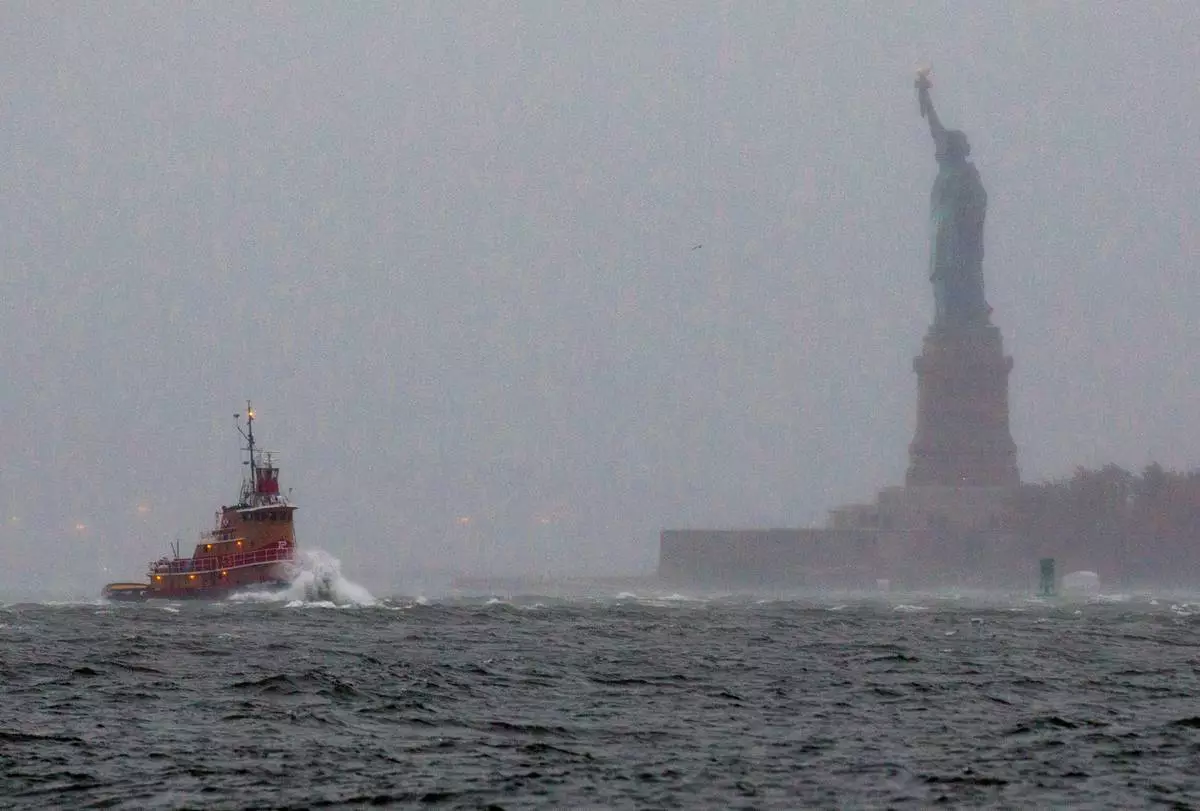
FILE - Waves crash over the bow of a tug boat as it passes near the Statue of Liberty in New York as rough water as the result of Hurricane Sandy churns the waters of New York Harbor, Oct. 29, 2012. (AP Photo/Craig Ruttle, File)
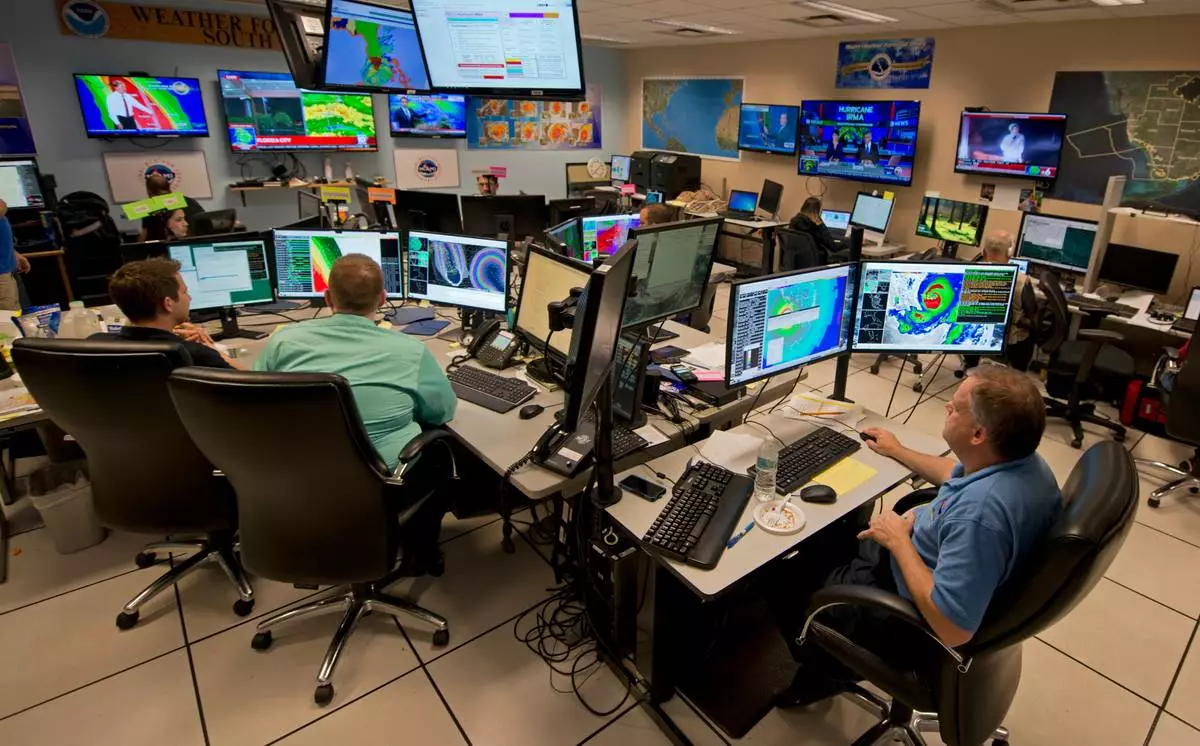
FILE - Forecasters at the National Weather Service office monitor Hurricane Irma, Sept. 9, 2017, at the hurricane center in Miami. (AP Photo/Andy Newman, File)
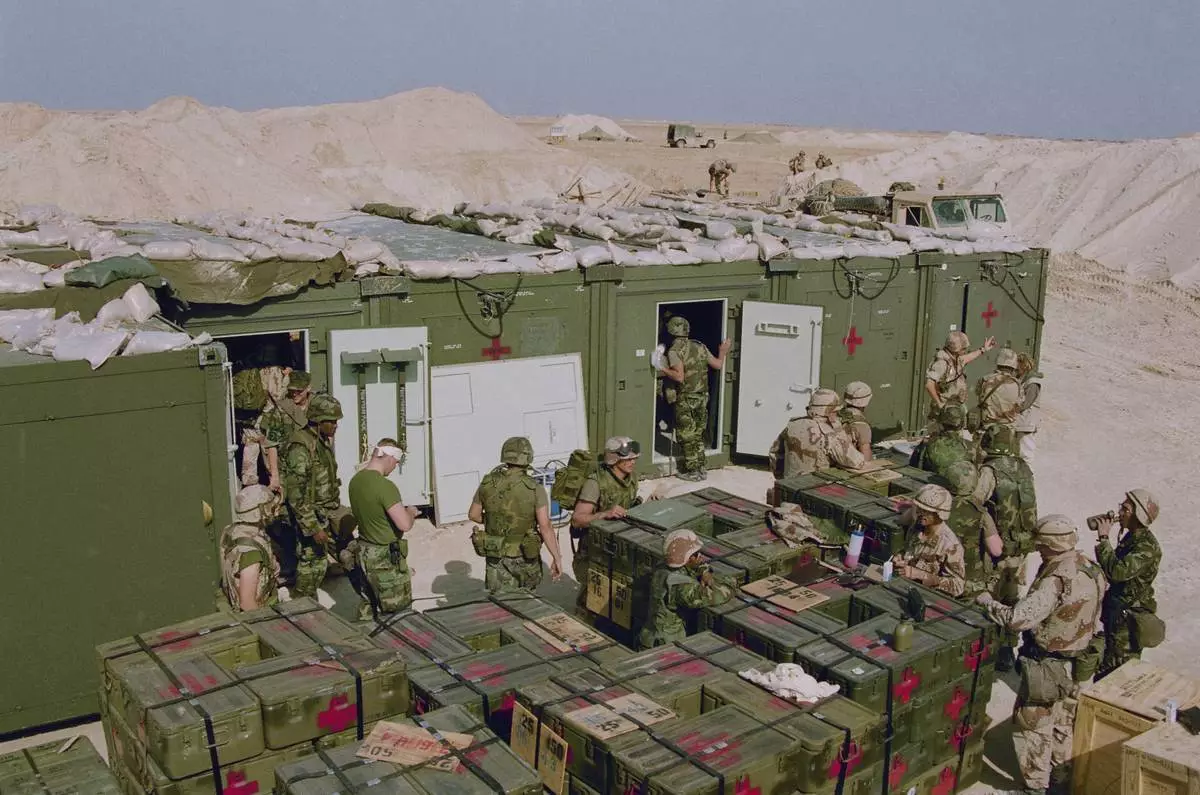
FILE - A U.S. Marine field hospital is set up in the Saudi Arabian Desert on Jan. 17, 1991, as part of Operation Desert Storm. (AP Photo/Mikami, File)
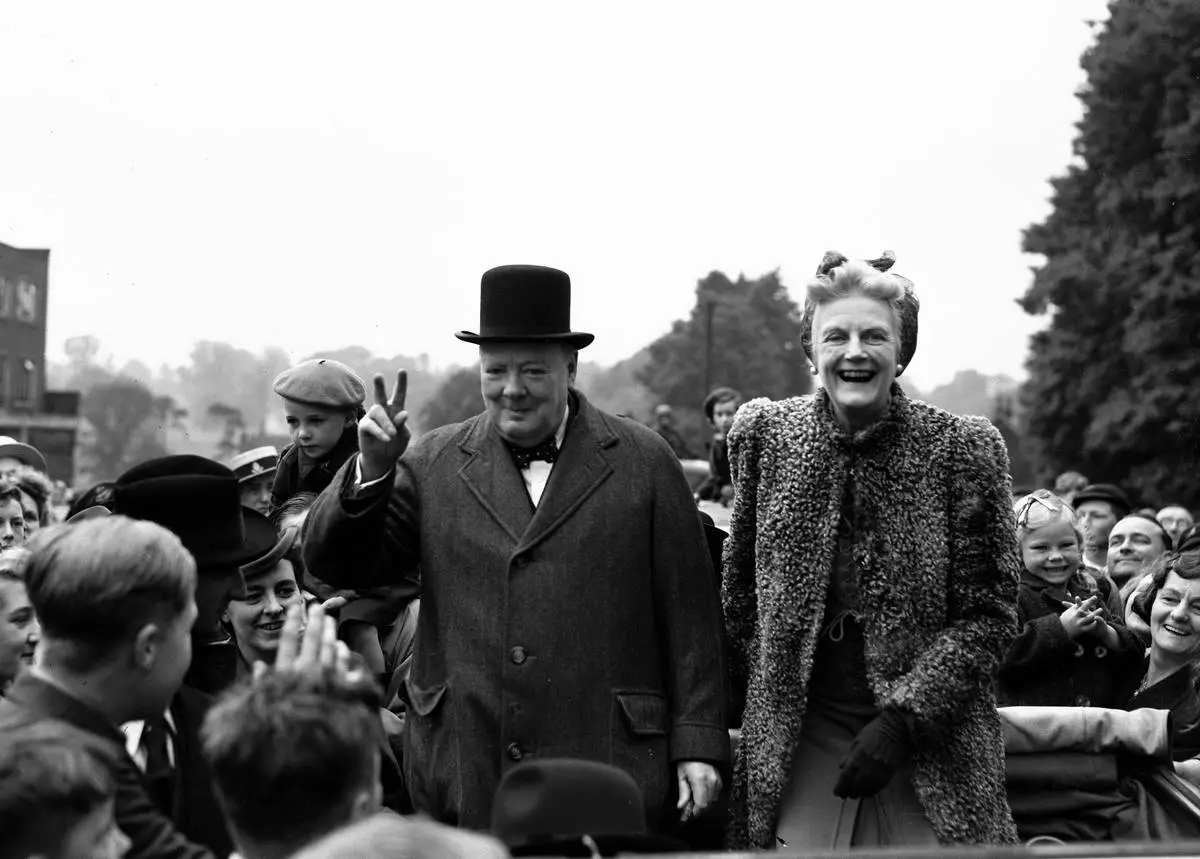
FILE - Britain's Prime Minister Winston Churchill and his wife Clementine tour Churchill's constituency of Woodford, in Essex, England, as part of the Conservative's General Election campaign, May 26, 1945. (AP Photo/Eddie Worth, File)
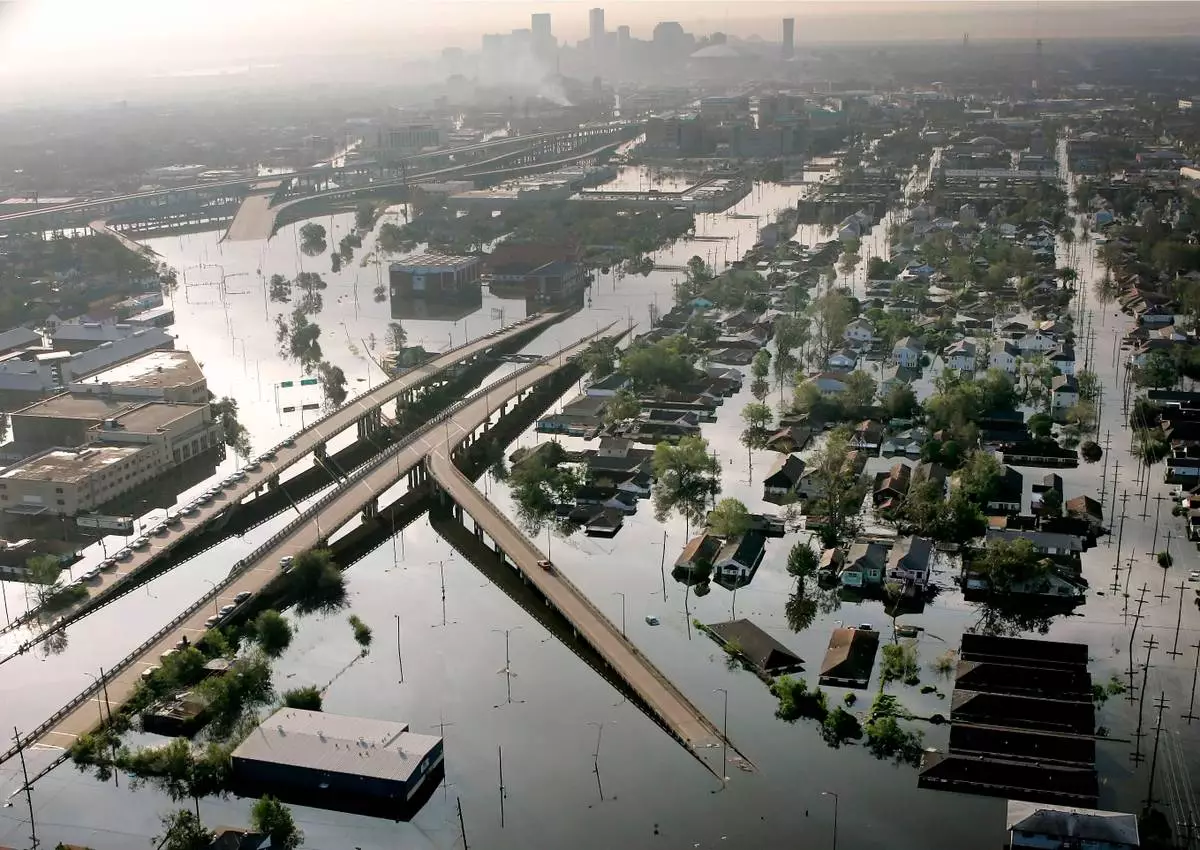
FILE - Floodwaters from Hurricane Katrina fill the streets near downtown New Orleans on Aug. 30, 2005. (AP Photo/David J. Phillip, File)