Japan's core consumer prices increased 1.8 percent in July from a year earlier, marking that the country's core consumer price index (CPI) had risen for 59 consecutive months, government data showed Friday.
The core CPI, which excludes volatile fresh food items, stood at 102.1, accelerating from a 1.6 percent gain in June, according to the Ministry of Internal Affairs and Communications.
The overall CPI, meanwhile, climbed 1.9 percent year on year, reaching the highest level so far this year.
Energy costs rose 0.6 percent year on year in July, after a 0.4 percent drop in June, serving as the main driver of the widened CPI growth.
Prices for food, excluding fresh items, were up 3.0 percent in July, another key contributor to the overall price gains.
Analysts noted that while Japan's core CPI has remained below the Bank of Japan's 2 percent inflation target for seven consecutive months, upward price pressures have not eased significantly.
A weaker yen and the ongoing conflicts in the Middle East could further raise Japan's import and energy costs, potentially pushing inflation higher and reinforcing market expectations for a Bank of Japan rate hike in September.
Earlier this month, the ministry revised the CPI base year from 2020 to 2025, with all indexes from January 2025 onward recalculated under the new benchmark.
The year-on-year increase in June's overall CPI under the new base is largely on par with the old standard, showing no significant changes to the overall statistical results.

Japan's core consumer prices up 1.8 pct in July
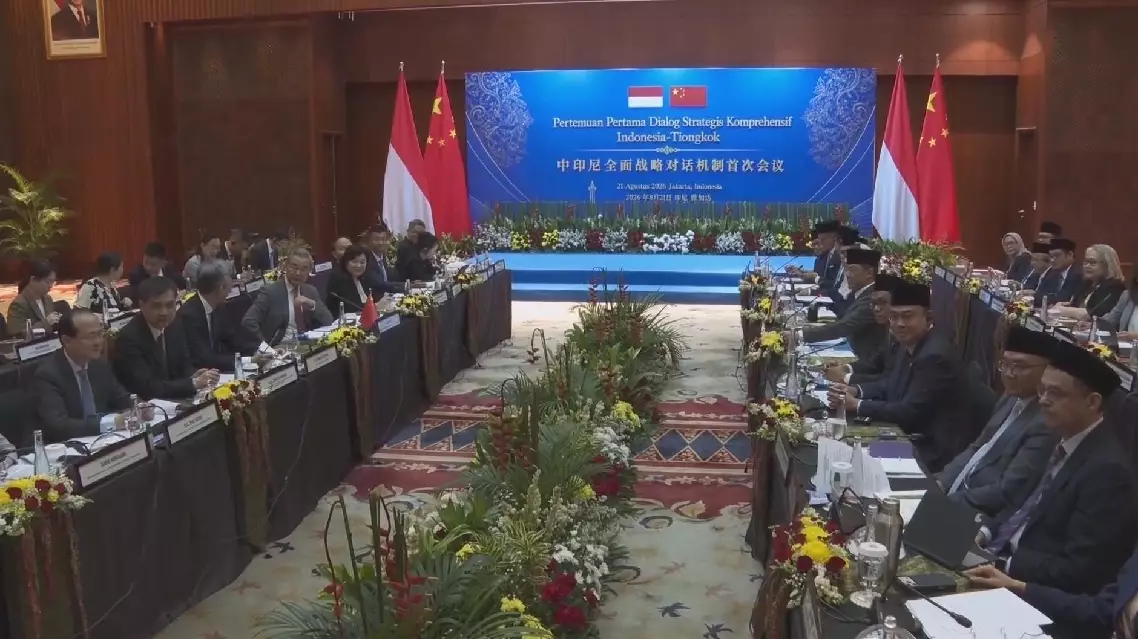
Chinese Foreign Minister Wang Yi on Friday called on China and Indonesia to strengthen all-round cooperation and pool greater development synergy to jointly tackle risks and challenges.
Wang, also a member of the Political Bureau of the Communist Party of China Central Committee, made the remarks while co-chairing the first Conference of China-Indonesia Comprehensive Strategic Dialogue Mechanism with Indonesian Foreign Minister Sugiono in Jakarta.
Noting that the current international situation is marked by growing turbulence and uncertainty, with unilateralism and hegemonic practices seriously impacting global security and development, Wang said it is timely for China and Indonesia, as major developing countries, to strengthen strategic communication and deepen strategic cooperation, which carries important and far-reaching significance beyond bilateral relations.
Wang said China has always placed Indonesia in an important position in its diplomacy, particularly its neighborhood diplomacy, and is ready to work with Indonesia to enhance mutual understanding and support.
Stressing that the conference marks an important milestone in bilateral relations, Sugiono said China's development has brought enormous opportunities to the world, particularly neighboring countries such as Indonesia.
He said Indonesia and China share closely intertwined interests and stressed the importance of strengthening coordination with China for mutual benefit as Indonesia advances its development strategies.
Sugiono added that Indonesia firmly adheres to the one-China policy and supports China's cause of reunification.
The two sides also agreed to uphold strategic autonomy and firmly support each other's core interests. They also decided to launch the formulation of the China-Indonesia Five-year Action Plan (2027-2031).
Both sides agreed that deepening cooperation in energy and mineral resources serves their common interests, and expressed readiness to jointly build a comprehensive, open and green partnership in energy and mineral resources.
Indonesia spoke highly of the contributions made by Chinese companies to local development, noting that the success of Chinese companies is also a success for Indonesia. It expressed readiness to provide Chinese companies with a fair, transparent and friendly business environment.
The two sides also pledged to expand cooperation in areas such as artificial intelligence and poverty reduction. They agreed to restart cooperation in fishing, accelerate maritime cooperation and push forward joint development.
They agreed to fully and effectively implement the Declaration on the Conduct of Parties in the South China Sea and work toward the early conclusion of the Code of Conduct in the South China Sea.
Both sides agreed to hold the second meeting of the dialogue mechanism in China next year.
Chinese FM calls for stronger all-round cooperation with Indonesia to tackle risks, challenges