WASHINGTON (AP) — Even for well-traveled IndyCar drivers, a track with the U.S. Capitol in the background is a little awe inspiring.
“We get to race at a lot of cool cities, but this one is by far the best that we've ever had, and I can say that very truthfully," Kyle Kirkwood said Friday. "Going by the Capitol building, the views here, all the architecture of all the buildings around here, all the museums, it's stuff that you dream of.
"It's a serious honor and privilege.”
This weekend's Freedom 250 Grand Prix is the second big sporting event staged by President Donald Trump in Washington as part of the nation’s 250th birthday celebration. The first was a UFC fight card on the White House’s South Lawn in June.
IndyCar racing — an open-wheel counterpart to NASCAR — doesn’t have quite the same association with the right-wing “manosphere” or the MAGA movement, but series owner Roger Penske received the Presidential Medal of Freedom from Trump in 2019 and led the effort to put together this race in the District of Columbia.
For the drivers, it’s a welcome moment in the spotlight.
“What’s been the coolest part of this week? Honestly, the media covering us,” Kirkwood said. “It’s cool to see IndyCar in this light. We don’t get these opportunities very often outside of the Indy 500, and to have an event that is sought after as much as the 500 is something that’s special.”
Washington has little history with high-level motorsports. In 2002, the parking lot at RFK Stadium on the city's east side was transformed into a course for an American Le Mans Series event.
The Freedom 250 is downtown in one of D.C.'s prime tourist areas. If you're not in a race car, it's not the greatest weekend to be driving around the area given all the road closures, but if the weather holds up, the setting has the potential to be spectacular.
“As a boy from the Netherlands that just got his green card, it is really cool,” said Rinus VeeKay, who has six top-10 finishes this season. “We didn't get too much U.S. history in school ... but learning so much about it here, seeing all the monuments and museums and just how every building kind of has a special purpose here around the city, is very cool. Getting to see the White House, this is stuff you see in movies.”
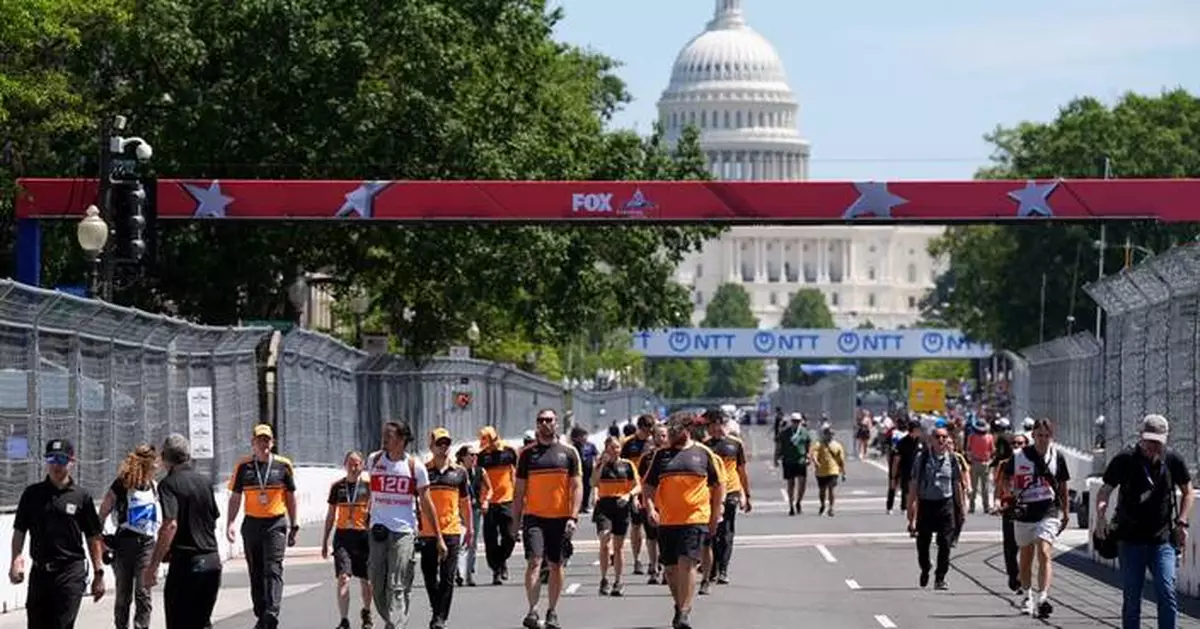
The White House is not part of the D.C. course, although after Turn 1, the track does include a lengthy straightaway along Pennsylvania Avenue, heading northwest away from the Capitol. Then there's a sharp left turn between the National Archives and the main Justice Department building, followed by a couple quick 90-degree turns as the track navigates the city's grid system.
After a straightaway takes drivers across the National Mall, they turn left onto Independence Avenue, passing the Smithsonian’s National Air & Space Museum. and the Eisenhower Memorial before heading north on 3rd Street to the finish line, which is just west of the Capitol.
“I think it's more exciting when you actually get on the grounds and see what you're about to do. I mean, when is this ever going to happen again?" said Josef Newgarden, a driver for Team Penske. “I hope it's great visibility. That's probably the biggest thing that it could bring to us — is visibility to people that aren't maybe as familiar with IndyCar racing."
IndyCar practice and qualifying are scheduled for Saturday, along with an IROC race. The IndyCar race is Sunday and set for 250 miles (147 laps) — the second-longest street circuit race in IndyCar history.
The 1.7-mile track includes seven turns in all. The Air & Space Museum and National Gallery of Art are both inside the course's perimeter, with a fan zone between them. The track is shorter and has fewer turns than several others on the IndyCar schedule, but it's not much different from the 1.6-mile, nine-turn circuit used in downtown Detroit.
“It’s short and snappy, but you know what? We don't know. We haven't driven on it yet," driver Marcus Armstrong said. “We'll find out tomorrow. It might even be wet tomorrow. There's a lot of crosswalks, a lot of paint on the track, so that could be super slippery.”
See AP’s full auto racing coverage here
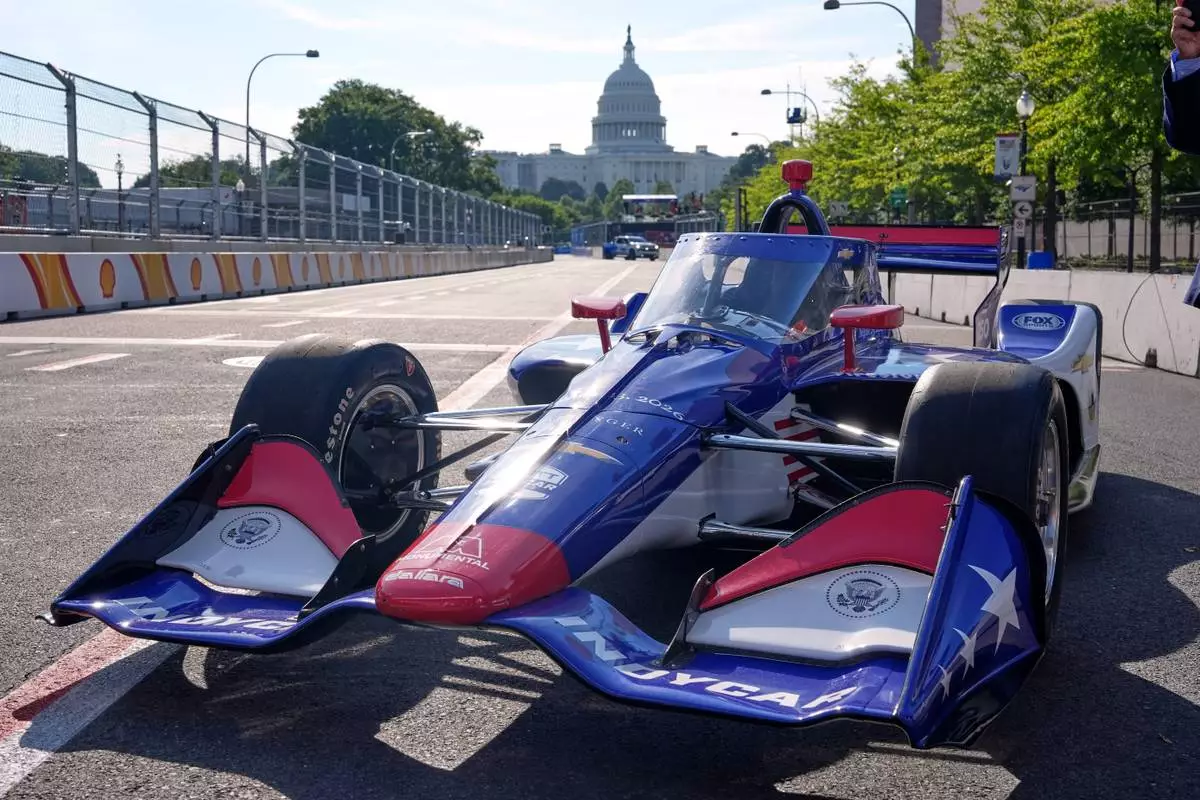
A car on display on the track ahead of the Freedom 250 Grand Prix auto race, shown Friday, Aug. 21, 2026, in Washington. (AP Photo/Alex Brandon)
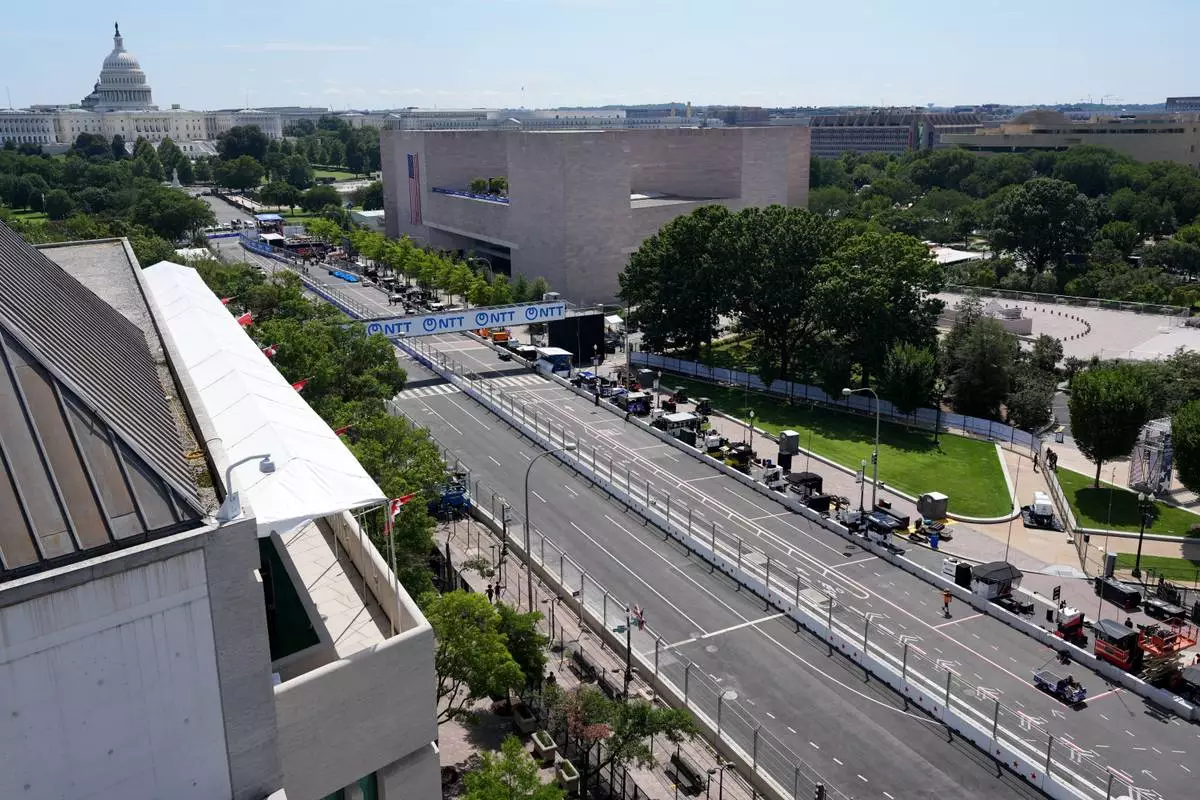
The race track is seen on Pennsylvania Ave., near the National Gallery of Art, East Building, and the U.S. Capitol, ahead of the Freedom 250 Grand Prix auto race, Friday, Aug. 21, 2026, in Washington. (AP Photo/Alex Brandon)
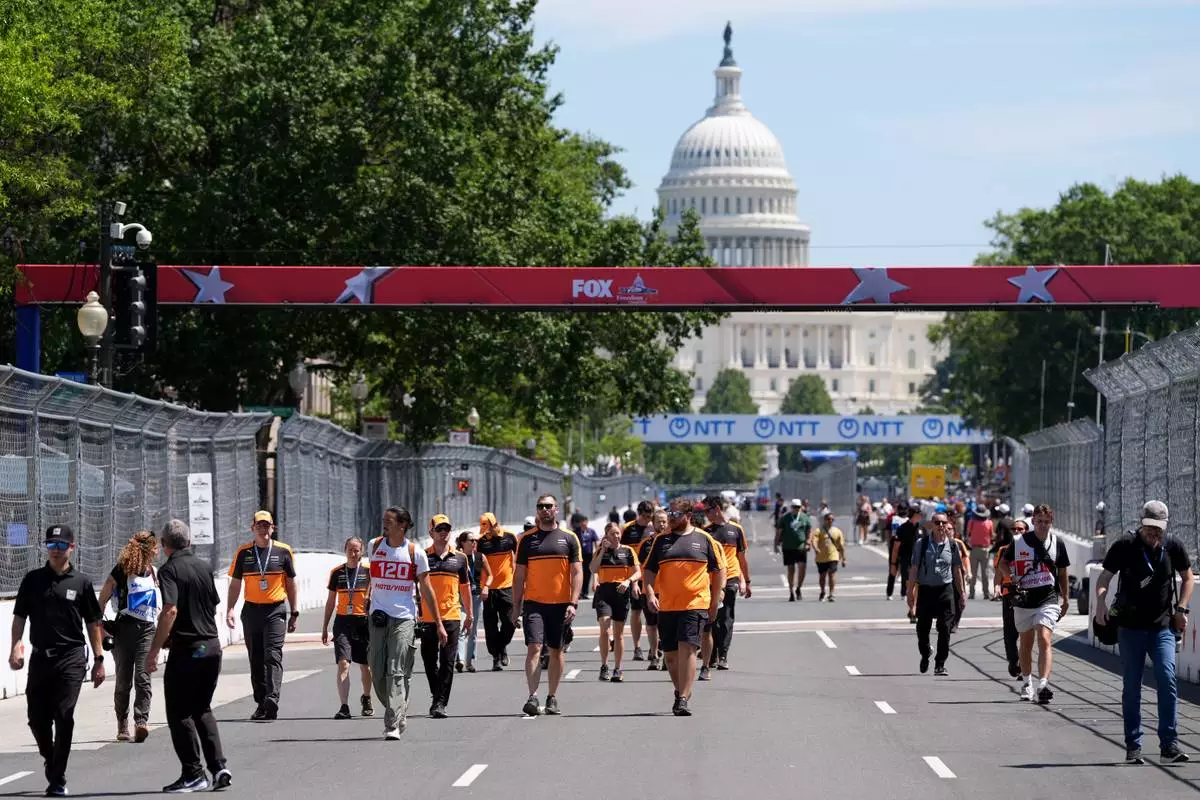
Racing teams walk the track before Sunday's Freedom 250 Grand Prix auto race, seen Friday, Aug. 21, 2026, in Washington. (AP Photo/Alex Brandon)
PHOENIX (AP) — State prosecutors declined to file criminal charges against Arizona Gov. Katie Hobbs over allegations that she took part in a pay-to-play scheme with a group home company that received a rate increase from the state after contributing $100,000 to her inaugural celebration, Attorney General Kris Mayes announced Friday.
The Democratic governor has been accused of giving preferential treatment to Sunshine Residential Homes after the Arizona Republic revealed the private company contributed to the inaugural fund and Arizona Democratic Party and later received a 30% payment increase. Only Sunshine and one other company were given increases during the 2022-2023 contracting period.
The investigation has turned into a political millstone for Hobbs as she seeks a second term as governor. Her Republican opponent, U.S. Rep. Andy Biggs, has run an ad underscoring the investigation into Hobbs.
Hobbs denies wrongdoing, saying she wasn’t involved in the decision to grant the increase.
“The investigation has not uncovered any evidence of the necessary quid pro quo to support a bribery charge,” Mayes, a Democrat, said in a statement. Her investigators concluded the rate increase was the result of Sunshine's leverage as the largest provider of beds for children in foster care, not political pressure.
While the situation did not meet the standard for criminal charges, Mayes said her investigation “shows there is a need for legislative reform" around the transparency of political donations made by state contractors. She urged Hobbs and the GOP-controlled Legislature to adopt improvements.
A separate investigation by Republican Maricopa County Attorney Rachel Mitchell and the state auditor general is continuing. It’s unclear when the latter investigation will be completed, or whether its scope differs from the attorney general's focus on bribery-related crimes. A spokesperson for Mitchell, Erin Pellett, said she had no estimate for when the the investigation would conclude. She declined to comment on the attorney general's announcement, citing the open investigation.
“As has been publicly reported multiple times and the Attorney General’s report now confirms: Governor Hobbs was not involved in, did not direct, and did not instruct any member of her administration regarding the rate increases the Department of Child Services approved,” Christian Slater, a spokesperson for Hobbs, said in a statement.
As Democrats in a Republican-leaning state, Hobbs and Mayes both face tough fights for reelection in November. Biggs, who has made the scandal a centerpiece of his campaign for governor, said Mayes was “whitewashing obvious corruption” by clearing her fellow Democrat.
The company gave $200,000 to the state Democratic party in the months leading up Hobbs’ November 2022 showdown against Republican Kari Lake. After her narrow victory, Sunshine gave another $100,000 to Hobbs’ inaugural fund weeks before she took office in 2023 and another $100,000 to the party in August 2023, according to records.
Sunshine also gave $150,000 to a legal defense fund for Hobbs between November 2023 and the following May, according to records released by Mayes. Those contributions had not previously been disclosed.
The company's founder, Simon Kottoor, and his wife, Elizabeth Kottoor, each contributed a total of $10,400 to Hobbs’ two gubernatorial campaigns.
Sunshine sought an increase in 2022, but it was denied about a month after Hobbs took office. The company tried again and was approved in May 2023, raising its rate from $149 to $195 per bed.
The Arizona Department of Child Safety said Sunshine told the state it would reduce its bed capacity if it didn’t get a rate increase and instead would use such beds to house unaccompanied immigrant children for the federal government.
The ultimatum came as the federal government was reimbursing group homes at nearly twice the rate paid by the state, which had already seen some providers moving beds to the federal program that serves unaccompanied immigrant children, the agency said.
Sunshine is the state's largest provider of beds for children without developmental disabilities, with about 290 beds across 28 homes. It also provides 70% of beds for siblings in foster care in metropolitan Phoenix. Losing Sunshine’s beds would significantly affect the state’s ability to place children in homes and would likely lead to siblings in foster care being split up and sent to different homes, the agency said earlier this month.
“The potential loss of approximately 290 beds was a serious capacity concern that required careful consideration of the consequences for children and the broader child welfare system,” the agency said in a statement.
The agency said then-DCS Director David Lujan approved the increase and that the governor and her staff weren’t involved.
All providers that previously had contracts with the agency received rate increases during a new round of contracts in 2024, when Sunshine also saw its rate increase to $234 per bed.
Hobbs declined to be interviewed by investigators but submitted two statements through her attorneys on Monday, according to a memo from Nick Klingerman, chief of the attorney general’s criminal division. Her statements said she did not discuss contract rates with anyone from Sunshine, nor did she “order or authorize” others to do so on her behalf, and didn’t even know there were discussions about rates until after the increase was approved.
“Rather than the result of a bribe, the investigation has found that Sunshine’s rate increases appear as the result of its outsized leverage over DCS’ congregate care program,” Klingerman wrote.
Furthermore, he wrote, political contributions are protected speech, and any charges filed against Hobbs or Sunshine executives would likely be tossed on First Amendment grounds.
In seeking the investigations, Republican state Sen. T.J. Shope pointed out the group-home company was under scrutiny for its care of Jakob Blodgett, a 9-year-old who stayed at a Sunshine home in Glendale in December 2022 after his father was arrested on a drug charge. He died days later at a hospital from complications of Type 1 diabetes, including the serious complication known as ketoacidosis.
A lawsuit alleges poor management of the boy’s diabetes while in the foster care system and that child welfare authorities and Sunshine were negligent in exposing the boy to harm that resulted in his death. While the state has denied the negligence allegations, two Sunshine employees responsible for providing direct care for Blodgett during a crucial stretch of his decline in health testified they didn’t have the necessary training or knowledge to manage a Type 1 diabetic.
The Maricopa County Sheriff’s Office interviewed several Sunshine employees as part of its criminal investigation into Blodgett’s death. No one has been charged. The county agency said the investigation remains open.
Associated Press writer Jonathan J. Cooper contributed to this story.
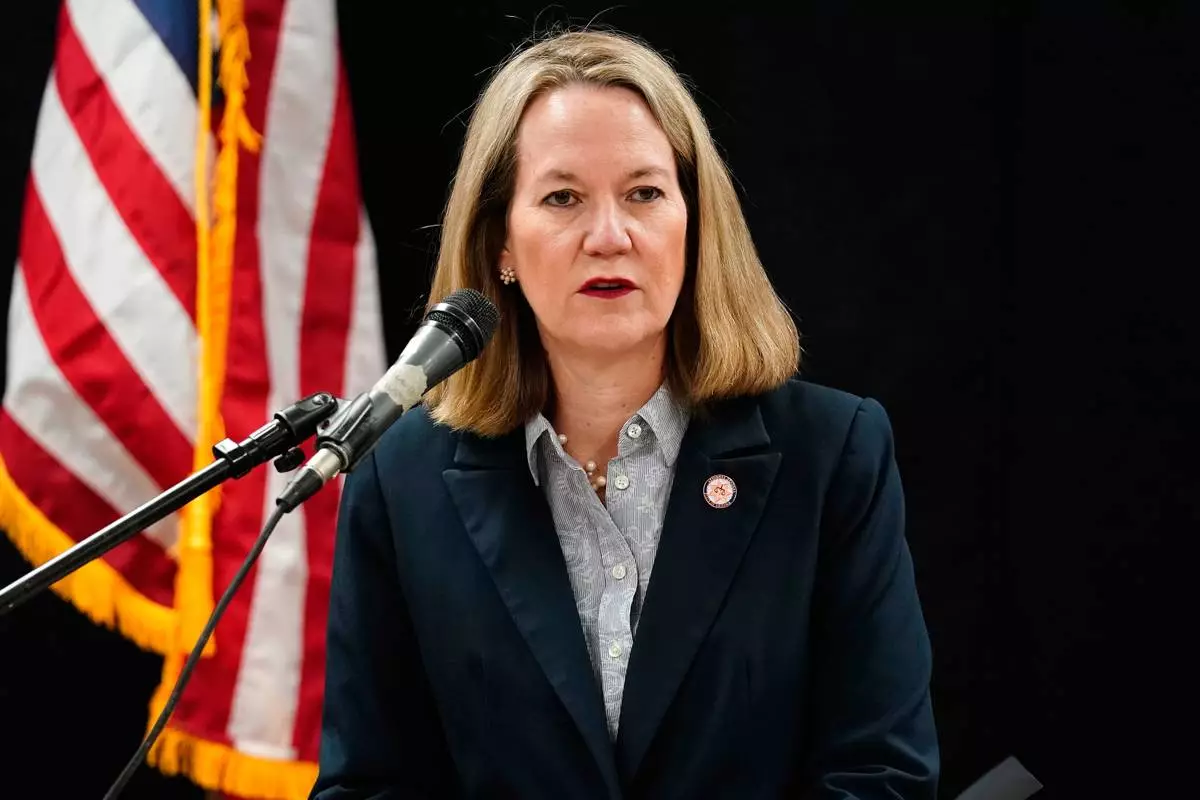
FILE - Arizona Attorney General Kris Mayes speaks at the Arizona State Prison, March 19, 2025, in Florence, Ariz. (AP Photo/Darryl Webb, File)
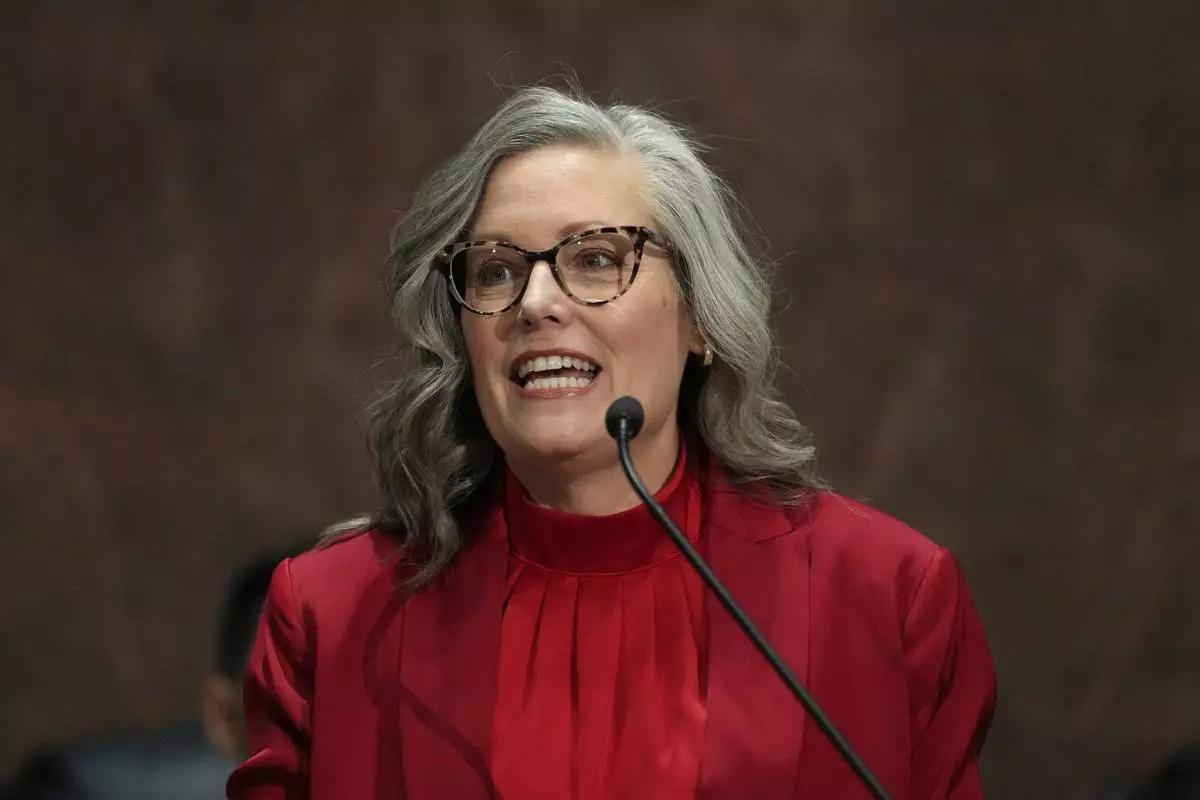
FILE - Arizona Democratic Gov. Katie Hobbs gives her State of the State address in the House of Representatives at the Capitol, Jan. 12, 2026, in Phoenix. (AP Photo/Ross D. Franklin, File)