Information Services Department signs MOU with Asia-Pacific Broadcasting Union
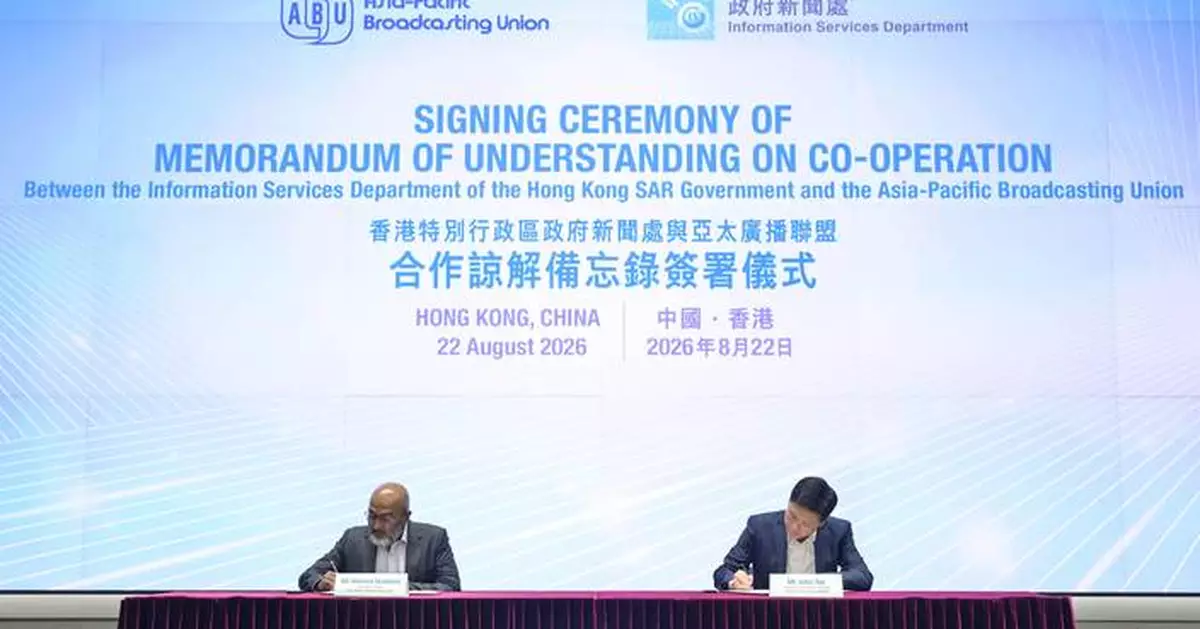
The Information Services Department (ISD) of the Hong Kong Special Administrative Region Government and the Asia-Pacific Broadcasting Union (ABU) signed a Memorandum of Understanding on Co-operation (MOU) today (August 22) to strengthen collaboration and exchanges on matters related to media and communication, and to bring the good stories of Hong Kong to the global stage.
The MOU was signed by the Director of Information Services, Mr John Tse, and ABU Secretary-General Mr Ahmed Nadeem. Under the agreement, both parties will seek to establish a dedicated communication mechanism for the exchange of views on media and communication co-operation; collaborate on hosting and supporting joint events in Hong Kong; leverage ABU platforms to present compelling stories of Hong Kong to global audiences; and facilitate and support visits by media professionals from ABU member organisations to Hong Kong to promote reciprocal dialogue and mutual understanding.
This is the first such MOU that the ISD has signed with a regional broadcasting union.
Mr Tse said that the expansive global footprint of the ABU aligns closely with the ISD's objective of engaging regional and international media, and the ISD can support the reporting of ABU members by sharing Hong Kong's accurate and up-to-date news stories and materials, paving the way for a long-term and mutually beneficial partnership.
"Upon signing the MOU, the ISD will immediately initiate discussions on the arrangements for inviting senior and mid-level editorial staff from ABU member organisations to visit Hong Kong at the end of this year to learn about the city's latest developments. We will also support the ABU in hosting media events in Hong Kong next year," Mr Tse said.
"As we prepare to celebrate the 30th anniversary of the establishment of the Hong Kong Special Administrative Region next year, we will also make good use of the ABU's international network and platforms to share information on Hong Kong's celebratory activities and achievements over the past three decades with wide audiences around the world. It will also help global audiences to keep abreast of the latest developments in Hong Kong, and learn about the emerging opportunities in areas ranging from business and investment, to education, arts, culture and much more."
Established in 1964, the ABU is a not-for-profit, non-governmental professional association dedicated to advancing broadcasting in the Asia-Pacific, promoting the collective interests of television and radio broadcasters, and facilitating regional and international media co-operation. Headquartered in Kuala Lumpur, Malaysia, it is demographically and geographically the world's largest broadcasting union, encompassing more than 220 member organisations across 66 countries and serving more than half the world's population.
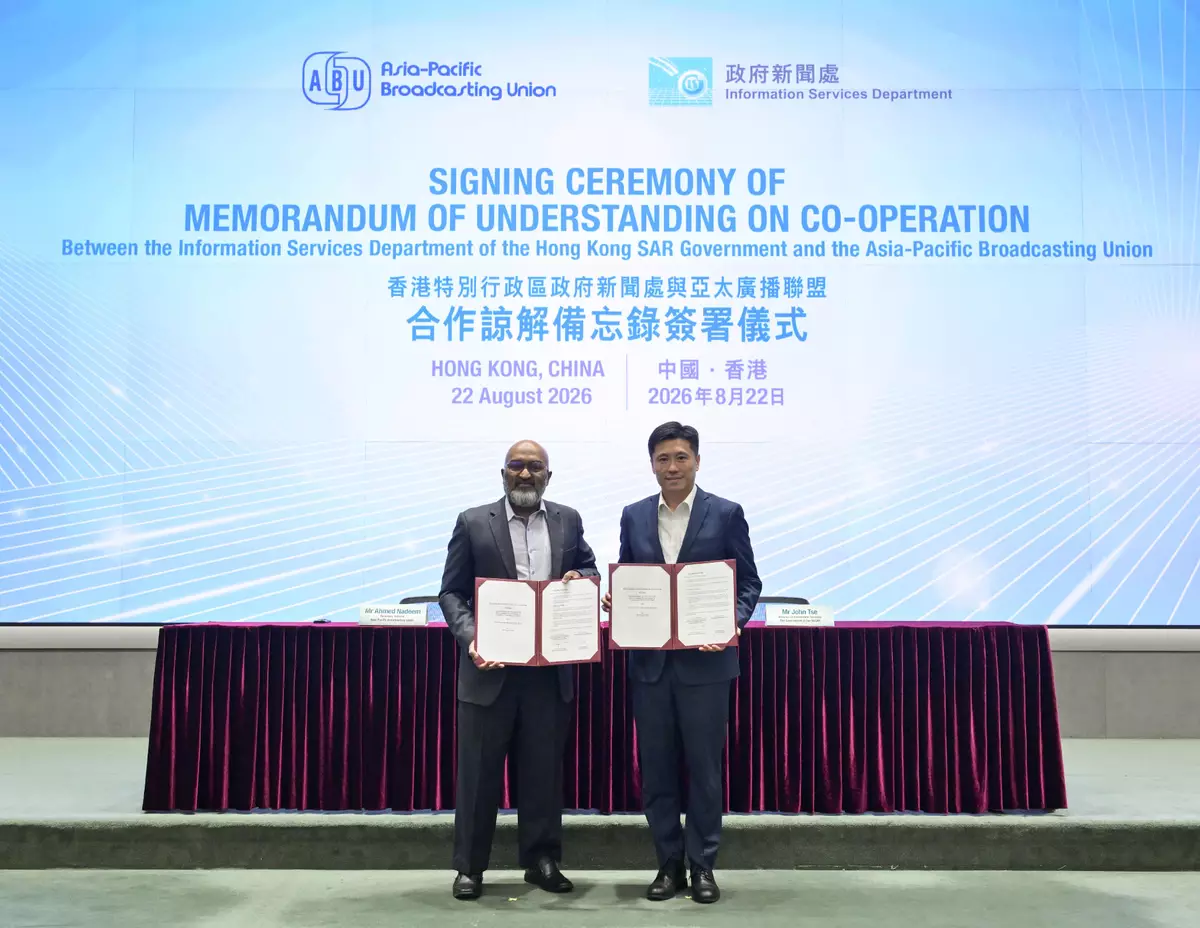
Information Services Department signs MOU with Asia-Pacific Broadcasting Union Source: HKSAR Government Press Releases
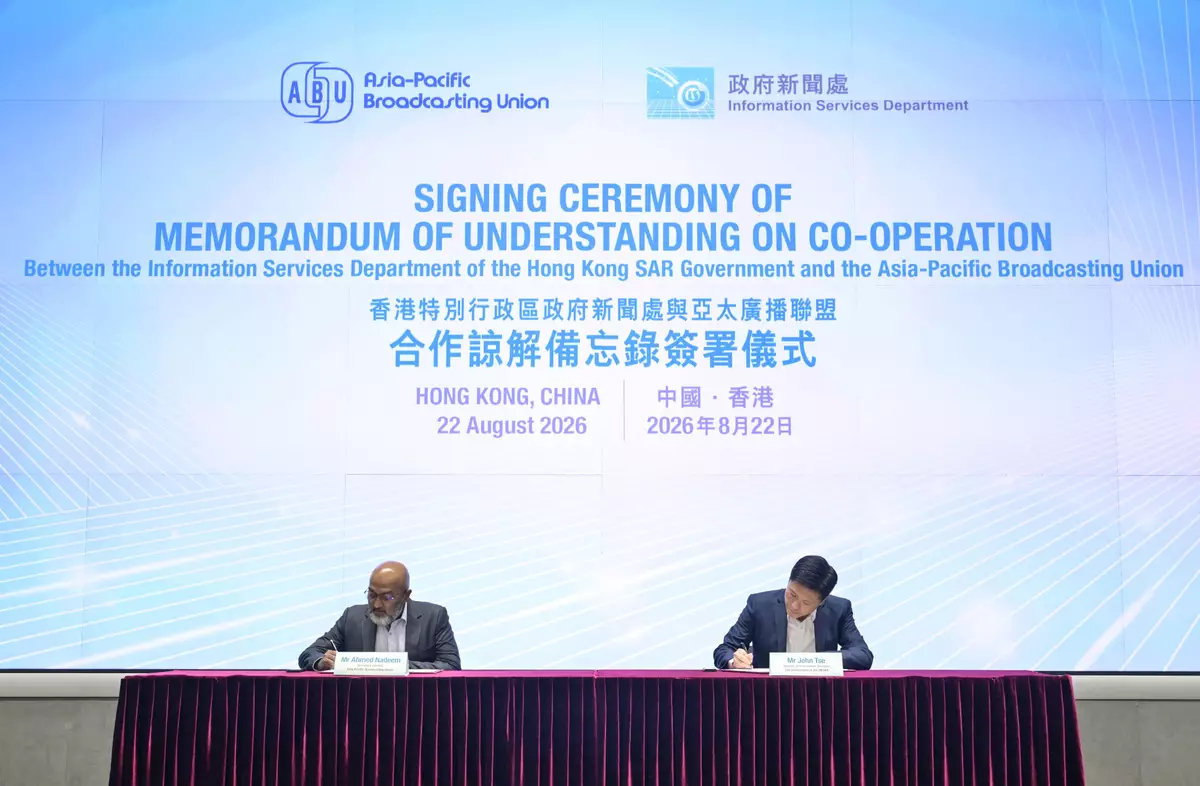
Information Services Department signs MOU with Asia-Pacific Broadcasting Union Source: HKSAR Government Press Releases
Over 10 000 persons join stress test at Huanggang Port (with photos/video)
The Hong Kong Special Administrative Region (HKSAR) Government today (August 22) conducted the first stress test of passenger and vehicular flows with the relevant units of Shenzhen at the Huanggang Port.
Over 10 000 civil servants from over 70 bureaux and departments had been mobilised to participate in the stress test. They were instructed to take different modes of public transport to arrive at the port, then practised immigration procedures before departure. Participants participated in cyclical trials involving more than 400 departures using vehicles dispatched by public transport operators to simulate the flow of people and vehicles arriving and departing from the port.
The drill marked the first trial of the "collaborative inspection" automated channels for passenger clearance. Participants departed through the "collaborative inspection" automated channels or manual counters at the departure hall with their Mainland Travel Permits for Hong Kong and Macao Residents (commonly known as the Home Visit Permit), and then returned through the automated channels or manual counters at the Shenzhen side's departure hall with their Hong Kong identity cards. This exercise tested the operation and tuning of the automated channels and related systems, and passenger flow management. The stress test also included a "crowd concentrated-flow test". A large number of participants were held on designated floors as instructed, and were subsequently released in several major batches within a short period of time, so as to simulate a situation where a large number of arriving passengers proceed to the public transport interchange during peak hours, thereby testing the management of passenger and vehicular flows, as well as co-ordination of supporting arrangements.
Meanwhile, the drill also conducted a vehicle-flow stress test involving nearly 1 000 vehicle trips on the "joint one-stop" vehicle lane level, and invited automobile associations to assist in organising private vehicles to participate together. Participating vehicles were instructed to enter the port through the new connecting road in batches. Then, they simulated the process of undergoing risk assessment by the Hong Kong Customs and Excise Department at the "customs front kiosks", and the process of queuing up to enter the "joint one-stop" vehicle lanes for inspection and clearance or going to the inspection area for further inspection, in order to test the vehicular flow management and on-site guidance.
The Chief Secretary for Administration, Mr Chan Kwok-ki, accompanied by the Secretary for Security, Mr Tang Ping-keung; the Secretary for the Civil Service, Mrs Ingrid Yeung; and the Secretary for Transport and Logistics, Ms Mable Chan, inspected the drill. Mr Chan said that the drill was conducted smoothly, with a large number of passengers and vehicles entering and leaving the port building in an orderly manner and a public transport interchange capable of absorbing substantial passenger flows within a short period of time. He noted that the test closely resembled the situation at the port under high load, effectively testing the emergency coordination capabilities among departments. He hoped that all parties would summarise the experiences from the drill, continue refining details, and work closely with the Shenzhen side to press ahead with the various preparatory tasks at full steam. Upon confirmation by both sides that the port is ready for safe and smooth operation, the governments of Guangdong and Hong Kong will finalise the official opening date of the Huanggang Port and make timely announcements to the public.
Representatives from various bureaux, departments and organisations participated in the drill, including the Security Bureau, the Transport and Logistics Bureau, the Civil Service Bureau, the Hong Kong Police Force, the Transport Department, the Highways Department, the Immigration Department, the Hong Kong Customs and Excise Department, the Department of Health, the Fire Services Department, the Architectural Services Department, the Electrical and Mechanical Services Department, the Government Property Agency, the Digital Policy Office, the Office of the Communications Authority, the Food and Environmental Hygiene Department, the Agriculture, Fisheries and Conservation Department, the Civil Aid Service, the Auxiliary Medical Service, and various public transport operators.

Source: AI-found images
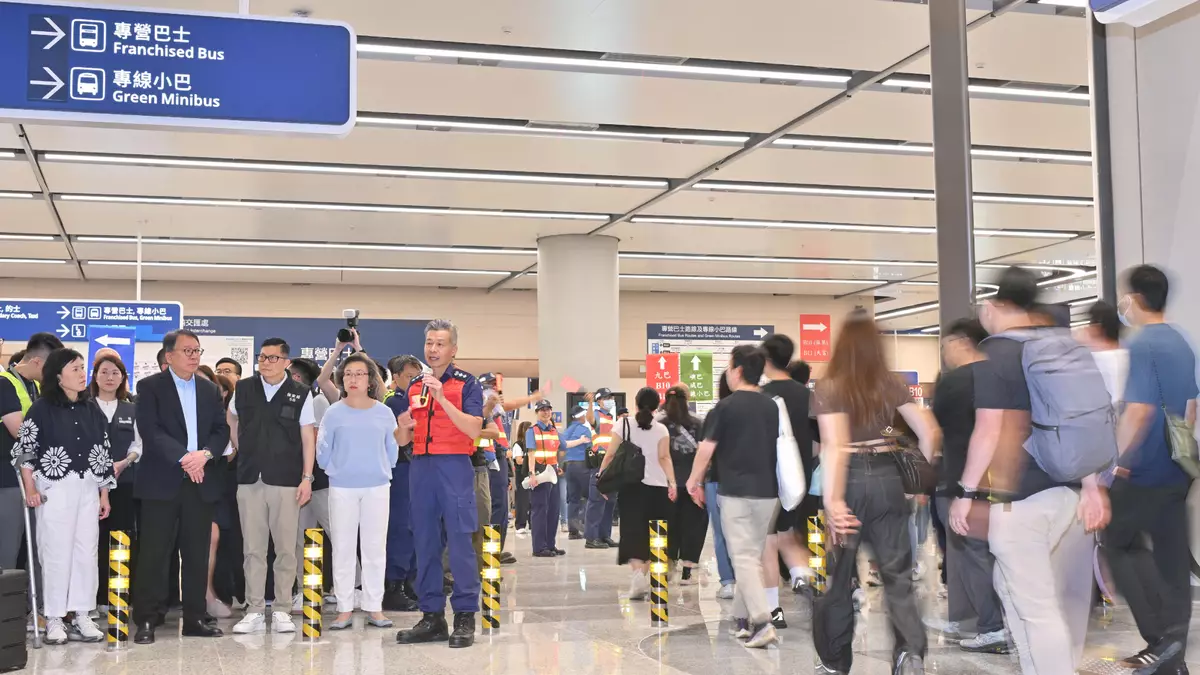
Over 10 000 persons join stress test at Huanggang Port (with photos/video) Source: HKSAR Government Press Releases
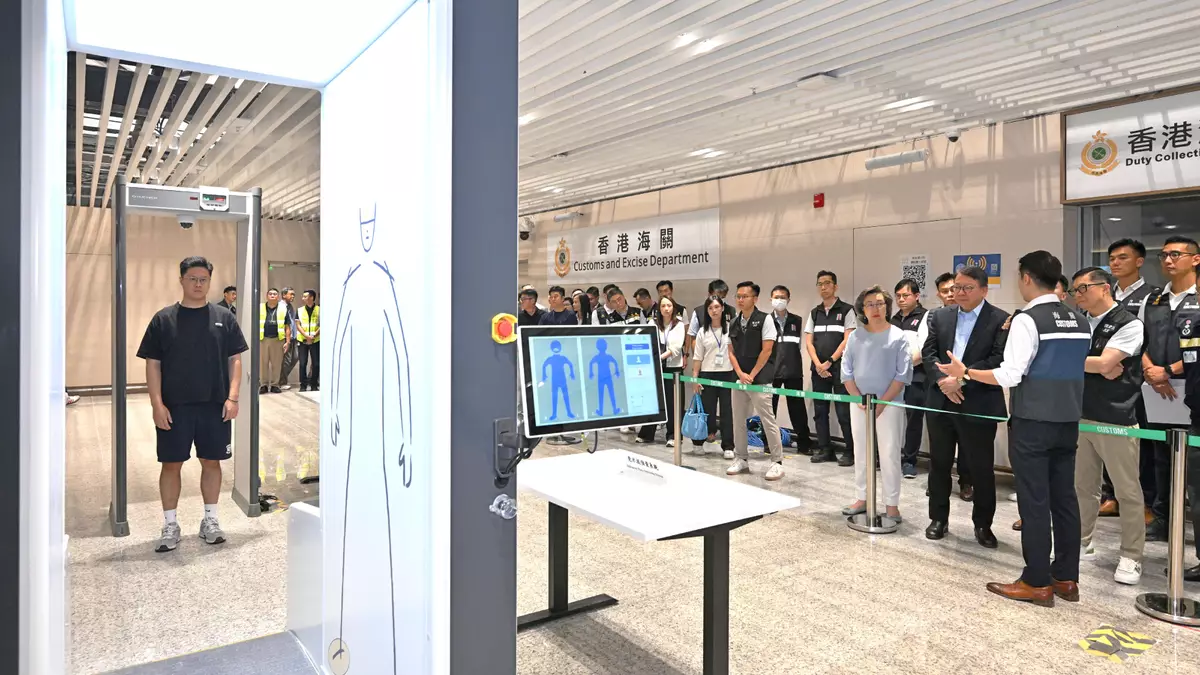
Over 10 000 persons join stress test at Huanggang Port (with photos/video) Source: HKSAR Government Press Releases
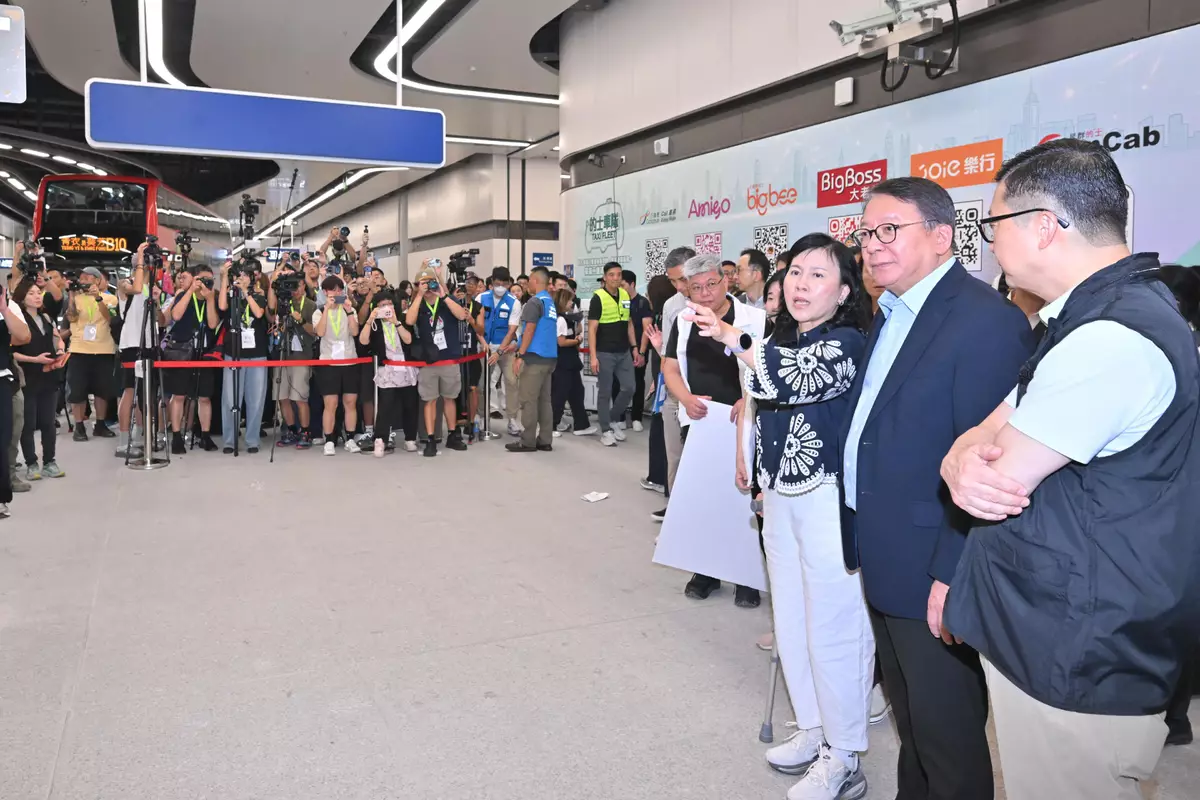
Over 10 000 persons join stress test at Huanggang Port (with photos/video) Source: HKSAR Government Press Releases
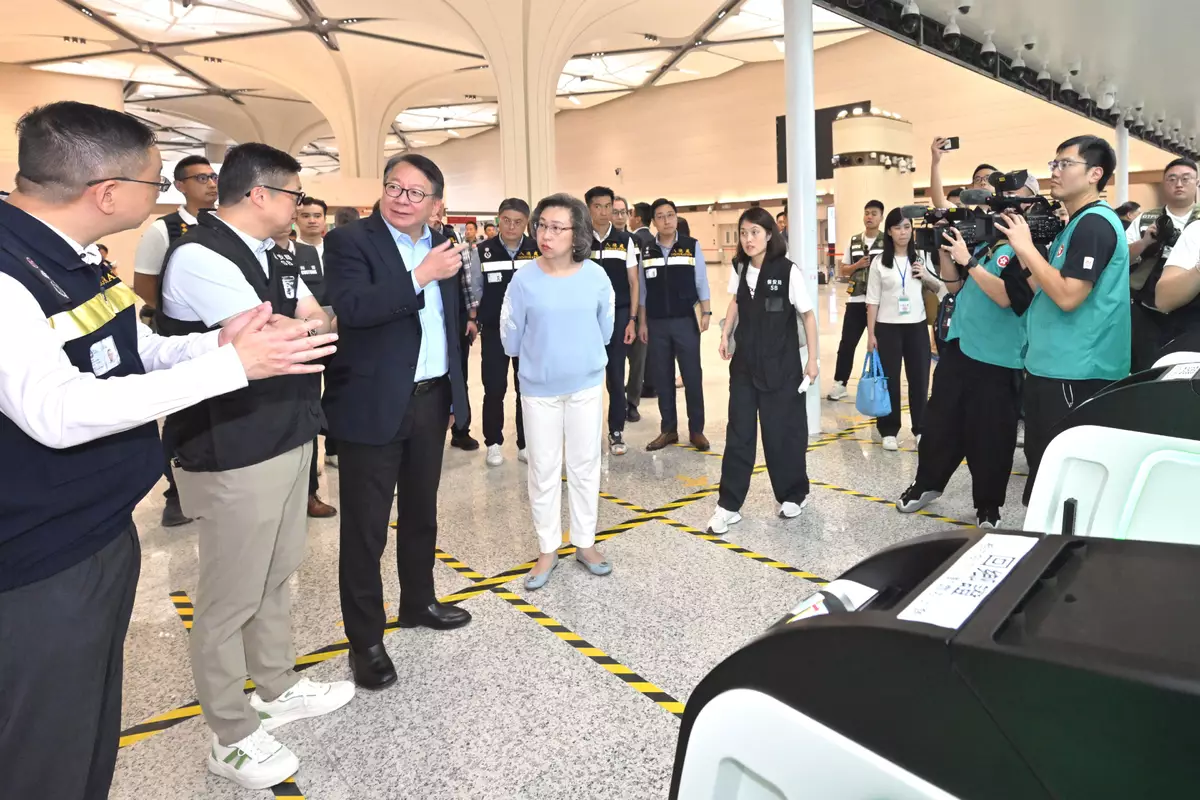
Over 10 000 persons join stress test at Huanggang Port (with photos/video) Source: HKSAR Government Press Releases
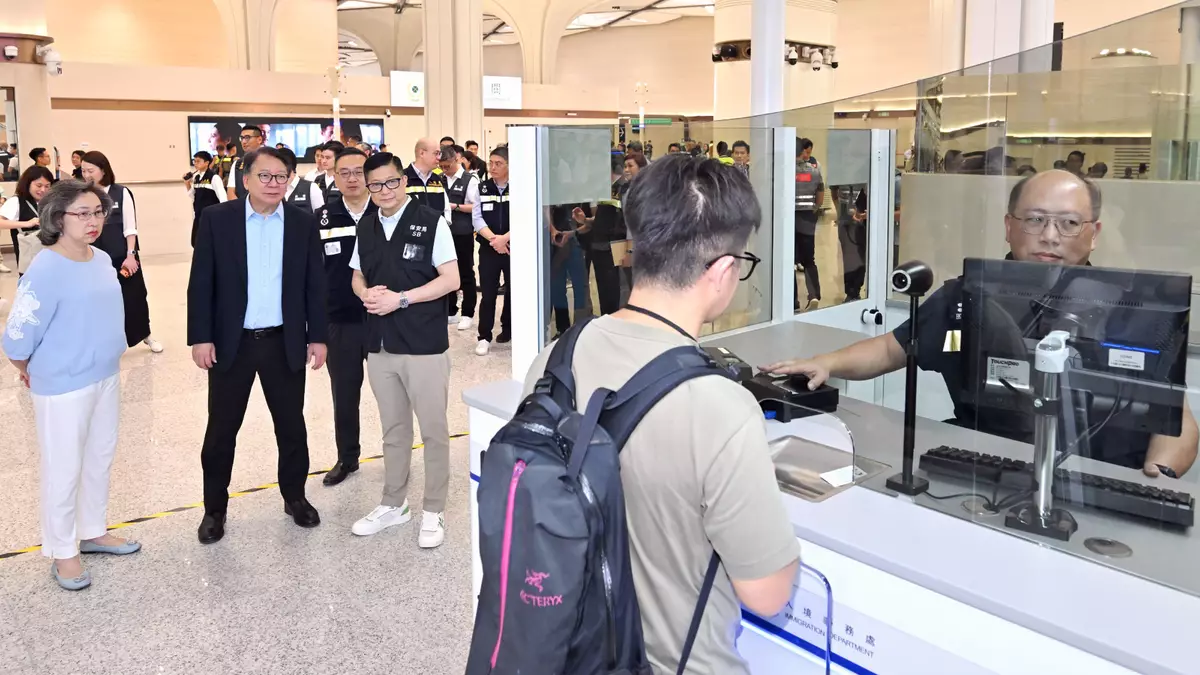
Over 10 000 persons join stress test at Huanggang Port (with photos/video) Source: HKSAR Government Press Releases
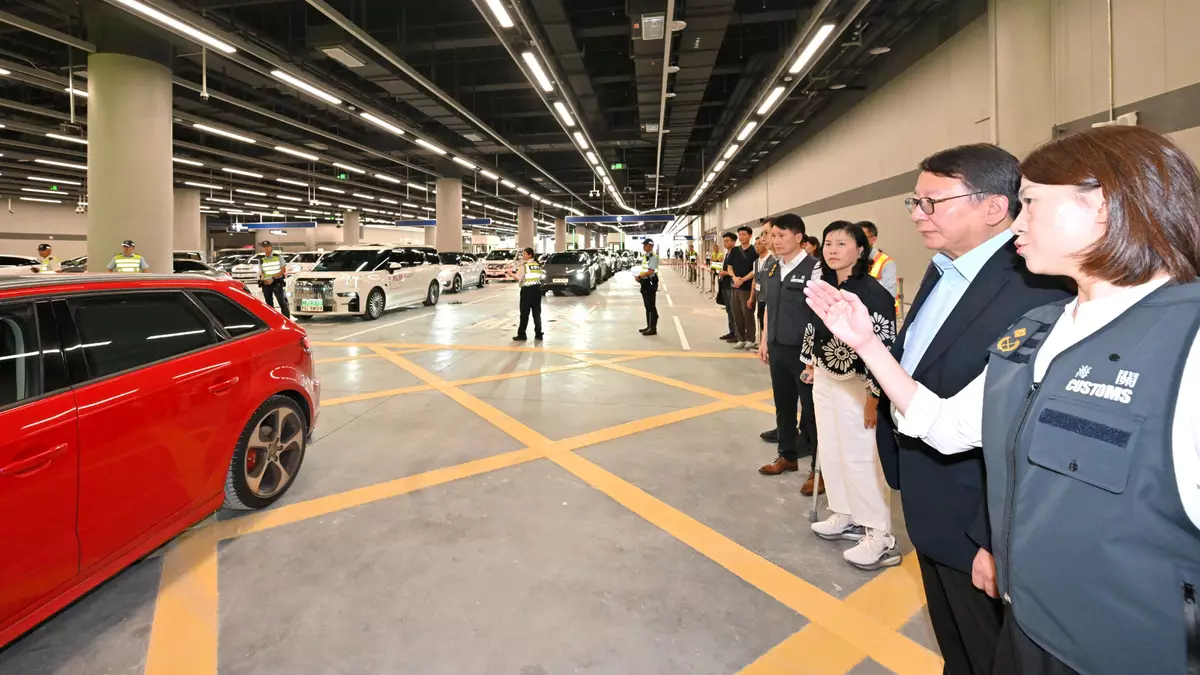
Over 10 000 persons join stress test at Huanggang Port (with photos/video) Source: HKSAR Government Press Releases
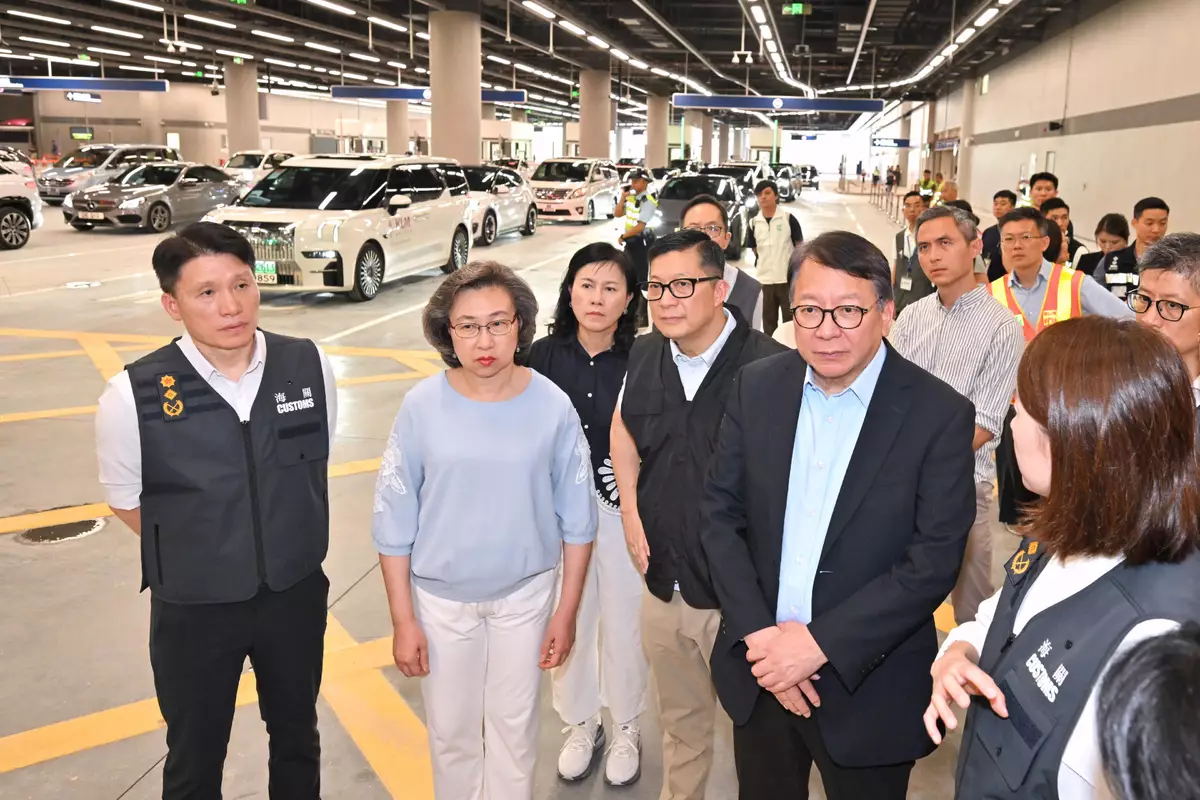
Over 10 000 persons join stress test at Huanggang Port (with photos/video) Source: HKSAR Government Press Releases
Source: AI-found images