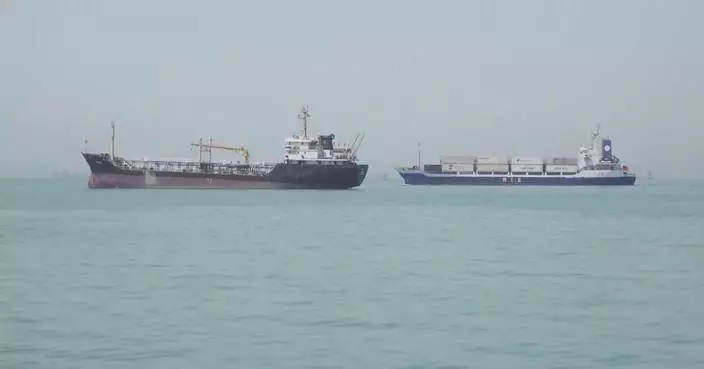
Prolonged high temperatures and scant rainfall have driven Germany's major rivers, including the Rhine, to record-low levels, disrupting cargo shipping and putting mounting pressure on the nation's industrial supply chain.
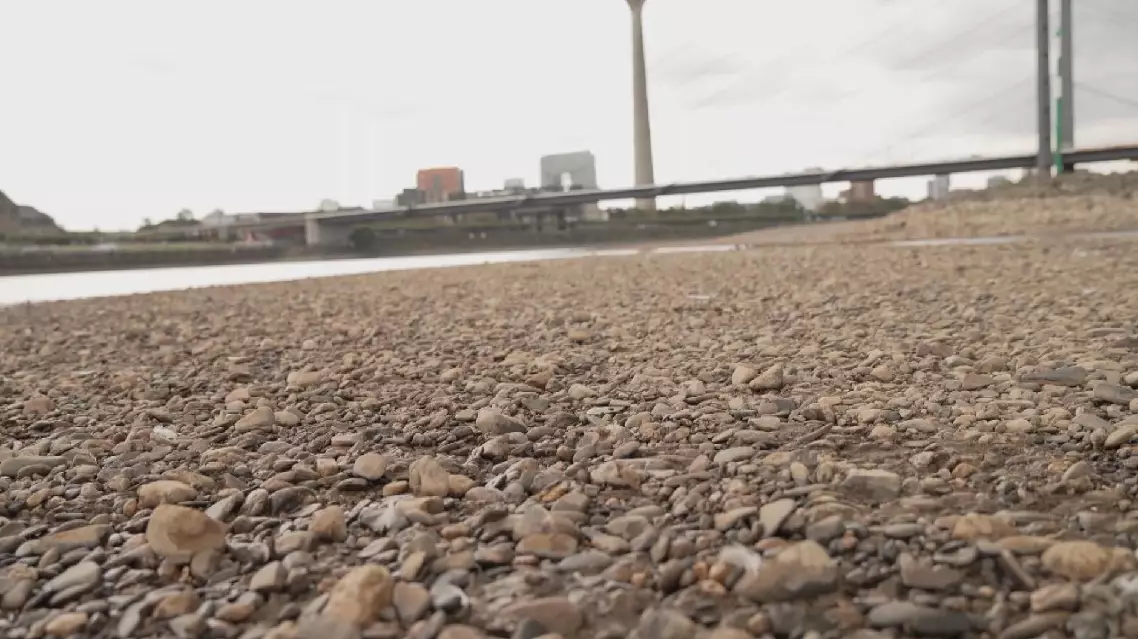
At the Rhine section in western Germany's Dusseldorf, official measurements recorded the water level at just 20 centimeters as of 10:00 local time Friday. While recent rainfall has brought a slight recovery, this figure remains below the historic low of 23 centimeters set in 2018. The average water level there between 2010 and 2020 stood at approximately 257 centimeters.
The extreme low water not only exposes vast stretches of riverbed, but also severely restricts navigation, putting Germany's vital inland shipping artery under acute strain and affecting the entire industrial supply chain that depends on it.
The Rhine, which carries roughly 80 percent of Germany's inland waterway freight, channeling coal, petroleum, ores, and vast quantities of chemical raw materials to the country's industrial heartlands.
In its latest monthly report released on August 20, the German central bank warned that months of dry weather have caused water levels on the Rhine and other German rivers to drop sharply. Vessels are unable to sail at full capacity, leading to higher transport costs, shipment delays, and subsequent disruptions to industrial production and exports.
The central bank cited low water levels as a significant factor weighing on Germany's economic activity in the third quarter, noting that it is visibly hampering the nation's economic recovery.
A scenario analysis by the German Economic Institute previously estimated that a sustained one-month low-water period could reduce Germany's waterway freight volume by about 25 percent, potentially shaving roughly 1 percent off industrial output.
The heatwave and drought are probably transmitting climate risks step by step along the Rhine, Germany's industrial lifeline, directly into the real economy.
Record-low Rhine water levels strain German industrial supply chain